分类: technology

  • X back up after brief outage affects over 19,000 US users, Downdetector data finds

    X back up after brief outage affects over 19,000 US users, Downdetector data finds

    The social media platform X, formerly recognized as Twitter, encountered a significant service interruption on Sunday that impacted over 19,000 users across the United States. According to data compiled by the outage monitoring service Downdetector.com, the technical difficulties began approximately at 11:19 AM Eastern Time and persisted for about 45 minutes before being largely resolved by 12:04 PM ET.

    The disruption represented one of the more notable technical incidents for the Elon Musk-owned platform in recent months. Downdetector, which aggregates user-submitted outage reports from multiple sources, recorded a peak of 19,281 individual problem reports during the incident. It is important to note that the actual number of affected users may differ from the reported figures, as the tracking methodology relies on voluntary user submissions rather than comprehensive internal data.

    The platform’s communication team did not immediately respond to media inquiries regarding the root cause of the outage or the specific technical challenges that led to the service interruption. This brief disruption occurred amidst ongoing developments at X, which has undergone significant structural and operational changes since Musk’s acquisition of the company formerly known as Twitter.

    Service reliability remains a critical concern for social media platforms, with even temporary outages potentially impacting millions of users worldwide. The rapid resolution of Sunday’s technical issues demonstrates the platform’s capacity to address system failures promptly, though the incident underscores the persistent challenges in maintaining uninterrupted digital services at scale.

  • Apple’s Mac online store just changed: Here’s how buying a Mac works now

    Apple’s Mac online store just changed: Here’s how buying a Mac works now

    Apple has implemented a comprehensive overhaul of its digital retail platform, fundamentally transforming how consumers purchase Mac computers through its online store. The tech giant has eliminated all preconfigured models across its entire Mac lineup, including MacBook Air, MacBook Pro, iMac, Mac mini, Mac Studio, and Mac Pro devices.

    The new purchasing paradigm requires customers to build their machines from the ground up through an intricate customization process. Instead of selecting from predetermined configurations, buyers now navigate through sequential customization steps beginning with display size and color selection. The process continues with choices regarding nano-texture display options, Apple’s M-series chip configurations, RAM capacity, and SSD storage specifications.

    Additional personalization options include selecting preferred power adapter configurations, keyboard language preferences, and software bundle additions such as Final Cut Pro and Logic Pro licenses. The familiar AppleCare+ protection plan remains available as a final purchase consideration before checkout completion.

    While the customization experience has been significantly enhanced, the available hardware components remain unchanged. Notably, the MacBook Pro series continues to lack M5 Pro or M5 Max chip options, indicating that next-generation Apple Silicon upgrades remain forthcoming in future product revisions.

    The transition to this fully customizable approach was first identified by industry observers at Macworld and has been fully implemented across Apple’s UAE digital storefront, suggesting a global rollout strategy. This strategic shift represents Apple’s most substantial e-commerce transformation in recent years, emphasizing personalized computing experiences over standardized configurations.

  • Samsung Galaxy S26 Ultra leaks: Unpacked 2026 date, battery details and design revealed

    Samsung Galaxy S26 Ultra leaks: Unpacked 2026 date, battery details and design revealed

    Samsung Electronics is generating significant anticipation for its Galaxy Unpacked 2026 event, with multiple leaks revealing crucial details about the upcoming flagship Galaxy S26 Ultra. According to reliable industry insider Evan Blass, the unveiling ceremony is scheduled for February 25, 2026, marking the continuation of Samsung’s early-year flagship launch tradition.

    The battery specifications have emerged as a particularly contentious topic among technology enthusiasts. Despite increasing competition from Chinese manufacturers adopting advanced silicon-carbon battery technology, Samsung appears committed to maintaining its 5,000mAh battery capacity from the previous S25 Ultra model. This decision comes at a time when competitors like Honor and Xiaomi are demonstrating breakthrough multi-day battery performance in their 2025 flagship devices.

    Design renders indicate evolutionary refinements rather than revolutionary changes to the S26 Ultra’s aesthetic. The device showcases subtly rounded edges and introduces a new pill-shaped camera housing, drawing design inspiration from Samsung’s recently launched Galaxy Z Fold 7. The sophisticated camera array maintains its impressive specifications, featuring a 200-megapixel primary sensor complemented by 50-megapixel ultrawide and periscope telephoto lenses, alongside a 10-megapixel telephoto camera.

    Notably, the S26 Ultra demonstrates advancements in structural engineering, measuring at 163.6 x 78.1 x 7.9mm – representing a slimmer profile than its predecessor while preserving battery capacity. This achievement suggests successful implementation of ultra-thin manufacturing techniques previously exclusive to Samsung’s foldable smartphone lineup.

    Industry analysts suggest that potential price reductions could significantly enhance the device’s market competitiveness, though Samsung has yet to confirm any official pricing strategy. The combination of refined design, maintained battery capacity, and possible aggressive pricing positions the Galaxy S26 Ultra as a potentially transformative product in Samsung’s 2026 mobile portfolio.

  • A chatbot entirely powered by humans, not artificial intelligence? This Chilean community shows why

    A chatbot entirely powered by humans, not artificial intelligence? This Chilean community shows why

    In a novel protest against the environmental impact of artificial intelligence, approximately 50 residents of Quilicura, a municipality on the outskirts of Santiago, Chile, spent Saturday operating a fully human-powered chatbot system. The 12-hour demonstration project, dubbed Quili.AI, processed over 20,000 global requests while deliberately avoiding the instant responses characteristic of conventional AI systems like ChatGPT or Google’s Gemini.

    Instead of algorithmic processing, volunteers working from a community center manually responded to queries, with image generation requests taking approximately 10 minutes to complete. When an Associated Press reporter requested an image of a ‘sloth playing in the snow,’ the system returned a hand-drawn pencil sketch of a cartoonish sloth clutching snowballs after a noticeable delay.

    The initiative, organized by environmental group Corporación NGEN, aimed to spotlight the hidden environmental costs associated with AI data centers concentrated in the Quilicura region. Lorena Antiman, the project coordinator, stated: ‘The goal is to highlight the hidden water footprint behind AI prompting and encourage more responsible use.’

    The human-operated system excelled at responding to culturally specific queries, such as recipes for Chilean sopaipillas (fried pastries), by leveraging local knowledge. When volunteers lacked immediate answers, they collaboratively sought information within their community rather than generating fabricated responses.

    This demonstration occurs against the backdrop of Chile’s severe decade-long drought, which experts link to recent devastating wildfires. The campaign highlights ongoing debates about the substantial resource consumption of AI infrastructure, particularly the massive water requirements for cooling data center computer chips. Major tech corporations including Amazon, Google, and Microsoft have established or planned data centers in the Santiago region, with Google facing legal challenges over water usage concerns despite claiming its Quilicura facility is ‘the most energy efficient in Latin America.’

  • China, Algeria expand space cooperation with new satellite launch

    China, Algeria expand space cooperation with new satellite launch

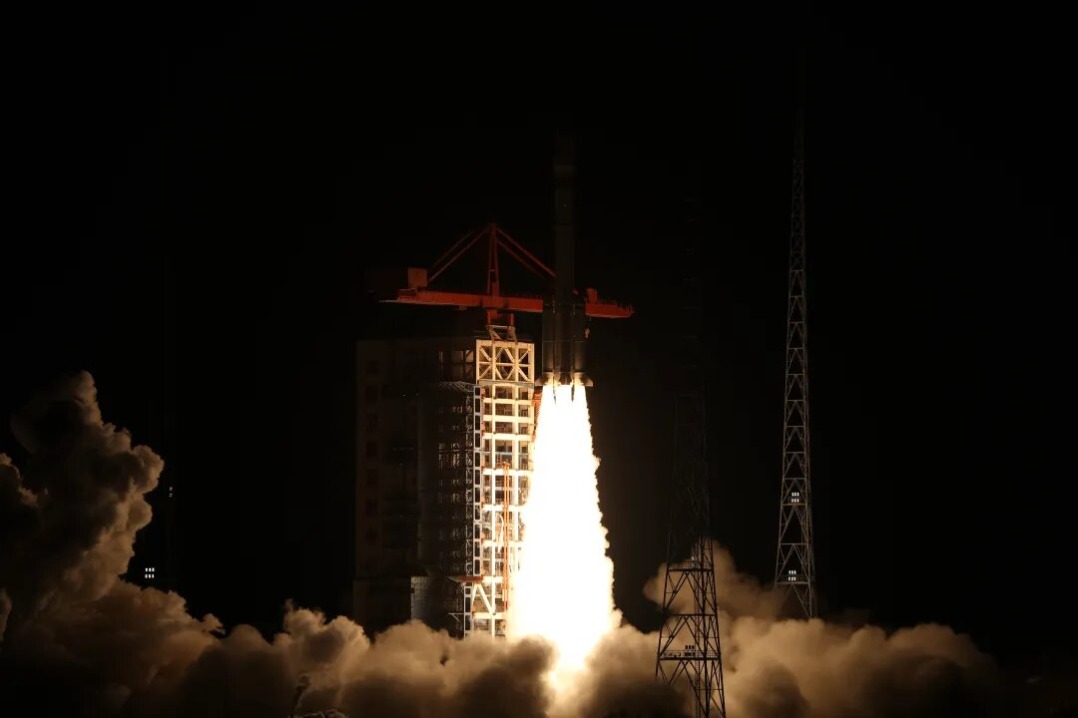
    In a significant advancement of Sino-Algerian space collaboration, China successfully deployed the AlSat-3B remote-sensing satellite into orbit on Saturday, January 31st, 2026. The spacecraft ascended aboard a Long March 2C carrier rocket from the Jiuquan Satellite Launch Center in Inner Mongolia at precisely 12:01 pm local time.

    The newly launched satellite represents the second component of Algeria’s enhanced Earth observation capabilities, joining its predecessor AlSat-3A which was similarly launched by Chinese partners just weeks earlier on January 15th. Both sophisticated satellites were developed by the China Academy of Space Technology, showcasing China’s growing prowess in international space technology partnerships.

    This bilateral project operates under a comprehensive cooperation agreement signed in July 2023 between the Algerian Space Agency and China Great Wall Industry Corporation, the international trade subsidiary of China Aerospace Science and Technology Corp. The contractual arrangement encompasses not only satellite delivery but also includes complete ground systems, specialized training programs, and ongoing technical support services.

    The twin-satellite constellation is designed to provide critical data for multiple civilian applications including geological surveying, agricultural planning, environmental monitoring, urban development mapping, and disaster management infrastructure. The partnership marks the most significant space cooperation between the nations since the successful deployment of Algeria’s Alcomsat-1 communications satellite in December 2017.

    The launch vehicle itself, the Long March 2C manufactured by China Academy of Launch Vehicle Technology, stands 43 meters tall with a 3.35-meter diameter and a substantial liftoff weight of 242.5 metric tons. The reliable rocket model specializes in deploying payloads into both low-Earth and sun-synchronous orbits.

    This mission represents the 629th flight of the Long March rocket series and China’s ninth successful orbital launch in 2026, demonstrating the nation’s accelerating pace in space operations and international technology cooperation.

  • Musk’s SpaceX applies to launch 1m satellites into orbit

    Musk’s SpaceX applies to launch 1m satellites into orbit

    SpaceX, under the leadership of Elon Musk, has submitted a groundbreaking proposal to deploy one million satellites into Earth’s orbit, creating an unprecedented network of orbital data centers specifically designed to power artificial intelligence systems. The revolutionary application, filed with the Federal Communications Commission on Friday, presents this ambitious infrastructure as the most economically viable and energy-efficient solution to meet the exponentially growing computational demands of AI technology.

    The aerospace company contends that traditional terrestrial data facilities, typically housed in massive warehouse complexes, are increasingly inadequate to handle the computational requirements of expanding AI applications. According to SpaceX’s documentation, these orbital data centers would operate as a distributed network of solar-powered satellites positioned in low-Earth orbit at altitudes ranging from 500 to 2,000 kilometers.

    This proposal represents a dramatic expansion beyond SpaceX’s existing Starlink constellation of approximately 10,000 satellites, which has already drawn criticism from astronomers and space traffic experts. The company maintains that the new system would provide essential computing capacity to serve billions of users worldwide while advancing humanity toward what Musk describes as ‘a Kardashev Type II civilization’—a theoretical societal classification that denotes the ability to harness a star’s complete energy output.

    Addressing potential concerns about space congestion, Musk stated on his social media platform X that ‘the satellites will actually be so far apart that it will be hard to see from one to another,’ emphasizing the vastness of space. SpaceX further argues that orbital data centers offer environmental advantages over traditional ground-based facilities by eliminating the enormous water and power requirements for cooling.

    However, space technology experts have raised multiple concerns regarding the feasibility and safety of such an extensive orbital network. Previous analyses indicate that launching and maintaining hardware in space remains prohibitively expensive, with complex infrastructure requirements for protection, cooling, and power management. Additionally, the increasing volume of space debris presents significant collision risks that could potentially damage equipment or cause materials to re-enter Earth’s atmosphere.

    Astronomers have previously reported interference from SpaceX’s existing satellite network, noting in 2024 that radio emissions from Starlink satellites were effectively ‘blinding’ their telescopes and impeding scientific research. Despite these concerns, Musk has consistently rejected allegations that his satellites are overcrowding space or creating unfair competition in the orbital environment.

  • China launches satellite for Algeria

    China launches satellite for Algeria

    China’s aerospace capabilities reached another milestone on Saturday with the successful deployment of an Algerian remote sensing satellite from the Jiuquan Satellite Launch Center in northwest China. The mission, executed precisely at 12:01 pm Beijing Time, utilized a Long March-2C carrier rocket to transport the satellite into its designated orbit.

    This collaborative space endeavor between China and Algeria focuses on practical Earth observation applications. The newly deployed satellite is specifically engineered to support land planning initiatives and enhance disaster prevention and mitigation capabilities for the North African nation. The sophisticated remote sensing technology will provide valuable data for urban development, agricultural management, and emergency response coordination.

    The launch represents a significant achievement in international space cooperation, demonstrating China’s growing role as a reliable partner in global space missions. This mission also marks the 629th flight of China’s Long March rocket series, underscoring the program’s extensive experience and technical maturity in space launch operations. The consistent performance of these rockets has established China as a major player in the competitive satellite launch industry, capable of serving both domestic and international space objectives.

  • Capital accelerates humanoid robot mass production

    Capital accelerates humanoid robot mass production

    Beijing has inaugurated a groundbreaking pilot manufacturing and validation platform for humanoid robotics, marking a significant leap from small-batch prototyping to large-scale production capabilities. The Beijing Innovation Center of Humanoid Robotics unveiled this first-of-its-kind facility in the capital on Thursday, equipped with 500 sets of specialized production and testing equipment capable of producing up to 5,000 embodied humanoid robots annually.

    The comprehensive platform addresses critical industry bottlenecks by providing end-to-end services including prototyping, performance validation, process optimization, module assembly, and complete robot testing. This initiative comes at a crucial juncture as the global humanoid robotics sector transitions from research and development phases to practical application scenarios and commercial deployment.

    Liu Yizhang, head of the pilot platform, identified the primary industry challenges: “The main bottlenecks lie in pilot manufacturing readiness, standardized production protocols, and insufficient data continuity from development to scale-up phases.” He noted that research institutions and startups typically rely on costly, inefficient small-scale trial lines with inconsistent quality standards and inadequate testing systems.

    The platform’s digital infrastructure represents a core innovation, featuring a unified master data system and open interfaces that connect information, logistics, and data flows throughout the production cycle. This integrated digital operation system enables seamless tracking from design and process planning to production and test feedback, significantly shortening iteration cycles.

    Located in Beijing’s Economic-Technological Development Area (E-town), the 9,700-square-meter facility aligns with national industrial priorities. In November 2025, China’s Ministry of Industry and Information Technology had specifically identified humanoid robotics as requiring accelerated development of manufacturing validation platforms to convert technological advances into productive capacity.

    The Beijing municipal government has established a tiered support system for such platforms, offering subsidies of up to 100 million yuan ($14.39 million) for newly established facilities. This policy framework complements the city’s growing robotics sector, which saw nearly 40% revenue growth in 2025 and leads the nation in specialized robotics enterprises.

  • Phone (3a) Community Edition: A new model for co-creating products with fans

    Phone (3a) Community Edition: A new model for co-creating products with fans

    In an innovative departure from conventional product development, technology company Nothing has launched the Phone (3a) Community Edition—a smartphone entirely co-created with its community of dedicated fans. This groundbreaking initiative represents a fundamental reimagining of how consumer technology products are conceived and developed.

    The nine-month collaborative endeavor generated over 700 submissions across multiple creative categories, culminating in the selection of four emerging creators who worked directly with Nothing’s London-based teams. These winners—Emre Kayganacl (Hardware Design), Ambrogio Tacconi & Louis Aymond (Accessory Design), Jad Zock (Lock Screen Interface), and Sushruta Sarkar (Marketing Campaign)—were chosen based on their exceptional originality, technical craftsmanship, and ability to advance Nothing’s distinctive design philosophy.

    This year’s program expanded significantly from previous iterations, incorporating hardware design, custom software elements, accessory creation, and comprehensive marketing campaigns. Nothing enhanced the collaborative process by releasing all creative briefs simultaneously and providing participants extended development timelines alongside dedicated resources. Each category winner received a £1,000 cash prize to support their creative development.

    The resulting device showcases remarkable innovation: Kayganacl’s hardware design draws inspiration from late-1990s and early-2000s technology aesthetics, creating a nostalgic yet futuristic visual language. The accessory component features ‘Dice’—a culturally universal gaming element incorporating Nothing’s proprietary Ndot 55 font. Zock’s software contribution includes a minimalist clock face designed to reduce visual clutter while improving information retention, complemented by exclusive wallpapers that bridge the device’s physical and digital aesthetics. Sarkar’s ‘Made Together’ marketing campaign celebrates the collaborative process itself rather than focusing exclusively on the final product.

    Beyond product development, Nothing is pioneering a comprehensive community integration model. The company recently opened a $5 million community investment opportunity at its Series C valuation of $1.3 billion, allowing supporters to invest alongside institutional partners. This initiative coincides with Nothing’s strategic pivot toward developing AI-native operating systems, reflecting the company’s conviction that future personal technology should be shaped directly by its users.

    The Phone (3a) Community Edition will have extremely limited availability with only 1,000 units produced worldwide. Priced at Dh1,399, the device will be exclusively available through noon retailers, maintaining the 12+256 GB specifications of the standard Phone (3a) model.

  • Paradoxa AI announces 3 billion organic views milestone supporting consumer AI applications

    Paradoxa AI announces 3 billion organic views milestone supporting consumer AI applications

    In a significant achievement for organic marketing in artificial intelligence, Paradoxa AI has officially surpassed 3 billion tracked organic views across major social media platforms. The milestone, announced on January 30, 2026, demonstrates the company’s successful content distribution strategy for consumer AI applications, particularly AI companion and chat platforms.

    Operating as a specialized growth partner for consumer AI apps, Paradoxa AI collaborates with over 44 AI companion and chat applications to drive user acquisition through organic social media content rather than traditional paid advertising. The company’s distribution model concentrates on short-form video content across TikTok, Instagram, and YouTube, creating platform-native material that resonates with target audiences.

    Founder and CEO Mohamed Anani emphasized the significance of this achievement: “Reaching 3 billion organic views demonstrates the scale at which content-driven user acquisition can operate for consumer AI apps. This milestone represents our work with dozens of AI platforms seeking sustainable growth through organic distribution rather than paid media.”

    The company, founded by Mohamed Anani and Ahmed Hamdy with Mahmoud H Abbas as COO, maintains a unique operational structure. Rather than executing influencer campaigns or one-off marketing initiatives, Paradoxa AI manages proprietary social media accounts and coordinates a distributed network of content creators. This approach allows for continuous testing of content formats and rapid scaling of successful videos across different platforms and geographic markets.

    The results speak for themselves: several AI chat applications supported by Paradoxa AI have reached Top 50 positions among generative AI consumer apps based on web traffic, while others have entered Top 5 entertainment app rankings on regional App Store charts. Collectively, client apps have acquired millions of users through Paradoxa’s organic content distribution system.

    Notably, the company has achieved seven-figure revenue since its launch without external funding or paid advertising for its own services. This success highlights the growing demand among AI app developers for user acquisition methods that don’t rely exclusively on performance marketing or paid media networks.

    With a remote team operating across multiple time zones, Paradoxa AI continues to serve AI companion, AI chat, and consumer AI platforms that prioritize sustainable growth strategies over traditional advertising approaches, positioning organic social media content as a powerful alternative for user acquisition in the competitive AI market.