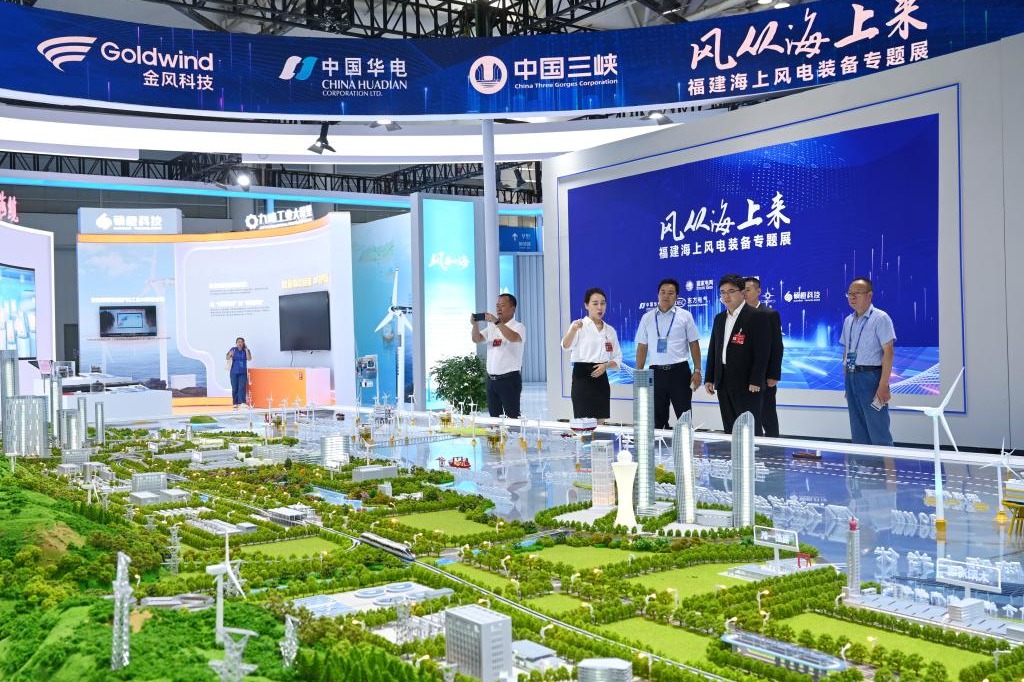
The future of the maritime industry hinges on the development of green and intelligent maritime equipment, according to experts at the World Maritime Equipment Conference 2025, held in Fuzhou, Fujian Province. The event, themed ‘Setting Sail Towards Green Development,’ emphasized the critical role of technological innovation in driving the maritime sector’s low-carbon transformation and sustainable growth. Yu Qing, Deputy Director of the Marine Technology Innovation Center-Yangtze Delta, highlighted that green and intelligent maritime equipment is essential for reducing emissions and energy consumption, which are significant challenges in the industry. Liu Feng, Chairman of Fujian Baofan New Energy Technology, pointed out the limitations of traditional diesel-powered vessels and the potential of electric and hybrid solutions, such as the company’s methanol-lithium battery hybrid fishing vessel, which combines efficiency, low costs, and rapid energy replenishment. International cooperation was also underscored as a key driver for decarbonization and intelligent upgrades in global shipping systems. Lou Luobing, Business Director of RINA’s Greater China and Vietnam regional branch, emphasized the complementary strengths of China and Italy in advancing maritime technology. Additionally, Lin Jian, a member of the European Academy of Sciences, stressed the importance of deep-sea engineering and the opportunities in unmanned maritime exploration equipment. The conference showcased China’s leadership in intelligent unmanned vessel technology, with products from Zhuhai Yunzhou Intelligence Technology being exported to over 50 countries, demonstrating advanced capabilities in autonomous navigation and cooperative control.
分类: technology
-
AI and fintech to drive next digital leap of Africa
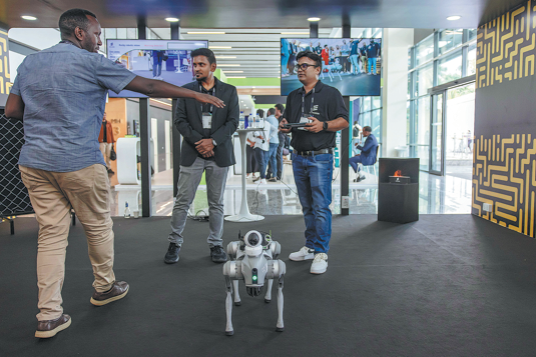
As Africa’s mobile revolution evolves, the continent stands on the brink of a new digital era driven by artificial intelligence (AI) and financial technology (fintech). This was the central theme at the Mobile World Congress (MWC) Africa, held in Kigali, Rwanda, where policymakers and industry leaders emphasized the need to bridge digital and energy gaps to unlock inclusive growth. Rwandan President Paul Kagame, speaking at the opening ceremony, highlighted Africa’s rapid digital transformation, noting how mobile technology has become integral to daily life, revolutionizing commerce, education, and finance. He praised mobile money as a global model for financial inclusion, empowering small businesses and women entrepreneurs. However, Kagame cautioned that Africa must urgently address its digital divide, as only a small fraction of its population is connected compared to the global average. He stressed the importance of integrating AI into public services and harmonizing policies to foster innovation. Rwanda’s Minister of ICT and Innovation, Paula Ingabire, echoed this sentiment, calling for collaboration across governments, industries, and innovators to position Africa as a leader in digital transformation. Doreen Bogdan-Martin, Secretary-General of the International Telecommunication Union, projected that AI could generate $2.9 trillion for the African economy, emphasizing the need for cross-sector cooperation. Vivek Badrinath, Director General of the Global System for Mobile Communications Association, highlighted Africa’s mobile industry as one of the largest infrastructures globally, covering 91% of the population. He called for partnerships to develop inclusive AI models for African languages and stressed the importance of regulatory reforms to attract investment. Closing the usage gap, he noted, could add $625 billion to Africa’s GDP by 2030, underscoring that connectivity is about empowering people and driving sustainable growth.
-

Mobile Developers Week brings together Samsung and Android innovators
The Mobile Developers Week, scheduled for December 13-15, 2025, in Abu Dhabi, is set to become a landmark event for Android developers, innovators, and industry leaders. Organized by OMNES Technologies, a leader in MarTech innovation in the MENA region, the event will unite droidcon Abu Dhabi and Swift Heroes Abu Dhabi under one roof for the first time. This convergence aims to explore the transformative potential of on-device artificial intelligence (AI) and Android performance enhancements, driving the next generation of user experiences.
Samsung Gulf Electronics, a strategic partner of the event, underscores its commitment to advancing AI-driven performance, efficiency, and privacy on mainstream devices. With the global on-device AI market projected to grow at a CAGR of 24.6% to reach $124 billion by 2025, the event highlights the immense opportunities in this rapidly evolving sector. Fahed Aldeeb, CEO of OMNES Technologies, emphasized the importance of addressing user needs such as privacy, personalization, and power efficiency while keeping pace with technological advancements.
The event will feature three key sessions: ‘The State of AI/ML on Android,’ focusing on performance optimization and embedded intelligence; ‘AI in Your Pocket: Implementing LiteRT in Android Apps,’ offering hands-on insights into real-time AI models; and ‘Empowering Android Apps with Local Google Gemini,’ exploring native AI integration. These sessions align with Samsung’s vision of democratizing AI, making it accessible and intuitive for all users.
Mobile Developers Week will also host interactive exhibitions, networking zones, live app launches, and startup pitches across four stages: GovAI Summit, NextPlay Arena, droidcon Abu Dhabi, and Swift Heroes Abu Dhabi. Supported by the Abu Dhabi Convention & Exhibition Bureau and various media partners, the event is expected to attract 3,000 visitors, fostering collaboration among developers, engineers, entrepreneurs, and investors to shape the future of mobile innovation.
-

North Korea has stolen billions in cryptocurrency and tech firm salaries, report says
North Korea has emerged as a formidable player in the realm of cybercrime, leveraging sophisticated hacking techniques to siphon billions of dollars from cryptocurrency exchanges and infiltrate foreign companies through fake identities, according to a comprehensive international report. The 138-page document, published by the Multilateral Sanctions Monitoring Team, reveals that these illicit activities are orchestrated by Pyongyang to finance its nuclear weapons program. The team, comprising the U.S. and 10 allied nations, was established last year to oversee North Korea’s adherence to U.N. sanctions. The report highlights how North Korean hackers have targeted global businesses and organizations with advanced malware, disrupting networks and stealing sensitive data. Additionally, the regime has utilized cryptocurrency for money laundering and military procurement, circumventing international sanctions tied to its nuclear ambitions. Despite its isolation, North Korea has invested heavily in offensive cyber capabilities, now rivaling China and Russia in sophistication. The report underscores the significant threat posed by these cyber operations, which have led to the destruction of physical equipment, loss of private assets, and funding for weapons of mass destruction. Earlier this year, North Korean hackers executed one of the largest crypto heists, stealing $1.5 billion in Ethereum. Furthermore, U.S. authorities have identified thousands of IT workers employed by American companies as North Korean operatives using fake identities to funnel salaries back to the regime. The report concludes that North Korea’s cyber activities are a critical component of its strategy to sustain its government and military programs.
-

India proposes strict rules to label AI content citing growing risks
In a significant move to address the growing risks of artificial intelligence (AI) misuse, the Indian government has proposed stringent regulations requiring AI and social media companies to clearly label AI-generated content. Announced on Wednesday, October 22, 2025, the draft rules aim to curb the spread of deepfakes and misinformation, particularly in a country with nearly 1 billion internet users and diverse ethnic and religious communities where fake news can incite deadly conflicts. The proposal follows similar initiatives by the European Union and China. The new regulations mandate that AI-generated content be labeled with markers covering at least 10% of the visual display or the initial 10% of an audio clip’s duration. Social media platforms must also obtain user declarations confirming whether uploaded content is AI-generated and implement technical measures to ensure transparency and accountability. The Indian IT Ministry emphasized that the rules will ‘ensure visible labelling, metadata traceability, and transparency for all public-facing AI-generated media.’ Public and industry feedback on the proposal is invited until November 6. The government expressed concerns about the increasing misuse of generative AI tools, which can spread misinformation, manipulate elections, or impersonate individuals. High-profile lawsuits related to deepfakes, including those involving Bollywood stars Abhishek Bachchan and Aishwarya Rai Bachchan, are currently being heard in Indian courts. The proposed regulations are among the first global attempts to set quantifiable visibility standards for AI-generated content. If implemented, AI platforms in India will need to develop automated labeling systems to identify and mark AI-generated content at the point of creation. India is rapidly becoming a major market for AI firms, with OpenAI CEO Sam Altman noting in February that India is its second-largest market by user base, which has tripled in the past year.
-
First satellite produced in Xiong’an marks industry milestone
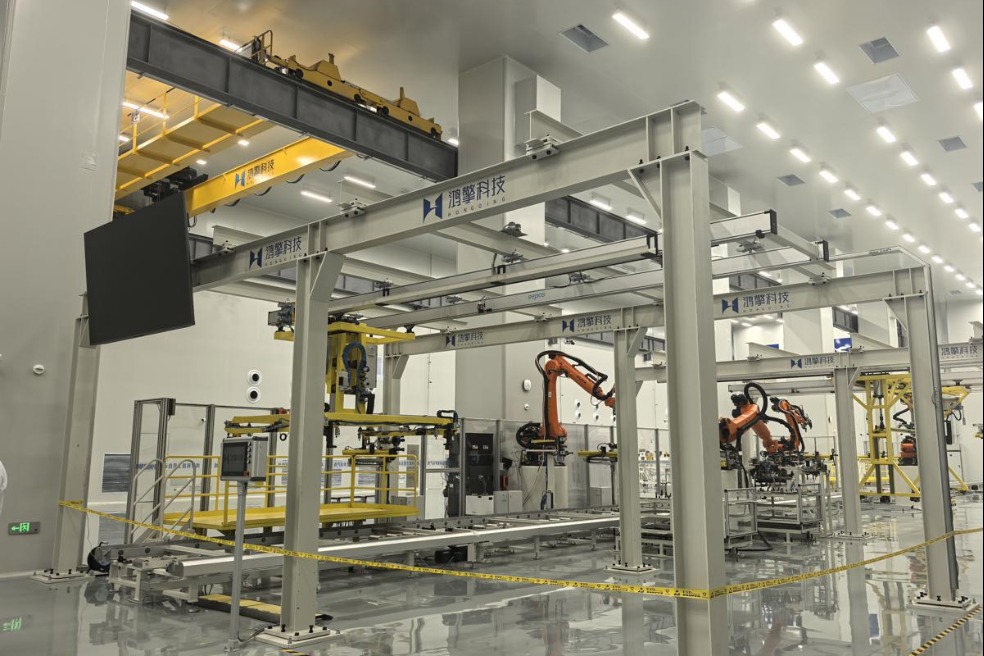
The production of the first satellite in Xiong’an New Area, Hebei province, has been hailed as a significant milestone in the region’s aerospace industry. Dubbed Xiong’an-1, the satellite was unveiled on Wednesday at the smart satellite manufacturing pilot base of Blue Arrow Hongqing (Xiong’an) Space Technology. This achievement underscores Xiong’an’s growing prowess in smart manufacturing within the aerospace information sector and is expected to draw more enterprises to the area, further solidifying its industrial chain. The satellite boasts three key technological innovations: a high-performance onboard computer, large flexible solar wings, and a next-generation electric propulsion system. These advancements are designed to improve computing power, energy efficiency, and propulsion capabilities, paving the way for the development of high-throughput, long-life, and intelligent communication satellites. Since its inception earlier this year, Blue Arrow Hongqing has benefited from robust local government support, including streamlined registration processes and an 80 million yuan ($11 million) investment from a regional sci-tech fund, which has expedited its research and production efforts. As a cornerstone of Xiong’an’s future industries, the aerospace information sector has already attracted major players like China Satellite Network Group, fostering a comprehensive industrial ecosystem.
-

SpaceX says it has cut Starlink services to Myanmar scam camps
SpaceX, under Elon Musk’s leadership, has severed Starlink satellite communication links to more than 2,500 devices utilized by scam compounds operating along the Thai-Myanmar border. These compounds, numbering over 30, are notorious for trafficking individuals from across the globe and coercing them into fraudulent activities that generate billions of dollars annually. Lauren Dreyer, head of Starlink business operations, emphasized the company’s commitment to enforcing its policies, stating that action is taken whenever violations are identified. This decisive move follows the Myanmar military’s recent takeover of KK Park, one of the largest scam compounds, as part of its efforts to reclaim territory lost to insurgent groups in recent years. Campaigners have long criticized the use of Starlink technology by Chinese crime syndicates, enabling them to operate from remote border areas. Victims, often lured under false pretenses of legitimate employment, endure harrowing conditions, including torture and forced labor. Many survivors hail from African nations. Dreyer, in a post on X, reiterated SpaceX’s dedication to maintaining Starlink as a force for good, ensuring global trust by connecting the unconnected while preventing misuse by malicious actors. While the Myanmar military claims to have liberated over 2,000 workers from KK Park and confiscated 30 Starlink terminals, at least 30 other compounds remain active, protected by militia groups loyal to the junta. These centers have become integral to Myanmar’s wartime economy, sustained by Chinese support as the military battles rebel factions. The extent to which these remaining compounds have lost access to Starlink services remains unclear.
-

Ukraine unveils upgraded sea drone it says can strike anywhere in the Black Sea
Ukraine’s state security service, the SBU, has introduced an upgraded version of its maritime drone, the ‘Sea Baby,’ which now boasts enhanced capabilities, including artificial intelligence (AI) for precision targeting, extended operational range, and the ability to carry heavier payloads. This cutting-edge unmanned vessel has been instrumental in Ukraine’s strategic strikes against Russian naval assets and infrastructure in the Black Sea, forcing Russia to relocate its primary naval base from Sevastopol to Novorossiysk. The Sea Baby’s range has been expanded to 1,500 kilometers (930 miles), and it can now carry up to 2,000 kilograms (4,400 pounds) of payload, making it a formidable tool in modern naval warfare. At a recent demonstration attended by The Associated Press, variants of the drone were showcased, including models equipped with multiple-rocket launchers and stabilized machine-gun turrets. Brig. Gen. Ivan Lukashevych of the SBU highlighted the drone’s advanced features, such as AI-assisted targeting systems, the ability to deploy small aerial attack drones, and multilayered self-destruct mechanisms to prevent capture. The Sea Baby has evolved from a single-use strike craft to a reusable, multipurpose platform, marking a significant advancement in asymmetric naval warfare. The SBU emphasized that the drone’s development has been partially funded by public donations through a state-run initiative and is closely coordinated with Ukraine’s military and political leadership. The Sea Baby has already been used in successful attacks against 11 Russian vessels, including frigates and missile carriers, and has played a key role in high-profile strikes, such as repeated attacks on the Crimean Bridge. The SBU’s pioneering efforts in this new form of naval warfare underscore Ukraine’s commitment to leveraging technology to counter Russian aggression effectively.
-

New chip sharpens, widens views of the universe
Chinese researchers have unveiled a groundbreaking spectroscopic chip, named RAFAEL (Yuheng in Chinese), which promises to revolutionize the way we observe the universe. Developed by a team at Tsinghua University, this chip, no larger than a mobile phone SIM card, combines exceptional resolution with a panoramic view, enabling sharper, faster, and wider scans of the cosmos. The findings were published in the prestigious journal Nature on October 15, 2025.
Traditional high-resolution spectrometers are often cumbersome and heavy, but RAFAEL’s compact design allows it to be mounted on satellites or deep-space probes, opening new possibilities for mapping the universe’s spectral data. According to Fang Lu, the research leader and professor at Tsinghua University’s Department of Electrical Engineering, the chip can capture full spectral data with sub-angstrom resolution for approximately 10,000 stars per second. This capability could reduce the time needed to compile complete spectra for all stars in the Milky Way from thousands of years to under a decade.
The chip’s core innovation lies in its ability to resolve the long-standing trade-off between resolution and field breadth in spectral imaging. By employing advanced computational imaging methods and reconfigurable integrated photonics based on lithium niobate, the team achieved snapshot spectroscopy with 10-megapixel-level spatial resolution and sub-angstrom spectral resolution across visible and near-infrared wavelengths. This allows the chip to discern light wavelengths down to ten-millionths of a millimeter and detect the slightest energy variations while capturing wide-field scenes in high detail.
Fang emphasized that this new technique surpasses existing international counterparts in snapshot spectroscopy, improving spectral resolution by two orders of magnitude. The on-chip prototype measures just 2 centimeters in length and width, with a depth of 0.5 centimeters, making it highly portable and adaptable for future space and astronomical applications.
The technology’s potential extends beyond astronomy, with promising applications in material identification, plant health, autonomous driving, and atomic spectroscopy. Operations are already underway to integrate the chip into large-aperture telescopes at observatories in Xinglong County (Hebei Province), Lijiang (Yunnan Province), and the Canary Islands (Spain).
Fang concluded that this study marks the beginning of a new era in intelligent photonics, pushing the boundaries of what light can reveal about the universe.
-

China bolsters governance as AI usage, popularity rise
As generative artificial intelligence (AI) becomes increasingly integrated into the daily lives and professional activities of millions, China is reinforcing its regulatory and institutional frameworks to ensure the sector’s healthy and sustainable development. According to a recent report by the China Internet Network Information Center (CNNIC), the number of generative AI users in China surged to 515 million by June 2025, marking a significant increase of 266 million since December 2024. This exponential growth underscores the technology’s transition from experimental use to widespread practical application. Liu Yulin, director of the CNNIC, highlighted that AI has evolved from a laboratory concept into a transformative force reshaping production and lifestyle across the nation. Zhang Xiao, deputy director of the CNNIC, emphasized the growing popularity of domestically developed large AI models, which are driving the intelligent transformation of various industries. The report reveals that the most utilized functions of generative AI include answering questions, office assistance, and content creation, such as generating images and videos. Notably, younger, middle-aged, and highly educated individuals form the core user base, with those under 40 accounting for 74.6% of users and 37.5% holding at least a junior college degree. Social media platforms like Weibo have become hubs for users to share their positive experiences with AI, from enhancing work efficiency to providing emotional support. The rapid adoption of AI has also spurred a surge in AI-related products, with 538 generative AI services registered with the Cyberspace Administration of China by August 2025, a 192-service increase since March. China’s leadership in AI innovation is further evidenced by its 1.58 million AI-related patent applications, representing 38.58% of the global total. To ensure the responsible development of AI, China has introduced a series of policies and regulations, including interim measures for managing generative AI services and guidelines for establishing a national standardization system. Zhang Xiao stressed that these measures provide a robust institutional foundation for the sector’s orderly growth, supporting China’s broader goals of high-quality development. Legal experts have also advocated for risk-based classification and regulation of AI applications, reflecting the nation’s proactive approach to balancing innovation with governance.