分类: sports

  • Scaloni: ‘The whole planet’ awaits Messi’s 200th cap as Argentina opens World Cup against Algeria

    Scaloni: ‘The whole planet’ awaits Messi’s 200th cap as Argentina opens World Cup against Algeria

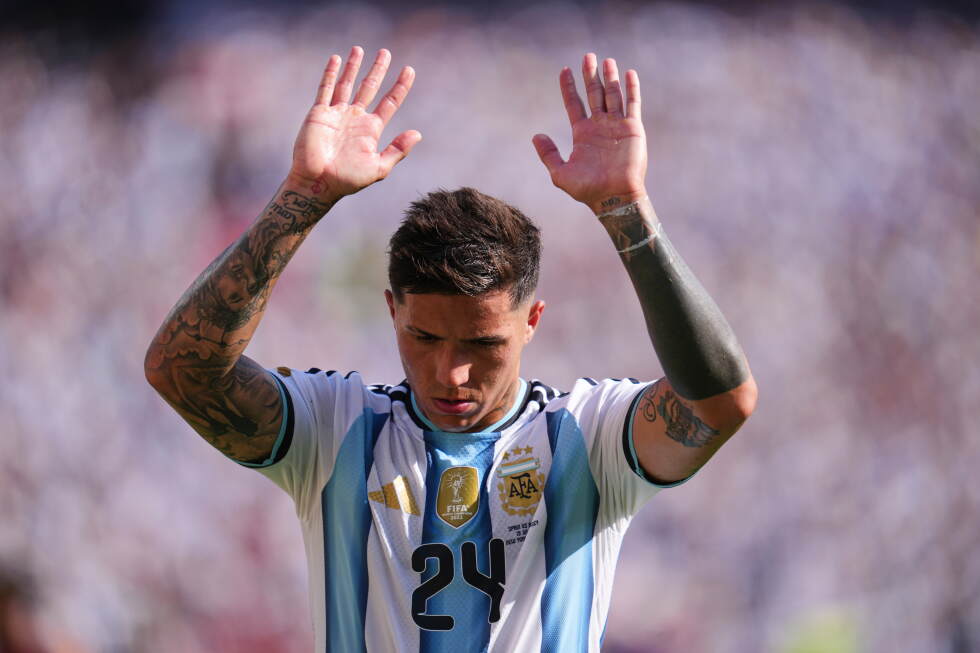
    KANSAS CITY, Mo. — As the 2026 FIFA World Cup kicks off its first match for defending champions Argentina here at Arrowhead Stadium on Tuesday night, all eyes are fixed on one man: Lionel Messi, the Argentine icon widely regarded as the greatest soccer player of all time. For Argentina head coach Lionel Scaloni, who shares a deep-rooted connection with Messi that stretches back decades, the global fascination with the 36-year-old forward is no surprise.

    Both Scaloni and Messi hail from Argentina’s Santa Fe province, and both rose through the youth ranks of Newell’s Old Boys, the storied Rosario-based club that has produced a long list of soccer legends, from Gabriel Batistuta to current U.S. men’s national team coach Mauricio Pochettino. Having watched Messi’s career unfold for nearly his entire professional life, Scaloni says the entire world craves to see Messi step onto the pitch.

    “Not only the Argentinian population but everybody — the whole planet — wants to see him play,” Scaloni said in an interview ahead of the opening Group C match against Algeria. “Everybody wants to see him on the pitch, because he has an effect not only on Argentina fans but supporters all over the world.”

    For many fans in attendance on Tuesday, this will likely be the final chance to watch Messi compete in a World Cup wearing Argentina’s iconic light blue and white striped jersey. Questions about Messi’s fitness circulated in the weeks leading up to the tournament, after the Inter Miami star picked up a minor hamstring injury. But those concerns appear to have been put to rest: in training sessions open to reporters, Messi has looked sharp and comfortable, and he played 20 minutes without issue in Argentina’s final pre-tournament tuneup against Iceland last week, entering as a second-half substitute and scoring a penalty just minutes after checking in.

    Barring any last-minute unforeseen issue, Messi will hit a historic milestone in Tuesday’s match, earning his 200th cap for the Argentine senior national team. Scaloni made clear that Messi remains an irreplaceable core of the side’s title defense bid.

    “There’s nothing negative to say,” Scaloni said. “He’s always been there, and he’s essential for us. He’s going to remain that way.”

    Messi mania has already fully taken over Kansas City, with fans traveling from across the region to catch a glimpse of the star ahead of kickoff. Tapash Chakraborty, a 57-year-old engineering firm owner, set up at a local downtown bar 24 hours before the match, hoping to meet Messi ahead of the game. Chakraborty, who has a ticket for Tuesday’s clash, put it simply: “Messi is Messi. He is the god of football.”

    Chakraborty is far from alone. Messi’s famous No. 10 is everywhere across the city, emblazoned on everything from vintage Barcelona jerseys to current Inter Miami kits to Argentina national team shirts. Michelle Lemmon, a former college soccer player, drove 160 miles from her home in Kirksville, Missouri, to Kansas City with her four children to celebrate her 42nd birthday, drawn by the chance to see Messi play. Though Lemmon will cheer for the U.S. throughout the tournament, she says her dream final would be a matchup between the U.S. and Argentina.

    “I’m nervous that this might be his last World Cup, so we’re very excited,” Lemmon said. “Honored that they chose Kansas City as their home base. To have the 2022 World Cup champions here, you know, it’s amazing. It’s hard. You’ve got to like him.”

    A win for Argentina in this tournament would not only extend Messi’s legacy — it would tie him even closer to the only other name consistently mentioned alongside him in the GOAT debate: Brazilian legend Pele. Only two nations in history have successfully defended a World Cup title: Italy, which won back-to-back tournaments in the 1930s, and Brazil, which repeated as champions in 1962 even after Pele suffered an early tournament injury. France came close to repeating in 2022, but Argentina defeated Les Blues in a penalty shootout in Qatar to claim the trophy.

    Nicolas Otamendi, Messi’s longtime defensive partner for Argentina, says the memory of that iconic Qatar win continues to fuel the team through this tournament. “What happened back in Qatar was just amazing. The whole country united,” Otamendi recalled. “We have that engraved in our minds, and it’s just injected us with the strength to keep trying. There’s no relaxing. We need to keep working with that level of humility that is required in these types of competitions.”

    Otamendi added that Messi’s quiet competitiveness and dedication have set the tone for the entire squad. Describing Messi as a “simple man that just focuses on training,” Otamendi noted: “He’s also a competitive animal. You want to be there with him, supporting him, serving him, and laughing our hearts out all the time. As I’ve said, when the ball is rolling, that’s when you need to press, unite and come together as a family on the pitch.”

  • Iran opens its politically charged World Cup by playing to a 2-2 draw with New Zealand

    Iran opens its politically charged World Cup by playing to a 2-2 draw with New Zealand

    Against a backdrop of geopolitical upheaval, fan divisions, and unprecedented logistical hurdles, Iran’s national men’s football team clawed back from two deficits to secure a dramatic 2-2 opening Group Stage draw with New Zealand at SoFi Stadium in Inglewood, California, on Monday night.

    The tournament has been far from the typical celebration of sport for Team Melli. Since regional conflict involving the U.S. and Israel against Iran began on February 28, the Iranian squad’s World Cup journey has been marked by constant turmoil. The team requested FIFA to relocate its three group-stage matches away from the U.S. due to the conflict, but governing body rejected the appeal, forcing Iran to proceed with the schedule if it wanted to compete, a decision the federation ultimately made.

    To adapt to the situation, Iran arranged a highly unusual travel and training routine: the squad moved its permanent base from Arizona to Tijuana, Mexico, and flies into the U.S. only one day before each match, returning to Mexico immediately after the final whistle. Team captain Mehdi Taremi acknowledged that this tournament has been a draining experience, stripped of much of the joy that football typically brings to him and his teammates.

    Monday’s match took place just outside Los Angeles, a region home to the largest population of Iranian diaspora in the world outside Iran itself. The pre-match atmosphere reflected the deep divisions within the community: several hundred Iranian Americans gathered outside the stadium to protest the Iranian government, while inside the venue, many diaspora fans voiced their opposition by turning their backs to the pitch during the playing of the Iranian national anthem. Despite these pre-match tensions, nearly all in attendance shifted their support to the Iranian players once the opening whistle blew, packing the stands to cheer the team on.

    On the pitch, it was New Zealand that struck first, stunning the pro-Iranian crowd in the 7th minute. All Whites captain Chris Wood intercepted a poor Iranian goal kick, held the ball under pressure, and played a through pass to Elijah Just, who volleyed a clinical finish into the net amid a crowd of defenders to put New Zealand 1-0 up.

    Iran gradually found its rhythm after the early shock, and equalized in the 32nd minute. Veteran winger Ramin Rezaeian curled a deft chip into the net with the outside of his boot, leaving the New Zealand goalkeeper with no chance to stop the strike.

    New Zealand reclaimed the lead in the 54th minute, as Wood again set up his strike partner. The captain held up play on the edge of the box before finding Just, who fired another low shot through traffic to put the All Whites back on top. The side, ranked 85th in the world—65 spots below Iran—held the lead for just 10 minutes before Iran struck back once more.

    In the 64th minute, Rezaeian turned provider, delivering a perfectly weighted long pass that found forward Mohammad Mohebbi unmarked at the edge of the six-yard box. Mohebbi directed a header into the back of the net to level the score at 2-2. Both teams carved out clear scoring chances in the remaining 26 minutes of play, but neither could find a game-winning finish, with the score holding to full time.

    After the final whistle, players from both sides exchanged handshakes and embraces, with at least one player swapping jerseys with an opponent. While Iranian head coach Amir Ghalenoei remained alone in the dugout after the match, his players walked a lap of the pitch together, applauding the thousands of flag-waving, cheering fans who supported them through the turbulent opening match.

    For New Zealand, the result was an impressive outcome against a far higher-ranked opponent. The All Whites, the lowest-ranked team in this year’s 48-team expanded World Cup, have now gone winless across all three of their World Cup appearances in history, but matched their total goal output from both of their prior World Cup campaigns in a single match. This tournament marks New Zealand’s first World Cup appearance since 2010, and the first time the side claimed an automatic qualifying spot from the Oceania Football Confederation after the World Cup expanded from 32 to 48 teams.

    Iran, ranked 20th globally, is making its seventh World Cup appearance and its fourth consecutive qualification, but has never advanced past the group stage, leaving the squad with everything to play for in its remaining two group matches.

  • Injured Matt Garbett ruled out of New Zealand’s World Cup squad, replaced by Logan Rogerson

    Injured Matt Garbett ruled out of New Zealand’s World Cup squad, replaced by Logan Rogerson

    Just hours before kickoff of their opening 2022 FIFA World Cup group stage match against Iran, New Zealand has received a devastating last-minute injury blow: starting midfielder Matt Garbett has been withdrawn from the nation’s 26-man tournament squad.

    The news was officially confirmed in a social media statement released by New Zealand Football on Monday, which clarified that the 24-year-old sustained a hamstring strain during a team training session over the weekend.

    “The whole squad’s thoughts are with Matt at this time and we are gutted he won’t be able to play in the tournament,” the governing body said in its public announcement.

    Garbett, who plies his trade for English third-tier club Peterborough United, has been a mainstay in the New Zealand national setup, earning 38 caps and notching five goals for the All Whites. Most recently, he featured in New Zealand’s 1-0 friendly defeat to England in Florida earlier this November, a warm-up fixture designed to prepare the side for their World Cup campaign.

    To fill the vacant spot in the squad, New Zealand Football has called up Logan Rogerson, a forward from domestic side Auckland FC, who will travel with the team for the remainder of the tournament.

    This World Cup marks New Zealand’s first appearance at soccer’s global flagship event in 12 years, with their last tournament run dating back to 2010 in South Africa. Drawn into Group G, the side faces far stiffer competition, grouped alongside Iran, African powerhouse Egypt and European giants Belgium as they fight to advance out of the group stage for the first time in their history.

  • Uruguay’s Maxi Araújo scores equalizer in 1-1 World Cup draw with Saudi Arabia

    Uruguay’s Maxi Araújo scores equalizer in 1-1 World Cup draw with Saudi Arabia

    MIAMI GARDENS, Fla. – In an intriguing Group H opening match at the Hard Rock Stadium on Monday, Saudi Arabia and Uruguay left everything on the pitch before splitting points with a 1-1 draw, a result that set the tone for an unpredictable group stage following another shock result elsewhere in the bracket.

  • Neymar’s World Cup doubts continue after Brazil forward has new tests on his injured right calf

    Neymar’s World Cup doubts continue after Brazil forward has new tests on his injured right calf

    Uncertainty clouded the prospects of soccer superstar Neymar making his World Cup debut on Monday, as the Brazilian forward underwent a new round of medical assessments for a lingering right leg injury that has kept him sidelined for months.

    Initial optimism had circulated within the Brazil camp that the 34-year-old would rejoin full team training on Monday. Instead, the veteran attacker skipped group sessions and traveled to a specialized sports clinic to complete updated scans on his injured right calf. The Brazilian Football Confederation has not yet released any official statement on the outcomes of these tests, leaving fans and analysts guessing about his availability for the tournament.

    Neymar, who is competing in his fourth World Cup, has not played competitive soccer since picking up the injury during a club match with Santos on May 17. Since Brazil’s five-time World Cup champions set up their pre-tournament training base in Morristown, New Jersey, the star playmaker has not taken part in a single full team training session. His first potential chance to take the pitch comes this Friday, when Brazil faces off against Haiti in Philadelphia.

    The question of Neymar’s return has grown far more pressing for Brazil following a underwhelming 1-1 draw against Morocco in the team’s tournament opening match on Saturday. Though Neymar could not take the field at MetLife Stadium in East Rutherford, New Jersey, he still drew crowds and attention on the sidelines, greeting high-profile spectators including rapper Travis Scott and seven-time NFL Super Bowl champion Tom Brady before kickoff.

    Brazil’s toothless attacking performance against Morocco immediately reignited calls from fans and pundits alike for Neymar’s experienced playmaking presence in the starting lineup. However, the star’s inclusion in the World Cup squad has already sparked fierce public debate across Brazil, ever since new head coach Carlo Ancelotti named him to the roster. Supporters argue that the veteran, who made his World Cup debut on home soil back in 2014, still offers unmatched creativity and leadership that can lift Brazil to a sixth title. Critics, by contrast, claim Neymar is past his athletic peak and that his spot in the squad should have gone to a younger, fit player who could contribute earlier in the tournament.

    Brazil’s medical team is reportedly targeting a full recovery for Neymar in time for the tournament’s knockout stage, according to local Brazilian media reports. For now, the nation waits for official test results to clarify when their biggest star will finally step onto the World Cup pitch.

  • ‘Greatest feeling ever’: Cape Verdeans tell BBC of joy at holding Spain to draw

    ‘Greatest feeling ever’: Cape Verdeans tell BBC of joy at holding Spain to draw

    Tucked off the western coast of Africa, the tiny island archipelago of Cape Verde — home to just under 500,000 residents — erupted in nationwide celebration this week after its underdog men’s national football team held European and world champion Spain to a scoreless draw in their first ever FIFA World Cup group stage match.

    The streets of the capital city Praia were flooded with jubilant fans from the final whistle onward, where the thunderous roar of vuvuzelas, rhythmic chants of national pride, and blaring car horns drowned out all other sounds. For locals, sharing a point against one of the most decorated teams in international football felt far more than a draw — to many, it was a victory that will be remembered for generations.

    “It was an emotional moment,” Isa Conceição, a local supporter who watched the match in a packed downtown fan zone, told the BBC. Like thousands of fellow fans, she wore the team’s iconic blue national jersey, a visible display of pride for the Blue Sharks’ unprecedented run to the global tournament. By the time the referee blew the final whistle, communities across the entire island nation had broken out into wild, spontaneous celebration. “Being a small country and being able to achieve such a good result against Spain, a football powerhouse, is the greatest feeling ever,” Conceição added.

    Men, women, and children packed public spaces across the country, dancing and singing along to the Cape Verdean Football Federation’s official 2026 World Cup anthem *Nos Óra Dja Txiga* — a phrase in Cape Verdean Creole that translates to “our time has come.” The line has taken on new meaning for the team’s fans, after the underdog side edged continental heavyweight Cameroon to qualify for the World Cup for the first time in the country’s history.

    Heading into Group H, Cape Verde entered the tournament ranked as the lowest seed, drawn alongside two former World Cup champions: Spain and Uruguay, plus Asian side Saudi Arabia. The shock result against Spain has already turned global public opinion in their favor, with even visiting international supporters praising the team’s tenacious performance.

    Pauline, a tourist visiting from France, told reporters that Cape Verde’s standout performance stemmed from one simple factor: “They played with their hearts. That’s all that matters.” A first-time Congolese visitor to the islands echoed that sentiment, noting “I thought Spain was going to win the match, but the energy, the speed of Cape Verde was just amazing.” Many other foreign tourists, drawn to Cape Verde’s famous idyllic beaches and tropical landscapes that draw roughly one million visitors every year, also said they were rooting for the tiny underdog side.

    Across residential neighborhoods in Praia and beyond, the country’s blue, red, and white national flag hung from windows, balconies, and even the edges of rooftops. Drivers cruising city streets added to the celebration, leaning on their horns and yelling in celebration, with most displaying small national flags from their side mirrors or car windows.

    The Blue Sharks’ tight, disciplined defensive performance against one of the world’s top offensive teams has already lifted domestic expectations, with many fans now holding out hope that the side can advance beyond the group stage. The team will face Uruguay next, followed by a final group fixture against Saudi Arabia, matches that will determine whether their historic World Cup run continues.

    Even if the side fails to advance past the group stage, however, Cape Verdeans across the country say they already consider the tournament a success. The team’s performance has already put the small island nation in the global spotlight, and residents say they will remain fiercely proud of the impact the squad has had in lifting Cape Verde’s international profile. This story was reported by BBC correspondent Michel Mvondo, reporting on location from Praia, Cape Verde.

  • World Cup what to know: Argentina’s Lionel Messi kicks off expected last hurrah against Algeria

    World Cup what to know: Argentina’s Lionel Messi kicks off expected last hurrah against Algeria

    The 2026 expanded 48-team FIFA World Cup, co-hosted across the United States, Canada and Mexico, kicked off its second full matchday on June 16 with a slate of games headlined by two historic defending title bids, a shocking underdog draw, and a collection of long-awaited returns to the global soccer stage.

    All eyes will fall on Kansas City, Missouri, when Argentina takes on Algeria in its opening group stage match – a contest that marks the start of the South American side’s push to become the first nation in 62 years to win back-to-back World Cup titles. For Argentine talisman Lionel Messi, this tournament is widely expected to be his final appearance on international soccer’s biggest stage. The 36-year-old generational talent, who will turn 39 later this month, finally claimed the one major honor missing from his legendary career when Argentina lifted the trophy in Qatar 2022, and now he is chasing a unique piece of history that has not been claimed since Brazil’s 1962 triumph.

    Messi is also within striking distance of another all-time record: he needs just four more World Cup goals to surpass Miroslav Klose’s standing mark of 16. However, the Inter Miami star has carried visible physical fatigue into the tournament, after a hamstring strain forced an early substitution in his final club match before the World Cup. To maximize his fitness for what is being called his final World Cup hurrah, Messi sat out Argentina’s pre-tournament friendly against Honduras, prioritizing full health for his opening match against Algeria. Argentina head coach Lionel Scaloni has already framed the opening contest as an important but not decisive fixture for the defending champions.

    Later the same afternoon in East Rutherford, New Jersey, another pre-tournament co-favorite France will open its 2026 campaign against Senegal, chasing its third World Cup title and second championship in the last three tournaments. Didier Deschamps’ side claimed the 2018 trophy in Russia, before falling to Argentina in a penalty shootout in the 2022 Qatar final, bringing Les Bleus into this tournament with a star-studded roster that includes Kylian Mbappé, Ballon d’Or winner Ousmane Dembélé, and breakout 19-year-old talent Désiré Doué. Mbappé currently sits one international goal short of Olivier Giroud’s all-time France record of 56, though the 2024 Real Madrid transfer has faced consistent criticism in recent months for what pundits call a lack of defensive work rate.

    History also adds extra stakes to this opening match: as the defending 1998 champions entering the 2002 World Cup, France suffered a shocking opening-round defeat to Senegal that ultimately saw the defending champions eliminated in the group stage. Entering this 2026 contest, France is listed as a heavy betting favorite, but that 2002 upset still looms over the fixture.

    Before the two heavyweight favorites kick off their campaigns, the tournament already delivered one of its most surprising results on matchday one, when first-time World Cup qualifiers Cape Verde held pre-tournament favorite Spain to a scoreless draw, weathering an unrelenting Spanish attack to claim a historic point. Spanish coaches had planned to rotate key recovering stars in what was widely projected to be a lopsided rout, but Cape Verde’s squad defied all expectations, anchored by a legendary performance from 40-year-old goalkeeper Vozinha. The veteran shot-stopper turned away multiple high-quality chances from Spain, who recorded 27 total shots on the night, and was left in tears after his heroic performance.

    The gap in resources between the two sides makes the result even more remarkable: per Transfer Markt, Spain’s 17-year-old wunderkind Yamine Lamal holds a market value of 200 million euros, while star midfielder Pedri is valued at 150 million euros. By comparison, Vozinha’s total market value sits at just 50,000 euros. Cape Verde also holds a unique place in World Cup demographics: the archipelago nation off West Africa is the third-smallest country to ever qualify for the men’s World Cup, with a total population of just 525,000, compared to Spain’s 47 million residents.

    The June 16 slate also includes two other opening group stage fixtures, each with their own historic backstories. In Foxborough, Massachusetts, Norway will kick off its first World Cup appearance since 1998 against Iraq, entering the tournament as long shots but boasting one of the world’s most dangerous strikers in Erling Haaland. The 25-year-old Manchester City superstar scored 16 goals in European qualifying to single-handedly drag Norway back to the global stage after nearly three decades of absence. The side went viral pre-tournament for a viral viral photoshoot titled “The Vikings are Coming”, where players dressed in traditional Viking garb and posed alongside three longships on a Norwegian fjord, captured by British photographer David Yarrow. Haaland, known for his iconic long hair, fully leaned into the bit, and enters this tournament primed to become the face of the 2026 World Cup.

    Closing out the day’s action in Santa Clara, California, Austria will face first-time qualifiers Jordan in Group J. Austria’s return to the World Cup after a 28-year absence is largely credited to manager Ralf Rangnick, who turned down a coveted job offer from Bayern Munich to continue leading the national side’s rebuild, a decision that has paid off with a spot in the tournament. After winning their group at Euro 2024 before falling to Turkey, Austria secured their qualifying group to book their spot in the 48-team field, and are now targeting their first knockout stage appearance since 1982. Jordan, making their first ever World Cup appearance, will be without their top goalscorer Yazan Alnemat, who scored eight qualifying goals but suffered a torn ACL at the Arab Cup last December that ruled him out of the tournament.

    Full broadcast details for all June 16 matches, airing across U.S. networks: France vs. Senegal kicks off at 3 p.m. EDT in East Rutherford, broadcast on Fox, Telemundo and Peacock; Iraq vs. Norway follows at 6 p.m. EDT in Foxborough, also airing on Fox, Telemundo and Peacock; Argentina vs. Algeria kicks off at 9 p.m. EDT in Kansas City on FS1, Telemundo and Peacock; and Austria vs. Jordan closes the day at midnight EDT in Santa Clara, airing on FS1, Telemundo and Peacock.

  • VAR official says hand gesture was ‘involuntary, subconscious twitch’

    VAR official says hand gesture was ‘involuntary, subconscious twitch’

    A contentious controversy around video assistant referee Shaun Evans has concluded with FIFA clearing the Australian official of any rule breach, following widespread social media speculation over an upside-down OK hand gesture caught on camera during the 2026 FIFA World Cup.

    The incident unfolded ahead of Sunday’s Group Stage match between Germany and Curacao, held as part of the ongoing 2026 World Cup. As part of FIFA’s standard pre-match world feed coverage, cameras cut from the on-field officials to the VAR hub in Dallas, where Evans was captured mid-movement forming his right hand into an inverted OK sign. The gesture quickly sparked global debate, as it carries two wildly different interpretations: one as an innocuous prank from popular culture, and another as a recognized hate symbol associated with white supremacy.

    Hours after footage of the moment spread across social media, FIFA launched a formal internal investigation to determine if Evans had violated the FIFA Disciplinary Code. Following a full review, world football’s governing body announced it had found no evidence of intentional misconduct, clearing Evans to remain eligible for officiating duties for the remainder of the tournament.

    In a formal statement released through FIFA, the 38-year-old veteran official pushed back against widespread assumptions about the gesture, describing the movement as an involuntary, subconscious twitch. Evans stressed he was completely unaware he had made the hand movement at the time of the camera shot, and categorically denied intentionally using the gesture to convey any message, affiliation, or belief. “The coverage following this incident simply does not reflect who I am,” Evans said. He added that internal VAR room video evidence confirmed the movement was not deliberate, noting he had repeated the same involuntary motion multiple times later in the match while holding a pen between his fingers. “Officiating at the World Cup is the biggest honour of my career and I look forward to supporting my colleagues for the rest of the tournament,” he added.

    The upside-down OK gesture at the center of the debate has two distinct public associations. It is most famously known as the core of the “circle game,” a decades-old schoolyard prank popularized by the U.S. sitcom *Malcolm in the Middle* that became a viral internet meme. However, since 2017, the gesture has also been co-opted by far-right and white supremacist groups as a covert identifying symbol. The Anti-Defamation League (ADL) added the OK gesture to its official hate symbol registry in 2019, noting it has become a common trolling tactic used by right-wing extremist groups online.

    Prior to FIFA’s conclusion of the investigation, anti-discrimination organizations called for swift action from the governing body. The Fare network, an anti-racism group that partners with both FIFA and UEFA to combat discrimination in football, issued a statement saying expert analysis concluded the gesture matched the white power symbol used by far-right networks. UK-based anti-racism group Kick It Out also confirmed it had formally written to FIFA seeking clarification on the incident and the investigation’s next steps.

    In a quiet procedural shift that followed the incident, FIFA altered its pre-match broadcast protocol for all subsequent matches. Prior to the Germany-Curacao game, VAR officials at the Dallas hub had posed briefly for the on-screen introduction camera before turning to their monitors. In all three matches held after the incident, and continuing through Monday’s fixtures, cameras cut to VAR officials already positioned at their monitors facing their screens — eliminating the posed camera shot that captured Evans’ gesture. FIFA has not issued any public explanation for the change in protocol.

    A highly experienced official, Evans has been listed on FIFA’s international referee roster since 2017, and previously served as a VAR at the 2022 FIFA World Cup in Qatar. Back home in Australia, he has officiated in the top-tier A-League since 2012, and took charge of the league’s 2019 Grand Final.

  • Scaloni: Argentina’s World Cup opener vs. Algeria is important but not decisive as it defends title

    Scaloni: Argentina’s World Cup opener vs. Algeria is important but not decisive as it defends title

    KANSAS CITY, Missouri — As reigning World Cup champions, Argentina head into their 2026 tournament opening clash with Algeria on Tuesday brimming with quiet confidence, but carrying hard-won perspective from their dramatic 2022 Qatar run that proved a rocky start does not define a team’s entire campaign. Four years ago, La Albiceleste suffered one of the most shocking opening-match upsets in World Cup history, falling to Saudi Arabia in their group stage opener. Rather than crumbling, the side rallied, clinching wins against Mexico and Poland to advance, outlasted the Netherlands in a tense penalty shootout in the quarterfinals, and ultimately secured their third world title with another dramatic penalty victory over France.

    Speaking to reporters the day before kickoff at Arrowhead Stadium, head coach Lionel Scaloni emphasized that while the opening match carries importance, it will not make or break Argentina’s title defense bid. “We’ve got the experience of the last World Cup to draw from,” Scaloni said via an interpreter. “So this first match is not critical. It matters, but the tournament doesn’t end after 90 minutes on opening day.”

    Only two nations in World Cup history have successfully defended their title: Italy in 1938 and Brazil in 1962, a statistic that adds extra weight to Argentina’s historic bid this year. Despite the pressure, Scaloni said the side has entered the tournament in peak form. “We’re happy, assured and confident,” he added. “We’re here at a very good moment heading into the opener.”

    While Scaloni confirmed he would not finalize his starting lineup until after Monday’s final training session, he delivered largely positive injury updates for the star-studded squad. A handful of key players, including eight-time Ballon d’Or winner Lionel Messi, Manchester City striker Julian Alvarez, Real Madrid prospect Nico Paz, and starting goalkeeper Emiliano Martinez, have all dealt with minor fitness issues in the lead-up to the tournament. Martinez is set to start despite a fractured ring finger, while Alvarez has recovered fully from an ankle injury to be available for selection. “We’ve taken excellent care of Julian, and he arrives in optimal condition,” Scaloni said. “His recovery has been huge for us, because he’s a key attacking option for tomorrow.” Only Paz remains sidelined with a lingering knee injury, and Scaloni noted that no other player is dealing with a serious injury. The only unresolved fitness question surrounds defender Nicolas Tagliafico, who has been managing a small muscle tear in his left calf.

    Messi, who is set to make his historic sixth World Cup appearance at 38 years old, has silenced any concerns over his mild hamstring strain. The forward has not spoken to the media since arriving at Argentina’s Kansas City base camp two weeks ago, but on-pitch glimpses from training have shown the legend looking sharp and relaxed. He eased worries last week when he logged 20 minutes of game time and found the back of the net in a warm-up friendly against Iceland. Scaloni noted that Messi’s presence extends far beyond the pitch for the global tournament. “Not only Argentinians — people across the entire world want to see him play,” Scaloni said. “Everybody wants to see him out on the pitch, because he means so much to fans not just from our country, but to supporters everywhere.”

    The Argentine camp also took a key lesson from the day’s earlier 2026 World Cup action, when heavily favored Spain was held to a surprise scoreless draw by underdog Cape Verde in one of the first big upsets of the expanded 48-team tournament. Scaloni and defender Nicolas Otamendi learned of the result while traveling to Arrowhead Stadium for their pre-match press conference, and the outcome served as a stark warning that no opponent can be overlooked in the expanded tournament format. “There are no easy rivals here,” Scaloni said. “Every team earned their place at this World Cup, and we are fully focused on Algeria. They have top-quality players across the pitch, and this will be a great test for us — not the definitive one, but a test we have to be ready for.”

    Algeria’s coaching staff and players have also taken note of Cape Verde’s result, and are embracing their underdog status heading into the matchup. “Of course we are not favored to win this match,” Algeria head coach Vladimir Petkovic acknowledged. “But as we’ve already seen at this World Cup, upsets can happen, and we are going to do everything we can to pull one off tomorrow.”

    After both sides dealt with severe weather disruptions in the lead-up to the match — including two tornado warnings for Argentina’s camp and severe storms at Algeria’s training base in nearby Lawrence, Kansas, plus heat indexes nearing 100 degrees Fahrenheit at points — the forecast for Tuesday night’s kickoff is nearly ideal. Game time is set for 8 p.m. local time, with temperatures expected to hover around 80 degrees Fahrenheit (27 degrees Celsius) and almost no chance of rain interrupting play.

  • Cape Verde 40-year-old goalkeeper Vozinha turns in a ‘dream’ performance in his World Cup debut

    Cape Verde 40-year-old goalkeeper Vozinha turns in a ‘dream’ performance in his World Cup debut

    ATLANTA — For four decades, Vozinha carried one singular, burning dream: to step onto the world’s biggest soccer stage and represent the tiny island nation of Cape Verde at the FIFA World Cup. On Monday, that decades-long journey culminated in one of the most stunning upsets the tournament has seen in recent years, as the 40-year-old goalkeeper turned in a masterclass to shut down Spain’s star-studded attack and secure a historic 0-0 draw in Cape Verde’s first-ever World Cup match.

    Despite being completely outpossessed and outshot by the pre-tournament favorites — Spain launched 27 attempts on goal, with seven testing Vozinha directly — the veteran keeper was unbeatable. He intercepted crosses, blocked point-blank shots, and organized his backline with unflappable poise, leaving Spanish forwards and their supporters growing increasingly frustrated as the clock ticked down. Even the much-anticipated second-half introduction of 16-year-old phenom Yamine Lamal, the youngest player to ever feature at a senior World Cup, could not find a way past Vozinha and his determined defensive unit.

    When the final whistle blew, the weight of the moment crashed over the 40-year-old. He bent over just in front of his goal and wept, before being swarmed and embraced by jubilant teammates, who had just secured a share of the points against one of the world’s top-ranked teams. For a nation that had never before qualified for the World Cup, the result was already a win; holding Spain to a draw was nothing short of historic.

    In post-match interviews, Vozinha opened up about the personal emotion of the moment, revealing that many of the people who shaped him could not be there to see his career-defining performance. The goalkeeper was raised by his grandparents, who both passed away in recent years, and his mother was unable to secure a U.S. visa in time to travel to the match due to financial constraints. “When I think about them, I just get overwhelmed with emotion,” he said.

    Vozinha’s path to this World Cup moment was far from conventional. He did not even make his professional debut until he was 25, when he first took the field for Angola’s Progresso. Over the decades that followed, he carved out a nomadic club career, plying his trade in Moldova, Cyprus, Slovakia, and now Portugal, where he plies his trade for Chaves in the country’s second division. He earned his first cap for the Cape Verde national team in 2012, and there were points along the way where he considered stepping away from international soccer. But he never gave up on the dream.

    “I have worked my whole life for this, for this exact moment, for this dream,” he said. “So many generations before us dreamed of this day and never got the chance to achieve it. Now, that dream has come true.”

    Even his unusual nickname, Vozinha — which means “grandmother” in Portuguese — is tied to his roots. As a child, older players bullied him on local soccer fields, taunting him with the name because he would run home crying to his grandmother after rough matches. Years later, the nickname stuck permanently when another teammate at his first professional club shared his birth name, Josimar.

    Teammates say Vozinha’s performance on Monday was the perfect reflection of the leadership he brings to the team every day. Steven Moreira, one of his fellow squad members, joked that the team often teases the keeper about his age, but added that he is immensely proud of the veteran. “He’s a big legend, and that was a crazy game,” Moreira said. “It just goes to show that age doesn’t matter when you have the heart and the will to win.”

    Pico Lopes echoed that sentiment, noting that Vozinha is often the strictest member of the squad in training, constantly pushing his teammates to show up on time and play to their full potential. “He lives and breathes Cape Verde,” Lopes said. “He’s always pushing us to be better, and today he led by example. That’s who he is.”

    The historic performance has already turned Vozinha into a global soccer sensation. In the hours after the final whistle, his Instagram follower count skyrocketed from roughly 50,000 to more than 2.4 million, as fans around the world rushed to follow the 40-year-old underdog who pulled off one of the biggest upsets in World Cup history.