分类: sports

  • The 40-year-old keeper who inspired Cape Verde’s historic debut

    The 40-year-old keeper who inspired Cape Verde’s historic debut

    When the final whistle echoed across Atlanta Stadium on matchday one of the 2026 FIFA World Cup, the first person the broadcast cameras found was Cape Verde’s veteran goalkeeper Josimar Dias, universally known by his nickname Vozinha. Tears streamed down the 40-year-old’s cheeks, as the full weight of the historic moment he had just delivered for his tiny island nation finally set in: his side had held four-time World Cup winners Spain, one of the pre-tournament favorites, to a stunning 0-0 draw.

    The stands erupted into blue, red and white chaos as thousands of traveling Cape Verde supporters, who had cheered nonstop through 90 minutes of relentless Spanish pressure, flooded together to celebrate. Players embraced each other wildly on the pitch, their joy unconfined. Even neutral fans watching in the stadium and around the world were swept up in the underdog story, joining in the celebrations by full time.

    Against the reigning European champions, Vozinha turned in the performance of a lifetime to secure a heroic clean sheet and what is already the most iconic result in Cape Verde’s 50-year history as an independent footballing nation. Named player of the match for his seven crucial saves, Vozinha opened up about the emotion of the moment after the final whistle, explaining that his tears came from a deeply personal place.

    “I cried because I grew up with my grandparents,” he told reporters. “Unfortunately they were not here. They died a few years before. They were everything for me, everything for my life. And also because of my mum. She didn’t manage to be here because of the visa. Because of the money you have to pay for the visa, we didn’t manage on time. I would like her to be here.”

    Beyond the personal grief and longing, Vozinha emphasized that the result was a product of the one strength his small side has always relied on: collective unity. “Our best weapon is our unity,” he said. “Regardless of the player who arrives today, or the player who is 10 or 15 years old, the way we treat our family is our greatest strength. Everyone thought that we came here just to enjoy the World Cup, but no, we know that we have teams that we will always respect, because this is our first time, but we are here to compete, and we are here to fight for our country.”

    For Vozinha, this history-making moment was decades in the making. Born in Mindelo on the island of São Vicente, Cape Verde, an isolated archipelago 600 kilometers off the west coast of Africa, he faced barriers to football from the very start of his career. Opportunities for young talent on the islands are extremely limited, and even when he proved himself as one of the best young goalkeepers on his island, he was repeatedly passed over because selectors thought he was too short.

    It took until 2012, when he was 25 years old — considered extremely late for a player to turn professional — for Vozinha to kick off his pro career, moving to former colonial ruler Portugal to chase opportunities. He spent years bouncing between clubs across Slovakia, Angola, Moldova and Cyprus before settling at second-tier Portuguese side Chaves, never giving up on his dream of reaching the World Cup with his national side. At one point, he even considered walking away from international football, but his lifelong dream pushed him to keep going.

    Even his name carries a connection to World Cup history: his father originally wanted to name him Valdano, after Argentine 1986 World Cup winner Jorge Valdano, but Cape Verdean authorities rejected the name, so he was named Josimar instead, after Brazilian defender Josimar, who became a global star at that same 1986 tournament. Decades later, on a new World Cup stage, Vozinha has written his own chapter of football history.

    At 40 years and 12 days old, Vozinha entered the record books as the oldest player to debut in a nation’s first ever World Cup match, breaking the record set just days earlier by Curaçao’s Eloy Room. Only Egypt’s Essam El Hadary, who debuted at 43, has ever been older when making their first World Cup appearance. His seven saves against Spain also put him in rare company: he is only the second goalkeeper over 40 to make seven or more saves in a single World Cup match, after Northern Ireland’s Pat Jennings, who made 10 against Brazil on his 41st birthday in 1986.

    Every save Vozinha made was greeted by the Cape Verde crowd like a winning goal, and the moment quickly went viral around the world. Brazilian YouTube channel CazeTV, which holds World Cup broadcast rights in Brazil, encouraged their audience to follow Vozinha on Instagram — and in less than 24 hours, his follower count surged from 50,000 to more than five million. When reporters told him of his new global fame, he simply laughed and said, “That is crazy.”

    Football pundits around the world were quick to praise Vozinha and the entire Cape Verde side for their historic performance. Former Scotland winger Pat Nevin said the goalkeeper “lit up this game”, telling BBC 5 Live: “He has been absolutely brilliant. He’s done it at 40 years of age. Every single camera is on him, all his players are pointing to him. It is a beautiful moment. Cape Verde spent the vast majority of the game in their own 18-yard box — not all of it, and when they broke they were brave and they broke in numbers. To do that and to keep that level of concentration, you don’t do that if you’re a bunch of individuals, you only do that if you’re a team.”

    Former England defender Lee Dixon, commentating for ITV, echoed that praise, saying: “It’s absolutely fantastic. A brilliant performance. They deserve that point more than anything and Spain almost don’t deserve a point. They walk off disappointed but the night is Cape Verde’s. What a performance from every single one of them, the centre halves, the full-backs, that man there crying – I’m almost crying myself.”

    For Cape Verde, a nation of just 590,000 people that ranks as the third smallest country ever to qualify for a World Cup, no bigger in area than the English city of Sheffield, this result carries far more weight than a single point in the group stage. It is a testament to the power of perseverance, teamwork, and the underdog spirit that makes the World Cup the world’s most beloved sporting event. By the final whistle, neutrals across the globe had already fallen for Cape Verde’s story — and a 40-year-old goalkeeper who spent his whole life chasing a dream had turned that dream into history.

  • Senegal looks to repeat 2002 World Cup upset of France that set off dancing in Dakar’s streets

    Senegal looks to repeat 2002 World Cup upset of France that set off dancing in Dakar’s streets

    EAST RUTHERFORD, N.J. – Ahead of their Group I World Cup clash on Tuesday, two-time World Cup champion France and 2002 Cinderella story Senegal are preparing to write a new chapter in their unique shared football history, a rivalry rooted in Senegal’s former status as a French colony and defined by one of the most shocking upsets in modern tournament history.

    In the opening match of the 2002 World Cup, then-defending champion France fell 1-0 to the unheralded Senegalese side, nicknamed the Lions of Teranga. The historic upset sent waves of celebration across Senegal, where then-President Abdoulaye Wade declared an immediate national holiday to honor the win. Papa Bouba Diop scored the game’s only goal in the 30th minute, and Senegal went on to reach the quarterfinals before bowing out to Turkey, while France left the tournament winless and eliminated in the group stage – a result that remains one of the biggest upsets in World Cup history.

    More than two decades later, the rematch has generated huge global attention, though both sides have downplayed any talk of revenge for the 2002 result. For France, six of its current squad were not even born when the 2002 upset occurred. Midfielder N’Golo Kanté emphasized Monday that the team is focused on progress in the current tournament, not settling old scores.

    “Not for revenge do we want to win, but we want to go as far as possible in this competition,” Kanté said through a translator. “Our main opponent is ourselves. We cannot see ourselves too beautiful or too strong.”

    French head coach Didier Deschamps echoed that sentiment, noting that the 2002 result is history, and Tuesday’s match will be an entirely new contest. The two-time World Cup winner (as a player in 1998 and head coach in 2018) is on the cusp of a major coaching milestone Tuesday: the match will mark his 20th World Cup game at the helm of Les Bleus, just five games short of Helmut Schön’s all-time record for World Cup matches coached, set with West Germany. Deschamps, who will retire from his post this summer after 12 years leading the French national team, is one of only three people in history to win the World Cup as both a player and a coach, alongside Brazil’s Mário Zagallo and Germany’s Franz Beckenbauer. France, currently ranked third in the global FIFA rankings, is aiming to reach its third consecutive World Cup final, having won in 2018 and fallen to Argentina in a penalty shootout in the 2022 final.

    For Senegal, the match carries deep symbolic weight, and current head coach Pape Thiaw brings unique personal context to the contest. Thiaw was a member of the 2002 Senegalese squad, appearing in the team’s round of 16 upset win over Sweden. Ahead of Tuesday’s game, he plans to pass on lessons learned from Bruno Metsu, the legendary late head coach who led the 2002 side to its iconic run.

    “Of course, there is going to be a Bruno effect when I’m going to be talking to my players tomorrow,” Thiaw said through a translator. “I will also add my personal touch and also add what Bruno taught me along the way.”

    Thiaw acknowledged that the match against France has unique meaning beyond football, given the two countries’ shared historical ties. “We know that a game between France and Senegal is a very symbolic game,” he said.

    Off the pitch, a visa issue has prevented many fans traveling directly from Senegal from entering the U.S. for the match, but Thiaw says he still expects a massive show of Senegalese support at MetLife Stadium, thanks to the large expatriate Senegalese community in the country. “Of course we’d like to have our fans. We know what they can do for us. They push us,” Thiaw said. “But we have a major Senegalese community and we know that the Senegalese is very patriotic and they like their national team. You will see this tomorrow. You won’t even believe it that no Senegalese came over from Senegal.”

    Senegal, ranked 16th globally, comes into the match with its own recent continental success: the side won the 2022 Africa Cup of Nations, but its 2024 title defense ended in controversy after a 1-0 final win over Morocco was overturned to a 3-0 forfeit loss when Senegal players left the pitch for 15 minutes during stoppage time to protest a late penalty awarded to Morocco. Senegal has appealed the ruling to the Court of Arbitration for Sport, and Thiaw made clear the team still considers itself the rightful African champion. “For me we are champions of Africa, full stop,” he said.

    Weather conditions are not expected to be a major factor for the contest, which kicks off at 3 p.m. EDT at MetLife Stadium. Forecasters call for sunny skies with a kickoff temperature of roughly 77 degrees Fahrenheit (25 degrees Celsius), a noticeable drop from the extreme heat seen in the region over the previous weekend. France prepared for the conditions during training sessions at Bentley University in Waltham, Massachusetts after arriving in the U.S. last Wednesday, with Kanté noting the team had already adjusted to playing in warm, sunny conditions.

  • Cape Verde secures stunning 0-0 draw with Spain in its World Cup debut

    Cape Verde secures stunning 0-0 draw with Spain in its World Cup debut

    In one of the most shocking upsets of the current FIFA World Cup, first-time qualifier Cape Verde held European champion and tournament favorite Spain to a goalless draw in their historic tournament debut, shutting out a star-studded Spanish side that entered the match heavily favored to claim three points. The unlikely stalemate, delivered by a tenacious underdog side representing an island nation of just 500,000 people, already stands as the biggest surprise of the tournament to date.

    The hero of Cape Verde’s defensive masterclass was 40-year-old veteran goalkeeper Vozinha, who turned in a man-of-the-match performance to keep Spain’s high-powered attack off the scoreboard for 90 minutes. Vozinha was in fine form from the opening whistle, turning away a string of Spanish chances in the first half. He denied Barcelona midfield star Pedri, pushed back a late first-half scoring opportunity, and twice stopped shots from Barcelona forward Ferran Torres — including one effort that hit the crossbar before Vozinha claimed the follow-up.

    Cape Verde’s stunning defensive stand even survived the introduction of teenage phenom Lamine Yamal, who came off the Spanish bench in search of a match-winning goal but could not break through the underdog’s stubborn backline to turn the result in Spain’s favor. Shockingly, Cape Verde itself nearly claimed all three points late in the match, only for Spanish keeper Unai Simon to stop a late header from Diney Borges that would have secured a historic victory for the debutants.

    Spain, which claimed its first World Cup title in 2010 and entered this tournament as one of the bookmakers’ top picks to lift the trophy for a second time, entered the match with a roster stacked with global superstars from top European clubs. Even before kickoff, Spanish head coach Luis de la Fuente had warned that Cape Verde carried the potential to upset higher-ranked sides in the tournament — a prediction that proved far more accurate than many expected. For the tiny African island nation, the draw against one of the world’s top soccer powers already cements their place in World Cup history as giant-killers in their first ever appearance on the global tournament stage.

  • Empty seat at World Cup for imprisoned French sports journalist

    Empty seat at World Cup for imprisoned French sports journalist

    As the 2026 FIFA World Cup unfolds across North America, a quiet but powerful act of solidarity has emerged within the French national team’s press operations, drawing global attention to the detainment of a French sports journalist in Algeria. Across every match France has played in the tournament, an empty seat has been deliberately left vacant in the press box, and a similar empty chair sits at every official team press conference — all to advocate for Christophe Gleizes, a football reporter for Paris-based outlet So Foot who has been imprisoned in Algeria since 2024.

    Gleizes, who specialized in coverage of African football, was arrested during a reporting trip to Algeria in May 2024, where he was researching a feature on JSK, a top club based in the northern city of Tizi Ouzou. In 2025, he was convicted of supporting terrorism and handed a seven-year prison sentence. The conviction stems from allegations that he communicated with a supporter of self-determination for Algeria’s Kabyle minority, a charge that press freedom advocates have rejected as criminalization of routine journalistic work.

    The show of support for Gleizes ramped up on Monday, ahead of France’s highly anticipated group stage match against Senegal at New Jersey’s New York Stadium. Before head coach Didier Deschamps began his pre-match press conference, attending French sports journalists held up printed scarves emblazoned with the words “Free Gleizes” to honor their colleague. Even Gleizes’ official 2026 World Cup press accreditation — personally approved by FIFA President Gianni Infantino — was displayed prominently at the conference, a visible reminder of the seat he should have filled.

    Gleizes’ mother, Sylvie, traveled to the 2026 World Cup specifically to amplify calls for her son’s release. In an interview with BBC Sport on the grounds of the New York Stadium on Monday, she shared that her son, cut off from most outside contact in prison, feels disconnected from the global football community he has spent his career covering.

    Major press freedom and journalist bodies in France have rallied behind Gleizes’ cause. Following his 2025 sentencing, representatives from roughly 40 French media outlets issued a joint statement condemning the imprisonment, arguing that “the imprisonment of a journalist for carrying out his profession is a red line that must never be crossed.” French journalists’ unions have formally called on the Algerian government to reverse the conviction and release Gleizes immediately.

    The solidarity action extended into the question-and-answer portion of Deschamps’ press conference on Monday. Veteran L’Equipe journalist Vincent Duluc asked a routine question about hydration breaks in the upcoming match on Gleizes’ behalf. Responding to the gesture, Deschamps expressed his public support, saying “I hope for his sake and his family’s that he can be here as soon as possible and ask his questions himself.”

    The coordinated demonstration within the high-profile World Cup press corps has brought new international visibility to Gleizes’ case, turning a global football stage into a platform for press freedom advocacy.

  • World Cup 2026: Saudi football’s star-studded revolution has yet to lift the national team

    World Cup 2026: Saudi football’s star-studded revolution has yet to lift the national team

    It has been nearly three years since that iconic sunny winter afternoon at Qatar 2022’s Lusail Stadium, when Saudi Arabia pulled off what remains one of the most shocking upsets in men’s FIFA World Cup history. Trailing Argentina by a single goal at the halftime break, the Green Falcons roared back with two quick second-half strikes to secure a 2-1 win over the side that would eventually lift the tournament trophy. For Saudi football, that result erased the painful memories of past World Cup humiliations: the 8-0 rout by Germany in 2002 and the 5-0 opening-match defeat to Russia in 2018 were no longer the first story the world associated with the kingdom’s national side. Instead, global attention turned to Saudi Arabia’s passionate fanbase and its rapidly evolving football culture.

    Buoyed by the global hype generated by the Argentina upset, the Saudi Pro League (SPL) moved quickly to capitalize on its newfound momentum. Within months, top-flight club Al-Nassr secured the high-profile signature of Portuguese icon Cristiano Ronaldo. Six months after the World Cup, Saudi Arabia’s sovereign wealth vehicle, the Public Investment Fund (PIF), acquired controlling stakes in the kingdom’s four biggest clubs and began bankrolling the signings of dozens of global football superstars.

    Three years on from that massive cash injection, the transformation of Saudi domestic football is impossible to ignore. SPL sides now consistently dominate Asian club competition, and the starting lineups of the kingdom’s top clubs feature some of the biggest household names in the global game. The gap between the SPL and established top European leagues was highlighted last year when Riyadh powerhouse Al-Hilal pulled off a stunning 4-3 upset over European champions Manchester City in the Club World Cup round of 16.

    Yet for all the glitz, success and global attention the SPL has earned, one gaping hole remains: the massive investment has yet to translate to any tangible improvement in the performance of Saudi Arabia’s national men’s team.

    Many long-time observers and fans remain optimistic that change is on the horizon, especially with the 2034 FIFA World Cup set to be hosted on Saudi soil. “It is great that we have some of the best players and coaches now in Saudi Arabia. It has only been a couple of years [since PIF invested], but maybe we will see a jump by the time we host the World Cup,” Nasser Khalfan, an Al-Hilal supporter who plans to attend the club’s pre-season tour matches in the U.S. this summer, told Middle East Eye.

    In many ways, the legendary 2022 win over Argentina covered over deep structural flaws in Saudi football. When the Saudi football authorities increased the foreign player quota from five to eight then 10 per starting lineup, requiring just three domestic Saudi players on the pitch at any time, the crisis for the national side only deepened. The stark disconnect between big-spending domestic club investment and stagnant national team performance has drawn widespread comparisons to China’s failed top-flight experiment a decade earlier.

    Back in 2017, the Chinese Super League (CSL) outspent the English Premier League in the transfer market, with total expenditure crossing €1 billion. The big-money project ultimately failed to lift the quality of China’s national team, and authorities abandoned the approach in favor of financial sustainability, introducing a 600 million yuan (€76 million) annual cap on total club football spending and strict salary limits for both domestic and foreign players.

    To avoid falling into the same unsustainable debt trap, PIF has actively sought outside investment to reduce the kingdom’s financial exposure. Already, a 70% stake in Al-Hilal has been sold to prominent Saudi investor Prince Al-Waleed bin Talal, and a number of smaller top-flight clubs including Al-Riyadh, Abha, Al-Fateh, Al-Tai and Al-Shoulla have been listed for sale to private investors. The move comes after Saudi football required a $333 million government bailout in 2018, and policymakers have made clear they have little appetite for repeating that exercise.

    Despite the structural concerns, most Saudi fans remain enthusiastic about the transformation of their domestic game. Khalfan argues that even with the slow progress on the national side, the investment has already changed football for the better in the kingdom. “Yes, the government spent a lot of money, but I think it is changing sport in Saudi Arabia for the better. I remember before the 2018 World Cup we sent players to Spain [on loan] and they did not play for their clubs. Now Saudi players have some of the best players in the world as their teammates,” he explained.

    Tangible results for the national team have yet to materialize, and the Green Falcons’ recent competitive record remains underwhelming. Just days after the historic 2022 win over Argentina, Saudi Arabia lost consecutive group-stage matches to Poland and Mexico, crashing out of the tournament in the opening round. The team has also struggled in continental Asian competition.

    For long-time Saudi football fans, top-tier success is not an unrealistic dream: the kingdom made its Asian Cup debut in 1984 and won the tournament in its first appearance, before going on to reach five more finals and claim two additional titles between 1988 and 2007. That run of success captured the imagination of football fans across the Arab world, so much so that when the iconic Japanese football anime *Captain Tsubasa* was dubbed into Arabic, it was renamed *Captain Majed* in honor of legendary Saudi striker Majed Abdullah. But today, these historic triumphs are largely lore for most Saudis: the kingdom’s median age sits just under 24, meaning the majority of the population was not alive the last time the national side won a knockout-stage match at the Asian Cup, two decades ago.

    The road to 2026 World Cup qualification has been fraught with turmoil. In a high-profile hire, the Saudi Football Federation poached manager Roberto Mancini from the Italian national team in August 2023, luring the coach who led Italy to a surprise 2020 European Championship title with a four-year contract worth $100 million. Mancini’s remit was simple: replicate his Italian magic with the Green Falcons and turn them into a global contender. But the Italian manager lasted just 14 months in the role, leaving the side stuck in mid-table of World Cup qualifying with just five points from four matches. In his final press conference, he publicly blamed star player Salem al-Dawsari for missed penalties in disappointing draws against Indonesia and Bahrain.

    Facing the very real prospect of missing out on 2026 World Cup qualification, the federation turned to a familiar face, reappointing former manager Herve Renard. Renard steadied the ship just enough to secure qualification, but was dismissed shortly after a lopsided 4-0 defeat to Egypt in March 2025. His replacement, Giorgios Donis, was hired specifically for his experience coaching in the SPL, but has been given less than six weeks to prepare the side for its 2026 World Cup opener.

    This year marks Saudi Arabia’s seventh appearance at the FIFA World Cup, where it has been drawn into a tough group with European powerhouse Spain, South American giant Uruguay and African contender Cape Verde. The national side’s most pressing flaws are visible at both ends of the pitch: despite billions in investment, the Green Falcons have struggled to find goals, managing just 10 strikes in their last 12 World Cup qualifying matches.

    “I would be more concerned if they weren’t creating chances,” Paul Williams, founder of Asian football outlet *The Asian Game*, told Middle East Eye. “The issue comes down to finishing … and you can’t fix finishing in a week. That’s going to be an issue.” At the other end of the pitch, none of the three goalkeepers called up to the 2026 World Cup squad is a regular starter for their SPL club, raising serious questions about the side’s ability to withstand the high-powered attacks of Spain and Uruguay.

    Williams remains cautiously pessimistic about the team’s 2026 chances: “I’m not downbeat on their chances. I’m not bullish on their chances, either. They have the talent. Let’s see if they can deliver.”

    With the 2027 Asian Cup set to be hosted in Saudi Arabia in just six months’ time, and the 2034 World Cup just nine years away, Saudi fans are hoping a strong run at this year’s World Cup can kickstart a new era of regional and global football dominance for the Green Falcons.

  • France star Mbappe vows to increase defensive work

    France star Mbappe vows to increase defensive work

    As France enters the 2026 FIFA World Cup as two-time champions, their new captain Kylian Mbappe is making a public commitment to shore up a key gap in his game ahead of the team’s opening group stage match against Senegal on Tuesday. The 27-year-old striker, who completed a high-profile transfer from Paris Saint-Germain to Real Madrid in 2024, has faced mounting criticism in his second season at the Santiago Bernabeu, where the club finished the campaign trophy-less despite his individual success as La Liga’s top goalscorer.

    Much of the scrutiny has centered on Mbappe’s limited defensive output, a weakness backed up by official Opta data across Europe’s top five leagues. Among 1,490 players with at least 19 league appearances in the 2025-26 season, Mbappe ranked 1,350th in combined defensive metrics including interceptions, blocks, tackles, and recovered possession. His rate of just 0.14 tackles per 90 minutes placed him in the bottom five of the same ranking. Compounding these on-pitch questions, Mbappe also missed a portion of Real Madrid’s season with a hamstring injury, and the club’s trophy drought fueled growing fan frustration and unconfirmed reports of unrest in the first-team dressing room.

    The French star has not been without support in the face of this criticism. His international teammate Ousmane Dembele recently spoke out publicly, arguing that the negative commentary targeting Mbappe has gone “too far”. During a recent interview with French newspaper Le Parisien, where questions were posed by teammates and close friends, Mbappe’s younger brother Ethan – who currently plays for Ligue 1 side Lille – teased the captain over his defensive shortcomings. Rather than pushing back on the critique, Mbappe acknowledged the gap in his game and pledged to improve ahead of the World Cup.

    “I need to take the extra step [with my defensive work] because it’s something important for the team and I have to do it,” Mbappe told the outlet. “It will start this time because we want to win, and to win, I’m ready to do whatever because I want to win at all costs.”

    For Mbappe, this World Cup carries extra personal milestones beyond the team’s pursuit of a third global title. This is his first tournament as France’s full-time captain, having stepped into the role following Hugo Lloris’ retirement from international football in 2023. Already one of the most prolific goalscorers in World Cup history, with 12 goals in 14 tournament appearances to date – including a historic hat-trick in the 2022 final against Argentina – one more goal will tie him with Olivier Giroud as France’s all-time leading men’s international goalscorer.

    After kicking off their group stage campaign against Senegal, Didier Deschamps’ side will face Iraq and Norway in their remaining two pool matches as they look to progress to the knockout rounds of the 2026 World Cup.

  • Cucurella joins Real Madrid from Chelsea on same day he’s set to play at World Cup for Spain

    Cucurella joins Real Madrid from Chelsea on same day he’s set to play at World Cup for Spain

    In a high-profile transfer move that shakes up European soccer just as the 2024 World Cup gets underway in North America, Real Madrid has officially confirmed the signing of Spanish left-back Marc Cucurella from Chelsea. The announcement came on Monday, mere hours before Cucurella was set to take the pitch for Spain in its opening group stage match against Cape Verde in Atlanta.

    The 27-year-old, who is instantly recognizable across global soccer for his signature long curly hair, has put pen to paper on a six-year contract with the Spanish giants. According to BBC reporting, the transfer fee totals 60 million euros, equal to roughly $70 million. This deal is widely expected to be just the first of a major spending spree for Real Madrid this transfer window, coming on the heels of two key organizational changes at the club: the hiring of legendary head coach Jose Mourinho last week and the re-election of long-serving club president Florentino Pérez. Pérez has already publicly outlined his ambition to add more top defensive talent to the squad, with Liverpool center back Ibrahima Konaté and Inter Milan right back Denzel Dumfries already named as primary targets.

    Cucurella’s journey back to La Liga has been years in the making. He launched his professional career at Barcelona, Real Madrid’s bitter domestic rivals, before earning his stripes at Eibar and Getafe. He made the move to the English Premier League in 2021, signing with Brighton & Hove Albion, and just one year later he moved to Chelsea in a deal that came shortly after the London club was acquired by its current American ownership group. During his two years at Stamford Bridge, Cucurella cemented his reputation as one of the top left-backs in men’s soccer, and he was a key part of the Spanish national side that claimed the 2024 European Championship title earlier this year.

    For Chelsea, the sale of Cucurella comes as no surprise, as the club faces mounting financial pressure to offload high-value first-team players this summer. After a disastrous 2023-2024 campaign that saw the Blues fail to qualify for any European competition next season, selling top talent has become a necessity to balance the club’s books. The team slumped to a disappointing 10th-place finish in the Premier League, and suffered a humiliating 8-2 aggregate defeat to Paris Saint-Germain in the Champions League Round of 16. Cucurella also drew internal scrutiny at the club earlier this year, when he publicly criticized Chelsea’s January decision to fire manager Enzo Maresca in an interview with The Athletic in March. He argued that the timing of the sacking was poorly chosen, noting that the change had a major negative impact on the squad and that the club should have waited until the end of the season to make a management change.

    As Cucurella prepares to make his first tournament appearance for Spain at the North American World Cup, the transfer adds another layer of intrigue to both La Liga’s title race and the ongoing upheaval at Chelsea, one of the Premier League’s most high-profile clubs.

  • Dublin-born Cape Verde star recruited on LinkedIn gets World Cup chance

    Dublin-born Cape Verde star recruited on LinkedIn gets World Cup chance

    The 2026 FIFA World Cup will bring one of its most extraordinary underdog stories to the global stage when tiny Atlantic island nation Cape Verde makes its first ever tournament appearance, headlined by the incredible journey of defender Roberto Lopes, who went from a part-time footballer working a Dublin desk job to starting against 2010 champions Spain.

    At 33, Lopes’ path to the world’s biggest sporting stage reads like a Hollywood script. A decade ago, he was a newly certified mortgage adviser grinding through a 9-to-5 office job he disliked, turning out part-time for Irish side Bohemians after work. It was not until 2017 that Dublin rivals Shamrock Rovers gave him the life-changing chance to pursue football full-time, a gamble he took without hesitation.

    The next twist in his journey came through an unlikely channel: LinkedIn. In 2019, then-Cape Verde head coach Rui Aguas discovered Lopes’ father was born in the African island nation, and reached out to invite him to join the national side nicknamed the Blue Sharks. Lopes, who had previously represented Republic of Ireland at under-19 level, initially mistook the Portuguese-language message for spam and ignored it for nine months. When Aguas followed up, Lopes translated the message and jumped at the opportunity immediately.

    “From when I was a young child, and I imagine every aspiring footballer when they were young, they wanted to play at the highest level possible and, for me, it doesn’t go any further than the World Cup,” Lopes told BBC Sport. “Being able to represent my family playing for the national team and being able to put our family name out there at one of the biggest sporting events in the world fills me with great pride.” Just days after helping Cape Verde secure World Cup qualification, Lopes welcomed his first child, son Diego, with wife Leah, capping off a whirlwind period of achievement.

    Lopes’ story is just one part of Cape Verde’s decades-long climb to global football prominence. The nation of just 525,000 people, a former Portuguese colony that gained independence in 1975 and only joined FIFA in 1986, has shocked the global football community to reach the tournament. For generations of Cape Verdean footballers, this moment was once unthinkable.

    Anselmo “Jair” Ribeiro, who played for the Blue Sharks in 2000 when the side was ranked 182nd in the world, recalled the challenges of that era: when he played, he had to pay for his own plane tickets to represent the national team, and even many people he met had never heard of his country. Today, the Blue Sharks sit 67th in the FIFA rankings, have qualified for four Africa Cup of Nations tournaments, and will become one of the smallest nations by population to ever compete at a World Cup. Locals call the qualification the biggest moment for the country since independence, a staggering rise for a football association that employs only seven full-time staff and sells match tickets out of local bakeries and petrol stations.

    For the large Cape Verdean diaspora in the United States, the team’s first World Cup match – to be held in Atlanta, just a 1,000-mile trip from the U.S.’s largest Cape Verdean community in Massachusetts – is a moment of unprecedented national pride. At Thony’s Barbershop in Boston’s Dorchester neighborhood, owned by Cape Verdean immigrant Antonio Alves, the shop is decked out in Blue Sharks colors, and every conversation for months has revolved around the tournament. Alves, who will attend the opening match in person, has set up the shop’s large television to broadcast the game live for local fans, complete with free snacks and drinks.

    Massachusetts is home to between 70,000 and 90,000 Cape Verdean residents, whose ancestors first arrived as whalers in the 1850s. Alves, who left Cape Verde for the U.S. at 18 and has funded tickets for local children to attend Cape Verde’s home matches, says the unlikelihood of the Blue Sharks’ run has united the entire community. Alves was in Praia, Cape Verde’s capital, when the team beat Eswatini to secure qualification, and recalls fans crying with joy as the historic result sank in.

    “The rest of the world said, ‘No chance, no way are Cape Verde getting this close’. But here we are,” Alves said. “This is the power of sport. There are a lot of people in this community who don’t follow football, but they’ve been coming into the shop to ask questions. When’s the game? Where’s the game? Can I watch? This is the power of sport, getting people together.” Cape Verde kicks off its historic Group H campaign against Spain on Monday, with matches against Saudi Arabia and Uruguay to follow, as the Blue Sharks aim to become the first African debutant since Ghana in 2006 to advance to the knockout stage.

  • World Cup: South American teams start off on the wrong foot

    World Cup: South American teams start off on the wrong foot

    PHILADELPHIA — The 2026 FIFA World Cup has delivered an unexpected early twist, as powerhouse South American national teams have failed to secure a single win across their opening three fixtures, a rocky start that stands in stark contrast to a dominant opening performance by host-region North American sides on home soil.

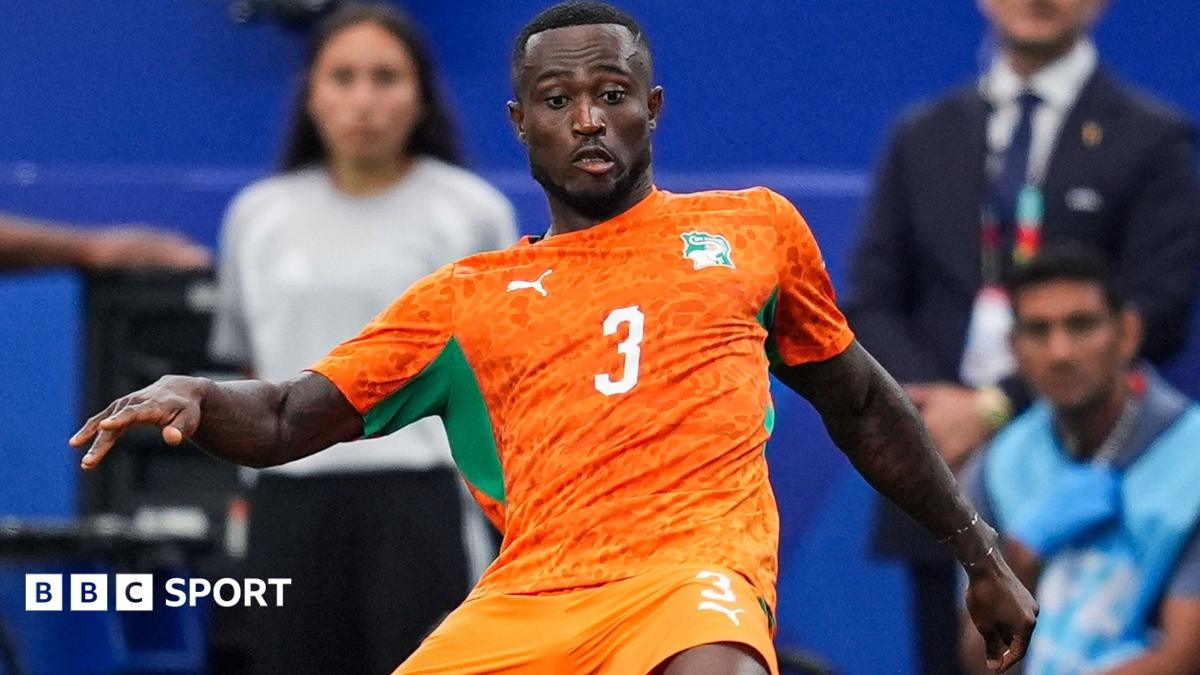
    The latest setback for South American soccer came Sunday at Philadelphia’s Lincoln Financial Field, where Ivory Coast claimed a tight 1-0 victory over Ecuador. The result brought an end to Ecuador’s 19-game undefeated run stretching back to a 1-0 loss to Brazil last September, even as a pro-Ecuador crowd of 68,274 — most clad in the team’s iconic yellow kits — turned the venue into a near-home field for La Tri.

    Ecuador’s defeat follows two other underwhelming South American results from the tournament’s opening weekend: five-time World Cup champions Brazil were held to a 1-1 draw by Morocco on Saturday, while Paraguay suffered a lopsided 4-1 rout at the hands of co-host United States.

    Post-match comments from South American coaching staff shared a common tone of reflection following the underwhelming starts. Ecuador manager Sebastián Beccacece described the result as a “very painful situation”, noting “I’m very sorry we did not give our fans the joy they came to seek. It was an unfair defeat, played out in a fantastic stadium atmosphere. We have to process it, put what happened behind us, focus on what lies ahead, and I believe we keep the faith.”

    Paraguay head coach Gustavo Alfaro echoed that language, calling his side’s heavy defeat to the U.S. a “very painful lesson”, and offered unreserved praise for the co-hosts’ performance: “The U.S. won this match very clearly and fairly. They dominated tactically, technically and physically as well. They have answers to everything you throw at them.”

    Even for Brazil, the most decorated men’s World Cup program in history, the opening draw did not spark panic. Legendary manager Carlo Ancelotti urged the side to remain confident, reminding critics and players alike: “You don’t win a World Cup based on your first match.”

    Ecuador’s playing staff also pushed back against narratives that an opening loss eliminates their title hopes, pointing to recent tournament history as proof early results do not determine final outcomes. Captain Enner Valencia said the squad retained its optimism despite the setback: “We’re keeping our heads held high knowing that this is just the beginning, and there’s still a tournament ahead of us.”

    Ecuador goalkeeper Hernan Galindez expanded on that point, referencing Argentina’s 2022 World Cup victory to illustrate the unpredictability of the tournament: “In the last World Cup, we won the first game and then were left out. Argentina, in the last World Cup, lost the first game and won the World Cup, so nothing guarantees you anything.”

    South American soccer carries a unique global legacy: it is the only continent outside Europe to produce men’s World Cup champions, and has claimed nine of the 22 titles awarded in tournament history. Three more South American sides are yet to kick off their 2026 campaigns, with Uruguay facing Saudi Arabia on Monday, defending champions Argentina taking on Algeria on Tuesday, and Colombia meeting Uzbekistan on Wednesday.

    The rocky opening for South American nations stands in sharp contrast to the strong start by all three North American co-hosts. Following the U.S.’s lopsided win over Paraguay, Mexico opened its tournament with a 2-0 victory over South Africa, while Canada earned its first ever World Cup point with a 1-1 draw against Bosnia and Herzegovina.

  • World Cup 2026: For Iran, politics and football collide again

    World Cup 2026: For Iran, politics and football collide again

    For decades, Iran’s journey in the FIFA World Cup has been inextricably intertwined with the nation’s political and social upheavals. But the 2026 tournament, hosted in part by the United States, has brought the country’s national team, Team Melli, into an uncharted maelstrom of competing pressures that no other side in the competition’s history has had to navigate.

    Team Melli’s opening match against New Zealand in Los Angeles falls just one day after former U.S. President Donald Trump announced a landmark tentative deal with Iran’s government, a development that could bring a close to three and a half months of open conflict. The location of the match alone adds layers of tension: Los Angeles is widely nicknamed “Tehrangeles,” home to one of the largest Iranian diaspora communities in the world, the majority of which hold staunch anti-regime views. Back in Iran, public support for the national team is deeply divided, with many Iranians viewing the side as a symbol of the ruling government rather than a unifying national representative. This rift has deepened dramatically after the government’s reported crackdown on mass anti-government protests earlier this year that left thousands of demonstrators dead.

    “There is a long history of politics mixing with football in Iran,” explained Jahanyar Mohebbi, a former head coach of Iran Pro League side Foolad FC. “The players feel the pressure from all sides – the politicians, the fans in the U.S. and at home.” This pattern of political entanglement stretches back to Iran’s very first World Cup appearance in 1978. As the squad traveled to Argentina for the tournament, revolution was already sweeping across the country, and the Shah’s government tried to insulate the team from growing domestic unrest. Iran’s star player Parviz Ghleechkhani, who passed away just last month, was barred from the tournament after the Shah’s secret police detained and questioned him over his outspoken political views. Even the team’s legendary goalkeeper Nasser Hejazi, who turned heads with his standout performances in Argentina, missed out on a historic transfer to English powerhouse Manchester United after the revolution disrupted all transfer negotiations.

    After the 1979 revolution established the Islamic Republic, the new government under Ayatollah Ali Khomeini remained wary of football, recognizing the sport’s unmatched ability to mobilize mass passion and public discontent. That wariness was validated in 1997, when Iran defeated Australia in a playoff in Melbourne to qualify for the 1998 World Cup. Widespread spontaneous celebrations across Iran grew so large that the team was ordered to delay their return home to let public tensions subside. That qualification set the stage for one of the most politically charged matches in World Cup history: Iran’s group stage clash with the United States in Lyon. Ahead of the game, then-U.S. President Bill Clinton released a public message of goodwill, and Iranian players presented flowers to their American opponents before securing a 2-1 victory. “Every day somebody from the government, from sports officials, they were asking about the game and demanding a win,” recalled Jalal Talebi, Iran’s head coach at the 1998 tournament. “What I tried to tell the players was, ‘Forget what they said – it’s all politics.’ I knew exactly how much pressure they were carrying.”

    In the decades that followed, political undertones remained a constant in Iran’s World Cup campaigns. The 2006 tournament brought less international tension, but controversy emerged from within the squad, with reported deep divisions between supporters of star players Ali Daei and Ali Karimi. Karimi later made headlines during 2010 World Cup qualifiers when he and several other players wore green armbands, a gesture widely interpreted as a show of support for opposition protesters contesting the disputed re-election of President Mahmoud Ahmadinejad. Most recently, at the 2022 Qatar World Cup, protest took center stage again: following the death of 22-year-old Mahsa Amini in morality police custody for allegedly violating hijab laws, the entire Iranian squad refused to sing the national anthem before their opening match against England, a silent rebuke of the government that drew global attention.

    Beyond the political and social pressures, longstanding international isolation has systematically held Iranian football back. On a practical level, the Iranian Football Federation frequently struggles to access prize money and funding from international governing bodies held in overseas accounts. There has been chronic underinvestment in training facilities and international training camps for the national team, the domestic league has fallen behind other top leagues in the Middle East, and leading international nations routinely refuse to schedule friendly matches against Iran. While Japan, the first team to qualify for 2026, has prepared for the tournament with high-profile tune-up matches against Brazil, England, the U.S. and Mexico, Iran has only been able to arrange warm-up games against Russia, Tanzania, Costarica, Nigeria and Gambia.

    Yet for all these systemic obstacles, Iran has consistently qualified for World Cup tournaments and remains the second-highest ranked men’s national team in Asia, trailing only Japan. The 2026 campaign, however, represents the most daunting challenge the side has ever faced. Until just days before the tournament, there was open uncertainty over whether the entire Iranian squad would even be granted entry to the United States, forcing the team to relocate its pre-tournament training camp from Arizona to Tijuana, Mexico, on the U.S. border.

    Mohebbi noted that the chaotic preparation has brought one unexpected upside: “Usually national teams arrive at the tournament exhausted after a long domestic season, but Iran have had a long break and have been training almost like a club side.” That advantage is outweighed by significant drawbacks, though: the Iranian domestic league was canceled back in February, leaving players without competitive match action for months, and constant logistical uncertainty has created pervasive anxiety. “The most challenging thing is the logistics,” Mohebbi added. “Will they even be allowed to train at the stadium a day in advance, or will they just show up for the match? That uncertainty makes everything much harder.”

    Team captain Mehdi Taremi, who is competing at his third World Cup, echoed those frustrations after several members of the Iranian delegation were denied U.S. visas. “I’ve been to three World Cups, and they always say once you get off the plane and enter the host country, there’s just a unique atmosphere of friendliness and global connection,” Taremi told ESPN. “Unfortunately, I’m not feeling it right now. There’s a lot of tension right now in this World Cup, you can feel it in the atmosphere, and it’s because of actions like these visa denials.” Still, Taremi emphasized that the squad remains united, regardless of differing views on the Iranian government. “Obviously some people outside Iran, many here, are against the government, but we are all Iranian,” he said. “We are united and we are looking for peace. I think they will come there to support us, and we have to bring them joy.”

    For the players, anxiety extends far beyond logistics and visa issues, as they remain constantly concerned about loved ones back in Iran amid ongoing unrest. “It’s been very difficult, I’ll be honest with you, for every single one of us with the whole situation back home,” said winger Alireza Jahanbakhsh. “You have to keep checking on your family, on your loved ones, on your people back home, and of course it’s affecting the whole group.” As the team takes the pitch in Los Angeles, all eyes will be on how the 11 players caught in the middle of global political conflict will perform under the weight of unprecedented pressure.