分类: sports

  • Dhoni biopic inspired Pakistan bowler Usman Tariq to leave sales job in UAE for cricket

    Dhoni biopic inspired Pakistan bowler Usman Tariq to leave sales job in UAE for cricket

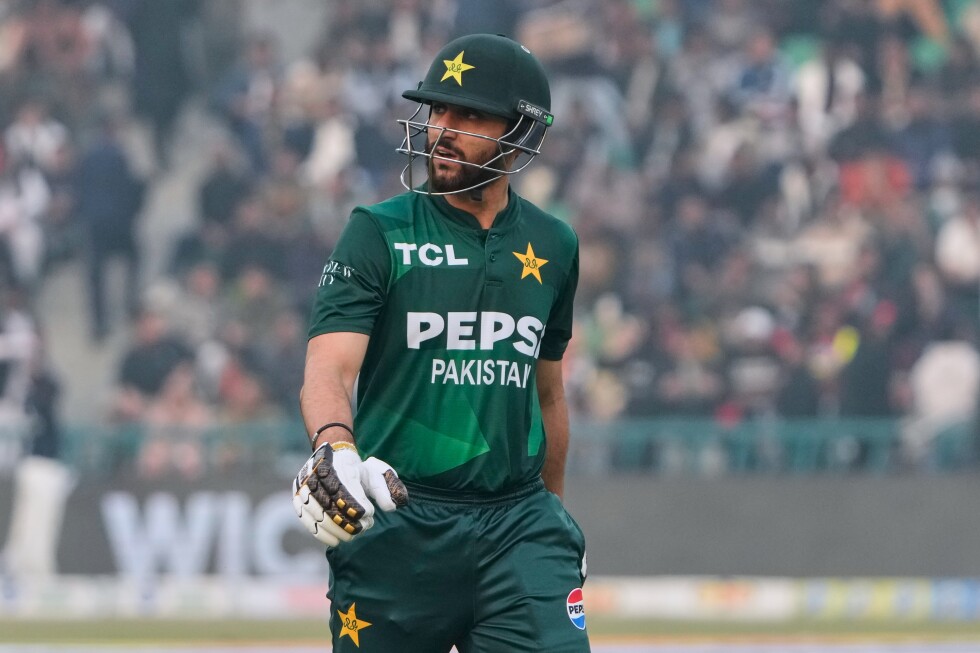
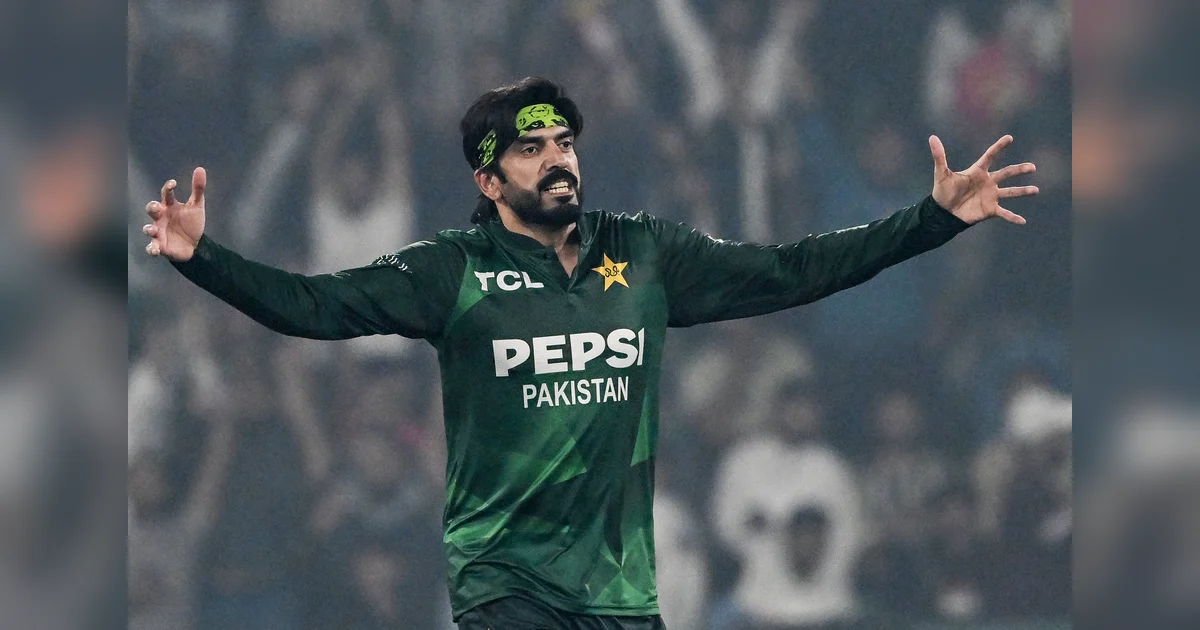
    In an extraordinary transformation story bridging two cricket-crazed nations, Pakistani spinner Usman Tariq has emerged as an unexpected weapon ahead of Sunday’s high-voltage clash against India at the T20 World Cup. The 30-year-old’s journey from a sales job in Dubai to international cricket stardom began with an unlikely source of inspiration: the 2016 Bollywood biopic “M.S. Dhoni: The Untold Story.”

    Tariq had shelved his cricket ambitions to pursue a conventional career in the UAE until watching the film about India’s World Cup-winning captain. The narrative of perseverance, rejection, and ultimate glory resonated so deeply that he abandoned his sales position to pursue cricket professionally. “I had left behind thinking of making a name in cricket,” Tariq revealed to AFP, “but one day I watched this film and it convinced me that I could also do the same.”

    The double-jointed spinner’s unique bowling action has generated both fascination and controversy. With an exaggerated pause followed by a sling-shot release, his technique has been reported as illegal twice in recent years but was ultimately cleared by the International Cricket Council laboratory. Despite skepticism from players like England’s Tom Banton and Australia’s Cameron Green, who mimicked the action before the World Cup, the bowling has received validation from experts including India’s legendary spinner Ravichandran Ashwin.

    “I believe that it is entirely legal,” Ashwin declared on social media, providing technical analysis supporting his assessment. Tariq attributes his unusual delivery to a rare physical characteristic: “I have two corners of my bowling arm elbow, which is rare. I have been cleared twice so I am confident that it’s legal.”

    Since making his international debut just three months ago, Tariq has taken 11 wickets in four T20 internationals, including a hat-trick against Zimbabwe. His match-defining performance of 3-27 against USA in Colombo this week has positioned him as what Pakistan skipper Salman Agha describes as the team’s “X-factor and key weapon” against their arch-rivals.

    The spinner’s rapid ascent through the ranks saw him take 20 wickets in last year’s Caribbean Premier League, eventually forcing his way into the national team selection—news he received while preparing for his wedding. “I thought it was a prank,” Tariq recalled. “But it was true so I think my wife brought luck for me.”

    From the sales floors of Dubai to the world’s most celebrated cricket grounds, Tariq’s story continues to unfold, proving that sometimes life imitates art in the most extraordinary ways.

  • Ireland grinds out a shaky Six Nations win over Italy in second half fightback

    Ireland grinds out a shaky Six Nations win over Italy in second half fightback

    Dublin witnessed a tense Six Nations encounter on Saturday as Ireland narrowly overcame a determined Italian side 20-13 in a match that revealed significant concerns for the home team’s championship aspirations. Despite entering the game under pressure following their record 36-14 defeat to France—their worst Six Nations loss in 16 years—Andy Farrell’s squad delivered another underwhelming performance that failed to silence mounting doubts about their form.

    The match unfolded as a tale of two contrasting halves, with Italy making history by securing their first-ever halftime lead in Dublin. The visitors demonstrated remarkable progress from their traditional tournament underdog status, building on their opening victory against Scotland with courageous, inventive rugby that frequently exposed Irish vulnerabilities.

    Italy’s performance deserved greater reward, with two potential tries denied—one through a forward pass ruling and another lost to an unfortunate bounce. Their scrum dominance proved particularly alarming for Ireland, with prop Simone Ferrari consistently overpowering opposite number Jeremy Loughman and even managing to lift British and Irish Lions star Tadhg Furlong off his feet.

    Ireland’s response came through replacement playmakers Jamison Gibson-Park and Jack Crowley, whose second-half introduction provided crucial impetus. Winger Robert Baloucoune marked his first test appearance in over three years with a decisive try, while Crowley contributed vital points through conversions and penalties.

    The dramatic conclusion saw Ireland’s James Lowe intercepting Italy’s final attack beyond the 80-minute mark, yet instead of securing an easy penalty to deny Italy a losing bonus point, Ireland controversially pursued a fourth try only to kick the ball dead and end the match.

    The result sets up concerning prospects for Ireland’s upcoming clash against England at Twickenham, while Italy travels to face tournament favorites France with reinforced credibility and confidence.

  • UAE residents turn living rooms into mini stadiums for India-Pakistan match on Feb 15

    UAE residents turn living rooms into mini stadiums for India-Pakistan match on Feb 15

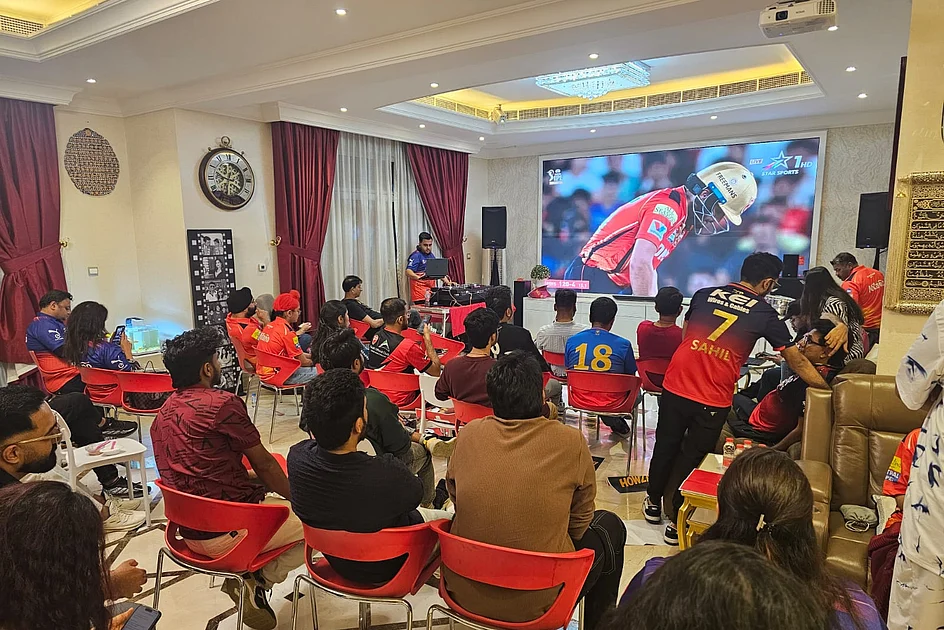
    Across the United Arab Emirates, residents are converting their homes into vibrant cricket viewing venues ahead of Sunday’s highly anticipated T20 World Cup clash between arch-rivals India and Pakistan in Colombo. While some dedicated fans have traveled to Sri Lanka for the live event, countless others are preparing their living spaces for communal screenings that capture the electric atmosphere of stadium viewing.

    In Dubai and Sharjah particularly, households are undergoing elaborate transformations with large-screen installations, decorative arrangements, and culinary preparations. The event has transcended ordinary cricket viewing, evolving into a significant social occasion that brings together diverse communities. Invitations have circulated days in advance, grocery lists have been meticulously planned, and technical equipment is being rigorously tested to ensure flawless viewing experiences.

    Anis Sajan, founder of Mr Cricket UAE, has established a tradition of hosting these screenings during major tournaments. “Cricket remains a gentleman’s game that builds bridges rather than walls,” Sajan remarked. “The India-Pakistan encounter represents more than mere competition—it embodies deep emotion. We’re recreating the stadium experience with DJ entertainment, traditional dhol drummers, and spirited fan engagement.”

    The gatherings feature potluck-style dinners where participants contribute national dishes ranging from biryanis and kebabs to various snacks and desserts. Nadeem Ahmed, a Pakistani expatriate in Arabian Ranches, described his preparations: “We’ve converted our lawn into a mini-stadium with large screens and arranged seating tables. A barbecue station will operate throughout the evening, and we’ve created separate areas for children to enjoy themselves while learning about cricket’s cultural significance.”

    Parents emphasize the educational value for children growing up in the UAE’s multicultural environment. Youngsters witness both the competitive rivalry on screen and the respectful camaraderie among adults from both nations. Despite the geographical distance from Colombo, the excitement within UAE homes promises to match stadium intensity, with enthusiastic cheers for wickets and good-natured banter following boundary shots.

    For the UAE’s diverse population, this cricketing event symbolizes how athletic competition can foster cross-cultural friendship and mutual respect, reflecting the tolerance that defines Emirati society.

  • Pakistan captain Agha says it is up to India to decide whether to shake hands before World Cup clash

    Pakistan captain Agha says it is up to India to decide whether to shake hands before World Cup clash

    COLOMBO, Sri Lanka — As cricket rivals India and Pakistan prepare for their highly anticipated T20 World Cup encounter on Sunday, the pre-match focus has shifted from sporting prowess to diplomatic tensions and symbolic gestures. Pakistan captain Salman Ali Agha has placed the decision about pre-match handshakes squarely with the Indian team, highlighting the strained relations that have transformed this cricketing rivalry into a geopolitical spectacle.

    The upcoming match marks the first meeting between the teams since last year’s contentious Asia Cup tournament in the United Arab Emirates, where on-field animosities reached boiling point. The tournament witnessed Indian captain Suryakumar Yadav refusing handshakes with Pakistani players, followed by multiple disciplinary actions against players from both sides for breaching the International Cricket Council’s code of conduct.

    This encounter nearly didn’t materialize after Pakistan’s government threatened a boycott following the ICC’s exclusion of Bangladesh from the World Cup over security concerns regarding matches in India. Only through intensive negotiations with cricket’s governing body was the fixture preserved—a crucial revenue generator for international cricket.

    The historical context adds layers to the confrontation: India hasn’t toured Pakistan since 2008, while Pakistan’s last visit to India was for the 2023 ODI World Cup. All recent encounters have occurred at neutral venues under ICC tournaments, with India dominating the head-to-head record with 12 victories in 16 T20 matches and a commanding 6-1 record in T20 World Cup meetings.

    Both captains attempted to deflect attention from past controversies during pre-match press conferences. Agha emphasized learning from history rather than being bound by it, while Yadav dismissed questions about handshake protocols, stating his team’s focus remains solely on cricket performance.

    Additional subplots include scrutiny over Pakistani spinner Usman Tariq’s bowling action and concerns about Indian opener Abhishek Sharma’s recovery from a stomach infection that caused him to miss the Namibia match.

    Despite the political undertones, both teams recognize the match represents an opportunity to create new narratives beyond diplomatic tensions and historical records in what remains cricket’s most politically charged rivalry.

  • Late goal in a loss to Sweden may get Slovakia into the quarterfinals at the Olympics

    Late goal in a loss to Sweden may get Slovakia into the quarterfinals at the Olympics

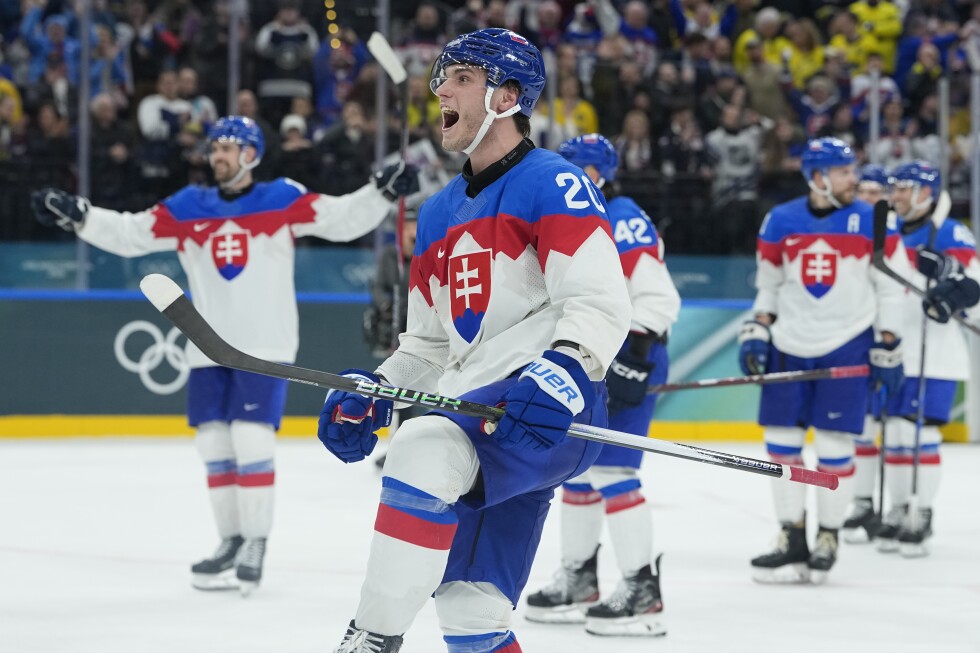
    In a stunning turn of events at the Milan Winter Olympics, Slovakia secured advancement to the quarterfinals in men’s hockey despite suffering a 5-3 defeat against Sweden in Saturday’s preliminary round finale. The crucial moment came when Dalibor Dvorsky of the St. Louis Blues scored with just 39 seconds remaining, creating a tiebreaker scenario that ultimately favored Slovakia.

    The complex advancement mathematics hinged on Slovakia’s superior goal differential among three tied teams in Group B, contingent upon Finland’s expected victory over host Italy later that day. This unusual circumstance prompted Slovakia’s Juraj Slafkovsky, the reigning Olympic MVP who shares the tournament scoring lead with Canada’s Connor McDavid at six points each, to describe the outcome as “probably the best loss I ever had.”

    Dvorsky, who netted the critical power-play goal following a penalty against Sweden’s Lucas Raymond, echoed this sentiment, calling it “the best loss of my life.” The forward revealed their late-game strategy was straightforward: “We all know what we need to do on the ice. There was not too much tactics, right? At this point of the game, just try to get pucks to the net.”

    Meanwhile, Sweden faced disappointment despite their on-ice victory, having performed significantly better than in their previous 4-1 loss to archrival Finland. Coach Sam Hallam’s decision to pull goaltender Jacob Markstrom while leading by two goals in the final seconds—aiming for additional tiebreaker advantages—backfired as Sweden failed to score again. Alternate captain Victor Hedman called the outcome a “tough pill to swallow” but vowed the team would “regroup and be ready for our next challenge.”

    In other Olympic hockey action, Latvia delivered an upset victory over Germany with a 4-3 win, thanks to goals from Eduards Tralmaks and Renars Krastenbergs just over three minutes apart. Zemgus Girgensons of the Buffalo Sabres, one of ten NHL players on Latvia’s roster, expressed confidence in his team’s capabilities: “We’re a good team. We believed it. We came in today thinking we’re going to win.” Germany now faces a critical match against the United States on Sunday night.

  • Athletes travel on cruise ship to UAE’s iconic Sir Bani Yas Island with peacocks, dolphins

    Athletes travel on cruise ship to UAE’s iconic Sir Bani Yas Island with peacocks, dolphins

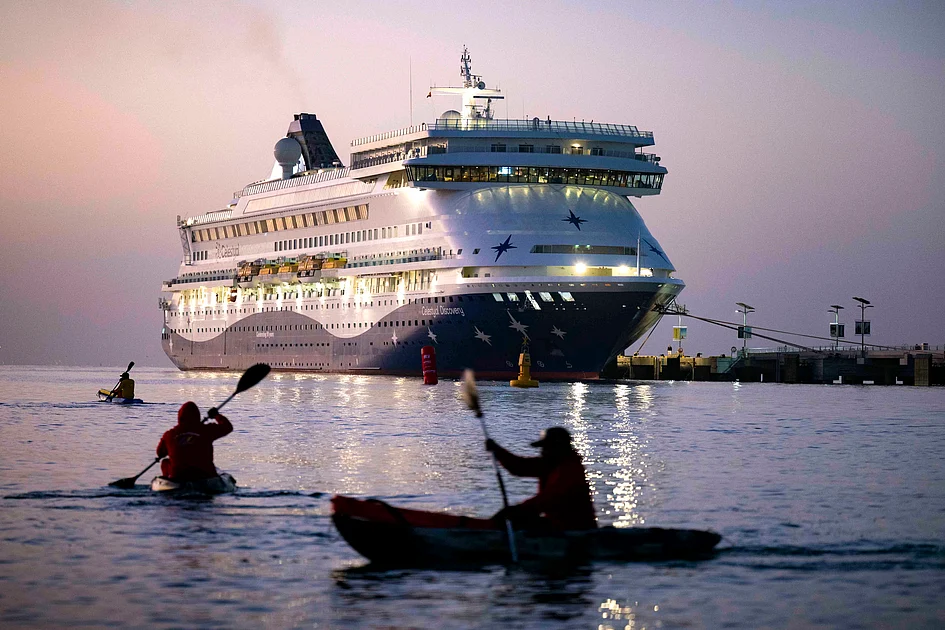
    In an unprecedented fusion of athletic competition and luxury travel, the United Arab Emirates has once again demonstrated its capacity for innovation by hosting the Challenge Sir Bani Yas event aboard a specially chartered cruise ship. This groundbreaking sporting spectacle transported over 4,800 participants representing 93 nationalities to the iconic Sir Bani Yas Island while providing a unique pre-race experience that blended world-class athletic preparation with vacation-style amenities.

    The three-night voyage across the Arabian Gulf transformed traditional race logistics by offering competitors immediate proximity to start lines while eliminating common travel inconveniences. Aboard the vessel, amateur athletes trained alongside Olympians and Iron Man champions, with professional triathletes conducting running drills on deck while mechanics performed bicycle maintenance. The ship featured specialized facilities including swim training machines, a fully-equipped gym, and race briefing sessions, creating a mobile athletic village unlike any other.

    Participants competed across multiple distance categories including the full 226km Iron Man, 113km middle-distance, and 51.5km Olympic triathlons. The island course itself presented a spectacular natural backdrop with 17,000 free-roaming animals including oryx, gazelles, and peacocks accompanying cyclists along the route. Dubai resident Christopher Van Der Wait, a seasoned triathlete with over 100 global competitions, declared it the most unique event he’d ever experienced, noting how the UAE consistently pushes boundaries in sporting innovation.

    The cruise format offered significant practical advantages beyond the novelty factor. Abu Dhabi resident Giovanni Dellomes highlighted the financial accessibility: “I knew I wouldn’t have to buy flight tickets or hotel accommodations, making it considerably more affordable than international competitions.” The simplified logistics of transporting sporting equipment proved equally valuable, with participants able to wheel bicycles directly on and off the vessel without weight restrictions or assembly requirements.

    Beyond the competitive aspect, the event successfully engaged families and spectators. Egyptian visitor Ebtehag Yassin attended with her husband and teenage sons, noting how the experience inspired her eldest to consider participating next year. The convergence of elite athletics and tourism infrastructure represents a new paradigm in event hosting, with Australian professional triathlete Belinda Granger confirming she’d never witnessed anything comparable in her 30-year career. This innovative approach to sporting events continues the UAE’s tradition of transforming ambitious concepts into reality, creating unforgettable experiences that redefine what’s possible in athletic competition and hospitality.

  • The samba-dancing skier making Brazil Olympic history

    The samba-dancing skier making Brazil Olympic history

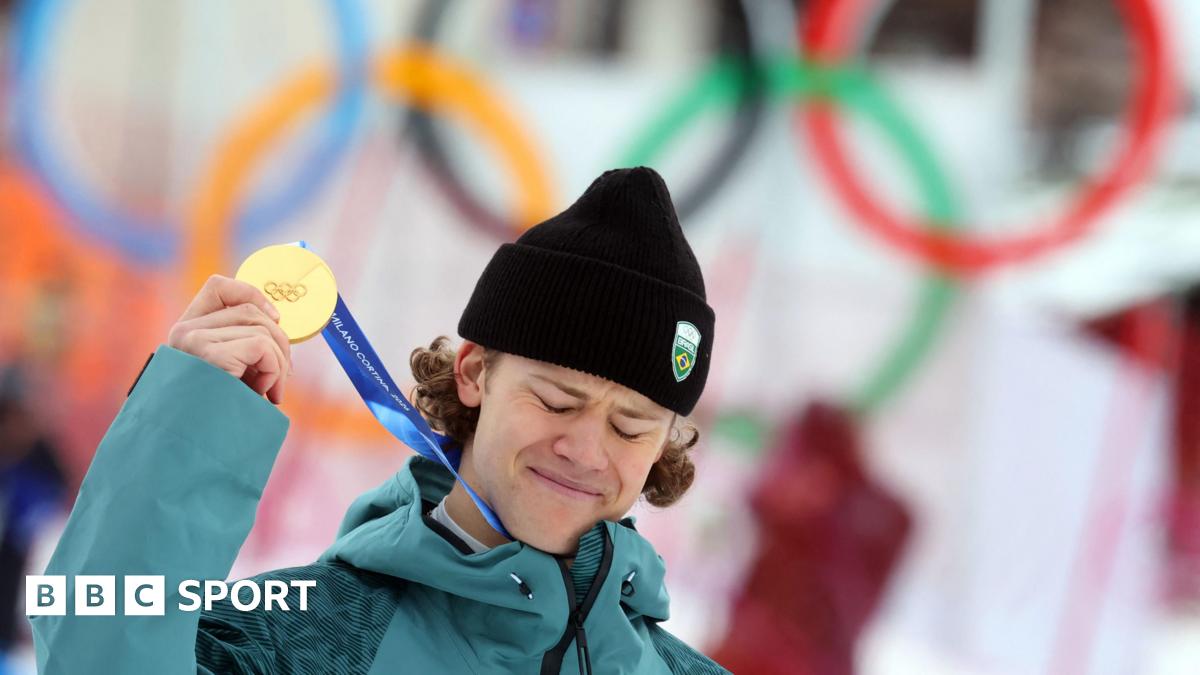
    In an extraordinary display of athletic prowess and personal redemption, Lucas Pinheiro Braathen carved his name into Olympic history by securing Brazil’s inaugural Winter Games medal with a stunning giant slalom victory. The 25-year-old skier, competing in the green and yellow of his maternal heritage, delivered a masterful performance on Bormio’s challenging Stelvio piste amid deteriorating weather conditions.

    Pinheiro Braathen’s triumph over Swiss defending champion Marco Odermatt by 0.58 seconds represents more than just athletic achievement—it marks the first Winter Olympic medal ever won by any South American nation. The victory becomes particularly poignant given the athlete’s recent history: exactly one year after announcing his shock retirement from professional skiing, citing a loss of ‘joy of living,’ he returned to the sport with renewed purpose.

    The Brazilian-Norwegian skier established a commanding 0.95-second lead after the first run, maintaining his composure despite pressure from Odermatt’s aggressive second descent. His victory denied the four-time World Cup champion what many considered an inevitable gold medal, reshaping the alpine skiing hierarchy at the Milan-Cortina Games.

    Pinheiro Braathen’s journey to Olympic glory reflects a lifetime of cultural navigation. Born in Oslo to a Norwegian father and Brazilian mother, he spent his childhood oscillating between continents, moving homes 21 times before turning 22. Initially drawn to football and resistant to skiing, he eventually embraced the sport’s high-speed challenges while maintaining his Brazilian cultural identity.

    His flamboyant personality—evidenced by painted fingernails, samba celebrations, and fashion runway appearances—has brought unprecedented color to alpine skiing. After winning 12 World Cup medals for Norway, his decision to retire at 23 and subsequently return representing Brazil has become one of sports’ most compelling narratives of self-discovery.

    Following his historic victory, Pinheiro Braathen emphasized the importance of authenticity: ‘I hope I can inspire kids that despite what they wear, despite how they look, despite where they come from, they can follow their dreams and be who they really are. That is the real source of happiness in life.’

  • Brazil’s Lucas Pinheiro Braathen wins giant slalom, earns South America’s 1st medal at Winter Games

    Brazil’s Lucas Pinheiro Braathen wins giant slalom, earns South America’s 1st medal at Winter Games

    In a historic moment for winter sports, Brazilian alpine skier Lucas Pinheiro Braathen captured the Olympic giant slalom gold medal on Saturday, delivering South America’s first-ever Winter Games medal. The 25-year-old athlete mastered the challenging Stelvio course in Bormio, Italy, overcoming falling snow and dense fog to finish with a combined two-run time of 2 minutes, 25 seconds.

    Pinheiro Braathen’s victory margin of 0.58 seconds secured his triumph over defending Olympic champion Marco Odermatt of Switzerland, who claimed silver. Odermatt’s teammate Loic Meillard completed the podium with bronze.

    The emotional champion collapsed onto the snow in celebration upon seeing his top-ranked position, later explaining his mindset during the decisive run: “I was pulling, pulling, always pulling, trying to find where to step, always trying to find the rhythm. I was skiing with my heart, and when you ski the way you are, anything is possible.”

    Pinheiro Braathen’s background reflects his unique journey—born to a Brazilian mother and Norwegian father, he initially competed for Norway before unexpectedly retiring prior to the 2023 season. His return to competitive skiing representing Brazil just one year later has culminated in this extraordinary achievement.

    The victory carries special significance during Brazil’s Carnival season, a connection highlighted by the skier’s helmet inscription “Vamos Dancar” (Let’s Dance) and his reputation as a samba-dancing, fun-loving competitor. Brazilian supporters at “Casa Brasil” in Milan erupted in celebration, with the venue playing both Queen’s “We Are The Champions” and traditional samba music.

    Brazilian President Luiz Inácio Lula da Silva recognized the achievement on social media, stating: “This unprecedented result shows Brazilian sport has no limits. It is the reflection of talent, dedication and continuous work to strengthen sport in every dimension.”

    The victory adds to Pinheiro Braathen’s growing legacy as a pioneer for Brazilian winter sports, having previously become the first Brazilian Alpine racer to reach a World Cup podium last year and securing the country’s first World Cup win this season.

  • South Africa hammers New Zealand by seven wickets at T20 World Cup. England beats Scotland

    South Africa hammers New Zealand by seven wickets at T20 World Cup. England beats Scotland

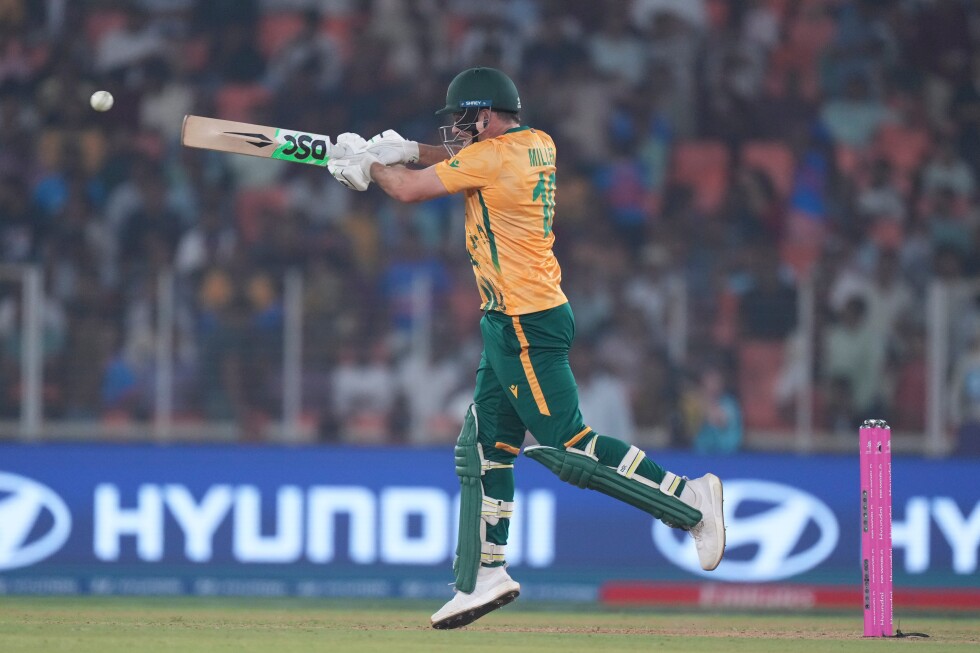
    In a spectacular display of cricketing prowess, South Africa delivered a commanding performance against New Zealand in their T20 World Cup encounter on Saturday. Captain Aiden Markram emerged as the undisputed hero, blasting an unbeaten 86 runs from just 44 deliveries to secure a comprehensive seven-wicket victory for the Proteas.

    The match witnessed South Africa’s clinical execution as they chased down New Zealand’s total of 175-7 with remarkable ease, achieving their target of 178-3 with 2.5 overs remaining. Markram’s explosive innings, featuring four sixes and eight boundaries, included the fastest half-century in South Africa’s T20 World Cup history, reaching 50 runs in merely 19 deliveries.

    Left-arm pacer Marco Jansen set the stage for South Africa’s dominance with an impressive bowling performance, claiming 4-40 in his four-over spell. His early breakthroughs dismantled New Zealand’s top order, reducing them to 64-4 within 6.4 overs. Despite a recovery effort from Daryl Mitchell and Mark Chapman, who contributed 74 runs, New Zealand struggled to maintain momentum against South Africa’s disciplined attack.

    The victory marks South Africa’s third consecutive win in Group D, solidifying their position as strong contenders for the next round. Meanwhile, New Zealand suffered their first tournament defeat and extended their winless streak against South Africa to five matches in T20 World Cup history.

    In other tournament developments, England revived their campaign with a crucial five-wicket triumph over Scotland in Kolkata. Tom Banton’s unbeaten 63 from 41 balls proved instrumental in England’s recovery after early setbacks. Ireland recorded their inaugural victory in Colombo, overwhelming Oman by 96 runs behind Lorcan Tucker’s spectacular 94 not out from 51 deliveries, posting the tournament’s highest score of 235-5.

  • Valentine’s Day at the Winter Olympics might look a little different, but it’s still special

    Valentine’s Day at the Winter Olympics might look a little different, but it’s still special

    MILAN CORTINA — Beyond the pursuit of medals and athletic glory, a different kind of warmth is defying the winter chill at the Olympic Games. The venues are serving as unexpected backdrops for romance, proposals, and celebrations of love, creating heartfelt narratives alongside the competitive drama.

    The atmosphere turned electric when Dutch speed skater Jutta Leerdam, fresh from setting an Olympic record in the 1000-meter race, shared an emotional moment with her fiancé, Jake Paul, in the stands. The couple, visibly moved to tears, exchanged handmade heart signs across the ice. In a similarly romantic gesture, downhill skiing champion Breezy Johnson was surprised with a marriage proposal from her longtime boyfriend near the finish line, surrounded by cheering members of the U.S. Ski Team.

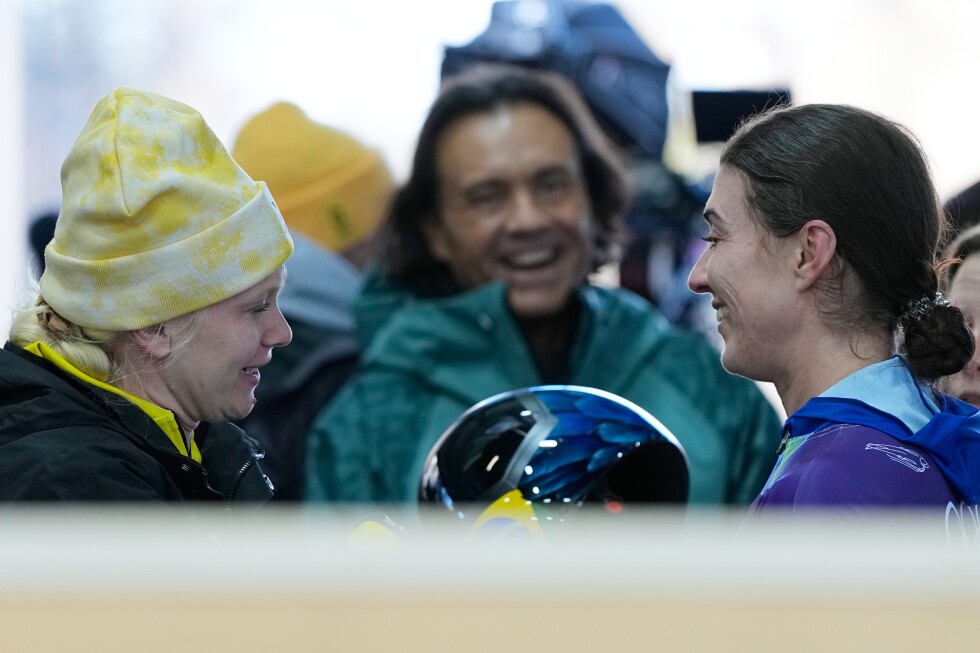
    For some athletes, Valentine’s Day coincides with the pinnacle of their sporting careers. Belgian skeleton racer Kim Meylemans and her wife, Brazil’s Nicole Rocha Silveira, spent the day preparing for the women’s skeleton finals rather than celebrating with a romantic dinner. The international couple, who represent their respective countries, told The Associated Press they had even forgone gift exchanges due to their intense focus on competition.

    Their love story blossomed during the pandemic, evolving from shared short-term rentals in 2019 to marriage in August 2023. In a remarkable coincidence, they had unknowingly purchased identical engagement rings and planned proposals for the same vacation in Brazil. The Olympic Committees accommodated their relationship by arranging shared housing in the Cortina Olympic village, where their room is divided between Belgian and Brazilian decorations.

    Their relationship carries particular significance in Italy, where same-sex marriage isn’t legally recognized. Rocha Silveira emphasized the importance of visibility, stating the Games provide a platform to “encourage and inspire people that they can be themselves.”

    The Olympic spirit of togetherness extends beyond athletes to volunteers like Lori and Curtis Brown, who are celebrating their 30+ years of marriage while working at the skating arena. Among the 18,000 volunteers in navy blue uniforms ensuring the smooth operation of the Games, the Browns hope to coordinate breaks for a shared Valentine’s dinner, calling it “the most special Valentine’s Day of our lives.”

    Canadian hockey players Laura Stacey and her wife, team captain Marie-Philip Poulin, faced Germany in quarterfinal competition on February 14th. Stacey reflected on their unique circumstance: “We’re pretty lucky. Most people don’t get to do what they love, chasing their dreams together.”

    The Games feature numerous other power couples, including U.S. alpine skiing star Mikaela Shiffrin engaged to Norway’s Aleksander Aamodt Kilde, married lugers from Latvia and the U.S., and American figure skaters Madison Chock and Evan Bates, who recently won silver medals. Curling has emerged as particularly couple-friendly, with several married pairs competing, including Norway’s Magnus Nedregotten and Kristin Skaslien, and Canada’s Jocelyn Peterman and Brett Gallant.