分类: sports

  • World ski president Eliasch loses election by one vote and alleges IOC influence

    World ski president Eliasch loses election by one vote and alleges IOC influence

    BELGRADE, Serbia — In a stunning upset that has sent ripples through global winter sports, longtime International Ski and Snowboard Federation (FIS) president Johan Eliasch has been removed from his post by a razor-thin one-vote margin, capping a chaotic campaign that pitted the incumbent against a coalition of traditional skiing powerhouses and elite athletes.

    The Thursday election ended with Alexander Ospelt, a little-known lawyer from the Alpine principality of Liechtenstein, securing a 65-64 victory over Eliasch, a Swedish-British billionaire and owner of global sports equipment brand Head. Ospelt will now take the helm of FIS for a four-year term, after the vote went his way at the governing body’s general congress held in the Serbian capital.

    For Eliasch, the defeat comes with an additional high-profile consequence: he immediately loses his seat in the International Olympic Committee (IOC), one of the most exclusive and influential bodies in global sport. The 64-year-old, who served as FIS president for five years, had previously run for IOC presidency 15 months ago, a race ultimately won by Kirsty Coventry.

    In his immediate concession address, Eliasch made a bombshell allegation against the IOC, claiming the Olympic governing body had interfered to sway the election result. “The IOC tried to influence the outcome of today’s vote. Against this we must stay firm,” he told delegates, before urging FIS to defend its institutional independence and extending congratulations to his opponent.

    The writing was on the wall for Eliasch from the opening moments of the FIS congress, as delegates moved quickly to signal their dissatisfaction with his leadership. By an 88% majority, members voted to rearrange the official agenda and advance the presidential election to the first order of business, an unusual move that reflected widespread discontent. Later, another 60% vote approved a shift from electronic voting to paper ballots, a change widely interpreted as a vote of no confidence in Eliasch’s outgoing administration over transparency concerns.

    Unlike international soccer governing body FIFA’s one-member-one-vote system, FIS uses a weighted voting framework that grants larger, more established skiing nations two or three votes apiece. That structure worked against Eliasch, who had spent half a decade locked in bitter public disputes with the sport’s traditional heartland nations in Europe and North America over his autocratic management style and controversial decisions around spending FIS’s cash reserves.

    Even his home national federations of Sweden and Great Britain refused to back his re-election bid. To comply with FIS nomination rules, Eliasch ultimately secured a nomination and citizenship from Georgia to appear on the ballot. His campaign was opposed by a coalition of leading winter sports nations that secured the backing of many top professional skiers, including American skiing legend Mikaela Shiffrin, one of the most decorated athletes in the sport’s history.

    Under FIS bylaws, Ospelt will not officially take office until one full day after the election, allowing Eliasch to oversee the remaining congress business on his final day in the role. Framing the outcome as a positive result either way in pre-election comments, Eliasch struck a measured tone in his closing remarks. “It’s been a great privilege to serve you,” he said. “Either way I am very happy,” adding that a loss would let him “get my life back.”

    Ospelt, who has served as a member of the FIS Council under Eliasch’s leadership, struck a unifying tone in his first remarks as president-elect. “I will start my new job with great joy and humility,” he said. “I will be the president for all of you. Let’s be united.”

    Unlike his predecessor, Ospelt will not automatically gain IOC membership immediately after taking office. However, as the head of FIS — the governing body that oversees roughly half of all medal events at every Winter Olympic Games — he is widely expected to receive an invitation to join the IOC in due course.

  • Mahomes to become NFL’s first $500m player

    Mahomes to become NFL’s first $500m player

    In a landmark deal that reshapes the ceiling of professional athlete contracts in North American sports, star Kansas City Chiefs quarterback Patrick Mahomes is poised to make history as the first player in National Football League history to sign a contract with total guaranteed earnings exceeding half a billion dollars.

    The 30-year-old field general, who has already cemented his legacy by steering the Chiefs to five Super Bowl berths and three championship titles, has agreed to a two-year contract extension that pushes his total guaranteed compensation to $504.75 million. The new deal extends his tenure with the Kansas City franchise through the 2033 season, locking the generational talent into the organization for the rest of his professional playing career.

    Mahomes’ prior contract, a 10-year agreement signed in 2020, carried a base value of $450 million, with up to an extra $50 million available through performance-based incentives. Under the restructured extension, the average annual value of Mahomes’ contract will hit $64 million starting in 2027. That figure surpasses the previous NFL record for average annual pay, the $60 million per season deal Dallas Cowboys quarterback Dak Prescott signed in 2024 that made him the league’s highest-paid player at the time.

    For Mahomes, the extension cements his lifelong connection to the only NFL franchise he has ever played for. “I’m just so excited to be here for life and to be a part of Chiefs kingdom for even longer,” he said in a statement following the announcement. “We have so much more to do. Let’s go out and do it. Let’s go win some more.”

    The new deal comes nearly seven months after Mahomes suffered a season-ending anterior cruciate ligament tear in his left knee during the 2025 regular season. That injury cut the Chiefs’ campaign short and kept the team out of the NFL playoffs for the first time since 2014, ending a historic run of sustained success that Mahomes led.

    That run of dominance included Super Bowl victories in 2020, 2023, and 2024. The Chiefs came within one game of becoming the first NFL franchise to win three consecutive Super Bowl titles, falling to the Philadelphia Eagles in the 2025 championship game.

    Chiefs chief executive Clark Hunt framed the extension as a no-brainer for the organization, praising Mahomes both for his on-field dominance and off-field impact. “Over the past decade Patrick has become one of the most iconic, beloved sports figures of all-time,” Hunt said. “He has helped lead our franchise to five Super Bowl appearances and three championships, he has been instrumental in shaping the Chiefs brand and putting Kansas City on the world stage, and on top of it all he has been an outstanding role model in the community.”

    Hunt added, “Patrick is a generational talent and an elite human being, and I’m so excited he will continue to lead our team into the future.”

  • ‘Not on my bingo chart’ – Tharp smashes 110m hurdles record

    ‘Not on my bingo chart’ – Tharp smashes 110m hurdles record

    In a stunning upset that has sent shockwaves through the global track and field community, 20-year-old Ja’Kobe Tharp, a junior sprinter-hurdler at Auburn University, has broken the long-standing men’s 110m hurdles world record during the preliminary heats of the 2025 NCAA Outdoor Track and Field Championships held in Eugene, Oregon, on Wednesday.

    Tharp crossed the finish line with an official time of 12.75 seconds, beating the previous world record of 12.80 seconds set by fellow American athlete Aries Merritt back in September 2012 at the Brussels Diamond League. The new mark also improves the long-standing collegiate record of 12.98 seconds, which was set by reigning Olympic champion Grant Holloway back in 2019.

    This historic achievement marks the first time in half a century that an athlete has set a new senior world record at the NCAA Division I Outdoor Championships, a testament to the rising talent and competitive depth of collegiate track and field in the United States.

    Coming into the national meet, Tharp held a personal best time of 13.01 seconds. While he acknowledged he had prepared extensively and was confident he would lower his own best mark, he never anticipated cutting more than a quarter of a second off his previous top time to claim the world record.

    “I knew I was ready to drop something crazy,” Tharp told reporters after his historic run. “I knew what I was capable of, but I didn’t know about that. It wasn’t on my bingo chart for this meet, not at all. I’m speechless, seriously.”

    Tharp, who hails from Auburn, Alabama, will now advance to the 110m hurdles final, scheduled to take place this Friday. He is gunning for his second consecutive NCAA individual title, a feat no hurdler has achieved since Grant Holloway claimed back-to-back titles in 2019.

  • Knicks fans go wild as New York team makes biggest comeback in NBA Finals history

    Knicks fans go wild as New York team makes biggest comeback in NBA Finals history

    On a feverish Wednesday night at Manhattan’s iconic Madison Square Garden, the New York Knicks etched their name into NBA history, pulling off the largest comeback in Finals history to secure a 107-106 one-point win over the San Antonio Spurs, with the game-winning basket dropping with just 1.2 seconds left on the clock.

    The matchup marked Game 4 of the best-of-seven championship series, and carried extra weight for New York fans: it was the first time the franchise had hosted a Finals game in 27 years, having last reached the league’s final stage back in 1999, when they fell to the very same Spurs side they faced this week.

    London-born forward OG Anunoby, who joined the Knicks roster in January 2024, delivered the iconic game-winning three-pointer that sent the sold-out crowd into hysterics. As fans flooded the stands with chants of “O-G! O-G!”, A-list spectators dotted the courtside, including pop superstar Taylor Swift – who sported a playful “Stevie Knicks” shirt that blended the team’s name with Fleetwood Mac legend Stevie Nicks – Academy Award-nominated actor Timothée Chalamet, iconic New York filmmaker Spike Lee, late-night host Jimmy Fallon, comedy star Ben Stiller, and pop trio Haim members Este and Alana Haim. Post-game, Swift was spotted jumping for joy while exiting the arena, even stopping for a playful twirl with a member of the Knicks City Dancers.

    New York Mayor Zohran Mamdani captured the collective shock and joy of the city in a viral all-caps post on X, writing simply: “SPEECHLESS.” Knicks head coach Mike Brown echoed that awe in post-game comments, calling Anunoby’s clutch shot “the most iconic shot in the history of New York basketball” adding, “It was just unbelievable.”

    The 2025-26 season has already represented a stunning reversal of fortune for a franchise that has spent decades mired in mediocrity after its 1999 Finals appearance. Long-suffering New Yorkers have poured into city streets to celebrate every playoff win, turning the five boroughs into a sea of orange and blue. City landmarks have embraced the moment: the Empire State Building has been lit up in the team’s signature colors every game night, and even the iconic marble lions outside the New York Public Library’s Fifth Avenue branch have gotten in on the Knicks fever.

    “It’s electric out there, you can feel the energy everywhere you go,” one local fan told the BBC earlier this week. Sol, a 31-year-old New York resident, added, “I can’t say I’ve ever seen anything like this before because in 1999 I was 4 years old. I’m just trying to soak it all in.” No Knicks fan has watched their team lift the Larry O’Brien Championship Trophy in their lifetime – the franchise’s last championship win came all the way back in 1973.

    With Wednesday’s win, the Knicks now hold a commanding 3-1 series lead, needing just one more victory to claim the historic title. Their first chance to close out the series will come this coming Saturday, when the team travels to San Antonio for Game 5. While the path to the trophy now runs through the Spurs’ home court, and San Antonio remains capable of pulling off a comeback of its own – the franchise could still claim the title if it wins three straight games – the night belonged to New York, in what will go down as one of the most memorable games in NBA history.

  • Messi, Maradona or Pele? Ranking the top 10 World Cup legends

    Messi, Maradona or Pele? Ranking the top 10 World Cup legends

    Narrowing down thousands of elite players across 22 men’s FIFA World Cup tournaments spanning nearly 120 years to a final list of just 10 all-time greats is no small feat, according to senior BBC Sport journalist Alex Bysouth. While Bysouth notes the top six or seven selections are largely undisputed, debate will inevitably rage over the final spots on the ranking, with many iconic players forced to miss out.

    Among the standout omissions is Miroslav Klose, the men’s World Cup’s all-time leading goalscorer, who lands just outside the top 10 at 11th. Also left off the final list are Brazilian dribbling legend Garrincha, Italian icon Roberto Baggio, 1958 single-tournament 13-goal record holder Just Fontaine, Dutch revolutionary Johan Cruyff, Portuguese powerhouse Eusébio, German clinical finisher Gerd Müller, and no individual from Spain’s universally celebrated 2010 World Cup-winning squad, whose collective strength left no single player standing out enough to claim a spot. With that context, here is Bysouth’s ranking of the 10 greatest World Cup legends in history:

    10. Sir Geoff Hurst, England (1966 Winner)
    England’s 1966 home World Cup final was meant to see star striker Jimmy Greaves return from a group stage injury to start, but manager Alf Ramsey opted to retain Hurst — a player who had made his international debut just months earlier. That decision went down in football folklore: the West Ham forward scored the only hat-trick in a men’s World Cup final for 56 years, leading England to their first and to date only World Cup title. Hurst was not the most naturally gifted player in that England squad, but his historic final feat — only matched 56 years later by Kylian Mbappé in Qatar, who finished on the losing side — cements his place in World Cup history. Without Hurst, there would be no iconic “they think it’s all over” commentary, nor the decades of national longing that have followed England’s 1966 triumph.

    9. Cafu, Brazil (1994 & 2002 Winner)
    The only player in history to feature in three consecutive World Cup finals, Cafu’s legacy stretches from the favelas of São Paulo to the world’s biggest football stages. He came off the bench to claim his first winners’ medal when Brazil beat Italy on penalties in the 1994 Rose Bowl final, finished as a runner-up in 1998 on home soil for France, and lifted the trophy as captain in the 2002 co-hosted tournament in Japan and South Korea. Across four tournaments, Cafu notched 16 World Cup wins — a total only topped by the omitted Miroslav Klose. Before lifting the 2002 trophy, he wrote “100% Jardim Irene” on his Brazil shirt, a tribute to the working-class favela where he grew up, cementing his status as both a World Cup great and a grounded icon of the game.

    8. Paolo Rossi, Italy (1982 Winner)
    Rossi’s 1982 World Cup run remains one of the greatest fairytale redemption stories in tournament history. Returning to international football just months after a two-year ban over match-fixing allegations he always denied, Rossi rose to the occasion in one of the most iconic World Cup matches of all time: Italy’s second-round clash with tournament favorites Brazil at Barcelona. Expected to rely on their solid defense to grind out a result, Italy found their match-winning hero in Rossi, who scored a hat-trick — including the game-winner — to knock out the Seleção. He went one step further, bagging a brace against Poland in the semi-final, and scoring the opening goal of Italy’s 3-1 final victory over West Germany at the Santiago Bernabéu, securing Italy’s first World Cup title since 1938. His six tournament goals earned him the Golden Boot, Golden Ball, and FIFA World Player of the Year honors.

    7. Zinedine Zidane, France (1998 Winner)
    A second-generation Algerian immigrant raised in the public housing towers of northern Marseille, Zidane became the face of France’s multicultural 1998 World Cup-winning squad, a team that united the nation behind the tournament hosted on home soil. After a red card against Saudi Arabia in the group stage sidelined him for two matches, Zidane returned in the knockout stage to lead France past Italy and Croatia, before delivering a masterclass in the final against favorites Brazil. He scored two trademark header goals from corner kicks, sparking mass celebrations across Paris that saw a million fans pack the Champs-Élysées, with chants of “Zidane for president” ringing out around the Arc de Triomphe. Zidane’s World Cup legacy is equal parts brilliance and controversy: he is also remembered for a red card after headbutting Marco Materazzi in the 2006 final, which France lost to Italy, but that moment does not overshadow his status as one of the tournament’s greatest ever players.

    6. Kylian Mbappé, France (2018 Winner)
    Mbappé’s World Cup legend is still being written at just 27 years old, with potentially two or three more tournaments left in his career before he retires. As a 19-year-old at the 2018 Russia World Cup, he became France’s youngest ever World Cup goalscorer, the first teenager to score twice in a knockout round match since Pele in 1958 (in a last-16 win over Argentina), and the first teen to score in a World Cup final since Pele, as France lifted the trophy against Croatia. Despite his prolific club success at Paris Saint-Germain and now Real Madrid, Mbappé has yet to win a UEFA Champions League title — his greatest performances have consistently come on the World Cup’s biggest stage. His sensational hat-trick in the 2022 Qatar final against Argentina, including a stunning volley, was a performance worthy of a second title, even if he ultimately ended on the losing side against Lionel Messi.

    5. Franz Beckenbauer, West Germany (1974 Winner as Captain, 1990 Winner as Manager)
    Nicknamed Der Kaiser, Beckenbauer is one of only a handful of people to win the World Cup both as a player and as a manager. After finishing runner-up in 1966 and third in 1970, he captained host West Germany to the 1974 title against the heavily favored Dutch side led by Johan Cruyff. Despite falling behind to a second-minute penalty before the German side had even touched the ball, the elegant ball-playing defender led his team to a comeback victory over Cruyff’s revolutionary Total Football side, a style that had influenced Beckenbauer’s own approach to the game. After retiring as a player, he moved to the dugout, leading West Germany to the 1986 final (a loss to Argentina) before securing revenge and the 1990 title in Italy, cementing his unique multi-decade World Cup legacy.

    4. Lionel Messi, Argentina (2022 Winner)
    For years, it looked like World Cup glory would elude Messi, one of the greatest players of his generation and of all time. As he entered his mid-30s, Messi had never lifted the trophy, even after leading Argentina to the 2014 final. His fifth tournament in Qatar got off to a disastrous start, with a shocking opening defeat to Saudi Arabia that left Argentina facing early elimination. But Messi turned the tournament around single-handedly: he notched a goal and an assist in a critical win over Mexico, scored against Australia in the last 16, converted a penalty against the Netherlands in the quarter-final, and scored another spot kick against Croatia in the semi-final to send Argentina to the final. In a classic final against France, Messi scored twice to bring his tournament total to seven goals, and converted his penalty in the shootout to secure Argentina’s first World Cup title since Diego Maradona’s 1986 triumph, finally completing his legacy.

    3. Ronaldo (Brazil, 1994 & 2002 Winner)
    Ronaldo’s 2002 World Cup triumph remains the sport’s most iconic redemption arc. Like Cafu, the teenage Ronaldo was part of Brazil’s 1994 World Cup squad but did not make an appearance. By 1998, he was the best player on the planet, a dynamic combination of blistering pace, technical skill and ruthless finishing, and carried Brazil to the final, scoring four goals en route. But a pre-match seizure left him disoriented for the final, and Brazil fell to France, leaving the star with a painful legacy he carried for four years. Years of serious knee injury kept him out of club and international football for long stretches ahead of 2002, leaving his place in the squad in doubt. But in Japan and South Korea, the Brazilian legend reclaimed his status, scoring eight goals — including two in the final win over Germany — to erase the memory of 1998, and brought his total World Cup goal tally to 15, a record that stood for years.

    2. Diego Maradona, Argentina (1986 Winner)
    No player in World Cup history brought more drama, star power and iconic moments than Maradona, who claims the second spot on this list. Left out of Argentina’s 1978 home World Cup win at 17, he made his tournament debut in 1982, where he was sent off for retaliation in a fiery knockout clash with Brazil. His defining tournament came in 1986 in Mexico, where he delivered what many still consider the greatest individual performance in World Cup history. His quarter-final clash with England produced two of the most famous goals in history: the controversial “Hand of God” opening goal, followed by a moment of pure genius, where he dribbled from inside his own half past six England players to score one of the greatest goals the tournament has ever seen. He scored twice more against Belgium in the semi-final, and captained Argentina to a final win over West Germany, finishing the tournament with five goals and five assists. Maradona’s World Cup career ended as dramatically as it played out: he led Argentina to the 1990 final, where they lost, and was sent home from the 1994 tournament after failing a doping test.

    1. Pele, Brazil (1958, 1962 & 1970 Winner)
    There was never any question who would top this list: Pele remains the only player in men’s World Cup history to win three titles, across three different decades, and for generations, he was the most iconic name in global football. As a 17-year-old in 1958, he fulfilled a promise he made to his father after Brazil’s devastating 1950 Maracana final defeat to Uruguay, scoring a semi-final hat-trick against France and two more in the final win over Sweden to claim his first title. He was part of the 1962 Brazilian squad that retained the trophy, though he missed most of the tournament through injury after scoring in the opening match. A series of brutal tackles in the 1966 tournament led him to vow he would never play in the World Cup again, but he returned in 1970, leading what many consider the greatest World Cup squad of all time to victory in Mexico, scoring in the 4-1 final thumping of Italy and setting up two more goals. Across four World Cups, Pele scored 12 goals in 14 matches and left an unmatched legacy as the greatest World Cup star of all time.

    Bysouth has invited football fans to share their own takes on the ranking in public comments, opening the debate up to the global football community.

  • Australia recalls Meredith after 5 years, bats first against Bangladesh in 2nd ODI

    Australia recalls Meredith after 5 years, bats first against Bangladesh in 2nd ODI

    MIRPUR, Bangladesh — The second ODI cricket clash between Bangladesh and Australia delivered a key pre-match twist on Thursday, as Australia turned to a familiar pace talent for his first international limited-overs appearance in five years, before captain Josh Inglis won the pre-game toss and opted to set a first-innings total for the hosts.

    Bangladesh heads into this fixture with a golden opportunity to make history, having secured an dominant 86-run victory in the opening match of the series via the Duckworth-Lewis-Stern (DLS) rain-adjusted method. The win puts Bangladesh one step away from its first ever ODI series win over a full-strength Australian side — though the current Australian touring squad is far from its best, facing pressure to perform without the team’s three top-tier fast bowlers: Pat Cummins, Josh Hazlewood, and Mitchell Starc.

    The only adjustment Australia made to its starting XI from the first match was bringing 32-year-old fast bowler Riley Meredith back into the fold, replacing Liam Scott. Meredith has only appeared in one senior ODI for Australia to date, a 2021 fixture against the West Indies, making his return a long-awaited milestone for the paceman.

    Bangladesh also made just one single change to its starting lineup, with opening batter Saif Hassan stepping out of the squad to make room for experienced batter Soumya Sarkar.

    Full starting lineups for the second ODI are as follows:

    Bangladesh: Tanzid Hasan, Soumya Sarkar, Najmul Hossain Shanto, Tawhid Hridoy, Litton Das, Mosaddek Hossain, Mehidy Hasan Miraz (captain), Taskin Ahmed, Mustafizur Rahman, Nahid Rana, Tanvir Islam

    Australia: Matt Short, Cooper Connolly, Josh Inglis (captain), Marnus Labuschagne, Alex Carey, Cameron Green, Matthew Renshaw, Xavier Bartlett, Riley Meredith, Nathan Ellis, Adam Zampa

    This report is part of AP News’ ongoing cricket coverage, with more updates available via the organization’s official cricket hub.

  • Knicks stage historic comeback to beat Spurs, one win from NBA title

    Knicks stage historic comeback to beat Spurs, one win from NBA title

    In a clash that will go down in NBA Finals folklore, the New York Knicks pulled off the largest comeback in championship series history on Wednesday, erasing a mammoth 29-point deficit to edge the San Antonio Spurs 107-106 at Madison Square Garden. The stunning result gives New York a commanding 3-1 lead in the best-of-seven title race, with Game 5 set to tip off this Saturday in San Antonio.

    OG Anunoby, who finished the night with 33 points, delivered the game-winning tip-in with just 1.2 seconds left on the clock, converting the putback after Jalen Brunson’s three-point attempt bounced off the rim. The last-second bucket sent the sold-out, star-studded Garden crowd into a wild celebration, capping off an unprecedented second-half surge from the Knicks. Brunson led all scorers with 36 points in a performance that showcased his clutch leadership when his team needed it most.

    San Antonio got off to a historic start that looked set to lock in a series-tying win. Led by young star Victor Wembanyama, who posted a 24-point, 13-rebound double-double, the Spurs hit 14 first-half three-pointers – a new NBA Finals record – and carried a 76-49 lead into the halftime break. Their 27-point halftime advantage was also the largest ever for a road team in the Finals, built on red-hot shooting that left the Knicks reeling early.

    Additional contributions from Dylan Harper (21 points), De’Aaron Fox (18 points) and Devin Vassell (18 points) powered San Antonio’s opening half dominance, but the team’s offense vanished after the break. The Spurs managed just 30 total second-half points, and their late-game collapse allowed the Knicks to claw their way back into contention.

    Early game foul trouble plagued the Knicks from the start: center Karl-Anthony Towns picked up two quick fouls in the first quarter, while reserve Mitchell Robinson was called for a flagrant foul after a frustrated forearm to Wembanyama’s throat. Brunson, constantly hounded by San Antonio’s defense, did not hit his first basket until the second quarter. By the midpoint of the game, it looked like the Spurs would force a 2-2 split heading back to Texas.

    The turning point came early in the third quarter, when Wembanyama was called for a flagrant foul after an elbow to Towns’ face, leaving the Spurs star one foul away from an automatic suspension. The call seemed to introduce hesitation into San Antonio’s play, and the Knicks capitalized immediately with a 13-0 scoring run. The Spurs cooled off dramatically, connecting on just 4 of 20 third-quarter shots and turning the ball over five times after only two turnovers in the entire first half.

    Trailing 90-75 going into the final quarter, the Knicks chipped away at the lead steadily, withstanding San Antonio’s attempts to stem the tide and leaning on their collective resilience to stay in the fight. Brunson put the Knicks ahead for the first time all game with a 105-104 floater just 82 seconds away from the final buzzer. San Antonio’s Stephon Castle hit two free throws to reclaim the lead, setting up Anunoby’s last-second heroics.

    After the game, Wembanyama took responsibility for the collapse, acknowledging his team’s lack of hunger in the final two quarters. “I don’t know. I think it’s just execution, greediness of some sort. We clearly weren’t the most hungry in the second half,” the Spurs star said.

    Towns paid tribute to the Garden faithful who never gave up on the team despite the lopsided halftime deficit. “It was an ugly, ugly game. We didn’t bring it in the first half. But they stuck with us,” Towns said.

    Knicks head coach Mike Brown praised his team’s collective resilience in the face of severe early adversity, highlighting the squad’s chemistry as the key to the historic win. “You talk about a total team effort when we hit adversity. Our guys showed their resiliency and showed they’re connected enough to handle a moment like that,” Brown said.

    Prior to Wednesday’s game, the largest comeback in NBA Finals history was a 24-point rally by the Boston Celtics against the Los Angeles Lakers back in 2008. The Knicks’ 29-point comeback has now set a new benchmark for late-series resilience in championship play, putting New York 48 minutes away from their first NBA title in decades.

  • Iran’s World Cup super fans excited for football despite the war

    Iran’s World Cup super fans excited for football despite the war

    Even as geopolitical conflict rages between Iran and the United States, two lifelong Iranian American football superfans are refusing to let political tensions dim their excitement for the 2026 FIFA World Cup, which is being co-hosted across North America. For 70-year-old Mostafa Pourmand and 64-year-old Reza Mansoor, who have built a 50-year life in San Diego, California, supporting Iran’s national men’s football team Team Melli is more than a hobby — it is a decades-long commitment that has already seen them attend 11 World Cup tournaments combined. This year, even open military conflict between their home nation and their adopted home’s country has not shaken their dedication: the pair say they are eager for nothing more than a historic on-pitch showdown between Iran and the US in the knockout rounds.

    To make that long-awaited clash a reality, Iran will need to hit a milestone it has never reached in its World Cup history: advancing beyond the group stage. For Mansoor, the 2026 draw gives Team Melli its best ever shot at breaking that curse, with the team drawn into a group against New Zealand, Egypt and Belgium. “There is a really high chance that we’re going to advance, best chance we’ve ever had,” he told AFP in an interview. Buoyed by that optimism, the pair have already purchased advance tickets for knockout stage matches, to ensure they will be in the stands if Iran advances to a match-up against the US.

    Amid renewed deadly clashes in the Strait of Hormuz — a critical global trade waterway where hostilities flared again after a brief lull — Mansoor holds onto the hope that a football match could act as an unexpected bridge between two nations locked in conflict. “I think everyone will love it, and I think that match would actually bring out peace. It could change a lot of things,” he said.

    Mansoor’s commitment to Team Melli runs so deep that he has already crossed the Mexican border to Tijuana, where he is staying at the same hotel as the Iranian squad, after the team relocated its pre-tournament training camp from Tucson, Arizona to Mexico. The 2026 tournament will mark Mansoor’s sixth World Cup attendance; he has traveled to every edition Iran qualified for, with the exception of the 1978 tournament.

    For both fans, one of their most cherished memories dates back to the 1998 World Cup in France, where Iran claimed its first ever World Cup victory with a dramatic 2-1 win over the US. At the time, FIFA framed the match as one of “fraternity”, a rare moment of connection between two nations that had been estranged since the 1979 Islamic Revolution. Before kickoff, players from both sides exchanged flowers and posed for a joint group photo — a moment Mansoor calls one of the most iconic in World Cup history. That encounter opened the door for a 2000 friendly match between the two nations in Los Angeles, a city nicknamed “Tehrangeles” for its large and vibrant Iranian American community. That match ended in a 1-1 draw, and Pourmand recalls the whole stadium cheering for both sides. “Those were the good old days,” he smiled.

    This year’s tournament carries far more tension, however. Since late February, Tehran and Washington have been engaged in open military conflict following joint strikes by Israel and the United States. Iran retaliated by targeting US allies in the Gulf and restricting traffic through the Strait of Hormuz, the global oil artery whose disruption has sent shockwaves through the global economy. This geopolitical turmoil cast significant uncertainty over Iran’s participation in the World Cup, which sees all three of the team’s group stage matches hosted on US soil.

    While the Iranian players have received US visas to compete, several support staff and team administrators have been denied entry, prompting the squad to move their training camp across the border to Mexico. Mansoor calls this the most difficult World Cup Iran has experienced out of its seven total tournament appearances.

    Beyond geopolitical tensions, the pair also face division within the global Iranian diaspora, where many see the national team as a propaganda tool for the Islamic Republic. During the 2022 World Cup in Qatar, just months after the death of Mahsa Amini in morality police custody sparked nationwide protests that were violently crushed, the team faced loud boos from dissident Iranian fans. Even Iran’s 1-0 loss to the US in that tournament was celebrated by protesters on the streets of Iran. That rift remains fresh: in Los Angeles, the Iranian diaspora held large-scale protests in January to condemn the brutal crackdown on a new popular uprising that left thousands of Iranians dead. Pourmand expects widespread opposition to the national team during matches in LA.

    Still, he remains convinced that once the first whistle blows, much of that political animosity will fade for true football fans. “People like me, people like my friend, and the true fans, they are tuning out and want to just focus on the game,” he said. “We’ll deal with the politics after.”

  • ‘We love these weeks’: Why Trent Robinson isn’t worried about his missing Origin stars

    ‘We love these weeks’: Why Trent Robinson isn’t worried about his missing Origin stars

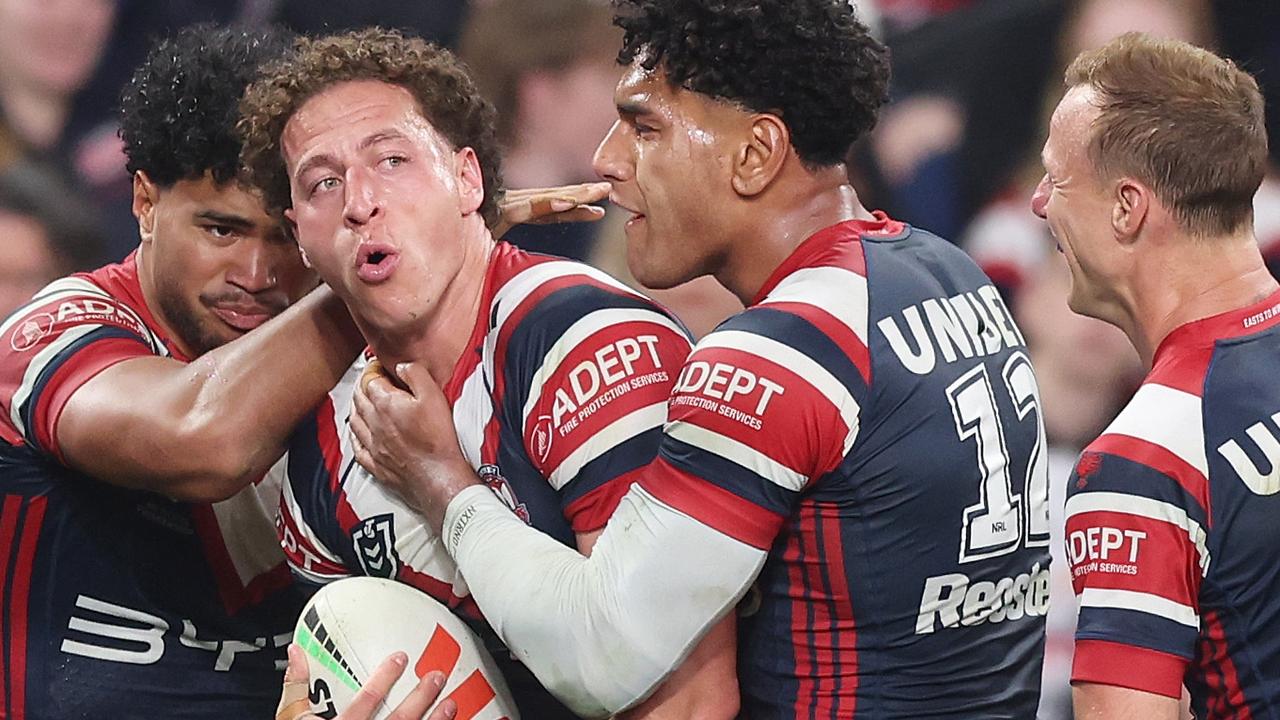
    As the NRL’s round of State of Origin-enforced squad reshuffles kicks off, the Sydney Roosters are preparing to face the Dolphins at Brisbane’s Suncorp Stadium on Friday night with a drastically altered lineup—seven of their top first-grade stars are sidelined for the clash, but head coach Trent Robinson says the mass absences have created a golden opportunity for rising talent to prove their worth at the top level.

    Both sides are navigating significant Origin-related disruptions. The Dolphins will also be without five of their Queensland Maroons representatives for the match, but they have received a timely boost: playmaker Isaiya Katoa has been released from New South Wales Origin camp to suit up for the club on Friday. For the Roosters, the absentees read like a who’s who of regular matchwinners: captain and fullback James Tedesco, Lindsay Collins, Mark Nawaqanitawase, Reece Robson, Robert Toia, Sam Walker and Victor Radley will all watch from the sidelines, with Nawaqanitawase in line to make his senior State of Origin debut for the Blues.

    One of the most anticipated inclusions in the Roosters’ extended squad is 19-year-old prospect Rex Bassingthwaighte, a Dubbo native recently named to the NSW Under-19s side who has long been tagged as the club’s future long-term fullback. Speaking to reporters ahead of the game, Robinson said the young talent has earned his first call-up to a top-grade bench spot after turning heads in junior and reserve competitions. “Rex has come down from Dubbo and been on our radar for a while,” Robinson said. “He’s got a free spirit about him, but he’s also really gone after moments through the junior grades. We saw that in the SG Ball, we’ve seen that in reserve grade, so it was good to put him on that the bench, and I’m looking forward to see if he gets that opportunity. You can see when someone’s going to be a first-grader, and it’s time to give some of those guys an opportunity.”

    While the roster is far from the Roosters’ full-strength starting side, the club still retains elite experience with key playmaker Daly Cherry-Evans, forward Angus Crichton, backrower Naufahu Whyte and other established first-graders suiting up. This match also marks the Roosters’ sixth consecutive clash against non-NSW-based opposition, a stretch that has forced the club to dig deep into its 38-player full-time squad. For Robinson, the forced rotation is a positive outcome for the club’s long-term depth. “The guys that you’ll see play, they’ve been in our squad, they train every day,” Robinson said. “We train with about 38 players, and we’re a really close crew. And some of those players that don’t get to play as often get to play tomorrow, and that’s a great thing for a club. We love these weeks. The possibility is really high, and you want to see someone take that opportunity that they’re going to get. But then it’s also for the other guys that play each week to shoulder the load and say, ‘OK, follow me’. It creates a really good environment for footy this weekend, and it’s some of the most enjoyable weeks of the year.”

    Two players in particular are gearing up for highly anticipated returns to their preferred positions, starting with halfback Hugo Savala. With regular starting half Sam Walker sidelined for Origin, Savala will step into the halves to partner Cherry-Evans, the man he is widely expected to replace long-term. Savala has turned in strong performances at left centre throughout the 2024 season, but the playmaker made his name as a five-eighth in his breakout rookie campaign, and Robinson said the shift back to his natural position has injected extra energy into the young gun. “I think it’s hard to see energy grow from somebody whose energy is so high already. But it’s a great opportunity for him,” Robinson said. “He’s excited about getting back into the halves and playing his role, and so are we.”

    For Cody Ramsey, the opportunity to start at fullback is even more meaningful, coming nearly two years after he last started in the role at NRL level and 12 months after he returned from a career-threatening battle with ulcerative colitis. Ramsey, who joined the Roosters after leaving the St George Illawarra Dragons, has played four NRL games since his comeback, filling in on the wing admirably while Nawaqanitawase and Daniel Tupou recovered from injury. Now he will step into the fullback role to cover Tedesco’s Origin absence, a position he calls his own. “I think it was really beneficial to have him play on the wing,” Robinson explained. “It’s not great having Mark and ‘Toops’ out, but to be able to have Cody come in and play (was great) knowing that if Ted did get in Origin that he was going to play that fullback role. So having him on the wing, getting him comfortable on the field again in NRL, and then coming back into fullback, he’s been driven this week.”

    For the Dolphins, a win on Friday would see them jump over the injury-hit Roosters into the top eight of the NRL premiership, putting them in strong position to secure a first finals berth since entering the competition. For the Roosters, the opportunity to pull off an upset with a young, inexperienced side has the club embracing the challenge ahead of kickoff.

  • Haiti forced to change World Cup kit over war imagery

    Haiti forced to change World Cup kit over war imagery

    Just days ahead of their opening 2023 Women’s World Cup Group C clash against Scotland, Haiti has been required to alter its official team kit after global governing body FIFA ruled out a design feature honoring a pivotal moment in the nation’s fight for independence. The original kit, produced by Colombian apparel manufacturer Saeta, included a subtle illustration of the 1803 Battle of Vertieres — the conflict that ultimately secured Haiti’s sovereignty from colonial rule — paired with the country’s national flag. Haitian players wore the original design in two warm-up friendly matches held in Florida earlier this month, triggering a review by FIFA’s equipment compliance team.

    In an official statement shared to Instagram Wednesday, Saeta clarified the original creative intent behind the controversial design, emphasizing it was never meant to carry a political message. “The final design we presented was crafted as a tribute to all the Haitian men and women who work every day to build a better future for their country,” the statement read. “Throughout the standard regulatory review process, FIFA concluded that specific visual elements in the design could be interpreted in a way that violates their equipment guidelines, and formally requested adjustments to the kit. While FIFA’s interpretation does not align with our original, non-political intent, Saeta respects the governing body’s processes and has fully implemented the required modifications to meet their final specifications.”

    The kit revision comes as Haiti prepares to make its long-awaited return to the World Cup stage, kicking off its campaign against Scotland in Boston on Saturday. This is only the second time in the nation’s history that it has qualified for the tournament, ending a 52-year drought since its last World Cup appearance. Ranked 83rd in the global FIFA rankings, the underdog Caribbean side faces a daunting group stage challenge: after facing Scotland, it will go up against five-time tournament champion Brazil and current African title holder Morocco.

    Haiti’s historic qualification has already been hailed as one of the most uplifting underdog stories of this year’s tournament. The team overcame extraordinary off-pitch obstacles to secure their spot, amid widespread gang violence and political instability that has plunged the impoverished Caribbean nation into chaos. The ongoing unrest made it impossible for the team to host any of its qualifying matches on home soil, forcing the side to play all home fixtures in neutral territories. Despite these crippling challenges, the squad pulled off one of the biggest upsets of the qualifying process to book their place in the 32-team tournament.

    For Haitian midfielder and team star Jean-Ricner Bellegarde, the World Cup berth offers a chance to reshape global perceptions of his crisis-stricken homeland. “We know many people around the world have a negative image of our country, that they only see all the problems we face,” Bellegarde told AFP in an interview. “But just being here, competing on this stage, will bring so much good for our country, our people, and our families.”