分类: sports

  • World Cup 2026: Saudi football’s star-studded revolution has yet to lift the national team

    World Cup 2026: Saudi football’s star-studded revolution has yet to lift the national team

    It has been nearly three years since that iconic sunny winter afternoon at Qatar 2022’s Lusail Stadium, when Saudi Arabia pulled off what remains one of the most shocking upsets in men’s FIFA World Cup history. Trailing Argentina by a single goal at the halftime break, the Green Falcons roared back with two quick second-half strikes to secure a 2-1 win over the side that would eventually lift the tournament trophy. For Saudi football, that result erased the painful memories of past World Cup humiliations: the 8-0 rout by Germany in 2002 and the 5-0 opening-match defeat to Russia in 2018 were no longer the first story the world associated with the kingdom’s national side. Instead, global attention turned to Saudi Arabia’s passionate fanbase and its rapidly evolving football culture.

    Buoyed by the global hype generated by the Argentina upset, the Saudi Pro League (SPL) moved quickly to capitalize on its newfound momentum. Within months, top-flight club Al-Nassr secured the high-profile signature of Portuguese icon Cristiano Ronaldo. Six months after the World Cup, Saudi Arabia’s sovereign wealth vehicle, the Public Investment Fund (PIF), acquired controlling stakes in the kingdom’s four biggest clubs and began bankrolling the signings of dozens of global football superstars.

    Three years on from that massive cash injection, the transformation of Saudi domestic football is impossible to ignore. SPL sides now consistently dominate Asian club competition, and the starting lineups of the kingdom’s top clubs feature some of the biggest household names in the global game. The gap between the SPL and established top European leagues was highlighted last year when Riyadh powerhouse Al-Hilal pulled off a stunning 4-3 upset over European champions Manchester City in the Club World Cup round of 16.

    Yet for all the glitz, success and global attention the SPL has earned, one gaping hole remains: the massive investment has yet to translate to any tangible improvement in the performance of Saudi Arabia’s national men’s team.

    Many long-time observers and fans remain optimistic that change is on the horizon, especially with the 2034 FIFA World Cup set to be hosted on Saudi soil. “It is great that we have some of the best players and coaches now in Saudi Arabia. It has only been a couple of years [since PIF invested], but maybe we will see a jump by the time we host the World Cup,” Nasser Khalfan, an Al-Hilal supporter who plans to attend the club’s pre-season tour matches in the U.S. this summer, told Middle East Eye.

    In many ways, the legendary 2022 win over Argentina covered over deep structural flaws in Saudi football. When the Saudi football authorities increased the foreign player quota from five to eight then 10 per starting lineup, requiring just three domestic Saudi players on the pitch at any time, the crisis for the national side only deepened. The stark disconnect between big-spending domestic club investment and stagnant national team performance has drawn widespread comparisons to China’s failed top-flight experiment a decade earlier.

    Back in 2017, the Chinese Super League (CSL) outspent the English Premier League in the transfer market, with total expenditure crossing €1 billion. The big-money project ultimately failed to lift the quality of China’s national team, and authorities abandoned the approach in favor of financial sustainability, introducing a 600 million yuan (€76 million) annual cap on total club football spending and strict salary limits for both domestic and foreign players.

    To avoid falling into the same unsustainable debt trap, PIF has actively sought outside investment to reduce the kingdom’s financial exposure. Already, a 70% stake in Al-Hilal has been sold to prominent Saudi investor Prince Al-Waleed bin Talal, and a number of smaller top-flight clubs including Al-Riyadh, Abha, Al-Fateh, Al-Tai and Al-Shoulla have been listed for sale to private investors. The move comes after Saudi football required a $333 million government bailout in 2018, and policymakers have made clear they have little appetite for repeating that exercise.

    Despite the structural concerns, most Saudi fans remain enthusiastic about the transformation of their domestic game. Khalfan argues that even with the slow progress on the national side, the investment has already changed football for the better in the kingdom. “Yes, the government spent a lot of money, but I think it is changing sport in Saudi Arabia for the better. I remember before the 2018 World Cup we sent players to Spain [on loan] and they did not play for their clubs. Now Saudi players have some of the best players in the world as their teammates,” he explained.

    Tangible results for the national team have yet to materialize, and the Green Falcons’ recent competitive record remains underwhelming. Just days after the historic 2022 win over Argentina, Saudi Arabia lost consecutive group-stage matches to Poland and Mexico, crashing out of the tournament in the opening round. The team has also struggled in continental Asian competition.

    For long-time Saudi football fans, top-tier success is not an unrealistic dream: the kingdom made its Asian Cup debut in 1984 and won the tournament in its first appearance, before going on to reach five more finals and claim two additional titles between 1988 and 2007. That run of success captured the imagination of football fans across the Arab world, so much so that when the iconic Japanese football anime *Captain Tsubasa* was dubbed into Arabic, it was renamed *Captain Majed* in honor of legendary Saudi striker Majed Abdullah. But today, these historic triumphs are largely lore for most Saudis: the kingdom’s median age sits just under 24, meaning the majority of the population was not alive the last time the national side won a knockout-stage match at the Asian Cup, two decades ago.

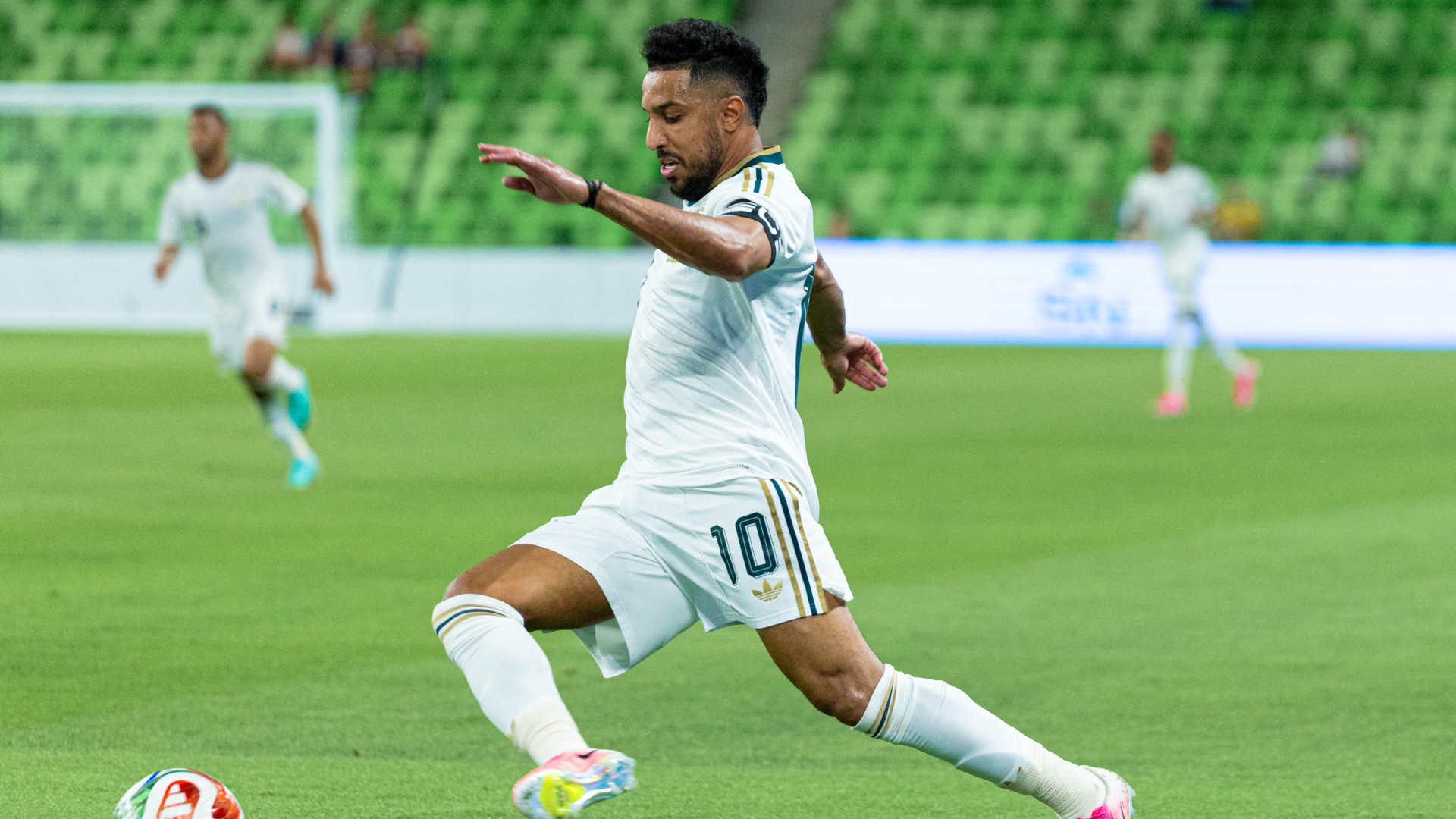
    The road to 2026 World Cup qualification has been fraught with turmoil. In a high-profile hire, the Saudi Football Federation poached manager Roberto Mancini from the Italian national team in August 2023, luring the coach who led Italy to a surprise 2020 European Championship title with a four-year contract worth $100 million. Mancini’s remit was simple: replicate his Italian magic with the Green Falcons and turn them into a global contender. But the Italian manager lasted just 14 months in the role, leaving the side stuck in mid-table of World Cup qualifying with just five points from four matches. In his final press conference, he publicly blamed star player Salem al-Dawsari for missed penalties in disappointing draws against Indonesia and Bahrain.

    Facing the very real prospect of missing out on 2026 World Cup qualification, the federation turned to a familiar face, reappointing former manager Herve Renard. Renard steadied the ship just enough to secure qualification, but was dismissed shortly after a lopsided 4-0 defeat to Egypt in March 2025. His replacement, Giorgios Donis, was hired specifically for his experience coaching in the SPL, but has been given less than six weeks to prepare the side for its 2026 World Cup opener.

    This year marks Saudi Arabia’s seventh appearance at the FIFA World Cup, where it has been drawn into a tough group with European powerhouse Spain, South American giant Uruguay and African contender Cape Verde. The national side’s most pressing flaws are visible at both ends of the pitch: despite billions in investment, the Green Falcons have struggled to find goals, managing just 10 strikes in their last 12 World Cup qualifying matches.

    “I would be more concerned if they weren’t creating chances,” Paul Williams, founder of Asian football outlet *The Asian Game*, told Middle East Eye. “The issue comes down to finishing … and you can’t fix finishing in a week. That’s going to be an issue.” At the other end of the pitch, none of the three goalkeepers called up to the 2026 World Cup squad is a regular starter for their SPL club, raising serious questions about the side’s ability to withstand the high-powered attacks of Spain and Uruguay.

    Williams remains cautiously pessimistic about the team’s 2026 chances: “I’m not downbeat on their chances. I’m not bullish on their chances, either. They have the talent. Let’s see if they can deliver.”

    With the 2027 Asian Cup set to be hosted in Saudi Arabia in just six months’ time, and the 2034 World Cup just nine years away, Saudi fans are hoping a strong run at this year’s World Cup can kickstart a new era of regional and global football dominance for the Green Falcons.
  • France star Mbappe vows to increase defensive work

    France star Mbappe vows to increase defensive work

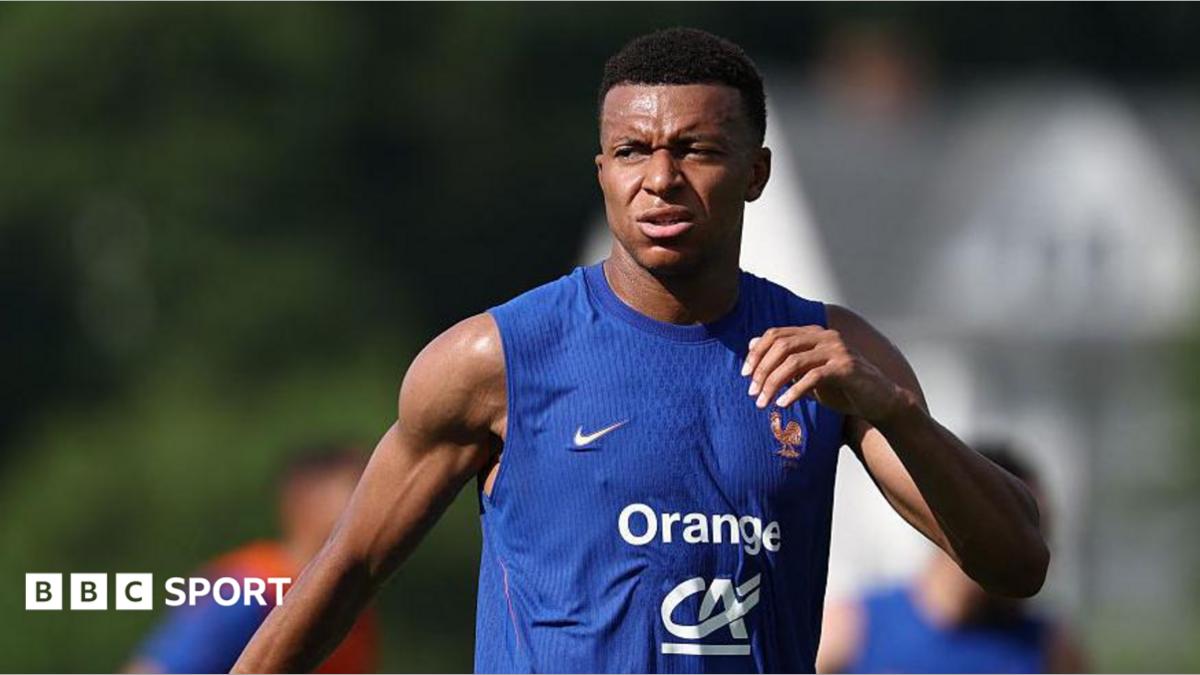
    As France enters the 2026 FIFA World Cup as two-time champions, their new captain Kylian Mbappe is making a public commitment to shore up a key gap in his game ahead of the team’s opening group stage match against Senegal on Tuesday. The 27-year-old striker, who completed a high-profile transfer from Paris Saint-Germain to Real Madrid in 2024, has faced mounting criticism in his second season at the Santiago Bernabeu, where the club finished the campaign trophy-less despite his individual success as La Liga’s top goalscorer.

    Much of the scrutiny has centered on Mbappe’s limited defensive output, a weakness backed up by official Opta data across Europe’s top five leagues. Among 1,490 players with at least 19 league appearances in the 2025-26 season, Mbappe ranked 1,350th in combined defensive metrics including interceptions, blocks, tackles, and recovered possession. His rate of just 0.14 tackles per 90 minutes placed him in the bottom five of the same ranking. Compounding these on-pitch questions, Mbappe also missed a portion of Real Madrid’s season with a hamstring injury, and the club’s trophy drought fueled growing fan frustration and unconfirmed reports of unrest in the first-team dressing room.

    The French star has not been without support in the face of this criticism. His international teammate Ousmane Dembele recently spoke out publicly, arguing that the negative commentary targeting Mbappe has gone “too far”. During a recent interview with French newspaper Le Parisien, where questions were posed by teammates and close friends, Mbappe’s younger brother Ethan – who currently plays for Ligue 1 side Lille – teased the captain over his defensive shortcomings. Rather than pushing back on the critique, Mbappe acknowledged the gap in his game and pledged to improve ahead of the World Cup.

    “I need to take the extra step [with my defensive work] because it’s something important for the team and I have to do it,” Mbappe told the outlet. “It will start this time because we want to win, and to win, I’m ready to do whatever because I want to win at all costs.”

    For Mbappe, this World Cup carries extra personal milestones beyond the team’s pursuit of a third global title. This is his first tournament as France’s full-time captain, having stepped into the role following Hugo Lloris’ retirement from international football in 2023. Already one of the most prolific goalscorers in World Cup history, with 12 goals in 14 tournament appearances to date – including a historic hat-trick in the 2022 final against Argentina – one more goal will tie him with Olivier Giroud as France’s all-time leading men’s international goalscorer.

    After kicking off their group stage campaign against Senegal, Didier Deschamps’ side will face Iraq and Norway in their remaining two pool matches as they look to progress to the knockout rounds of the 2026 World Cup.

  • Cucurella joins Real Madrid from Chelsea on same day he’s set to play at World Cup for Spain

    Cucurella joins Real Madrid from Chelsea on same day he’s set to play at World Cup for Spain

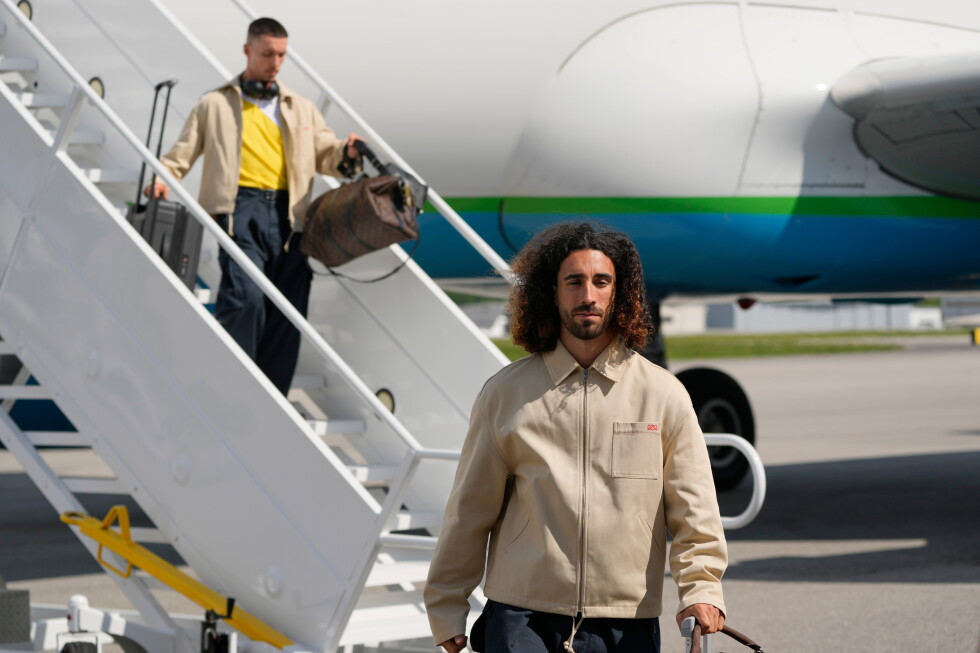
    In a high-profile transfer move that shakes up European soccer just as the 2024 World Cup gets underway in North America, Real Madrid has officially confirmed the signing of Spanish left-back Marc Cucurella from Chelsea. The announcement came on Monday, mere hours before Cucurella was set to take the pitch for Spain in its opening group stage match against Cape Verde in Atlanta.

    The 27-year-old, who is instantly recognizable across global soccer for his signature long curly hair, has put pen to paper on a six-year contract with the Spanish giants. According to BBC reporting, the transfer fee totals 60 million euros, equal to roughly $70 million. This deal is widely expected to be just the first of a major spending spree for Real Madrid this transfer window, coming on the heels of two key organizational changes at the club: the hiring of legendary head coach Jose Mourinho last week and the re-election of long-serving club president Florentino Pérez. Pérez has already publicly outlined his ambition to add more top defensive talent to the squad, with Liverpool center back Ibrahima Konaté and Inter Milan right back Denzel Dumfries already named as primary targets.

    Cucurella’s journey back to La Liga has been years in the making. He launched his professional career at Barcelona, Real Madrid’s bitter domestic rivals, before earning his stripes at Eibar and Getafe. He made the move to the English Premier League in 2021, signing with Brighton & Hove Albion, and just one year later he moved to Chelsea in a deal that came shortly after the London club was acquired by its current American ownership group. During his two years at Stamford Bridge, Cucurella cemented his reputation as one of the top left-backs in men’s soccer, and he was a key part of the Spanish national side that claimed the 2024 European Championship title earlier this year.

    For Chelsea, the sale of Cucurella comes as no surprise, as the club faces mounting financial pressure to offload high-value first-team players this summer. After a disastrous 2023-2024 campaign that saw the Blues fail to qualify for any European competition next season, selling top talent has become a necessity to balance the club’s books. The team slumped to a disappointing 10th-place finish in the Premier League, and suffered a humiliating 8-2 aggregate defeat to Paris Saint-Germain in the Champions League Round of 16. Cucurella also drew internal scrutiny at the club earlier this year, when he publicly criticized Chelsea’s January decision to fire manager Enzo Maresca in an interview with The Athletic in March. He argued that the timing of the sacking was poorly chosen, noting that the change had a major negative impact on the squad and that the club should have waited until the end of the season to make a management change.

    As Cucurella prepares to make his first tournament appearance for Spain at the North American World Cup, the transfer adds another layer of intrigue to both La Liga’s title race and the ongoing upheaval at Chelsea, one of the Premier League’s most high-profile clubs.

  • Dublin-born Cape Verde star recruited on LinkedIn gets World Cup chance

    Dublin-born Cape Verde star recruited on LinkedIn gets World Cup chance

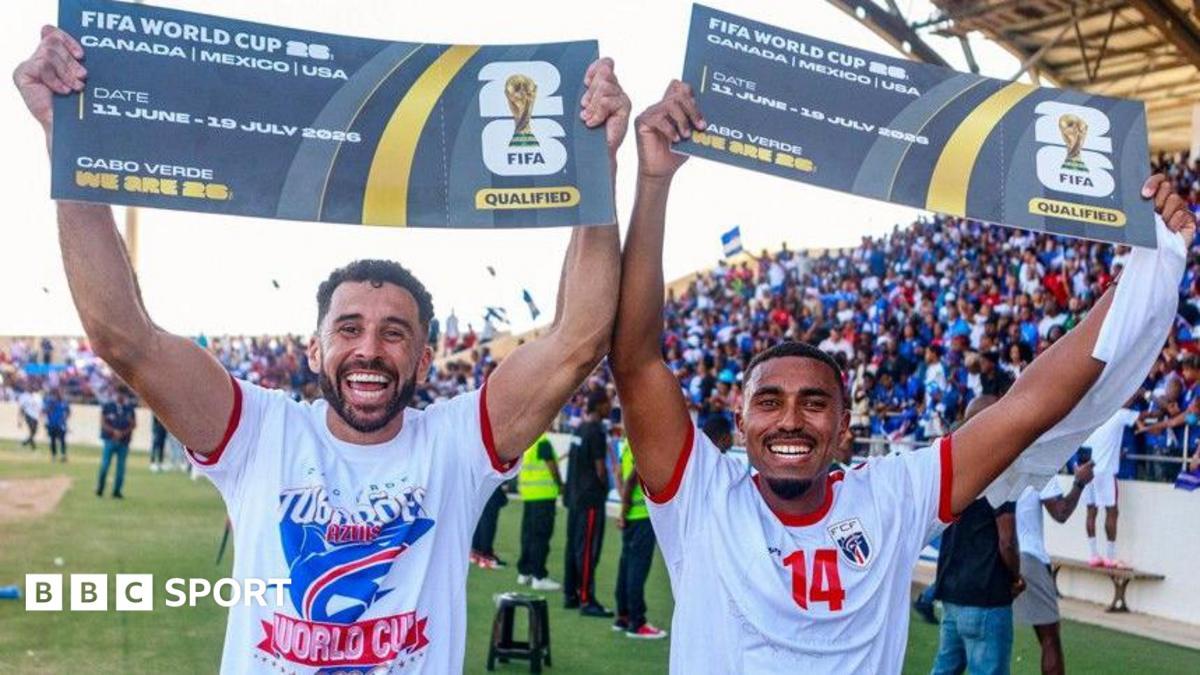
    The 2026 FIFA World Cup will bring one of its most extraordinary underdog stories to the global stage when tiny Atlantic island nation Cape Verde makes its first ever tournament appearance, headlined by the incredible journey of defender Roberto Lopes, who went from a part-time footballer working a Dublin desk job to starting against 2010 champions Spain.

    At 33, Lopes’ path to the world’s biggest sporting stage reads like a Hollywood script. A decade ago, he was a newly certified mortgage adviser grinding through a 9-to-5 office job he disliked, turning out part-time for Irish side Bohemians after work. It was not until 2017 that Dublin rivals Shamrock Rovers gave him the life-changing chance to pursue football full-time, a gamble he took without hesitation.

    The next twist in his journey came through an unlikely channel: LinkedIn. In 2019, then-Cape Verde head coach Rui Aguas discovered Lopes’ father was born in the African island nation, and reached out to invite him to join the national side nicknamed the Blue Sharks. Lopes, who had previously represented Republic of Ireland at under-19 level, initially mistook the Portuguese-language message for spam and ignored it for nine months. When Aguas followed up, Lopes translated the message and jumped at the opportunity immediately.

    “From when I was a young child, and I imagine every aspiring footballer when they were young, they wanted to play at the highest level possible and, for me, it doesn’t go any further than the World Cup,” Lopes told BBC Sport. “Being able to represent my family playing for the national team and being able to put our family name out there at one of the biggest sporting events in the world fills me with great pride.” Just days after helping Cape Verde secure World Cup qualification, Lopes welcomed his first child, son Diego, with wife Leah, capping off a whirlwind period of achievement.

    Lopes’ story is just one part of Cape Verde’s decades-long climb to global football prominence. The nation of just 525,000 people, a former Portuguese colony that gained independence in 1975 and only joined FIFA in 1986, has shocked the global football community to reach the tournament. For generations of Cape Verdean footballers, this moment was once unthinkable.

    Anselmo “Jair” Ribeiro, who played for the Blue Sharks in 2000 when the side was ranked 182nd in the world, recalled the challenges of that era: when he played, he had to pay for his own plane tickets to represent the national team, and even many people he met had never heard of his country. Today, the Blue Sharks sit 67th in the FIFA rankings, have qualified for four Africa Cup of Nations tournaments, and will become one of the smallest nations by population to ever compete at a World Cup. Locals call the qualification the biggest moment for the country since independence, a staggering rise for a football association that employs only seven full-time staff and sells match tickets out of local bakeries and petrol stations.

    For the large Cape Verdean diaspora in the United States, the team’s first World Cup match – to be held in Atlanta, just a 1,000-mile trip from the U.S.’s largest Cape Verdean community in Massachusetts – is a moment of unprecedented national pride. At Thony’s Barbershop in Boston’s Dorchester neighborhood, owned by Cape Verdean immigrant Antonio Alves, the shop is decked out in Blue Sharks colors, and every conversation for months has revolved around the tournament. Alves, who will attend the opening match in person, has set up the shop’s large television to broadcast the game live for local fans, complete with free snacks and drinks.

    Massachusetts is home to between 70,000 and 90,000 Cape Verdean residents, whose ancestors first arrived as whalers in the 1850s. Alves, who left Cape Verde for the U.S. at 18 and has funded tickets for local children to attend Cape Verde’s home matches, says the unlikelihood of the Blue Sharks’ run has united the entire community. Alves was in Praia, Cape Verde’s capital, when the team beat Eswatini to secure qualification, and recalls fans crying with joy as the historic result sank in.

    “The rest of the world said, ‘No chance, no way are Cape Verde getting this close’. But here we are,” Alves said. “This is the power of sport. There are a lot of people in this community who don’t follow football, but they’ve been coming into the shop to ask questions. When’s the game? Where’s the game? Can I watch? This is the power of sport, getting people together.” Cape Verde kicks off its historic Group H campaign against Spain on Monday, with matches against Saudi Arabia and Uruguay to follow, as the Blue Sharks aim to become the first African debutant since Ghana in 2006 to advance to the knockout stage.

  • World Cup: South American teams start off on the wrong foot

    World Cup: South American teams start off on the wrong foot

    PHILADELPHIA — The 2026 FIFA World Cup has delivered an unexpected early twist, as powerhouse South American national teams have failed to secure a single win across their opening three fixtures, a rocky start that stands in stark contrast to a dominant opening performance by host-region North American sides on home soil.

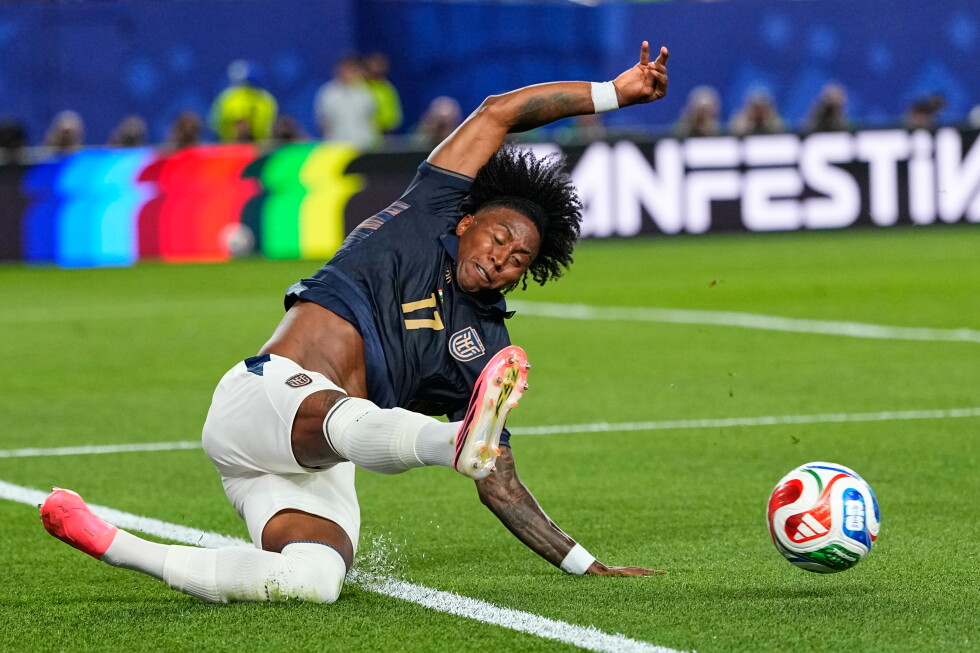
    The latest setback for South American soccer came Sunday at Philadelphia’s Lincoln Financial Field, where Ivory Coast claimed a tight 1-0 victory over Ecuador. The result brought an end to Ecuador’s 19-game undefeated run stretching back to a 1-0 loss to Brazil last September, even as a pro-Ecuador crowd of 68,274 — most clad in the team’s iconic yellow kits — turned the venue into a near-home field for La Tri.

    Ecuador’s defeat follows two other underwhelming South American results from the tournament’s opening weekend: five-time World Cup champions Brazil were held to a 1-1 draw by Morocco on Saturday, while Paraguay suffered a lopsided 4-1 rout at the hands of co-host United States.

    Post-match comments from South American coaching staff shared a common tone of reflection following the underwhelming starts. Ecuador manager Sebastián Beccacece described the result as a “very painful situation”, noting “I’m very sorry we did not give our fans the joy they came to seek. It was an unfair defeat, played out in a fantastic stadium atmosphere. We have to process it, put what happened behind us, focus on what lies ahead, and I believe we keep the faith.”

    Paraguay head coach Gustavo Alfaro echoed that language, calling his side’s heavy defeat to the U.S. a “very painful lesson”, and offered unreserved praise for the co-hosts’ performance: “The U.S. won this match very clearly and fairly. They dominated tactically, technically and physically as well. They have answers to everything you throw at them.”

    Even for Brazil, the most decorated men’s World Cup program in history, the opening draw did not spark panic. Legendary manager Carlo Ancelotti urged the side to remain confident, reminding critics and players alike: “You don’t win a World Cup based on your first match.”

    Ecuador’s playing staff also pushed back against narratives that an opening loss eliminates their title hopes, pointing to recent tournament history as proof early results do not determine final outcomes. Captain Enner Valencia said the squad retained its optimism despite the setback: “We’re keeping our heads held high knowing that this is just the beginning, and there’s still a tournament ahead of us.”

    Ecuador goalkeeper Hernan Galindez expanded on that point, referencing Argentina’s 2022 World Cup victory to illustrate the unpredictability of the tournament: “In the last World Cup, we won the first game and then were left out. Argentina, in the last World Cup, lost the first game and won the World Cup, so nothing guarantees you anything.”

    South American soccer carries a unique global legacy: it is the only continent outside Europe to produce men’s World Cup champions, and has claimed nine of the 22 titles awarded in tournament history. Three more South American sides are yet to kick off their 2026 campaigns, with Uruguay facing Saudi Arabia on Monday, defending champions Argentina taking on Algeria on Tuesday, and Colombia meeting Uzbekistan on Wednesday.

    The rocky opening for South American nations stands in sharp contrast to the strong start by all three North American co-hosts. Following the U.S.’s lopsided win over Paraguay, Mexico opened its tournament with a 2-0 victory over South Africa, while Canada earned its first ever World Cup point with a 1-1 draw against Bosnia and Herzegovina.

  • World Cup 2026: For Iran, politics and football collide again

    World Cup 2026: For Iran, politics and football collide again

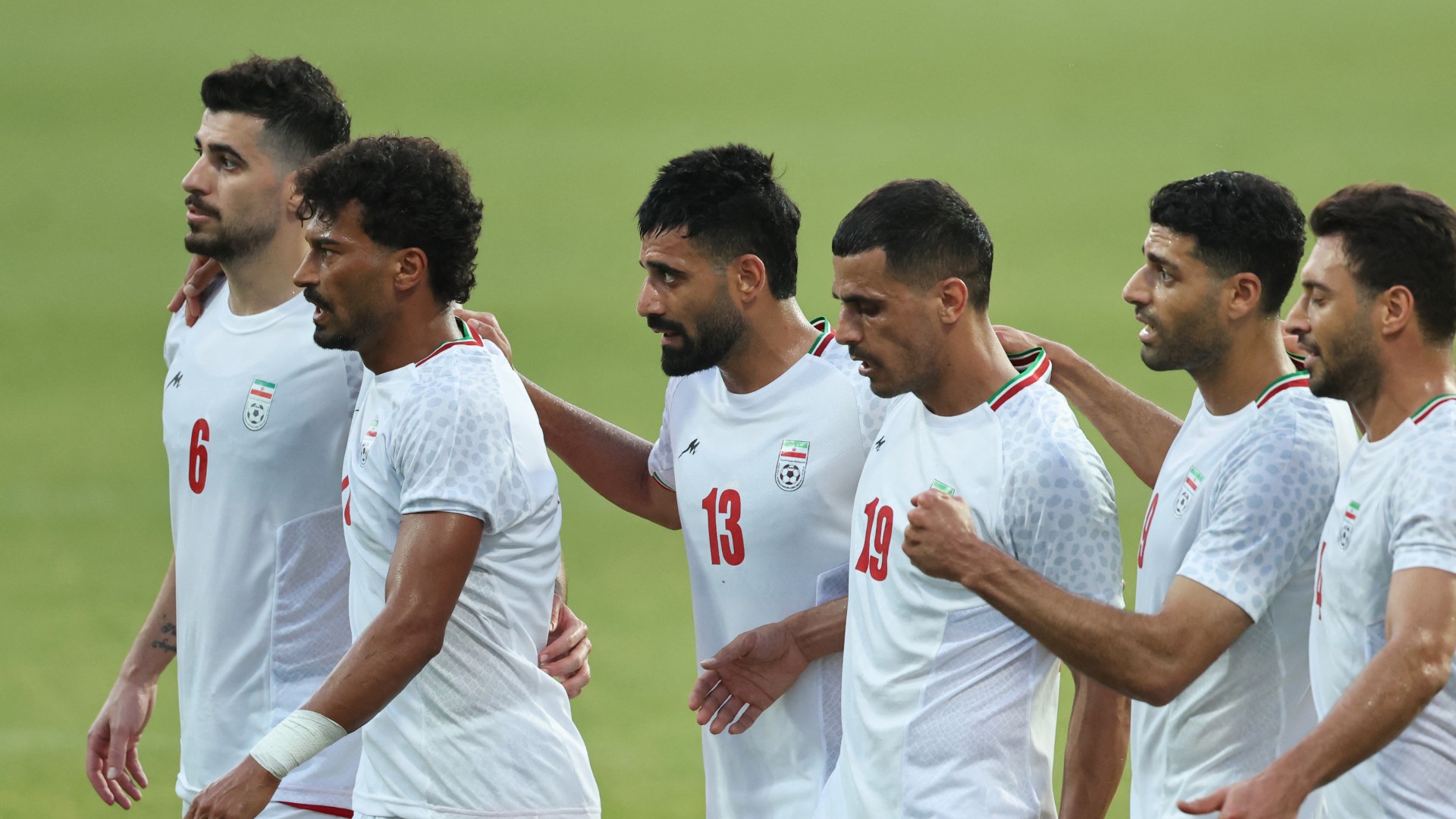
    For decades, Iran’s journey in the FIFA World Cup has been inextricably intertwined with the nation’s political and social upheavals. But the 2026 tournament, hosted in part by the United States, has brought the country’s national team, Team Melli, into an uncharted maelstrom of competing pressures that no other side in the competition’s history has had to navigate.

    Team Melli’s opening match against New Zealand in Los Angeles falls just one day after former U.S. President Donald Trump announced a landmark tentative deal with Iran’s government, a development that could bring a close to three and a half months of open conflict. The location of the match alone adds layers of tension: Los Angeles is widely nicknamed “Tehrangeles,” home to one of the largest Iranian diaspora communities in the world, the majority of which hold staunch anti-regime views. Back in Iran, public support for the national team is deeply divided, with many Iranians viewing the side as a symbol of the ruling government rather than a unifying national representative. This rift has deepened dramatically after the government’s reported crackdown on mass anti-government protests earlier this year that left thousands of demonstrators dead.

    “There is a long history of politics mixing with football in Iran,” explained Jahanyar Mohebbi, a former head coach of Iran Pro League side Foolad FC. “The players feel the pressure from all sides – the politicians, the fans in the U.S. and at home.” This pattern of political entanglement stretches back to Iran’s very first World Cup appearance in 1978. As the squad traveled to Argentina for the tournament, revolution was already sweeping across the country, and the Shah’s government tried to insulate the team from growing domestic unrest. Iran’s star player Parviz Ghleechkhani, who passed away just last month, was barred from the tournament after the Shah’s secret police detained and questioned him over his outspoken political views. Even the team’s legendary goalkeeper Nasser Hejazi, who turned heads with his standout performances in Argentina, missed out on a historic transfer to English powerhouse Manchester United after the revolution disrupted all transfer negotiations.

    After the 1979 revolution established the Islamic Republic, the new government under Ayatollah Ali Khomeini remained wary of football, recognizing the sport’s unmatched ability to mobilize mass passion and public discontent. That wariness was validated in 1997, when Iran defeated Australia in a playoff in Melbourne to qualify for the 1998 World Cup. Widespread spontaneous celebrations across Iran grew so large that the team was ordered to delay their return home to let public tensions subside. That qualification set the stage for one of the most politically charged matches in World Cup history: Iran’s group stage clash with the United States in Lyon. Ahead of the game, then-U.S. President Bill Clinton released a public message of goodwill, and Iranian players presented flowers to their American opponents before securing a 2-1 victory. “Every day somebody from the government, from sports officials, they were asking about the game and demanding a win,” recalled Jalal Talebi, Iran’s head coach at the 1998 tournament. “What I tried to tell the players was, ‘Forget what they said – it’s all politics.’ I knew exactly how much pressure they were carrying.”

    In the decades that followed, political undertones remained a constant in Iran’s World Cup campaigns. The 2006 tournament brought less international tension, but controversy emerged from within the squad, with reported deep divisions between supporters of star players Ali Daei and Ali Karimi. Karimi later made headlines during 2010 World Cup qualifiers when he and several other players wore green armbands, a gesture widely interpreted as a show of support for opposition protesters contesting the disputed re-election of President Mahmoud Ahmadinejad. Most recently, at the 2022 Qatar World Cup, protest took center stage again: following the death of 22-year-old Mahsa Amini in morality police custody for allegedly violating hijab laws, the entire Iranian squad refused to sing the national anthem before their opening match against England, a silent rebuke of the government that drew global attention.

    Beyond the political and social pressures, longstanding international isolation has systematically held Iranian football back. On a practical level, the Iranian Football Federation frequently struggles to access prize money and funding from international governing bodies held in overseas accounts. There has been chronic underinvestment in training facilities and international training camps for the national team, the domestic league has fallen behind other top leagues in the Middle East, and leading international nations routinely refuse to schedule friendly matches against Iran. While Japan, the first team to qualify for 2026, has prepared for the tournament with high-profile tune-up matches against Brazil, England, the U.S. and Mexico, Iran has only been able to arrange warm-up games against Russia, Tanzania, Costarica, Nigeria and Gambia.

    Yet for all these systemic obstacles, Iran has consistently qualified for World Cup tournaments and remains the second-highest ranked men’s national team in Asia, trailing only Japan. The 2026 campaign, however, represents the most daunting challenge the side has ever faced. Until just days before the tournament, there was open uncertainty over whether the entire Iranian squad would even be granted entry to the United States, forcing the team to relocate its pre-tournament training camp from Arizona to Tijuana, Mexico, on the U.S. border.

    Mohebbi noted that the chaotic preparation has brought one unexpected upside: “Usually national teams arrive at the tournament exhausted after a long domestic season, but Iran have had a long break and have been training almost like a club side.” That advantage is outweighed by significant drawbacks, though: the Iranian domestic league was canceled back in February, leaving players without competitive match action for months, and constant logistical uncertainty has created pervasive anxiety. “The most challenging thing is the logistics,” Mohebbi added. “Will they even be allowed to train at the stadium a day in advance, or will they just show up for the match? That uncertainty makes everything much harder.”

    Team captain Mehdi Taremi, who is competing at his third World Cup, echoed those frustrations after several members of the Iranian delegation were denied U.S. visas. “I’ve been to three World Cups, and they always say once you get off the plane and enter the host country, there’s just a unique atmosphere of friendliness and global connection,” Taremi told ESPN. “Unfortunately, I’m not feeling it right now. There’s a lot of tension right now in this World Cup, you can feel it in the atmosphere, and it’s because of actions like these visa denials.” Still, Taremi emphasized that the squad remains united, regardless of differing views on the Iranian government. “Obviously some people outside Iran, many here, are against the government, but we are all Iranian,” he said. “We are united and we are looking for peace. I think they will come there to support us, and we have to bring them joy.”

    For the players, anxiety extends far beyond logistics and visa issues, as they remain constantly concerned about loved ones back in Iran amid ongoing unrest. “It’s been very difficult, I’ll be honest with you, for every single one of us with the whole situation back home,” said winger Alireza Jahanbakhsh. “You have to keep checking on your family, on your loved ones, on your people back home, and of course it’s affecting the whole group.” As the team takes the pitch in Los Angeles, all eyes will be on how the 11 players caught in the middle of global political conflict will perform under the weight of unprecedented pressure.

  • US star Gaethje wins at Trump’s UFC White House show

    US star Gaethje wins at Trump’s UFC White House show

    In a landmark moment that blends elite mixed martial arts competition with United States national celebration, the UFC has made history by hosting the first-ever professional live sporting event on the White House South Lawn. Billed as UFC Freedom 250, the blockbuster card was timed to coincide with both the 250th anniversary of American independence and former President Donald Trump’s 80th birthday, drawing a crowd of more than 89,000 spectators across the South Lawn and nearby Ellipse Park, with the majority of in-person attendees being active-duty and veteran U.S. military members.

    Leading up to the event, organizers faced minor disruption concerns when forecasts called for severe thunderstorms across Washington, D.C. A brief half-hour delay to the opening bell caused by passing rain did little to dampen the mood of the crowd, and the rest of the fight card proceeded without issue. The event opened with a ceremonial procession that saw Trump and UFC CEO Dana White walk from inside the White House to the Truman Balcony overlooking the octagon, followed by a performance of the U.S. national anthem accompanied by a flyover from U.S. Air Force fighter jets. In a unique touch, all main card fighters began their walkouts from inside the White House, with the Marine Band providing musical accompaniment — headliner Justin Gaethje even started his entrance in the Oval Office, pausing to take in the historic setting before passing portraits of former U.S. presidents en route to the cage.

    The main event delivered on every bit of the hype, delivering what UFC commentator Joe Rogan called one of the greatest upsets in the sport’s history. Thirty-seven-year-old American underdog Gaethje entered the bout facing undefeated Ilia Topuria, the Georgian-Spaniard incumbent lightweight champion who carried an unblemished 17-0 professional record into the octagon after moving up from the featherweight division. From the opening bell, the bout was a brutal back-and-forth striking contest. Topuria drew first blood in the second round, dropping Gaethje with a series of sharp body shots, but the American weathered the storm and seized control of the fight from that point onward.

    Gaethje landed a devastating right hand that put Topuria on the canvas in the third round, then followed up with relentless punishment via uppercuts and knee strikes that left Topuria bloodied and badly swollen. The challenger’s pace never let up through the fourth round, and despite a doctor clearing Topuria to continue between rounds, the champion’s corner made the call to pull him from the bout before the fifth round, handing Gaethje a fourth-round stoppage victory. It is the first undisputed UFC lightweight title of Gaethje’s career, coming on his third attempt at the belt, and he was awarded a custom red, white, and blue commemorative belt to mark the historic occasion.

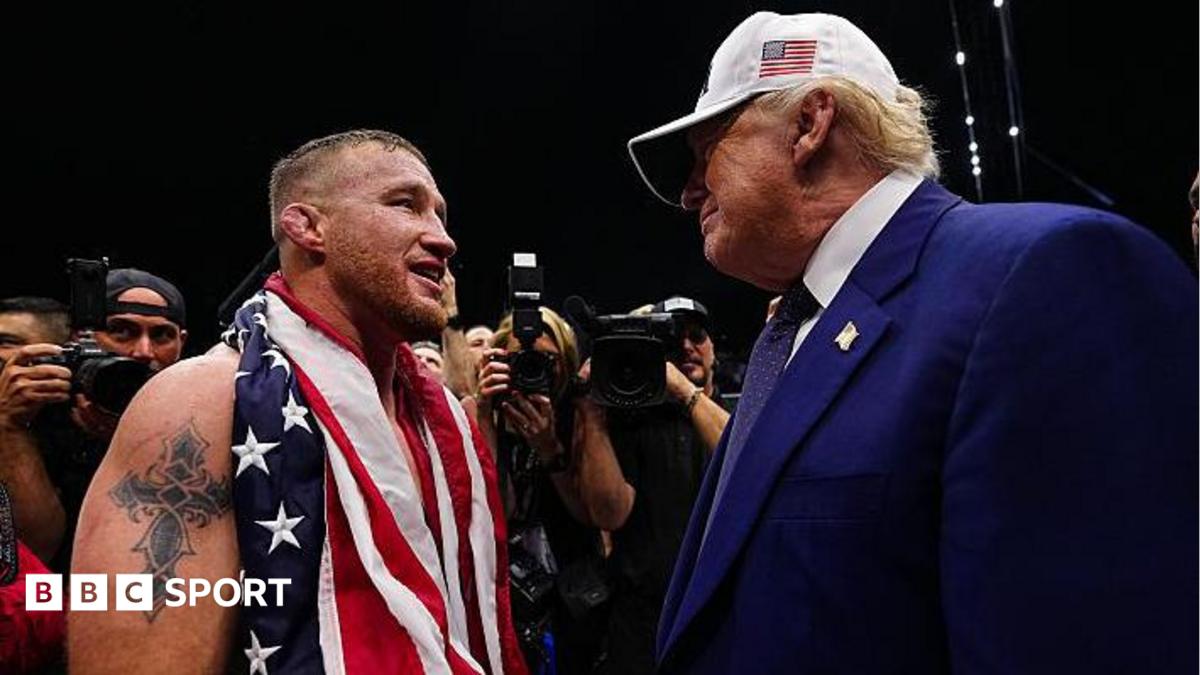
    In his rousing post-fight interview, Gaethje leaned into the event’s patriotic theme, drawing a parallel between his underdog status going into the bout and the odds facing America’s founding fighters 250 years prior. “I’m from America, 250 years ago we were way bigger than 6-1 dogs, and look at us thriving now,” Gaethje said. He also closed his remarks with a tribute to U.S. service members, saying “To all the current, former and future military service members, thank you so much.” After the interview, Gaethje completed his signature post-victory backflip from the top of the octagon cage before meeting and being congratulated by Trump at ringside. Entering the event with a professional record of 27 wins and 5 losses, the victory pushes Gaethje’s career mark to 28-5, cementing his reputation as one of the most exciting competitors in UFC history.

    The co-main event also delivered a stunning upset, as Ciryl Gane halted Alex Pereira’s quest to become the first fighter in UFC history to claim titles in three different weight divisions. Pereira, who already held belts at middleweight and light heavyweight, was challenging for the interim heavyweight crown, but Gane’s signature fluid footwork and sharp striking proved too much for the Brazilian. Gane hurt Pereira with jabs and body kicks in the first round, consistently evading his opponent’s power shots to control the distance. In the second round, Gane landed a perfectly timed counter jab as Pereira stepped in to attack, dropping the 38-year-old. Though Pereira returned to his feet quickly, Gane swarmed his dazed opponent, forcing the referee to stop the contest.

    The win makes Gane a two-time interim heavyweight champion, and marks his first successful bout since a controversial no contest against British champion Tom Aspinall last October. That bout was called off after repeated eye pokes from Gane left Aspinall unable to continue, and Gane used his post-fight interview to call for a rematch with Aspinall this October. “I just want to see thank you to Dana and the UFC, thank you to Pereira,” Gane said after the win.

    The historic event generated immediate buzz across combat sports, with additional breaking stories emerging in the hours after the main event, including a clarification from Eric Trump that social media messages claiming the fight was rigged were fabricated using artificial intelligence. Tyson Fury also appeared at the event, teasing a potential future bout with Anthony Joshua that would be held under the UFC banner alongside Dana White.

  • West Indies beat Sri Lanka by 5 wickets to clinch the T20 series

    West Indies beat Sri Lanka by 5 wickets to clinch the T20 series

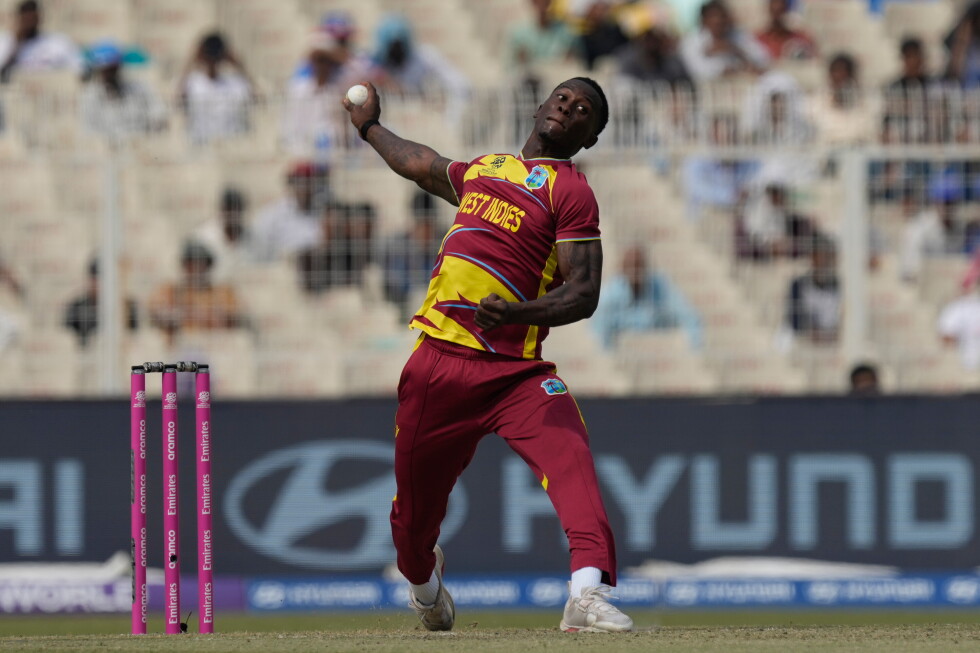
    In a thrilling conclusion to their three-match Twenty20 International series in Kingston, Jamaica, the West Indies pulled off a last-over five-wicket win against Sri Lanka on Sunday, clinching the series 2-1 with just two deliveries remaining. The dramatic run chase, capped by batter Sherfane Rutherford’s unbeaten half-century, capped a seesaw contest that kept spectators on the edge of their seats from the first over to the last.

    After winning the pre-match toss, West Indies captain made the tactical call to send Sri Lanka into bat first, a decision vindicated by seamer Shamar Joseph’s career-best player-of-the-match performance. The fast bowler picked up five wickets for just 33 runs, including two strikes in the sixth over and three more in the final over of Sri Lanka’s batting innings, narrowly missing out on a hat-trick twice.

    Sri Lanka got off to a fast start, reaching 49 for one after just five overs, but the momentum shifted abruptly when Joseph claimed wickets on back-to-back deliveries. First, opener Pathum Nissanka (26 off 17) top-edged a pull to Roston Chase after sharing a 43-run second-wicket stand, before Pavan Rathnayake was trapped lbw on the very next ball. The host’s fielding also delivered early: Matthew Forde pulled off a spectacular one-handed catch off his own bowling to remove dangerous batter Kusal Mendis for just five in the ninth over of the match.

    A late lower-order rally led by Dunith Wellalage dragged Sri Lanka to a competitive total of 169 all out. Wellalage anchored the recovery with a 28-ball 43, and shared a 49-run seventh-wicket partnership with Wanindu Hasaranga, but the stand was broken when Hasaranga was run out in the 19th over. Wellalage became the first of three Sri Lankan wickets to fall in the 20th over, closing out the visitors’ innings and setting the West Indies a target of 170 runs for victory.

    The West Indies chase got off to a shaky start, losing opener Shai Hope to Dunith Wellalage on just the third delivery of the innings. The hosts recovered quickly to reach 52 for one, before a collapse that saw three wickets fall for just one run in a 12-ball period handed the momentum back to Sri Lanka. Rutherford, who would eventually become the innings hero, combined with captain Rovman Powell to rebuild the chase, putting on an 81-run fifth-wicket partnership that got the West Indies back on track for victory.

    The contest turned chaotic in the 17th over, bowled by Sri Lankan paceman Dushmantha Chameera. The over stretched to nine deliveries after a no-ball and two wides, yielded 24 runs for the West Indies, and ended with Powell being dismissed for 33 off the final ball. After the over, the West Indies still needed 36 runs from the final three overs, with the equation narrowing to 29 runs from 12 balls by the start of the 19th over.

    All-rounder Jason Holder turned the game irreversibly in the West Indies’ favor in the penultimate over, smashing three sixes off Chameera in just four deliveries. The blitz cut the required runs down to just six for victory heading into the final over, with Rutherford still at the crease. Rutherford, who had benefited from two costly dropped catches by Sri Lankan fielders earlier in his innings, hit the winning runs to bring up his half-century off 40 balls, finishing unbeaten on 54. Holder ended the innings on 21 not out from just five deliveries, as the West Indies reached 170 for five to seal the series.

    The series win for the West Indies comes after the first two matches were split: the hosts won the opening fixture by seven wickets, before Sri Lanka claimed a 37-run victory in the second match on Saturday to leave the series tied heading into the decider. Prior to the T20I series, Sri Lanka claimed the preceding three-match ODI series 1-0, after the final two matches were washed out by rain following a 41-run win in the opening fixture. The two sides will next face off in a two-match Test series, scheduled to get underway on June 25 in Antigua.

  • Spain at a Tennessee boarding school, Iraq in a rural West Virginia town: Where World Cup teams live

    Spain at a Tennessee boarding school, Iraq in a rural West Virginia town: Where World Cup teams live

    Nestled in the shadow of Tennessee’s iconic Signal and Lookout Mountains, 8-year-old Beckham McClure balanced precariously on a wooden fence for more than three hours on a warm summer day. Clutching a crumpled handwritten note addressed to Spanish soccer stars Pedri and Lamine Yamal, the young fan waited patiently for the Spain national men’s team to step out of their team bus and onto Chattanooga soil. The note read simply: “I love you and I look up to you. Thanks for coming to my city. I hope you win the World Cup.” When the world-famous athletes finally jogged onto the training pitch, Beckham’s eyes went wide with disbelief. “Dad,” he whispered, “they’re real.”

    For Beckham’s father Jaxon McClure, a Marine Corps veteran and lifelong local soccer coach who named his son after the legendary David Beckham, that moment of childhood wonder encapsulated everything this World Cup experience has meant for small Southern American communities. This summer marks 32 years since the United States first hosted the FIFA World Cup, and for the 2026 iteration co-hosted by the U.S., Mexico and Canada, dozens of small to mid-sized cities across the South have stepped into the global spotlight as official base camps for competing nations, where teams can settle in, train, and prepare between matches.

    Tournament favorites Spain set up their training headquarters at Baylor School, a private boarding academy nestled along the Tennessee River in Chattanooga; the Iraq national team has taken up residence at a remote mountain resort town in West Virginia that counts fewer than 3,000 full-time residents; and four-time World Cup champions Germany have made their home in Winston-Salem, North Carolina, where historic cobblestone streets and repurposed tobacco warehouses now stand side-by-side with German national flags and roaming television crews.

    Across these communities, classic Southern hospitality is on full display for visiting teams. In Chattanooga, the 144-foot underground waterfall tucked beneath Lookout Mountain is lit up in Spain’s signature red, and the downtown Embassy Suites where the squad is staying is draped in the red-and-yellow Spanish flag, la Rojigualda. Giant welcome banners emblazoned with “Bienvenidos a Chattanooga” and portraits of star players greeted the team the moment they touched down at Chattanooga Airport. Local resident Skip Schwartz, who now serves on Baylor’s board of trustees, notes that Spanish jerseys are everywhere you turn. “You don’t know if they’re traveling fans from Spain hoping to get a glimpse, or locals who have jumped on the La Roja bandwagon,” Schwartz said.

    Demand to watch the world’s best players train up close has been overwhelming: roughly 25,000 local fans entered a public lottery for just 1,000 available spots to watch Spain’s open practice at Baylor. In Winston-Salem, all tickets to see Germany train at Wake Forest University sold out in just four minutes.

    Local businesses have also leaned into the excitement. Savannah Lahey, who manages Small Batch Beer Co., a popular soccer-focused bar in downtown Winston-Salem, extended opening hours to host public watch parties and created a special German-inspired menu for the tournament, featuring schnitzel sandwiches and sauerbraten ahead of Germany’s opening match. “It’s just fun to see everyone start to care about something they didn’t care about before,” Lahey said. “It makes our visiting friends feel at home, even when they’re thousands of miles away.”

    At West Virginia’s historic Greenbrier Resort, a luxury property that has hosted U.S. presidents and foreign leaders for more than a century, Iraqi and American flags fly side-by-side as the Iraq national team settles into their training camp.

    Spain’s decision to choose Chattanooga over larger American hubs like Chicago and Los Angeles comes down to the quality of Baylor School’s world-class soccer facilities. Under FIFA rules, higher-ranked national teams get first pick of approved base camps across North America, and the Spanish federation selected Baylor after FIFA inspectors gave top marks to the academy’s grass pitches, drainage, irrigation systems, and on-site operations. To keep the natural grass pitches in perfect condition for the Spanish team, Baylor’s own high school soccer team moved their entire spring training schedule to artificial turf, a sacrifice the senior class accepted without hesitation, said Sam Green, the school’s operations and systems director.

    Tucked behind a dense line of trees, two pristine grass pitches form the core of Spain’s daily routine. The training ground is just minutes from both the airport and the team’s downtown hotel, and Atlanta, where Spain will play two of their group-stage matches, is an easy drive away. After their first official training session, players headed straight to the school’s campus pool to relax and cool off ahead of their next workout.

    For Schwartz, the local trustee who played soccer at Baylor back in the late 1980s and early 1990s, when he and his teammates helped lay the Bermuda sod for the school’s first dedicated soccer field, the moment feels almost surreal. That original field has since been replaced by an indoor tennis center that now serves as Spain’s on-site media center, and the school has grown to boast three full soccer pitches and one of the top youth soccer programs in the region. “If somebody had told me then that 40 years later Spain would be using this campus as the foundation for a World Cup, I wouldn’t even have tried to fathom it,” he said.

    Local excitement has turned even casual fans into diehard La Roja supporters. At Spain’s open practice, hundreds of fans chanted “Vamos, España!” after nearly every touch of the ball, and even fans with other rooting interests have found themselves swept up in the energy. Seventeen-year-old Baylor midfielder Heath Techasiriwan, a Filipino American lifelong Lionel Messi fan who supported Argentina in the 2022 World Cup, said there’s no question who he’s backing this tournament. “Without a doubt, I’m cheering for Spain,” he said. “I can’t see players like Pedri, Gavi and Lamine Yamal literally right in front of me and not cheer for them.”

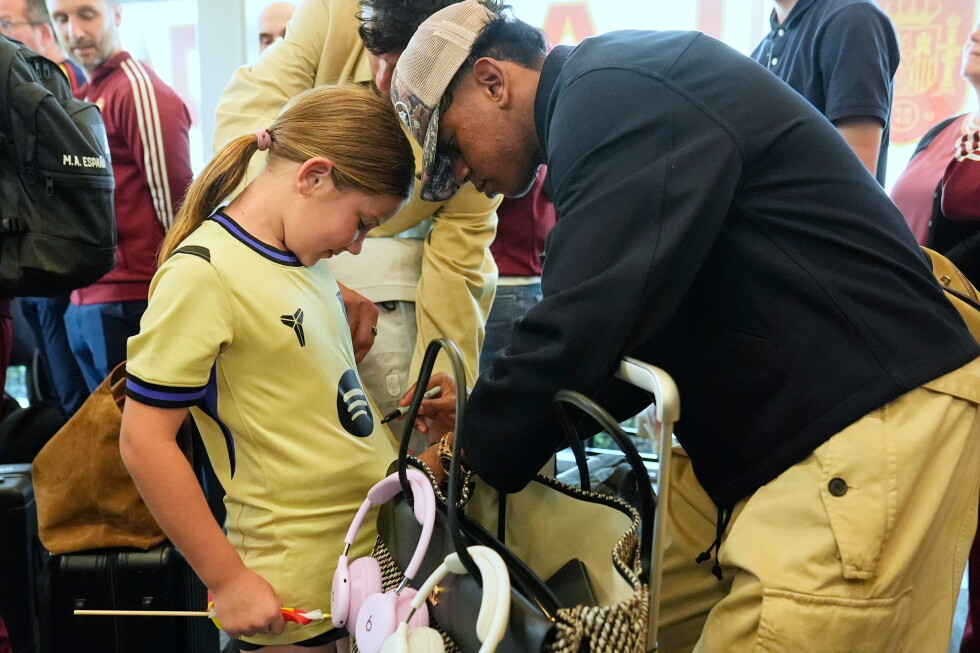
    Before the open practice, Baylor students snuck into the team locker room to snap photos of stalls freshly labeled with Spain’s biggest stars, joking and debating which player had ended up with “their” locker. Sixteen-year-old goalkeeper Mathew Ramirez, who commutes an hour each way from Calhoun, Georgia to train with Baylor, grew up watching Barcelona with his Guatemalan immigrant father. After the practice, 18-year-old star Lamine Yamal signed his custom Barcelona jersey. Ramirez told the young prodigy in Spanish: “Watching you play gives me happiness.” Ramirez says he plans to watch all of Spain’s matches this tournament surrounded by family and friends, eating traditional carne asada together.

    For young Beckham McClure, the day ended with signatures, selfies, and a new Spain jersey that his father says he insisted on sleeping in that night. After meeting his heroes, Beckham kept repeating the same thought: “Wait, Dad. They’re real. Lamine Yamal is a real person. I just thought they were like superheroes. They’re only on TV.”

    For Jaxon McClure, who grew up playing pickup soccer in Chattanooga neighborhoods using trash cans as goalposts and now coaches roughly 850 local children, moments like these prove how far the city’s soccer culture has come. Today, Chattanooga is home to both professional men’s and women’s soccer teams. “They could have gone anywhere in this country,” McClure said of Spain. “And they chose us.”

  • Mexican man apologises for making racist gesture at World Cup

    Mexican man apologises for making racist gesture at World Cup

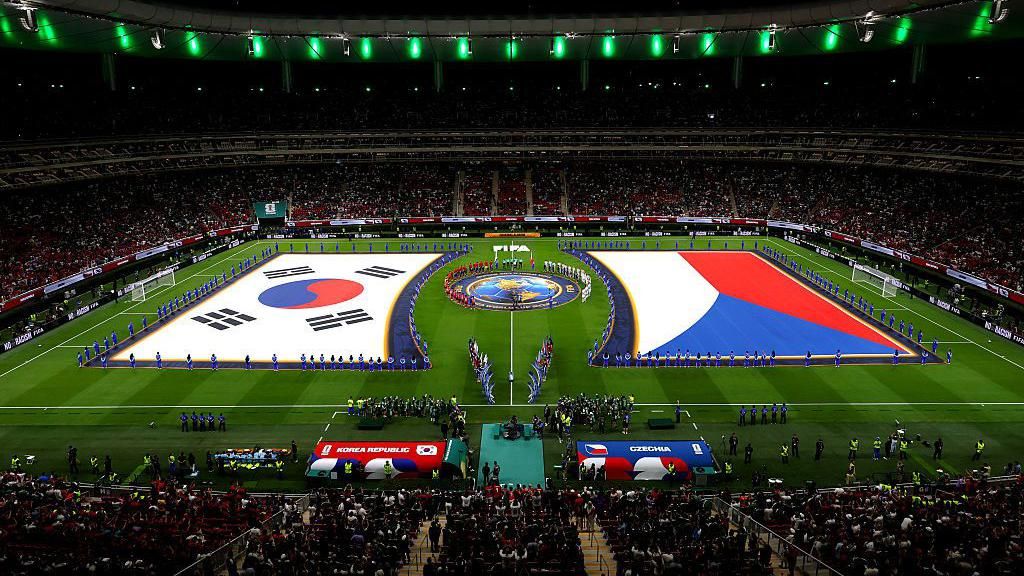
    An international incident sparked widespread public outrage after a Mexican man made a widely recognized anti-Asian racist gesture during a World Cup match between South Korea and the Czech Republic, held in Guadalajara, Mexico last Thursday. The perpetrator, Ulises Fernando Bernal Miramontes, who served as president of the College of Geomatics and Topographic Surveying Engineers of Jalisco (CITGEJ), has since issued a public apology and been removed from his leadership position over the offensive act. The incident was captured by popular South Korean content creator Yoon Su-jin, better known online by her alias Ino Cat, who boasts 6.6 million YouTube subscribers and more than 2 million TikTok followers. Yoon posted the clip to her Instagram, documenting the moment Bernal, seated directly behind her in the stadium stands, pulled the corners of his eyes into a slanted shape — a gesture long understood as a demeaning, racist mockery of East Asian people — before laughing at the action. In her caption accompanying the viral video, Yoon wrote: “You traveled across the world for the World Cup… and experienced racism…” The clip quickly spread across major social media platforms, amassing more than 65,000 comments and at least 120,000 shares or reposts within days. The overwhelming majority of reactions condemned Bernal’s behavior, with many commenters expressing disgust at the casual, unapologetic racism on display. One widely liked comment read: “Ugh so terrible. And then he laughs like he cracked the best joke.” Notably, dozens of commenters identifying themselves as Mexican also issued collective apologies on behalf of their compatriot, stressing that Bernal’s offensive actions do not represent the views or behavior of the broader Mexican population. In the wake of the viral backlash, leadership of CITGEJ confirmed to the New York Post that Bernal had been removed from his post as organization president. Two days after the incident, on Sunday, Bernal released a formal public apology addressing the widespread circulation of the clip and the heated public reaction it sparked. “For that reason, I believe it is important to offer a public apology,” he wrote in the statement. “I sincerely regret everything this situation has caused. I have taken time to reflect on what happened and I understand the responsibility I have in this moment.” Bernal declined to attempt to justify his action or debate varying interpretations of the gesture, adding: “Throughout my personal and professional life, I have always tried to treat others with respect, and I will continue working to ensure that my actions consistently reflect those values.” The match itself ended with South Korea staging a second-half comeback to secure a 2-1 victory over the Czech Republic.