The 2025 Vuelta a España, one of cycling’s most prestigious Grand Tours, has been marred by repeated disruptions caused by pro-Palestinian protesters, raising serious safety concerns for riders and organizers alike. The race, which is scheduled to conclude in Madrid this Sunday, has seen multiple stages shortened or altered due to protests, with one rider forced to abandon the competition after a crash caused by demonstrators running onto the course.
分类: sports
-

Sri Lanka & Zimbabwe in Pakistan 2025
In a thrilling display of cricketing prowess, Pakistan has emerged victorious in the ongoing One Day International (ODI) series against Zimbabwe and Sri Lanka. The series, which began on November 11, 2025, has seen Pakistan secure multiple wins, showcasing their dominance on the field. The matches, originally scheduled to be held in Lahore, were relocated to Rawalpindi due to unforeseen circumstances. Zimbabwe stepped in to replace Afghanistan, who withdrew from the series following an air strike incident in October that tragically claimed the lives of three players during a local tournament. Despite the challenges, the series has been a testament to Pakistan’s cricketing strength. Key highlights include Pakistan’s six-run victory in the 1st ODI, an eight-wicket win in the 2nd ODI, and a six-wicket triumph in the 3rd ODI. The series continues with more matches scheduled, including a final on November 29. Cricket enthusiasts can stay updated with live scorecards and match details as the action unfolds.
-

New Oceania soccer competition hopes to raise level of the sport in the Pacific region
The Oceania Football Confederation (OFC) has unveiled a groundbreaking initiative aimed at elevating the region’s soccer prowess on the global stage. The newly announced OFC Professional League, set to debut in January, will feature eight elite clubs from across the western Pacific. This historic league marks the first professional competition specifically tailored for the Oceania region, offering a structured pathway for players, coaches, referees, and administrators to refine their skills and enhance competitiveness. Among the selected clubs are Auckland FC and Christchurch United from New Zealand, Bula Boys from Fiji, Solomon Kings from the Solomon Islands, Hekari United from Papua New Guinea, Vanuatu FC, Tahiti United, and South Melbourne from Australia. Despite Australia’s departure from the OFC in 2006 to join the Asian Football Confederation, South Melbourne’s inclusion underscores the league’s cross-border appeal. The OFC Professional League aims to address the challenges posed by the region’s scattered populations and limited infrastructure, which have historically hindered international success. League manager Stuart Larman emphasized the league’s potential to provide high-level competition, with each club guaranteed at least 17 matches per season. This increased exposure is expected to better prepare OFC representatives for FIFA tournaments, including the 2029 FIFA Club World Cup. The league’s stringent licensing requirements will also drive improvements in governance, infrastructure, and sporting standards, fostering a more professional environment. Former FIFA and AFC executive James Kitching highlighted the potential for this cross-border model to inspire similar initiatives worldwide, reflecting FIFA’s evolving approach to league structures. The OFC Professional League will be officially launched in Auckland at the end of October, heralding a new era for soccer in Oceania.
-

Need a vacation? Imagine how US Open tennis players feel during their long season
As the U.S. Open progresses, top tennis players like Aryna Sabalenka are revealing the importance of taking breaks during the season to recharge. Sabalenka, the reigning U.S. Open champion, skipped the Montreal event in late July to unwind on the Greek island of Mykonos. ‘The season had been really intense, and I felt low on energy,’ Sabalenka explained. ‘I needed a little break to come back stronger.’ Her decision highlights a growing trend among tennis professionals who face a relentless calendar. Alex de Minaur, seeded No. 8 at the U.S. Open, echoed this sentiment, stating that without such breaks, the grind of the season feels never-ending. De Minaur and his fiancée, Katie Boulter, often take short vacations after Wimbledon to reset mentally for the latter half of the year. However, not all players can afford or desire such breaks. Some, like Adrian Mannarino, prefer to maintain their rhythm by competing continuously. Mannarino, who recently became the oldest man to break into the ATP top 20, believes in focusing on work now and saving vacations for retirement. The concept of in-season vacations is unique to tennis, as team sports like the NFL or NBA offer ample off-seasons for rest. Boulter, who struggled after skipping breaks, emphasized the importance of prioritizing personal well-being. Meanwhile, Ajla Tomljanovic, who lost to Coco Gauff in the first round, advocates for players to make their own choices about when to take breaks. ‘If I need a vacation, I take it,’ she said. As the tennis season continues, the debate over balancing competition and rest remains a hot topic among players.
-

‘No way!’ – Wiegman surprised by Burna Boy at Euro 2025 ceremony
In an unforgettable moment during the Euro 2025 victory celebrations, England women’s football team manager Sarina Wiegman was left in awe as her favorite artist, Burna Boy, made a surprise appearance on stage in front of Buckingham Palace. The event, which marked the Lionesses’ triumphant win, saw thousands of fans gathered in London to celebrate the historic achievement. Wiegman, known for her composed demeanor, was visibly shocked and delighted by the unexpected encounter with the Nigerian superstar. The celebration not only highlighted the team’s success but also underscored the cultural significance of music and sports coming together. This unique moment added an extra layer of excitement to the festivities, leaving fans and players alike with a memory to cherish.
-

Which Premier League players are going to Afcon?
The upcoming 2025 Africa Cup of Nations (AFCON) in Morocco presents substantial challenges for Premier League clubs, with up to 43 players potentially departing for international duty during the critical winter fixture period. Scheduled from December 21, 2025, to January 18, 2026, the tournament coincides with six Premier League matchdays, the FA Cup third round, and EFL Cup semi-final first legs—potentially causing key players to miss up to eight crucial matches.
Liverpool’s Mohamed Salah and Manchester United’s new signing Bryan Mbuemo headline the list of prominent players expected to participate. While 50 African players currently feature in England’s top flight, several nations including Ghana, Gambia, and Guinea-Bissau failed to qualify, sparing players like Tottenham’s Mohammed Kudus and Bournemouth’s Antoine Semenyo from international call-ups.
Club impact varies significantly across the league: Sunderland faces the most substantial disruption with eight potential absentees, while Wolves, Nottingham Forest, and Crystal Palace each anticipate losing four players. Newcastle’s Yoane Wissa has already been excluded from DR Congo’s squad due to injury concerns. Notably, Arsenal, Chelsea, and Leeds United maintain squads without African players, insulating them from tournament-related disruptions.
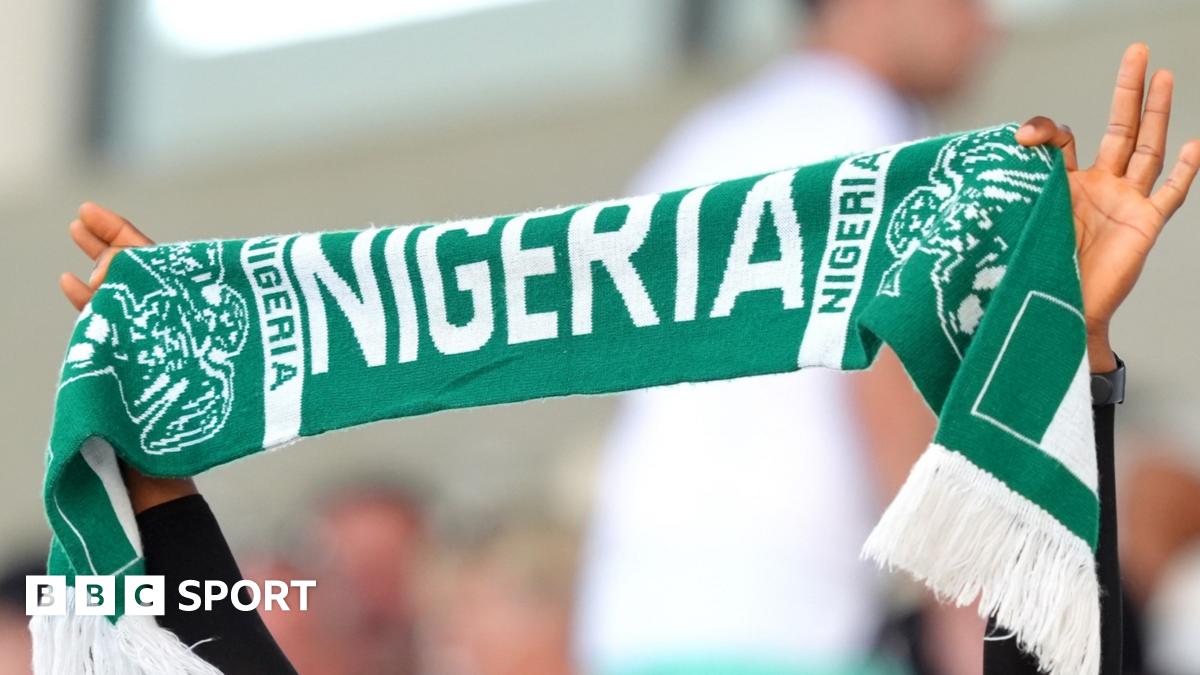
Nigeria leads Premier League representation with nine players, followed by Ivory Coast and Senegal with six each. Brighton emerges as uniquely affected—though possessing multiple African players, their representatives hail from nations that didn’t qualify for the tournament.
The tournament’s scheduling continues a longstanding tension between international commitments and club obligations, forcing managers to devise contingency plans for approximately one month of depleted squads during the demanding winter period.
-

Wimbledon: All the early upsets could stem from a lack of experience on grass courts
LONDON (AP) — Novak Djokovic, despite his remarkable success on Wimbledon’s grass courts with 100 wins and seven of his 24 Grand Slam titles, did not grow up playing on this surface. In fact, his first encounter with grass was in 2005, during a qualifying event at Roehampton, where he secured his debut at the All England Club at 18. ‘That was actually the first year I stepped out on the grass,’ Djokovic recalled. ‘It felt very natural for me to adapt, even though I grew up on clay.’ Djokovic is set to face Alex de Minaur in the quarterfinals on Monday. The unpredictability of grass courts has been a recurring theme at Wimbledon this year, with eight top-10 seeds—four women and four men—exiting in the first round, the highest number since 2001. Elena Rybakina, the 2022 champion, noted, ‘Grass is very unpredictable.’ With Rybakina’s third-round exit and defending champion Barbora Krejcikova’s loss to Emma Navarro, the women’s singles will crown a first-time winner for the ninth consecutive year. The All England Club’s grass courts pose unique challenges, as most players grow up on hard or clay courts. Grass courts, used for only about a month each year, require significant adaptation. ‘It’s a surface that requires a lot of adapting. You have to go by feeling,’ said Lorenzo Musetti, a semifinalist last year. The slippery footing, skidding balls, and inconsistent bounces make grass a demanding surface. Tommy Paul, who grew up playing on green clay, described grass as ‘the most fun surface to play on’ despite its challenges. Many top players, like Naomi Osaka and Iga Swiatek, have struggled on grass, with Osaka citing a past injury as a source of fear. Swiatek, despite a junior Wimbledon title, has found it her least successful Slam as a pro. ‘This year on grass, I had some moments where I just felt comfortable,’ Swiatek said. ‘It was just pretty smooth.’
-

FIFA Club World Cup: When it starts and which teams are playing in soccer’s new-look tournament
The highly anticipated FIFA Club World Cup, now expanded to 32 teams, is set to commence on June 14 in Miami, featuring soccer’s elite players and clubs, including Lionel Messi’s Inter Miami and European giants like Real Madrid and Manchester City. This revamped tournament, hosted across multiple U.S. cities, marks FIFA’s ambitious attempt to establish a premier global club competition akin to the international World Cup. However, the event faces challenges, including concerns over player burnout and fan engagement in an already congested soccer calendar. The tournament’s format mirrors the World Cup, with eight groups of four teams competing in a round-robin stage, followed by knockout rounds culminating in the final on July 13 at New Jersey’s MetLife Stadium. Notable participants include top clubs from Europe, South America, and other regions, though some European powerhouses like Barcelona and Manchester United are absent due to FIFA’s stringent qualifying criteria. With a staggering $1 billion prize pool, the competition promises high stakes, but its success remains uncertain amidst mixed reactions from players and fans alike.
-

FIFA details Club World Cup prize money with $125M target for the winner in $1BN fund
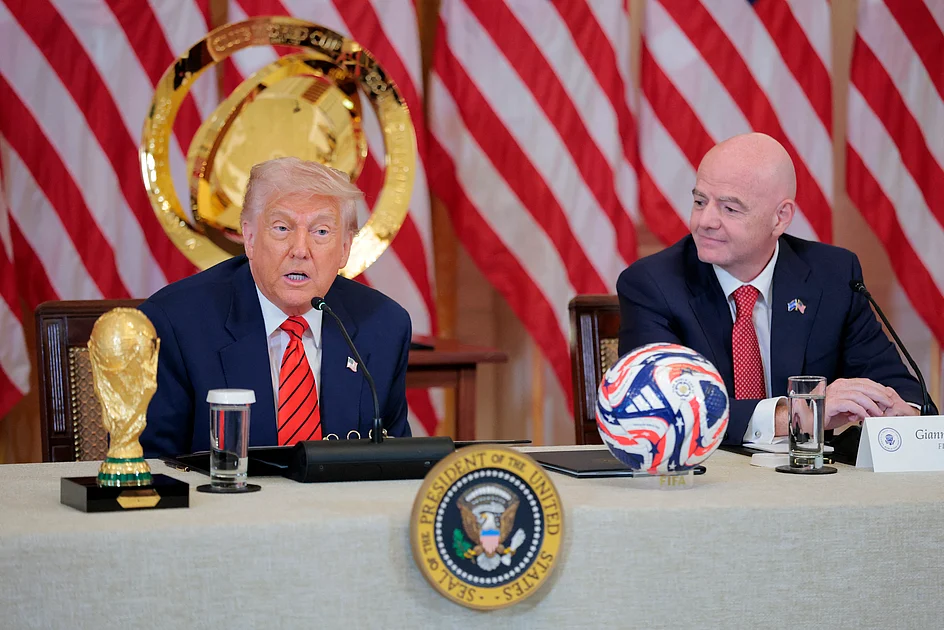
The inaugural 32-team FIFA Club World Cup, set to take place in the United States from June 14 to July 13, has unveiled a staggering $1 billion prize pool, with the winning team potentially earning up to $125 million. FIFA announced that $525 million will be distributed as guaranteed fees to participating teams, ranging from $38.19 million for the top-ranked European team to $3.58 million for Oceania’s Auckland City. An additional $475 million will be awarded based on tournament performance, including $2 million for group-stage victories, $7.5 million for advancing to the round of 16, and $40 million for the champion crowned at New York’s MetLife Stadium. The top European team, likely Real Madrid, could amass the full $125 million by winning all group-stage matches and progressing through the knockout rounds. The tournament’s golden trophy, currently displayed in the White House’s Oval Office, was presented to former President Donald Trump by FIFA President Gianni Infantino, who invited Trump to award it to the winning captain. The prize fund’s announcement was delayed until December, when FIFA secured a global broadcast deal with streaming service DAZN, backed by a major investment from a Saudi Arabian state sports agency. Fans can stream matches for free on DAZN’s platform. The expanded tournament features 12 European teams, each guaranteed at least $12.81 million, with payments determined by sporting and commercial criteria. Notable qualifiers include Manchester City, Bayern Munich, Paris Saint-Germain, and Chelsea. South American teams will receive $15.21 million each, while African, Asian, and CONCACAF teams, including Lionel Messi’s Inter Miami, will earn $9.55 million. FIFA also plans to distribute $250 million to clubs worldwide that did not qualify. Despite the record-breaking prize pool, the $125 million maximum falls short of the English Premier League and UEFA Champions League payouts. The Club World Cup’s $1 billion fund more than doubles the $440 million shared among teams at the 2022 Qatar World Cup. Sponsors for the Club World Cup have also secured deals for the 2026 men’s World Cup, co-hosted by the U.S., Canada, and Mexico.
-

2026 World Cup spot at stake: New Zealand, New Caledonia to meet in the Oceania qualifying final
In a stunning display of dominance, New Zealand’s national football team triumphed over Fiji with a resounding 7-0 victory in the Oceania World Cup qualifying semifinal. The match, held on Friday, was highlighted by a remarkable hat trick from Nottingham Forest striker Chris Wood, who scored all three goals with his head. This victory propels New Zealand into the final against New Caledonia, who earlier secured their place by defeating Tahiti 3-0. The winner of Monday’s final in Auckland will earn direct entry to the 2026 World Cup, marking a historic first for the Oceania confederation. The victor will join hosts Canada, the United States, Mexico, and Japan, the first nation to qualify for the expanded 48-team tournament. Wood opened the scoring in the sixth minute, capitalizing on a cross from Sarpreet Singh, and added two more goals in the second half before being substituted. Singh, Tim Payne, and Kosta Barbarouses also contributed to the scoreline, while Fiji’s own goal compounded their woes. Despite missing a late penalty, New Zealand’s performance was a testament to their teamwork and preparation. Meanwhile, New Caledonia’s Georges Gope-Fenepej shone with two goals in their semifinal victory, showcasing his experience and skill. The loser of the final will still have a chance to qualify through an intercontinental playoff, offering hope to the region’s smaller footballing nations. This opportunity is particularly significant for New Zealand, the highest-ranked Oceania nation, and New Caledonia, which overcame political unrest to compete in the tournament.