分类: sports

  • Clinical Australia upset Turkey in World Cup opener

    Clinical Australia upset Turkey in World Cup opener

    Australia has launched its 2026 FIFA World Cup journey with a victory over Turkey in its opening group stage match, a result that delivered a historic milestone for one rising young star of the Socceroos. Twenty-year-old forward Nestory Irankunda etched his name into Australian soccer record books during the contest, when he became the youngest player ever to score a goal for the Socceroos at a men’s FIFA World Cup. Highlight clips capturing the team’s winning performance and Irankunda’s groundbreaking goal are available for viewers to watch, though access to all additional 2026 FIFA World Cup match content is currently restricted exclusively to users located within the United Kingdom. The report of the opening match result and historic achievement was published to global sports audiences just 21 minutes ago, giving soccer fans around the world an early look at one of the tournament’s first breakout stories.

  • Australia spoils Turkey’s return to the World Cup with a 2-0 victory

    Australia spoils Turkey’s return to the World Cup with a 2-0 victory

    VANCOUVER, B.C. – June 14, 2026 – A night of long-awaited World Cup returns ended in disappointment for Turkey, as Australia’s dogged defensive performance and clinical finishing secured a shock 2-0 Group D victory on Saturday, cutting short Turkey’s celebrations of their first World Cup appearance in a generation.

    Turkey had waited 24 years to step back onto soccer’s biggest global stage, having last qualified for the 2002 tournament – where they stunned the world with a fourth-place semifinal run – before missing five consecutive editions. This year, they booked their spot with a playoff win over Kosovo, marking just their third World Cup appearance in history, after debuting in 1954. Most of Turkey’s young standout stars, including 21-year-old Real Madrid attacking midfielder Arda Güler, weren’t even alive the last time their country competed in the tournament.

    Heading into the match, Turkey captain Hakan Calhanoglu stirred up pre-game tension by claiming his side boasted greater quality and more talented talent than Australia. That comment proved to be exactly the spark the Socceroos needed, according to young goal scorer Nestory Irankunda.

    It took less than a half of play for Irankunda, a 20-year-old Watford player, to make history. Just 60 seconds after a first-half hydration break, the young winger broke through Turkey’s defense, evading three pursuing opponents to fire a low shot into the back of the net in the 27th minute. The goal made Irankunda the youngest goal scorer in Australian World Cup history, and he celebrated by punching the corner flag – a deliberate tribute to Australian soccer icon Tim Cahill.

    The story of the match, however, was surprise starting goalkeeper Patrick Beach. Socceroos coach Tony Popovic turned heads when he selected the relatively untested Beach over veteran goalkeeper Matthew Ryan for the starting spot, a decision that would pay off dividends for Australia. Through 90 minutes, Beach pulled off eight critical saves to keep a clean sheet, denying Turkey multiple high-quality chances. Shortly after Irankunda’s opener, he stopped a blistering long-range strike from Abdulkerim Bardakcı, and in the 57th minute, he pushed away a dangerous free kick from Güler to maintain Australia’s lead.

    Australia doubled their advantage in the 75th minute, when Connor Metcalfe seized on a turnover from Turkey midfielder Ismail Yüksek to slot home the second goal, putting the match out of Turkey’s reach. Despite dominating possession for the full 90 minutes – holding 72% of the ball and outshooting Australia 30 to 9 – Turkey could not break through Beach’s defense and find the back of the net.

    “Yeah, it was extra motivation,” Irankunda told reporters after the match. “Obviously we don’t like people to talk bad about us because we’re a great team. People underestimate us.” This tournament marks Australia’s sixth consecutive World Cup appearance, and their seventh overall, building on a 2022 run in Qatar that saw them advance out of the group stage before falling to eventual champion Argentina in the round of 16.

    Turkey coach Vincenzo Montella, who led his side to a surprise quarterfinal run at Euro 2024, accepted the result with grace after the final whistle. “I respect Australia very much. I was expecting that they would play in this way,” Montella said. “This is football. As for the critics, nobody has underestimated Australia, actually.” Rising 21-year-old Juventus star Kenan Yildiz, who did not start the match, came on as a halftime substitute for Turkey, but could not turn the tide of the result.

    Group D also features host nation United States and Paraguay, who kicked off their tournament on Friday in Los Angeles, with the Americans securing a 4-1 victory in their opening match. FIFA President Gianni Infantino was in attendance at Saturday’s match in Vancouver to watch the two sides compete. Both teams will return to the pitch for their next group stage matches in the coming days, as they vie for a spot in the 2026 World Cup knockout round.

  • Bangladesh wins toss and bats first in search of ODI series sweep against Australia

    Bangladesh wins toss and bats first in search of ODI series sweep against Australia

    On a critical Sunday in Mirpur, Bangladesh’s stand-in cricket captain Najmul Hossain Shanto called correctly at the toss, opting to set a batting target for Australia in the decisive third match of their one-day international series, with a landmark series sweep on the line.

    The host side enters the match already holding an unassailable 2-0 series lead, a position that has already secured Bangladesh its first-ever ODI series win over Australia across history. Both of Bangladesh’s opening victories came via the Duckworth-Lewis-Stern method, with an opening 86-run win followed by a hard-fought five-wicket triumph in the second fixture.

    However, Bangladesh will be without their regular captain Mehidy Hasan for the decider, after the skipper was struck in the head by a bouncer from Australian pace bowler Nathan Ellis during the second match. Speaking after the toss, Shanto reassured fans that Mehidy is in stable condition, but doctors ordered the captain to sit out the final game for continued medical monitoring.

    Bangladesh made two further adjustments to their match squad beyond the change of leadership: fast bowler Nahid Rana was rested for the decider, with experienced offspinner Mahedi Hasan brought into the side to replace him.

    For Australia, the tour has already been defined by disappointment, and the visitors are now chasing only a consolation win to end the series on a positive note. Head coach and selectors made two key changes to their starting lineup, recalling pace bowler Ben Dwarshuis and all-rounder Oliver Peake to the side. The pair will replace opening batsman Matthew Short and Nathan Ellis, the bowler who injured Mehidy Hasan in the previous match.

    Full starting lineups for the contest are as follows:
    Bangladesh: Tanzid Hasan, Soumya Sarkar, Najmul Hossain Shanto (captain), Litton Das, Towhid Hridoy, Mahedi Hasan, Mosaddek Hossain, Taskin Ahmed, Tanvir Islam, Mustafizur Rahman, Shoriful Islam.
    Australia: Cooper Connolly, Josh Inglis (captain), Matt Renshaw, Marnus Labuschagne, Alex Carey, Cameron Green, Oliver Peake, Xavier Bartlett, Ben Dwarshuis, Adam Zampa, Riley Meredith.

  • Cage fights at the White House: What to know as Trump hosts UFC

    Cage fights at the White House: What to know as Trump hosts UFC

    In a groundbreaking first for professional sports, the Ultimate Fighting Championship (UFC) is set to host an invite-only mixed martial arts card on the South Lawn of the White House this Sunday, marking an unprecedented milestone for both the organization and the U.S. presidential residence. The event coincides with three major milestones: former President Donald Trump’s 80th birthday, Flag Day, and the national celebrations marking the 250th anniversary of the United States, and it has been years in the making through the long-standing personal friendship between Trump and UFC President Dana White.

    Organizers anticipate 4,300 invited guests will pack the South Lawn for the seven-bout card, with an additional 85,000 fans expected to gather at a nearby official fan zone to watch the fights. In a massive engineering and construction effort, the centerpiece of the event is a 92-foot-tall 600-ton steel structure nicknamed “the Claw”, which towers over the octagon and most spectator seating. In total, the UFC has invested roughly $60 million (£45 million) into staging the event, including a $700,000 allocation to repair the South Lawn grass after the event concludes; the lawn is normally reserved for traditional annual events such as the White House Easter Egg Roll.

    The fight night will kick off at 20:00 EDT (midnight GMT), with 14 athletes competing in back-to-back bouts leading up to the main event: a lightweight showdown between Georgian-Spanish contender Ilia Topuria and American fan favorite Justin Gaethje. The entire card will stream exclusively on Paramount+, the streaming platform run by David Ellison, a known political ally of Trump. The UFC signed a massive 10-year $7.7 billion media rights deal with Paramount+ last year, pitting the service against industry leader Netflix for live sports content.

    For the UFC itself, the opportunity to host an event at the White House represents far more than a one-off spectacle: it is a transformative branding milestone for a sport that spent decades on the margins of American athletics. Early UFC events were widely shunned by major corporate sponsors and mainstream venues, and even faced harsh criticism from senior politicians, with one former U.S. senator infamously labeling the sport “human cockfighting”. Now, with a spot on the most prestigious grounds in the country, UFC leaders see the event as a full validation of the sport’s place in mainstream American culture.

    The Trump administration has embraced the event wholeheartedly, with Trump himself praising it as “the greatest show on Earth” and drawing a comparison between the massive Claw structure and Paris’s Eiffel Tower. This week, Secretary of State Marco Rubio went a step further, framing the UFC as the “definition of American soft diplomatic power” and announcing a new public-private partnership that will use the organization’s global reach as a tool for U.S. diplomacy.

    Despite the historic occasion, the event has faced significant headwinds in its final days. Just before the event, the Public Integrity Project, a Washington-based anti-corruption legal group, filed a lawsuit on behalf of two Virginia plaintiffs—a Vietnam War veteran and a local civic activist—seeking to halt the event entirely. The lawsuit argued the event amounted to “deep corruption”, citing the close personal and financial ties between Trump and White/UFC, as well as a lack of required permits for the pre-fight weigh-in held at the Lincoln Memorial. On Friday, however, a federal judge rejected the plaintiffs’ request for an emergency injunction to block the fight, a ruling the White House dismissed the entire legal challenge as “frivolous”.

    Public opinion also leans heavily against the event, according to a Reuters/Ipsos poll published Friday. The survey found that only 16% of U.S. adults consider hosting a UFC fight at the White House appropriate, while 46% view the plan as inappropriate. Even among Republican respondents, only one-third approve of the decision to stage the event on the South Lawn.

    Compounding these challenges, weather forecasters warn that severe summer weather could disrupt Sunday’s spectacle. The National Weather Service predicts high heat and humidity in Washington D.C., with peak temperatures expected to hit 91°F (33°C) by mid-afternoon. As humidity builds throughout the day, scattered thunderstorms are forecast to move into the region through the afternoon and evening, bringing risks of lightning, heavy downpours, and wind gusts exceeding 50 mph (80 km/h). The D.C. summer heat and humidity also bring the added nuisance of large swarms of flying insects, which already disrupted a pre-fight press conference at the Lincoln Memorial on Friday, forcing a brief delay and prompting organizers to urge attendees to take shelter amid the sudden inclement weather.

    This UFC event is just one of several high-profile national events planned this year to mark the U.S.’s 250th anniversary, with an IndyCar race around the National Mall scheduled for later this summer and a “Great American State Fair” set to open in July.

  • Why Haiti v Scotland was antidote to the ills of world football

    Why Haiti v Scotland was antidote to the ills of world football

    For 28 long years, Scotland’s football fans had been locked out of the World Cup, forced to watch from the sidelines as the world’s biggest football tournament rolled on without them. So when thousands of members of the famous Tartan Army found themselves stuck in crippling traffic gridlock on the highway to Foxborough’s Boston Stadium ahead of their opening 2026 World Cup group match against Haiti, there was not a hint of frustration – only unbridled joy.

    Four hours before kickoff, a line of yellow school buses carrying jubilant Scottish supporters crawled along Interstate 95 at just one mile per hour. Fans leaned out of every window, belting out traditional anthems, waving blue and white flags, and turning the slow-moving convoy into an impromptu street party, completely unaware of the nail-biting tension that would unfold on the pitch hours later. The anticipation across the entire city of Boston was tangible; clusters of Scotland fans packed every street corner, turning the area into a sea of tartan that felt less like a visiting crowd and more than a joyful invasion.

    When the Scottish team walked out onto the pitch just before 9 p.m. local time, the Boston Stadium erupted into a cacophony of noise and color. Giant screens behind each goal captured every raw emotion on the stands, from tearful grins to thunderous cheers as the crowd sang *Flower of Scotland* with a ferocity that manager Steve Clarke would later note felt even more powerful on foreign soil than it does at Hampden Park. For a side that had waited a generation to return to the World Cup finals, the moment was electric – a raw, authentic rebuke to the commercialism and greed that plagues modern global football.

    The match got off to a promising start for Scotland, but the side quickly faded, letting Haiti, ranked 83rd in the world, grow into the contest. The Caribbean side grew bolder as the half wore on, creating more clear chances than the heavily favored Scots, even if they failed to convert their opportunities. With less than 30 minutes on the clock, a small section of the Tartan Army began chanting for Aston Villa midfielder John McGinn, urging their talisman to deliver a moment of magic. Two minutes later, he answered the call.

    McGinn’s winning goal was far from a technical masterpiece: the scruffy strike took two deflections before looping into the Haitian net, but that detail meant nothing to the jubilant crowd. It was Scotland’s first goal at a World Cup finals in a generation, and it put Clarke’s side 1-0 up, lifting their total of all-time World Cup finals wins from four to five. Rare moments like this do not need to be pretty to be perfect.

    Instead of pushing on to extend their lead after the break, Scotland retreated into a defensive shell, unable to impose their game on a hungry Haiti side. For the final 20 minutes, the Scots hung on desperately, their defense littered with errors and constantly pinned deep inside their own half. With 12 minutes left on the clock, the Tartan Army dug into their songbook for a dry, gallows-humored rendition of “No Scotland No Party” – a ironic tweak on their favorite anthem, as the entire crowd held its breath through every attacking Haiti thrust. The tension was so thick you could cut it: with six minutes remaining, Haiti striker Frantzdy Pierrot rose above center-back Grant Hanley and sent a header inches wide of the post, sending heart rates soaring across the Scottish section.

    A late equalizer would not just have stolen a point for Haiti – it would have gutted Scotland’s hopes of progressing out of the group stage, a historic first for the nation. If they could not beat Haiti, there seemed little hope of taking points from heavyweights Brazil or Morocco in their remaining group matches. Pierrot had another golden chance late on and missed again, while panicked Scottish defenders cleared lines frantically rather than playing the composed football they are capable of.

    What was supposed to be a relatively comfortable return to the World Cup stage for Scotland turned into a 90-minute rollercoaster of nerves, an exhausting contest that left both players and fans drained. But at the final whistle, the scoreboard still read 1-0, and the 36-year wait for a World Cup finals win was over.

    Post-match reactions summed up the conflicting mood in the camp: three points on the board, but plenty of work to do. McGinn, who spoke after the game beaming with pride, admitted the side has higher gears that they did not show on the night, a sentiment echoed by Clarke, who described the match as a must-win that his side had grinded out. Goalkeeper Angus Gunn acknowledged that the performance was far from perfect, but stressed that a World Cup win is still a win. Young winger Ben Gannon-Doak was Scotland’s stand-out player, his constant running causing Haiti problems all evening, while key stars like Billy Gilmour, Scott McTominay (who hit the post late on) and even McGinn failed to exert their usual control over the match outside of the winning goal.

    On Monday morning, the squad will return to their Charlotte base tired but victorious, with six days to iron out their mistakes before their second group match against Morocco back in Boston. The win sparked wild celebrations among the Tartan Army, but most supporters admitted the mood was more relief than unfiltered joy. Still, after waiting 28 years just to be back at the World Cup, even the most nail-biting win is enough. Thousands of fans are already planning to return for the Morocco match, ready for another night of anxiety and pressure – and adamant there is nowhere else they would rather be.

  • New York Knicks win NBA championship for first time in over 50 years

    New York Knicks win NBA championship for first time in over 50 years

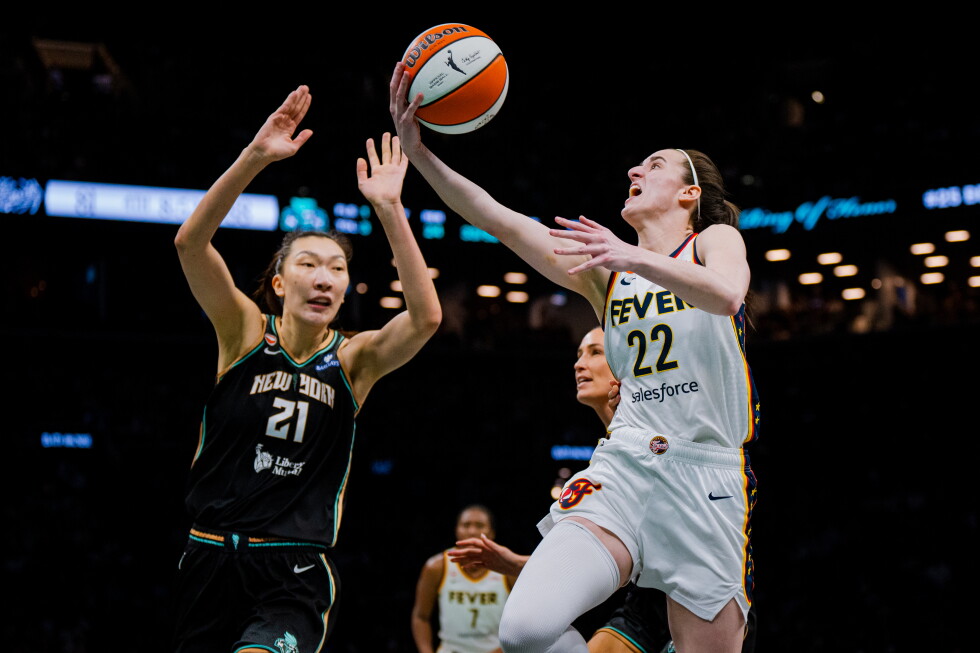
    After more than half a century of heartbreak and unfulfilled hope for New York Knicks fans across the globe, the historic franchise has finally captured its first National Basketball Association championship since 1973, sealing a tight 94-90 victory over the rising San Antonio Spurs in Game 5 of the 2026 NBA Finals held in San Antonio.

    Guard Jalen Brunson, the undisputed leader of the 2025-26 Knicks squad, delivered a legendary performance that earned him the Bill Russell NBA Finals Most Valuable Player Award, capping off a dominant postseason run with a standout showing in the title-clinching game. Photographs from the matchup capture intense on-court battles: Knicks center Mitchell Robinson going head-to-head with generational Spurs prospect Victor Wembanyama for loose balls and positioning, Brunson rising for a first-half shot over Spurs guard Stephon Castle, and a surprising celebrity appearance from Prince Harry, Duke of Sussex, who took in the historic matchup from courtside in Texas.

    Back in New York City, thousands of ecstatic fans flooded iconic public spaces including Times Square, and packed organized watch parties outside Madison Square Garden, Radio City Music Hall and Wollman Rink, which were arranged in partnership between the city government and the Knicks organization. Supporters packed neighborhood sports bars within walking distance of the Garden, cheering every basket and defensive stop as the clock wound down on the Knicks’ historic win. Within minutes of the final buzzer, crowds poured into city streets to celebrate the long-awaited milestone that has united the entire five boroughs.

    In advance of the matchup, New York Mayor Zohran Mamdani took to social media to urge celebrating fans to prioritize safety and look out for fellow attendees, reminding the public to make the night a reflection of New York’s best community values. His appeal for caution came on the heels of troubling isolated incidents of fan violence targeting Spurs supporters in New York in the days leading up to Game 5. Local media reports documented two separate attacks: one left a Spurs fan hospitalized, while a fast-food employee wearing a Spurs jersey was also assaulted by aggressive Knicks supporters. Both the Knicks and Spurs organizations, along with all active players from both teams, issued public statements condemning the unsportsmanlike violence and harassment ahead of the final game.

    The lead-up to the title decider also included a short-lived ticket controversy that sparked frustration among traveling New York fans. Early online notes from Ticketmaster sparked panic when it stated that any ticket purchases by fans living more than 150 miles from San Antonio’s AT&T Center would be automatically canceled and refunded without advance warning, leaving hundreds of traveling Knicks fans fearing they would be locked out of the championship-clinching game. New York Governor Kathy Hochul publicly called out the confusing policy on social media, writing: “Knicks fans finally get within one game of a championship and their reward is having their tickets canceled?” Ticketmaster quickly moved to correct the miscommunication, issuing a formal statement assuring fans that no valid tickets purchased through its platform would be canceled, easing concerns for traveling supporters.

    By the time the final buzzer sounded, all off-court controversies faded into the background, as New Yorkers turned their full attention to celebrating a win decades in the making. For a franchise that has endured decades of playoff disappointments, front-office chaos, and national mockery, the 2026 NBA championship marks the end of one of the longest title droughts in major North American professional sports.

  • Nagelsmann: Goalkeeper Manuel Neuer fit to start as Germany opens the World Cup vs Curaçao

    Nagelsmann: Goalkeeper Manuel Neuer fit to start as Germany opens the World Cup vs Curaçao

    HOUSTON — Ahead of Germany’s highly anticipated 2026 FIFA World Cup opening clash against debutant Curaçao this Sunday, head coach Julian Nagelsmann has confirmed that veteran goalkeeper Manuel Neuer has made a full recovery from the calf injury he sustained last month, and is fit to start the fixture. At 40 years old, Neuer is set to make history at this tournament: he will notch his fifth World Cup appearance, tying the all-time German record held by legendary former midfielder Lothar Matthäus. He is also the sole remaining player from Germany’s 2014 World Cup-winning squad still active on the national team.

    Neuer’s path to this tournament has been unusual. After retiring from international play, he was lured back to the national setup by Nagelsmann nearly two years after his last cap for Germany. Questions over his match fitness lingered after he picked up the left calf injury during Bayern Munich’s final Bundesliga match of the season in late May, forcing him to sit out the German Cup final against Stuttgart due to the muscular issue. But speaking on Saturday night on the eve of the opener, Nagelsmann brushed aside any remaining concerns over Neuer’s condition.

    “(He’s) definitely fit enough to start the game and he got better and better,” Nagelsmann told reporters. “He didn’t really have the rhythm, but now he found the rhythm. He played a lot, we trust him a lot and I think … in order to have a good World Cup, we need Manuel in top performance and I think he can bring that.”

    Neuer’s return to the national side has already proven to be an invaluable asset beyond his on-pitch contributions, particularly for the squad’s younger, less experienced players. As Germany looks to rebound from back-to-back early group-stage exits in 2018 and 2022, the veteran’s leadership has become a cornerstone of the team’s preparations. Bayern Munich teammate and 22-year-old rookie midfielder Aleksandar Pavlović, who is set to make his own World Cup debut this tournament, spoke glowably of Neuer’s influence.

    “Manuel is a world class player,” Pavlović said. “He always gives me tips. He helps me on the pitch and it is very important for me. I am very grateful for any tip he gives me and I’m trying to implement any tip he gives me.”

    Sunday’s opening fixture will also make World Cup history off the pitch, thanks to the stark contrast between the two sides’ dugouts. Four-time World Cup champion Germany enters the match as the overwhelming favorite against Curaçao, which is competing in its first ever World Cup as the smallest nation to ever qualify for the global tournament. While Curaçao enters the clash as clear underdogs, their head coach Dick Advocaat brings no shortage of elite tournament experience, having previously led the Netherlands at the 1994 World Cup and South Korea at the 2006 edition.

    At 78 years old, Advocaat will become the oldest head coach in World Cup history when he steps onto the touchline on Sunday. Opposite him, Germany’s 38-year-old Nagelsmann is the youngest head coach participating in this year’s tournament. The 40-year age gap between the two coaches is the largest ever recorded in a World Cup fixture. The two veteran and rookie coaches have nothing but praise for one another ahead of kickoff.

    “I think he’s a really cool coach,” Nagelsmann said of Advocaat. “I think it’s really cool and a great compliment for his work. I got to know him a few times and he’s always kind. As a young coach I always can learn from people like him.” When asked if he expected to still be coaching at 78, Nagelsmann laughed and responded, “I like my job, but I hope to do different things with my life at that age.”

    Advocaat returned the compliment, noting that Nagelsmann’s rise to the top job of a major national team at such a young age speaks for itself. “He must have something special and he has that otherwise he wouldn’t be the coach of the national team,” Advocaat said. “He’s an excellent coach.”

  • Scotland marks 28-year World Cup absence with 1-0 victory over Haiti in Group C

    Scotland marks 28-year World Cup absence with 1-0 victory over Haiti in Group C

    FOXBOROUGH, Mass. – In a historic World Cup Group C clash at Gillette Stadium on Saturday, Scotland claimed a long-awaited 1-0 victory over Haiti, courtesy of a deflected first-half goal from Aston Villa midfielder John McGinn that capped off a dramatic opening to the nation’s first World Cup tournament in 25 years.

    McGinn’s decisive strike arrived in the 28th minute, sparked by a close-range attempt from Scotland striker Che Adams that goalkeeper Johny Placide could only parry into open space inside the penalty area. Pouncing on the loose ball from 13 yards out, McGinn fired a low effort that ricocheted off a Haitian defender, wrong-footing Placide and bouncing into the back of the net. The goal broke a decades-long drought for Scotland, which had not notched a World Cup win since a 2-1 victory over Sweden at the 1990 tournament, and was making its first appearance at the global competition since 1998.

    The result was all the more sweeter for Scotland after Group C favorites Brazil and Morocco played to a 1-1 draw earlier the same day, leaving Steve Clarke’s side sitting atop the early group standings with three points from their opening fixture.

    Scotland nearly doubled their lead 11 minutes before McGinn’s goal, when captain Scott McTominay found space outside the box and unleashed a curling effort that clipped the top of the crossbar, bouncing just over the frame of the goal to deny the Manchester United star an opening goal.

    Haiti, which is only making its second World Cup appearance in history following their debut at the 1974 tournament in West Germany, pushed hard for an equalizer in the second half and came close to leveling the score twice. In the 74th minute, winger Ruben Providence delivered a pinpoint cross into the six-yard box for forward Wilson Isidor, but Isidor failed to make clean contact with the ball and the chance went begging. Ten minutes later, striker Frantzdy Pierrot got on the end of another cross to nod a header toward goal, but his effort drifted just wide of the left post, leaving Haiti still searching for its first ever World Cup point.

    The packed stadium was dominated by Scotland’s famously passionate fanbase, the Tartan Army, who turned the venue located 30 miles outside Boston into a sea of maroon, creating a raucous atmosphere from kickoff to final whistle.

    Looking ahead to the next round of group fixtures, Scotland will remain in Foxborough to face Morocco at Gillette Stadium next Friday, while Haiti will travel to Philadelphia to take on Brazil the same day.

  • Has Vinicius Jr brilliance just papered over the Brazilian cracks?

    Has Vinicius Jr brilliance just papered over the Brazilian cracks?

    The 2026 FIFA World Cup kicked off with a tense Group C opener at New Jersey’s MetLife Stadium, where five-time champions Brazil escaped a humiliating opening-match defeat thanks to a moment of individual magic from star forward Vinicius Jr, who forced a 1-1 draw against a dominant Morocco side.

    Heading into the tournament, Vinicius made his ambitions clear: he has not come to this World Cup to claim individual honors, but to lift Brazil back to the summit of global football. Just 90 minutes later, the Real Madrid winger proved he was willing to put in the work to back up those words, single-handedly rescuing his side when all looked lost.

    Trailing 1-0 from an early Ismael Saibari strike and outplayed for large portions of the first half, Brazil looked on course for their first opening World Cup defeat since 1934. That was until a well-placed pass from Bruno Guimaraes found Vinicius unmarked on the left edge of Morocco’s penalty area in the 62nd minute. Cutting inside onto his stronger right foot, the 25-year-old unleashed a thunderous strike that flew into the top corner of the net, leaving Morocco goalkeeper Yassine Bono with no chance of making a save. The strike, described by former England goalkeeper Joe Hart as a “lightning bolt” of quality, dragged Brazil back level and avoided an unwanted place in the history books.

    Despite the last-gasp equalizer, Brazil’s performance raised major questions about the squad’s depth and tactical balance, with analysts and former players unanimous in their criticism of the five-time champions’ ragged display. South American football expert Tim Vickery summed up the mood after the match, telling BBC Sport: “Ideally you want the team to make the stars, here you have a case of the star saving the team.”

    The underlying issues plaguing Brazil were clear for all to see. The current squad is heavily overloaded with attacking wingers, but critically short of depth in central midfield. Veteran 34-year-old Casemiro struggled to keep pace with Morocco’s dynamic midfield through the stifling New Jersey heat, and was substituted at half-time after failing to impose himself on the game. Defender Roger Ibanez also did not return for the second half as head coach Carlo Ancelotti, making his World Cup head coaching debut at the age of 67, scrambled to fix the team’s obvious shortcomings.

    Former Uruguay and Chelsea midfielder Gus Poyet said he was shocked by Brazil’s technical sloppiness, noting: “I was surprised how bad technically they were today. I don’t know if it was the pitch, maybe the pitch didn’t help but they were missing passes, simple passes that you would expect the Brazilian players to do well.”

    For long spells of the match, Brazil lacked the iconic swagger that has defined generations of Brazilian greats from Pele to Ronaldo, Ronaldinho to Zico. This indifferent form is not a new issue: Brazil narrowly qualified for the 2026 tournament after a disastrous qualifying campaign that saw them drop six defeats from 18 matches, finishing fifth in the South American standings and only securing their place in the final draw at the last minute. Ancelotti, the first foreign head coach to lead Brazil at a World Cup, was brought in specifically to steady the ship after that rocky qualifying run, and admitted after Friday’s draw that his side had fallen short of expectations.

    In his post-match press conference, the five-time Champions League-winning coach said: “I am sorry we didn’t play as well as we hoped. It wasn’t a bad result but we will keep picking up. We have to do better, that’s very clear. We have to have a more balanced team and we have to be more aggressive. I am not disappointed but I am not satisfied either. Not everything goes perfect and we have to accept criticism.”

    Vickery, however, noted that Brazil’s ability to snatch a draw despite a poor performance is exactly what makes them such a dangerous opponent at major tournaments: “How many teams can play that badly and still be in the game? It’s the individuality.”

    History also offers Brazil fans a glimmer of hope, with experts pointing out that this expanded 48-team World Cup is a marathon, not a sprint. Four years ago in Qatar, Argentina suffered a shocking opening defeat to Saudi Arabia, before going on to lift the trophy, a example of how slow starts do not rule out ultimate success.

    All eyes will remain on Vinicius, who entered this tournament already carrying the weight of expectation to become the next great Brazilian superstar. The equalizer against Morocco marked his 10th international goal for Brazil, with three of those strikes coming on American soil. Doubts have lingered ever since Brazil’s penalty shootout exit to Croatia in the 2022 World Cup quarter-finals, but the Real Madrid forward says he is ready to step into the leading role the national team needs.

    Speaking before the match, Vinicius said: “I feel great freedom and sincere trust from Ancelotti. He is sure I can do for the national team what I do for Real Madrid. I want to try to write the history of the country and the national team. We must do everything to win.”

    Brazil next face Haiti in Philadelphia on 19 June, before concluding their group stage campaign against Scotland in Miami on 24 June. They are still heavily favored to progress to the knockout stage, but Friday’s draw has left major questions unanswered. Brazil have not won the World Cup since 2002, marking a 24-year title drought for the most successful nation in World Cup history. A failure to go all the way this tournament will spark intense scrutiny over the future direction of Brazilian football, but for now, Vinicius’s moment of magic has kept their dream of a sixth title alive.

  • Curaçao embraces historic World Cup debut against Germany

    Curaçao embraces historic World Cup debut against Germany

    HOUSTON — For a small Caribbean island nation of just 150,000 people, a once-in-a-lifetime moment is almost here. Curaçao is gearing up to make its first-ever FIFA World Cup appearance on Sunday, stepping onto soccer’s grandest global stage to face four-time tournament winner Germany — and in doing so, it will claim a new record as the smallest country to ever compete at the World Cup.

    The milestone comes as a landmark achievement for a nation that has rarely had the opportunity to fly its flag independently at top-tier international sporting events. Due to its constitutional ties to the Netherlands, Curaçao is not recognized as a sovereign participating nation at the Olympic Games, and even its world-class baseball talent, produced at an outsized rate per capita for the tiny island, competes under the Dutch flag at the World Baseball Classic. This World Cup debut marks the first major global sports stage that Curaçao can call entirely its own.

    Veteran head coach Dick Advocaat has worked intentionally to keep his young squad grounded and calm as they navigate the unprecedented pressure and attention of their first World Cup run. As the team departed their pre-tournament training camp in Boca Raton, Florida, for Houston, defender Shurandy Sambo shared Advocaat’s simple, steady message to the group: “Just be yourself, and don’t be nervous.”

    Sambo noted that while the entire squad is buzzing with excitement to compete against one of the most dominant teams in men’s international soccer, the group has stayed focused on preparation. The players have spent hours studying game footage of Germany, a side making its 21st World Cup appearance and entering the match as a heavy favorite, to understand the four-time champions’ tactical approach and on-pitch strengths.

    Far from just happy to be there, the Curaçao side is hungry to prove they belong on the world stage. “We are not here to just be here,” midfielder Ar’jany Martha said. “We want to show ourselves and get good results.”

    Despite its small roster size, Curaçao will not lack for support inside the stadium on matchday. Every single player on the squad will have family in the stands to cheer them on: Sambo’s own relatives will be in attendance, alongside 21 other players’ family members who have traveled to support the historic moment. The squad itself has cultivated a tight, family-like culture that has kept spirits high in the lead-up to the match. “I (would describe us) as one big family,” defender Livano Comenencia said. “If you see us on the bus or outside the bus, in the hotel, we are always with music, always happy. Everybody is around each other.”

    This debut is more than just a single match for Curaçao — it is a historic moment that puts the small island nation on the global sports map, and a chance to prove that size is no barrier to competing at the highest level of the world’s most popular sport.