分类: society

  • A baby trafficking ring has been convicted – but what now for the babies?

    A baby trafficking ring has been convicted – but what now for the babies?

    After a months-long judicial investigation into a notorious infant trafficking operation in Indonesia, a court has handed down guilty convictions for all 19 accused members of the criminal network. The ring, which authorities say trafficked at least 34 infants over several years, has been dismantled through coordinated law enforcement action, bringing a measure of accountability for the illegal scheme that shocked the nation.

    While the convictions mark a key milestone in holding perpetrators accountable for their crimes, a critical, unresolved question lingers in the aftermath of the ruling: what will become of the 34 babies who were rescued from the trafficking network? Court proceedings focused exclusively on building the case against the accused and securing convictions, with no discussion or decision issued on the long-term care, placement, and legal status of the rescued children.

    Child welfare advocates and local authorities have yet to outline a clear roadmap for the infants, many of whom have already spent months in temporary care facilities following the dismantling of the ring. The lack of a formal plan has raised concerns among experts about the long-term developmental and social outcomes for these children, who have already experienced trauma from being separated from their birth families and exploited by the criminal network. Stakeholders are now calling for urgent action from national child protection agencies to coordinate permanent, safe placement, whether through reunification with biological family members where possible or ethical, regulated adoption that prioritizes the children’s best interests.

  • Teenage rider left laying on road after crash between e-scooter and car in Berala

    Teenage rider left laying on road after crash between e-scooter and car in Berala

    A shocking hit-and-run collision between a teen e-scooter rider and a passenger vehicle has left a Sydney family pleading for answers, two weeks after the incident left the teenager hospitalized and in severe pain. The crash unfolded at the busy intersection of Oxford Street and Mount Auburn Road in the Sydney suburb of Berala just before 5:20 p.m. on July 8, and the entire event was captured on nearby closed-circuit television footage.

    Surveillance footage shows the 16-year-old rider traveling south along Oxford Street before crossing into the intersection, where he collided with a white hatchback that was entering the junction from Mount Auburn Road. Immediately after the impact, the driver of the hatchback did not stop to provide assistance or exchange information, instead leaving the injured teenager crumpled and motionless on the asphalt.

    The crash left the teen with multiple serious injuries, including persistent chest and head pain that has left him unable to recover normally. Two weeks on from the incident, his mother — who has chosen to remain unnamed — has launched a public appeal to the driver responsible to turn themselves in to authorities, as New South Wales Police continue their ongoing investigation into the hit-and-run.

    In an interview with 7News, the mother described the moment she learned of the crash as “very, very scary”, and shared that her son has struggled to recover both physically and psychologically from the incident. “He’s not coping mentally, he’s not coping physically,” she said. “He’s in a lot of pain, spending the time he’s not in hospital or getting scans done on the bed.”

    In the immediate aftermath of the collision, the teenager’s family rushed him to hospital for emergency care, and did not contact police to report the incident until the following morning on July 9. Since then, the mother has launched her own desperate search for more details, door-knocking nearby homes to speak with residents who may have witnessed the crash, and turned over all existing CCTV footage of the incident to investigating officers.

    A NSW Police spokesperson confirmed that officers from the Auburn Police Area Command officially opened an investigation into the collision after receiving the formal report on July 9. “Police were told about 5:15 p.m. on Wednesday, July 8, a 16-year-old boy was riding an e-scooter southbound on Oxford Street, Berala, before he collided with a white hatchback near the intersection of Mount Auburn Road,” the spokesperson said in a statement. After the collision, NSW Ambulance paramedics responded to the scene to treat the injured teen before transporting him to Auburn Hospital for further care. Police confirmed the teenager’s injuries are not considered life-threatening.

  • David Blackbourne accused of sexually assaulting teenage girl at rural NSW police station

    David Blackbourne accused of sexually assaulting teenage girl at rural NSW police station

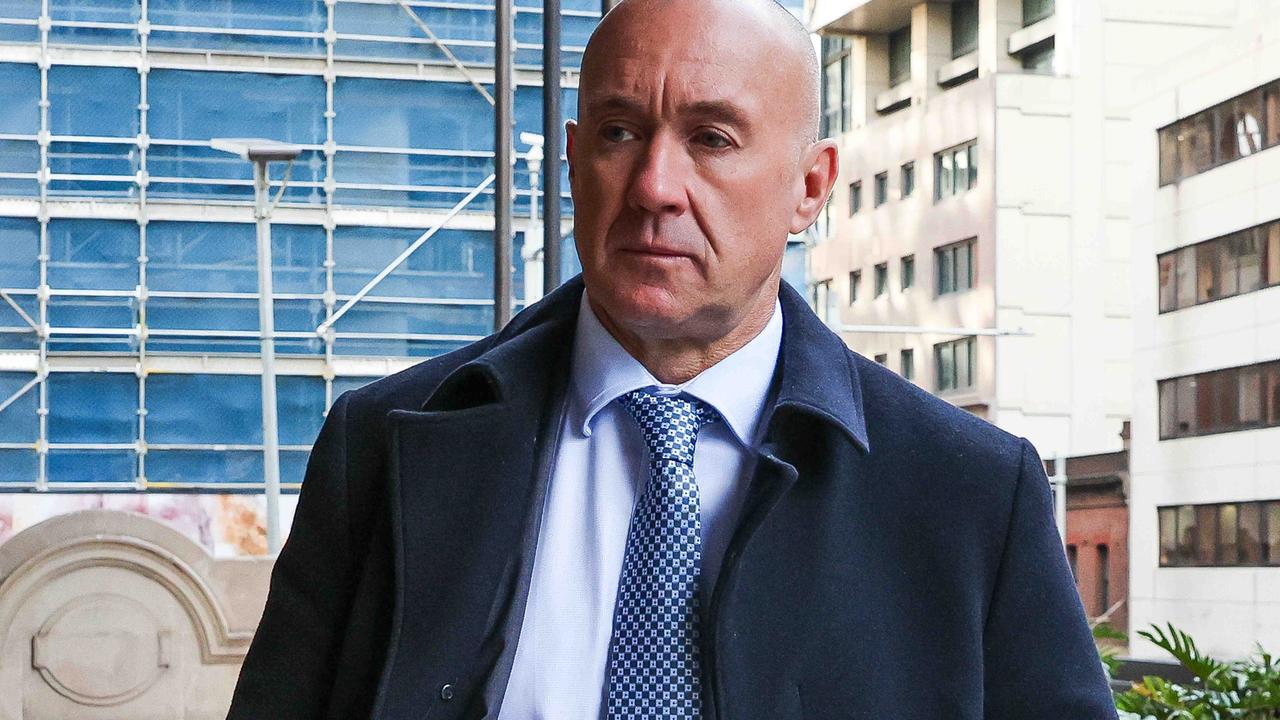
    A decades-old sexual assault case has opened at the Downing Centre District Court in New South Wales, Australia, where 56-year-old former police officer David Robert Blackbourne faces multiple criminal charges over the alleged abuse of a 17-year-old girl at a rural border police station in 1998. Blackbourne has entered a plea of not guilty to all five counts before the court: two counts of indecent assault, two counts of non-consensual sexual intercourse, and one count of public office misconduct.

    During the first week of the trial, the now-adult complainant, who cannot be named publicly under Australian law to protect her identity, took the witness stand to recount the sequence of events that she says unfolded in the months leading up to the alleged October 1998 assault. The woman, who was under the age of majority at the time, told the jury she first encountered Blackbourne, who she only knew by the first name Dave, on multiple occasions when she was a teenager living in the small rural town on the New South Wales-Victoria border.

    The first alarming interaction she detailed occurred months before the alleged rape, when Blackbourne and an unidentified second officer offered the teenager and her friend a ride home. The pair agreed, but were driven first to the local police station. At the station, the officers offered the underage girls alcoholic drinks they claimed were seized contraband, before the complainant was invited to view the holding cells out of curiosity. “I said yes, I was curious,” she told the court. When she stepped inside the large brick cell, Blackbourne locked the door behind her, leaving her trapped alone in the cold, dark, damp space for far longer than she expected. “I got quite panicked, like I couldn’t get out it was cold and dark,” she testified.

    In the months that followed, the complainant alleged Blackbourne leveraged his position of authority to ingratiate himself to her, saying he offered to ensure she could enter local pubs despite being underage. On one night walk, Blackbourne pulled over in his marked police vehicle, and the girl and her friend got inside. She told the jury that Blackbourne immediately handcuffed both of her wrists, then kissed her against her will, forcing his tongue into her mouth.

    The final, violent assault occurred in October 1998 when the teenager visited the police station to pick up a police hat she had arranged to borrow for a friend’s costume. After handing over the hat, Blackbourne told her she could not leave yet. The woman told the court Blackbourne suddenly became intimidating and angry, leaving her terrified that she was in trouble for taking the hat. He then kissed her again without consent, pulled down her pants, and raped her behind the police station’s front counter before forcing her into a separate room and assaulting her a second time.

    Breaking down in tears while staring directly at Blackbourne in the dock, the complainant recounted the aftermath of the assault. “Afterwards … he handed me some tissues and he told [me] to clean myself up,” she said. She walked home sobbing, and stopped halfway on a local bridge, where she contemplated ending her life. “I was very upset and overwhelmed by what happened … and I was contemplating jumping off the bridge,” she said.

    The woman told the court she kept the alleged abuse secret for four years, only disclosing the incident to her now-husband during a trip to Europe in 2002. She did not report the allegations to police until 2016, when she spoke to officers in Victoria, before the investigation was transferred to New South Wales Police in November 2021. Blackbourne was arrested and formally charged in 2023, more than 25 years after the alleged incident.

    In his opening statement to the jury, Blackbourne’s defence barrister Matthew Johnston SC said the former officer strongly denies every allegation. The defence does not dispute that Blackbourne was a serving officer at the time of the alleged events, but rejects all claims of sexual contact and misconduct. Johnston noted to the jury that the passage of more than two decades means the reliability and quality of the evidence presented will be a key point of contention throughout the trial.

    Presiding Judge Huw Baker SC reminded the jury of its legal obligation to the standard of proof: the prosecution carries the burden of proving all allegations against Blackbourne beyond a reasonable doubt. The trial is expected to continue in coming weeks as more evidence is presented to the jury.

  • Powerball ticket sales begin Tuesday in the United Kingdom

    Powerball ticket sales begin Tuesday in the United Kingdom

    Starting Tuesday, a new chapter in global lottery history will begin, as Powerball ticket sales launch across the United Kingdom for the very first time. This groundbreaking expansion means that lottery players across the Atlantic will now get a shot at the same enormous multi-million-dollar jackpots that American players have chased for decades — and they will face the same famously slim odds of taking home the top prize. The expansion, first unveiled back in April, is the result of a landmark partnership between the U.S.-based Multi-State Lottery Association, which runs Powerball, and U.K. lottery operator Allwyn UK. This milestone marks the first occasion that a lottery operating outside the United States will add to the cumulative Powerball jackpot, breaking new ground for one of America’s most well-known gambling games. For U.K. participants, the partnership opens the door to compete for far larger jackpots than any currently offered by domestic or European lotteries. The first Powerball drawing to include U.K.-purchased tickets will take place on Wednesday night, putting the new cross-border arrangement to its first test. To put the size of Powerball jackpots in context, the largest payout in the game’s history hit just over $2 billion — equivalent to roughly 1.5 billion pounds — won by a single ticket holder in California back in 2022. By comparison, the continent’s top pan-European lottery EuroMillions, which is also operated in the U.K. by Allwyn, has only awarded a maximum of 250 million euros (around $285 million) across three winning tickets held by players from France, Ireland and Austria over the full course of 2025. The chances of matching all numbers to claim the Powerball jackpot remain extraordinarily low, at just 1 in 292.2 million. Lottery officials have confirmed that these odds do not change for U.K. players, remaining identical to those that U.S. participants face when they buy a ticket. American lottery leaders say the expansion to the U.K. will deliver clear benefits to the game overall: a larger, global player base will allow jackpots to grow at a much faster pace, which in turn is expected to boost overall ticket sales as more participants are lured by the prospect of ever-larger grand prizes. There are a number of key differences between how Powerball works in the U.K. versus the United States, however. A single Powerball ticket is priced at $2 globally, but any tickets bought in the United Kingdom will only contribute to the game’s main jackpot, rather than the pool for lower-tier prizes. U.K. players will operate under an entirely separate structure for smaller secondary prizes. Additionally, advertised estimated jackpot amounts will differ between the two countries. This gap comes from two key factors: currency exchange rate fluctuations, and the fact that the U.S. publishes pre-tax jackpot figures to players, while the U.K. advertises final after-tax amounts. Another structural difference is in how jackpots are paid out. U.K. Powerball jackpot winners will receive their payout in annual installments spread over 30 years. In the U.S., by contrast, winners can choose between the 30-year annuity structure or an immediate one-time lump-sum cash payment — a choice that the vast majority of American jackpot winners opt for. Currently, Powerball is offered to players across 45 U.S. states, as well as Washington D.C., Puerto Rico, and the U.S. Virgin Islands. The rules of the game itself will not change with the U.K. expansion: players still select five white ball numbers from a range of 1 to 69, plus one red Powerball number from 1 to 26. Regular draw schedules also remain unchanged, with drawings held every Monday, Wednesday, and Saturday.

  • ‘Anti-ICE’ Army veteran set fire outside Manhattan federal building, say officials

    ‘Anti-ICE’ Army veteran set fire outside Manhattan federal building, say officials

    A violent incident that left three people injured has shaken lower Manhattan, after a former U.S. Army service member launched a coordinated attack on 26 Federal Plaza — a major federal government hub that houses the New York offices of the FBI, U.S. Immigration and Customs Enforcement (ICE), and U.S. Citizenship and Immigration Services. The Federal Bureau of Investigation confirmed the arrest of 43-year-old Andrew Arrabaca, a Poughkeepsie, New York resident, following the Monday morning attack.

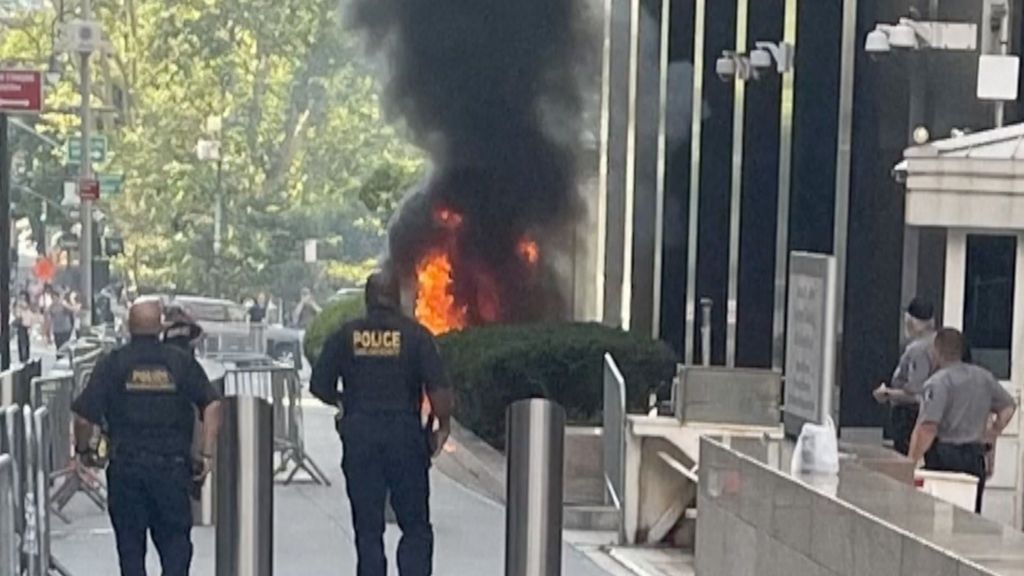
    According to official statements from law enforcement leadership, Arrabaca arrived at the downtown building heavily armed. FBI New York Assistant Director James Barnacle told reporters the suspect was carrying multiple weapons: two axes, a machete, three additional knives, and a cache of fireworks. Before starting a fire on the building’s entrance staircase, Arrabaca opened fire with an airsoft pellet gun, discharging between five and seven rounds toward the building, Barnacle said.

    After setting off the fireworks, Arrabaca poured accelerant across the entrance stairs, igniting a blaze that was quickly contained and extinguished by the New York City Fire Department. Federal agents on site intercepted the suspect and tackled him before he could cause further harm. Three people sustained non-life-threatening minor injuries in the chaos: two federal government employees, one on-site security officer who participated in subduing Arrabaca, and an immigrant who was at the building to attend an immigration status hearing. The Department of Homeland Security (DHS) clarified that one bystander also suffered a minor grazing injury during the incident.

    The FBI confirmed that Arrabaca made repeated anti-government and anti-ICE statements throughout the attack, leading Barnacle to characterize him as an anti-American, anti-government extremist. DHS has also labeled the suspect an “anti-ICE rioter.” The BBC has reached out to DHS for additional comment on the incident, as of yet no further statement has been released.

    CBS News, the BBC’s U.S. news partner, has verified that Arrabaca served in the active-duty U.S. Army from 2001 to 2004, before transferring to the New York Army National Guard, where he served from 2004 to 2005. He never received an overseas deployment during his service, and left the military with the rank of specialist, with no prior reported violent criminal record tied to his military service.

    26 Federal Plaza has long been a flashpoint for public demonstrations, particularly for protests targeting hardline immigration policies enacted by former President Donald Trump. In the wake of the attack, New York City Mayor Zohran Mamdani issued a public statement on the social platform X condemning the violence. “This incident is deeply disturbing,” Mamdani wrote. “Our administration will continue to ensure that every New Yorker is safe in their city — and hold accountable any who threaten that safety.”

  • Inside Indonesia’s slave island: ‘I want my children to be free’

    Inside Indonesia’s slave island: ‘I want my children to be free’

    Just a two-hour journey from Bali’s postcard-perfect tourist beaches, a starkly different reality unfolds on Indonesia’s remote Sumba Island: chattel slavery, outlawed across the nation for more than 160 years, remains embedded in daily life through a centuries-old rigid caste system. For generations, people on this isolated eastern island have been born into bonded servitude, known locally as ata, trapped in a cycle of exploitation that outlasts colonial rule and constitutional bans.

    Sumba’s remote landscape, 2,000 kilometers east of Indonesia’s capital Jakarta, holds a quiet, timeless charm that draws adventurous travelers chasing hidden tropical paradises. Arid hills roll toward the sea, connected only by rutted rocky roads where travelers dodge roaming livestock; mobile phone signals are non-existent, and meals are still cooked over open wood fires. Turquoise waterfalls draw visitors to villages like Tenggedu, where towering traditional thatched homes, shaped to resemble buffalo horns, cluster around the ancestral tombs of local noble families. It is here that 31-year-old noble Umbu Ana Rara shares a home with Kanisius Kanyali Hambarita, an ata three years his senior. Umbu Ana claims he treats his bonded servant “like a member of the family,” allowing Kanisius to earn small side income driving a motorcycle taxi and grow food on a tiny plot of land. For Kanisius, the weight of inherited tradition has led him to resignation: “I don’t object to it, that’s how it is. It’s only the symbol of a tradition inherited from our ancestors.”

    But away from the watchful eyes of their masters, many ata tell stories of relentless abuse and intergenerational trauma. A 40-something ata from nearby Napu village told AFP he was beaten and doused with water as a child for failing to meet work quotas, forced to tend fields, feed pigs and cook for his master even after school. “I tell my children: ‘I don’t want you to go through what I went through,’” he said.

    The caste system that underpins this modern slavery is rooted in marapu, the island’s indigenous belief system that blends animism and ancestor worship, which remains deeply influential even among the 80% of Sumba’s 685,000 residents who identify as Christian. Marapu divides society into three distinct, hereditary tiers: ruling nobles called maramba, who often control most of the island’s land; commoners known as kabihu; and the lowest caste, ata, who are born into bonded servitude. “Legend says that the marambas acquired atas when they arrived in Sumba,” explained marapu priest Umbu Remi Deta, cementing the caste system as the core of local social order. Sumba’s geographic isolation has allowed these ancestral structures to survive largely unchanged centuries after slavery was banned by Dutch colonial rulers, and later enshrined as illegal in Indonesia’s 1945 post-independence constitution.

    Estimates of the current ata population vary widely: a local social worker estimates roughly 1,700 bonded people in East Sumba alone (home to 350,000 residents), while other sources put the total number across the island at several thousand. While other forms of debt bondage exist in other parts of Indonesia, historian Bondan Kanumoyoso of the University of Indonesia notes that Sumba’s system is unique: it passes intact from generation to generation, with masters and servants often living side-by-side under the same roof in similar material conditions, making it nearly invisible to outside observers.

    For generations, maramba rule has been enforced through systemic physical and sexual violence, with a long-accepted tradition of droit de seigneur giving masters unchallenged access to female ata servants. “If you are a girl, you belong to the master,” explained Andy Yentriyani, former head of Indonesia’s National Commission on Violence Against Women. “Sexual intercourse is not considered rape. It is only using your authority over your belonging.” One anonymous maramba confirmed the practice to AFP, admitting he would beat the husband of any female slave who rejected his advances. Most violence never reaches authorities, says rights activist Martha Hebi, founder of local NGO Solidarity for the Women and Children of Sumba, because victims are too intimidated to testify.

    That reluctance to speak out has left even high-profile cases stalled in the justice system. In 2024, an 18-year-old ata who reported being repeatedly raped by her master and his son starting at age 13 finally came forward to police in East Sumba’s capital Waingapu after giving birth to the child. Two years later, the investigation remains open and unresolved, according to Dian Sasmita of the Indonesian Child Protection Commission, who has called on authorities to prioritize these cases. Local faith groups like the East Sumba Protestant synod offer support to victims who come forward, but activists agree deep cultural change will take generations.

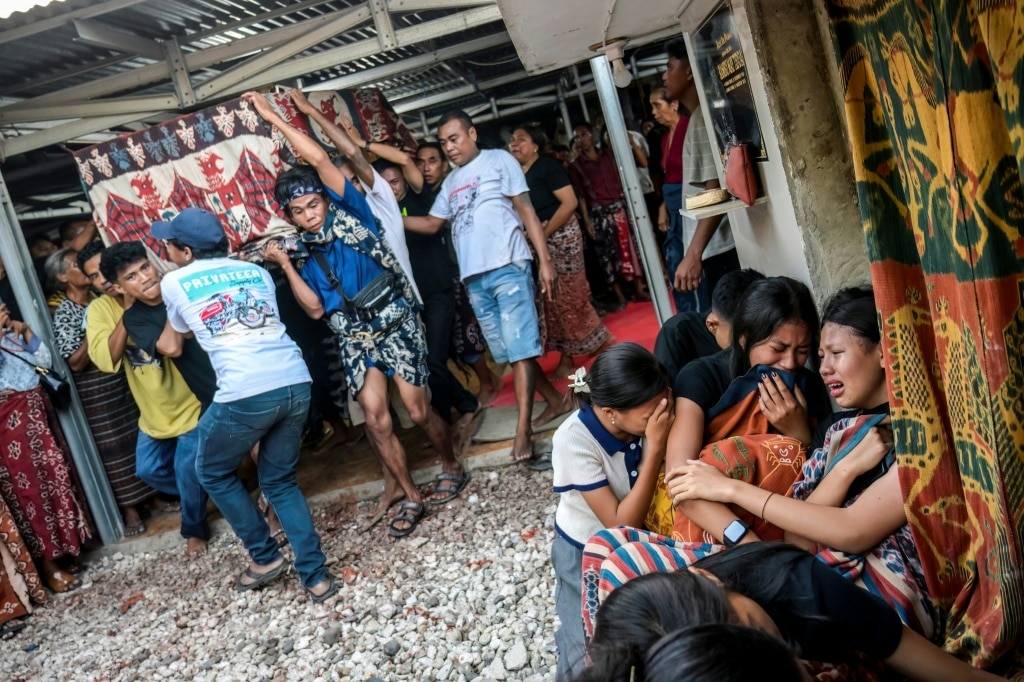
    Gidion Mbilijora, who led East Sumba district as its top official for 13 years and himself owns two ata, acknowledged the system’s deep roots. “We need a long process of changing the mindset” of the noble class, he said, speaking at a massive noble’s funeral attended by 4,000 guests that included ritual horse sacrifice — a practice that until the 1990s was feared to sometimes include human slave sacrifice to accompany a deceased noble into the afterlife, according to American anthropologist Janet Hoskins.

    International and local human rights groups have long pressured the Indonesian national government to enforce its constitutional ban on slavery and implement anti-discrimination conventions the country has signed. “The government is aware of the situation in Sumba but has so far taken no measures to eliminate slavery,” says Haeril Halim of Amnesty International Indonesia. Human Rights Watch Indonesia’s Andreas Harsono argues the government should “declare the freedom of all ata people from their maramba masters.”

    But Indonesian Human Rights Minister Yusril Ihza Mahendra says the government’s approach prioritizes incremental change to respect Indonesia’s extreme ethnic and cultural pluralism. “The government does not wish to impose change suddenly — rather it follows the social development of each community step by step,” he told AFP. “We are convinced that education will change everything.” That view is echoed by many local leaders, including Gidion, who argues that growing access to knowledge will eventually lead lower-caste communities to reject the bonded system.

    A small number of progressive nobles have already begun pushing for change from within. Norlina Rambu Jola Kalunga, a 54-year-old noblewoman and Christian pastor who inherited five ata when she married into a royal family, supports full emancipation but says she cannot free her own servants without violating deeply held local custom — even though her own grandfather freed all his ata when he led the local Protestant community in neighboring Central Sumba. Another noblewoman, Tamu Rambu Margaretha — known locally as Mama Margaretha — has traveled to Jakarta to advocate for ata emancipation, sending all her bonded servants’ children to school alongside her own and helping ata women sell their handwoven ikat textiles to tourists for fair income. “if someone is illiterate, there are many things they won’t understand,” she explained. Though she says she would not oppose any of her ata leaving to build independent lives, none have the financial means to do so.

    Even for ata who manage to build independent lives outside their master’s home, the hereditary caste system continues to bind them to the old order. The Napu village man who endured childhood abuse now lives with his family in an abandoned home once owned by his former master, and has even sent two of his four children to university on government scholarships after building his own livestock business. But the land he farms still belongs to his maramba, so when the noble family calls, he must comply. “It’s so easy for them to order us around. But I did not directly fight back. I made my own path. I could see what freedom looked like,” he said. “Now there are rules… laws that protect us. Maybe the maramba understands that, so they do not bother us too much anymore.” Still, he remains legally and socially categorized as an ata — and his greatest hope is that the next generation will escape the bond entirely. “I want my children to be free from the maramba,” he said. “If we have knowledge, then we are free.”

  • Yemenis turn to ‘Ruqyah’ faith healers as medical healthcare remains in crisis

    Yemenis turn to ‘Ruqyah’ faith healers as medical healthcare remains in crisis

    Deep in the heart of Taiz, Yemen, the rhythmic cadence of Quranic recitation drifts through every floor of a four-century residential building, broadcast from a decades-old cassette player tucked away on the second level. While recitations of the Quran are traditionally tied to funeral rituals across the country, this daily gathering serves a far different, more urgent purpose: hundreds of people travel from every corner of Yemen to wait for hours, just for a chance to meet with a sheikh offering Ruqyah Shari’ah, a form of divine spiritual healing through Quranic recitation. Many of these visitors also receive cupping therapy (Hijama) alongside recitations, with patients seeking relief from ailments ranging from routine headaches to late-stage, life-threatening cancer. For most who arrive, their turn to spiritual healing is not a matter of choice, but necessity born of a collapsed national healthcare system.

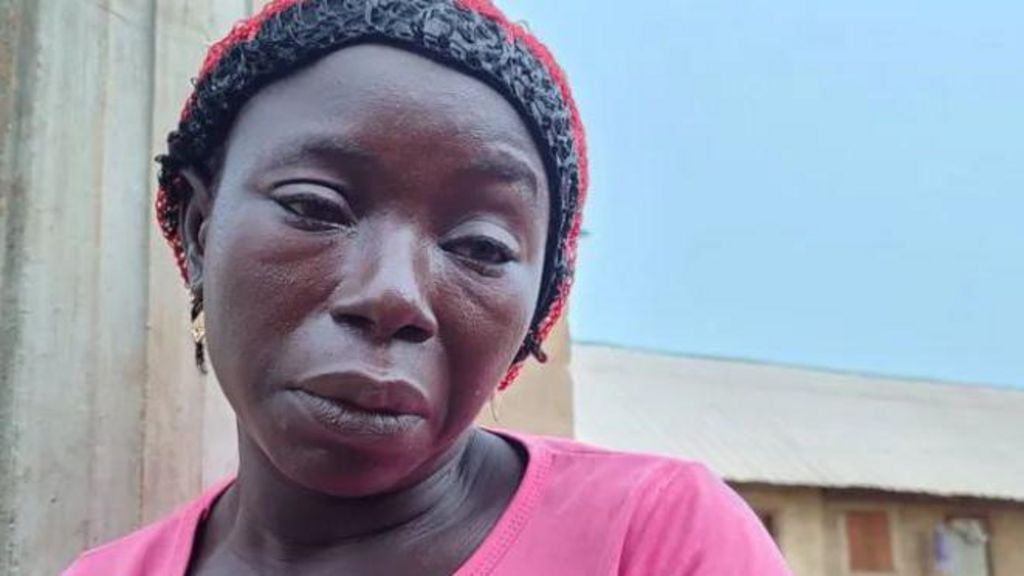
    Take 60-something Fatima, who is fighting an aggressive stomach cancer. When she first developed symptoms, she sought care at every major hospital across Taiz Governorate, even making the long journey to Aden in search of a diagnosis and effective treatment. Her search yielded nothing. With no other options left, she followed her sister’s advice to visit a Ruqyah sheikh, after her sister reported feeling better following similar treatment. For six months, Fatima returned weekly, paying the sheikh 12,000 Yemeni riyals – roughly $7 – each week, a sum that drained her limited resources while doing nothing to stop her cancer’s progression. The sheikh repeatedly told her her illness was caused by the evil eye and that healing required patience, but as months passed, Fatima’s condition deteriorated until she could no longer eat and the pain became unmanageable. It was only when her illness reached a critical stage that the sheikh finally urged her to see a specialist tumor. “It was then that I realised the sheikh couldn’t actually do anything; he was just trying to make money by reciting the Quran over patients,” Fatima explained in an interview.

    Today, Fatima’s case remains incomplete: she has never had a full scan to check if her cancer has spread to other parts of her body. Cancer care in Yemen is already nearly inaccessible for most: without advanced diagnostic equipment or specialized treatment available domestically, only patients wealthy enough to travel abroad for care can access life-saving treatment, while low-income patients are left to die at home. Fatima’s story is far from unique across a country where decades of armed conflict and catastrophic funding shortfalls have left the national healthcare system in complete ruins. According to the World Health Organization, more than half of all Yemeni health facilities are completely non-functional, and 18 percent of the country’s districts have no doctors at all. Most highly skilled medical professionals have fled the country for better opportunities abroad, leaving Yemen with just 0.1 doctors per 1,000 residents – a figure that is a fraction of the regional average of 1.1, the global average of 1.9, and even the average 0.5 doctors per 1,000 people seen in other conflict-affected fragile states. Overall, more than 20 million Yemenis – nearly half the country’s total population – lack access to basic medical care.

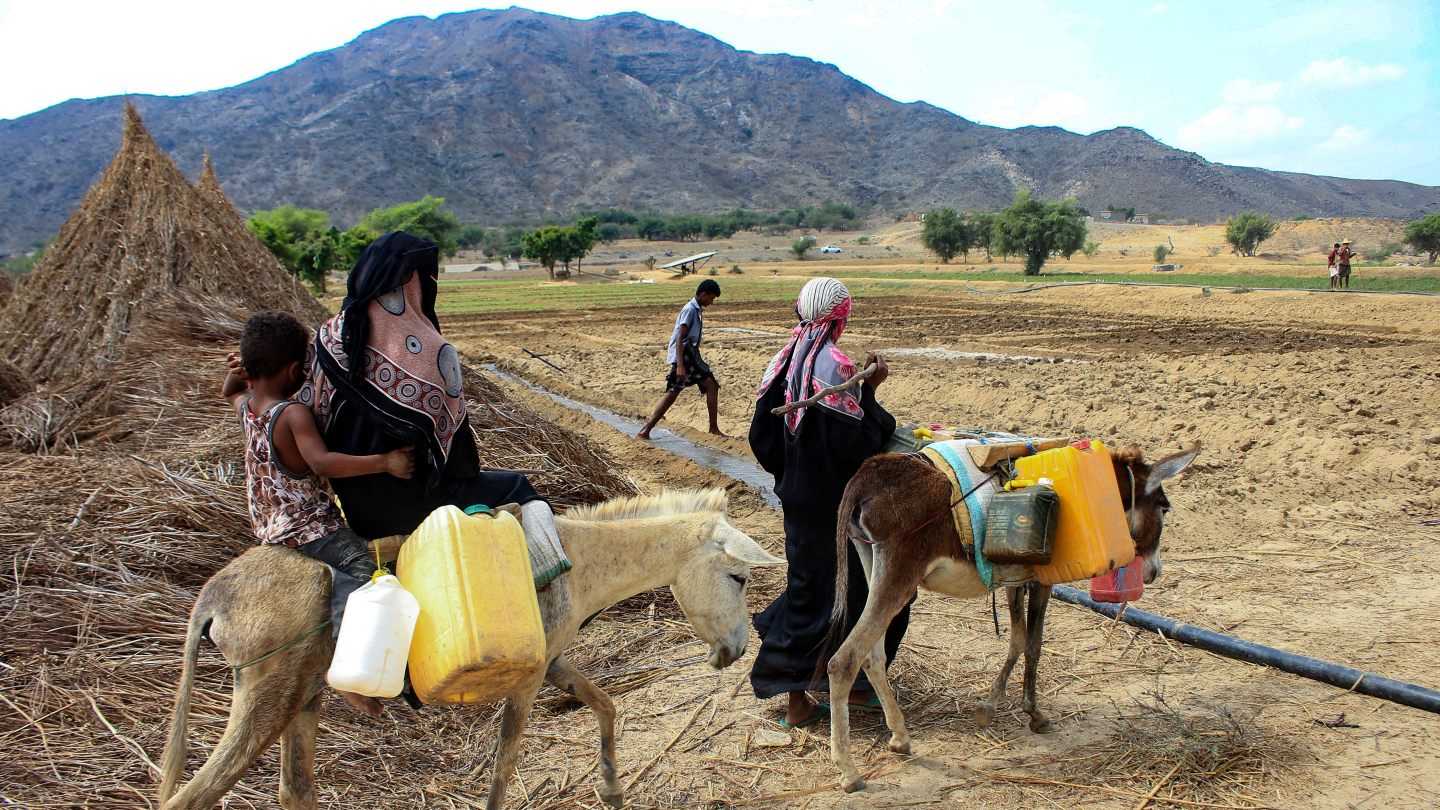
    With affordable clinical care out of reach for most, unregulated Ruqyah centers have spread rapidly across every Yemeni governorate, with rural women making up the vast majority of patients, a gap widened by widespread limited access to education in marginalized rural areas. Fifty-year-old Khadijah al-Ghaili, who struggles with chronic shortness of breath, traveled 80 kilometers from her remote village to see a well-known Ruqyah sheikh who also offers cupping therapy. While she acknowledges that formal care is available at private hospitals, the cost is far beyond what she can afford. “Private hospitals require a lot of money that I simply cannot afford, so I chose to come to this sheikh as an alternative,” al-Ghaili said. “This is a good alternative because it was recommended by our Prophet, and our grandparents used it back when there were no hospitals.” After three cupping sessions across six treatment areas, she says her shortness of breath remains, but the accompanying pain has faded, and she remains confident she will recover once she completes her treatment plan with the sheikh.

    The rising popularity of unregulated Ruqyah healing has sparked debate among both practitioners and medical professionals, who emphasize that the issue is not the religious practice itself – which is widely recognized in Islam – but the exploitation of desperate patients by unqualified actors looking to profit. Abu Ahmed, a 60-year-old Ruqyah practitioner with more than 20 years of experience who uses a pseudonym for privacy, notes that the practice is meant to address spiritual afflictions such as the evil eye, envy, or jinn possession, not to replace evidence-based clinical care for physical illness. “If I see that a patient is not suffering from the evil eye, envy, magic, or jinn possession, I advise them to visit a hospital to seek medical healthcare, as we cannot help every case,” he explained. He also acknowledged that the lack of any licensing or regulatory framework for Ruqyah centers has opened the door for bad actors: “This work should, first and foremost, be a voluntary act for the sake of Allah. Those who can afford to pay should only pay a small amount, and it should be entirely free for those who cannot.”

    Dr. Adel, a Yemeni tumor specialist who also uses a pseudonym to avoid conflict with fraudulent practitioners, says he regularly sees patients who only seek formal medical care after spending months consulting unregulated Ruqyah sheikhs, by which point their conditions have already deteriorated to untreatable stages. “I am not speaking about all Ruqyah sheikhs, as Ruqyah is part of Islam. I am talking about the fraudsters who claim they can treat physical diseases like tumours, deceiving patients for months until their conditions become critical,” he said. Just this month, he treated a female patient with a facial tumor who came to him after months of unsuccessful Ruqyah treatment, but her cancer had progressed too far for any intervention to save her. “It is the needy who fall victim to both the collapse of the healthcare system and the deception of these religious traders,” he added, noting that wealthy patients almost always seek clinical care first before traveling abroad for treatment, leaving only low-income patients exposed to exploitation.

    Mohammed Abdulkhaleq, director of health awareness and media at the Taiz health office, confirms that widespread poverty and the sky-high cost of formal medical care are the primary drivers pushing patients to seek out Ruqyah sheikhs instead of hospital care. “Ruqyah is a religious practice and is absolutely not a replacement for medical healthcare. However, there are several factors, including the two I mentioned, that prevent people from seeking hospital care,” he explained. The biggest public health risk, he notes, is that patients delay seeking formal care until their condition is already untreatable. “We urge anyone who is sick to go to whatever hospital they can afford as early as possible.”

    For her part, Fatima, who continues to fight her cancer, is now speaking out to warn other Yemeni patients to avoid the trap she fell into. “Those who need medical help should avoid Ruqyah sheikhs, and head straight to hospitals to seek medical treatment from the early stages of their illness,” she said. “Ruqyah is for spiritual healing. It is not for someone who has tumours in their body.”

  • Guyana launches criminal probe as crews scour waters for survivors after ferry capsizes

    Guyana launches criminal probe as crews scour waters for survivors after ferry capsizes

    GEORGETOWN, Guyana — Rescue teams extended their search efforts for missing passengers of the capsized MV Barima ferry into Monday, following the weekend disaster that has already thrown the South American nation’s lax maritime safety regulations into sharp relief. As the operation enters its third day, hopes of pulling more survivors from the Atlantic Ocean are fading rapidly, with government officials confirming only two fatalities have been recovered so far and the true number of people on board remains unknown.

    The decades-old vessel — constructed more than 80 years ago, and most recently dry-docked for major repairs earlier this year with another round of major work scheduled for October — capsized Saturday evening off Guyana’s Essequibo Coast. It was traveling from the capital Georgetown to Port Kaituma, a remote community in the country’s northwest region near the Venezuelan border, a route heavily relied on by locals due to the country’s sparse overland road network and lower cargo costs compared to domestic air travel.

    Prime Minister Mark Phillips confirmed to reporters Sunday evening that official records list 116 passengers and 17 crew members on the vessel’s manifest, but preliminary investigations indicate the actual number of people aboard was far higher. Of the 67 people rescued from the capsizing, 35 do not appear on the official passenger list at all. This discrepancy lines up with longstanding complaints from passengers about a pervasive informal scheme at state-owned piers, where ferry clerks sell unrecorded off-the-books seats to passengers for cash, skirting official safety limits and manifest requirements for extra personal income.

    The revelations of misconduct do not end there: the rescued captain and at least one other crew member have tested positive for marijuana, and both are currently in police custody as authorities open a formal criminal investigation into the incident. Phillips emphasized that the government is launching an urgent, full-scale probe covering every factor that may have contributed to the disaster, from manifest accuracy and cargo loading practices to compliance with mandatory safety rules and the pre-voyage conduct of the captain and crew.

    “Let me be absolutely clear: Where negligence, misconduct or criminal wrongdoing is established, those responsible will face the full force of the law,” Phillips said. “There will be no exceptions and no tolerance for actions that placed innocent lives at risk.”

    Public Works Minister Juan Edghill described the incident as the worst marine disaster Guyana has seen in decades, saying he was devastated by the tragedy and the failures that allowed it to happen. “We have a zero tolerance for members of the crew drinking or smoking while at work. And for us to have positive tests from the captain, this is serious,” Edghill said. “People’s lives are at risk, and those matters will be dealt with.”

    Edghill echoed the prime minister’s condemnation of the unrecorded passenger scheme, noting that the inaccurate manifest has already hampered critical search and rescue operations. “Nobody for the want of a few extra dollars can cheat a system and compromise the entire search-and-rescue operation,” he said. “To be confronted with a reality that despite an official manifest given to us, persons who were rescued were not manifested, that is a criminal action.”

    Multiple passengers who survived the disaster reported on social media that they noticed water seeping into the vessel’s cargo area long before the MV Barima capsized, as the aging ferry struggled along its coastal route to Port Kaituma.

  • Utah firefighter and four family members killed in flash flooding

    Utah firefighter and four family members killed in flash flooding

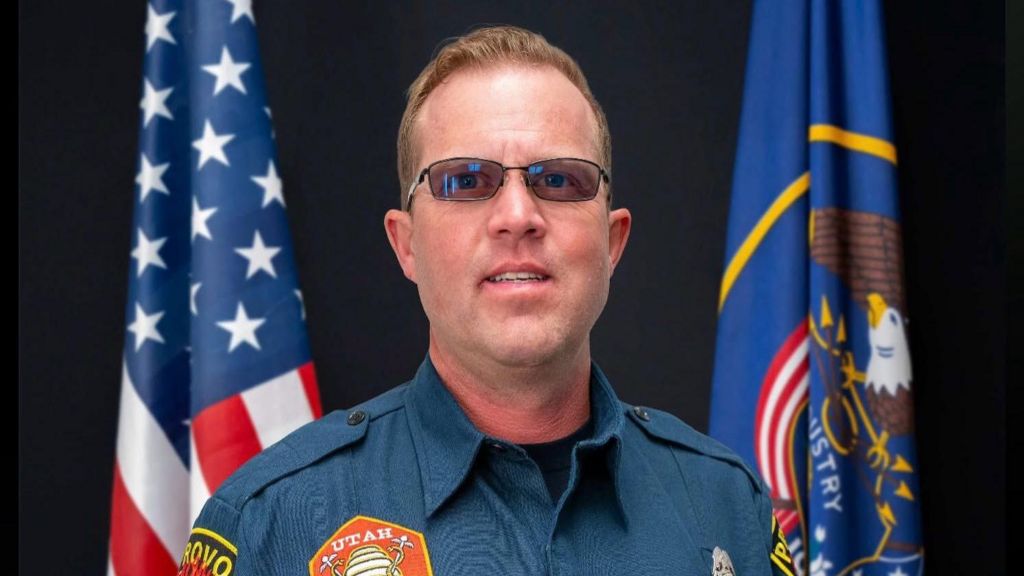
    A devastating weekend flash flood has claimed the lives of five members of a Utah family during a planned day of hiking in the state’s southern region, local law enforcement officials have confirmed. Among the deceased is Captain Spencer Long, a serving member of Provo Fire & Rescue, alongside his wife and their three young sons. The only surviving immediate family member is a daughter who chose not to participate in the outdoor excursion, leaving her as the sole survivor of the immediate household.

    In an official statement, the Wayne County Sheriff’s Office confirmed that the tragedy is linked to sudden floodwaters triggered by days of heavy regional rainfall. The agency did not release the identities of the victims publicly, leaving that confirmation to Provo Fire & Rescue, which formally announced Captain Long’s passing in a separate public message.

    “The entire Provo Fire & Rescue community is absolutely heartbroken by the death of Captain Spencer Long and his entire family,” the department shared in its statement. “Our deepest thoughts and condolences are with his surviving family member, friends, and fellow colleagues as they navigate this unimaginably difficult time.”

    Details of the victims’ full identities were further clarified through a verified GoFundMe fundraising page set up in the wake of the disaster, which confirmed the victims as Long, his wife Katrina, and their three sons: Reid, Thayne, and Gage. The fundraising page also noted that the surviving daughter “has had her life forever changed in an instant” by the sudden loss of her entire family.

    According to the Wayne County Sheriff’s Office timeline, the family arrived at a trailhead campground near the small town of Bicknell, Utah, to begin their day trip on Friday afternoon. Local emergency dispatch received the first report of a flood-related incident at the campground around 5:00 PM local time (23:00 GMT), where first responders recovered the body of a young male victim. As search and rescue teams combed the surrounding flood-prone terrain, they recovered two additional male victims later the same day. Search operations resumed at first light on Saturday to locate the two remaining missing family members, and by the end of the day, officials confirmed that the final two bodies had been recovered, bringing the total death toll to five.

  • Dozens feared dead in another Nigeria boat disaster but why do they keep happening?

    Dozens feared dead in another Nigeria boat disaster but why do they keep happening?

    For millions of rural Nigerians, winding rivers and sprawling waterways are not just geographical features—they are lifelines. With crumbling overland roads, few bridges, and remote villages tucked along riverbanks, rickety, aging wooden boats are often the only option to reach markets, attend family gatherings, or connect to the outside world. But this reliance on water transport comes at a devastating, recurring cost: a steady stream of preventable capsizings and sinkings that have left thousands dead and countless families shattered.

    Three years ago in Kwara State, Aisha Mohammed endured a loss no parent should ever face: she lost three of her daughters in a boat disaster that claimed more than 100 lives. Her grief is far from unique. Just this past Sunday, a wooden canoe carrying 40 people—most of them female farmers and laborers—capsized in Jigawa State, where search-and-rescue teams have recovered seven bodies so far and continue to hunt for survivors. The tragedy is the latest in a string of fatal incidents this year alone: last month, 12 people, including a pregnant woman and six children, died in a wreck on the Central Nigerian River Benue; earlier in 2026, 14 people returning from a wedding procession in Kebbi State lost their lives when their boat overturned. To date, more than 55 Nigerians have died in boat accidents in 2026, with dozens of bodies still missing from submerged vessels.

    For survivors of past tragedies, the pain never fades. Isiyaka Bello, a Kebbi State resident, still carries the fresh wound of losing his wife last year. She was returning from a village market when her boat sank, killing her and eight other passengers. “It seems like just yesterday. She left behind four children, and I am still struggling to adjust to raising them on my own,” Bello told reporters. “Whenever I pass by a large body of water, all I think about is her.”

    The root causes of Nigeria’s water transport crisis are well-documented, and all point to systemic failure rather than random bad luck: chronic overcrowding, structurally unsound vessels, and near-total failure to enforce even the most basic safety regulations, such as mandatory life jacket use. After every high-profile tragedy, government officials vow to crack down on unsafe practices and improve infrastructure—but years of broken promises have left waterways just as dangerous as ever.

    Mallam Sala Altine holds the traditional title of Sarkin Ruwan Shiroro, tasked with overseeing safety on Shiroro Lake in Niger State, a region that has seen some of Nigeria’s deadliest boat disasters. The Niger River, Africa’s third-longest waterway, cuts through the state that shares its name, fed by dozens of smaller tributaries that create a vast, high-risk network for passenger transport. Between 2023 and 2025, Nigeria recorded nearly 860 boating-related deaths nationwide, with Niger State accounting for a disproportionate share—one report counted 253 fatalities in the state between June 2023 and August 2025 alone.

    Altine says the core problem is simple: a crippling shortage of life-saving equipment, despite repeated government pledges to deliver supplies. “Our boats usually carry well over 100 passengers. But most of the time, we can only provide life jackets for 10 people, or even fewer, because we simply don’t have enough,” he explained. “We want to make it a rule that everyone who boards a boat must wear a life jacket. But we can’t enforce it because we don’t have any to give them.” After one 13-fatality accident, the government promised a large shipment of new life jackets, Altine recalled, but only a tiny number ever arrived. “It breaks my heart to see passengers boarding boats without any protection,” he said.

    Local safety advocates frame the recurring deaths as entirely preventable. “These are not acts of fate. They are the predictable consequences of systemic negligence,” one local observer noted.

    But government officials push back on that narrative, arguing that cultural resistance to safety measures also plays a role. Ibrahim Husseini, director of information at Niger State’s National Emergency Management Agency, says the government regularly distributes life jackets, but many lifelong riverine residents refuse to wear them, saying they do not need the equipment or find it uncomfortable. “We have people who are born and raised in riverine communities who take it for granted that this is the life they are used to,” Husseini told the BBC. “Sometimes it is difficult to force them to wear life jackets.”

    This dynamic disproportionately puts women at risk: while many men in riverine communities learn to swim from childhood, far fewer women have the same training, making them far more likely to die if a boat capsizes. Yet women are also the group most likely to rely on water transport to travel to markets and attend large family events like weddings.

    After a particularly deadly 2025 disaster in Niger State that killed 32 passengers, the National Inland Waterways Authority (Niwa) reaffirmed a national mandate requiring all passengers to wear life jackets, and banned commercial boats from picking up passengers outside of officially registered, approved docking areas. But these rules are not new—they were first written into Nigeria’s 2023 Water Transport Code—and they are almost never enforced across most of the country.

    Timothy Iwuagwu, president of the Institute of Safety Professionals of Nigeria, says weak enforcement is the core of the crisis. “Any regulation is as good as its implementation,” Iwuagwu explained. Beyond missing life jackets, he pointed to a widespread lack of formal training and licensing for boat operators: most local vessel pilots have no formal education in reading water conditions, from tides and currents to hidden hazards, and operate without official approval. Overcrowding is also rampant, he added, with no clear markings of maximum passenger capacity on most vessels. Even when life jackets are available, Iwuagwu noted, they are often low-quality, and passengers rarely receive instruction on how to wear them correctly.

    Last year, the federal government announced a plan to phase out traditional wooden boats, which are often decades old, structurally unsound, and never receive major repairs. Iwuagwu supports the long-term goal of replacing wooden vessels but says immediate action to enforce existing safety rules is far more urgent. He also called for safety professionals to be directly involved in designing and rolling out water safety policy, a step the government has not yet taken.

    One proposed intervention—stationing water marshals at terminals to stop overloading and enforce safety rules—has had little impact to date, because there are not enough marshals to cover the thousands of informal docking points across the country. A further hidden hazard clogs many Nigerian waterways: thousands of sunken tree stumps left behind by decades of unregulated logging. At low tide, the stumps are visible, but when water levels rise, they disappear beneath the surface, where they can slice through boat hulls and cause vessels to capsize. Husseini blames poor dredging and maintenance for the problem, noting that removing submerged tree debris falls under Niwa’s jurisdiction, not state governments, and the national authority has failed to address it.

    Federal officials acknowledge the scope of the crisis. “The time has come for a decisive break from outdated practices,” Nigeria’s Minister of Marine and Blue Economy Adegboyega Oyetola said late last year, after a nine-fatality accident on Sokoto State’s Jaranja River. “Wooden boats have served their time, but they cannot be the future of water transport in Nigeria. The tragic mishaps we continue to witness are a direct consequence of the continued reliance on unsafe vessels.” Oyetola said the ministry has distributed thousands of life jackets to riverine states and mandated their use, but added that “life jackets alone cannot guarantee safety without safe boats.” He has called on state governments to encourage operators to switch to stronger, more durable fiber and aluminum vessels, which are far safer than traditional wooden craft.

    There is already proof that systematic reform can drastically reduce fatalities. In Lagos, Nigeria’s largest coastal city, where one-third of the metropolitan area is covered by water and water transport is a critical alternative to crippling road congestion, aggressive safety reforms have cut deaths dramatically. Between 2018 and 2023, Lagos recorded 92 boating-related deaths. But after the state government implemented four key reforms—replacing old wooden boats with standardized new vessels, distributing free life jackets, dredging clogged water channels, stationing trained water guards at every jetty, and requiring all operators to complete formal training and licensing—fatalities plummeted: only one person died in a boating accident in 2024, six died in 2025, and there have been no fatal accidents so far in 2026.

    “Even when there is an accident or mechanical fault, the water guard quickly informs the control room and a rescue boat is deployed in record time,” said Abdulbaq Balogun, managing director of Lagos Ferry Services. Public awareness campaigns have also shifted cultural attitudes: today, many Lagos passengers now ask for life jackets before boarding, a practice that is almost unheard of in other parts of the country.

    While the Lagos model proves reform works, scaling it across Nigeria’s vast network of rural waterways will take significant time, political will, and funding. For those who have already survived tragedy, the decades of inaction are a devastating disappointment. Aminu Bagwai, a popular Nigerian singer, survived an 18-year-old boating disaster in Kano State that killed 36 people, including a bride traveling to her wedding. None of the passengers on the boat wore life jackets. Bagwai wrote a hit Hausa-language song, *Ruwan Bagwai (Bagwai’s Water)*, about the tragedy that made him a household name across northern Nigeria. But 18 years later, he says nothing has changed. “I still think about it every day, and it is sad I still see boat accidents happen leading to loss of lives,” he said. “My prayer at the time was that ours would be the last one.”