分类: society

  • Tonnes of rotting food from vast LA warehouse fire creates unbearable stench

    Tonnes of rotting food from vast LA warehouse fire creates unbearable stench

    Two months after a devastating fire tore through a massive cold-storage warehouse in Los Angeles’ Boyle Heights neighborhood, local residents and small business owners are still grappling with a putrid stench, pest infestations, and public health risks from 39 million kilograms of rotting meat and seafood left behind by the blaze. What was once a bustling mixed neighborhood of industrial warehouses and residential homes has become an unbearable place to live and work, leaving the community frustrated with the slow, uneven cleanup process.

    Alexis Sicairos, owner of local coffee stand Brew Sting, knows the impact of the ongoing crisis firsthand. On a normal day, his shop would have a steady line of customers waiting for signature drinks like banana buzz lattes and cloud matcha, including dozens of warehouse workers who stopped by daily. Today, his street corner stands mostly empty. After a two-week mandatory shutdown following the fire, Sicairos reopened, but business has collapsed. The warehouse workers who made up a core portion of his customer base are gone, and returning patrons have stayed away to avoid the overwhelming stench, thick swarms of flies, and residual smoke. “We still have to pay our bills, so we have to stay open,” Sicairos explained, noting that flies constantly cover his serving tables and equipment – a sight that drives away customers looking to enjoy food and drinks outdoors.

    The fire, which broke out on June 17, completely destroyed the facility operated by temperature-controlled logistics giant Lineage, leaving behind more than 85 million pounds of spoiled food, including beef, pork, poultry, and seafood. With high summer temperatures accelerating decomposition, the stench has lingered across the neighborhood for weeks. Local security guard Mesha, who works outside a nearby marijuana dispensary, described the odor as so overpowering it triggers nausea, comparing it to the smell of a decaying body. Walking through the neighborhood now means constant swatting at swarms of multi-colored flies, and residents have reported sightings of unusually large rats that sidewalk traps are too small to contain.

    Public health officials have warned the infestation poses tangible safety risks. A city-commissioned inspection conducted by a pest control firm found that the rotting waste and warm temperatures speed up fly breeding, and the insects can spread infection to open wounds on both humans and animals, increasing the risk of disease for local residents.

    While Lineage claims that approximately 80 percent of the spoiled food waste has been removed from the site as of this week, city officials have blasted the company’s response as inadequate. Los Angeles Mayor Karen Bass, who is running for re-election this year, confirmed this week that the company’s efforts have “fallen short”, and the county public health department has issued daily $500 citations for unsanitary and public nuisance conditions. Bass has set a strict August 13 deadline for Lineage to complete the full bulk waste cleanup, and has issued an executive order pausing all plans to rebuild the warehouse until full public health and safety protections are in place. In a letter to Lineage shareholders released Tuesday, Bass criticized the company for delayed communication, limited transparency, and insufficient community engagement, noting that repeated requests for updates on cleanup, environmental monitoring, and recovery efforts have gone unanswered.

    In response to the criticism, a Lineage spokesperson stated that cleanup crews are working around the clock to remove waste, clear debris, and dismantle damaged sections of the warehouse, acknowledging that odor reduction is a top priority. The company notes that the cleanup effort is a highly complex operation, and projects total costs will reach between $80 million and $100 million. The company expects to complete bulk waste removal by next week, up from 60 percent completion on July 31.

    To address immediate community needs, Mayor Bass has mobilized city resources and coordinated with local, state, and federal partners alongside non-profit organizations to bring support to Boyle Heights. The city has deployed mobile health clinics to the neighborhood and distributed thousands of air purifiers to local homes and businesses. Bass emphasized that she has met directly with residents since the first day of the crisis to center their input in the city’s response, acknowledging their frustration and noting that the community deserves transparency, clear communication, and robust support.

    Local residents, however, have repeatedly voiced anger at what they see as a slow, inadequate response from both the city and the warehouse operator, with many citing a lack of transparency and insufficient resources dedicated to the cleanup. As crews continue working to clear the site, the community remains trapped waiting for the stench and health risks to be eliminated.


  • Paris tells e-scooter riders to wear safety gear or face fines

    Paris tells e-scooter riders to wear safety gear or face fines

    Paris has rolled out stringent new safety mandates for riders of privately owned electric scooters and similar micro-mobility devices, launching a targeted crackdown on violations after a worrying spike in deadly and serious accidents across the French capital. Local law enforcement announced the new regulations over the weekend, alongside grim data from France’s national road safety authority that underscores the urgency of the policy shift.

    Last year alone, 79 people lost their lives in e-scooter-related accidents across France, marking a dramatic 75% jump from the 45 fatalities recorded just 12 months earlier. In Paris specifically, 1,100 people sustained injuries in e-scooter crashes in 2025 – a 33% year-over-year increase that has pushed city officials to strengthen safety standards.

    Under the new rules, all riders of private e-scooters, electric unicycles, and hoverboards on public roads are now required to wear an approved safety helmet and a high-visibility vest or attach retro-reflective markers to their vehicles. Violators face steep penalties: riders caught without a compliant helmet will be issued a €135 (£129) fine, while those missing high-visibility gear will receive a €35 (£30) fine.

    The updated regulations build on existing safety restrictions already in place across Paris, which prohibit riders under the age of 14 from operating e-scooters, ban carrying extra passengers, and cap maximum speed at 25km/h (16mph). The policy also follows a 2023 city-wide ban on rental e-scooters, a move approved by 90% of voters in a public referendum – even though just 8% of eligible voters participated in the ballot.

    Despite the elimination of rental services, private e-scooters remain a widely popular commuting option in Paris, where narrow, frequently congested city streets make compact micro-mobility an attractive alternative to cars or public transit. European Union data shows France has the highest rate of private e-scooter ownership in Europe, with roughly 2.5 million units owned by French residents as of 2023, and hundreds of thousands more sold in the time since. A large share of these private scooters are registered and used in Paris, though the city does not track exact ownership numbers.

    The push for mandatory helmet and high-visibility gear is not unique to Paris: several other French regions, including Seine-et-Marne, Alpes-Maritimes, and Vaucluse, already enforce similar requirements. Paris’ policy shift also aligns with a growing trend across major European cities: Madrid implemented a full ban on rental e-scooters in 2024, and Brussels has announced it will introduce its own rental ban this coming June.

  • Widower who lost wife and 6 children in attack remarries in Nigerian mass wedding for 1,500 couples

    Widower who lost wife and 6 children in attack remarries in Nigerian mass wedding for 1,500 couples

    In the heart of Kano, Nigeria’s most populous northern state, a weekend of collective celebration has opened the door to fresh beginnings for 1,500 couples, many of whom have carried grief, economic hardship, and social vulnerability for years. For Haruna Bashir, one groom participating in the state-organized event, the mass wedding was far more than a traditional ceremonial gathering—it was a long-awaited turning point after unfathomable tragedy earlier this year, when a brutal attack claimed the lives of his first wife and all six of his children.

    Organized by Kano State Governor Abba Kabir Yusuf, the two-day event unfolded across all 44 of the state’s local government areas simultaneously, marking the second mass wedding initiative launched under Yusuf’s administration, which took office in 2023. The program was crafted to target vulnerable groups: widows seeking to remarry, young women from low-income backgrounds, and people like Bashir who lost their families and needed support to rebuild their lives. Unlike traditional weddings in the region that often impose crippling financial burdens on couples and their families, this state-led effort covers most core costs and provides direct financial support to help new households get started.

    Sheikh Aminu Ibrahim Daurawa, commander-general of the Kano State Hisbah Board, which coordinated the logistics of the ceremony, shared that Bashir had isolated himself from community life after his tragic loss, but the wedding has pulled him back toward connection and normalcy. Daurawa added that every participating couple completed mandatory pre-wedding screening, counseling, and fulfilled all religious and legal requirements before the event to ensure long-term compatibility and compliance with local norms.

    Each bride received 200,000 naira, equal to approximately $145, which serves both as a formal dowry and startup capital for a small independent business. Couples also went home with essential household goods, including beds, mattresses, blankets, linens, and rugs—foundational items many would have been unable to afford on their own.

    Governor Yusuf framed the initiative as a deliberate, bold social intervention designed to restore hope and foster dignified family life across the state. “This program is not just about helping people who cannot afford to marry on their own,” he explained. “It is about strengthening family units and advancing social stability across Kano.” The mass wedding forms part of a broader slate of social welfare policies that Yusuf has prioritized since taking office in 2023, all aimed at reducing economic hardship for vulnerable residents.

    The ceremony concluded with prayers from Kano Chief Imam Prof. Sani Zahraddeen, who asked for divine guidance, blessings, and lasting peace for every new household. Many beneficiaries have already spoken publicly about their gratitude for the opportunity to start over with dignity. For Malama Ainau Mudi, a 38-year-old widow who had been unmarried for four years after her first husband’s passing, the day marks an unforgettable new chapter. “Today’s date will never be forgotten in my life,” Mudi said. “My husband died four years ago, and today I wed my new husband whose love and caring will ease my years of being a widow.”

    Mass wedding programs have a long history in Kano, a major center of Islamic culture in West Africa, where successive state administrations have embraced the practice as a tool to support widows, divorcees, and low-income young women. The initiative arrives at a critical moment, as northern Nigeria grapples with soaring inflation and rising costs of living that have made marriage unobtainable for thousands of vulnerable households.

    Social welfare experts have praised the program for addressing a pressing social need, while noting that long-term impact will require complementary support. Dr. Musa Abdullahi, a university lecturer specializing in social welfare, explained that removing economic barriers to marriage can meaningfully boost family stability for marginalized groups, but lasting change depends on pairing wedding support with broader economic and social development programs. Even with that caveat, for the 1,500 couples who crossed this threshold this weekend, the program has already delivered life-changing change: for people who thought they would never get a second chance at happiness, the mass wedding has turned that hope into reality.

  • Ukraine honors its ‘collector of souls’ killed while recovering the war dead

    Ukraine honors its ‘collector of souls’ killed while recovering the war dead

    Thousands of Ukrainians gathered in central Kyiv’s Cathedral of Saint Volodymyr on Saturday to bid a final farewell to Oleksiy Yukov, the 40-year-old founder of a volunteer organization dedicated to recovering the remains of fallen troops and civilians from Ukraine’s war zones. Yukov, who died in a landmine detonation during a recovery operation on August 5, spent more than 20 years honoring the dead by bringing their remains home for proper burial — including those of enemy Russian soldiers.

    A native of the conflict-scarred Donbas region, Yukov first began his life’s work as a teenager, when he stumbled on the unclaimed remains of Soviet and Russian World War II soldiers. Before dedicating himself full-time to recovery work, he worked as a martial arts instructor, but he soon committed fully to his mission: every life deserves a dignified burial, regardless of which side a fighter belonged to.

    In 2014, after the outbreak of full-scale conflict in Donbas, Yukov launched the volunteer NGO Platsdarm, which translates to “bridgehead” in English. Over the years, he earned the reverent nickname “the collector of souls” for his tireless, high-risk work. Platsdarm’s teams venture into mine-laced terrain, from abandoned fields and dense forests to bombed-out urban ruins, to locate and retrieve the remains of the dead, a mission that puts volunteers in constant danger of explosive blasts.

    Yukov already survived a catastrophic mine incident in 2022, which left him with permanent leg injuries and cost him an eye. Even while recovering from those life-altering wounds, he returned to the field to continue his work. In a social media post shared just weeks before his death, Yukov laid out the harsh reality of his mission, acknowledging that every outing carried grave risk. “Remote mines, shelling, drones — everything is against you. But you go and do everything to ensure that every soul returns home,” he wrote.

    He pushed back against critics who argued that the remains of Russian soldiers should be left unclaimed to rot. “When they say: ‘Let them rot,’ I do not agree. This is how we fight for every soul,” Yukov wrote. He framed his work as a deeply moral and spiritual calling, writing that every fallen body is a soul waiting to return to its home. “This is action,” he noted of his daily work. “Action every day in the fields, in the forest belts, among the ruins, where your life can end at any moment.”

    Saturday’s Orthodox Christian funeral service drew crowds of mourners who came to honor Yukov’s legacy of radical compassion amid decades of ongoing war in Ukraine.

  • Families retrieve bodies after a 14-year-old killed at least 7 in a shooting outside Bangkok

    Families retrieve bodies after a 14-year-old killed at least 7 in a shooting outside Bangkok

    BANGKOK — A day after a 14-year-old school student carried out one of the deadliest mass shootings in Thailand’s recent history, grieving relatives arrived Saturday to claim the bodies of their loved ones, as the country grapples with shocking new details of the violence and rising concerns over gun access. The attack unfolded in the early hours of Friday in Nonthaburi province, a residential area just northwest of Bangkok. Officials confirmed the teenager first fatally shot his two grandparents at the family home, where he lived, before traveling to Debsirin Nonthaburi School and opening fire just after 10 a.m. The gunman eventually died by suicide at the school, bringing the total death toll to seven. As of Saturday, Thailand’s Ministry of Health reported 16 wounded victims remained hospitalized, with seven in critical condition. Most of those injured in the attack are between 12 and 14 years old, matching the age range of the shooter’s peers at the school. By early Saturday afternoon, all eight bodies — five school employees, the 14-year-old attacker, and his two grandparents — had been released from Bangkok’s Institute of Forensic Medicine to families for funeral arrangements. Wiroon Supasingsiripreecha, head of the forensic institute, told reporters that nearly all fatally wounded victims suffered a single lethal gunshot wound to a vital area, such as the head or chest. The wound suffered by the 14-year-old shooter aligns with the weapon recovered at the scene, he added, with more comprehensive forensic analysis, including toxicology screenings, expected to be released in the coming days. Officials confirmed the weapon used in the attack, described as a small, compact firearm, was legally registered to the shooter’s grandfather, raising new questions about firearm storage and regulation in the country. While preliminary reports indicate the teenager had shown visible signs of stress linked to academic and school pressures, some family members told local Thai media they had no prior knowledge of any mental health struggles or behavioral issues he may have been experiencing. In the wake of the attack, school administrators announced all classes would be suspended from August 10 through August 14, with all staff instructed to work remotely during that period. On Saturday, the campus stood eerily quiet, with only a small contingent of police stationed at the main entrance. A small number of mourners trickled in throughout the day to lay flowers at the gate, while parents arrived to collect personal belongings left behind by their children when the shooting unfolded. Charin Siriananchai, a local resident who brought his 9-year-old and 6-year-old sons to pay respects, said the entire neighborhood was stunned by the violence. “Everyone was saddened and shocked, because it was unexpected that this would happen in Thailand, and also it’s quite a great loss,” he said. One father of a student who was on campus during the attack, who asked to remain anonymous, said his son remains traumatized by the event and is unable to sleep alone. The deadly attack has once again put a spotlight on Thailand’s gun ownership regulations, which are among the most lax in Asia. According to 2017 data from Small Arms Survey and GunPolicy.org, the most recent comprehensive international study on the topic, Thailand has roughly 15.1 civilian-owned guns per 100 residents. That rate is far higher than most of its Southeast Asian neighbors — neighboring Malaysia counts less than one gun per 100 residents — and gives Thailand the second highest rate of civilian gun ownership in Asia, behind only Pakistan. 2023 statistics from World Population Review put Thailand’s firearm death rate at 3.49 per 100,000 people. While that rate is far lower than that of Latin America and the Caribbean, it is among the highest in Asia, with only the Philippines recording a higher rate in Southeast Asia. Though mass indiscriminate shootings remain rare in Thailand, the country has seen a steady increase in high-profile fatal shootings in recent years. In February 2024, a 17-year-old stole a service weapon from a police officer and carried out an attack at a public high school in southern Thailand, killing one person and wounding two others during a two-hour standoff that included hostage-taking. In 2023, a 14-year-old boy was charged in a fatal shooting at a major shopping mall in central Bangkok that left multiple people dead and injured.

  • Queensland farmstay which hosted fatal rave announces closure

    Queensland farmstay which hosted fatal rave announces closure

    Two weeks after a 40-year-old New Zealand father of two died following a fall at an unlicensed rave held on its grounds, Hidden Camp – an off-grid farmstay and camping venue nestled in bushland between Queensland’s Maryborough and Gympie – has announced an immediate temporary shutdown that will last at least several months. The venue’s owners confirmed the decision in a public statement posted to Facebook on Friday, noting that the closure is tied to ongoing planning and development approval processes that have come to the forefront following the fatal incident. All existing and future bookings will be fully canceled and refunded to guests via the camping booking platform HipCamp, per the announcement. For the family that runs Hidden Camp, the shutdown is far more than a business interruption: the property is not only their commercial operation but their family home and primary livelihood, the statement explained. “It is our home, our livelihood, and something we’ve poured our hearts, savings and countless hours into,” the statement read. “Unfortunately, this means Hidden Camp could remain closed for several months while this process runs its course. We know this is incredibly disappointing for everyone who had plans to visit, and it is devastating for our family.” The sudden closure comes in the wake of a tragic accident that shocked the local Glenwood community two weeks prior. During the unauthorised “Rhythm of the Wild” secret rave held on the property, Trenton Ehrhorn, a 40-year-old New Zealand national and father of two, fell from the event stage and suffered fatal injuries. Immediately after the incident, the venue’s owners released an initial statement expressing profound sorrow over the loss of life, extending condolences to Ehrhorn’s family and friends, and acknowledging the negative impact of the tragedy on nearby residents and the wider Glenwood community. Following the accident, Queensland Police took a 33-year-old man from Burpengary into custody for questioning. As of earlier this week, however, law enforcement officials confirmed no charges have been filed against any person connected to the incident, and the official investigation remains active and ongoing. The venue owners said they look forward to reopening Hidden Camp once all required planning and development processes are finalized, though no specific timeline for a potential reopening has been set.

  • 70 years after South Africa’s women challenged apartheid, some say their freedom isn’t complete

    70 years after South Africa’s women challenged apartheid, some say their freedom isn’t complete

    On Sunday, South Africa marked a landmark moment in its anti-apartheid struggle: the 70th anniversary of the 1956 Women’s March, a watershed act of collective resistance that brought nearly 20,000 women of all racial backgrounds together to challenge unjust segregation laws. Seventy decades on, however, contemporary South African women say the freedom their predecessors risked everything to win remains incomplete, as the nation grapples with persistent crises of gender-based violence, systemic poverty, and deep-rooted structural inequality.

    The 1956 march saw demonstrators converge on Pretoria, South Africa’s administrative capital, to protest apartheid pass laws that forced Black women to carry restrictive identity documents to control their movement across the country. The action has long been recognized as one of the most powerful displays of mass resistance against white minority rule in the nation’s history.

    For Ramnie Dinat, an 84-year-old who was a teenager when the march took place on August 9, the day remains a vivid memory. Dinat assisted her mother, Ama Naidoo, a prominent anti-apartheid activist of Indian heritage, with last-minute organizing ahead of the rally. The multiracial coalition that turned out included Black women, women of Indian descent like Naidoo, and a small group of white women, all united in their opposition to racist legislation.

    “Black women were organizing, and Indian women couldn’t be silent,” Dinat told the Associated Press, adding that none of the ordinary women who took part could have predicted their action would be etched into national history. “We were ordinary women who believed we could make a difference. We simply believed it was the right thing to do.”

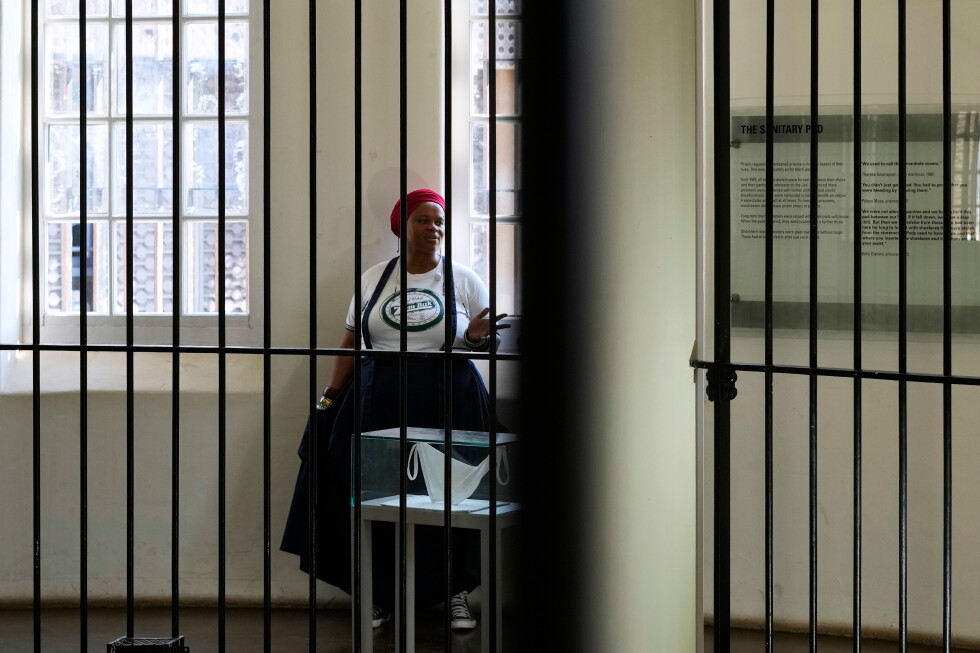
    Today, the legacy of the 1956 march is preserved at the former Women’s Jail on Constitution Hill in Johannesburg, a facility once used as a key part of the apartheid prison system that has since been converted into a public museum. Many leaders and participants of the 1956 march were later imprisoned at the facility, where inmates were segregated by race in line with apartheid policy, just as segregation was enforced across every sphere of South African public life.

    Nolubabalo Memese, visitor services manager at Constitution Hill, explains that the jail was intentionally designed to dehumanize and break anti-apartheid activists. Black women held at the facility were denied even basic human dignity, including access to proper underwear and sanitary products. Now, the museum honors both the iconic leaders of the anti-apartheid movement, including Winnie Madikizela-Mandela and Albertina Sisulu, and the thousands of ordinary women whose contributions to the struggle have often been left out of mainstream history books.

    “Our freedom is built on the shoulders of those kinds of women who were at this prison,” Memese said.

    That sentiment is echoed by Kgothatso Montjane, a 40-year-old Paralympic wheelchair tennis champion and the first Black South African woman to compete in all four of tennis’ Grand Slam tournaments, who took home the 2024 Wimbledon wheelchair doubles title. Montjane says the courage of the 1956 marchers cleared a path for her and other women to pursue opportunities their predecessors could not access.

    “The fight the women took on 70 years ago has paved the way for us,” she said.

    Yet even with the end of apartheid in 1994 and the formal elimination of racial restrictions on movement, work, and political participation, many women argue that new, persistent barriers continue to block full gender freedom in modern South Africa. A 2024 study supported by UN Women found that more than one in three South African women will experience physical or sexual violence over their lifetime, a crisis the United Nations has labeled a “national wound” for the country.

    For Memese, gender-based violence acts as a modern restriction on women’s freedom, just as pass laws constrained the movement of Black women 70 years ago. “There’s a different monster which precludes us from enjoying freedom of movement and economic participation. And that’s gender-based violence. That’s a crime,” she said. “If you want to go jog at six o’clock and it’s a bit dark, you’d rather not.”

    Systemic economic inequality further exacerbates these challenges. Official government data shows women in South Africa face higher unemployment rates than men, carry a disproportionate share of unpaid care work, and remain drastically underrepresented in senior leadership roles across public and private sectors. Even in sports, Montjane says, structural barriers persist: financial gaps limit access to elite training and competition, leaving women of color underrepresented at the highest levels of the sport.

    “The barriers I had to overcome … in a sport like tennis, it’s just a financial issue,” Montjane said. “They don’t lie when they say tennis is a white sport, and you don’t really find people of color dominating in this sport.”

    Even amid these ongoing struggles, Montjane emphasized that the 1956 marchers transformed the trajectory of South Africa for her and future generations of women. “The platform has been set,” she said.

    The symbolic reuse of materials from the apartheid-era jail to build the current museum holds deep meaning for Memese, who frames the work toward gender equity as a process of building a better future from the lessons of the past. “We are using the bricks of the past to build our future,” she said. “Once we forget the past, it’s very easy for us to make the same mistakes.”

    For Dinat, one of the last living participants of the 1956 march, the core lesson of that historic day remains unchanged after seven decades. “Every generation has its own struggles, and every generation has to decide whether it will stand up for what is right,” she said.

  • ‘Unfair’ court system lets wealthy offenders hide behind secrecy orders

    ‘Unfair’ court system lets wealthy offenders hide behind secrecy orders

    Two high-profile convicted rapists in Australia have drawn renewed scrutiny of a controversial legal loophole that allowed their identities to remain hidden from the public for years, leading legal experts to warn that the current system undermines open justice, erodes public trust, and perpetuates harmful stereotypes about sexual assault survivors.

    Tom Silvagni, son of Australian Football League legend Stephen Silvagni, and Ralph Carr, a prominent sports and entertainment manager, both secured court-issued suppression orders during their separate rape trials, preventing public disclosure of their names until guilty verdicts were returned. Carr’s identity remained sealed for three years, with the order only lifted after his conviction this week. For Silvagni, who was found guilty of raping a friend’s girlfriend on two occasions, the defendant went to extraordinary lengths to maintain his anonymity: he hired a full additional legal team exclusively to argue for continued secrecy, successfully keeping his name out of public view for 18 months throughout his trial.

    Legal analysts say the cases highlight deep structural flaws in Australia’s suppression regime, particularly in the state of Victoria, which has gained a reputation as the nation’s “suppression order capital.” Associate Professor Jason Bosland, a legal scholar at Melbourne Law School, argues that prolonged secrecy around high-profile sexual assault cases does profound damage to survivors and the integrity of the justice system. These extended orders, he explains, reinforce harmful cultural narratives that question the credibility of female complainants, while also creating the public perception that wealthy, connected offenders receive preferential treatment in the courts. This uneven application of justice, Bosland says, severely undermines public confidence in how justice is administered. He warns that open justice in Australia, and particularly in Victoria, is at a crisis point, with orders frequently remaining in force for months or even years after they are first granted – one case he reviewed only had its suppression order revoked after six years.

    Current laws around the public disclosure of criminal defendants in sexual assault cases vary widely across Australian jurisdictions. In Queensland, new legislation only passed in 2023 to allow public identification of adult defendants charged with rape and other severe sexual offenses before they go to trial. In the Northern Territory, media outlets are still barred from naming defendants in sexual assault cases until they are formally committed for trial or sentencing.

    Justin Quill, a partner at law firm Thomsons who represented media organizations in both the Silvagni and Carr trials, says the current system is fundamentally unfair. He notes that most ordinary Australians cannot afford to hire even one King’s Counsel, let alone two separate legal teams focused entirely on keeping a defendant’s name out of the press. Quill says the outcome of these two cases has justifiably left the Australian public angry and disappointed.

    Under Australian law, judges grant suppression orders on a limited set of grounds: to protect the fairness of an upcoming trial, to prevent distress to victims, children or witnesses, to protect the personal safety of any individual, or for national security purposes. In both the Silvagni and Carr cases, defense teams centered their arguments for secrecy on mental health grounds, framing public identification as a threat to the defendants’ mental safety. Silvagni’s legal team secured an order citing risks of psychiatric harm and suicide, while Carr’s team argued his history of prior suicide attempts put him at risk of self-harm if his name was made public.

    Quill argues that this interpretation of the “safety” provision of the 2013 Open Courts Act directly misrepresents the legislation’s original intent. When the law was drafted, he explains, the safety exception was intended to protect informers who faced deadly violence after providing evidence during the aftermath of Melbourne’s gangland wars – legislative drafters never contemplated that it would be used to shield criminal defendants from public scrutiny by claiming mental harm. Critics add that the process itself is stacked against transparency: defendants submit untested psychiatric evidence to support their claims, and neither media outlets nor prosecution teams are given the opportunity to cross-examine or challenge that evidence before the order is granted. To Quill, this amounts to defendants gaming the system, stretching the law far beyond its intended purpose.

    To address these flaws, legal experts are calling for urgent reform. First, Quill says, legislators must close the loophole that allows the safety ground to be used for claims of mental health risk from public identification. Beyond legislative change, he argues, there must be a broad cultural shift among barristers and judges. While many legal professionals pay lip service to the principle of open courts, few are willing to uphold that principle consistently in high-profile, politically charged cases. Bosland is currently set to host a roundtable to discuss targeted reforms to the Open Courts Act that would limit the misuse of suppression orders in sexual assault cases, as the legal community pushes for change to restore public faith in open justice.

  • 13yo charged with NT vehicle theft, police search for others involved

    13yo charged with NT vehicle theft, police search for others involved

    A chaotic, high-risk incident involving a stolen car driven by a group of teenagers has left the remote Northern Territory town of Katherine on high alert, with two minors already in police custody and a manhunt underway for five remaining suspects.

    The incident unfolded on Thursday afternoon, when a black Volkswagen was reported stolen from outside a commercial property located on Katherine Terrace, the town’s main commercial strip. For more than eight hours after the theft, the stolen vehicle terrorized local roads: witnesses described the car speeding recklessly along both the Victoria Highway and residential streets of Katherine, with multiple young people seen hanging out of the vehicle’s open windows during the rampage. Eyewitness accounts confirmed up to seven teenagers were involved in the dangerous stunt.

    Facing a difficult choice between immediate apprehension and public safety, local police made the deliberate decision not to initiate a high-speed chase. Acting Assistant Commissioner James Gray-Spence explained that standard police policy requires officers to weigh law enforcement goals against the potential harm a high-speed pursuit could cause to innocent bystanders, road users and the broader community. In this case, commanders opted to de-escalate the situation by prioritizing evidence collection and suspect identification over an immediate, risky pursuit.

    “The behaviour displayed was extremely concerning and created an unacceptable risk to members of the Katherine community,” Gray-Spence said in a statement released to media.

    The rampage came to an abrupt end at approximately 8:50 pm, when the stolen vehicle crashed into a residential fence on Stutterd Street in Katherine South. All seven teenagers fled the scene on foot before officers arrived.

    By Friday evening, police had taken the first two suspects into custody. A 13-year-old boy was arrested just before 11 pm, facing charges including motor vehicle theft, additional theft offenses and dangerous driving. A 15-year-old male suspect was taken into custody around 12:30 am Saturday, charged with being a passenger in a stolen motor vehicle and breaching existing bail conditions. Both teens remain in police custody and are scheduled to appear in court at a later date. As of Friday, investigators had identified a third suspect, and are continuing work to track down the remaining five people involved in the incident.

    “In this instance, officers made a deliberate decision to prioritise public safety. Rather than escalating the situation through a pursuit, they focused on gathering evidence, identifying those involved and progressing the investigation,” Gray-Spence added. “Police have already identified three suspects, and we are actively working to identify and locate all remaining offenders. We will continue to pursue every available investigative avenue to ensure those responsible are held accountable.”

    Local law enforcement has issued a public call for information, urging any Katherine resident or visitor who witnessed the incident or has additional details about the involvement of the remaining suspects to contact Northern Territory Crime Stoppers anonymously with tips.

  • Top doctor slams NSW health system following controversial Chris Minns plea

    Top doctor slams NSW health system following controversial Chris Minns plea

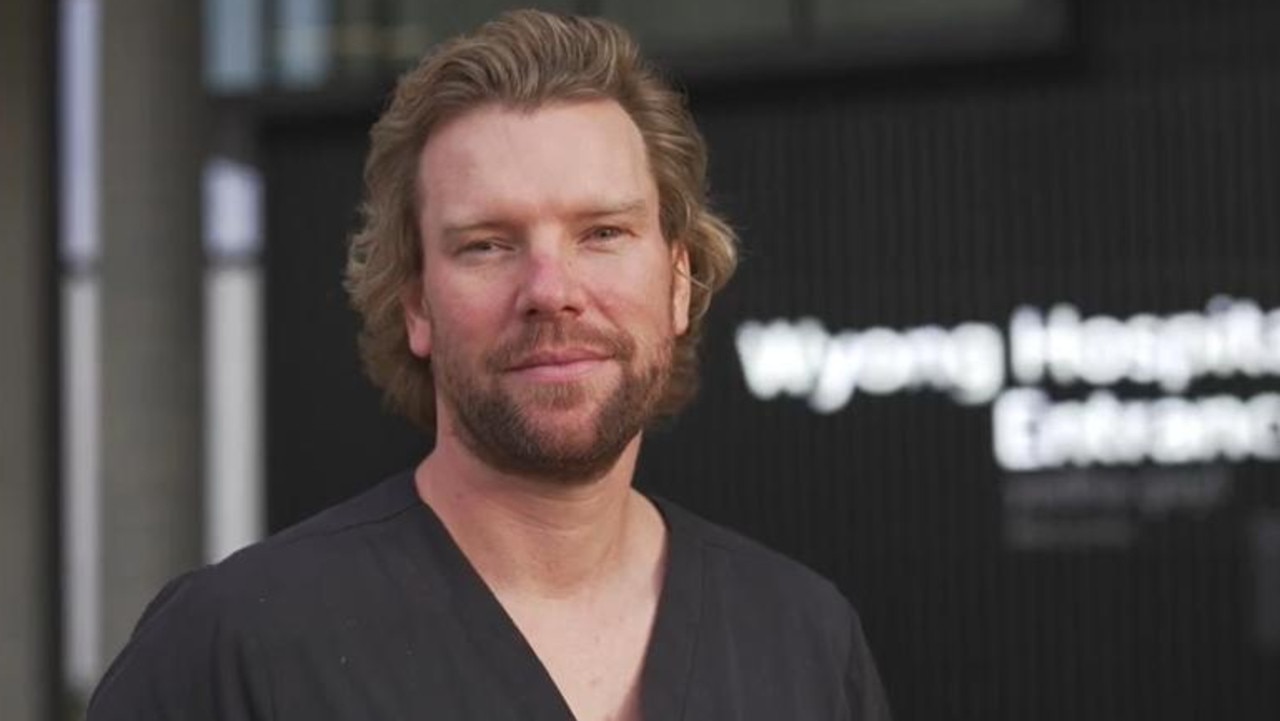
    A growing public health conflict has erupted in New South Wales (NSW), Australia, after state premier Chris Minns drew sharp criticism from a leading medical leader over his controversial call for residents to avoid public hospital emergency departments unless facing life-threatening conditions. The premier’s appeal came in response to a historic winter surge in demand that saw almost 10,000 Sydney residents seek emergency care in a single day earlier this week – a figure that marks the highest daily emergency department attendance ever recorded in the region.