分类: society

  • Japan court sentences ex-PM Abe’s assassin to life in prison, NHK reports

    Japan court sentences ex-PM Abe’s assassin to life in prison, NHK reports

    A Japanese court has delivered a life imprisonment verdict to Tetsuya Yamagami, the 45-year-old perpetrator behind the assassination of former Prime Minister Shinzo Abe in July 2022. The Nara District Court’s ruling concludes a landmark case that has captivated Japan for over three years, marking one of the most significant political violence incidents in the nation’s post-war history.

    Yamagami, who admitted to crafting a homemade firearm and fatally shooting Abe during a campaign speech in western Nara, faced certain conviction following his October court admission. Prosecutors had characterized the assassination as “an extremely grave incident unprecedented in post-war history” during last month’s sentencing request.

    The court proceedings revealed complex motivations behind the attack, with Yamagami expressing resentment toward the Unification Church after his mother’s substantial donations to the organization created severe financial distress for his family. Media reports indicated the assailant targeted Abe due to the former prime minister’s recorded video message to an event affiliated with the church.

    This assassination exposed extensive connections between Japan’s ruling Liberal Democratic Party (LDP) and the controversial religious group, with internal investigations revealing over hundred lawmakers maintained dealings with the organization. The disclosure has significantly eroded public trust in the long-dominant political party.

    Despite stepping down in 2020 citing health concerns, Abe remained Japan’s longest-serving prime minister with 3,188 days in office across two terms and continued to wield considerable influence within the LDP. His death created a political vacuum that has resulted in two leadership transitions and diminished party stability under current Prime Minister Sanae Takaichi, Abe’s political protégée.

    Internationally, Abe was recognized for forging strong diplomatic ties, particularly his unique relationship with former U.S. President Donald Trump, being the first foreign leader to meet Trump after his 2016 election victory. Their bond, strengthened through numerous golf meetings across both nations, continues to influence current Japan-U.S. relations under the Takaichi administration.

    Yamagami’s defense team argued for a reduced sentence of maximum 20 years, citing the defendant’s family hardships caused by the religious organization’s financial demands. The court ultimately rejected these mitigating circumstances in delivering Japan’s most severe punishment short of capital punishment.


  • Social media mobilize to find Boro, a dog who survived Spain’s train crash

    Social media mobilize to find Boro, a dog who survived Spain’s train crash

    MADRID — In the devastating aftermath of Spain’s catastrophic rail collision that claimed 42 lives and injured over 150 passengers, an unexpected story of hope and compassion has captured the nation’s attention. Ana García, a 26-year-old survivor bearing visible injuries from the tragedy, has ignited a massive search effort for her missing dog Boro, who vanished during the chaos of the rescue operation.

    The tragedy unfolded when the high-speed train from Malaga to Madrid derailed under unclear circumstances, resulting in a catastrophic collision with an oncoming train that sent cars tumbling down an embankment. García, who was traveling with her pregnant sister, managed to escape the wreckage with rescue crews’ assistance but lost sight of her canine companion during the evacuation.

    Following medical treatment, García immediately returned to the disaster perimeter, delivering an emotional public appeal while visibly fighting back tears. “Please, if you can help, look for the animals,” she implored, emphasizing that Boro was “family, too” after their family weekend trip.

    Spanish citizens have responded with extraordinary solidarity, transforming social media platforms into a nationwide search network. Videos of García’s heartfelt plea have been shared thousands of times, while photos of Boro—a medium-sized black dog with distinctive white eyebrows and chest markings—have gone viral across multiple platforms.

    The search gained significant momentum when television broadcaster TVE captured footage of a dog resembling Boro running through a field near the crash site during their Monday afternoon coverage. Although the sighting provided a moment of hope, the elusive dog remained unlocated despite extensive efforts.

    In a remarkable demonstration of institutional support, Spain’s animal rights political party secured official permission from the Interior Ministry to deploy specialized animal rescue teams within the investigation perimeter. Party president Javier Luna announced in a video statement that rescue patrols would commence on Wednesday, expressing confidence that the operation would successfully locate the missing dog.

    This extraordinary display of collective empathy highlights how personal stories of loss and hope can emerge even from the most devastating tragedies, uniting a nation in support of survivors grappling with multiple layers of trauma.

  • High-speed train staff members in Beijing busy preparing for Spring Festival travel rush

    High-speed train staff members in Beijing busy preparing for Spring Festival travel rush

    As the 2026 Spring Festival approaches, Beijing’s high-speed railway workforce has entered a phase of intensive preparation to accommodate the monumental travel demand characteristic of China’s annual migration period. At specialized training facilities throughout the capital, personnel ranging from train operators to service staff are undergoing rigorous simulation exercises to ensure operational excellence during the challenging travel season.

    Simulation training bases across Beijing have become hubs of activity where drivers meticulously practice handling various scenarios on advanced simulator equipment. These exercises replicate diverse weather conditions, technical challenges, and passenger management situations that might occur during actual operations. The comprehensive training regimen focuses on both technical proficiency and emergency response capabilities, emphasizing passenger safety and service quality.

    The preparation extends beyond driving simulations to include customer service training, maintenance drills, and logistical coordination exercises. Station staff are rehearsing crowd management techniques while technical crews are conducting preventive maintenance checks on rolling stock and infrastructure. This multilayered approach addresses both the visible passenger services and the behind-the-scenes operational requirements necessary for smooth festival travel.

    Authorities have implemented these preparation measures recognizing that the Spring Festival travel rush represents the largest periodic human migration globally, with hundreds of millions expected to travel via high-speed rail. The preparations reflect China’s continuous effort to enhance transportation capacity and service quality during peak travel periods, building upon experiences from previous years while incorporating new technological solutions and operational protocols.

  • A bar with no bar

    A bar with no bar

    In an innovative approach to social inclusion, Shanghai’s Changning district now hosts HandyCup, a pioneering establishment redefining the concept of accessible nightlife. Situated on Xinhua Road, this barrier-free pub has been specifically designed to foster natural interaction between disabled and non-disabled patrons, creating what founder Xia Yujie describes as ‘a home for meaningful connections.’

    The venue represents a significant departure from conventional bars through its meticulously planned accessibility features and intentionally welcoming atmosphere. Unlike typical establishments that often present physical and social obstacles for people with disabilities, HandyCup eliminates these barriers through both architectural design and community-focused programming.

    Founder Xia Yujie conceptualized the space after recognizing the scarcity of social environments where disabled individuals could comfortably socialize without facing the usual constraints. His vision materialized as a warm, inviting pub that encourages organic relationships to develop across different ability spectrums.

    The establishment has quickly evolved into more than just a drinking venue—it has become a community hub where friendships form naturally over shared experiences. Patrons consistently report that the environment facilitates genuine connections that might not occur in more conventional social settings.

    HandyCup’s innovative model has attracted attention from disability advocates and urban planners alike, serving as a potential blueprint for more inclusive social spaces in cities worldwide. The success of this establishment demonstrates how thoughtful design and intentional community building can create environments where diversity is not just accommodated but celebrated.

    As the concept gains recognition, HandyCup stands as a testament to Shanghai’s growing commitment to accessibility and social innovation, offering a replicable model for other cities seeking to create more inclusive public spaces.

  • Disaster relief efforts underway after 5.1-magnitude quake hits China’s Yunnan

    Disaster relief efforts underway after 5.1-magnitude quake hits China’s Yunnan

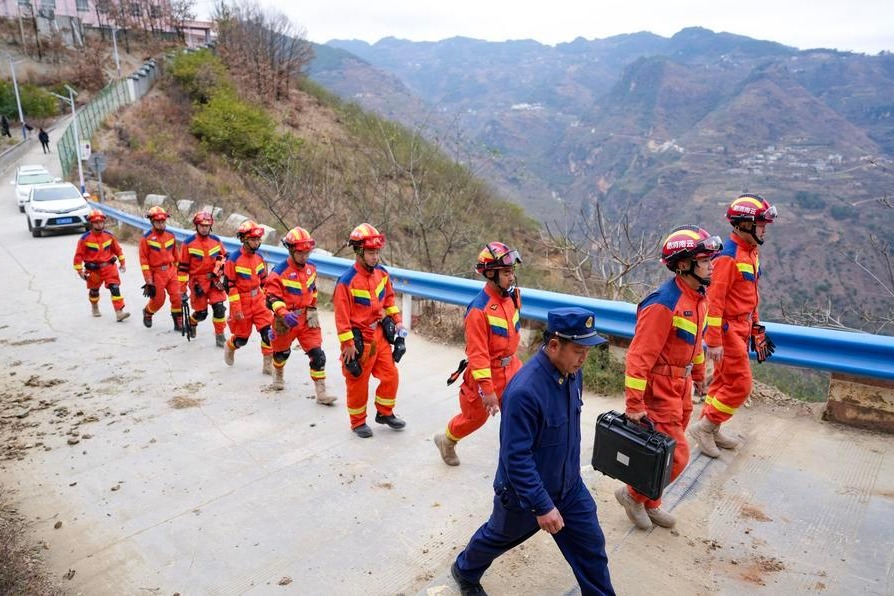
    Emergency response systems sprang into action across southwestern China’s Yunnan Province following a significant seismic event that struck Qiaojia county on Monday evening. The 5.1-magnitude earthquake, occurring at 7:32 pm local time with a focal depth of 10 kilometers, triggered comprehensive disaster management protocols despite the absence of casualties or structural collapses.

    According to official reports released by Tuesday afternoon, the tremor resulted in damage to approximately 1,540 residential structures while prompting the evacuation of 297 residents from 129 households. These individuals have been temporarily relocated to emergency shelters established within the affected region, with the village office in Hongshiyan—the epicenter area—serving as a primary refuge center.

    Infrastructure assessment teams from provincial authorities have conducted rapid evaluations of over 63,000 dwellings, identifying predominantly minor structural damage including hairline fractures in auxiliary facilities and production structures. County Deputy Administrator Cao Shanyou confirmed that no residential buildings had collapsed, though the seismic activity did cause 19 mountain fissures, 262 minor rockfall incidents, and some roadway damage.

    Financial support mechanisms were immediately activated, with the Yunnan Provincial Department of Finance allocating 5 million yuan (approximately $714,224) in emergency relief funding to facilitate disaster response operations. These resources will support hazard mitigation, secondary disaster prevention, and reconstruction initiatives throughout Zhaotong City’s administrative region.

    The China Earthquake Administration implemented a Level-III emergency response, deploying specialized working teams to assist local relief operations. China’s four-tier emergency framework designates Level I as the most severe classification, indicating the current situation remains managed within provincial capabilities.

    Personal accounts from residents illustrate the earthquake’s sudden impact. Zhao Kunyun, a Hongshiyan village local, described the intense shaking that prompted his family’s immediate evacuation. While his property sustained damage including a collapsed water tower and compromised retaining walls, structural engineers confirmed the main residence’s integrity.

    Temporary shelter occupants like villager Qian Zhenzhen reported efficient crisis management, noting that authorities provided accommodation and provisions within 30 minutes of the seismic event. This coordinated response demonstrates China’s enhanced disaster preparedness protocols for moderate seismic events in geographically vulnerable regions.

  • Reflections of an unforgettable journey to China

    Reflections of an unforgettable journey to China

    An extraordinary cultural bridge between the United States and China materialized through the artistic expressions of American high school students, now showcased in a compelling exhibition at Cupertino Library. “China in the Eyes of Americans” presents the profound experiences of 21 students who embarked on a transformative two-week immersion across Hubei province during the summers of 2024 and 2025.

    The exhibition, inaugurated on Sunday in California’s San Francisco Bay Area, features a diverse collection of photography, sketches, and personal narratives captured during the students’ journeys through Wuhan, Enshi, Xiaogan, and surrounding regions. Organized by the US-China Culture and Communication Association (UCCA), the display offers unique perspectives on China’s rich cultural heritage through the fresh eyes of young Americans.

    Chloe Xiao, a California sophomore from Valley Christian High School, described how the experience deepened her understanding beyond language to encompass China’s ancient civilization and intangible cultural heritage. “In Enshi, we wore traditional Tujia attire, experiencing first-hand the elegance and profound heritage of Tujia culture,” she recalled, noting the striking silver hair ornaments and complete costumes.

    Jasmine White, a senior at Carlmont High School, focused her photographic lens on Hubei’s architectural marvels, particularly the Yingwuzhou Yangtze River Bridge. “This journey revealed the symbolic significance of bridges in China—they represent connection: linking people, communities, and cultures across generations,” White explained.

    The human connections formed during the trip proved equally impactful. Benjamin Li, a sophomore from Florida, emphasized how friendship made his summer unforgettable: “We laughed, played games, and shared joy together in Enshi.”

    Aiden Wei Tanner from San Jose contrasted his China experience with previous European travels: “European cities feel distinctly foreign. China felt different—I became part of the culture rather than an outsider.”

    UCCA President Song Min initiated the program six years ago driven by what he described as “urgency and necessity” to connect youth from both nations. “When young people listen to their peers and learn from each other, great things happen,” Song stated, emphasizing that American participants become “practitioners of cross-cultural communication” rather than mere observers.

    Cupertino Vice-Mayor Liang-Fang Chao encouraged students to cherish the relationships forged during their journey, highlighting that the true value lies in “the friendships made, memories created, and stories shared.”

  • University to aid training for disasters

    University to aid training for disasters

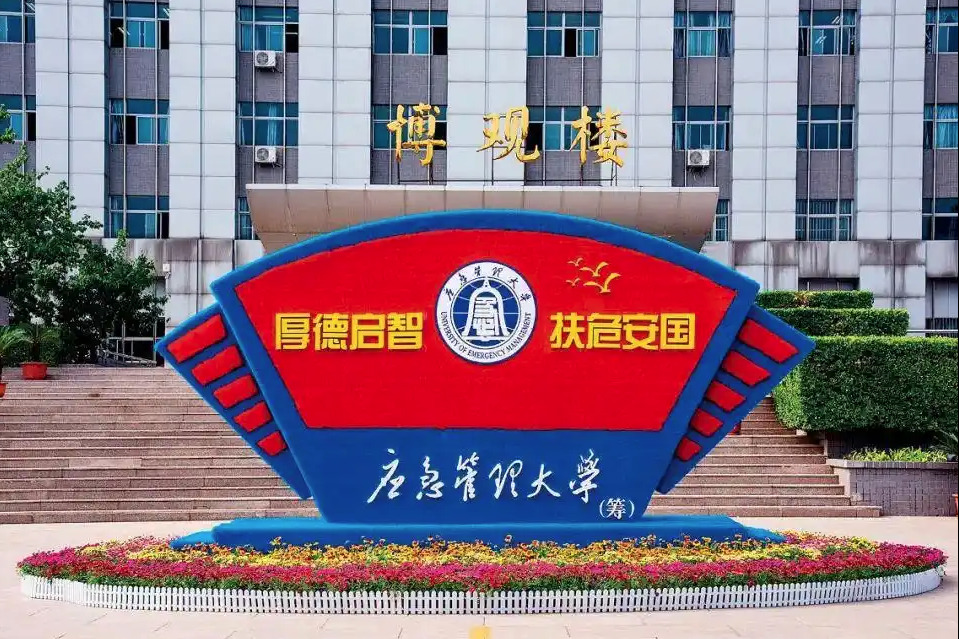
    China has inaugurated its first specialized institution for emergency management education, the University of Emergency Management, marking a significant advancement in the nation’s disaster response capabilities. The establishment ceremony in Langfang, Hebei Province, featured Vice-Premier Zhang Guoqing emphasizing the institution’s crucial role in modernizing China’s emergency management systems through specialized talent development.

    The university emerges from the strategic merger of the North China Institute of Science and Technology and the Institute of Disaster Prevention, both with established backgrounds in safety training and seismic monitoring. This consolidation creates a comprehensive educational institution featuring 15 specialized schools covering critical areas including emergency technology, mine safety, chemical safety, and emergency equipment management.

    Vice-Premier Zhang outlined the university’s mandate to develop innovative ’emergency management plus’ training models that integrate cutting-edge technologies such as artificial intelligence, big data analytics, and equipment engineering into practical disaster response scenarios. The curriculum will emphasize hands-on operational readiness through realistic drills and simulations, addressing a identified gap in traditional emergency management programs.

    Professor Yang Saini, a disaster reduction expert at Beijing Normal University, explained that contemporary emergency scenarios require interdisciplinary professionals capable of navigating complex, interconnected disaster chains. ‘A single weather event can trigger multiple cascading emergencies—from flash floods to landslides, industrial accidents to infrastructure failures—demanding coordinated response across sectors,’ Yang noted.

    The institution addresses a substantial workforce shortage identified in the 2025 Safety and Emergency Management Blue Paper, which documented a national deficit of approximately 5.5 million professionals despite existing workforce of 10.5 million. The university will focus on developing professionals who combine technical expertise with practical response capabilities, systemic thinking, and cross-departmental coordination skills essential for modern disaster management.

    With China’s earthquake monitoring system already drawing 70-80% of its frontline personnel from the predecessor institutions, the new university represents a strategic investment in national resilience through advanced education and research in emergency preparedness.

  • Energy prices lowered to warm rural consumers

    Energy prices lowered to warm rural consumers

    Multiple cities across northern China have implemented strategic reductions in natural gas pricing alongside targeted subsidies to alleviate financial pressures on rural households during the critical winter heating season. Major urban centers in Hebei province—including Baoding, Langfang, Handan, and Zhangjiakou—have witnessed energy providers slashing prices by approximately 0.2 yuan per cubic meter. ENN Energy’s Baoding division notably reduced rates for rural consumers to 2.98 yuan per cubic meter effective January 15, with simultaneous commitments from other suppliers to maintain affordability and ensure uninterrupted supply chains.

    This policy intervention addresses longstanding concerns within China’s coal-to-gas conversion initiative, launched in 2017 as a cornerstone effort to combat severe air pollution. While successful in improving regional air quality, the transition unexpectedly burdened rural residents with steep energy costs. Compounding these challenges, tiered pricing structures in provinces like Shanxi saw rates escalate beyond 3 yuan per cubic meter at higher consumption levels, rendering winter heating prohibitively expensive for many families.

    Structural complexities underlie these economic pressures. Professor Liu Mengdi of the University of International Business and Economics identifies key factors: “Rural areas present significantly higher operational expenditures for inspection, maintenance, and service due to dispersed housing and low population density.” These geographical realities inflate per-household infrastructure costs compared to urban environments.

    Further complicating the landscape, initial government subsidies that facilitated early adoption have gradually diminished, transferring financial responsibility to agricultural communities. Professor Pang Jun of Renmin University’s School of Ecology and Environment adds that county-level gas companies frequently lack leverage to negotiate favorable wholesale prices.

    Beyond pricing mechanisms, alternative heating solutions are gaining traction. In Yixian county’s mountainous Sanggang village, approximately 60% of households have adopted air-source heat pump technology. Residents Xie Guoqing and Zhao Guosheng reported substantial savings—approximately 2,300 yuan seasonal electricity costs versus previous coal expenditures exceeding 3,000 yuan—following investment in high-efficiency systems and home insulation.

    Experts advocate for this diversified approach to clean heating, emphasizing solutions calibrated to local resources, economic conditions, and living habits rather than uniform natural gas dependency. While natural gas remains a reasonable primary option, the evolving strategy recognizes the necessity of adaptable, region-specific implementations across northern China’s varied rural landscapes.

  • Viral hiking trail shaped like a horse closed off

    Viral hiking trail shaped like a horse closed off

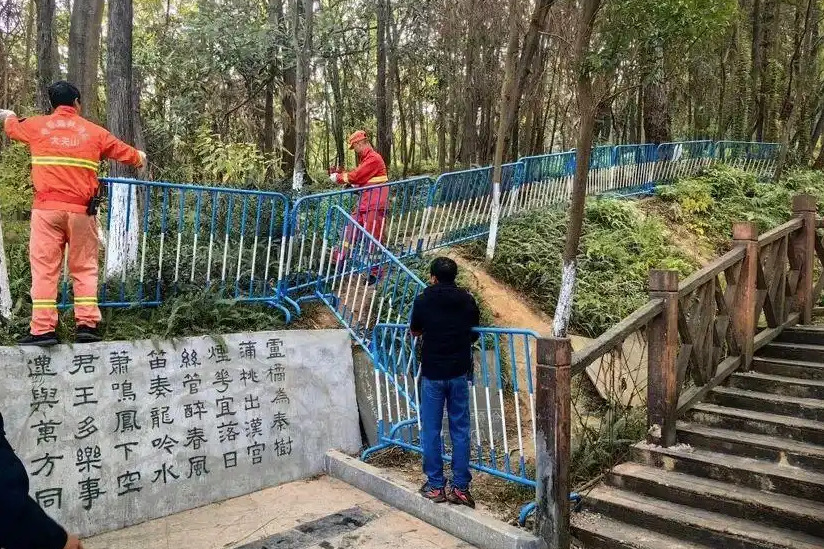
    Authorities in Guangzhou’s Panyu district have permanently closed an unregulated hiking trail that gained viral popularity for tracing the shape of a horse on digital maps. The decision follows mounting safety concerns after over 1,000 adventure seekers attempted the challenging 14.08-kilometer path through Dafu Mountain Forest Park.

    The phenomenon of ‘drawing a horse’ hiking routes emerged as a national trend among outdoor enthusiasts, with similar patterned trails appearing in Beijing’s Olympic Forest Park, Chengdu’s Longquan Mountain, and Guangzhou’s Baiyun Mountain. The Panyu route, first mapped by a hiker in late November, required approximately nine hours to complete and had been downloaded over 3,800 times from hiking applications.

    Park management officials emphasized that the trail was never an authorized path, noting numerous hazardous conditions including near-vertical 80-degree slopes, unstable terrain, falling rocks, and multiple sections requiring fence scaling. The undeveloped area also presented ecological concerns, with hiking activities damaging local vegetation and disturbing wildlife habitats including venomous snakes and insects.

    Rescue operations would be particularly challenging in these areas due to poor mobile signal coverage and complex topography, the park administration warned. The closure announcement came alongside reports of multiple injuries among attempted hikers, some suffering falls on steep, slippery surfaces.

    In response to public interest, park authorities have collaborated with professional surveyors to design an alternative 16.95-kilometer official route that similarly traces a horse silhouette. Cultural and tourism officials are currently soliciting public feedback to refine the trail’s equine shape before its formal inauguration.

    The incident reflects broader national safety concerns regarding unregulated outdoor activities. China’s General Administration of Sport recently issued regulations prohibiting unauthorized hiking and crossing activities, urging local authorities to identify and monitor popular online-famous routes. This policy follows several tragic incidents, including the recent closure of Shenzhen’s Wanglanggui area after multiple fatal accidents involving hikers in late 2025.

  • Saddling up for success

    Saddling up for success

    In the outskirts of Yihuang county, Jiangxi province, an innovative educational initiative is transforming the lives of young students through equestrian training. Tanlun Equestrian Town has emerged as a premier institution where adolescents pursue their passion for horsemanship alongside academic studies.

    Each day begins before dawn for dedicated participants like Wu Tianhao, a first-year high school student. His morning routine involves comprehensive horse care duties including grooming, exercising the animals, and maintaining stable cleanliness. This disciplined approach blends practical horsemanship skills with character development.

    The facility represents China’s growing interest in equestrian sports beyond traditional urban centers. Established as a specialized training center, it provides structured programs that combine athletic development with educational advancement. Students receive professional instruction in riding techniques, animal husbandry, and competitive equestrian disciplines.

    Photographic documentation from December 23 captures students actively engaged in training sessions, demonstrating the program’s hands-on methodology. The center’s infrastructure includes modern stables, training arenas, and educational facilities designed to nurture comprehensive equestrian expertise.

    This initiative reflects broader trends in Chinese education that increasingly value specialized skill development alongside conventional academics. By providing access to equestrian training in a region not traditionally associated with the sport, the program demonstrates how specialized athletic education is expanding across China’s diverse geographic and economic landscape.

    The equestrian town’s establishment contributes to local economic development while creating unique educational opportunities for Jiangxi’s youth. It represents how niche sporting programs can provide alternative career pathways and personal development opportunities outside mainstream athletic and educational systems.