分类: society

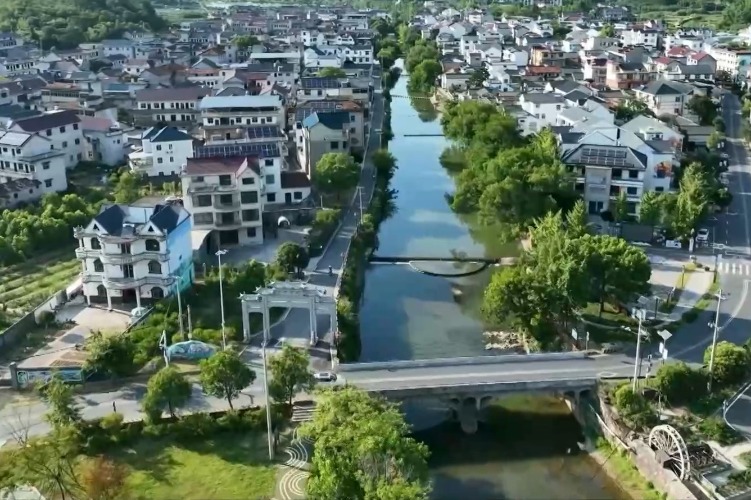
  • First batch of eco-friendly pioneer zones for construction of beautiful countryside unveiled

    First batch of eco-friendly pioneer zones for construction of beautiful countryside unveiled

    China has officially designated 23 county-level regions as the nation’s inaugural batch of ecological demonstration zones for beautiful countryside development. The Ministry of Ecology and Environment announced the pioneering initiative on Wednesday, highlighting these areas as exemplary models for sustainable rural transformation.

    The selected regions represent three distinct approaches to environmentally-conscious development. Ten mountainous counties have successfully reconciled ecological preservation with enhanced livelihoods, overcoming the unique challenges of highland village development. Seven other areas have achieved balanced urban-rural integration by coupling environmental conservation with the growth of distinctive local industries. The remaining six zones have utilized their well-maintained ecosystems to drive agricultural modernization and rural economic revitalization.

    According to Zhao Shixin, Director of the Ministry’s Department of Soil Ecology and Environment, these demonstration zones extend beyond creating habitable environments. They provide tangible blueprints for other regions seeking to enable residents to prosper from their natural assets—literally transforming ‘lucid waters and lush mountains’ into invaluable ecological and economic resources.

    All 23 zones feature immaculate villages with comprehensive sewage and waste management systems that have successfully eradicated black, malodorous water bodies. The Ministry further revealed ambitious plans to support approximately 100 additional county-level areas in developing similar pioneer zones by 2027, significantly expanding the national network of eco-conscious rural development models.


  • Woodpeckers, finches captured in Jilin winter scenes

    Woodpeckers, finches captured in Jilin winter scenes

    In the frost-kissed landscapes of Qianpailou village, Panshi city, northeastern China’s Jilin province, wildlife photographers have documented a remarkable avian display during the winter season. The captured images reveal intricate behavioral patterns of multiple bird species adapting to the harsh winter conditions.

    The photographic series, taken in mid-January 2026, showcases woodpeckers diligently foraging for sustenance beneath tree bark, gray magpies perched majestically on snow-dusted tree stumps, and vibrant red-breasted gray finches navigating the winter ecosystem. These images provide valuable insight into avian survival strategies during Jilin’s characteristically severe winters.

    Environmental specialists note that these photographs serve as both artistic achievements and ecological documentation, highlighting the biodiversity preserved within Jilin’s winter habitats. The imagery demonstrates interspecies coexistence and adaptive feeding behaviors that enable these birds to thrive despite temperature extremes.

    The photographic project, facilitated through collaboration between local naturalists and visual artists, represents ongoing efforts to document wildlife patterns in China’s northeastern regions. Such documentation contributes to broader understanding of seasonal avian migration and residential patterns in temperate climate zones.

    Conservationists emphasize the importance of maintaining natural habitats that support these winter populations, particularly as climate change alters traditional migratory routes and feeding grounds. The Qianpailou village area has emerged as a significant observation point for ornithologists studying adaptation mechanisms in songbirds and corvids alike.

  • Rescuers spot wreckage possibly from a helicopter that went missing near a volcano in Japan

    Rescuers spot wreckage possibly from a helicopter that went missing near a volcano in Japan

    TOKYO — Japanese authorities confirmed Wednesday that rescue teams have identified aircraft debris believed to be from a sightseeing helicopter that vanished during a scenic flight over Mount Aso, one of Japan’s most active volcanic sites. The aircraft carried three individuals—a pilot and two passengers—who remain unaccounted for since losing contact Monday afternoon.

    The helicopter, operated by Takumi Enterprise, was conducting a routine 10-minute tourist flight when communications abruptly ceased. Following an extensive search operation, wreckage was visually identified Tuesday within the crater of Nakadake, one of Mount Aso’s five distinct peaks. However, hazardous conditions including elevated volcanic gas emissions and powerful winds have significantly impeded physical access to the site.

    Takumi Morioka, head of the tour company, addressed media Wednesday expressing hope for survivors while acknowledging the challenging circumstances. This incident marks the second safety-related event for the operator in the volcanic zone, following an emergency landing last year that resulted in injuries to three occupants.

    Mount Aso, which last experienced volcanic activity in October 2021, represents a major tourism draw in southwestern Japan’s Kumamoto prefecture. Helicopter tours providing aerial views of the volcanic landscape have grown increasingly popular despite the inherent risks associated with active geological formations. Rescue coordination efforts continue under the supervision of local fire department and police authorities.

  • Mosuo boaters sing amid ethereal winter fog at Yunnan’s Lugu Lake

    Mosuo boaters sing amid ethereal winter fog at Yunnan’s Lugu Lake

    In the highland region of Yunnan province, Lugu Lake awakens each winter morning shrouded in an ethereal mist. As dawn breaks over the surrounding mountains, a timeless cultural tradition emerges from the fog. Local Mosuo ethnic community members navigate the tranquil waters in traditional dugout canoes, their ancient mountain songs reverberating across the lake’s surface.

    The Mosuo boaters provide visitors with an immersive cultural experience, blending natural beauty with living tradition. The combination of the lake’s atmospheric winter fog and the haunting melodies creates a surreal spectacle that has become a signature attraction of the Lijiang area. This daily ritual represents more than tourism—it’s a preservation of Mosuo heritage and connection to their ancestral environment.

    Photographers like Chen Fei have captured these mesmerizing scenes, showing how the Mosuo people maintain their cultural practices while sharing them with outsiders. The images reveal the perfect harmony between human activity and natural beauty, with the dugout canoes gliding effortlessly through the misty waters as songs echo against the mountainous backdrop.

    The phenomenon has gained attention as both a tourist attraction and an example of cultural preservation. Visitors to the region can experience this atmospheric performance firsthand, gaining insight into the Mosuo way of life while witnessing one of Yunnan’s most breathtaking natural settings.

  • Folk-themed train takes international tourists to China’s far north

    Folk-themed train takes international tourists to China’s far north

    A specialized cultural immersion experience unfolded aboard train K7041 as it departed Harbin Railway Station on Monday evening, transporting over 100 international tourists from Singapore, Malaysia, and various other nations toward Mohe—China’s northernmost urban center in Heilongjiang province.

    Operated by China Railway Harbin Group, this folk-themed journey transforms conventional rail travel into a mobile cultural showcase. Throughout the expedition, passengers engaged with the rich tapestry of Northeast China’s indigenous traditions through interactive demonstrations and participatory activities.

    The immersive experience featured authentic presentations of Ewenki birch bark pyrography, an ancient artistic practice utilizing heated tools to create intricate designs on tree bark. Travelers also enjoyed live performances of Oroqen folk music and observed delicate embroidery techniques passed down through generations.

    Beyond passive observation, the journey encouraged hands-on participation in traditional Northeast yangko dance—a vibrant folk dance style—alongside craft workshops including paper-cutting and dumpling making sessions. The cultural exploration extended to a traditional Manchu folk game, providing visitors with comprehensive insight into the region’s diverse ethnic heritage.

    This innovative travel concept represents China’s growing emphasis on experiential tourism that combines transportation with cultural education, offering international visitors an authentic encounter with remote regional traditions while showcasing the country’s ethnic diversity to global audiences.

  • Pakistan rescuers scour blaze site for dozens missing

    Pakistan rescuers scour blaze site for dozens missing

    Rescue teams in Karachi continue their painstaking search through the smoldering wreckage of Gul Plaza shopping complex four days after a catastrophic fire engulfed the building. The devastating blaze has claimed at least 29 confirmed fatalities, though authorities anticipate the death toll will rise significantly as recovery operations progress.

    Javed Nabi Khoso, Deputy Commissioner of Karachi South, disclosed that 39 individuals have been officially verified as missing, with nearly 50 additional persons remaining on unverified missing lists. The recovery process has drawn criticism from grieving families who have expressed frustration with the pace of the operation. AFP correspondents observed at least five sets of human remains being extracted from the debris on Wednesday.

    At Karachi’s Civil Hospital, health official Summaiya Syed reported that DNA samples from 51 families have been collected to facilitate identification of victims. “We will transfer the remains to families once DNA matches are confirmed,” Syed stated outside the hospital mortuary. Of the 29 victims transferred to the Edhi Foundation morgue, only seven have been positively identified and returned to relatives through DNA matching.

    The human tragedy has left families confronting unimaginable decisions. Muhammad Saleem, whose three relatives remain missing, explained his family’s resolution not to bring home any recovered remains. “They are bringing only remains wrapped inside clothes,” he expressed. “Our family members still believe they are alive. They will go mad if they see these remains.”

    Faraz Ali, 28, whose father and brother were inside the mall during the fire, articulated the anguish shared by many families: “I want the bodies to be recovered and handed over to their rightful families. That is all so that the families may receive something, some comfort, some peace. At least let us see them one last time, in whatever condition they are.”

    While fires occur frequently in Karachi’s commercial establishments due to substandard infrastructure, the scale of this tragedy stands as particularly severe. A government committee has initiated an investigation, though the cause of the inferno remains undetermined. The three-story Gul Plaza contained approximately 1,200 retail outlets, notably specializing in wedding merchandise and home decor.

  • Dozens of body parts are found after Pakistan’s shopping plaza fire

    Dozens of body parts are found after Pakistan’s shopping plaza fire

    KARACHI, Pakistan — The death toll from Saturday’s catastrophic shopping plaza fire is anticipated to increase significantly after rescue teams made a grim discovery Wednesday, uncovering human remains believed to belong to numerous victims who had sought refuge in a single shop during the blaze.

    For the first time since the fire erupted at Gul Plaza in Pakistan’s largest metropolitan area, search crews managed to access a retail establishment where multiple individuals had attempted to shelter from the inferno. The recovery operation revealed more than two dozen body parts, suggesting the final casualty count could substantially exceed initial estimates.

    Prior to this development, authorities had confirmed 29 fatalities from the incident, according to police surgeon Dr. Summaiya Syed. The city’s primary medical facility received the newly discovered remains on the fifth consecutive day of search efforts.

    Government administrator Javed Nabi Khoso provided preliminary assessments indicating the recovered remains might represent between 15 to 25 individuals. “This marks the first instance where such an extensive collection of remains has been located in a single area since the fire commenced,” Khoso stated.

    Senior rescue official Abid Jamal Sheikh corroborated these estimates, noting the remains could belong to more than a dozen people while emphasizing that official verification procedures remain ongoing.

    The investigation into the fire’s origin continues, with preliminary police reports suggesting an electrical short circuit may have ignited the blaze.

    Amid the ongoing recovery operations, dozens of mourners gathered Wednesday for the first funeral services, honoring shop owner Shahroz Iqbal who perished in the tragedy.

    This incident highlights Karachi’s persistent challenges with fire safety, characterized by inadequate safety protocols, lax enforcement measures, and unauthorized construction practices. The city witnessed a similar mall fire in November 2023 that resulted in 10 fatalities and 22 injuries. Pakistan’s deadliest industrial catastrophe occurred in 2012 when a garment factory fire claimed at least 260 lives.

  • In Dubai, everybody wants everyone to succeed, says Sheikha Latifa

    In Dubai, everybody wants everyone to succeed, says Sheikha Latifa

    At the World Economic Forum in Davos, Sheikha Latifa bint Mohammed bin Rashid Al Maktoum, Chairperson of Dubai Culture and Arts Authority, articulated the unique social fabric that underpins Dubai’s remarkable development. She characterized the emirate as a thriving mosaic where collective advancement and cultural preservation coexist harmoniously.

    Sheikha Latifa emphasized that Dubai’s fundamental ethos revolves around mutual success, where individual achievements create positive ripple effects throughout society. “The connecting theme in Dubai is that everybody wants everyone to succeed,” she stated during a panel discussion, highlighting the collaborative spirit that defines the city’s social contract.

    Despite its reputation as a forward-thinking, innovative, and progressive global hub, Sheikha Latifa noted that Emirati society remains deeply rooted in traditional values. These cultural foundations manifest daily through clothing choices, interpersonal interactions, and the enduring practices of hospitality, respect, and strong moral conduct.

    The cultural authority chairperson underscored Dubai’s extraordinary diversity, noting the emirate is home to 195 distinct cultures and backgrounds. What makes this diversity remarkable, she explained, is how these communities maintain their cultural and religious practices while contributing to a cohesive, open society.

    Sheikha Latifa presented a compelling vision for cultural coexistence: “We believe in openness beyond merely connecting through similarities. We must celebrate our differences. A world where everyone looked, spoke, and operated identically would be profoundly boring. The true beauty of our world lies in its diversity.”

    Addressing governance, Sheikha Latifa revealed the leadership’s rigorous approach to promise-keeping. “Dubai’s leadership maintains strict accountability regarding delivery on commitments. Whenever we launch a strategy or initiative, we are obligated to fulfill these promises,” she explained.

    This results-driven approach involves comprehensive stakeholder engagement. Before implementing any new strategy, Dubai’s authorities consult extensively with affected communities, listening to challenges, proposed solutions, and identifying industry gaps to enable collaborative problem-solving.

  • Catholicism shrinks in Latin America while more are religiously unaffiliated, Pew surveys find

    Catholicism shrinks in Latin America while more are religiously unaffiliated, Pew surveys find

    A profound religious transformation is underway across Latin America as Catholicism experiences significant decline while religiously unaffiliated populations surge, according to a comprehensive Pew Research Center study released Wednesday. The report, based on extensive surveys conducted in early 2024 across six major Latin American nations—Argentina, Brazil, Chile, Colombia, Mexico, and Peru—reveals a dramatic shift in spiritual identity across the region that represents approximately 75% of Latin America’s total population.

    The research documents that Catholic affiliation has diminished by at least 9 percentage points in each country over the past decade, while religiously unaffiliated adults—identifying as atheist, agnostic, or ‘nothing in particular’—have increased by 7 percentage points or more. This trend has resulted in religiously unaffiliated populations now outnumbering Protestants in Argentina, Chile, Colombia, and Mexico—a remarkable development in a region historically dominated by Catholic tradition.

    Kirsten Lesage, Pew research associate and lead author of the report, emphasized the significance of these findings: ‘Our analysis found that the Catholic share of the population in these six nations has significantly declined since 2013-14, while a growing share of adults in the region are religiously unaffiliated.’

    Despite these shifting affiliations, the study reveals that Latin Americans maintain strong spiritual inclinations. Approximately 90% or more adults across all surveyed countries affirm belief in God, with about half or more in Brazil, Colombia, Mexico, and Peru considering religion ‘very important’ in their lives. Majorities in Brazil, Colombia, and Peru report praying at least daily.

    Experts attribute the Catholic Church’s diminishing influence to multiple factors, including clergy sex abuse scandals and opposition to the institution’s conservative positions on abortion and LGBTQ+ rights. Many Latin Americans now seek spiritual fulfillment beyond traditional religious structures, exploring alternatives such as yoga, tarot, astrology, and personalized belief systems.

    The survey, which polled 6,234 adults from January to April 2024 with a margin of error ranging from ±4.0 to 4.5 percentage points, indicates that Protestantism has remained relatively stable across the region during this period of transformation.

  • Loved ones of victims reeling after high-speed rail crash in southern Spain

    Loved ones of victims reeling after high-speed rail crash in southern Spain

    Spain’s railway infrastructure faces intense scrutiny following two catastrophic derailments within 72 hours, claiming at least 43 lives and leaving dozens injured in the country’s worst rail disaster in over a decade.

    The initial tragedy struck Sunday evening near Córdoba when two high-speed trains collided in dense woodland 36 miles from the city. Emergency services responded to what doctors describe as ‘unprecedented carnage.’ Dr. Eduardo Morán of Córdoba’s Reina Sofía Hospital recounted the chaotic scene: ‘We prepared every department – emergency room, intensive care, surgical theaters. The injuries ranged from minor scratches to traumatic amputations.’ Despite the influx of casualties, hospital staff maintained control through rigorous triage protocols.

    Investigators are focusing on a potential track gap in the straight section where the collision occurred. Sniffer dogs continue searching through twisted metal and shattered glass as forensic teams work to identify victims.

    The tragedy became personal for countless families. Mari Carmen Abril Vega, a teacher returning from a surprise 50th birthday celebration in Córdoba, was among those confirmed dead. Her friend Jose Manuel Muñoz described the emotional whiplash: ‘We spent Saturday celebrating life, then endured two days of uncertainty before receiving confirmation of her death.’

    Before the nation could process the first disaster, a second derailment occurred near Barcelona during heavy rainfall, though without fatalities. This incident prompted Spain’s train drivers’ union to announce strikes against what they term ‘unacceptable constant deterioration of railway infrastructure.’

    At Córdoba’s Civic Center, families of the missing provide DNA samples under makeshift tents. Yamilei, whose brother-in-law Victor Luis Terán perished due to a last-minute travel change, expressed the collective anguish: ‘We need answers. We cannot continue like this.’

    Official calls for patience contrast with growing public demand for accountability as Spain’s rail network faces its most severe safety crisis in modern history.