分类: society

  • Brisbane police arrest wanted man after dramatic Moorooka shopping centre chase caught on dashcam

    Brisbane police arrest wanted man after dramatic Moorooka shopping centre chase caught on dashcam

    A high-stakes police pursuit that wound through suburban Brisbane ended in a dramatic manhunt through a busy shopping centre carpark, with two people now in custody facing a string of serious motor vehicle offences. The tense operation unfolded on Friday evening, starting just after 7:25 pm when patrol officers spotted a man and a woman exiting a residence on Spencer Street in Redbank, climbing into a stolen Mercedes sedan.

    Law enforcement immediately began tracking the vehicle as the 30-year-old male driver sped toward inner-city Brisbane, with officers alleging he operated the car in an extremely dangerous manner at excessive speed throughout the pursuit. To stop the fleeing vehicle, police deployed a tyre deflation device on a road leading into Moorooka, which successfully punctured one of the Mercedes’ front tyres. Undeterred, the driver continued moving, grinding the flattened rim along the asphalt for several kilometres before abandoning the car near Moorooka Square and fleeing on foot into the open shopping centre precinct.

    Newly released dashcam footage from Queensland Police captures the next intense phase of the operation: an unmarked police vehicle cuts across marked parking bays and navigates around dozens of stationary parked cars at high speed, as officers close the gap on the running suspect. Within minutes of the suspect entering the carpark, officers cornered and arrested him without further incident.

    Following the male suspect’s capture, police launched a secondary search for the 29-year-old woman who had remained with the vehicle. Authorities allege she drove the damaged Mercedes away from the shopping centre precinct as officers focused on apprehending the male suspect. A second tyre deflation device was deployed to stop her vehicle, and she was taken into custody shortly after.

    The 30-year-old male suspect has been charged with nine separate criminal offences, including two counts of unauthorised use of a motor vehicle, one count of dangerous vehicle operation, and one count of unlicensed driving. He made his first court appearance at Brisbane Magistrates Court on Monday. The female co-accused faces a single charge of dangerous operation of a motor vehicle, and is scheduled to appear at the same Brisbane court on 31 August.

  • How Lamine Yamal became a symbol of Spain’s identity debate

    How Lamine Yamal became a symbol of Spain’s identity debate

    In the immediate aftermath of Spain’s 2026 World Cup final win over Argentina, one image cut through the chaos of post-match celebrations and on-pitch scuffles to capture global attention: 19-year-old Lamine Yamal, the youngest starter to win a World Cup final since Pele and Kylian Mbappé, dropped to his knees in prayer, the iconic red of Spain’s national team draped over his shoulders. What began as a quiet, personal moment of gratitude for a historic sporting achievement quickly exploded into the center of a decades-long conversation in Spain over what it means to be Spanish, and who gets to claim that identity.

    Yamal’s background places him directly at the intersection of Spain’s complex multicultural present. Born in the working-class neighborhood of Rocaforda in Mataró to a Moroccan father and an Equatorial Guinean mother, the young Barcelona star has never hidden his Muslim faith. He has spoken openly about reciting a traditional dua taught by his grandmother before every match and fasting during Ramadan while training at Barcelona’s Camp Nou stadium. Earlier in the World Cup, after scoring against Saudi Arabia in the group stage, he performed sujud – a common prostration of gratitude practiced by Muslim athletes around the world. That gesture alone sparked immediate backlash: while many fans celebrated Yamal’s open embrace of his identity, others argued his public prayer had no place on the pitch when he was representing Spain.

    He is not the first Muslim player to wear the Spanish national team jersey – Munir Al Haddadi earned that distinction back in 2014 – but Yamal’s unprecedented profile has made him the face of this national debate. As the heir to Barcelona’s legendary number 10 shirt, once held by Lionel Messi, every choice he makes is scrutinized, and his loyalty to the country of his birth has been called into question repeatedly in public discourse.

    The debate has pulled in high-profile Spanish politicians, laying bare deep divisions over multiculturalism and immigration. Former minister and leading Podemos party figure Ione Belarra has positioned Yamal as a symbol of a more inclusive modern Spain, saying she “liked the Spain of Lamine Yamal much more than the Spain being promoted by the conservative People’s Party and far-right party Vox.” Like many of Yamal’s supporters, she celebrated the image of his younger brother running through the stadium cheering on Spain in a national team shirt as proof of his family’s deep connection to the country.

    But conservative and far-right voices have framed Yamal’s faith and identity as a threat to Spanish national culture. Santiago Abascal, leader of the far-right Vox party, defended anti-Yamal rhetoric on social platform X, arguing that critics overreacted to what he framed as a legitimate display of native Spanish identity. “They expect Spaniards to silently put up with the Islamist invasion and the mafia government,” he wrote. Long before Yamal rose to global fame, Vox already described his working-class hometown neighborhood of Rocaforda as a “multicultural shithole.”

    Data from the Spanish Observatory on Racism and Xenophobia underscores the intensity of the backlash: the organization recorded more than 40,000 pieces of online hate content targeting Yamal, with sport accounting for 16% of all monitored hateful posts, and Yamal named as the primary target in many of them. Hostility only grew after his sujud gesture, with commentators leaving comments claiming “our roots have been humiliated” and “he is not worthy of being Spanish.”

    Yet in Rocaforda, residents reject that divisive framing. Juan Carlos Serrano Muñoz, owner of a local café decorated with murals of the neighborhood’s most famous residents, including iconic bullfighter El Cordobés, dismissed far-right rhetoric as a political tactic to stoke division. “They want to focus on migration, on delinquency, but what Lamine did was give a kick to these people and tell a different story about this neighbourhood; a better story about the integration of the many cultures that live here,” he told Middle East Eye.

    Institutional leaders in Spanish football have also moved to build more inclusive spaces for athletes of all faiths and backgrounds. While Spain’s broader cultural landscape still carries deep traces of its Catholic heritage, the country is formally a secular state, and athletes of any religion are eligible to represent the national side. The Royal Spanish Football Federation (RFEF) established an Equality Department in 2023, a year before Yamal made his international debut at Euro 2024, formalizing protections against discrimination in sport for players regardless of background or faith. Individual clubs across the country have also implemented their own measures to ensure equal opportunity and welcoming environments.

    Many native-born white Spaniards have also publicly backed Yamal, embracing a vision of Spanish identity that can accommodate multiple heritages. In a public survey conducted by The New Arab, one respondent put it simply: “He is Spanish, and regardless of his origins, he has defended his country, as the Spaniard that he is.” This view does not erase Yamal’s cultural and religious background, but holds that his identity as a Spaniard and his Muslim faith can coexist.

    Today, that viral image of Yamal on his knees in prayer, surrounded by post-match chaos, carries two wildly different meanings for the Spanish public. For supporters, it is nothing more than a young athlete’s quiet moment of gratitude, no different than a Christian player crossing himself before a match or pointing to the sky to honor a loved one. For critics, shaped by years of anxiety over immigration and multiculturalism stoked by far-right parties, the gesture has become a political flashpoint in a debate that extends far beyond the football pitch.

    Spain already has one of the highest densities of public sports facilities in Europe, and football remains the country’s greatest unifying cultural force. As more young Muslim players rise through the grassroots ranks, their presence on national and club sides will only continue to grow. The RFEF’s formal anti-discrimination measures and the growing public support for athletes like Yamal point toward a future where open displays of faith by multicultural players are a normal, accepted part of Spanish football. But the ongoing political backlash surrounding Yamal also reveals another possible future: one where every gesture he makes is pulled into an old, unresolved debate about national identity that stretches far beyond the sport.

    Unlike Achraf Hakimi, another Spanish-born player who chose to represent his parents’ homeland of Morocco rather than Spain, Yamal never defused the identity debate by choosing another flag. He stayed, he scored, he prayed, and he won the biggest prize in global football – making it impossible for either side of Spain’s identity divide to make their argument without invoking his name.

  • Watch: Texas sinkhole swallows pickup truck

    Watch: Texas sinkhole swallows pickup truck

    A dramatic incident in Texas has gone viral after newly released footage captured a large sinkhole completely swallowing a full-size pickup truck, leaving onlookers stunned by the sudden geologic hazard. The shocking clip, which has circulated widely across local social media channels, shows the passenger vehicle plunged nose-first into the unexpected ground collapse, with its front end fully submerged in the hollowed opening and only a small portion of the truck’s rear frame visible above ground.

    Emergency response teams and roadside recovery crews were quickly dispatched to the scene to address the safety hazard and extract the trapped vehicle. After securing the surrounding area to prevent bystanders from getting too close to the unstable ground, crews brought in a heavy-duty tow truck to complete the delicate recovery operation. The step-by-step process, documented in the same video footage, shows the tow truck’s powerful winch system securing a firm hold on the sunken pickup before gradually lifting the vehicle back out of the sinkhole to solid, stable ground.

    Local authorities have not yet released information about any injuries reported in connection with the incident, nor have they shared details on what may have caused the ground collapse in the area. Sinkholes are a relatively common geologic occurrence in parts of Texas, often triggered by prolonged drought, heavy rainfall that erodes underground soil layers, or aging underground infrastructure that fails over time. Officials have urged residents in the region to stay alert for any signs of ground shifting in their neighborhoods and report any unusual depressions or soft spots to local public works departments immediately.

  • Grieving mother dolphin carries her dead calf for days

    Grieving mother dolphin carries her dead calf for days

    Marine observers have documented a deeply moving display of animal emotion, as a mother dolphin has been observed carrying her deceased calf through the water for multiple consecutive days in an extended period of mourning. The remarkable behavior, which has captured the attention of marine biologists and animal lovers alike, offers a rare and intimate look at the complex emotional lives of cetaceans, long hypothesized by researchers to experience grief and social bonding similar to humans. Witnesses to the event say the mother dolphin stayed close to her calf at all times, using her body and fin to keep the lifeless infant near the surface, refusing to leave it behind despite days passing since the calf’s death. This incident adds to a growing body of anecdotal and scientific evidence that dolphins, known for their high intelligence and tight-knit social structures, possess deep emotional capacities that extend to mourning their dead.

  • Two workers told to re-enter quake-hit Japan mall before fatal blast

    Two workers told to re-enter quake-hit Japan mall before fatal blast

    A devastating magnitude 6.8 earthquake that struck Japan’s Kumamoto Prefecture on July 28 has left an even deeper tragedy in its wake: two employees of a local general goods retailer lost their lives in a subsequent explosion at the heavily damaged Aeon Mall, after being instructed by their employer to re-enter the structurally unstable building to secure store cash. The pair were among 38 total fatalities recorded from the seismic event, with seven of those deaths tied to the Aeon Mall complex.

    One of the fallen workers has been publicly identified as 22-year-old Kurumi Otake, while the second employee’s identity remains private at the request of their family. According to reporting from Japan’s Asahi Shimbun, Otake encountered a family member outside the mall immediately after the initial earthquake struck. She told the relative that her employer, Habita – a 48-year-old retail chain that operates more than 10 locations across multiple Japanese prefectures – had ordered her to return inside to move cash from the store’s registers to a locked safe. This account was confirmed by two Habita representatives, who attended Otake’s wake on Sunday to offer a formal apology to her grieving family.

    In statements to Japan’s public broadcaster NHK, Habita Sales Director Goji Yuse acknowledged that the order given to the two workers was completely inappropriate, and that the company bears full responsibility for the tragedy. “Looking back now, it was not worth a life,” Yuse told reporters at the wake, per reporting from Kyodo News. “The instructions given at the time were inappropriate, and I truly regret the loss of two precious lives,” he added, noting that the company is still evaluating next steps for accountability and support for the victims’ families.

    Otake’s family has shared that the young woman was known for her strong sense of responsibility, and had been supporting her mother financially since her father passed away three years ago. “If she hadn’t gone back inside the store at that time, Kurumi would still be with her family today,” a relative told local media. Otake’s mother echoed the grief of the loss in a statement to reporters, saying simply, “My daughter is not coming back.”

    The timeline of the tragedy reveals a devastating gap between the earthquake and the fatal explosion: while most mall patrons and staff evacuated immediately after the seismic shaking, the explosion that took the workers’ lives struck roughly an hour later, when the pair were carrying out their assigned task inside the damaged building.

  • Estonia’s Seto people bolster their centuries-old culture and language with a kingdom for a day

    Estonia’s Seto people bolster their centuries-old culture and language with a kingdom for a day

    Beneath the open sky in the tiny Estonian village of Mikitamäe, the cheerful trill of an accordion drifts across a lush grass field. Eighty-year-old Maime Kapten twirls across the green, her hand-embroidered traditional skirt flaring out around her, while the silver chains and antique coins strung around her neck jingle in rhythm with her steps. For Kapten, this dance is far more than a festive performance—it is an act of cultural reclamation, part of a one-day annual celebration that turns this quiet southeastern Estonian village into the symbolic “Kingdom of Setos.”

    This unique celebration, launched in 1994, was born out of necessity. For centuries, the Seto ethnic community has called the borderlands between modern Estonia and Russia home. When the Soviet Union collapsed, the newly drawn Estonian-Russian border split the Seto people apart, cutting off families from one another and from their ancestral lands. What began as a small gathering to lift up the community’s distinct identity and protect their endangered language has grown into a beloved annual tradition, complete with ceremonial entry visas instead of event tickets, custom printed mock currency, and a lighthearted symbolic military parade.

    Today, the Seto community is scattered across Estonia and beyond. Estonia’s 2021 national census recorded roughly 25,000 people who reported some ability to speak Seto—a tongue closely related to Estonian, but regarded by the Seto themselves as a fully separate language with unique pronunciation, grammar, and vocabulary. Linguists warn, however, that only a few thousand people still use Seto in daily life. Fewer than 3,000 people remain in Setomaa, the Seto’s traditional ancestral parish, and after the border split, less than 200 Seto stayed on the Russian side of the divide. For dispersed community members, the annual Kingdom Day is the most important chance to reconnect. “This is an important cultural day for us,” Kapten explained. “We get to meet people we know, we get to talk, exchange a few words, give each other a hug.”

    On the day of this year’s celebration, Mikitamäe’s normally quiet streets overflowed with attendees clad in vibrant, handcrafted traditional folk dress. A centuries-old local proverb says “you hear a Seto woman before you see her,” a nod to the jangling silver adornments that are a staple of traditional women’s dress. What was everyday wear 100 years ago is now reserved for special occasions, but these garments still carry deep cultural meaning. “Seto clothes say a lot about the person who wears them,” noted 62-year-old Seto cultural activist Piret Torm-Kriis. “If you look at a Seto woman, you can understand whether she is married or single, whether she is going to the church or to the market, to a party or to work.”

    A core tradition of Kingdom Day is the annual election of the Ülemsootska, the Seto community’s symbolic leader who serves as the messenger for Peko—the ancient Seto folk deity of fertility and the legendary mythic king of the Setos. The Seto’s unique cultural heritage blends pre-Christian pagan mythology with Eastern Orthodox religious traditions, a fusion that has shaped their identity for hundreds of years. For the election, candidates stand atop aged tree stumps to lay out their agendas for the coming year, and supporters form long lines holding threads that stretch hundreds of meters to their chosen candidate. This year, folk costume maker Ingrit Kala won the role by drawing the longest line of supporters.

    Kala’s top priority is straightforward: expanding outreach for Seto culture and securing the future of the Seto language. “We have so many different things, so many skilled craftspeople, to show what a rich culture we have and to really introduce it,” she said.

    The celebration’s centerpiece this year, as always, was leelo—the Seto’s centuries-old traditional polyphonic singing, a practice dating back more than 1,000 years that is listed on UNESCO’s Register of Intangible Cultural Heritage. The distinctive style features a solo singer opening each verse, with a full choir joining in on the final syllables before the voices blend into a unified harmony. For millennia, leelo lyrics, which draw heavily from Seto mythology, have been passed down orally between generations, and the songs once accompanied every part of daily life, from farm work to religious rituals to holiday feasts. “Leelo singing contains a lot of information about the world and people at the time of its origins, how were they thinking, what was important, what did they believe in,” explained Mari Palolill, a researcher and teacher of the tradition who performed with her choir at this year’s event.

    Despite growing recognition of Seto culture, the community faces steep challenges to preserve their language and traditions. Most Seto traditions have been preserved through oral transmission, and while small wins have been made—including a Seto-language kindergarten group, a regional Seto newspaper, and even translations of popular books like *The Little Prince* into Seto—the language still relies heavily on being spoken at home to survive. “If Seto isn’t spoken at home, then what children learn at school doesn’t help much,” Kala acknowledged.

    Still, young Seto community members are stepping up to carry the tradition forward. Twenty-three-year-old Maria Grünberg learned Seto as a child by singing along to traditional leelo songs, and she now leads the youth leelo choir. Her goal is to reframe Seto culture as a living, relevant tradition for all ages, not just a relic of the past. “We all together try to preserve the songs, the language, and show also other young people that Seto songs and Seto language is not only for old people,” said Grünberg, who performed in a customized traditional Seto dress paired with her grandparents’ antique silver jewelry. “We want to show that this is for everyone.”


  • Top Australian radio host Alan Jones allegedly groped men as they drove, court hears

    Top Australian radio host Alan Jones allegedly groped men as they drove, court hears

    One of Australia’s most recognizable and influential media figures, 85-year-old veteran broadcaster and former national rugby coach Alan Jones, has appeared in a Sydney courtroom on the opening day of his long-awaited trial, facing multiple allegations of non-consensual sexual misconduct against six male complainants.

    Prosecutors laid out detailed allegations before the packed judge-only trial on Monday, outlining 20 counts of indecent assault and two additional counts of sexual touching that are alleged to have occurred between 2003 and 2020. The alleged incidents are said to have taken place across a range of locations, including public events, Jones’s private residences, and his former workplace.

    Nine of the 22 total charges relate to complainant J, who was just 17 years old when the alleged abuse began. Prosecutors told the court that complainant J first met Jones as a teenager during an on-air radio interview celebrating his sporting success. After the meeting, Jones allegedly gave the teen gifts including a mobile phone and a car, and began providing regular fortnightly cash payments that started at AU$400 and later rose to AU$600. On a drive to Jones’s rural property in Fitzroy Falls, roughly two hours south of Sydney, Jones is accused of groping complainant J’s genitals and attempting to kiss him without consent.

    A second complainant, identified as complainant C who worked for years as Jones’s personal driver, is expected to testify that the broadcaster groped his genitals on multiple occasions while he was driving Jones home from work. Prosecutors added that Jones repeatedly attempted to kiss complainant C without consent, often inside the lift of his radio studio, and sent the driver unsolicited explicit messages. The complainant has stated he felt pressured to respond to the messages out of fear of losing his job, according to prosecution accounts.

    Additional allegations include an incident where a 17-year-old high school student was invited to Jones’s Fitzroy Falls property, where the broadcaster is accused of attempting to kiss him without consent. In total, six separate men have brought allegations against Jones, all of which Jones has categorically denied since his arrest in November 2024. That arrest came after the Sydney Morning Herald first published reports of the abuse claims, prompting a formal police investigation.

    In their opening arguments to the court, Jones’s defense team launched a forceful challenge to the credibility of the complainants’ accounts. Defense lawyers argued that the allegations against Jones are rooted in a toxic mix of professional rivalry, financial incentive, personal animosity, and opportunism, claiming some witnesses have deliberately fabricated their claims. They also told the court that Jones has already endured unfair “trial by media” long before the case reached the courtroom, arguing that rivals in the media and political spheres encouraged the complainants to come forward with false statements. The defense emphasized that prosecutors must prove all allegations beyond a reasonable doubt to secure a conviction.

    Outside the criminal allegations, Jones has had an outsize impact on Australian public life for more than four decades. Before retiring for health reasons in 2020, he dominated Sydney talkback radio for 2GB, building a large loyal audience and wielding significant political influence. Prior to his broadcasting career, Jones worked as a school teacher, and in the mid-1980s he served four years as head coach of the Australian national rugby union team, the Wallabies.

    The judge-only trial, which is scheduled to hear testimony from more than 70 witnesses over the coming weeks, continues.

  • Former Australian radio host and national rugby coach Alan Jones on trial for sex charges

    Former Australian radio host and national rugby coach Alan Jones on trial for sex charges

    SYDNEY – One of Australian media and rugby’s most prominent former figures has appeared in a Sydney court to face trial over allegations of decades-long sexual misconduct against six male complainants, opening a high-stakes legal proceeding that is expected to stretch for months.

    The 85-year-old retiree, who built his career across top-tier rugby coaching, commercial radio and conservative political circles, has maintained a categorical not-guilty plea against 22 total charges: 20 counts of indecent assault and two counts of non-consensual sexual touching. Court documents outline the alleged offenses occurred between 2003 and 2020, when the defendant stepped back from his radio role. The incidents are reported to have taken place at multiple Sydney locations and the defendant’s rural property in New South Wales’ Southern Highlands.

    As the accused and his legal team entered the Downing Center Local Court on Monday morning, they declined all requests for comment from assembled reporters. The trial, which will be heard by Judge Glenn Walsh without a jury following a formal request from the defendant, is scheduled to call more than 70 witnesses to the stand. In line with Australian legal protections for sexual offense complainants, none of the six accusers can be publicly identified.

    In her opening address to the court, Prosecutor Georgina Wright laid out the details of the prosecution’s case, detailing the alleged abuse of power by the high-profile defendant against vulnerable young men. Wright told the court the first complainant was just 16 years old and a rising young sports talent when he first encountered Jones. The defendant is accused of committing nine separate offenses against this teenager, including repeated non-consensual kissing and genital touching while the young man was behind the wheel of a car. Wright noted the complainant felt “trapped and didn’t know what to do” in the face of the alleged abuse.

    A second accuser, who was 21 when the alleged offending occurred and worked on Jones’ radio program, will tell the court Jones repeatedly groped him during a car ride, after addressing him with the intimate nickname “darling”, Wright added.

    The defendant has repeatedly rejected all allegations since his arrest in early 2024. In a statement released one month after his arrest, he claimed the accusations are either entirely without foundation or deliberate distortions of the truth.

    The case carries unique national attention due to the defendant’s decades-long career in the public eye. For nearly 20 years, he hosted one of Sydney’s highest-rated breakfast radio programs, earning a reputation as one of the most influential figures in Australian media. Beyond broadcasting, he led Australia’s national men’s rugby team, the Wallabies, as head coach from 1984 for four years, notching a remarkable 86 wins from 102 test matches during his tenure. He also wielded behind-the-scenes influence in Australian conservative politics, serving as a speechwriter for former Prime Minister Malcolm Fraser, who held office from 1975 to 1983 and passed away in 2015.

    The investigation into the defendant was launched after 2023 reports in The Sydney Morning Herald that detailed allegations he exploited his successive positions of power – first as a schoolteacher, and later as a leading media personality – to target and abuse multiple young men. In response to the initial revelations, New South Wales Police assembled a dedicated strike force to probe the claims, leading to the defendant’s arrest last year.

  • High-profile Melbourne man seeks suppression order after guilty rape verdicts

    High-profile Melbourne man seeks suppression order after guilty rape verdicts

    A high-profile Australian business figure, recently found guilty by a jury of raping a much younger woman, is fighting to keep his identity hidden from public view, with a key court hearing on the request set for this week in Victoria.

    The 12-member jury delivered its guilty verdict last Tuesday, concluding a two-week trial in the County Court of Victoria. The guilty finding centered on a 2023 sexual assault that unfolded after the defendant and his accuser met at his home to discuss potential work opportunities. According to court testimony, after the work meeting, the pair began drinking alcohol and consuming cocaine. The woman, who was decades younger than the defendant, told the court she opened up to him about a recent romantic relationship breakup, after which he hugged her and claimed he would “take care of her” before initiating unwanted sexual contact.

    Prosecutor Matthew Fisher told the court that the woman repeatedly pushed the defendant away, explicitly saying “I don’t want this”, but the businessman ignored her protests, responding that he could not stop because he found her so attractive. The attack continued as the defendant digitally penetrated the woman while she cried into a pillow, before raping her. She only managed to stop the assault by punching him in the face, Fisher told the court.

    Throughout the trial, defense barrister Dermot Dann KC repeatedly challenged the accuser’s account, arguing there were inconsistencies in her testimony. Dann claimed the woman had a clear financial incentive to fabricate the allegations, pointing to evidence that she had launched a civil claim against his client, and had told a cousin she intended to “take this man for all that he’s worth”. The defendant has maintained his full innocence, denying the allegations of sexual assault, cocaine use and unwanted advances, and his legal team has confirmed they are weighing an appeal against the guilty verdict.

    For three years leading up to the trial, successive non-publication orders have barred news organizations from releasing any information that could identify the defendant. These initial orders were granted after judicial officials ruled there was a substantial risk of severe psychological harm to the man if his name was released, and were scheduled to expire once the jury delivered its verdict. However, immediately following last week’s guilty finding, Dann requested and received a temporary extension of the suppression order, to give his legal team time to prepare full arguments and evidence for a permanent gag order. Dann confirmed the submission will include new psychiatric evidence outlining the risks to the defendant’s mental health if his identity is made public.

    The upcoming Monday hearing in the County Court of Victoria will hear arguments for and against the permanent suppression order. Multiple media outlets have already confirmed they will formally challenge the request to keep the defendant’s identity secret, and prosecuting authorities have also previously stated they oppose the ongoing non-publication order.

    A sentencing hearing is scheduled to take place later this month after the court resolves the dispute over the suppression order.

  • Millions of Thais banish the booze for Buddhist Lent

    Millions of Thais banish the booze for Buddhist Lent

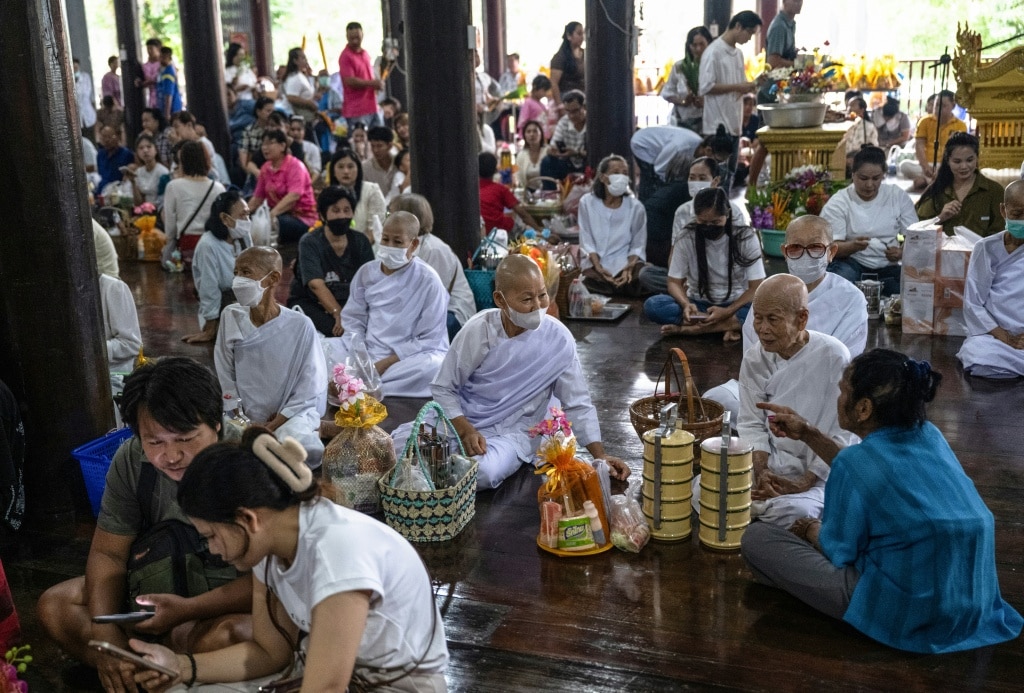
    Across temples and community gatherings in Thailand this week, millions of people have joined a decades-old movement that merges Buddhist spiritual tradition with public health action: the annual three-month alcohol abstinence campaign tied to Khao Phansa, or Buddhist Lent. For participants, the ritual is more than a seasonal commitment — it is a life-changing opportunity to break harmful drinking habits rooted in widespread cultural acceptance of alcohol.

    Wassana Nak-umma, a 42-year-old housewife who took her 2025 abstinence pledge at a temple in Samut Sakhon, a coastal province west of Bangkok, is one of millions returning to the campaign after experiencing its benefits firsthand. A self-described former heavy drinker, she recalled to Agence France-Presse how her addiction once left her so incapacitated that her own children had to clean up after her when she vomited from overconsumption. It was only after a concerned relative encouraged her to join the Khao Phansa campaign in 2024 that she was able to curb her habit. Though she returned to drinking after that first three-month abstinence, she now drinks only in moderation, and this marks her third year taking the pledge.

    “I still craved it. Whenever I saw people buying liquor or beer at stores, I would look at them and want to drink like them,” she said. “But I held back, telling myself it was only three months. After that three-month period, I realised, ‘Hey, I can do this! Next year, I must do it again.’”

    For 66-year-old former coconut farmer Phayom Raksa, the campaign led to a complete end to his daily drinking habit six years ago. Before joining, he told AFP, his addiction left his children ashamed of his constant drunkenness and drained all of his income on alcohol. Now, he encourages other community members to take the pledge, urging them to reframe their lives around positive goals.

    The Khao Phansa abstinence campaign, which launched in 2003, was created to address a striking national paradox: more than 90% of Thailand’s population identifies as Buddhist, a faith that lists avoiding intoxicants as one of its core moral precepts, yet 2024 World Health Organization data ranks Thailand third highest in per capita alcohol consumption across Asia. Last year alone, more than eight million Thais signed up for the initiative, making it one of the largest voluntary public health campaigns in the country.

    This year’s launch of the campaign, which coincided with the official start of Khao Phansa on Thursday, brought celebrations to Samut Sakhon, with traditional offerings to monks, cultural dance performances, and a community parade where participants rode coconut-transporting sidecar scooters called salengs, holding placards highlighting the benefits of healthy, alcohol-free living.

    Unlike popular Western dry campaigns such as Dry January, which focus primarily on physical health benefits after holiday overconsumption, Thai organizers say the Khao Phansa initiative gains unique power from its spiritual and community roots. Ubolwan Kongsawang, a regional volunteer with Thailand’s Stop Drinking Network, explained that the public pledge taken in a religious or community setting creates a powerful accountability structure that individual attempts to cut back often lack.

    “The Buddhist Lent campaign provides a ‘spiritual anchor’ that boosts motivation,” she said. “When individuals take a pledge before a Buddha image, at a temple, or within their community, they feel bound to honour their word.”

    Organizers have updated their outreach strategy this year, shifting focus from strict total abstinence for all participants to highlighting the wide-ranging benefits of any reduction in alcohol consumption, including better physical health, stronger family relationships, and lower household spending. Dr. Pongthep Wongwatcharapaiboon, director of the government-run Thai Health Promotion Foundation, noted that even reduced consumption that leads to long-term health improvements counts as a win for the campaign.

    “Our goal is not necessarily total abstinence for everyone,” he said. “Many reduce their consumption and discover the health benefits, which is already a success.”

    The campaign comes as Thailand adjusts its long-standing alcohol regulations: in December 2024, the government relaxed decades-old rules that banned alcohol sales during afternoon hours, a policy originally implemented to prevent government employees from drinking on the job. Alcohol remains prohibited for sale on religious public holidays and around election periods.

    Ultimately, campaign leaders say their work extends far beyond the three months of Lent, aiming to shift Thailand’s deep-rooted drinking culture that normalizes alcohol consumption at nearly every social gathering, from funerals to national festivals. “We are trying to transform the drinking culture itself, not just reduce individual consumption,” said Teera Wacharaprannee, head of the Stop Drinking Network. “Our strategy is to continue beyond Lent, supporting villages and communities to reduce alcohol in daily life.”