分类: society

  • Indonesia will ban social media for children under 16, communication minister says

    Indonesia will ban social media for children under 16, communication minister says

    JAKARTA, Indonesia — In a sweeping digital protection measure, Indonesia has announced it will prohibit children under 16 from accessing major social media platforms. Communication and Digital Affairs Minister Meutya Hafid confirmed the groundbreaking regulation on Friday, marking one of Asia’s most comprehensive youth digital safety initiatives.

    The new policy targets high-risk digital platforms including YouTube, TikTok, Facebook, Instagram, Threads, X (formerly Twitter), Bigo Live, and Roblox. Minister Hafid emphasized that the ban addresses escalating threats to children’s wellbeing, citing exposure to pornography, cyberbullying, online fraud, and algorithm-driven addiction as primary concerns.

    Implementation will commence gradually from March 28, allowing platforms time to establish compliance mechanisms. “Our children face increasingly real threats,” Hafid stated. “The government is here so that parents no longer have to fight alone against the giant of algorithms.”

    The minister acknowledged potential initial discomfort, noting: “Children may complain and parents may be confused about how to respond to their children’s complaints.” However, she characterized the move as necessary “in the midst of a digital emergency” to reclaim sovereignty over children’s futures.

    Jakarta residents expressed support for the restrictions. Marianah, 43, noted: “Children have too much freedom with photos, videos and everything. Some content is educational, but some is misleading.” Another parent, Harianto, 49, urged broader action against pornography and online gambling websites.

    The decision follows Indonesia’s recent surprise inspection of Meta’s Jakarta office over concerns about harmful content handling. The ministry issued a stern warning regarding Meta’s alleged low compliance with national regulations.

    Indonesia becomes Southeast Asia’s first nation to implement such restrictions, joining Australia which began similar measures in December 2025, resulting in the revocation of approximately 4.7 million child accounts. European nations including Spain, France, and the UK are also considering protective measures amid growing global concern about unregulated social media’s impact on minors.


  • Taking women empowerment to heart

    Taking women empowerment to heart

    Chen Zhonghong, a dedicated member of China’s National Committee of the Chinese People’s Political Consultative Conference (CPPCC), has redefined political advocacy through her hands-on approach to public service. In 2025 alone, her schedule documented over 60 official engagements, each representing tangible connections with vulnerable communities including struggling children, isolated seniors, and rural women seeking entrepreneurial training.

    Operating an agricultural enterprise in Tianjin, Chen emphasizes that meaningful political representation cannot be achieved through conference room deliberations alone. “Only by immersing ourselves in grassroots communities and maintaining close proximity to citizens can we genuinely comprehend their actual necessities,” Chen stated. “Every positive response from community members validates that our efforts yield meaningful impact.”

    Now serving her second term as a national political adviser, the 58-year-old has concentrated her efforts on addressing critical gaps in elderly care and child welfare systems. During visits to nursing facilities, Chen discovered that while residents received adequate physical care, they suffered from profound loneliness. “Their deepest need isn’t material support but genuine companionship—someone to sit and converse with them,” she observed.

    This realization prompted Chen to explore innovative elderly care models that integrate traditional services with social resources and artificial intelligence applications. Similarly, her involvement with special needs children during Children’s Day activities revealed both the challenges facing these children and the tremendous pressures borne by their parents.

    Chen advocates for inclusive development that ensures special needs children receive increased societal attention and support. Her experiences have solidified her conviction that effective political service requires not merely physical presence but authentic emotional investment—truly internalizing the urgent concerns and needs of the people she represents.

  • Australia forces porn sites to block under-18s from Monday

    Australia forces porn sites to block under-18s from Monday

    Australia has implemented groundbreaking digital protection measures requiring all pornography websites to implement robust age verification systems starting Monday. The sweeping regulations represent one of the world’s most comprehensive online child safety initiatives, expanding beyond December’s pioneering social media restrictions that prohibited children under 16 from joining platforms.

    The enhanced safeguards now encompass pornographic sites, search engines, application marketplaces, gaming providers, and generative artificial intelligence systems including chatbots. eSafety Commissioner Julie Inman Grant emphasized the regulatory commitment to enforcement, stating: “Where we see failures or foot-dragging, we will hold companies to account.” Non-compliant organizations face substantial penalties reaching AUD$49.5 million (approximately USD$35 million) per violation.

    Unlike previous inadequate measures, the new framework prohibits simple checkbox affirmations of age. Instead, services must implement verified age confirmation mechanisms when users attempt to access restricted content. Commissioner Inman Grant drew parallels to physical age restrictions, noting: “We don’t allow children to walk into bars or bottle shops, adult stores or casinos, but when it comes to online spaces where they are spending a lot of their time, there have been no such safeguards.”

    The regulatory expansion mandates consistent standards across digital services to prevent accidental exposure to harmful material. AI companion chatbots capable of generating explicit sexual content, violent material, or self-harm depictions must now confirm users’ ages. Application stores and online gaming platforms must similarly block under-18 users from adult-only content.

    Search engines will automatically blur results containing pornography and high-impact violence for non-authenticated users. Those searching for terms related to suicide or eating disorders will receive prioritized mental health support service referrals in search results. The eSafety Commission will continuously monitor compliance and pursue enforcement actions against systemic violations, acknowledging that while no regulation eliminates all risks, these measures establish meaningful protections throughout the digital ecosystem.

  • A Lagos rave rewrites the rules of nightlife, drawing young Nigerians priced out of club culture

    A Lagos rave rewrites the rules of nightlife, drawing young Nigerians priced out of club culture

    LAGOS, Nigeria — In a striking departure from Nigeria’s conventional club scene, thousands of young Lagosians are flocking to underground raves that prioritize communal experience over financial status. The movement represents a cultural shift in Africa’s most populous nation, where traditional ‘table culture’ nightlife has increasingly excluded youth grappling with record inflation.

    At Group Therapy—a pioneering rave event in the upscale Lekki district—revelers experience a radically different social environment. The venue operates without the hierarchical seating arrangements that dominate mainstream clubs, featuring instead a unified dance floor where attendees dance shoulder-to-shoulder under pulsating green strobe lights. A single, modestly-priced bar replaces the multi-tiered bottle service endemic to Lagos nightlife.

    Founder DJ Aniko explained the philosophy behind the movement: ‘Raves restore the essential element missing from conventional parties—actual space for dancing and genuine human connection. Typical Lagos venues require reservations and complicated bookings, transforming leisure into a competitive financial performance.’

    Economic realities drive this cultural transformation. Traditional clubs often charge between 100,000 naira ($72.34) to one million naira for bottled drinks, effectively pricing out most young Nigerians. By contrast, Group Therapy charges a flat 21,000 naira ($15.19) entrance fee without pressure for additional purchases.

    Cultural analyst Oluwamayowa Idowu of Culture Custodian notes: ‘This demonstrates declining purchasing power among youth. Raves offer democratic alternatives where enjoyment isn’t predicated on financial display. People now seek authentic experiences rather than performing affluence.’

    The events feature continuous, high-tempo house music infused with African sonic elements—a trend that gained momentum post-pandemic through cross-pollination with South African genres. This musical choice deliberately avoids mainstream Nigerian artists who typically control club playlists, ensuring the focus remains on collective experience rather than celebrity culture.

    Attendee Yetunde Onikoyi, 28, describes the appeal: ‘Since discovering raves last year, I’ve been completely captivated. The environment creates genuine connection through shared musical experience.’

    Consultant Dayo Williams echoes this sentiment: ‘Finding spaces that prioritize human aspects over materialism feels like a blessing in today’s climate.’

    The phenomenon represents both a cultural rebellion against Nigeria’s conservative social norms and an adaptive response to economic pressures, signaling a broader redefinition of leisure and community among urban youth.

  • Bondi hero Ahmed Al Ahmed sells tobacco store, business reopens with new owners

    Bondi hero Ahmed Al Ahmed sells tobacco store, business reopens with new owners

    Ahmed Al-Ahmed, the civilian hailed as a national hero for his bravery during Australia’s deadliest terrorist attack at Bondi Beach, has made a significant life change by selling his tobacco business. The 42-year-old, who was filmed confronting gunman Sajid Akram and wrestling a firearm from him during the December 14 rampage, has parted ways with Cigara, his tobacco store in Sutherland on the Old Princes Highway.

    The attack, which targeted Jewish celebrants at a Chanukah by the Sea event, claimed fifteen innocent lives including 10-year-old Matilda who attended with her family. Al-Ahmed’s intervention during the deadly assault is widely credited with preventing further casualties, though he sustained five bullet wounds to his shoulder during the struggle. Despite multiple surgeries and a two-week hospital recovery, two bullets remain lodged in his arm, causing ongoing pain and limited finger mobility according to former employee Salman Habib.

    Following the attack, Al-Ahmed’s shop became an impromptu shrine covered in floral tributes and cards from grateful citizens. The business has now reopened under new ownership, marking a new chapter for the hero who received over $2 million in public donations and was honored with numerous awards including the Canterbury Bankstown Local Hero designation for 2026 and the first ever keys to the city. His remarkable journey continued with a trip to New York alongside Rabbi Ulman to attend a Jewish awards ceremony, symbolizing his extraordinary transition from shopkeeper to national symbol of courage.

  • Scott Mathieson: Man accused of arson attack after Prahran firebombing killed David Gaddie

    Scott Mathieson: Man accused of arson attack after Prahran firebombing killed David Gaddie

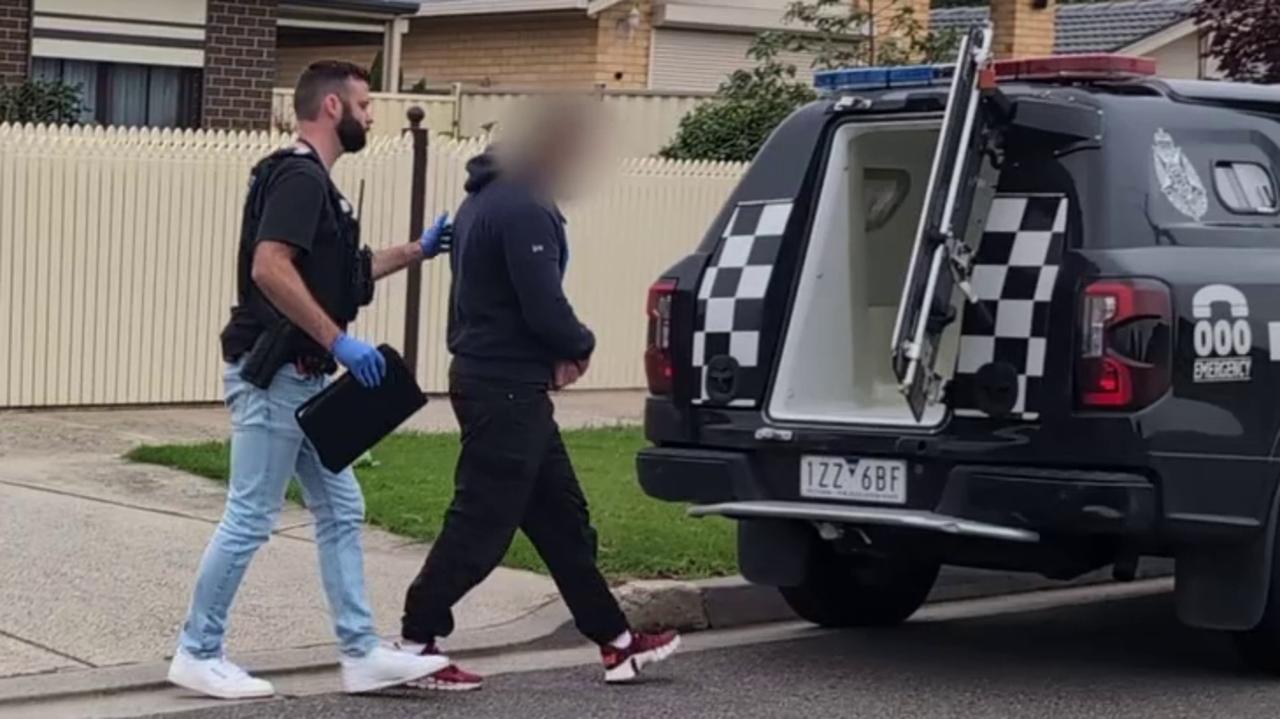
    A 44-year-old man stands accused of murder following a devastating arson attack that destroyed a Melbourne dessert establishment and claimed a man’s life five months after the incident. Scott Mathieson faced Melbourne Magistrates’ Court on Thursday evening charged with arson causing death, reckless conduct endangering life, and motor vehicle theft.

    The case stems from a catastrophic fire that engulfed The Golden Lounge Dessert and Juice Bar in Prahran during the early hours of January 15, 2025. Police allege that two individuals forcibly entered the Chapel Street premises, doused the interior with accelerant, and intentionally ignited the blaze. Security footage captured the moment a tremendous fireball erupted from the storefront at approximately 4:15 AM, nearly consuming a passing vehicle.

    According to investigative reports, one of the alleged perpetrators caught fire during their escape from the scene. The suspects fled in a stolen orange Holden Commodore sedan. Emergency services discovered a severely burned man in Fitzroy forty-five minutes after the incident. The victim, identified as 52-year-old St Albans resident David Gaddie, was transported to a medical facility but succumbed to his extensive injuries on June 6.

    Victoria Police’s Arson and Explosives Squad executed Mathieson’s arrest following a comprehensive year-long investigation. Authorities have simultaneously released computer-generated images depicting both a potential accomplice believed to have driven the getaway vehicle and a silver Toyota RAV4 observed circling the area proximate to the fire’s ignition.

    Detective Inspector Chris Murray issued a compelling public statement emphasizing the disregard for human safety exhibited by those commissioning arson attacks. “Those people who are paying others an absolute pittance to light these fires have zero concern for their safety,” Murray stated. “Your life is worth more than a couple of hundred dollars.”

    Mathieson did not submit a bail application during Thursday’s proceedings and remains in custody pending his next court appearance scheduled for June 11. Investigators continue to seek additional information regarding the incident and those potentially responsible for the tragic loss of life.

  • Emin Mehmedovic: Man charged over alleged Bandidos-linked $660k blackmail incident

    Emin Mehmedovic: Man charged over alleged Bandidos-linked $660k blackmail incident

    Melbourne courts are addressing a serious organized crime case involving alleged blackmail attempts exceeding $660,000 with connections to outlaw motorcycle gangs. Emin Mehmedovic, 36, faced Melbourne Magistrates’ Court following his Wednesday arrest on charges of blackmail and steroid possession stemming from January incidents.

    According to police allegations, Mehmedovic facilitated a sophisticated extortion operation involving patched members of the Bandidos outlaw motorcycle gang. Court documents reveal the accused made “unwarranted demands with menaces” targeting a specific victim between January 17-19.

    The elaborate scheme allegedly involved tracking the victim to both his residence and a family member’s regional café. On January 17, Mehmedovic reportedly arrived at the café with five associates, including at least one Bandidos member, demanding the victim contact him. The following day, he allegedly organized surveillance of the victim’s home before orchestrating a meeting in Brooklyn the next day.

    During the January 19 meeting, prosecutors claim Mehmedovic and his associates demanded precisely $663,584.22 from the victim. Further investigation led to a March 4 search of Mehmedovic’s Lalor residence, where police allegedly discovered steroids and four registered firearms.

    This case connects to broader organized crime investigations, coming weeks after another alleged Bandidos member, Joel Leavitt, faced similar blackmail charges. Both defendants are scheduled to return to court on June 18, while a third alleged gang member faces separate proceedings in April.

  • Grooming makes Crufts debut as UK dog show widens offer

    Grooming makes Crufts debut as UK dog show widens offer

    The prestigious Crufts dog show has entered a new era by launching its first-ever professional grooming championships, signaling a strategic expansion of its traditional offerings. This landmark addition to the world-renowned canine event highlights the growing sophistication and popularity of professional dog grooming as both an art form and competitive discipline.

    At the National Exhibition Centre in Birmingham, skilled groomers showcased their meticulous craft on carefully prepared canines. Among them was Amie Gale and her five-year-old standard poodle Raven, who underwent an extensive two-and-a-half hour grooming session before expert judges. Despite not claiming victory in this inaugural competition, Gale expressed enthusiasm about the platform bringing professional recognition to groomers’ technical expertise.

    The new grooming category joins Crufts’ evolving landscape of canine-centered activities that now includes interactive public engagement opportunities. The ‘have a go’ sessions allow first-time attendees like sisters Harriet and Chiron Tait to experience handling show dogs under guidance from experienced owners. This initiative, alongside the established Young Kennel Club contests, represents Crufts’ commitment to nurturing future generations of dog enthusiasts.

    Founded in 1891 and organized by The Kennel Club, Crufts continues to blend its rich heritage with contemporary canine culture. The four-day event, expected to attract approximately 150,000 visitors, maintains its pinnacle Best in Show competition while expanding its commercial and educational offerings. Industry representatives from pet food retailers to breeding clubs converge alongside competitive events, creating a comprehensive celebration of canine excellence that balances professional competition with public participation.

  • These women fought in Ethiopia’s last civil war and warn against another one

    These women fought in Ethiopia’s last civil war and warn against another one

    In the aftermath of Ethiopia’s devastating two-year civil war, female veterans from the Tigray region continue grappling with profound psychological wounds while facing the terrifying prospect of renewed hostilities. Their stories reveal the hidden human cost of conflict that extends far beyond battlefield casualties.

    Abeba Amdu, once a promising 22-year-old football star studying IT in Mekelle, saw her athletic career and academic ambitions shattered by the conflict. The talented striker who challenged traditional gender norms in sports now bears both physical and emotional scars from her military service. “I lost everything,” she confesses, describing how the trauma has left her isolated and unable to reclaim her former athletic prowess.

    Her decision to join the Tigray Defence Forces stemmed from both familial legacy—her parents were veterans of the 1991 revolution—and the terrifying reports of systematic sexual violence against Tigrayan women. “It was the whole situation that forced me to fight,” she explains, noting that basic necessities like sanitary pads became luxury items during combat.

    The war officially concluded with an African Union-brokered peace agreement in 2022, but peace remains elusive for these veterans. Selam Hailu, a 30-year-old lawyer and mother of two, joined the conflict after her retired parents returned from frontline service physically broken and bearing accounts of “sexual violence and mass killings.”

    As an educated professional, Selam confronted institutional sexism within military leadership, challenging the “unprincipled relationships” between officers and young female combatants. Her advocacy resulted in overnight detention—a punishment that highlighted the systemic challenges women faced even within their own forces.

    Dr. Rahwa Gebremedhin, a university lecturer, approached the conflict from an academic perspective, her military knowledge derived solely from war films. The transition back to civilian life has proven nearly impossible, with she and many others displaying “all the symptoms of PTSD.” She states bluntly: “I’m just trying to survive.”

    These women’s struggles are compounded by recent military developments. January witnessed brief clashes between federal troops and Tigrayan fighters, accompanied by drone strikes and suspended flights. Both sides exchange accusations: the federal government alleges Eritrean interference while the TPLF claims troop buildups along regional borders.

    Abeba articulates the collective anxiety: “Right now, I see fear everywhere—the fear of another conflict.” Their hard-won perspective suggests diplomatic solutions rather than renewed combat: “We have seen that in the end, it is negotiation—not combat—that provides the solution.”

    Despite attempts at rebuilding—Abeba briefly established a women’s football mentoring program called “Wegahta”—financial constraints and psychological burdens have hampered recovery efforts. These initiatives represent not just career moves but desperate searches for sanctuary from memories that continue to haunt Ethiopia’s female veterans.

  • Police ‘ruin’ Sydney’s reputation, akin to lockout laws, MP warns

    Police ‘ruin’ Sydney’s reputation, akin to lockout laws, MP warns

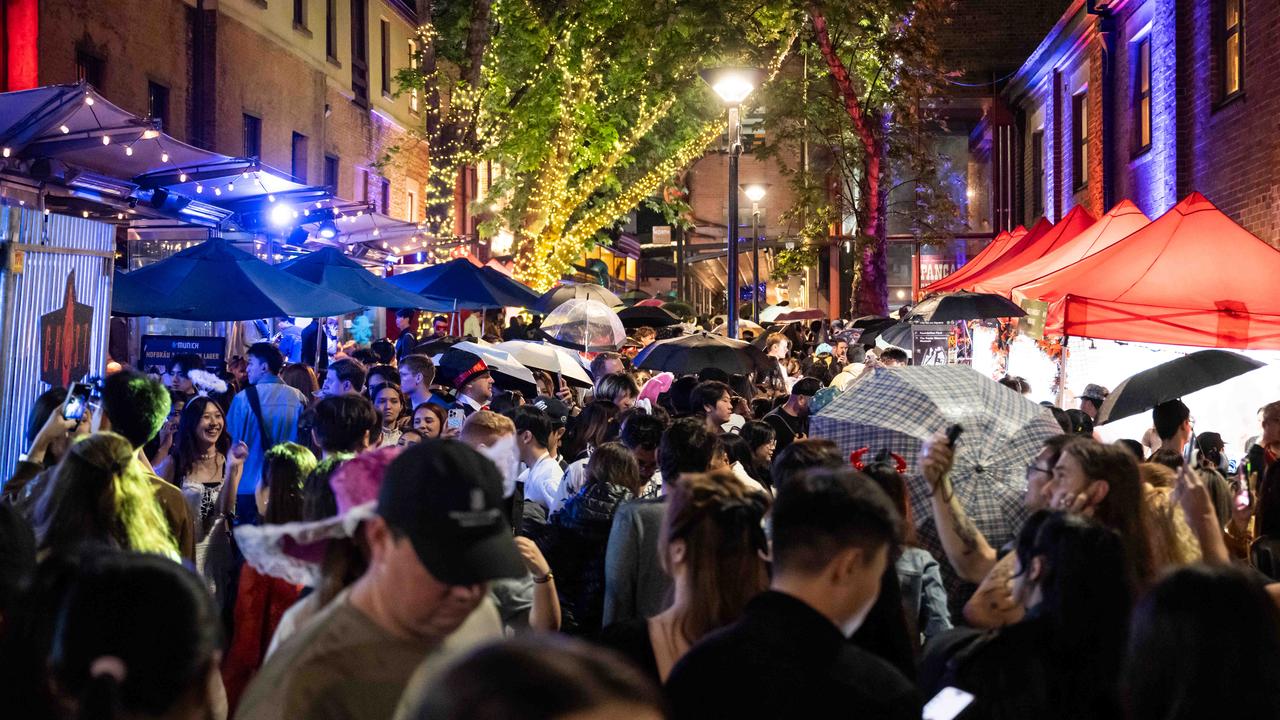
    A prominent Member of Parliament has issued a stark warning that aggressive policing tactics at Sydney’s entertainment venues are severely damaging the city’s global reputation. The concerns emerged during a heated budget estimates hearing where Night-time Economy Minister John Graham found himself defending police operations against strong criticisms.

    Greens MLC Cate Faehrmann leveled serious allegations against law enforcement, accusing them of effectively attempting to implement their own version of lockout laws through stringent enforcement measures. These include imposing strict liquor license conditions, deploying facial recognition technology, positioning uniformed security personnel on dancefloors, and enforcing alcohol restrictions after midnight at establishments such as The Marlborough Hotel in Newtown.

    Faehrmann further described disturbing accounts of police squads—sometimes comprising up to twelve officers—conducting venue raids based on what appeared to be minimal intelligence, specifically mentioning operations in Coogee within Sydney’s eastern suburbs. She emphasized that Sydney’s international standing suffers when compared to other global cities that don’t employ such intensive policing methods during nighttime hours.

    In response, Minister Graham acknowledged cultural challenges within the police force while simultaneously expressing support for officers, noting the difficulty of their duties. He revealed ongoing discussions with police leadership, including new NSW Police Commissioner Mal Lanyon, who has reportedly committed to supporting the government’s vibrancy reforms. Graham pointed to recognizable improvements since the controversial lockout laws period, though he conceded that enforcement consistency across different police area commands remains an issue requiring continued inter-ministerial collaboration.