
分类: society

  • Intl faculty, students experience Chinese New Year flavors in Sanming

    Intl faculty, students experience Chinese New Year flavors in Sanming

    Sanming University in Fujian province has transformed into a vibrant hub of cultural exchange as international faculty and students actively participate in traditional Chinese New Year celebrations. The institution’s School of Overseas Education has orchestrated a series of immersive events designed to foster cross-cultural understanding through hands-on experiences with China’s rich cultural heritage.

    Among the standout activities was the ‘Welcoming the New Year with Ink and Tradition’ event, organized in collaboration with the Sanming Translators Association. Held at the prestigious Qilin Academy on January 30, the gathering provided international participants with exclusive access to observe master artisans demonstrating intricate cloisonné enamel techniques and Yunjin silk weaving—both recognized as intangible cultural treasures of China.

    The cultural immersion extended beyond observation as visitors actively engaged in creating traditional Spring Festival elements. Participants crafted elaborate paper window decorations and composed poetic couplets, many experiencing these ancient art forms for the first time. The atmosphere brimmed with enthusiasm as international guests expressed their New Year wishes through these traditional mediums.

    The celebrations culminated on Chinese New Year’s Eve with the campus adorned in festive lanterns and decorations. University President Zhang Juncheng joined faculty and students who remained on campus for a special reunion dinner in the staff canteen, collectively welcoming the arrival of the Year of the Horse in a warm, communal atmosphere that blended cultural education with genuine interpersonal connection.

  • Land reforms not ‘anti-farmer’, expert says, as clearing explodes by 129 per cent

    Land reforms not ‘anti-farmer’, expert says, as clearing explodes by 129 per cent

    Alarming new data reveals land clearing activities in New South Wales have surged by 129% following significant environmental law reforms implemented in 2016, creating unprecedented risks for both agricultural sustainability and endangered wildlife populations. The findings from the Wentworth Group demonstrate how vegetation management deregulation has triggered widespread ecological consequences across the Australian state.

    Former Treasury Secretary Dr. Ken Henry, now chair of the Australian Climate and Biodiversity Foundation, is delivering an urgent plea for policy reform, emphasizing that environmental protection and economic interests are fundamentally aligned rather than contradictory. “When we destroy the vegetation that stabilises our soils and regulates our water, we destroy our capacity to farm,” Dr. Henry stated in his address to the Rural Press Club. “Protecting nature is not anti-farmer—abandoning it is.”

    The statistical analysis reveals approximately 677,500 hectares of land has been cleared since 2010, equivalent to three times the area of the Australian Capital Territory. This destruction has impacted 34,000 hectares of vital riparian corridors and jeopardized up to 150,000 hectares of habitat for vulnerable species including greater gliders, malleefowl, southern brown bandicoots, and long-nosed potoroos.

    The 2016 legislative changes transferred significant vegetation management authority to landowners through self-assessable clearing codes, creating a regulatory conflict with federal environmental protections established under the Environment Protection and Biodiversity Conservation Act. Dr. Henry highlighted how this legal contradiction places landowners in an impossible position where clearing activities may be permitted under state law while violating federal regulations.

    NSW Premier Chris Minns previously committed to addressing excessive land clearing during the 2022 state election campaign. The current administration is now examining comprehensive biosecurity law reforms aligned with Dr. Henry’s recommendations, which include establishing absolute no-clearing zones, implementing real-time spatial monitoring systems, and providing enhanced support services for landholders engaged in ecosystem restoration.

  • Field experts find balance of hard work and family tenderness

    Field experts find balance of hard work and family tenderness

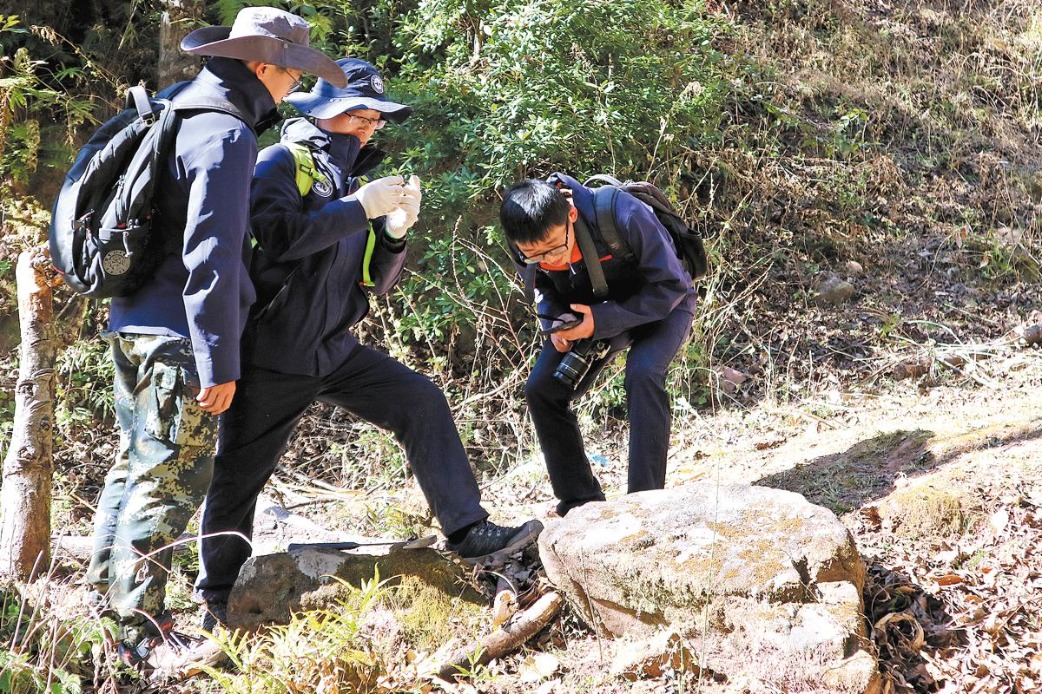
    At altitudes reaching 4,500 meters, geological experts with China’s survey teams demonstrate remarkable resilience balancing demanding fieldwork with cherished family connections. These dedicated professionals spend approximately half of each year conducting Earth exploration missions in remote regions, often under challenging conditions that include improvised accommodations and extended separations from loved ones.

    Bai Pingyan, a 34-year-old geologist, recalls waking in a sheep shed during high-altitude surveys in Tibet’s autonomous region—a testament to the unconventional working conditions these scientists routinely face. Despite such hardships, Bai emphasizes that the true challenge lies not in physical discomfort but in prolonged family separation. His sentiment echoes throughout the geological survey community, where professionals maintain strong family bonds through modern technology and creative solutions.

    Huang Jiazhong from the Kunming General Survey of Natural Resources Center logged nearly ten months of field service last year, among the longest durations recorded. Yet he maintains consistent involvement in his children’s development through scheduled video conferences each evening. During these sessions, Huang reviews his son’s schoolwork, providing mathematics and Chinese language guidance while collaboratively learning English through educational applications.

    The personal stories reveal innovative approaches to maintaining relationships across distances. Zhao Ruigang, anticipating fatherhood, maintains romantic connections with his wife through thoughtful gestures developed during their courtship. Despite initial meetings immediately preceding three-month fieldwork deployments, their relationship flourished through consistent communication and the exchange of local specialties from Zhao’s survey locations.

    These geologists demonstrate that professional dedication and family commitment need not be mutually exclusive. Through technological adaptation, mutual understanding between partners, and creative maintenance of domestic responsibilities, they successfully bridge the gap between scientific exploration and personal fulfillment. Their experiences highlight how modern relationships evolve to accommodate demanding careers while preserving emotional connections and shared growth.

  • Distance and duty small obstacles on road to true love

    Distance and duty small obstacles on road to true love

    In a remarkable testament to marital devotion, Huang Xin undertook an arduous 5,000-kilometer journey during the Spring Festival period to reunite with her husband stationed at a remote military installation. Traveling from Bama in the Guangxi Zhuang Autonomous Region to a high-altitude radar outpost in the Karakoram Mountains of Xinjiang, Huang’s pilgrimage symbolizes the extraordinary sacrifices made by military families across China.

    Sergeant Meng Mingtao, serving with the People’s Liberation Army Air Force under the Western Theater Command, has maintained his year-long marriage primarily through digital connectivity, with video calls bridging the physical separation imposed by his patriotic duties. Despite their formal union, the couple had been unable to conduct proper wedding ceremonies due to Meng’s operational commitments in one of China’s most challenging terrains.

    “My affection for him translates directly into support for his mission,” Huang stated, reflecting on her motivation for undertaking the demanding trek. “Regardless of the geographical obstacles, I felt compelled to experience firsthand the environment that commands his dedication and loyalty.”

    The emotional reunion occurred at an elevation exceeding 4,000 meters, where temperatures regularly plummet to -30°C. Huang’s journey involved multiple transportation modes—from commercial flights to military conveyances—across dramatically varied landscapes from subtropical Guangxi to the rugged Karakoram ranges.

    During her stay, the couple participated in commemorative activities at a local martyrs’ cemetery, honoring fallen soldiers who previously served at the remote outpost. This gesture underscored the deep respect military families hold for China’s defense traditions and the continuity of service across generations.

    The narrative exemplifies the broader phenomenon of military spouses throughout China who maintain family cohesion despite prolonged separations, often measuring their relationships in accumulated travel miles rather than shared days. Sociologists note such relationships represent modern adaptations of traditional marital bonds, reconfigured around technological mediation and periodic reunions.

    Defense analysts highlight that such personal sacrifices collectively contribute to military morale, particularly at remote border stations where personnel face exceptional environmental and psychological challenges. The PLA has increasingly recognized family support systems as crucial components of military readiness, implementing improved visitation policies and communication facilities at isolated posts.

    This story emerges as China continues strengthening border infrastructure and military presence in strategic high-altitude regions, with personnel rotations typically lasting multiple years between home postings.

  • Workers don hanfu, thrill air passengers

    Workers don hanfu, thrill air passengers

    A remarkable cultural phenomenon unfolded at Guangzhou Baiyun International Airport during the recent Spring Festival period, where airport personnel exchanged their standard uniforms for exquisite Song Dynasty-era hanfu costumes. This innovative approach to cultural presentation created an unexpected immersive experience for travelers passing through one of China’s busiest transportation hubs.

    The transformation extended beyond mere costume changes, with security staff adopting historically accurate warrior outfits complete with armor for male personnel and delicate pink peony hairpins adorning the hats of female employees. The initiative formed part of a broader cultural program that included traditional lion dances and Cantonese opera performances, transforming the typically utilitarian airport environment into a vibrant celebration of Chinese heritage.

    Travelers responded with enthusiasm and appreciation for the unexpected cultural display. Gu Ziqi, a 20-year-old university student from Nanjing, described the events as effectively bridging the gap between contemporary society and traditional culture. ‘These interactive experiences allow people to see, experience, and understand traditional culture in accessible ways,’ she noted, highlighting how such initiatives reduce cultural estrangement.

    The Guangzhou airport initiative represents part of a larger trend across China’s tourism and hospitality sectors. In Xitang ancient town, Zhejiang Province, performers staged traditional boat weddings in hanfu attire, while Xi’an’s Huaqing Palace presented spectacular Tang Dynasty-style performances featuring historical figures like Emperor Xuanzong and Consort Yang Yuhuan on the first day of the Lunar New Year.

    Industry experts recognize both cultural and commercial value in these developments. Qi Chunguang, vice-president of travel portal Tuniu, observed that ‘hanfu perfectly suits the festive mood of the Spring Festival,’ while researcher Zhang Jinshan from Beijing Union University noted the effectiveness of such measures in attracting domestic and international tourist interest. The growing market for hanfu, projected to reach approximately 24.2 billion yuan by 2027 according to iiMedia Research, underscores the economic potential of cultural revitalization efforts.

  • ‘Deep regret’: Victorian anti-corruption watchdog issues rare apology for mishandling complaint against police officer

    ‘Deep regret’: Victorian anti-corruption watchdog issues rare apology for mishandling complaint against police officer

    In a remarkable display of institutional accountability, Victoria’s Independent Broad-based Anti-corruption Commission (IBAC) has delivered an unprecedented formal apology to a survivor of police-perpetrated family violence. Commissioner Victoria Elliott offered the profound apology during a parliamentary committee hearing, expressing deep regret for the watchdog’s inadequate handling of Dr. Jana Katerinskaja’s complaints.

    The case originated in 2018 when Dr. Katerinskaja, whose former partner was a serving police officer, reported serious family violence incidents to Victoria Police. She subsequently escalated her concerns to IBAC after discovering that the investigation was being conducted by her partner’s colleagues and that confidential information had been improperly shared.

    IBAC’s initial response involved referring the complaint back to Victoria Police’s Professional Standards Command, which initially dismissed the allegations as “unfounded.” Despite identifying deficiencies in the police investigation, IBAC again referred the matter back to the same force. Dr. Katerinskaja filed a second complaint two years later regarding her treatment by police handling her case.

    The Victorian Inspectorate’s 2022 special report revealed significant systemic failures, including IBAC’s failure to consider potential corrupt conduct, substantial procedural delays, and inadequate attention to the complainant’s welfare. Commissioner Elliott acknowledged that IBAC had adopted a “highly adversarial approach” when responding to the critical report, which she now characterizes as “inappropriate and insensitive.”

    Dr. Katerinskaja described the apology as a potential “turning point” for the organization but cautioned that similar cases could still occur under the current system. Her legal representative, Jeremy King of Robinson Gill, noted the historical significance of the apology while emphasizing the need for structural reforms, including the establishment of an independent police ombudsman to handle complaints through trauma-informed approaches.

    The case has highlighted ongoing concerns about Victoria’s police oversight framework, with IBAC reportedly investigating only 1% of police complaints while referring the overwhelming majority back to Victoria Police for internal review.

  • As China’s economy slows, some young people are snapping up cheap apartments to ‘retire’ early

    As China’s economy slows, some young people are snapping up cheap apartments to ‘retire’ early

    Across China, a profound demographic shift is underway as young professionals abandon high-pressure careers in megacities for affordable tranquility in smaller communities. This movement represents a dramatic reversal of China’s traditional urbanization pattern, where previous generations flocked to booming metropolitan centers seeking economic advancement.

    The partially abandoned ‘Life in Venice’ development in Jiangsu province exemplifies this trend. Originally conceived as a luxury weekend resort for wealthy Shanghai residents, this massive replica of the Italian city now stands largely empty after China’s property market collapse bankrupted developer Evergrande in 2024. With less than 20% occupancy, the development has become an unlikely haven for young urban refugees like Sasa Chen, a former finance professional who left her 700,000 RMB ($98,480) Shanghai job at age 28.

    Chen now pays just 1,200 RMB ($168) monthly for her apartment, enabling her to retire early through careful savings and investment returns. ‘I have all the time in the world, the freedom of doing whatever I want,’ Chen explains. ‘I never believed that work is the meaning of life.’

    This phenomenon reflects broader economic pressures facing Chinese youth. The economy grew just 5% in 2025—respectable globally but significantly below China’s historical double-digit growth. Youth unemployment reached 16.5% in December, driving many to reject the grueling ‘996’ work culture (9 a.m.-9 p.m., six days weekly) that dominates Chinese tech and finance sectors.

    Instead, young Chinese are embracing the ‘lying flat’ movement—shunning competitive careers for ‘low-desire living’—or pursuing FIRE (Financial Independence, Retire Early) principles more aggressively than Western counterparts due to China’s extremely low regional living costs.

    Migration patterns confirm this trend: Beijing lost approximately 1.6 million residents in their twenties and early thirties between 2019-2024. Some are flocking to extremely affordable regions like Hegang, a northeastern mining city where apartments now sell for as little as $3,000—less than many cars.

    Professor Chen Zhiwu of Hong Kong University observes: ‘Young people are facing reality and thinking hard about their futures.’ As economic opportunities diminish in traditional urban centers, China’s youth are fundamentally redefining success, prioritizing personal freedom and well-being over conventional career advancement.

  • Foreign visitors taste the delicacies of Tianjin’s ancient town

    Foreign visitors taste the delicacies of Tianjin’s ancient town

    The historic streets of Yangliuqing Ancient Town in Tianjin became a culinary crossroads during the Spring Festival as international visitors discovered traditional Chinese delicacies. Master Zhang, a local artisan, demonstrated the ancient preparation of chatang (tea soup), skillfully combining red sorghum flour, millet flour, and boiling water before garnishing with red sugar, sesame seeds, raisins, and peanut crumbs.

    Ahmed Mohamed Saleh from Egypt expressed delight after his first taste. “It’s wonderfully warm and sweet,” he remarked, curious about the name despite the absence of tea. Master Zhang explained the historical context: “Tea soup originated in the late Ming Dynasty. The name derives from the tea-brewing technique of using boiling water, though no actual tea leaves are involved. It’s particularly comforting during winter months, providing immediate warmth.”

    Nearby, Hassan Sameh Hassan Elsayed, another Egyptian student, sampled Sutang (crispy candy) and immediately purchased two boxes to send home. Xu Liansen, third-generation inheritor of Xu’s Crispy Candy, reported exceptional visitor engagement during the holiday period. “Our workshop attracted substantial tourist attention, with approximately 10% of purchases made by international visitors like Mr. Elsayed,” Xu noted.

    The culinary experiences formed part of a broader cultural celebration that featured over 500 performances and interactive activities throughout the Spring Festival period, averaging more than 70 daily events. According to official data from the Tianjin Municipal Bureau of Culture and Tourism, the city experienced an 11.7% increase in tourist arrivals compared to the previous year during the Year of the Horse Spring Festival, accompanied by a 9.4% growth in hotel revenue.

  • Deadly Texas bar shooting is ‘potentially an act of terrorism’, FBI says

    Deadly Texas bar shooting is ‘potentially an act of terrorism’, FBI says

    AUSTIN, Texas – A deadly shooting outside a popular Austin bar early Sunday morning has prompted an FBI terrorism investigation after two civilians were killed and fourteen others injured in a violent attack. The incident occurred approximately at 2:00 a.m. local time (0700 GMT) in the city’s bustling West Sixth Street entertainment district.

    According to Austin Police Chief Lisa Davis, law enforcement responded rapidly to reports of an active shooter near Buford’s Bar. The suspect, operating from a large SUV with emergency flashers activated, initially fired a pistol through the vehicle’s window, striking patrons on the outdoor patio and sidewalk. The assailant subsequently parked nearby and advanced toward the establishment armed with a rifle.

    Three police officers confronted the suspect at a nearby intersection, resulting in the shooter being fatally wounded during the exchange. The swift police response, made possible by increased weekend patrols in the entertainment district, occurred within 57 seconds of the initial emergency call.

    Acting Special Agent in Charge Alex Doran from the FBI’s San Antonio field office revealed that evidence recovered from the vehicle and suspect indicated a ‘nexus to terrorism,’ though investigators have not released specific details pending further examination. The SUV was thoroughly searched and determined not to contain explosives.

    Austin-Travis County Emergency Management Services confirmed three of the fourteen transported victims remain in critical condition. Authorities have not yet disclosed the identities of the deceased victims or the suspected shooter, nor have they commented on potential motives.

    Austin Mayor Kirk Watson praised the exceptional response time of emergency personnel, stating unequivocally that their rapid intervention ‘definitely saved lives’ despite the tragic outcome.

  • Dudley MP delivers physiotherapy help to Ukraine

    Dudley MP delivers physiotherapy help to Ukraine

    In an unprecedented humanitarian initiative, British Member of Parliament Sonia Kumar has spearheaded a specialized physiotherapy training program for Ukrainian medical professionals confronting the devastating aftermath of ongoing conflict. The Labour representative for Dudley, who maintains her clinical practice as an NHS physiotherapist alongside parliamentary duties, organized the pioneering mission following an emotionally impactful visit to Ukraine in September 2024.

    The delegation, which included Anju Jaggi (Clinical Director of Therapies at the Royal National Orthopaedic Hospital) and physiotherapist Tanisha Sandhu, conducted intensive training sessions at Kyiv’s Institute of Vertebrology and Rehabilitation. Their collaboration with the Patients of Ukraine Charitable Foundation addressed the critical shortage of rehabilitation expertise in a nation where official figures acknowledge 55,000 military fatalities with actual casualty estimates potentially reaching 200,000.

    Kumar described the complex medical landscape facing Ukrainian clinicians, noting that while some injuries mirror those seen in UK practice, the battlefield context creates unique challenges. “When an ankle injury balloons up in combat, how do you manage that rapidly to return someone to duty?” she questioned, highlighting the practical realities of front-line medicine.

    The training program equipped 25 clinicians with advanced techniques for addressing severe trauma cases, including neurological deficits, limb amputations, and complex spinal injuries. Sandhu observed that the injuries being treated “are incredibly complex” and emphasized that sharing techniques “that improve recovery or reduce pain can make a huge difference to someone’s life.”

    Ukrainian Deputy Health Minister Yevheniy Honchar formally acknowledged the mission’s significance, stating that “rehabilitation is really our key priority because we have huge demand in Ukraine because of the war.” He expressed particular appreciation for the knowledge transfer from “well recognized experts from Great Britain.”

    Beyond physical rehabilitation, Kumar identified mental health support as equally crucial, noting that Ukrainian healthcare professionals specifically requested practical skills and partnerships rather than sympathy. She characterized the collaboration as “what international cooperation looks like at its best” and expressed hope that this mission would establish lasting professional bridges between British and Ukrainian medical teams, proving that “even in the shadow of war, collaboration like this can help rebuild lives.”