分类: society

  • Man, 45, charged after allegedly kicking at airline staff, biting passenger while being restrained on Perth-bound flight from Canberra

    Man, 45, charged after allegedly kicking at airline staff, biting passenger while being restrained on Perth-bound flight from Canberra

    A chaotic mid-air incident that endangered the safety of passengers and crew on a domestic Australian flight from Canberra to Perth has led to criminal charges against a 45-year-old Queanbeyan resident, Blake Antrobus, Australian Federal Police (AFP) have confirmed.

    The disruptive incident unfolded on 16 April, when Antrobus allegedly began engaging in aggressively disorderly conduct mid-flight: he shouted profanities, repeatedly ignored explicit safety directives issued by cabin crew, and physically kicked and shoved the seat positioned in front of him, which was occupied by a female passenger. When the woman asked him to cease the disturbance, his behavior escalated into open aggression.

    After crew members reported the unruly conduct to the flight captain, authorization was granted to restrain Antrobus to prevent further harm to other people on board. During the restraint process, AFP allege that Antrobus kicked a senior cabin crew manager and bit the arm of a fellow passenger who was assisting in holding him down.

    Following the aircraft’s landing, Antrobus was taken into custody. He faces three distinct criminal charges: one count of assaulting an aircraft crew member, one count of failing to adhere to a legally required safety instruction from cabin crew, and one count of engaging in offensive, disorderly conduct on an aircraft. He made his first appearance at Perth Magistrates Court the day after the incident, on 17 April, and returned for a brief further hearing this Friday.

    In an official statement following the case, AFP Acting Superintendent Peter Brindal emphasized the serious risks that unruly, anti-social behavior poses to the entire aircraft cabin. “Being in the air does not give anyone a free pass from the law and consequences on the ground,” Brindal stated. He added that the AFP maintains close collaborative partnerships with Australian airlines to protect the safety of all domestic air travelers, and any individual accused of endangering that safety will be brought before the courts to answer for their actions.

  • A rumour, a lynching in India and a long wait for justice

    A rumour, a lynching in India and a long wait for justice

    In the humid heat of a June 2018 afternoon, two young residents of Guwahati, India, set off on a casual road trip through the rolling hills of Assam’s Karbi Anglong region. Abijeet Nath, a 30-year-old local businessman, and Nilotpal Das, a 29-year-old musician, never made it back to their homes. Nearly eight years after their brutal killing at the hands of a mob falsely accusing them of child abduction, an Assam court has finally issued a long-awaited verdict – one that has left the victims’ grieving families far from satisfied.

    On Monday, the district sessions court delivered its ruling in the high-profile case: 20 of the 45 adult accused were found guilty on charges of murder and participation in an unlawful assembly, while 25 others were acquitted due to insufficient evidence that met the “beyond reasonable doubt” standard required for conviction. The court will announce the length of the defendants’ sentences on Friday. All convicted individuals have already denied wrongdoing, and retain the right to file an appeal with a higher regional court.

    In its written judgment, the court emphasized the scale of the violence that unfolded that evening, noting “this is not a simple case of murder. The involvement of the entire locality is established from the evidence on record.” Court testimony and police records reconstruct the chaotic sequence of events: after stopping in Panjuri Kachari village to ask for directions, an unsubstantiated rumor that the pair were child kidnappers spread rapidly through the community. A spontaneous crowd of 150 to 200 villagers gathered at the site, with at least 50 people directly joining the fatal attack using sticks and other crude weapons. While the exact motivation for their trip to Karbi Anglong, roughly 112 miles from Guwahati, was not confirmed in court, the victims’ parents testified that the two were avid travelers who often explored remote areas of the state together.

    The first confirmation of the tragedy reached Nath’s family when he failed to return calls: a stranger answered Nath’s phone and told his father that his son was dead, and the news would soon air on television. Families rushed to the region immediately, while local police, alerted to reports of an assault, also deployed to the village. By the time emergency responders arrived, the two men had already been pronounced dead at a local hospital. In the aftermath of the killings, dozens of arrests were carried out, and a formal chargesheet was filed against 48 people in 2024. Three of the accused were confirmed to be minors at the time of the attack, so their cases were transferred to the juvenile justice system, leaving 45 adults to stand trial.

    The verdict has returned this shocking case to national headlines, and reignited long-simmering conversations about the deadly consequences of viral misinformation that first gripped India in the late 2010s. The 2018 lynching of Nath and Das was not an isolated incident: at the time, a nationwide wave of mob attacks was being fueled by false rumors of child abduction gangs that spread exponentially across WhatsApp, a massively popular messaging platform in India. Viral text posts and videos stoked widespread panic and deep suspicion of unfamiliar outsiders, leading to similar lynchings across Tamil Nadu, Karnataka, Telangana, Maharashtra, Tripura and other states. Law enforcement struggled for months to curb the rapid spread of the false claims across encrypted social platforms.

    At the height of the violence, the case sparked national outrage, particularly after the federal government claimed there was no proven connection between the online rumors and the mob attacks. India’s Supreme Court publicly urged the central government to draft and pass a dedicated anti-lynching law, while lawmakers raised alarms about the growing threat of unregulated “fake news” on private messaging platforms. Pressure also mounted on WhatsApp, which the Indian government warned could face legal liability if it continued to act as a “mute spectator” to deadly misinformation. In response, the platform implemented sweeping changes: it introduced limits on how many times a single message could be forwarded, added clear labels for all forwarded content, and launched national public awareness campaigns to teach users how to identify false claims.

    Years later, the case remains a defining example of the complex challenges of containing harmful viral misinformation, a problem that continues to frustrate policymakers and tech companies alike. A 2021 UNICEF study confirmed what the 2018 attacks made clear: false information spreads far faster and reaches wider audiences than verified factual reporting, especially when the content preys on public fear and anger, making it extremely difficult to halt mid-spread.

    Prateek Waghre, a New Delhi-based researcher focused on technology policy, argues that the root of the problem extends far beyond platform design. “Technology companies alone cannot address problems rooted in society,” he explained. While limiting message forwarding can slow the spread of misinformation, Waghre noted, the measure can also restrict the flow of legitimate, valuable information to users. On platforms like WhatsApp, which uses end-to-end encryption that only allows senders and recipients to read message content, direct content moderation is inherently complicated. Any attempt to increase monitoring of private messages, Waghre added, would require weakening encryption protections, which would in turn raise serious, widespread concerns about user privacy.

    For law enforcement agencies in Assam, the 2018 lynching marked a major turning point in how authorities approach rumor-fueled violence. Kuladhar Saikia, Assam’s former top police official, told reporters that response strategies have shifted dramatically in the years since the attack. Early responses, such as temporary suspensions of local internet service, only offered short-term disruption of misinformation and did nothing to address the underlying social conditions that allowed rumors to take root, he explained. “Instead, we focused on grassroots outreach, working with community leaders to verify information and discourage rumors,” Saikia said.

    But for the families of Nath and Das, these broader policy discussions feel distant from their years-long fight for justice. The acquittal of more than half of the accused has left their demands for full accountability unmet. Gopal Das, father of Nilotpal Das, told reporters after the verdict that his family was “not satisfied” with the ruling. They plan to meet with their legal team to review their options for further legal action, and are pushing for the maximum possible sentence for the 20 convicted defendants. Nath’s family has echoed those concerns, noting they are also evaluating legal challenges to the acquittals and have called on the state government to provide support for their case.

    For the grieving families, Monday’s ruling is only one more incremental step in a legal process that has stretched on for nearly eight years. It cannot bring back the two young men who left home for a casual trip and never returned, nor can it undo the permanent loss that has shaped their lives every day since that summer afternoon in 2018.

  • ‘Missing scientist’ cases have stoked wild speculation. For loved ones, the theories are hurtful

    ‘Missing scientist’ cases have stoked wild speculation. For loved ones, the theories are hurtful

    In recent months, a loose collection of deaths and disappearances of roughly 10 people linked to U.S. scientific and national security work has ignited a firestorm of baseless conspiracy theorizing across social media, drawing official scrutiny from federal investigators and congressional oversight bodies while inflicting unnecessary additional pain on grieving families who have repeatedly tried to set the record straight.

    Among the cases at the center of the online speculation is the February killing of 67-year-old Carl Grillmair, a respected astronomer at the California Institute of Technology’s IPAC science and data center, who was shot and killed at his rural Llano, California, property. A local 29-year-old man named Freddy Snyder has been charged with murder and burglary in the case, and is scheduled for arraignment next week. Despite an arrest and a clear, publicly outlined motive from the victim’s family, Grillmair’s name has become a centerpiece of unsubstantiated online narratives that frame the 10 cases as part of a coordinated, hidden plot tied to classified research.

    According to Grillmair’s widow, Louise, the killing was the result of a misplaced revenge plot, not a targeted assassination tied to her husband’s work on exoplanets and astronomy. Months before the shooting, Snyder had trespassed on the couple’s land while claiming to hunt coyotes, and later escalated disruptive behavior across the neighborhood. When a local resident called 911 to report Snyder’s activity, the suspect incorrectly blamed Grillmair for the call, Louise explained. After returning to the property with a baseball bat two weeks prior to the killing, Snyder came back armed on February 16 and fatally shot Grillmair.

    Louise Grillmair has dismissed the online conspiracies as utter nonsense, noting that her late husband — a kind, morally grounded man who regularly helped others and refused to pursue legal action even when he was not at fault in car accidents — would laugh off the wild claims and use statistical reasoning to debunk them. She called the unfounded speculation denigrating to the memory of those who have died or gone missing, a sentiment echoed by other grieving relatives who have described the theorizing as disgusting and disrespectful, compounding the pain of their loss.

    Other cases included in the online conspiracy lists equally straightforward explanations that theorists routinely ignore. Retired Air Force General William Neil McCasland, the highest-profile person on the list, disappeared from his New Mexico home in February, with his wife Susan McCasland Wilkerson quickly clarifying that all evidence points to a deliberate departure driven by declining health. McCasland, who had retired nearly 13 years prior and only held routine clearances, had recently struggled with anxiety, memory loss, and insomnia, and had told his wife he did not want to live if his physical and mental health continued to deteriorate. He left his phone behind and took only his gun, leading Susan to note that he planned not to be found. Even dryly addressing the conspiracies, she joked that if there was no evidence of any foul play, the only outlandish hypothesis left was that aliens had beamed him to a mothership — a claim she noted had no supporting evidence.

    Eight months before McCasland’s disappearance, Melissa Casias, an administrative assistant at Los Alamos National Laboratory, vanished from Taos, New Mexico, with her family confirming she left deliberately. Even with that public statement, conspiracy theorists continue to fixate on her case. MIT physicist Nuno Loureiro was murdered by a former classmate, who confessed to the killing on video and was arrested for additional homicides at Brown University. Another researcher died by suicide after suffering devastating grief following the loss of both of his parents in a single day, his body later recovered from a local lake, while another death was officially ruled the result of cardiovascular disease by a coroner.

    Mick West, a well-known science writer and debunker of pseudoscience, has pushed back against the conspiracy claims, pointing out that statistical probability explains the small number of deaths among the hundreds of thousands of people with security clearances in the U.S. aerospace and nuclear sectors. Over a 22-month period, ordinary mortality would predict roughly 4,000 deaths, 70 homicides, and 180 suicides among that population, West noted, making the 10 cases cited by conspiracy theorists entirely unremarkable.

    Despite the clear explanations and family members’ repeated attempts to quell the hysteria, the conspiracy theories have gained enough traction online that both the FBI and the U.S. House Oversight Committee have launched formal investigations. For Louise Grillmair, the attention would be better focused on celebrating her husband’s legacy: groundbreaking scientific research, a commitment to helping others, and a quiet life spent enjoying flying, outdoor work, and astronomy from the small observatory he built at his home.

  • Singer D4vd had ‘significant amount’ of child sex abuse images when arrested, prosecutors say

    Singer D4vd had ‘significant amount’ of child sex abuse images when arrested, prosecutors say

    The American music industry and online fan communities have been rocked by the unfolding of a horrific criminal case that has gripped Los Angeles: rising TikTok star D4vd, best known for his viral 2020s hits *Romantic Homicide* and *Here With Me*, stands accused of the brutal murder, sexual abuse, and dismemberment of 14-year-old Celeste Rivas Hernandez. Court proceedings this week have brought previously unreported, disturbing details to light, peeling back the curtain on a months-long investigation that spawned widespread online speculation after the teen’s body was discovered.

    The case dates back to September 2025, when workers at a Hollywood towing yard responded to complaints of a foul odor coming from a parked Tesla, registered to D4vd, whose legal name is David Anthony Burke. Inside the vehicle’s front trunk, investigators found Rivas Hernandez’s dismembered remains sealed inside a black zipper bag. At the time of the discovery, Burke was mid-way through a planned worldwide tour; the tour was immediately scrapped following the find, and the artist withdrew almost entirely from public view and his social media platforms, which had served as the launchpad for his rapid rise to fame.

    Rivas Hernandez had been reported missing by her family months earlier, after she was last seen leaving Burke’s Hollywood Hills home on April 3, 2025. For months after the discovery of her body, law enforcement released almost no details about the case, the nature of the relationship between the 14-year-old and the singer, or the progress of the investigation. That information vacuum fueled a wave of unfounded conspiracies across social media platforms, leaving the public and Rivas Hernandez’s family without clear answers.

    It was not until last week that Los Angeles law enforcement announced Burke’s arrest. The Los Angeles County District Attorney’s office officially filed seven criminal charges against the artist, including one count of murder, multiple counts of continuous sexual abuse of a minor, and charges for the mutilation of human remains. This week, prosecutors presented even more disturbing allegations during open court proceedings.

    Prosecutors told the court that during the execution of search warrants for Burke’s electronic devices, investigators recovered what they described as a “significant amount” of images depicting child sexual abuse on both his personal phone and linked iCloud account. Prosecutors further alleged that Burke repeatedly sexually assaulted Rivas Hernandez before killing her and dismembering her body, claiming he took these extreme steps to conceal the abuse and protect his fast-growing, profitable music career.

    On Wednesday, the Los Angeles County Medical Examiner released its long-withheld autopsy report, which had been kept from public disclosure at the request of investigating officers. The report officially ruled Rivas Hernandez’s death a homicide, caused by multiple penetrating injuries from an as-yet-unidentified weapon or weapons. It confirmed the body was heavily decomposed and had been dismembered, matching the initial observations of first responders.

    Burke has entered a formal plea of not guilty to all criminal charges brought against him. It is important to note that while prosecutors have alleged the possession of child sexual abuse material, no additional charges related to those claims have been filed against the singer to date. The BBC reached out to Burke’s legal team for comment on the new allegations, and the team has repeatedly stood by their client’s claim of innocence.

    “We will vigorously defend David’s innocence, and we are confident that evidence will ultimately prove David did not kill Celeste,” the defense team said in an earlier statement. They have also pushed back on the prosecution’s procedural approach, noting that three grand juries have reviewed evidence in the case so far, but no indictment has been returned. Instead, the district attorney chose to bring charges via a direct criminal complaint, a step the defense has questioned.

    “There has been no indictment returned by any grand jury in this case, and no finalized criminal complaint filed. David has only been detained under suspicion,” the defense team told the BBC.

    This week, Rivas Hernandez’s family broke their months-long silence to release their first public statement about the case, offering a tender portrait of the teen they lost and calling for accountability. “Celeste was a beautiful, strong girl who loved to sing and dance. Every Friday night was movie night and we spent wonderful times together,” her parents Jesus Rivas and Mercedes Martinez said. “We love her very much and she always told us that she loved us. We miss her deeply. All we want is justice for Celeste.”

    Two upcoming court hearings in the case are scheduled for next Wednesday and Friday, as the legal process moves forward and more details are expected to enter the public record. Law enforcement officials have said they have recovered and analyzed a substantial body of digital and forensic evidence to support their charges, setting the stage for a high-profile trial that will continue to draw national attention.

  • At least 10 injured in shooting at Louisiana shopping centre

    At least 10 injured in shooting at Louisiana shopping centre

    A midday argument between two rival groups erupted into a deadly shootout at a popular Louisiana shopping mall this week, leaving at least 10 people wounded — several of them innocent bystanders caught in the crossfire, local law enforcement confirmed Thursday. The violence unfolded at the Mall of Louisiana in Baton Rouge, starting in the facility’s busy food court before spreading through the common area, according to Baton Rouge Police Department officials.

    During an emergency press briefing shortly after the incident, Police Chief Thomas Morse Jr. confirmed that unintended casualties were among those hurt. “Unfortunately there were some innocent people in the area who might have also caught some rounds,” Morse told reporters. Of the 10 victims transported to area hospitals, at least two required urgent surgical intervention, he added. Crucially, no fatalities have been reported as of Thursday’s update, and authorities have already cleared the mall of any ongoing threat, declaring the active shooter situation resolved.

    Investigators have quickly ruled out random violence, framing the shooting as a targeted confrontation tied to a preexisting dispute between the two groups involved. “This was not a random act of violence, but a targeted disagreement between two groups of people,” Morse said, as law enforcement teams launched a manhunt for the at-large suspects. To aid the investigation, police have issued a public call for witnesses to share any cell phone footage or security recording of the incident that could help identify and track down the shooters.

    Local leaders have issued sharp statements condemning the violence and vowing to bring the perpetrators to justice. “To the thugs that did this, we’re going to catch you,” Baton Rouge Mayor Sid Edwards said in a public address. Louisiana Governor Jeff Landry also confirmed that his office is working in full coordination with state and local law enforcement to support the response and investigation, and urged local residents and visitors to avoid the mall area while the investigation proceeds. On social media, Landry shared a message of solidarity with those impacted: “I’m praying for those affected and am grateful for the quick response by our law enforcement officials,” he wrote.

    The shooting marks the latest high-profile incidence of gun violence flaring in a public crowded space in the United States, reigniting ongoing conversations around public safety and gun regulation across the country.

  • Hundreds of wildfires burn across Florida and Georgia

    Hundreds of wildfires burn across Florida and Georgia

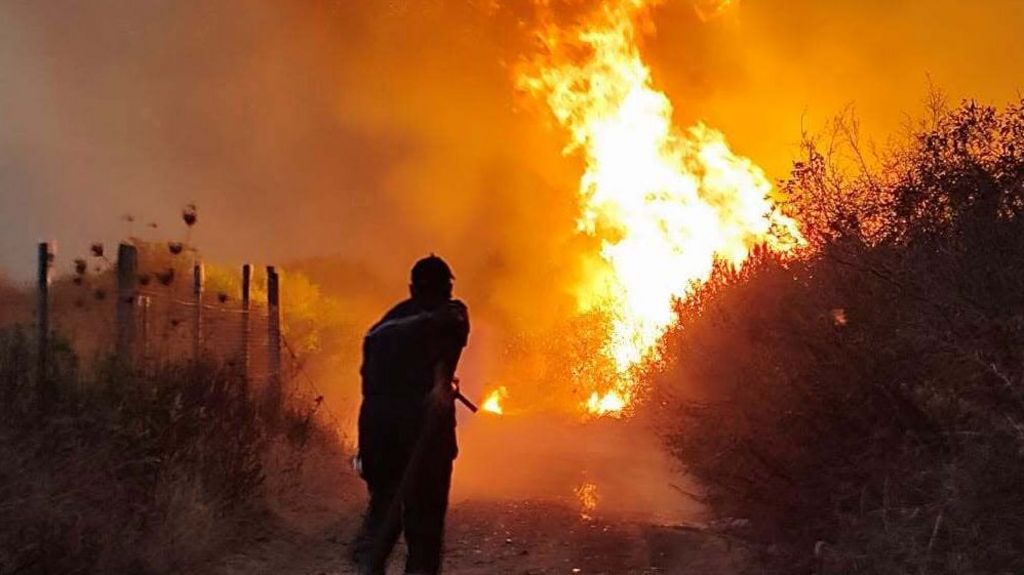
    Two southeastern U.S. states, Florida and Georgia, are currently grappling with an extensive wildfire crisis that has left hundreds of blazes burning across their landscapes. Local emergency management officials from both states have identified a combination of extreme environmental factors that are turning this fire event into an increasingly challenging disaster to contain. Long-term drought has parched vegetation across large swathes of both regions, turning forests, grasslands and brush into tinder-dry fuel that ignites easily and spreads rapidly. Persistent high winds are further exacerbating the situation, carrying embers for miles to spark new blazes and pushing existing fires to expand at unpredictable speeds. These unfavorable dry weather conditions have created a persistent high-risk environment that has stretched firefighting resources thin across both states, as crews work around the clock to contain the hundreds of active fires and protect at-risk communities.

  • Shanghai Disney Resort celebrates Earth Day

    Shanghai Disney Resort celebrates Earth Day

    To mark this year’s Earth Day, Shanghai Disney Resort convened its annual nature conservation forum on Wednesday, bringing together environmental researchers, explorers, and young advocates to highlight progress in urban ecological restoration and boost public awareness of sustainable coexistence with nature.

    A centerpiece of this year’s Earth Day celebration was the launch of a new research report focused on the ecological performance of the resort’s Wishing Star Park, titled *Creating an Urban Wetland Ecosystem: A Case Study of Shanghai Disney Resort’s Wishing Star Park*. The report offers a comprehensive, data-backed look at how intentional eco-friendly planning, construction, and long-term operational management have transformed an urban green space into a thriving habitat that supports rich biodiversity.

    Drawing on 11 consecutive years of bird observation data collected since the project launched in 2015, the research documents clear ecological gains across the park’s wetland system. As of March 2026, official surveys have recorded more than 133 distinct bird species and over 62,000 individual birds within the park’s boundaries. Of these tracked populations, roughly 90 percent have maintained stable population sizes or recorded measurable growth over the study period, confirming the success of the resort’s long-term conservation strategy.

    The annual conservation forum featured keynote talks from leading global environmental researchers and explorers. Among the speakers was Asha de Vos, a National Geographic explorer and marine biologist, who shared key insights from her ongoing work studying blue whales and sperm whales. De Vos’s research has uncovered unexpected complexity in the communication systems and social structures of these iconic marine mammals, shedding new light on the cognitive and social lives of ocean-dwelling megafauna.

    Another featured speaker, National Geographic explorer Huang Qiaowen, presented findings from her 10-year study of human-wildlife coexistence. Huang emphasized the outsized ecological role of leopards as an “umbrella species,” explaining that targeted conservation efforts to protect these top predators generate cascading benefits that strengthen the health and resilience of entire regional ecosystems.

    Beyond academic and expert discussions, this year’s Earth Day celebration prioritized engaging younger generations in environmental action. Student participants from the second iteration of the Youth Environmental Inspiration Program took part in the event, showcasing their original environmental projects selected from more than 100 nationwide submissions. The student projects covered a wide range of topics, from innovative energy-saving designs to hands-on local environmental observation initiatives. The event also included a public eco-market featuring more than 30 interactive booths designed to connect attendees with practical sustainable living practices.

  • China tightens food safety checks ahead of May Day, Dragon Boat Festival holidays

    China tightens food safety checks ahead of May Day, Dragon Boat Festival holidays

    As two major public holidays approach, Chinese food safety regulators have launched a nationwide campaign to tighten regulatory oversight and enforcement, moving proactively to mitigate potential food safety hazards and guarantee a secure dining experience for consumers across the country.

    In an official notice released recently, the Food Safety Office of the State Council called on local regulatory bodies at all levels to make advance arrangements and ramp up inspections across every link of the national food supply chain, spanning from primary production and wholesale distribution to retail and food service, ahead of the peak holiday consumption surge that typically accompanies the May Day and Dragon Boat Festival breaks.

    The notice directs regulators to prioritize high-priority categories of food products, including staple goods with mass consumption, seasonal specialty items tied to the holidays, viral food products trending on social media and e-commerce platforms, and commercial health foods. Alongside targeted product checks, supervisory efforts will also be intensified at key high-traffic locations, including agricultural product wholesale markets, national retail chain outlets, and the country’s largest online e-commerce platforms.

    Under the new regulatory requirements, food producers and distributors are mandated to strictly uphold their primary legal responsibility for the safety of their products. For their part, regulators will increase the frequency and depth of on-site inspections, and launch a targeted crackdown on common violations. These prohibited activities include manufacturing and selling counterfeit or substandard food products, running deceptive false advertising campaigns for food items, and the unauthorized use of unapproved or illegal food additives.

    Special supervisory focus will also be placed on the food service sector, particularly large chain restaurant brands, catering services provided to organized tourist groups, and high-traffic online restaurants that rely heavily on food delivery orders. One key area of scrutiny is the growing problem of unregulated “ghost kitchens” — delivery-only food operations that lack compliant physical dining facilities and proper operating permits, which have been linked to repeated food safety outbreaks in recent years.

    Institutions that provide group meal services to large numbers of people, including primary and secondary schools and other public organizations, are required to reinforce internal food safety management protocols and conduct comprehensive proactive risk assessments to address potential hazards before they cause harm. Local authorities have also been assigned the task of tightening oversight over large group banquets commonly held in rural areas during holiday seasons, a measure designed to prevent large-scale foodborne illness outbreaks that have occurred in past holiday periods.

    In addition to routine on-site supervision, the campaign will expand the scope and frequency of random food safety sampling inspections throughout the holiday period. Targeted laboratory testing will be carried out on high-risk food products and seasonal holiday staples, most notably zongzi — the traditional glutinous rice dumplings that are the centerpiece of Dragon Boat Festival celebrations across the country.

    To further strengthen public protection, the notice also calls for the optimization and expansion of accessible consumer complaint and incident reporting channels, ensuring that members of the public can quickly report suspected food safety issues and have their legitimate rights and interests effectively protected throughout the holiday season.

  • Woman killed by bear in Polish forest, son and local government say

    Woman killed by bear in Polish forest, son and local government say

    A tragic wildlife encounter has left a 58-year-old woman dead after a brown bear attack in a remote forested mountain area of southeastern Poland, local authorities and the victim’s family have confirmed. The fatal incident unfolded near the small town of Płonna, located in the Bieszczady region – an area home to the vast majority of Poland’s small wild brown bear population – when the woman and her 27-year-old son were exploring the woodland separately.

    Details of the attack emerged from accounts provided by the victim’s son, who was on a phone call with his mother when the encounter began. A firefighter who responded to the emergency told Polish news channel TVN24 that the son heard his mother scream “Bear, bear!” before the connection cut out abruptly. After raising the alarm, emergency teams set out for the remote site, but first responders faced significant delays: rough, uneven terrain and spotty mobile phone coverage slowed access to the area where the attack occurred.

    Local emergency services spokesperson Paweł Giba confirmed that the first alert came in around 10:30 a.m. local time (8:30 a.m. GMT). By the time fire crews and police reached the woman, she had already succumbed to her injuries. Responders found she had suffered severe, extensive lacerations to the head, according to the on-scene firefighter.

    Local police sergeant Anna Oleniacz offered a slightly different account to Polish news outlet Onet, saying the son had stepped away from his mother briefly moments before the attack. When he returned and found her injured, he immediately called for emergency support. The victim’s other son told TVN24 that the encounter was likely accidental: he believes his mother unknowingly stepped on the bear, which was resting on the forest floor, where its dark fur blended in with surrounding mounds of earth. “Once it hits, there’s no escape,” he told the network.

    Investigators were on site by Thursday afternoon to document the incident and confirm the cause of death. Izabela Jurkowska-Hanus, district prosecutor for Sanok – which oversees the affected Bukowsko Commune – told TVN24 that as of Thursday afternoon, there was no evidence pointing to any cause of death other than the bear attack.

    Local forestry officials confirmed that the mother-son pair had been in the forest to collect shed antlers, a common activity during the annual spring stag shedding season. Wojciech Jankowski, spokesperson for the Lesko Forest District where the attack happened, explained that spring is a time when brown bears, which have just emerged from months of hibernation, often venture close to residential areas and popular walking trails in search of food. “This was an unexpected encounter for both the bear and the human,” Jankowski noted.

    In response to the fatal incident, Bukowsko Commune issued an urgent public warning via social media, urging local residents and visitors to avoid all nearby forest areas until further notice.

    Poland is home to an estimated 100 wild brown bears in total, with roughly 90% of that population residing in the Bieszczady Mountains. Deadly conflicts between brown bears and humans are extremely rare in the country: the last recorded fatal bear attack in Poland dates back to 2014, local media reports confirm.

  • World’s tallest bridge draws thrill-seekers to Guizhou canyon

    World’s tallest bridge draws thrill-seekers to Guizhou canyon

    Tucked between the steep, forested slopes of Southwest China’s Guizhou Huajiang Grand Canyon, a record-breaking engineering marvel has redefined extreme leisure travel in the region: the 625-meter-high Huajiang Grand Canyon Bridge, the tallest bridge on the planet. Since welcoming its first visitors last September, this innovative infrastructure project has rapidly evolved from a technical achievement to one of Guizhou’s most popular travel landmarks, drawing thousands of adventure enthusiasts and casual sightseers alike every month.

    What sets this bridge apart from other tourist-focused infrastructure is its range of experiences tailored to different comfort levels. For hardcore thrill-seekers, the bridge caters to adrenaline cravings with one-of-a-kind bungee jumping opportunities and a unique, rail-free edge walkway that lets visitors step right to the edge of the 625-meter drop for unobstructed, heart-pounding views of the roaring river and jagged canyon cliffs thousands of meters below. For casual travelers who prefer a more relaxed visit, the bridge offers gentle walking paths along its main steel frame, where visitors can feel the mountain breeze drift up from the canyon while enjoying a cup of coffee against the backdrop of sweeping panoramic views of Guizhou’s dramatic karst landscape.

    The bridge’s rapid rise to fame underscores Guizhou’s ongoing strategy to turn its unique mountainous geography into a competitive advantage for tourism development. What began as a groundbreaking infrastructure project has become a major economic driver for local communities, creating new jobs in hospitality, guiding, and tourism services while putting the remote Huajiang Grand Canyon on the global adventure tourism map.