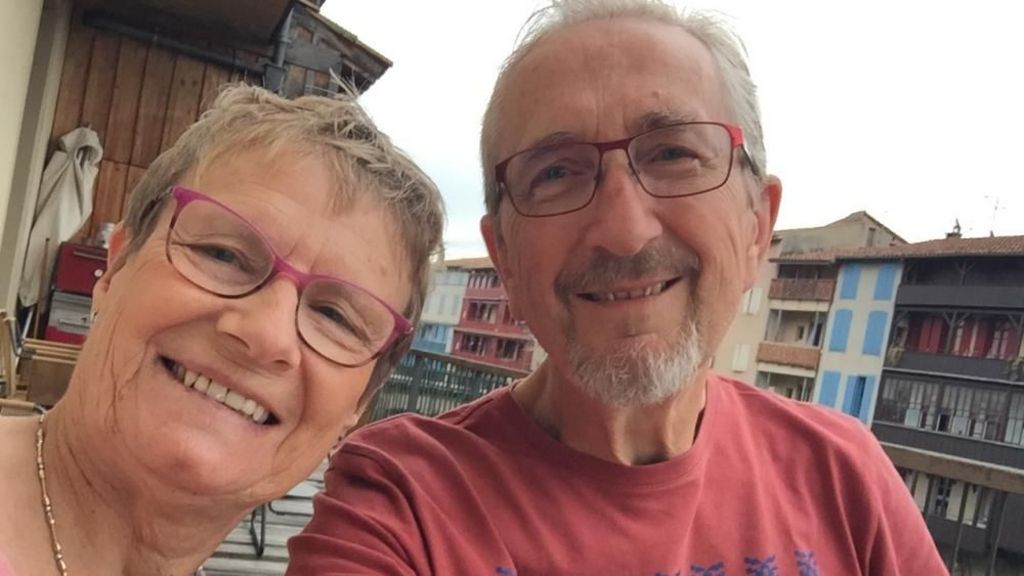
In May 2024, a dream six-week vacation across Singapore, Indonesia and Australia turned into an unthinkable tragedy for British couple Linda and Geoff Kitchen, leaving 74-year-old Linda a widow with permanent life-altering injuries and now pursuing legal action against Singapore Airlines for accountability. The couple, from Thornbury near Bristol, had been 10 hours into their flight departing London Heathrow when catastrophic unexpected turbulence struck the aircraft over Myanmar, sending the plane plummeting an astonishing 6,000 feet (1,828 meters) mid-flight. Recalling the harrowing incident, Linda Kitchen described how mild turbulence over Europe and the Indian Ocean had already made the journey uneasy, but nothing compared to the violent jolt that hit hours into the flight. “It was so severe; it felt like the aircraft was dropping. I noticed my Kindle and Geoff’s phone had fallen to the floor, and I thought the plane was going down,” she said in a statement shared through her legal team. As the plane dropped sharply, 73-year-old Geoff was thrown on top of Linda, crushing her into the aircraft’s armrest and breaking her back. Oxygen masks deployed across the cabin as the flight crew responded to the emergency, ultimately diverting the plane to an emergency landing in Bangkok, Thailand. Passengers and traveling medical personnel immediately rushed to assist, moving Geoff off of Linda and starting cardiopulmonary resuscitation. In the chaos that followed, Linda was transported off the plane to a local hospital for urgent care, while Geoff remained on board to receive continued treatment. It would be two full days before the grieving widow received confirmation that her husband, who she described as her “soul mate,” had succumbed to fatal injuries. Medical reports indicate Geoff suffered a fatal heart attack triggered by the sudden high-altitude altitude drop of the aircraft. Linda spent 10 days recovering in a Thai hospital before she was medically airlifted back to her home in Bristol, where she spent an additional week in inpatient care. The severe pain she endured made the entire repatriation journey a blur, she said, and even after discharge she requires round-the-clock specialized support at home to manage her chronic back injury. Now, more than two years after the tragedy, Linda has initiated High Court legal proceedings against the airline, seeking damages to cover the cost of her ongoing specialist care and, more importantly, answers for her family. Her legal representative, Anthe Korelidou, a leading aviation injury lawyer, said the devastating outcomes for the couple highlight the extreme severity of the incident, and that the family has never received full clarity on what went wrong. “While it’s more than two years since Geoff’s death, Linda and the rest of her family continue to have a number of questions and concerns about what happened and if more could have been done to prevent their injuries,” Korelidou stated. “All Linda wants is for the most thorough investigations to be conducted. The issuing of High Court proceedings is a major milestone in being able to provide Geoff’s loved ones with the answers they deserve.” The BBC has reached out to Singapore Airlines for a statement on the legal action, and the airline has not yet issued a public comment on the case.
分类: society
-
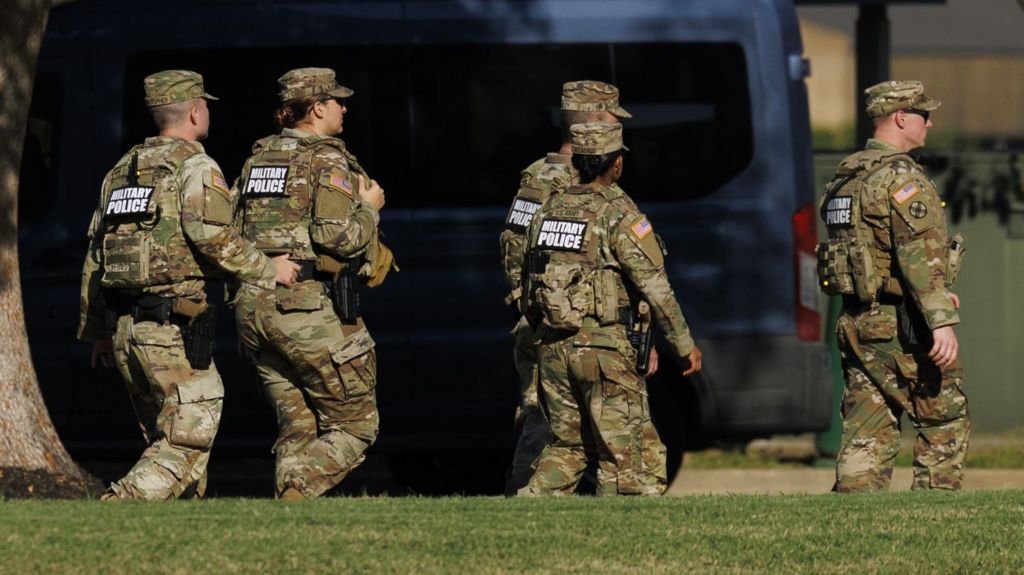
Autopsy shows National Guard fatally shot Memphis man in the back
A newly released autopsy report has upended the initial official account of the July 5 fatal shooting of 20-year-old Tyrin Johnson by Tennessee National Guard members in Memphis, confirming the single bullet that killed him entered the man’s back rather than his chest. The document, obtained by the BBC from the West Tennessee Regional Forensic Center Office of the Medical Examiner, details that the fatal bullet pierced Johnson’s right back, traveled through his lung, and exited through his upper right chest. This finding directly contradicts the original narrative shared by law enforcement, which claimed Johnson was shot twice in the chest by guard members after he confronted them with a weapon.
Included in the autopsy report is an investigative narrative from a Tennessee Bureau of Investigation (TBI) agent, which recounts the sequence of events as originally told to investigators. According to the agent’s account, Memphis police and National Guard troops were dispatched to the area following reports of nearby gunfire. When they encountered Johnson, the narrative states, he reached toward his waistband, and after officers observed him drawing a firearm, they opened fire, claiming he was struck once in the chest. Separately, the report notes Johnson was carrying a loaded handgun magazine, a detail that comes amid Tennessee’s permissive gun laws that allow legal gun owners to carry weapons openly.
Johnson’s family has renewed demands for full transparency and legal accountability in the wake of the autopsy’s conflicting findings. Evaniel Johnson, the victim’s grandfather and a former Nashville correctional officer, told the Associated Press that officials owe the public clarity about what occurred. “Be transparent – you shot him in the back,” he said. “I just want to make sure somebody be responsible for what happened. Some accountability. They ain’t never going to bring my grandson back. If he ain’t caused you no threat, you have no reason to be killing.”
Andre Wharton, the Johnson family’s attorney, who provided a copy of the autopsy to the BBC, said the new evidence confirms the family’s long-held concerns about the encounter with the Memphis Safe Task Force. “The autopsy findings reinforce the serious concerns we have regarding Tyrin’s shooting and the circumstances surrounding his encounter with the Memphis Safe Task Force,” Wharton said in a formal statement. “The fact that Tyrin was actually shot in the back, contrasted with officer and task force’s accounts, only further underscores the devastating nature of this encounter.”
The medical examiner officially listed Johnson’s cause of death as a homicide, a classification that denotes a death caused by another person and does not inherently indicate criminal intent. To date, no criminal charges have been filed against any of the involved guard members. When approached by the BBC for comment on the conflicting autopsy findings, the TBI declined to issue a new statement, pointing instead to its original July announcement and confirming the investigation remains active and ongoing. The agency also clarified that early claims that Johnson turned and pointed a weapon at guardsmen were never distributed by the TBI itself. The Tennessee National Guard has not yet responded to repeated requests for comment from the BBC.
State Representative Justin Pearson, a Memphis Democrat, publicly weighed in on the case Friday, posting a statement to the social platform X calling for a full, independent investigation. “Johnson should be alive today,” Pearson wrote, adding that “The National Guard is not welcome here. Mr Johnson’s murder is a horrifying example of the brutality and injustice the Memphis Unsafe Task Force has brought to our city.”
The National Guard deployment to Memphis is part of the broader Memphis Safe Task Force, an initiative launched under the current presidential administration’s policy to deploy National Guard troops to major U.S. cities. Former President and current presidential candidate Donald Trump framed the deployment, which is concentrated primarily in Democrat-led municipalities including Chicago, Los Angeles, and Washington D.C., as a targeted measure to combat rising violent crime across urban centers.
-

Watch: Puppy rescued from drain using a bucket and cheese
A charming tale of compassion and quick thinking has emerged from Florida, where a young puppy trapped in a narrow underground drain was saved in an unconventional rescue operation that relied on two simple tools: a common bucket and a tasty wedge of cheese.
According to official details released by the Tampa Police Department, the rescue unfolded after local residents spotted the stranded puppy and called authorities for help. First responders faced a tricky challenge: the confined space of the drain made it difficult to reach the frightened animal directly. Instead of relying on heavy equipment that could risk harming the puppy, the rescue team crafted a simple, gentle solution. They lowered a bucket baited with cheese into the drain, relying on the puppy’s hunger to coax it into the container. The plan worked perfectly: the curious, hungry puppy climbed into the bucket, and responders were able to lift it safely to the surface unharmed.
Following the successful rescue, the puppy was taken into the care of local animal control services, where it received a quick health check and was placed up for adoption. Unlike many stray animals that wait weeks or even months for a loving home, this lucky puppy did not wait long. Tampa Police confirmed that shortly after it was taken into the system, a new adoptive family stepped forward to give the young dog a permanent, loving home.
The entire rescue was captured on camera, and the footage has quickly spread across social media, drawing warm reactions from animal lovers around the region. The story serves as a reminder of how simple problem-solving and a commitment to helping vulnerable animals can turn a dangerous situation into a happy ending.
-
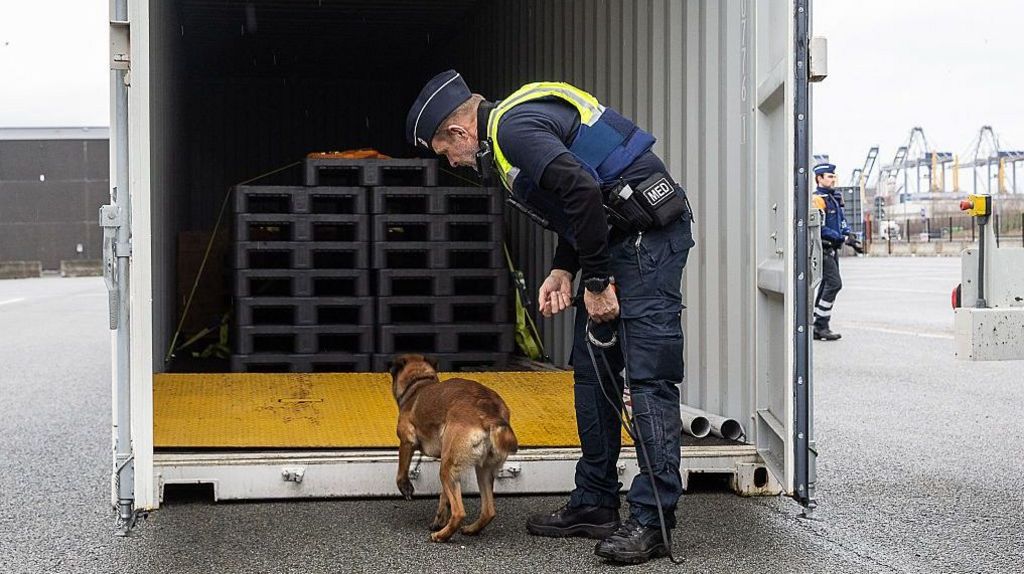
Shootings surge as drug gangs torment Brussels
On a quiet, charming small square in Brussels’ St Gilles district, just steps from the busy international Midi train station that welcomes daily passengers from London and Paris, what should be a bustling community gathering spot has been transformed into a frontline of escalating drug-related violence. Last Monday night, that transformation became impossible to ignore when drug gang gunshots ripped through Salvatore’s local pizzeria, turning a popular evening dining spot into a chilling crime scene.
Looking over the pockmarked walls still dotted with bullet holes days after the attack, Salvatore, the restaurant’s owner, recounted the terror of the incident: “We dropped to the floor. I had clients eating on the terrace with children. Look, we can see the bullet impacts everywhere.” Shocked by the audacity of the attack, the small business owner voiced the growing anger and fear spreading across the community: “Are we in an American gangster movie? This needs to stop.”
This shooting was not an isolated incident. It marked the third violent attack in this single neighborhood over just three days. The day before the pizzeria attack, a suspected drug dealer was shot in the leg just across the street from the restaurant. Even a week later, 70-year-old long-time resident Murielle still points out the faint dark stain of a bloodstain on the pavement where the shooting took place.
Murielle, who now sits daily with her dog Chéva near the site of the attack, says the neighborhood she has loved for years – a close-knit community she describes as “a little village inside the city” – has changed dramatically for the worse. She recalls that even when low-level drug dealing was common years ago, dealers treated local residents with respect: “Even the drug dealers used to be polite and decent. I would just tell them to go further away and they’d say, ‘Yes, ok mama!’ But that’s all changed now.”
Six months ago, the open-air drug trade in St Gilles intensified dramatically, according to residents. Just five minutes after arriving in the neighborhood, an on-scene reporter witnessed an open drug transaction: a buyer approached a waiting seller, exchanged a handshake, and walked away with contraband in hand. Crack cocaine use has skyrocketed among the most vulnerable, low-income residents of the area, and rival criminal gangs now fight deadly turf wars to control the most profitable dealing spots. Murielle says the trade has become so brazen that customers can regularly be seen lining up to purchase drugs.
The draw of enormous profits drives this escalating violence. According to Jurgen de Landsheer, chief of Brussels South Police, a prime drug dealing location in the city can net criminal gangs up to €50,000 (approximately $58,000) or more in a single day. Currently, police estimate there are more than 200 active open-air drug dealing points operating across Brussels.
The surge in drug-related violence in Brussels mirrors a growing crisis across multiple major European cities, most notably the French port city of Marseille. The root of the crisis lies in the massive inflow of cocaine into Europe, with major continental ports acting as the primary entry points for drug cartels. Just 40 kilometers north of Brussels, the Belgian port of Antwerp has reported record-breaking cocaine seizures year after year in recent years, as smuggling groups flood the European market with the drug.
De Landsheer notes that Brussels gangs have increasingly adopted the brutal violent tactics used by criminal groups in Marseille, though he stresses Brussels has not yet reached the same extreme level of instability. “We don’t have no-go zones here in Brussels,” he says. “It’s not easy to go in some neighbourhoods, but we go everywhere. We don’t want to become like some neighbourhoods in Marseille, so we’ll do everything to stop it.”
Still, recent violence has reached a new, alarming milestone. Just last weekend, a local Brussels police station became a direct target for criminal gangs – the first time such an attack has occurred in the city. Surveillance footage captured two attackers riding a scooter, pulling up outside the station, and firing multiple rounds at the building’s entrance with a weapon matching the description of an AK-47 assault rifle before fleeing the scene.
The proliferation of cheap, easy access to heavy weaponry and the recruitment of young, disenfranchised people to carry out attacks has further amplified the danger. De Landsheer explains that criminal gangs pay inexperienced young people just a few hundred euros to carry out contracted attacks: “They get a weapon, AK-47 or other heavy weapon, and then they get a mission. To shoot a person in the leg, for example, or to try to kill somebody. And they get very little money for this.” Many of the young people arrested for these attacks are as young as 12 years old, according to the police chief, creating an extremely high risk for the broader community. “The biggest danger is a stray bullet,” he says, that can hit innocent bystanders regardless of their connection to the drug trade.
In response to the dramatic spike in shootings, Belgian federal authorities have announced urgent intervention. On Thursday, Belgium’s interior minister confirmed that an additional 40 uniformed police officers would be deployed to the high-risk St Gilles area to crack down on open drug dealing and gang violence.
Despite the increased police presence, de Landsheer acknowledges that increased law enforcement alone cannot solve the deep-rooted crisis. “There is no magic solution. We need prevention over repression,” he says. “We can do our part and be present in the street, but our society also needs to give a future to the young people, do something with them. That’s the social part.”
Back in the St Gilles neighborhood, the daily fear has already upended community life. “Nobody sleeps here at the moment,” Salvatore says. “People talk about moving out, houses are losing value.” Even amid the uncertainty, long-time resident Murielle says local residents refuse to be driven out by gang intimidation. “We will not be intimidated,” she says. “We’ll carry on living and we’ll keep on protecting our lovely neighbourhood.”
-

Man charged following cross-border drugs bust
A coordinated cross-border law enforcement operation spanning the Republic of Ireland and Northern Ireland has delivered a major blow to illegal drug trafficking networks, resulting in large seizures of controlled substances, imitation weapons and cash, and the charging of one suspect.
The operation unfolded on Wednesday, when officers from An Garda Síochána – the Republic of Ireland’s national police force – stopped a vehicle in Dundalk, a town located in County Louth along the Irish border. A search of the vehicle uncovered 119 kilograms, or 262 pounds, of cannabis with an estimated street value of €1.6 million, or approximately £1.4 million.
Following the initial find, law enforcement teams carried out coordinated follow-up searches at a location in Newtownabbey, County Antrim, Northern Ireland, working alongside officers from the Police Service of Northern Ireland (PSNI). That search yielded an additional 45 kilograms of cannabis, half a kilogram of suspected cocaine, 22 imitation firearms, and £25,000 in criminal proceeds.
Two men were taken into custody for questioning in connection with the seizure as part of the ongoing multi-agency investigation. Of the two, a man in his 40s has now been formally charged with drug and weapons offenses, and is scheduled to make his first court appearance at Cavan District Court on Friday afternoon.
Representatives from both An Garda Síochána and the PSNI have confirmed that the investigation into the cross-border trafficking ring is still active, with more potential arrests and prosecutions expected as detectives continue to piece together the network’s operations. Cross-border collaboration has become a key strategy for law enforcement on both sides of the Irish border in disrupting organized criminal groups that exploit the open border to move illegal goods.
-

Oyo Nyimba, Ugandan ‘boy king’ who mesmerized world leaders, dies at 34
KAMPALA, Uganda – The global fascination surrounding one of Africa’s most unusual monarchs has ended with the death of Oyo Nyimba Kabamba Iguru Rukidi IV, the tribal king of Uganda’s Tooro Kingdom, who passed away at the age of 34. News of his passing was confirmed in an official statement released early Friday by Calvin Rwomiire Akiiki, the prime minister of the Tooro Kingdom administration.
In the announcement, Akiiki moved quickly to reassure subjects of the monarchy’s stability following the young king’s death. “The continuity of the Crown is assured,” the statement read. The prime minister confirmed Oyo leaves behind an heir apparent, a prince whose identity will be formally disclosed in line with Tooro’s ancestral traditions at a time deemed appropriate by royal authorities.
The announcement has sent ripples of shock across Uganda, as the public was never informed that Oyo had been receiving ongoing medical treatment for an undisclosed illness outside the country. For weeks, Tooro officials had only confirmed the king was in critical condition but still alive, leaving many Ugandans unprepared for the sudden news of his death at such a young age. Tributes from political leaders, community figures and ordinary citizens poured out across social and official platforms within hours of the announcement.
Deputy Speaker of Uganda’s Parliament Thomas Tayebwa captured the widespread disbelief, saying, “This is very difficult to comprehend.”
Commonly known to the world simply as King Oyo, his story has captivated global attention since he inherited the Tooro throne as an infant following his father’s unexpected death in 1995. Just three years old when he underwent the full traditional coronation rituals to formally become the kingdom’s ruler, Oyo held the unofficial distinction of being the world’s youngest reigning monarch. Clad in vibrant traditional royal regalia, the curious young boy became an object of deep affection for Tooro Kingdom’s hundreds of thousands of Batooro people, and even drew curiosity and fascination from world leaders who met him during official state events. For the first 15 years of his reign, a council of regents appointed by the kingdom governed on his behalf until he reached the age of majority at 18 and assumed full ceremonial duties.
Among the prominent international figures who developed a close bond with the Tooro royal family was former Libyan leader Moammar Gadhafi. Gadhafi visited Uganda multiple times over the decades, and provided consistent financial and political support to King Oyo and his mother, the queen mother, up until Gadhafi’s death in 2011.
As he entered adulthood, Oyo cultivated a reputation as a soft-spoken, private figure who prioritized keeping his personal life out of the public eye. Still unmarried at the time of his death, he was long known as one of Uganda’s most high-profile eligible bachelors. In a widely publicized lighthearted moment from September this year, the speaker of Uganda’s parliament publicly pledged to cover Oyo’s bride price whenever he decided to marry, prompting a broad smile from the king on his throne.
Tooro Kingdom is one of five ancient traditional monarchies recognized within Uganda’s modern republican framework. After the country gained independence from British colonial rule, a post-independence republican government banned all traditional kingdoms as part of an effort to unify the country’s diverse ethnic groups. The institutions were formally restored two decades later in 1993, and while modern Ugandan law strips these monarchies of formal political power and bars them from engaging in partisan political activity, they remain deeply influential as cultural authorities, tasked with preserving and promoting ancestral tribal traditions and customs. The Tooro Kingdom’s royal seat is located in a remote region of western Uganda, close to the country’s border with the Democratic Republic of Congo.
-

In Nigeria’s troubled north, a bustling nightlife lives with a morality police and insecurity
In the heart of one of northern Nigeria’s most socially conservative regions, a surprising cultural shift is unfolding. Multicolored strobe lights cut through the dark of Sokoto’s club streets, as crowds of excited partygoers stream into venues, ready to sing along to booming Afrobeats and dance into the early morning hours. This lively nightlife scene defies every outside expectation of a state long known as the “seat of the caliphate,” a historic center of Islamic propagation across West and Central Africa, bound by strict religious moral codes, patrolled by morality police, and shaken by persistent jihadi insurgent attacks.
As a DJ adjusted his equipment ahead of the night’s set and staff arranged premium liquor bottles across club tables, regular reveler Vincent Tabat joined the influx of guests entering one of Sokoto’s handful of popular venues. By nearly 2 a.m., when most of the city has quieted for the night, crowds still gathered outside the club, ready to join the fun. Tabat spent the night dancing to the loud bass alongside friends, refilling drinks as the party stretched on.
Sokoto’s growing nightlife scene stands in direct tension with the region’s governing religious enforcement body: the Hisbah, an Islamic police force tasked with upholding Shariah and local public morality rules across 19 northern Nigerian states. Hisbah patrols regularly conduct raids on venues suspected of violating rules, including alcohol bans, strict dress codes, and restrictions on social gatherings, with seized alcohol often destroyed publicly. Even so, partygoers across the city refuse to give up their weekend outings.
For frequent visitor Benjamin Danjuma, weekend trips to Sokoto’s small collection of bars and clubs are non-negotiable. For him and his friend group, the Sokoto nightlife experience matches exactly the lively party scenes found in Nigeria’s more liberal southern states. “We are living our life more than anybody’s expectation in this state,” Danjuma explained. “There is so much groove going on. We are not left behind.”
Cultural observers note that this shift marks a major break from decades past, when nightlife and public partying were widely considered taboo across conservative northern Nigerian society. Oluwamayowa Idowu, founder of leading Lagos-based culture publication Culture Custodian, explained that amid widespread insecurity and crippling economic hardship across the region, nightlife serves a critical purpose: it offers residents a much-needed escape from daily stress and trauma. “The north has been ravaged by insecurity, but people still live there, and people still participate in life there daily,” Idowu noted.
The coexistence of strict religious enforcement and thriving nightlife also lays bare the deep religious and social divides that shape modern Nigeria. The country’s population is almost evenly split between Christians, who primarily reside in the south, and Muslims, who make up the majority of the north’s population. Tabat and Danjuma, both non-Muslims, say they do not feel bound by Hisbah’s rules, though they acknowledge they have had confrontations with the force during raids. Non-Muslim residents across northern Nigeria have long been caught up in Hisbah’s enforcement activities, which the group frames as a necessary measure to uphold public morality.
The legal status of Shariah enforcement in northern Nigeria has remained unresolved for decades. After Nigeria returned to democratic rule in 1999, multiple northern states moved to adopt formal Shariah legal frameworks, opening deep fault lines in the country’s system of federalism and its founding identity as a secular state. The question has never been fully resolved by Nigeria’s Supreme Court, leaving it an open legal conflict that successive federal and state governments have declined to address through formal legal channels.
Hisbah has faced repeated accusations of excessive force and human rights abuses from activists and residents. In Sokoto, the force was first disbanded in 2017 following widespread public outcry over alleged high-handed enforcement tactics, only to be reestablished in early 2024. Since its return, the Sokoto Hisbah has announced a series of strict new statewide bans, including a prohibition on DJs at public and private events, restrictions on “inappropriate” haircuts, limits on extravagant bridal gifts, and a ban on playing music on public transport. Hisbah officers have also been repeatedly accused of subjecting alleged offenders to cruel, dehumanizing punishments including public beatings and public shaming.
Fu’ad Lawal, executive director of Lagos-based digital historical archive Archivi.ng, argues that the formal adoption of Hisbah-led Shariah enforcement has fundamentally reshaped the meaning of Nigeria’s secular federalism. “When it (Shariah) became a law, it basically extended (beyond) criminal law and, perhaps more consequential, led to the regulation of public life,” Lawal explained.
For their part, Hisbah leaders push back on criticism, saying the force’s only goal is to uphold “peace and stability through moral justice” and that it is not “enforcing Sharia law per se.” “Every citizen needs to fulfill his or her moral obligation,” Usman Abdullahi Jatau, commander of the Sokoto State Hisbah, told the Associated Press.
To avoid open conflict, Sokoto’s nightlife venues have worked to maintain a delicate balance between religious social norms and the desire for public celebration. The nightclub where Tabat partied, for example, posts a clear ban on face veils and turns away any women attempting to enter wearing the garments, which are required in most public spaces across the city. This small rule helps preserve the fragile coexistence of strict religious life and after-hours entertainment.
Analysts warn that rigid social codes can add additional strain to a society already grappling with years of violent extremist attacks and instability. But for many residents and transplants, the growing nightlife scene signals a quiet evolution of Sokoto’s cultural identity. Ibrahim Nuhu, a banker who moved to Sokoto from the more cosmopolitan Plateau state, has watched the city shift from a quiet, drab social scene to a lively weekend destination. Though he initially worried about leaving his former cosmopolitan lifestyle behind, Nuhu says he has come to love Sokoto’s growing nightlife. “People see Sokoto from outside; I see it from the inside,” he said.
-
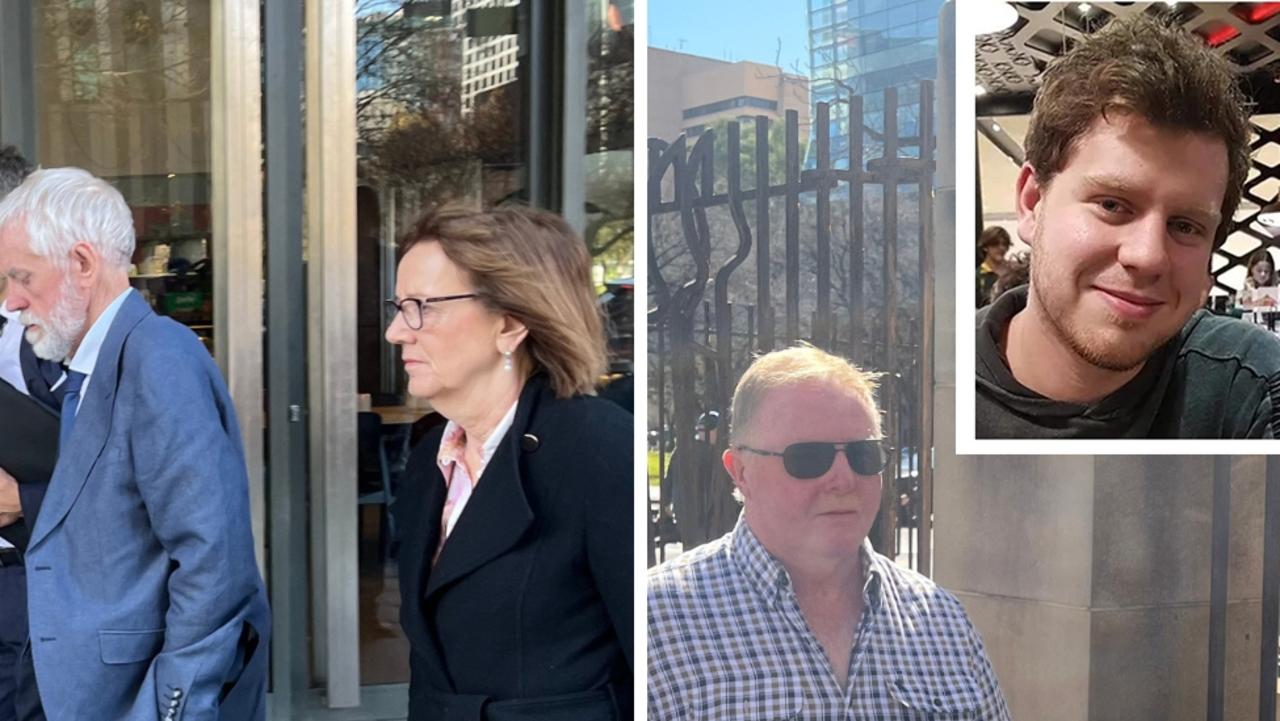
Nylastex Tooling bosses in court over worker’s death in landmark Adelaide case
South Australia has made legal history with its first-ever industrial manslaughter prosecution, stemming from the tragic 2024 death of a 28-year-old worker at a local manufacturing facility. The fatal incident unfolded on July 24 at Nylastex Tooling’s Edwardstown plant, where Lachlan Carslake was operating milling machinery when he was reportedly struck in the head by a loose metal object. He was rushed to a nearby hospital, where he later succumbed to his severe injuries.
Four defendants — company owners Graham and Winifred Philips, along with two linked entities Nylastex Tooling and Nylastex Holding — are facing the most serious charges in the case: counts of industrial manslaughter and recklessly exposing an employee to lethal risk. A third individual, Nylastex Tooling manager Graham Rowe, has been charged with two lesser offenses: failing to fulfill mandatory workplace health and safety obligations, and knowingly exposing a worker to the risk of death.
The case made its first official appearance at Adelaide Magistrates Court on Friday. During the brief preliminary hearing, all defendants stood together in the dock and were not required to enter pleas or make statements to the court. Prosecutors confirmed that all compiled evidence files had already been handed over to the defense legal teams, after which the judge adjourned the proceeding. None of the defendants addressed reporters from the media as they exited the courthouse.
This prosecution marks a watershed moment for South Australia’s workplace safety regulations. The charges were brought by SafeWorkSA under a recent amendment to the state’s Occupational Health and Safety Act, which formally added industrial manslaughter as an indictable offense carrying stiff penalties. Convicted individuals face a maximum prison sentence of 20 years, while companies found guilty of reckless or grossly negligent conduct leading to a worker’s death can be fined up to 18 million Australian dollars. The case is scheduled to return to court for further proceedings in October.
-
Tragedy as man, 34, dies after being trapped under van in alleged hit-and-run in Carlingford
A 34-year-old pedestrian hit in an alleged hit-and-run incident in Sydney’s northwestern suburb of Carlingford has passed away, four days after the crash left him trapped under a vehicle with life-threatening injuries.
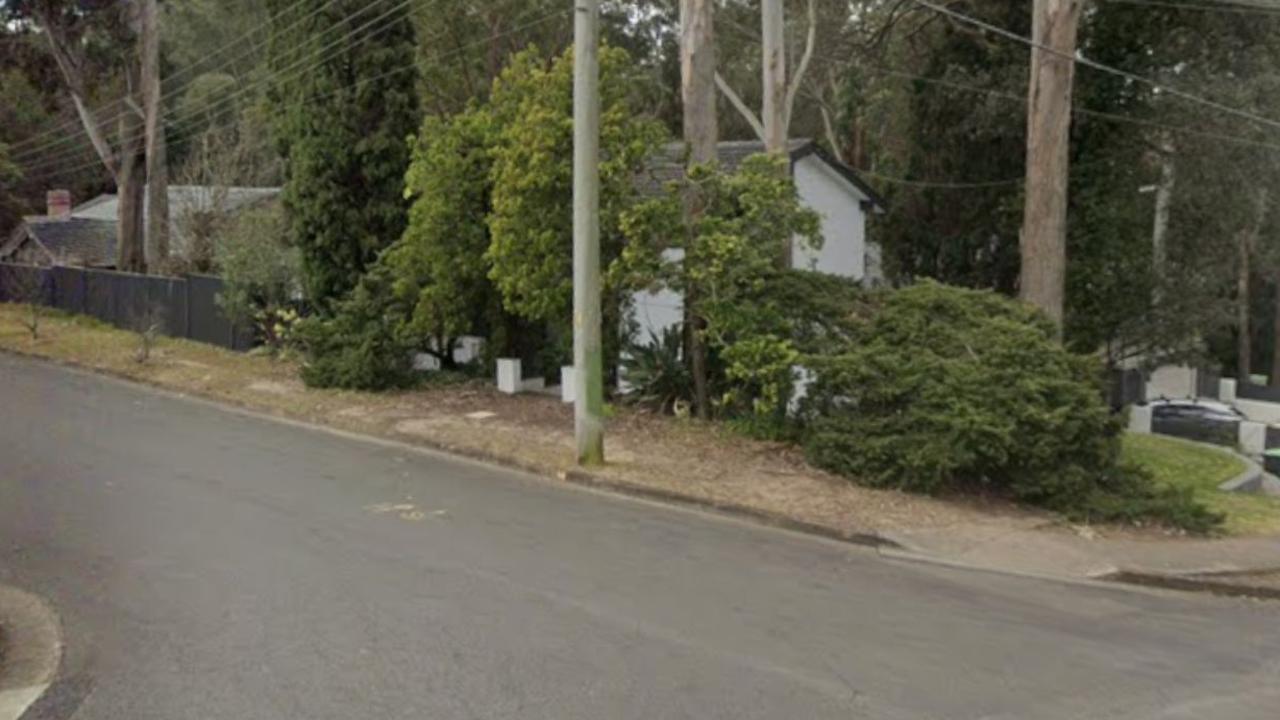
The tragedy unfolded just after 12:30 p.m. local time on Sunday, when Frederick Kipruto became wedged underneath a Nissan van at the intersection of Ferndale Avenue and Edinburgh Avenue. He remained trapped undetected for a period before emergency responders located him, administered on-site first aid, and rushed him by ambulance to Westmead Hospital. Despite urgent medical intervention, Kipruto, who suffered severe critical head trauma, succumbed to his injuries on Thursday evening.
News of Kipruto’s death was first confirmed by a member of the local community online. Tributes have quickly poured in for the 34-year-old, with close friend Maxwell Kiptanui Keter sharing a message of condolence on social media. “Our heartfelt condolences go to his family, relatives, friends, and the entire community during this very difficult time,” Keter wrote. “May Fredrick’s soul rest in eternal peace.”
According to New South Wales Police allegations, the driver of the van involved, identified as Jacob Kurui, fled the collision scene immediately after striking Kipruto, running into nearby dense bushland to avoid capture. He was eventually located and taken into custody at Castle Hill Police Station, where police say he refused to comply with a mandatory breath alcohol test.
Kurui was subsequently transported under armed police guard to Hornsby Hospital to complete the required testing. He has since been hit with three criminal charges: driving while disqualified, refusing to undergo breath test analysis, and failing to provide personal identification and collision details to responding officers.
The accused made his first court appearance at Parramatta Local Court on Monday, where a judge refused his application for bail. He is scheduled to reappear before the court on September 17 to face the charges against him.
-

Hunt on for newest millionaire as winning Weekday Windfall ticket sold in Adelaide
A life-changing $1 million lotto prize remains unclaimed in Adelaide, Australia, after a single ticket matched all Division One numbers in this week’s Weekday Windfall draw, official lottery operator The Lott has confirmed.
The winning entry was bought at Topz Shopz, a small local retailer located on Dorothy Street in Brahma Lodge, a suburban community north of Adelaide’s central business district. The mystery ticketholder is the only Division One winner of draw 4747, which took place on Wednesday, and has not yet stepped forward to claim their windfall.
Staff at the retail outlet are actively spreading the word among customers to jog the winner’s memory and encourage them to check their entry. Assistant manager Rebecca Schultz told reporters the whole team is buzzing with excitement while they wait for the winner to come forward. “It’s been a few years since this store sold a Division One winning ticket, but we’ve had luck here before – we previously sold two major winning entries, including one worth $13 million,” Schultz shared. “We’re telling every customer who comes through the door to double-check their tickets. A $1 million prize can completely change someone’s life, and we can’t wait for the lucky person to realize what they’ve won.”
The Lott’s spokesperson Khat McIntyre has issued an urgent appeal for anyone who bought a Weekday Windfall ticket at the Brahma Lodge Topz Shopz location to check their entry as soon as possible. “People often tuck their tickets away and forget about them – that winning slip could be sitting in your car’s glove compartment, buried at the bottom of your purse, or left on your bedside table waiting to be checked,” McIntyre said. The official winning numbers for draw 4747 are 7, 9, 10, 13, 22 and 29, with supplementary numbers 1 and 24.
This unclaimed windfall marks the 243rd Division One winner across Australia in 2024 so far, and the 21st in the state of South Australia. Lottery officials note that unclaimed prizes are held securely until the winner steps forward, and remind all players that tickets can be checked via the official Lott app, at any retail lottery outlet, or through the organization’s official website.