
Two days of crippling work stoppage that shut down large swathes of air travel across Kenya, including its busiest international gateway in Nairobi, has been brought to an abrupt end after union leaders and airport management brokered a last-minute agreement. The Kenya Aviation Workers Union, which launched the go-slow industrial action on Sunday, announced the immediate termination of the strike on Tuesday, confirmed union head Moss Ndiema. The walkout, which impacted not only Nairobi’s Jomo Kenyatta International Airport – a critical regional and international travel hub for East Africa – but also aviation operations across the country, left thousands of passengers trapped, with hundreds of flights canceled or delayed. Since the strike began, travelers have described chaotic scenes across airport terminals, with many forced to sleep on waiting room floors and miss critical personal and professional commitments. Among those stranded was Hellen Moraa, a business traveler who was scheduled to fly to the Netherlands via Dubai. Speaking to reporters at the airport on Monday, Moraa warned the unplanned disruptions would lead to significant financial losses for her, labeling the work stoppage an unfair burden for ordinary passengers. The root of the latest industrial action lies in long-simmering grievances from unionized aviation staff, who have raised complaints over what they call unfair hiring practices, uncompetitive compensation packages, and controversial proposed changes to the senior management structure of Jomo Kenyatta International Airport. The airport has a long history of repeated, intermittent labor unrest, as workers continue to push for meaningful improvements to both pay scales and working conditions. A comparable work stoppage back in February 2024 also left hundreds of passengers stranded at the hub, highlighting the ongoing instability that has plagued Kenya’s aviation sector for months. Following the announcement of the deal between the union and Kenya Airports Authority, aviation officials have begun the gradual process of clearing the backlog of stranded passengers and rescheduling canceled flights, though travelers are still being advised to expect residual delays over the next 24 hours as operations return to normal.
分类: society
-

In a scorching Spain, the traditional folding hand fan is having a moment
Across Spain’s packed metro carriages, sunbaked public squares, open-air festivals and crowded event venues, one iconic traditional accessory has made a striking resurgence this summer, driven by a string of record-breaking heat waves that have pushed temperatures across Western Europe to dangerous, sweltering highs. The abanico, Spain’s classic handheld folding fan, is compact enough to tuck into a purse or jacket pocket, and with a single flick of the wrist, it unfurls into a wide semicircle that generates a surprisingly cool, refreshing breeze without relying on batteries or electricity.
This summer, as successive heat domes sent temperatures climbing above 38 degrees Celsius (100 Fahrenheit) across much of the Iberian Peninsula, the abanico has cemented its status as an essential summer staple, embraced by people of all ages and genders both locally and among visiting tourists. Where once it was largely seen as a women’s accessory, more men are now carrying the fans, pulling them out to cool down on crowded public transit, at outdoor music concerts, and beneath the beating sun at summer festivals. During Madrid’s vibrant annual Pride celebrations in July, rainbow-patterned abanicos were ubiquitous across the city’s parade routes and gathering spaces.
On a sweltering August day in central Madrid’s Puerta del Sol, 20-year-old Ana Feliu spoke with the Associated Press while shielding herself from the sun with a lightweight paper abanico she received as a gift at a festival in Valencia. She carries one with her everywhere she goes during the summer months, noting that this particular fan is her favorite, but she maintains a large collection of different designs for different occasions. The Spanish capital had forecast highs of 39 degrees Celsius (102 Fahrenheit) for that Thursday and Friday, making constant cooling a daily necessity. Nearby, 53-year-old David González fanned himself with a vibrantly hued fan decorated in shades of pink, purple, and red. “At first, I felt a little self-conscious, because it’s something that’s mainly associated with women, but I have to admit it serves a purpose — and it brightens my day,” he explained.
The history of the folding fan in Spain stretches back hundreds of years, with deep global roots. Historians trace the accessory’s arrival in Europe to 15th and 16th-century Portuguese maritime trade routes connecting the continent to Asia, where handheld folding fans had been used for millennia. As folding fans grew fashionable among royal courts across Western Europe, Spain developed its own robust fan-making industry: Madrid emerged as an early production hub, and by the 18th century, Valencia had become the country’s undisputed fan-making capital. By the 1800s, the abanico was so deeply woven into Spanish aristocratic culture that women developed a subtle nonverbal “language of the fan,” using different movements and positions to discreetly communicate flirtation, romantic interest, or disapproval to others in social settings.
From Spain, the abanico traveled across the Atlantic to Latin America, and by the 19th century, it had become a core expressive prop for flamenco dance, shaped in part by Cuban musical and dance traditions like the guajira that influenced flamenco’s evolution. Over time, the fan’s close connection to flamenco turned it into one of the most recognizable quintessential symbols of Spanish culture. “The fan is a perfect element because, on the one hand, it evokes the heat and humidity of Cuba — that heavy, oppressive feeling,” explained Carmen Torres, a 44-year-old flamenco dancer based in southern Spain. “And at the same time, it gives us a way to bring out the seductive, coquettish quality that defines so much of the performance.”
For long-standing fan businesses across Spain, this summer’s heat waves have been a major boon, boosting sales to levels not seen in decades. At Casa de Diego, a wood-paneled fan shop in central Madrid that has been operated by the Llerandi family for more than 150 years, business has been booming this season. “We live from the heat,” said Javier Llerandi, the shop’s current owner. The store sells exclusively Spanish-made abanicos, ranging from simple two-tone wooden models priced around 30 euros ($35) to elaborate, hand-painted luxury pieces crafted from mother-of-pearl with intricate floral designs that can cost as much as 6,000 euros (nearly $7,000). Llerandi explains that prices shift dramatically based on the materials used, and even more so on the level of hand workmanship required for each piece. As Madrid has grown into a top global tourist destination, foreign visitors have become some of the shop’s most enthusiastic customers, drawn to the fan’s reliability compared to modern battery-powered portable coolers. “Battery-run items eventually run out of power, and always at the worst possible moment,” Llerandi said with a smile. “Without a doubt, heat waves are good for this business.”
For budget-focused shoppers and casual users, low-cost printed plastic or paper abanicos are available for just a few euros at street souvenir kiosks and market stalls across the country, and vendors across Madrid reported similarly strong sales this summer. Outside Madrid’s iconic Las Ventas bullring, for example, vendor Juani Duran sells wooden abanicos decorated with traditional floral patterns for five euros apiece ahead of bullfights, which take place in open-air stadiums where spectators often wear formal, layered attire. “You’ll usually find a hand fan in any woman’s pocket — and in some men’s, too,” Duran said ahead of a late-August bullfight. Acknowledging the more affordable quality of her stock, she added, “They’re not the best quality, but they’ll get you through the summer.”
-
Can pineapples thrive in Africa’s Sahel? A Burkina Faso farmer says the answer is yes
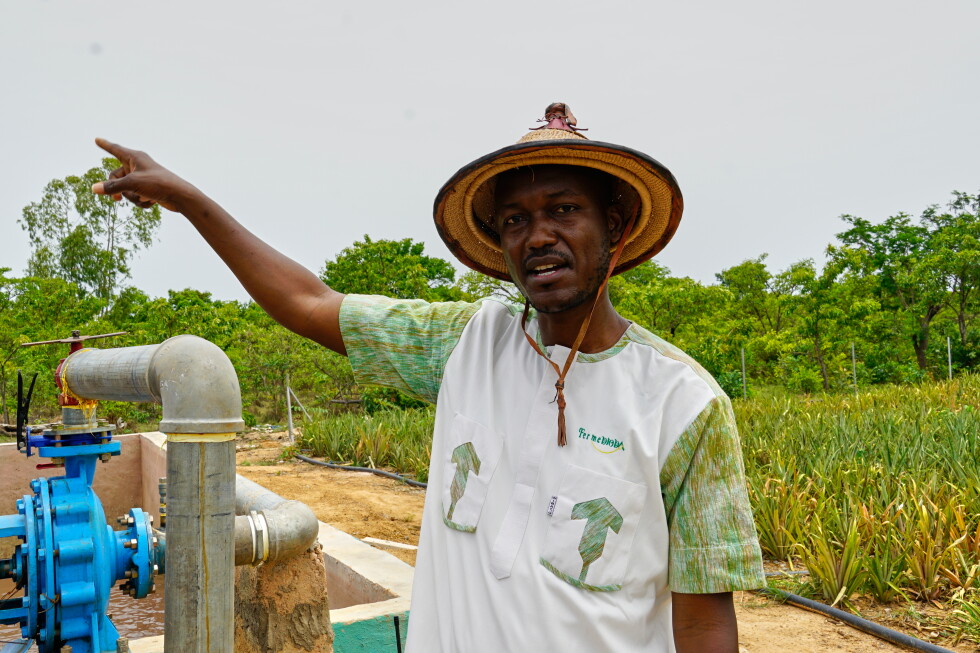
In the sun-scorched, sandy-stony plains outside Bobo-Dioulasso, western Burkina Faso, Oumarou Compaoré has defied long-held agricultural conventions to build one of the Sahel region’s first large-scale commercial pineapple operations – a project that has become a centerpiece of the landlocked West African nation’s growing push for food sovereignty amid climate volatility and economic instability.
For generations, conventional agricultural wisdom held that Burkina Faso’s dry, harsh Sahel climate could only support staple crops like cotton, maize and sorghum. Pineapples were widely seen as an exotic luxury import, grown exclusively by wealthier coastal neighboring countries and far out of reach for most local households compared to the ubiquitous mango that grows around many Burkinabe homes. But when border closures during the COVID-19 pandemic cut off supply chains and left fruit markets starved of stock, Compaoré – who had previously cultivated low-profit papayas – saw an opening. He launched his pineapple farm in 2018, branding himself the “Pioneer in pineapple production in the Sahel,” and the operation has since expanded to 50 hectares (124 acres) of productive farmland.
Compaoré’s unexpected success has captured the attention of Burkina Faso’s ruling military leadership, which has made expanding domestic agricultural production and cutting import dependence a core pillar of its national economic agenda under Captain Ibrahim Traoré, who took power in a 2022 coup. Traoré’s government has framed food production as a critical national sovereignty issue: it suspended rice imports in April 2024 to boost local output, inaugurated two domestic tomato paste factories that same year, and even launched a “buy local” campaign in major Ouagadougou supermarkets, where shelves dedicated to domestic goods – from shea butter and cassava flour to mango juice – bear the slogan “Let’s consume what we produce.”
These policy shifts come as Burkina Faso grapples with overlapping crises that have threatened food security for millions. Decades of reliance on imports have left the country vulnerable to global transport cost spikes and price shocks, while a 10-year long jihadi insurgency has seized control of large swathes of farmland, displaced hundreds of thousands of people, and disrupted market access. The United Nations estimates that 2.7 million Burkinabe face acute food insecurity during the annual lean season, when leftover harvest stocks run out and market prices hit their peak.
Against this backdrop, Compaoré’s pineapple initiative has inspired a growing wave of new farmers to enter the sector. While official national production data has not yet been published, regional agricultural director Adanabou Eric Pascal confirmed that total pineapple cultivation across the Houet administrative region – which includes Compaoré’s farm – had reached roughly 100 hectares (248 acres) as of November 2024. Kola Jean, an agricultural engineer who trains new growers at Compaoré’s farm, estimates more than 100 smallholder farmers have now launched their own pineapple operations.
One of those new entrants is Kaba Séré, a former nonprofit worker who switched to pineapple farming in 2023 after international aid cuts forced her out of her previous role. “We saw what Oumarou was doing and thought: It is possible, why not?” she said, after completing Compaoré’s cultivation training program. She has now expanded her operation to 60,000 seedlings, and says the profitable crop has allowed her to fully support her family. With pineapples still a relatively scarce commodity in local markets, growers report consistent demand, with many buyers purchasing fruit before it even reaches full maturity for harvest.
Still, the sector faces significant growing pains. Pineapples require up to two years to reach full harvest, and depend on consistent access to water and upfront investment in inputs like fertilizer, irrigation systems and reliable transport – costs many low-income smallholder farmers cannot cover. Compaoré relies on well water to irrigate part of his farm, but digging new wells is out of reach for most new producers. The Sahel’s increasingly harsh, hot and dry climate also creates growing challenges, though local agronomists have begun developing adaptation strategies, including evening irrigation with cool water to protect plants during extreme heat waves, according to Pascal Bazongo, a soil science professor at Burkina Faso’s University of Fada N’Gourma who advises Compaoré’s project.
Despite these hurdles, Compaoré remains optimistic about the future of domestic pineapple production. On recently acquired adjacent plots, 30 workers recently planted 60,000 new seedlings to expand his operation. He projects the new acreage will yield 60 to 75 metric tons of fruit, generating roughly $62,000 in revenue. Looking ahead, he says the potential for growth is far from exhausted: “We could even make the country self-sufficient in this fruit,” he said.
-
Nepal flood survivors fear loss of culture and community
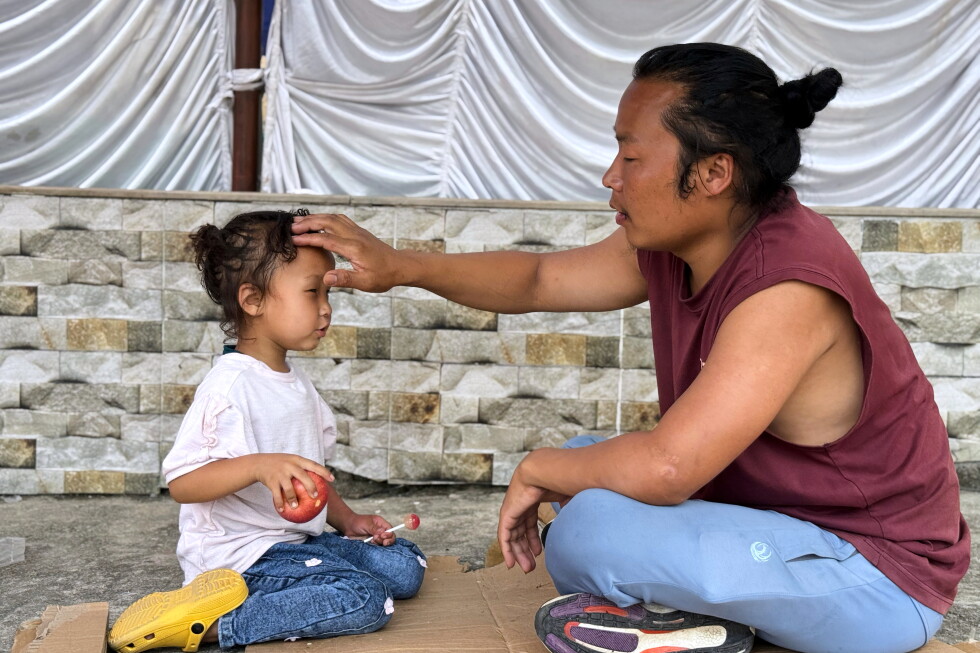
In a makeshift emergency shelter carved out of a Buddhist monastery in Kathmandu, Nepal’s capital, Tsering Gelbu Lama sits on the cold stone floor, brushing away unbidden tears. His 4-year-old daughter sits at his feet, unaware that her mother was swept to her death just days earlier when catastrophic floodwaters burst through mountain valleys along the Nepal-Tibet border. As he coaxes a spoonful of rice into the young girl’s mouth, his biggest fear reaches far beyond the loss of his wife and the home his family built on ancestral land: he has no idea how he will carry forward their centuries-old Indigenous cultural traditions to raise her in their faith and customs.
For Lama and hundreds of other flood survivors evacuated from remote Himalayan villages in Nepal’s northern Rasuwa district, the disaster has amplified a slow-burning crisis that was already eroding their community identities. Decades of outmigration of young people seeking education and work in Nepal’s cities have already weakened intergenerational transmission of local traditions. Now, the catastrophic floods have erased entire villages, swept away irreplaceable cultural heirlooms, destroyed restored religious sites, and killed dozens of community elders who carried oral knowledge of rituals, languages and customs — leaving displaced survivors questioning whether their unique way of life can survive at all.
“We’ve become homeless not only because we’ve lost our land — we’ve become homeless with our culture and tradition,” explained 36-year-old Tsering Sherpa, a Rasuwa native now staying at the Kathmandu monastery shelter, as he leaned against the stone steps of the building.
Nepal is one of the most ethnically diverse nations in South Asia, home to more than 120 distinct Indigenous and ethnic groups, many of which have preserved unique languages, ritual practices, and community festivals passed unchanged through hundreds of generations. Rasuwa district, tucked into the high Himalayan peaks along Nepal’s northern border with the Tibet Autonomous Region of China, is renowned for its tight-knit Indigenous Buddhist communities, whose unique cultural practices have even drawn international tourists to the region’s popular Tamang Heritage Trail, a trekking route that showcases local life and sacred traditions.
Survivors sheltering in Kathmandu still carry vivid memories of life before the floodwaters arrived. They describe villages nestled between steep forested hills teeming with bears, deer, and brightly colored butterflies, where rivers cut through lush green valleys. In shared photos and videos captured before the disaster, they show moments of daily cultural life: groups of women gathering to chop juniper for ritual incense, community members crafting new decorations for a local monastery that was being rebuilt, and men and women in vibrant handwoven traditional clothing dancing together during annual religious festivals.
“Now all of it is finished,” said 20-year-old Tenzin Dolma Ghale, a young survivor from Rasuwa.
When the floodwaters surged following heavy seasonal rains, residents described scrambling up steep hillsides to escape the rushing current, many finding temporary refuge in local monasteries that had only been rebuilt a year earlier — replacing structures that were completely destroyed in the devastating 2015 Gorkha earthquake that shook the Nepalese Himalayas. Most survivors had no time to grab belongings from their homes before evacuating; many were airlifted out by rescue helicopters with nothing more than the clothes on their backs. Others lost centuries-old family heirlooms that were meant to be passed down through generations, objects that carried both cultural and personal meaning for their communities.
The crisis of cultural preservation predates this year’s devastating floods, according to Alina Lama, a 26-year-old Rasuwa native who now volunteers at the Kathmandu shelter. For years, young people have left remote mountain villages for Nepal’s urban centers to access better education and job opportunities, drawn to the promise of more “modern” lives. This slow outmigration has already broken many intergenerational cultural ties: Alina Lama herself notes that she never learned many small, core details of her community’s traditions because she spent most of her young adulthood away from her village studying and working.
Now, the disaster has created an urgent new set of concerns, particularly for children who lost their parents in the floodwaters. “We don’t know who will teach them,” Alina Lama said.
International aid group Save the Children estimates that thousands of children across flood-affected regions are in need of urgent humanitarian assistance, though no official data has been released on how many children have been orphaned by the disaster.
For religious communities, the loss runs even deeper. With local Himalayan monasteries destroyed by floodwaters and many senior community monks — who carry specialized, localized knowledge of ritual practice — dead or displaced, key annual traditions are already at risk of disappearing. Tsering Sherpa points to the region’s important autumn Buddhist festivals, which for centuries have been held in local village monasteries, as an example of what the community stands to lose.
“We used to celebrate these festivals in our monasteries. Right now we don’t even have a monastery,” he said. “Culture and tradition are passed generation to generation by practice. If I can’t follow the tradition now, how can I pass it on to the next generation?”
This reporting on climate and environmental impacts on communities is supported by private philanthropic funding, with The Associated Press retaining full editorial control over all content.
-

The living care for ancestors and wandering spirits at Malaysia’s Hungry Ghost Festival
Nestled in the northern Malaysian state of Penang, the town of Bukit Mertajam comes alive every seventh month of the Chinese lunar calendar for one of Southeast Asia’s most enduring traditional Chinese religious celebrations: the Hungry Ghost Festival, centered on the veneration of Da Shi Ye, the Guardian God of Ghosts.
This year’s festival, which ran for 15 days from mid-August, traces its origins all the way back to 1888, when a devastating plague swept through Bukit Mertajam. In the wake of the outbreak, local Chinese ancestors established the ritual of worshipping Da Shi Ye to appease and care for wandering spirits, a practice that has remained uninterrupted for more than 135 years.
At the heart of the celebration stands a towering handcrafted effigy of Da Shi Ye, built from paper and bamboo. Following generations-old custom, the effigy is increased by roughly two centimeters every year. In 2025, the effigy stands at nearly 29 feet tall. For 69-year-old artisan Ng Chi Wong, who has devoted more than 40 years of his life to crafting these figures, the construction process is a masterclass in tacit tradition. A team of seven to eight builders spend roughly 45 days completing the work, with no formal blueprints to guide them. “Most of the design and construction details are already in our minds,” Ng explained. Builders start with the intricately detailed head, before assembling the bamboo frame, shaping the body, adding outer paper layers, and finishing with hand-painted details. While small incremental improvements have modernized minor parts of the process, Ng says the craft demands more than technical skill: artisans must also deeply understand the cultural and spiritual roots of the tradition to honor it properly.
Unlike Qingming Festival (Tomb-Sweeping Day), which centers on honoring one’s own family ancestors, the Hungry Ghost Festival extends care specifically to unclaimed wandering spirits—people who died with no surviving family members to pray for them or offer them sustenance in the afterlife. Lim Han Cong, a Chinese studies graduate from the University of Malaya, explains that the festival weaves together beliefs from Buddhism, Taoism, and Chinese folk religion. “At its core, the Ghost Festival expresses the belief that the living and the dead remain connected through enduring moral and emotional bonds,” Lim said. “The living, therefore, have a responsibility to honor, support and help the deceased attain peace.” During the festival, Taoist priests recite sacred scriptures and conduct ritual ceremonies to guide these lost spirits to peace and salvation.
This year’s festival culminated in the traditional ceremonial burning of the Da Shi Ye effigy, a ritual that symbolically sends the deity back to the spirit world. Lee Kim Fong, the event’s general affairs coordinator, estimates that more than 10,000 people attended this year’s closing ceremony, with peak crowds swelling to 20,000. Devotees travel to Bukit Mertajam not just from across Malaysia, but also from neighboring Singapore, Indonesia, and Thailand, mirroring similar celebrations held in Hong Kong, Singapore, and Taiwan.
Far from remaining a static ritual locked in the past, the century-old festival has evolved to take on new meaning and roles for the local Chinese community. Since the 1970s, organizers have integrated charitable community work into the festival’s schedule. Auctions of blessed ritual offerings and targeted fundraising campaigns generate funds that support low-income residents with urgent medical needs and sustain local Chinese-language education. “It has also become an important platform for strengthening community solidarity,” Lim noted, explaining that the celebration now extends far beyond its original spiritual purpose of honoring the dead.
To adapt to modern times and ensure the tradition can be passed to future generations, organizers have also embraced digital innovation. For devotees who live overseas or cannot travel to Bukit Mertajam for the festival, the committee has introduced online worship options, allowing participants to join prayers and submit offerings remotely. A professional media crew documented the entire 15-day 2025 celebration from August 14 to 29, and organizers plan to upload full footage to Facebook to make the Da Shi Ye festival accessible to audiences around the globe.
“As descendants of the Chinese community, we have a responsibility to preserve this 100-year-old tradition,” Lee said.
This report was contributed to by AP video journalist Syawalludin Zain, with Hernández reporting from Beijing. Associated Press religion coverage is supported through AP’s collaboration with The Conversation US, with funding from Lilly Endowment Inc. The AP holds sole responsibility for this content.
-

Watch: Moment Duane ‘Keffe D’ Davis is found guilty of Tupac Shakur’s murder
After nearly 30 years of speculation, unanswered questions and unproven conspiracy theories that gripped the hip-hop world and popular culture at large, a court has finally delivered a verdict in one of the most high-profile killing cases in modern entertainment history. Duane “Keffe D” Davis has been found guilty of the murder of iconic rap artist Tupac Shakur, marking the end of a decades-long investigation that had stumped law enforcement and fueled endless public debate.
Shakur, a cultural trailblazer whose work transformed hip-hop and cemented his legacy as one of the most influential artists of the 1990s, was fatally shot in a drive-by shooting in Las Vegas in September 1996. For nearly 27 years following his death, the case remained unsolved, with no arrests made and dozens of competing theories circulating about the circumstances of his killing and the parties responsible. The mystery surrounding Shakur’s death grew into one of the most enduring unsolved puzzles in modern popular culture, captivating true crime fans, music historians and casual observers alike for generations.
That stalemate broke in 2023, when law enforcement made their first arrest in the case, taking Davis into custody more than two and a half decades after the shooting. Davis, a former street gang leader who had long openly admitted to being in the car from which the fatal shots were fired, was charged with murder after years of new evidence gathering and investigative breakthroughs. After a trial that drew international media attention, the jury returned a guilty verdict, closing one of the most high-profile cold cases in American history.
-

Tandem bicycle club in Ecuador’s capital leads blind riders to new adventures
In the mountain-ringed capital of Quito, Ecuador, a 19-year-old community organization is redefining what freedom and inclusion mean for people living with visual impairment. What started as a spontaneous, one-off outing has grown into a thriving cycling collective that has opened up new worlds of adventure for more than 100 blind and low-vision residents across the country.
Franklin Ochoa, a 44-year-old Quito local who lost his vision 16 years ago, is one of the group’s most passionate and adventurous participants. Before losing his sight, he never imagined he would take on long-distance cross-country cycling challenges — but since joining Ciegocleta, a club whose name blends the Spanish words for “blind” and “bicycle,” he has already checked a 1,000-kilometer (621-mile) trip spanning most of Ecuador off his bucket list. For Ochoa, the feeling of rolling into a new town on two wheels brings unrivaled joy. “When I arrive on a bike in a new city I feel like shedding tears of happiness,” he shared. “I love speed and I always tell my guide to let go of the brakes.” His next ambition is even more ambitious: a multi-month overland ride from his home country all the way to Mexico, and he has already found a volunteer partner ready to join the journey.
The story of Ciegocleta begins with Miguel Ramos, a Quito resident who loved cycling and built his own custom tandem bikes in his spare time. Ramos originally constructed the multi-seat cycles to ride Quito’s popular weekly *ciclopaseo* — an event that closes major city avenues to motor vehicles, opening the space exclusively for cyclists and joggers — with his own children. Everything changed when one of his children was unable to join a ride, and he spontaneously invited his blind neighbor to take their place. That single outing turned into a regular tradition, and the informal group of tandem rides with sighted guides gradually evolved into the structured non-profit community Ciegocleta is today. The club now offers multi-seat bikes ranging from two-seat tandems to three and four-seat models that accommodate multiple visually impaired riders per trip.
Today, the organization counts 150 registered members, with roughly 30 riders turning out for the weekly Sunday rides that remain the club’s core activity. Before each public ride, the group prioritizes safety and mutual understanding: visually impaired participants receive detailed safety guidance, while participating sighted volunteers complete a perspective-shifting exercise, riding a short distance with their eyes covered to experience the vulnerability and trust their riding partners navigate on every trip. For long-time member Ximena Lozano, a 54-year-old psychologist who was born without sight, the club has transformed her daily life. After spending much of her younger years confined to indoor activities like reading, writing, and web surfing, Ciegocleta gives her a consistent reason to explore the outdoors. “It gives me the chance to experience freedom,” she explained.
The work of Ciegocleta fills a critical gap in accessibility for Ecuador’s visually impaired community. Official government data puts the total number of people living with vision impairment in the country at roughly 56,000. While blind Ecuadorians have made steady progress in accessing equal employment opportunities in recent years, inclusive access to recreational and sports activities remains a largely unmet need.
Volunteers say the experience of participating in the club is just as transformative for them as it is for the visually impaired riders. José Paéz, one of the club’s long-time volunteers, joined after his father-in-law lost his sight rapidly to illness and fell into depression. Bringing his father-in-law to the club’s free rides became a way to help him regain his joy for life. Even for experienced cyclists, guiding a tandem bike requires new skills and patience. “At first it felt scary to lead a blind person on a bike,” Paéz recalled. “Keeping a tandem bike balanced and sustaining the rhythm is not as easy as when you use a regular bike.”
For founder Ramos, the work of the club is about more than just cycling — it is a model for what genuine social inclusion looks like. “This is true inclusion,” he said. “We have blind people who are now enjoying cycling without any limits.”
-

US singer D4vd’s celebrity lawyers withdraw from murder case
In a major development in a high-profile Los Angeles criminal case, the team of high-profile celebrity attorneys that was set to defend rising US musician D4vd, legally known as David Anthony Burke, has formally withdrawn from the 21-year-old artist’s upcoming capital murder trial. The 21-year-old performer, who faces horrific charges including first-degree murder, sexual abuse of a minor, and mutilation of human remains, has now been assigned a court-appointed public defender from the Los Angeles County Public Defender’s Office to lead his defense.
Burke is accused of killing 14-year-old Celeste Rivas Hernandez in April 2025. Hernandez’s remains were discovered last September inside a Tesla registered to an address linked to Burke. Prosecutors have laid out a disturbing narrative alleging that after years of ongoing sexual abuse, Burke stabbed the teenager to death and dismembered her body to cover up the abuse. They argue the killing was motivated by financial and professional self-preservation: Hernandez had threatened to expose her underage relationship with Burke, a move that would have destroyed his multi-million-dollar music career. The case carries special circumstances tied to this alleged motive that make Burke eligible for the death penalty if convicted.
During a preliminary hearing held last month, court officials reviewed evidence of threatening text messages Hernandez sent to Burke days before her death. On April 22, 2025, amid an argument over Burke’s friendship with another minor, Hernandez sent a profanity-laden message reading, “I swear to GOD I will kill u,” followed by threats to strangle him, lie to her father about his actions, and “end ur career and ur life.” Prosecutors say that the day after these threats were sent, Burke arranged for an Uber to pick up Hernandez and bring her to his Hollywood home, where he allegedly carried out the killing.
Last month, a judge ruled that there was sufficient evidence to move forward with a full murder trial. During Monday’s court proceeding, charges were formally read to Burke, and he formally re-entered his not guilty plea to all counts. The three lead defense attorneys — Blair Berk, Marilyn Bednarski, and Regina Peter — confirmed their exit from the case in an official statement shared with the BBC, noting that the court had granted their request to withdraw and that Burke meets eligibility requirements for court-appointed counsel.
Berk, the lead attorney on the original team, is one of the most well-known criminal defense attorneys in the entertainment industry, having previously represented high-profile clients including actor Mel Gibson, disgraced film producer Harvey Weinstein, pop icon Britney Spears, and actress Lindsay Lohan. In their statement, the outgoing legal team reaffirmed their support for Burke, saying, “We continue to support David and his defense against these serious charges. We are grateful that the Los Angeles County Public Defender’s Office has taken over the representation and that David has a highly capable and committed team of attorneys and investigators behind him.”
Walid Kandeel, a deputy public defender now leading the defense, emphasized the core right to counsel in the American justice system in an official statement. “Burke is entitled to a defense that takes his circumstances seriously and carefully examines the evidence,” Kandeel said, adding, “We are committed to providing him with that defense.” A pretrial hearing to outline next steps for the case is scheduled for October 19, with a full criminal trial expected to begin at a later date.
-

Yemen’s traditional arms trade has evolved into a modern, internet-driven marketplace
For generations, weapon ownership has been far more than a personal choice in Yemen—it is a deeply ingrained cultural pillar that shapes social hierarchy, where a high-end Kalashnikov or premium handgun signals a man’s social standing, and those without firearms are often pushed to the margins of community respect. Even as segments of the educated population push back against this unwritten social rule, the tradition remains firmly embedded in Yemeni daily life, and is now undergoing an unexpected digital transformation.
-

Company offering reward for safe return of truckload of beer
A brazen cargo theft at a Southern California distribution center has left iconic brewer Pabst Brewing Company turning to the public and social media to recover thousands of pounds of stolen Pabst Blue Ribbon (PBR) beer, worth an estimated $25,000. The incident, which unfolded on August 17 at Anheuser-Busch’s Montclair distribution facility, is one of two linked cargo heists pulled off the same day that have law enforcement investigating a potential coordinated fraudulent theft ring.
According to Montclair Police Department officials, the alleged perpetrator gained access to the PBR shipment by presenting falsified pickup documentation. The 18,144-kilogram (40,000-pound) load was bound for retailers in San Diego when it was driven off the lot. The theft occurred just one hour after a separate, similarly fraudulent pickup of a cargo shipment valued at $45,000 that was en route to Tucson, Arizona. To date, that first shipment remains missing two weeks after it was supposed to arrive at its destination.
Investigators have confirmed multiple key similarities between the two incidents, noting that all details provided for the supposed trucking company, driver, and vehicles involved contained significant inconsistencies that are still being probed. While Pabst Brewing is an independent brand, it holds a production contract with Anheuser-Busch that sees the lager brewed at Anheuser-Busch facilities, including the Montclair center. It has not yet been confirmed whether the missing Arizona-bound shipment also contained PBR products.
A company spokesperson clarified to CBS News, a partner of the BBC, that the theft was carried out by a single bad actor who impersonated the authorized carrier scheduled to collect the shipment before driving away with the full load.
In a playful yet earnest social media appeal, Pabst has leaned into its brand identity while asking for the public’s help locating the stolen beer. The company acknowledged the situation sounds inherently absurd, but emphasized that it is treating the theft with full seriousness. “We realise how ridiculous that sounds, but it’s the truth,” the company shared in its public post. “This is real and we are deadly serious.”
In a lighthearted nod to its founding year, Pabst extended a limited amnesty offer to the thief, giving them exactly 18 years and 44 minutes to return the full shipment with no questions asked. Beyond the amnesty window, the brewer has also put up an unspecified reward for any tip that leads to the safe recovery of the stolen PBR load. Law enforcement is continuing to work through inconsistencies in the fraudulent paperwork and vehicle details to identify the perpetrators behind the linked heists.