分类: society

  • Paomapai pageantry puts hamlet in national spotlight

    Paomapai pageantry puts hamlet in national spotlight

    Nestled in the mountainous terrain of Shanxi province, the remote village of Xiadongzhai has captured national attention through its preservation of an extraordinary cultural tradition. The ancient practice of Paomapai—a breathtaking bareback horse-riding ceremony—has transformed this community of approximately 200 residents into a focal point of cultural heritage conservation.

    On March 4th, corresponding with the sixteenth day of the first lunar month, the village erupted in vibrant celebration as participants honored the Year of the Horse through daring equestrian displays. Forty-five-year-old Dong Jinxiang, a truck driver by profession, led this year’s procession with exceptional skill, maintaining perfect balance without saddle or stirrups along ancient narrow paths that echo the region’s historical significance.

    The origins of Paomapai trace back to the late Eastern Han Dynasty (25-220 AD), when the area served as a critical military corridor connecting Shanxi, Hebei, and Henan provinces. Military messengers, pressed by wartime urgency, developed the technique of riding without saddles to maximize speed and efficiency. Over centuries, this practical military necessity evolved into a cherished cultural tradition, now boasting over a millennium of continuous practice.

    Recent years have brought significant recognition to this unique heritage. In 2021, Paomapai achieved designation as a national intangible cultural heritage, followed by its inclusion in UNESCO’s Representative List of the Intangible Cultural Heritage of Humanity in 2024 as part of the broader ‘Spring Festival—Chinese New Year Celebrations’ project.

    The ceremony follows meticulously preserved rituals beginning with the sounding of ceremonial gongs. The first gong prompts villagers to spread ash and sand to level pathways, the second signals mounted ‘lamp officials’ to inspect the route, and the third initiates the main event. The celebration features drum troupes, yangge dancers, and traditional shehuo performers, creating an immersive cultural experience that connects contemporary participants with ancient traditions.

    Dong Jinxiang, who began riding at age 14, represents the continuity of this cultural legacy. ‘This year marks my first time leading the charge,’ he remarked. ‘It means greater responsibility and improved fortune.’ His succession of previous messenger Dong Huping demonstrates the intergenerational transmission of knowledge that sustains this living heritage.

    The international recognition and subsequent media attention have provided Xiadongzhai with unprecedented visibility, showcasing how ancient traditions can thrive in modern contexts while maintaining their historical authenticity and cultural significance.


  • Healing scars

    Healing scars

    In the war-ravaged northern Sheikh Radwan neighborhood of Gaza City, a powerful symbol of resilience emerges daily just before sunset during Ramadan. A sandy field, once buried under the rubble of homes destroyed by Israeli military operations, now hosts the revived ‘Neighborhood League’—a grassroots football tournament providing a crucial sense of normalcy for Palestinian youth.

    The players, many competing barefoot due to the scarcity and high cost of sports shoes, clear the pitch themselves amidst uneven terrain and scattered debris. Spectators form human boundaries along the edges, while shattered walls serve as makeshift stands. The tournament follows a distinctive format: five-player teams (one goalkeeper, four outfield players) compete in two 30-minute halves. A team scoring two goals before regulation automatically wins, with penalty kicks deciding tied matches.

    For 20-year-old Hamdi al-Shamali, the games represent more than sport. ‘Playing football is a way to feel a sense of freedom,’ he explained. After two years of suspension due to war, destruction, displacement, and economic hardship, he and his peers spent long hours clearing broken concrete and transporting beach sand to level the ground. ‘This place was full of broken concrete and debris,’ al-Shamali recalled.

    The emotional significance runs deeper than competition. Eighteen-year-old Samer al-Kahlout, who lost both brothers in an Israeli airstrike, finds returning to the field emotionally challenging. ‘Everything reminded me of them,’ he shared. Yet through courage, he now plays in their memory: ‘Football is no longer just a game for me. It is a way to release what is inside. I dedicate every goal to my brothers.’

    Sixteen-year-old goalkeeper Othman Harara, who lost a hand when his home collapsed during the conflict, guards the goal with a single glove and quick movements. His participation carries profound meaning: ‘Playing football shows that we are still here.’

    Elder residents like Tawfiq Abu Assi, who has followed the tournaments for years, draw hope from the spectacle. ‘When I see the young people playing despite the difficulties,’ he observed, ‘I feel that Gaza is still alive.’ Amidst overwhelming loss and trauma, this simple football league becomes an act of psychological healing and community defiance.

  • Authorities intensify crackdown on counterfeit goods

    Authorities intensify crackdown on counterfeit goods

    In a significant move preceding the 44th World Consumer Rights Day, China’s judicial and market regulatory authorities have launched coordinated efforts to combat counterfeit and substandard goods nationwide. The Supreme People’s Procuratorate (SPP) and Supreme People’s Court (SPC) have released landmark case studies demonstrating their intensified approach to protecting consumer rights and punishing offenders involved in production and distribution of fraudulent products.

    Prosecutorial data reveals substantial enforcement actions throughout 2025, with nationwide organs approving arrests of 5,745 suspects involved in counterfeit goods operations while prosecuting 18,376 individuals. Food and drug safety received particular emphasis, with prosecutors bringing charges in 5,026 food-related criminal cases involving 9,595 people and 2,135 drug-related cases involving 4,043 individuals.

    One illustrative case from Jiangsu province involved a criminal enterprise that established two companies between 2021-2023 to produce and distribute snacks containing illegal additives with laxative effects. The operation distributed products through e-commerce platforms to over 20 provincial regions, generating approximately 26 million yuan ($3.77 million) in sales. In March 2025, three primary perpetrators received prison sentences ranging from 5.5 to 11.5 years alongside substantial financial penalties.

    The SPP has committed to tracing complete upstream and downstream supply chains of counterfeit operations, dismantling criminal networks through enhanced inter-agency coordination and improved administrative-criminal justice linkages. Simultaneously, the SPC released typical consumer protection cases, including one where courts upheld punitive damages equal to ten times the purchase price against a merchant selling weight-loss products containing prohibited ingredients after the associated company had lost its business license over a decade prior.

    Concurrently, the State Administration for Market Regulation and Ministry of Public Security have initiated a specialized nationwide campaign targeting fraud in traditional crafts markets. This initiative addresses widespread misconduct including forged inspection certificates,虚假 marketing schemes, counterfeit institutions, and inferior products misrepresented as premium goods in sectors such as jewelry, precious metals, and rosewood artifacts.

    Judicial authorities emphasize that creating a safe, fair, and trustworthy consumption environment remains a priority, with continued focus on emerging challenges in online commerce, new business sectors, and food and drug safety through timely judicial interpretations and standardized development protocols.

  • Man charged after allegedly letting child, 9, drive car unrestrained on major NSW highway

    Man charged after allegedly letting child, 9, drive car unrestrained on major NSW highway

    New South Wales police have initiated legal proceedings against a 45-year-old man following a disturbing highway incident involving improper child supervision and vehicle operation. Advanced seatbelt detection technology allegedly captured the man’s nine-year-old child steering his vehicle while traveling unrestrained on the Great Western Highway at Mount Lambie.

    According to official statements from NSW Police, investigators determined the driver was experiencing significant fatigue during the incident. The adult male reportedly operated the vehicle’s pedals while the minor controlled the steering mechanism. The child was not properly restrained and was positioned on the driver’s lap during this dangerous episode.

    The incident, initially detected on March 7, prompted immediate investigation by Walgett Highway Patrol officers. Following thorough inquiries, law enforcement officials located and questioned the alleged offender at a Lightning Ridge property. The man now faces multiple charges including reckless and negligent driving, operating a vehicle without proper control, and transporting a passenger without appropriate safety restraints.

    This case emerges alongside significant upgrades to NSW’s traffic monitoring capabilities. Since February, enhancements to mobile phone and seatbelt detection cameras have enabled authorities to identify violations in both traffic directions simultaneously. Transport for NSW Secretary Josh Murray emphasized the life-saving potential of these technological improvements, noting behavioral changes already observed among drivers regarding seatbelt usage and phone distraction prevention.

    The comprehensive camera system update commenced rollout in March and will continue implementation across New South Wales over a six-month period. The accused individual is scheduled to appear before Walgett Local Court on April 28 to answer the charges.

  • Laptop found in search for missing Brazilian woman

    Laptop found in search for missing Brazilian woman

    British authorities in Essex are intensifying their investigation into the disappearance of Vitoria Figueiredo Barreto, a 30-year-old research psychologist from Brazil who vanished under mysterious circumstances nearly two weeks ago. The search operation has yielded significant evidence, including the recovery of her personal laptop and crucial CCTV footage that may hold clues to her whereabouts.

    Barreto was last in communication with her family on March 3rd and was officially reported missing the following day. According to Essex Police, surveillance footage captured at Brightlingsea boatyard at 00:16 GMT on March 4th shows an individual believed to be Barreto jumping over a fence into the facility. Investigators theorize she may have taken a boat from the premises, which was subsequently discovered adrift near Bradwell-on-Sea. The vessel was found to be missing a distinctive horseshoe-shaped buoyancy aid.

    The investigation expanded on March 14th when police discovered Barreto’s laptop in the coastal town of Brightlingsea, where she had traveled by bus on the day of her disappearance. Authorities are currently pursuing multiple potential sightings in the Bradwell region while appealing to the public for additional information.

    Barreto, hailing from the coastal city of Fortaleza in northeastern Brazil, had recently attended a conference in Morocco before arriving in the United Kingdom on February 2nd. She had been residing with friend Liliane Silva while conducting research at the University of Essex in Colchester.

    Her family has initiated a unique outreach effort, urging the Brazilian community in Essex to display national flags in hopes of attracting Barreto’s attention and making her feel secure should she see them. Detective Superintendent Anna Granger emphasized the department’s commitment: “Every single officer, staff member and volunteer involved in this search would love nothing more than to reunite Vitoria with her mum – and we’re working around the clock to do that.”

    The police have acknowledged strong community support in both raising awareness of Barreto’s disappearance and assisting her family during the investigation. Authorities continue to urge anyone with information regarding potential sightings or relevant CCTV footage to come forward immediately.

  • ‘Rein in your heart’: I.Coast women trapped by divorce taboo

    ‘Rein in your heart’: I.Coast women trapped by divorce taboo

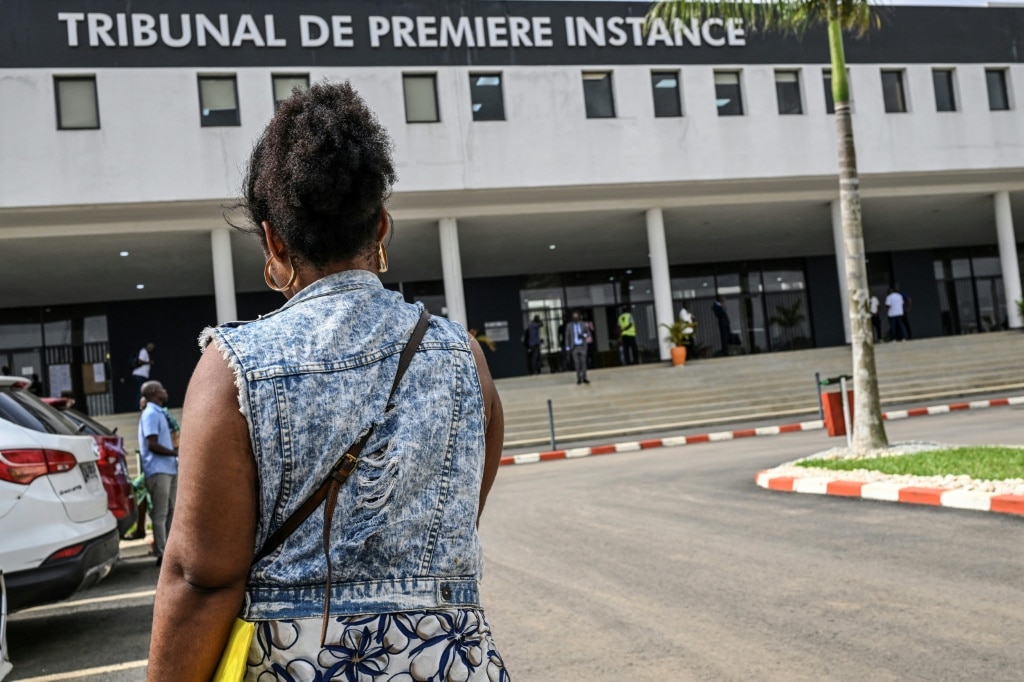
    In Ivory Coast, a powerful social taboo against divorce creates a prison of silence for countless women trapped in unhappy marriages. Despite discovering her husband’s infidelity and crippling debts three years ago, healthcare professional Josy remains bound to her marriage by overwhelming societal pressure. “In Africa, a divorced woman is singled out,” she explains, echoing the traditional advice to “rein in your heart” that keeps women in untenable situations.

    Official statistics reveal the stark reality: Ivory Coast maintains an exceptionally low divorce rate, with only 1,835 divorce petitions filed against 30,912 marriages in 2024. This disparity stems from a complex web of cultural, financial, and institutional barriers that disproportionately affect women.

    Anne Bera-Dasse, a family law attorney with over thirty years of experience, identifies the cumbersome judicial process as a significant deterrent. Divorce proceedings, particularly those contested, can extend for years while accumulating substantial legal costs. Financial dependency further complicates matters, as many women abandon careers upon marriage or lack economic autonomy.

    Nina, a 40-year-old woman whose husband left with three of their four children five years ago, embodies this financial trap. “I really want a divorce but I can’t afford it,” she admits, struggling even to maintain contact with her children.

    Corine Moussa Vanie, chair of Akwaba Mousso (an organization supporting victims of gender-based violence), emphasizes that Ivorian society prioritizes marital appearance over personal fulfillment. “Even if you have degrees, for a woman the pinnacle of success is marriage,” she notes, adding that families often encourage daughters to endure hardship to maintain social standing.

    Yet a growing feminist consciousness challenges these norms. Yacine, 42, emerged from a two-year legal battle transformed. “Today my children are happy… to see me happy,” she reflects, having reclaimed her health and peace of mind. Her journey required navigating an unfamiliar legal system alone, facing intrusive questioning in court—a taxing experience that nonetheless liberated her from living for others’ approval.

    While Yacine now cautiously entertains new romantic prospects, her primary commitment remains: “I want to live for myself.” Her story represents a quiet revolution against the stigma that continues to silence most Ivorian women, who choose suffering over social condemnation in a society where marriage signifies success regardless of its actual conditions.

  • Xi replies to French teens’ China dream

    Xi replies to French teens’ China dream

    In an extraordinary display of cultural diplomacy, Chinese President Xi Jinping has personally responded to a group of French students who expressed their fascination with Chinese language and culture. The correspondence began when more than twenty teenagers from Ecole Internationale PACA in southern France composed a collective letter to President Xi, sharing their enthusiasm for Mandarin studies and their aspiration to visit China.

    The students, primarily high schoolers enrolled in Chinese-language courses, initiated the communication after learning about French President Emmanuel Macron’s planned delegation to China. Their teacher, Hu Peixin—the institution’s first Chinese instructor—facilitated the unusual diplomatic outreach that culminated in Thursday’s historic response from Beijing.

    President Xi’s reply emphasized China’s welcoming stance toward international youth, explicitly inviting these French students along with their European peers to experience China’s multidimensional reality through educational visits and tourism. The Chinese leader highlighted the growing global significance of Mandarin, noting that by September 2025, 86 nations had integrated Chinese into their national curricula, with over 200 million international learners worldwide.

    Seventeen-year-old Isis Dauvillier expressed profound honor at receiving the presidential response, stating, ‘We genuinely wish to witness China’s architectural marvels and cultural sites previously known only through textbooks.’ Despite initial difficulties with character recognition, Dauviviller and her classmates have progressed to reading Chinese news reports, enhancing their historical understanding.

    Sixteen-year-old Arnaud Quintas, who began systematic Chinese studies five years ago, anticipates visiting Sichuan’s giant panda reserves and discussing technological advancements with Chinese counterparts. School director Nicolas Debenne described the presidential communication as emotionally overwhelming, emphasizing that ‘as ordinary citizens, we never anticipated correspondence from a president.’

    Debenne further articulated the transformative power of language acquisition in building international bridges: ‘When you share a language, communication becomes significantly more effective. This linguistic connection represents a crucial pathway for strengthening Franco-Chinese friendship.’ The school administrator noted that Mandarin studies have not only improved academic performance but also fostered greater awareness of China’s global contributions and research achievements.

    Teacher Hu Peixin believes this exchange will become a cherished memory that broadens students’ worldview and boosts their confidence in pursuing global opportunities. The incident reflects deepening bilateral relations and growing European interest in Chinese language acquisition as a tool for enhanced economic, diplomatic, and cultural connectivity.

  • Ten killed in fire at India hospital intensive care unit

    Ten killed in fire at India hospital intensive care unit

    A devastating overnight fire at SCB Medical College and Hospital in Cuttack, Odisha has resulted in ten fatalities, with all victims confirmed as patients receiving treatment in the trauma care intensive care unit. The blaze, which ignited approximately at 02:30 local time on Monday (21:00 GMT Sunday), is preliminarily attributed to an electrical short circuit.

    State Chief Minister Mohan Charan Majhi confirmed that eleven hospital staff members sustained burn injuries during heroic rescue attempts to evacuate patients from the rapidly spreading flames. These personnel, including medical staff and security, reportedly ‘risked their lives’ during the emergency operation according to the Chief Minister’s statements to press representatives.

    The fire primarily affected the trauma care ICU while also spreading to adjacent intensive care units and patient wards. Emergency response teams successfully brought the conflagration under control, with evacuated patients relocated to other departments within the same medical facility—one of Odisha’s largest government-run hospitals.

    This incident represents the latest in a series of tragic hospital fires across India. Historical precedents include last October’s ICU fire in Rajasthan that killed six critically ill patients, the 2024 neonatal ICU blaze in Jhansi that claimed ten newborn lives, and separate 2021 fires in Virar and Maharashtra that resulted in 13 COVID-19 patient fatalities and 10 infant deaths respectively.

    The Odisha state government has announced financial compensation for victims’ families and initiated a judicial inquiry into the incident. Chief Minister Majhi pledged strict action against any parties determined responsible for the tragedy.

    Electrical short circuits remain a predominant cause of hospital fires throughout India, with medical facilities presenting particular vulnerability due to extensive electrical equipment, oxygen systems, and the inherent challenges of evacuating immobile patients during emergencies.

  • Filipinas seek abortions online in largely Catholic nation

    Filipinas seek abortions online in largely Catholic nation

    In the predominantly Catholic Philippines, where abortion carries severe criminal penalties, women are increasingly turning to clandestine online networks to terminate pregnancies despite grave health risks. The nation’s strict prohibition drives an underground digital marketplace where unregulated providers operate with impunity, creating a public health crisis that remains largely unaddressed by authorities.

    Jane (pseudonym), a 31-year-old Manila resident, described her traumatic experience with an unlicensed online provider who inserted abortion pills without anesthesia. “It felt like my abdomen was being twisted,” she recounted, adding that she endured months of pain and complications while fearing legal repercussions. Like thousands of Filipinas, Jane sought online solutions due to the absence of legal alternatives, despite the nation’s 2012 Reproductive Health Law theoretically guaranteeing contraceptive access and sex education.

    The Catholic Church maintains absolute opposition to abortion, with Father Dan Cancino of the Catholic Bishops’ Conference stating the institution “will always oppose abortion and its applications” based on preserving human dignity. This religious influence has shaped legislation and healthcare policies, resulting in restricted emergency contraception and allowing medical professionals to refuse services on conscientious grounds.

    Healthcare advocates report alarming consequences: over 250 daily hospitalizations from unsafe abortion complications, with approximately three women dying each day. Junice Melgar of Likhaan Center for Women’s Health notes that even post-abortion care remains inconsistently provided due to providers’ fears of legal consequences, creating “a chilling effect” across the medical community.

    Despite recent parliamentary efforts to investigate online abortion providers, advocates argue criminalization only exacerbates the crisis. Clara Padilla of the Philippine Safe Abortion Advocacy Network emphasizes that most abortion seekers are married women with multiple children facing economic hardship, not the scenarios typically considered in limited exceptions. “People need this healthcare to save their lives,” Padilla asserts, challenging the moral arguments against abortion with practical health concerns.

    As the digital underground expands, women like Jane continue weighing legal risks against desperate circumstances. “When discussing abortion in the Philippines, people forget it’s fundamentally a health issue,” Jane concluded. “This is my body, my health, my life—the decision should be mine.”

  • Victoria to pay $125m to settle class action brought by businesses over Covid lockdowns

    Victoria to pay $125m to settle class action brought by businesses over Covid lockdowns

    The Victorian government has reached a landmark $125 million settlement with businesses impacted by the state’s controversial 2020 COVID-19 lockdown measures. The resolution comes after an intensive 12-week trial was unexpectedly postponed in Victoria’s Supreme Court just six days prior to the scheduled proceedings.

    Legal representatives from Quinn Emanuel Urquhart & Sullivan, who spearheaded the class action lawsuit, confirmed the settlement was finalized on the eve of the trial. The case alleged governmental negligence in the administration of hotel quarantine protocols, which plaintiffs contended directly triggered the devastating second wave of infections that necessitated extended lockdowns from July to October 2020.

    Originally, approximately 16,000 businesses had registered for participation in the lawsuit, with initial damage estimates reaching a staggering $2.6 billion. Legal experts had characterized the case as particularly novel and complex due to its unprecedented nature and legal challenges.

    Damian Scattini, a partner at the representing law firm, characterized the settlement as concluding “years of hard-fought litigation” that acknowledged the extraordinary difficulties faced by retail businesses during the specified period. He expressed hope that the compensation would provide meaningful relief to eligible enterprises affected by the lockdown measures.

    The settlement structure allocates 30% of the total amount toward covering legal expenses and litigation funding costs. Final approval of the settlement remains pending review and authorization by Victoria’s Supreme Court, marking the last procedural step in this significant legal proceeding.