分类: society

  • Arrest after man in his 60s dies in suspected assault

    Arrest after man in his 60s dies in suspected assault

    A homicide investigation is underway in County Donegal following the death of a man in his 60s during an apparent assault. The incident occurred in a residential property near Ardara in the early hours of Monday morning.

    Irish law enforcement, An Garda Síochána, responded to an emergency call at approximately 3:50 AM local time. Upon arrival at the scene, medical personnel pronounced the victim deceased. The location has been secured for forensic analysis by the Garda Technical Bureau, with the State Pathologist’s office notified to determine the exact cause of death.

    In a significant development, police have taken a man in his 30s into custody following his arrest at a separate location. The suspect is currently detained at a County Donegal Garda station for questioning regarding the fatal incident.

    Law enforcement authorities have established a dedicated incident room at Ballyshannon Garda Station to coordinate the investigation. A senior investigating officer has been appointed to lead the case, demonstrating the seriousness with which authorities are treating this matter.

    The human impact of this tragedy is being addressed through the assignment of a family liaison officer to support the deceased’s relatives during this difficult time. Investigators are appealing to the public for any information that might assist their inquiry into this devastating event.

  • 1.6°C recorded in UAE: Temperatures to fall slightly, but it will feel colder

    1.6°C recorded in UAE: Temperatures to fall slightly, but it will feel colder

    Meteorological authorities in the United Arab Emirates are advising residents to prepare for a perceptible increase in cold conditions despite minimal actual temperature drops. According to the National Centre of Meteorology (NCM), while thermometers show only slight declines of 1-3 degrees Celsius, fresh north-westerly winds are creating significantly colder sensations across the region.

    Dr. Ahmed Habib, NCM meteorologist, explained that wind patterns originating from northern directions have become increasingly influential since Sunday, initially affecting coastal waters before moving inland. These atmospheric conditions are generating rough to very rough seas in the Arabian Gulf while amplifying the subjective experience of cold on land.

    The western regions, particularly Al Dhafra area, have already recorded temperatures plunging to 1-3°C, with elevated mountain zones like Jebel Hafeet and Jebel Jais experiencing even lower readings due to their altitudes exceeding 1,000 meters. Raknah, north of Al Ain, demonstrated the most pronounced cooling effects last Friday when light frost formed following cold winds, continuing its reputation as the UAE’s coldest hotspot.

    Weather patterns are expected to shift temporarily after Monday, with easterly and north-easterly winds potentially raising temperatures by 1-3 degrees on Tuesday and Wednesday. However, another temperature dip accompanied by fresh winds is forecast toward week’s end, maintaining the heightened cold perception.

    The NCM has additionally predicted possible light rainfall over islands and western Arabian Sea areas mid-week, along with fog formation probabilities, particularly in western UAE territories. These conditions represent typical winter patterns for the region, though wind effects are making this season feel particularly brisk.

  • Teahouses turn nostalgia temples

    Teahouses turn nostalgia temples

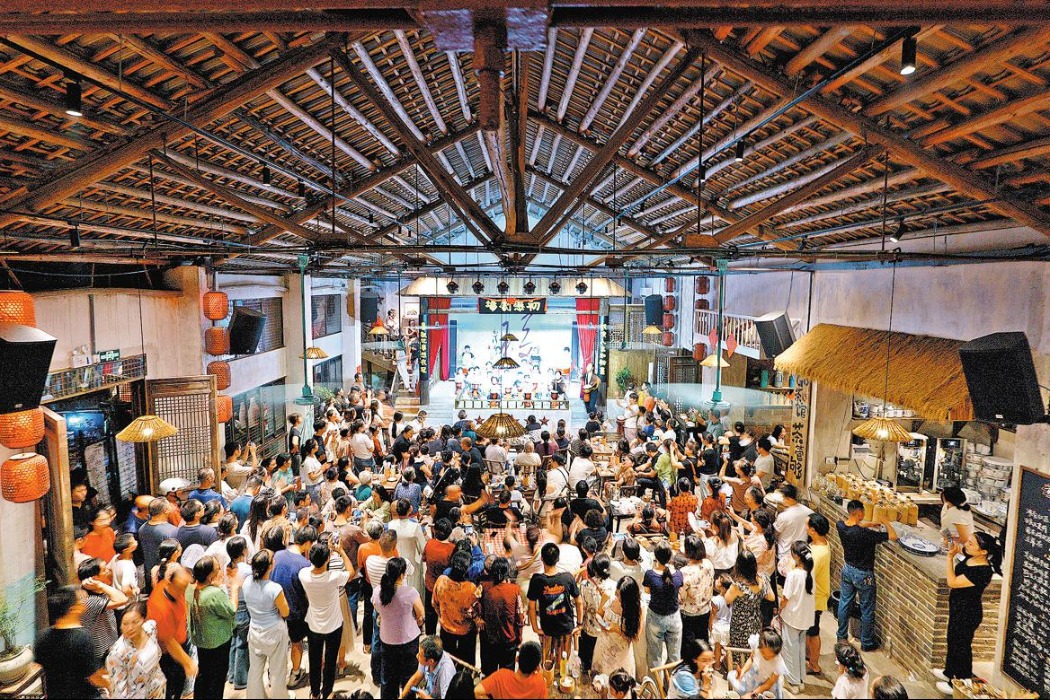
    In the picturesque landscapes of Kaihui township, just beyond Changsha’s urban sprawl, a cultural phenomenon is captivating city dwellers. The First Love Teahouse, housed within a repurposed rural supply and marketing cooperative building, has transformed into an unexpected pilgrimage site for urbanites seeking connection to simpler times.

    The establishment masterfully recreates the agrarian atmosphere of 1980s rural China through its meticulous design and curated artifacts. More than 600 vintage objects donated by local villagers—including aluminum water kettles, enamel tea mugs, and traditional bamboo baskets—create an immersive environment that founder describes as a ‘rural cultural living room.’ This attention to authentic detail has earned the venue its nickname: ‘a teahouse grown on farmland.’

    What began as a quiet nostalgic venture in September has evolved into a sensation, with patrons regularly enduring hour-long drives from downtown Changsha even on weekdays. The attraction extends beyond traditional tea service to include local specialty foods and vibrant cultural performances. Particularly popular are the Huagu Opera (flower-drum opera) shows that animate the main stage, combining with the aromatic tea steam and rhythmic drum beats to create a multisensory experience.

    Patrons consistently report powerful emotional connections to the establishment. ‘The dishes, the performance, the culture—everything feels like from our childhood,’ remarked one guest who grew up in the region. This successful blending of heritage preservation with contemporary consumption patterns demonstrates how rural cultural elements can find new relevance in modern urban life, creating sustainable business models that celebrate traditional Chinese culture while meeting the psychological needs of today’s consumers.

  • Lianjiang’s long road to renewal

    Lianjiang’s long road to renewal

    The Lianjiang River, once celebrated for its crystalline waters that inspired its silk-like name, is experiencing a remarkable ecological renaissance after suffering severe degradation during China’s rapid industrialization period. Flowing 71.1 kilometers through Guangdong province from its origins in Puning to its terminus at Haimen Port in Shantou, this vital waterway supports approximately five million residents along its banks.

    During the late 20th century economic expansion, the river’s health dramatically declined as industrial contamination and population pressures turned its waters toxic. The ecological damage was so extensive that aquatic life virtually disappeared, earning the Lianjiang the unfortunate distinction of being among Guangdong’s most polluted rivers.

    Recent conservation efforts have sparked a noticeable recovery, with visual evidence captured in June showing children playing on inflatable rafts and swim rings while adults perform daily washing routines in one of the river’s tributaries. These scenes of community interaction with the reviving waterway signal a significant environmental turnaround.

    The rehabilitation of the Lianjiang represents part of China’s broader commitment to environmental protection and ecological restoration. As the country balances economic development with environmental sustainability, success stories like the Lianjiang’s transformation demonstrate the potential for reversing ecological damage through dedicated conservation policies and practices.

    The river’s improving condition not only enhances local quality of life but also serves as an indicator of changing priorities in regional development strategies, highlighting the increased emphasis on environmental protection in China’s modernization journey.

  • Alleged Bondi shooter Naveed Akram moved to Goulburn Supermax prison

    Alleged Bondi shooter Naveed Akram moved to Goulburn Supermax prison

    Naveed Akram, the primary suspect in December’s Bondi Beach terrorist shooting, has been relocated to Goulburn Supermax, Australia’s most secure penitentiary facility. The 24-year-old was transferred Monday to the High Risk Management Correctional Centre approximately 190km southwest of Sydney, where he will remain in protective custody while facing extensive criminal charges.

    The alleged perpetrator stands accused of 59 offenses, including commission of a terrorist act, 15 counts of murder, and 40 counts of wounding with intent to murder. The charges stem from the December 14 attack targeting Jewish celebrants during Chanukah by the Sea festivities at Bondi Beach.

    Newly released court documents reveal chilling details of alleged preparation for the attack. CCTV evidence reportedly shows Akram and his father Sajid Akram conducting reconnaissance at the attack location two days prior to the shooting. Further evidence includes October 2025 footage allegedly depicting the pair conducting firearms training in a rural NSW location and appearing before an Islamic State flag while articulating ideological justifications for their planned actions.

    A NSW Government spokesman declined to confirm specific inmate movements but emphasized that “community safety remained the government’s top priority,” noting that the High Risk Management Correctional Center is specifically designed to accommodate inmates posing the highest security risks.

    The case has sparked broader scrutiny of firearm regulations in New South Wales. Retired Senior Constable Wayne Jackson, a former NSW Police Force veteran with three decades of service, has publicly criticized what he describes as systemic failures in the firearms registry system. Jackson contends the compliance-focused approach has created an “unchecked and effectively unlimited supply of firearms” into communities, with approximately 7,500 permits and 1,900 new license applications processed monthly without adequate enforcement capabilities.

    The transfer to Supermax places Akram alongside some of NSW’s most notorious criminals, including convicted murderers Ivan Milat and Malcolm Naden, as well as terrorist Bourhan Hraichie. Akram has not yet been required to enter formal pleas to the charges against him.

  • New Year holiday drives travel peak

    New Year holiday drives travel peak

    China’s tourism sector experienced a powerful resurgence during the three-day New Year holiday period commencing January 1st, 2026, marking the nation’s first significant travel peak of the year. Official data from the Ministry of Culture and Tourism revealed an impressive 142 million domestic tourist excursions generated approximately 84.8 billion yuan ($12.13 billion) in tourism revenue, signaling robust consumer confidence and pent-up travel demand.

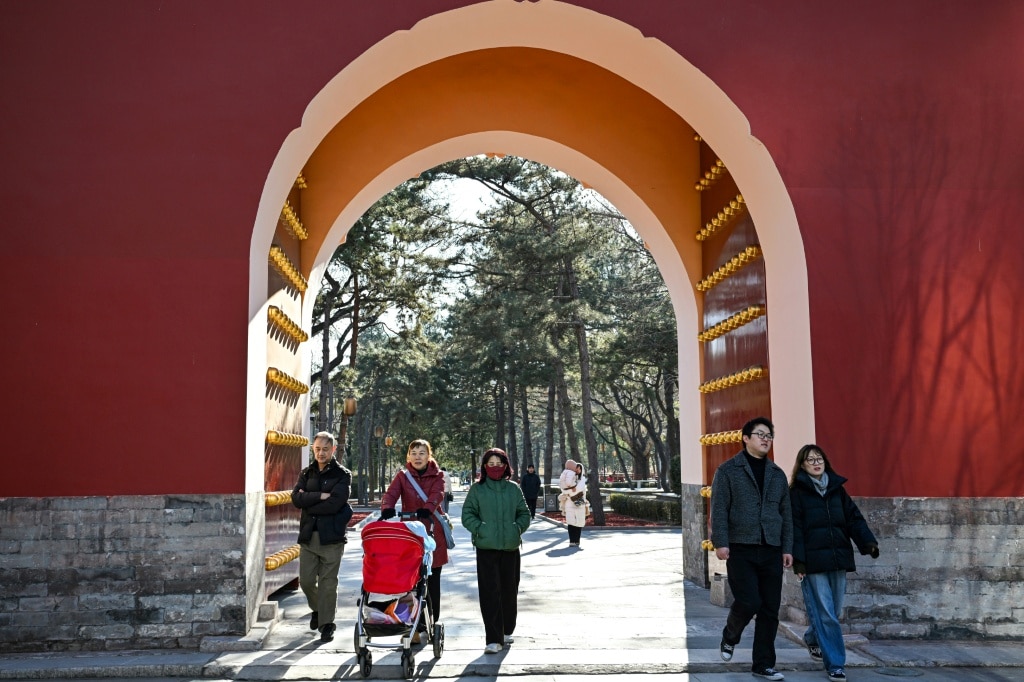
    The extended holiday period—two days longer than previous years—provided ample opportunity for diverse travel experiences across the country. From the artistic enclaves of Beijing’s 798 Art District to winter wonderlands in northern counties, Chinese travelers demonstrated increasingly sophisticated preferences. Yan Lijie, a 23-year-old university student from Tianjin, exemplified this trend as she and her dorm mates celebrated New Year’s Eve amidst art exhibitions, fairs, and performances in the capital.

    Industry experts noted a remarkable diversification in tourism consumption patterns. Qi Chunguang, Vice-President of travel portal Tuniu, observed that ‘younger travelers show stronger preferences for concerts, music festivals, drone shows or fireworks displays to count down to the new year.’ This generational shift toward experiential tourism was reflected in booking data from platform Qunar, which reported hotel reservations tripling in destinations like Kaifeng, Henan province, driven by Chinese-style theme parks.

    The revival extended beyond major metropolitan areas, with travelers venturing to over 1,000 counties nationwide—from the tropical warmth of Nan’ao in Guangdong to the snowy landscapes of Antu in Jilin. International travel also witnessed substantial growth, with Chinese tourists favoring short-haul destinations including Seoul, Bangkok, and Hong Kong. Simultaneously, China attracted visitors from 97 cities worldwide, particularly from neighboring Vietnam, Singapore, and Malaysia, with significant increases from Saudi Arabia, Uzbekistan, and the United States.

    According to the National Immigration Administration, approximately 6.62 million cross-border movements were recorded during the holiday period, including 828,000 trips by foreign nationals—a striking 29.8% year-on-year increase, underscoring China’s reopening and growing appeal as a global tourism destination.

  • Police hunt trio who allegedly hurled bricks from Melbourne overpass, leaving woman injured and cars damaged

    Police hunt trio who allegedly hurled bricks from Melbourne overpass, leaving woman injured and cars damaged

    Victoria Police have initiated a comprehensive manhunt for three unidentified youths following a dangerous incident where bricks were deliberately thrown from a highway overpass in Melbourne’s southeastern suburbs. The reckless act occurred in the early hours of Saturday morning along the Princes Highway in Springvale, resulting in significant property damage and physical injury.

    According to police reports, the incident transpired shortly before 1:00 AM when the suspects were observed on surveillance footage launching bricks from the elevated structure onto moving traffic below. The projectiles struck multiple vehicles with devastating effect—two cars sustained direct impacts through their windshields while three additional vehicles suffered various forms of damage. The most serious consequence involved brick debris causing multiple tire punctures among several automobiles.

    The most alarming outcome involved a female motorist who required immediate medical attention from paramedics to carefully extract glass fragments from her eyes following the windshield impact. Authorities have confirmed that while her injuries were classified as minor, the potential for catastrophic consequences remained significantly high.

    Detective Senior Constable Simon Jacobs issued a stern warning regarding the severity of such actions, emphasizing that throwing objects from overpasses constitutes far from harmless behavior. ‘This incident unequivocally demonstrates that such reckless actions carry grave and potentially fatal repercussions,’ Jacobs stated. ‘We consider it extremely fortunate that only one person sustained relatively minor injuries, as the outcome could have easily turned tragic.’

    The investigation remains active with detectives urging the perpetrators to demonstrate accountability and come forward voluntarily. Law enforcement officials have also made a public appeal for any witnesses or individuals with additional information, including possible video evidence, to contact Crime Stoppers immediately to assist in identifying the suspects captured on nearby CCTV footage.

  • Paris court to rule in case involving alleged cyberbullying of Brigitte Macron

    Paris court to rule in case involving alleged cyberbullying of Brigitte Macron

    A Parisian court is poised to deliver a pivotal verdict on Monday in a high-profile cyber harassment trial involving ten individuals accused of systematically targeting France’s First Lady, Brigitte Macron. The defendants, comprising eight men and two women ranging from 41 to 60 years old, face charges of orchestrating a malicious digital campaign filled with defamatory content regarding Madame Macron’s gender identity and personal life.

    The prosecution alleges these individuals disseminated extensively shared falsehoods claiming the President’s wife was assigned male at birth—a completely fabricated assertion—while simultaneously attempting to weaponize the 24-year age difference between the Macrons by making baseless associations with criminal behavior. This coordinated online harassment generated tens of thousands of engagements across social platforms.

    Although absent from the October proceedings, Brigitte Macron’s voice resonated through her daughter Tiphaine Auzière’s emotional testimony. Auzière detailed the profound psychological and physical toll the relentless cyberbullying inflicted on her mother, describing a noticeable deterioration in her wellbeing and emphasizing how the entire family unit, including young grandchildren, suffered collateral damage from the vicious rumors.

    Among the accused stands Delphine Jegousse, a 51-year-old known professionally as Amandine Roy, who prosecutors identify as a central figure in amplifying the conspiracy theory following her 2021 four-hour YouTube exposition. Another defendant, Aurélien Poirson-Atlan (operating online as Zoé Sagan), faced platform removal in 2024 after multiple judicial citations.

    The defendant pool includes surprising figures such as an elected official, an educator, and a technology professional. Several argued in court that their posts constituted satire or humor, expressing bewilderment at criminal prosecution. If convicted, they confront potential two-year prison sentences.

    This case represents the judicial culmination of years of persistent conspiracy theories falsely identifying Brigitte Macron as “Jean-Michel Trogneux”—actually her brother’s name. Simultaneously, the Macron family pursues international legal recourse through a defamation lawsuit in United States courts against conservative commentator Candace Owens.

    The Macrons’ relationship began conventionally at a French secondary school where Emmanuel was a student and Brigitte his teacher. Then Brigitte Auzière—a married mother of three—would eventually become France’s First Lady following their 2007 marriage, with Emmanuel assuming presidential duties a decade later.

  • Online lover willed $2.5 million by Australian man doesn’t exist, court rules

    Online lover willed $2.5 million by Australian man doesn’t exist, court rules

    In an extraordinary ruling that exposes the perils of digital deception, the Supreme Court of Victoria has determined that a purported online romantic partner set to inherit a multi-million dollar estate was, in fact, a complete fabrication. The case emerged from the 2022 passing of William Southey, whose will designated a man named Kyle Stuart Jackson as both the executor and primary beneficiary of his substantial $2.5 million estate. Judicial investigations, however, conclusively proved that no such person exists. Associate Justice Caroline Goulden delivered the landmark judgment last month, stating that the identity of ‘Kyle Stuart Jackson’ was a fictional construct used by an unknown party or parties to engage with the deceased. The court heard that Mr. Southey, after the death of his long-term partner Phillip Seymour in 2017, pursued several successive online relationships. His final connection was with the entity known as ‘Jackson,’ whom he never met in person but nonetheless intended to marry. Following Southey’s death, an individual claiming to be Jackson initially contacted lawyers to renounce the inheritance, stating, ‘I don’t want it, I don’t deserve it.’ Months later, the same correspondent reversed their position, requesting a 15% share of the estate while sentimentally describing their ‘special’ relationship with Southey. Suspicion arose when the claimant repeatedly refused video calls. A submitted passport photo was later exposed as fraudulent, and a provided address in Pennsylvania was verified by locals to have no resident by that name. The engagement of a U.S.-based private investigator confirmed the ultimate revelation: there was no official record of Kyle Stuart Jackson’s birth or existence. Justice Goulden ruled that the intended beneficiary was a phantom, rendering the bequest void. Consequently, the entirety of Mr. Southey’s estate will now be distributed to his ex-wife, with whom he maintained a close friendship following their divorce in 1989 after a 13-year marriage.

  • ‘Not about condoms’: Chinese shrug off contraceptive tax

    ‘Not about condoms’: Chinese shrug off contraceptive tax

    In a controversial policy shift, China has eliminated tax exemptions for contraceptives, imposing a 13% value-added tax on products including condoms effective January 1st. The move represents Beijing’s latest attempt to reverse the nation’s persistently declining birth rates amid growing concerns about demographic collapse.

    While childcare and marriage brokerage services retain their tax-exempt status, the contraception taxation policy has drawn widespread skepticism from both citizens and demographic experts. Multiple Beijing residents interviewed expressed doubt that increased contraceptive costs would meaningfully influence family planning decisions, citing far more substantial barriers to childrearing.

    ‘The overwhelming pressures confronting China’s youth—from employment instability to daily living expenses—bear absolutely no connection to condom pricing,’ remarked Jessica, a thirty-something resident who requested anonymity. She highlighted deepening class divisions and widespread future uncertainty as primary factors discouraging family formation.

    Demographic data underscores the urgency: China’s population has declined for three consecutive years, with UN projections suggesting a potential plummet to 633 million by 2100 from the current 1.4 billion. President Xi Jinping’s administration has pledged to tackle these demographic challenges, including through December policy meetings that advocated ‘positive views on marriage and childbearing.’

    However, Associate Professor Alfred Wu of Singapore’s Lee Kuan Yew School of Public Policy notes that the contraceptive tax is negligible compared to China’s extraordinarily high childrearing costs. ‘Couples aren’t debating contraceptive affordability—they’re questioning whether they can financially support a child altogether amid economic volatility,’ Wu explained.

    Structural obstacles include a weakened job market, prohibitively expensive housing, intense work culture, and persistent workplace discrimination against women. These concrete economic realities, according to those affected, render the contraceptive tax largely irrelevant to demographic goals.

    As 19-year-old student Ms. Du summarized, genuine change requires systemic reforms: ‘Unless smaller enterprises guarantee fundamental benefits like marriage and maternity leave, convincing young couples to pursue parenthood will remain profoundly challenging.’