分类: science

  • Artemis II: Nasa’s mega Moon rocket arrives at launch pad

    Artemis II: Nasa’s mega Moon rocket arrives at launch pad

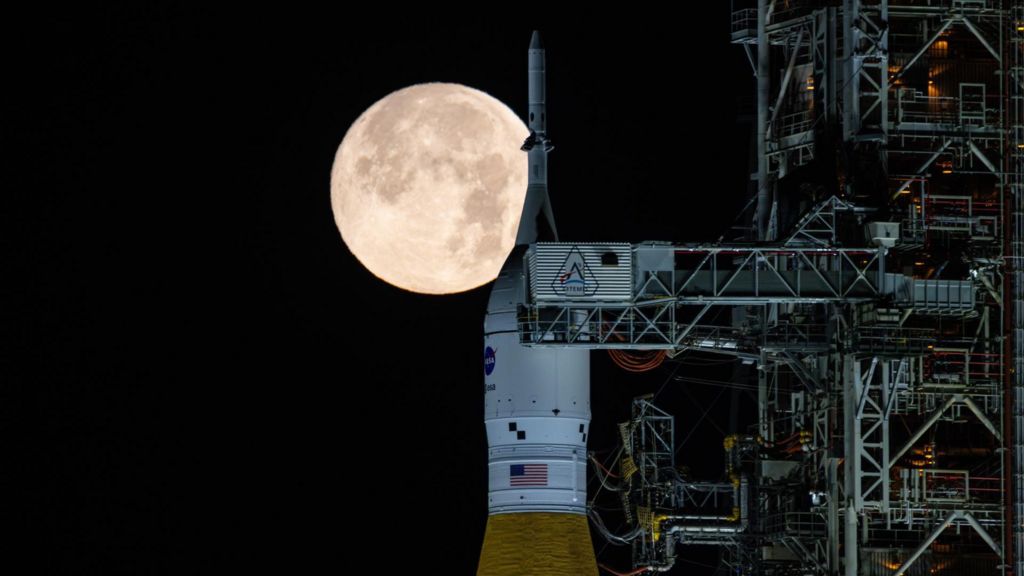
    In a monumental step toward returning humans to the Moon, NASA’s Space Launch System (SLS) rocket has completed its meticulous 12-hour journey to Launch Pad 39B at Florida’s Kennedy Space Center. The 98-meter-tall colossus, carrying the Orion spacecraft, was transported vertically atop a massive crawler-transporter at a painstakingly slow pace of 0.82 mph (1.3 km/h) along the 4-mile (6.5 km) route from the Vehicle Assembly Building.

    The Artemis II mission, scheduled for launch as early as February 6th with additional windows through April, represents humanity’s first crewed lunar mission since Apollo 17 in December 1972. The four astronauts—NASA’s Reid Wiseman, Victor Glover, and Christina Koch, along with Canadian Space Agency astronaut Jeremy Hansen—observed the rocket’s movement, anticipating their pioneering journey around the Moon.

    Before the historic launch, NASA engineers will conduct final preparations including a critical “wet dress rehearsal” to test fuel operations and countdown procedures. The 10-day mission will not land on the lunar surface but will instead orbit Earth initially before traveling approximately 250,000 miles to circumnavigate the Moon’s far side.

    A significant international collaboration underscores the mission, with the European Service Module—built by Airbus in Bremen, Germany—providing essential propulsion, power, and life support systems. “We basically can’t get to the Moon without it,” emphasized Sian Cleaver, an Airbus spacecraft engineer, highlighting the module’s critical role in crew safety and mission success.

    Despite years of development delays, NASA officials maintain that crew safety remains the absolute priority. “We’re going to fly when we’re ready,” stated John Honeycutt, chair of the Artemis mission management team, underscoring the commitment to the astronauts’ safe return. The mission will conduct substantial scientific observation during three dedicated hours of lunar flyby, gathering crucial data for future landing missions, particularly targeting the Moon’s south pole region.

  • China accelerates nuclear fusion engineering, targeting power generation demonstration by 2030

    China accelerates nuclear fusion engineering, targeting power generation demonstration by 2030

    China is dramatically accelerating its nuclear fusion program, shifting from fundamental research to large-scale engineering implementation. The ambitious Burning Plasma Experimental Superconducting Tokamak (BEST) project represents this strategic pivot, with construction advancing rapidly toward demonstrating net fusion power gain and electricity generation by approximately 2030.

    This groundbreaking update emerged from the Fusion Energy Technology and Industry Conference 2026 in Hefei, Anhui Province, where scientists described the project as potentially lighting humanity’s “first nuclear-fusion-powered lamp.” The BEST facility marks a historic transition in global fusion development from scientific exploration to practical energy demonstration.

    Unlike previous experimental devices, BEST is specifically engineered to achieve actual “burning” of deuterium-tritium plasma, replicating the nuclear fusion process that powers the sun. Fusion energy, often termed the “ultimate energy source,” promises virtually limitless clean energy without the radioactive waste associated with nuclear fission.

    China’s fusion program is recognized as a global leader, with its Experimental Advanced Superconducting Tokamak (EAST) having repeatedly set world records. Chinese teams have also contributed significantly to the International Thermonuclear Experimental Reactor (ITER) through multiple key procurement packages.

    The conference additionally announced plans for a “Fusion City” in Changfeng County, Hefei—a comprehensive science and innovation demonstration zone integrating research campuses, industrial clusters, and residential facilities centered around major fusion engineering projects.

    This development occurs within a competitive global context, with the United States, Japan, and the United Kingdom similarly accelerating their fusion power plant initiatives, many targeting fusion electricity generation before 2040.

  • Astronauts say training helped ensure safe return

    Astronauts say training helped ensure safe return

    In their first public appearance since returning from orbit, the crew of China’s Shenzhou XX mission provided a detailed account of how they managed a critical emergency involving a damaged spacecraft window, attributing their successful response to exhaustive training and seamless coordination with ground control.

    Mission Commander Senior Colonel Chen Dong and crew members Colonel Chen Zhongrui and Colonel Wang Jie addressed media at Beijing Aerospace City on January 16, 2026, nearly two months after their safe return from the Tiangong space station. Their homecoming, originally scheduled for November, was delayed when the crew discovered a triangular crack in their return capsule’s window during final pre-departure checks.

    The damage, potentially caused by micro-meteoroid or space debris impact, prompted immediate consultation with Earth-based mission specialists. Commander Chen described how the crew quickly documented the damage with photographs while coordinating observations with the Shenzhou XXI mission crew already aboard the station.

    ‘Trust was paramount in that moment,’ Chen emphasized. ‘We maintained absolute confidence in our ground team, who exhausted every methodology to develop the safest possible return protocol. Equally, we trusted in our own capabilities as thoroughly trained astronauts prepared to address unexpected system failures.’

    The mission headquarters ultimately determined the damaged capsule posed unacceptable re-entry risks, activating contingency procedures that saw the crew return aboard the Shenzhou XXI vehicle instead. Colonel Chen Zhongrui highlighted the psychological preparation behind their composed response: ‘We operated with complete assurance, knowing our nation’s robust space program and unified team supported us.’

    Colonel Wang Jie, the mission’s spaceflight engineer, noted how his ground-based construction experience with the space station proved immediately applicable when addressing equipment anomalies in orbit. ‘The additional knowledge we accumulate and repetitions we perform on Earth enable our calm effectiveness during critical moments in space,’ he explained.

    The incident represents one of the most significant in-flight emergencies publicly acknowledged by China’s space program, demonstrating evolving transparency in its rapidly advancing space operations.

  • FAST reveals insights into cosmic signals

    FAST reveals insights into cosmic signals

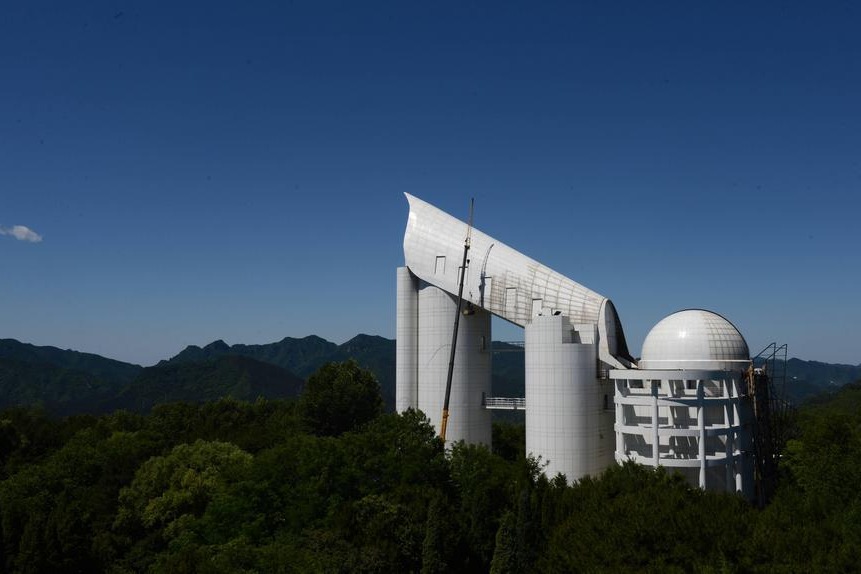
    In a groundbreaking astronomical discovery, China’s Five-hundred-meter Aperture Spherical radio Telescope (FAST) has provided compelling evidence illuminating the origin of mysterious cosmic phenomena known as fast radio bursts. An international research team has determined that at least some of these powerful energy emissions stem from compact binary star systems, resolving a long-standing cosmic enigma that has puzzled astronomers since 2007.

    The research, published in the prestigious journal Science, documents unprecedented observations of repeating fast radio burst FRB 20220529 over a 26-month monitoring period from June 2022 through August 2024. This marks the first time scientists have captured the complete evolutionary process of such a burst, offering critical insights into their generation mechanisms.

    Fast radio bursts represent among the most energetic transient events in the universe—millisecond-duration flashes that release energy equivalent to our sun’s output over an entire week. Despite detecting thousands of these events, astronomers have struggled to pinpoint their precise origins, with theories predominantly suggesting extreme stellar remnants like neutron stars as potential sources.

    Led by astronomers from the Chinese Academy of Science’s Purple Mountain Observatory, the research team utilized FAST’s unparalleled sensitivity to detect clear magnetic environment fluctuations described as ‘surge and recovery’ patterns—a phenomenon never before observed in such detail.

    Duncan Lorimer, the West Virginia University astrophysicist who first discovered fast radio bursts, praised the findings as “an amazing result” that demonstrates “the power of FAST in China to make these monitoring observations.” He emphasized how coupling FAST’s capabilities with survey instruments like the Canadian Hydrogen Intensity Mapping Experiment continues to transform understanding of these cosmic phenomena.

    Since becoming fully operational in 2020, FAST has established itself as a premier facility for pulsar studies, galactic structure mapping, and gravitational wave research. China now plans a significant upgrade to the facility, adding dozens of medium-aperture antennas around the main dish to create the world’s only mixed synthetic aperture array centered on a giant single-dish radio telescope. This enhancement would dramatically improve precision in locating fast radio burst sources.

    Senior engineer Sun Jinghai of the National Astronomical Observatories noted that continued observations may ultimately solve one of astronomy’s most persistent puzzles: what exactly produces these cosmic flashes and why certain variants repeat their brilliant performances across the cosmic stage.

  • Wuhan scientist honored for turning lab science into real-world farming solutions

    Wuhan scientist honored for turning lab science into real-world farming solutions

    Professor Peng Donghai from Huazhong Agricultural University has received prestigious recognition for his groundbreaking work in transforming laboratory discoveries into practical agricultural solutions. With over two decades dedicated to agricultural microorganism research, Professor Peng’s innovative approach to biological pest control has revolutionized traditional farming practices.

    The scientific breakthrough emerged when Professor Peng abandoned conventional screening methods that focused exclusively on the most potent pest-killing microbes. Instead, his research team pioneered an unconventional strategy examining previously overlooked, weaker microbial strains. This methodological shift led to the successful cloning of cry7Ba1, a revolutionary pest-fighting protein that became the first Chinese insecticidal protein to secure a US patent.

    To support this research, Professor Peng initiated an unprecedented nationwide sampling project in 2011. The ambitious endeavor mobilized tens of thousands of teachers and students across China, resulting in the collection of over 21,000 soil samples from more than 2,680 towns. This massive effort yielded the preservation of approximately 53,000 Bacillus thuringiensis (Bt) strains, creating one of the world’s most comprehensive microbial databases.

    The research team developed a specialized platform that enabled faster and more cost-effective identification of beneficial genes, assembling one of the planet’s largest collections of natural insecticide genes. Their most significant recent achievement involves combating plant-parasitic nematodes – microscopic worms that attack plant roots. The team has identified 102 effective Bt strains against these destructive pests and discovered several novel pest-fighting proteins, with findings published in leading scientific journals including Science Advances and Nature Communications.

    Beyond academic circles, Professor Peng’s team has successfully commercialized their research through collaboration with Wuhan Kernel Bio-tech. In 2021, they launched a commercial nematode-fighting agent demonstrating remarkable efficacy rates between 81.6% and 91.1% against root-destroying pests. This biological solution has already been applied to nearly 4 million mu (approximately 267,000 hectares) of farmland across China.

    The research has earned Hubei province’s 2024 Technical Invention Award (first prize) and generated nearly 100 million yuan ($14.4 million) in technology transfer income. The work has sparked increased interest from domestic pesticide companies seeking biological alternatives to chemical treatments. Looking forward, Professor Peng plans to expand international collaborations, aiming to apply microbial and genetic research to global food security and ecological protection challenges.

  • Astronauts of China’s Shenzhou XX mission meet press after return from space

    Astronauts of China’s Shenzhou XX mission meet press after return from space

    The three astronauts of China’s landmark Shenzhou XX mission made their first official public appearance on January 16, 2026, following their successful return from space. The press conference, held at the Beijing Aerospace City, featured crew members Chen Dong, Chen Zhongrui, and Wang Jie, who addressed media representatives and shared insights from their historic mission.

    The event marked a significant milestone in China’s ambitious space program, showcasing the nation’s growing capabilities in human spaceflight. The astronauts, appearing in good health and high spirits, detailed their experiences aboard the spacecraft and their contributions to China’s expanding space research initiatives.

    Photographic documentation of the event, captured by Wang Jing of China Daily, depicted the crew assembled before journalists in a ceremonious setting that underscored the achievement’s national importance. The press conference served as both a debriefing of the completed mission and a demonstration of China’s commitment to transparency in its space exploration endeavors.

    This public appearance followed extensive post-mission medical evaluations and recovery procedures standard for returning astronauts. The successful completion of the Shenzhou XX mission represents another strategic advancement in China’s methodical approach to establishing a permanent presence in space, with future lunar and orbital station objectives clearly in view.

  • Scientists using Chinese telesecope capture evolutionary process of mysterious flashes

    Scientists using Chinese telesecope capture evolutionary process of mysterious flashes

    In a groundbreaking astronomical discovery, China’s Five-hundred-meter Aperture Spherical radio Telescope (FAST) has captured unprecedented evidence revealing the evolutionary process of mysterious deep-space radio emissions known as fast radio bursts (FRBs). An international research team led by the Purple Mountain Observatory of the Chinese Academy of Sciences has documented the strongest evidence to date that these cosmic phenomena originate from compact binary star systems.

    The research, published in the journal Science, centers on observations of FRB 20220529—a repeating burst located approximately 2.9 billion light-years from Earth. Through meticulous monitoring from June 2022 to August 2024, scientists witnessed a dramatic magnetic environment transformation that provides crucial insights into the burst’s origin.

    Key to the discovery was the detection of a sudden surge in Faraday rotation—a measure of how radio waves twist as they pass through magnetized plasma. In December 2023, researchers observed the signal’s twisting effect spike approximately 20-fold before gradually returning to baseline levels over two weeks. This ‘surge and recovery’ pattern indicates the passage of a dense, magnetized plasma cloud between the burst source and Earth.

    Study corresponding author Wu Xuefeng compared the phenomenon to a solar coronal mass ejection, suggesting the most plausible explanation involves a binary system where a neutron star or magnetar orbits a companion star. Violent activity from the companion star or orbital geometry could eject plasma clouds that temporarily alter radio signals detected on Earth.

    The findings challenge previous theories suggesting FRBs originate from isolated neutron stars. Duncan Lorimer, the West Virginia University astrophysicist who first discovered FRBs in 2007, praised the discovery as ‘an amazing result’ that demonstrates FAST’s extraordinary capabilities.

    FAST’s exceptional sensitivity enabled detailed tracking of FRB 20220529, whose signals are typically too faint for other telescopes to detect. The facility has become instrumental in pulsar studies, gravitational wave research, and cosmic mapping since commencing full operations in 2020.

    Looking forward, China plans a major upgrade to FAST that will add dozens of medium-aperture antennas around the main dish, creating the world’s only mixed synthetic aperture array centered on a giant single-dish telescope. This enhancement will allow scientists to pinpoint FRB sources with unprecedented precision, potentially solving one of astronomy’s most enduring mysteries.

  • Sharks are famous for fearsome teeth, but ocean acidification could make them weaker

    Sharks are famous for fearsome teeth, but ocean acidification could make them weaker

    PORTLAND, Maine (AP) — The formidable dental arsenal that has secured sharks’ position as apex ocean predators for millions of years faces an unexpected threat from changing marine chemistry. A groundbreaking study conducted by German marine researchers reveals that ocean acidification—directly linked to human fossil fuel consumption—is progressively weakening shark tooth structure, potentially compromising their hunting efficiency and ecological dominance.

    The research team from Heinrich Heine University Düsseldorf, led by marine biologist Maximilian Baum, discovered that increasingly acidic ocean conditions cause significant corrosion damage to shark teeth, including structural cracks, root deterioration, and surface pitting. Their findings, published in Frontiers in Marine Science, demonstrate that teeth exposed to water with acidity levels projected for year 2300 (nearly ten times current acidity) showed substantially more damage compared to those in present-day conditions.

    This dental degradation represents an additional environmental pressure for sharks already confronting overfishing, habitat pollution, and climate change impacts. While sharks won’t become toothless overnight, the cumulative effect could gradually diminish their predatory effectiveness. Baum emphasized that ‘their whole ecological success in the ocean as rulers of other populations could be in danger’ if tooth integrity continues to decline.

    The study examined over 600 discarded teeth from blacktip reef sharks (Carcharhinus melanopterus), a species inhabiting Pacific and Indian Ocean regions. Scientists note that shark teeth—highly specialized tools evolved for slicing flesh rather than resisting chemical corrosion—undergo constant replacement throughout a shark’s lifetime.

    Independent experts including Nick Whitney of New England Aquarium’s Anderson Cabot Center acknowledge the study’s scientific validity while noting sharks’ evolutionary resilience. ‘They’ve been around for 400 million years and have adapted to changing conditions,’ Whitney observed, suggesting that protective mouth tissue might temporarily shield developing teeth from acidification effects.

    However, Gavin Naylor of the Florida Program for Shark Research cautions that ocean acidification’s impacts extend beyond sharks, particularly affecting shell-forming organisms and fish scale integrity. While overfishing remains the most immediate threat to shark populations, acidification introduces complex ecological changes that could ultimately reshape marine food webs and predator-prey relationships across ocean ecosystems.

  • China’s giant radio telescope observations unravel origin of cosmic enigmatic flashes

    China’s giant radio telescope observations unravel origin of cosmic enigmatic flashes

    An international research consortium spearheaded by Chinese astronomers has achieved a groundbreaking discovery in astrophysics, utilizing China’s monumental Five-hundred-meter Aperture Spherical radio Telescope (FAST) to decipher the origins of cosmic fast radio bursts (FRBs). The team from the Purple Mountain Observatory of the Chinese Academy of Sciences has gathered compelling evidence indicating these mysterious celestial phenomena originate from binary star systems, according to research published in the prestigious journal Science.

    Located in Guizhou Province’s rugged karst landscape, FAST—the world’s largest single-dish radio telescope—has provided unprecedented observational data enabling scientists to analyze FRB patterns with remarkable precision. These millisecond-duration cosmic flashes, which have baffled astronomers since their discovery in 2007, release more energy than our sun emits in three days.

    The research demonstrates that at least a subset of FRBs emanate from interacting binary systems where a neutron star orbits another celestial body. This configuration creates the extreme conditions necessary to generate these powerful electromagnetic emissions that travel billions of light-years across the universe.

    This discovery marks a significant advancement in high-energy astrophysics and showcases China’s growing capabilities in cutting-edge space research. The findings provide crucial insights into the extreme environments that produce FRBs, potentially revolutionizing our understanding of stellar evolution and cosmic phenomena. The international collaboration, leveraging FAST’s superior sensitivity, opens new pathways for decoding one of astronomy’s most persistent mysteries.

  • New finding to help probe dark matter

    New finding to help probe dark matter

    In a historic breakthrough bridging decades of theoretical physics, Chinese researchers have achieved the first experimental confirmation of the Migdal effect—a discovery with transformative implications for detecting dark matter, the invisible substance constituting approximately 85% of the universe’s mass.

    The landmark findings, published in Nature, validate a 1939 prediction by Soviet physicist Arkady Migdal, who theorized that a nuclear recoil event—such as a collision with a dark matter particle—could produce a rapid shift in the atom’s electric field, ejecting an orbiting electron. For nearly 90 years, this phenomenon remained experimentally unverified due to its minuscule scale and susceptibility to background interference from cosmic radiation.

    To overcome these challenges, a multidisciplinary team led by the University of Chinese Academy of Sciences engineered a specialized high-precision gas detector integrated with custom microchip technology—essentially an “atomic camera” capable of tracking individual atomic trajectories and electron emissions.

    After bombarding gas molecules with neutrons and analyzing over 800,000 candidate events, researchers identified six unambiguous signals exhibiting the Migdal effect’s distinctive signature: dual particle tracks emanating from identical points—one from the recoiling nucleus and another from the ejected electron. The results achieved five-sigma statistical confidence, particle physics’ gold standard for discovery.

    Professor Yu Haibo of UC Riverside noted: “Direct observation of the Migdal effect has been a longstanding experimental challenge. Multiple international teams attempted detection without success. This breakthrough is genuinely exciting.”

    The discovery arrives as physicists pivot from searching for heavy dark matter particles (WIMPs) toward lighter alternatives. Traditional detectors struggle to register faint nuclear recoils from lightweight particles, but the Migdal effect effectively converts these imperceptible events into measurable electronic signals.

    “By capturing the ejected electron’s full energy, our detector theoretically achieves 100% efficiency,” explained co-leader Professor Zheng Yangheng. “This work solidifies the Migdal effect’s theoretical foundation and provides crucial experimental validation.”

    Looking ahead, the team plans to optimize detector performance and study the effect across different materials. Professor Liu Qian revealed: “Extending observations to other elements will provide essential data for detecting even lighter dark matter particles.” Professor Liu Jianglai, lead scientist of China’s PandaX experiment, emphasized this represents “a crucial first step” toward practical dark matter detection applications.