
In a groundbreaking discovery, Chinese scientists have identified a new species of snake in the West China Rain Zone, a region renowned for its rich biodiversity. The species, named the western China mountain snake (Plagiopholis pluvialis), was found in the Giant Panda National Park’s Chengdu segment and the lush forests of Mount Emei in Sichuan province. This marks the first new species within the Plagiopholis genus to be discovered in nearly a century. The findings were published in the esteemed international journal Zoosystematics and Evolution in September 2025. The research, conducted by teams from the Chengdu Institute of Biology of the Chinese Academy of Sciences and Qinghai University, among others, spanned from 2020 to 2025. The non-venomous snakes, measuring approximately 80 centimeters in length, exhibit diurnal behavior and primarily feed on earthworms and slugs. A distinctive inverted V-shaped pattern on their necks sets them apart from other species. The West China Rain Zone, with an average annual precipitation of 2,000 millimeters, is a critical area for biological evolution. This discovery underscores the scientific importance of the region and highlights the Giant Panda National Park’s pivotal role in biodiversity conservation.
分类: science
-
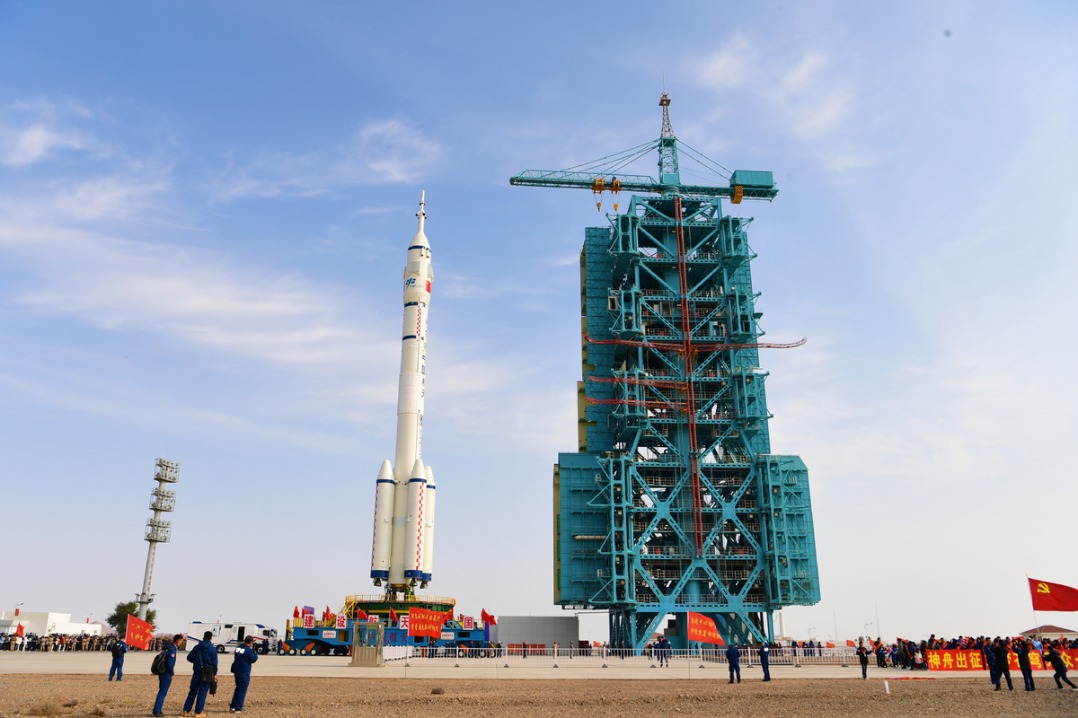
China prepares to launch Shenzhou XXI crewed spaceship
China is on the brink of another significant milestone in its space exploration endeavors as the Shenzhou XXI crewed spaceship prepares for launch. The China Manned Space Agency (CMSA) announced on October 24, 2025, that the spacecraft, paired with a Long March 2F carrier rocket, has been successfully transferred to the launching area at the Jiuquan Satellite Launch Center. All systems and equipment at the site are reported to be functioning optimally, with pre-launch checks and joint tests proceeding as scheduled. The exact launch time will be determined based on favorable conditions in the near future. This mission underscores China’s growing capabilities in manned spaceflight and its commitment to advancing space exploration. The Shenzhou XXI mission is expected to contribute to China’s broader goals in space science and technology, further solidifying its position as a key player in the global space race.
-

Scientific, technological modernization emphasized in promoting China’s advancement
In a pivotal address at the 15th Five-Year Plan (2026-30) press conference in Beijing, Yin Hejun, Minister of Science and Technology, underscored the indispensable role of scientific and technological modernization in propelling China’s progress. Speaking on October 24, 2025, at a briefing organized by the CPC Central Committee, Yin outlined a comprehensive strategy to elevate China’s innovation capabilities and foster breakthroughs in core technologies. He emphasized the necessity of advancing original innovation and achieving critical technological milestones in key sectors such as integrated circuits, industrial machine tools, and high-end instruments. Yin proposed the establishment of a new national system to mobilize resources effectively, ensuring decisive progress across the entire technological chain. Additionally, he called for prioritizing national strategic needs through the deployment of major scientific and technological tasks, alongside enhancing the strategic and systematic layout of basic research. Yin also highlighted the importance of integrating scientific and technological innovation with industrial development, advocating for stronger enterprise leadership in innovation consortia and increased support for high-tech and small-to-medium-sized enterprises. Furthermore, he stressed the need for the integrated development of education, science, technology, and talent, aiming to align these sectors with national strategy. Yin also emphasized the construction of a Digital China, promoting the deep integration of the real economy with the digital economy and accelerating innovations in artificial intelligence. Strengthening the supply of computing power, algorithms, and data, along with implementing the ‘AI Plus’ initiative, were also key points in his vision for comprehensive industrial empowerment.
-

Slow-motion footage reveals secrets of snake bites
In a groundbreaking study conducted at a venom research facility in Paris, scientists have utilized high-speed cameras to delve into the mechanics of snake strikes. The research aimed to determine which snake species exhibit the fastest predatory strikes. By analyzing slow-motion footage, the team was able to capture the intricate details of these rapid movements, providing new insights into the biomechanics of snake attacks. This study not only enhances our understanding of snake behavior but also contributes to the development of more effective anti-venom treatments and safety measures for regions where snake bites are prevalent. The findings are expected to have significant implications for both biological research and public health strategies.
-
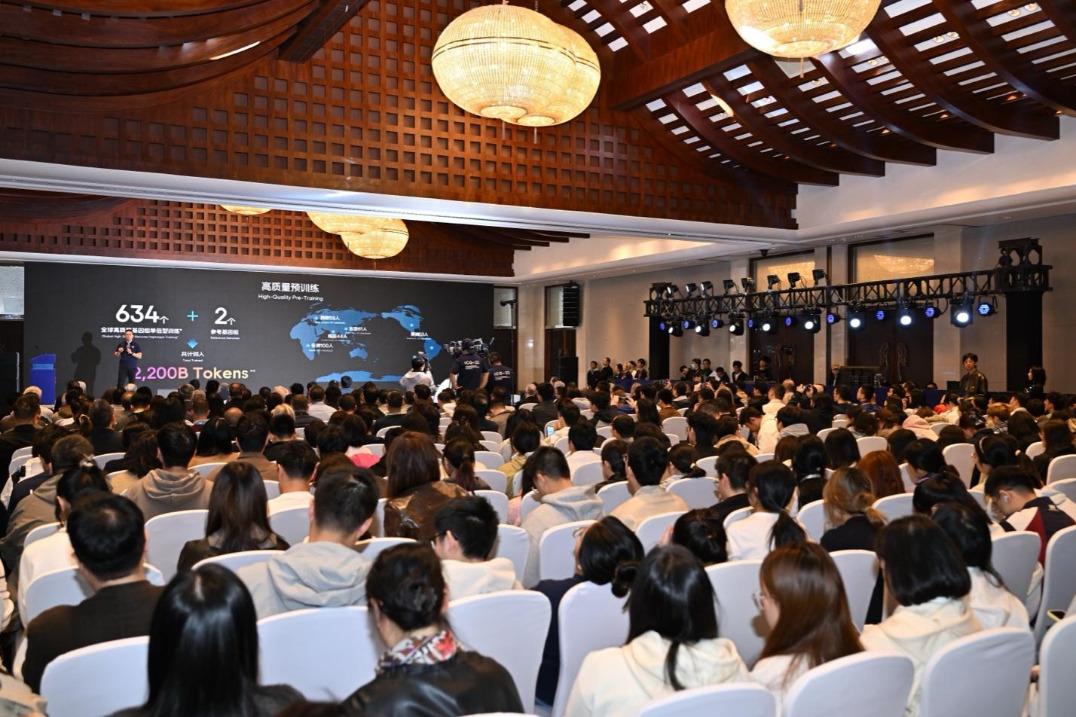
Chinese biotech firms unveil advanced human-centric genomic model
In a landmark development at the 20th Annual Meeting of the International Conference on Genomics (ICG-20) in Hangzhou, BGI-Research and Zhejiang Lab unveiled Genos, an open-source Human-Centric genomic foundation model. This cutting-edge innovation, designed to operate at single-nucleotide precision across ultra-long DNA sequences, leverages high-quality human genomes from diverse global ancestries. Genos promises transformative applications across multiple domains, including public health, developmental biology, and scientific research. In public health, it enhances disease monitoring and informs targeted preventive measures. In developmental biology, it sheds light on gene regulation in tissue and organ formation. For scientific research, it predicts RNA expression from DNA sequences in seconds, a process that previously took weeks or months. Integrated into BGI’s DCS Cloud and the CNGB database, Genos empowers researchers to forecast cell expression levels, identify key candidate genes, and accelerate discoveries. Clinically, it collaborates with BGI’s GeneT deep reasoning model to diagnose genetic diseases, while in personal health, it generates personalized genomic reports via BGI’s BGE platform. The development of Genos was spearheaded by a cross-disciplinary team from the Foundation Model Training Program, a joint initiative by BGI-Research and Zhejiang Lab. This program united bioinformatics experts and computing specialists, fostering interdisciplinary collaboration that is driving life science research from data mining toward emergent intelligence.
-

Dinosaurs were thriving in North America before the mass-extinction asteroid strike, study suggests
The long-standing debate among scientists about whether dinosaurs were already in decline before the catastrophic asteroid impact 66 million years ago has taken a new turn. Recent research indicates that dinosaur populations in North America were flourishing right up until the asteroid struck, which triggered a mass extinction event. However, experts caution that this finding represents only a fragment of the global scenario. The study, published in the journal Science, focuses on the Kirtland Formation in northern New Mexico, a site renowned for its dinosaur fossils for over a century. Analysis of fossils and surrounding rocks suggests these remains date back to approximately 400,000 years before the asteroid impact—a brief period in geological terms. The dating was achieved by examining volcanic glass particles in sandstone and magnetic minerals in mudstone. Daniel Peppe, a paleontologist at Baylor University and co-author of the study, emphasized that the findings reveal diverse dinosaur communities thriving shortly before their abrupt extinction. The fossils discovered include species like Tyrannosaurus rex, a long-necked dinosaur, and a Triceratops-like herbivore. However, independent experts like Mike Benton from the University of Bristol warn that evidence from a single location may not reflect broader trends across North America or globally. Andrew Flynn, a paleontologist at New Mexico State University and study co-author, highlighted the challenges of accurately dating fossils, as carbon-based materials do not survive in them. Further research is needed to paint a comprehensive picture of dinosaur diversity worldwide on the eve of the asteroid impact.
-
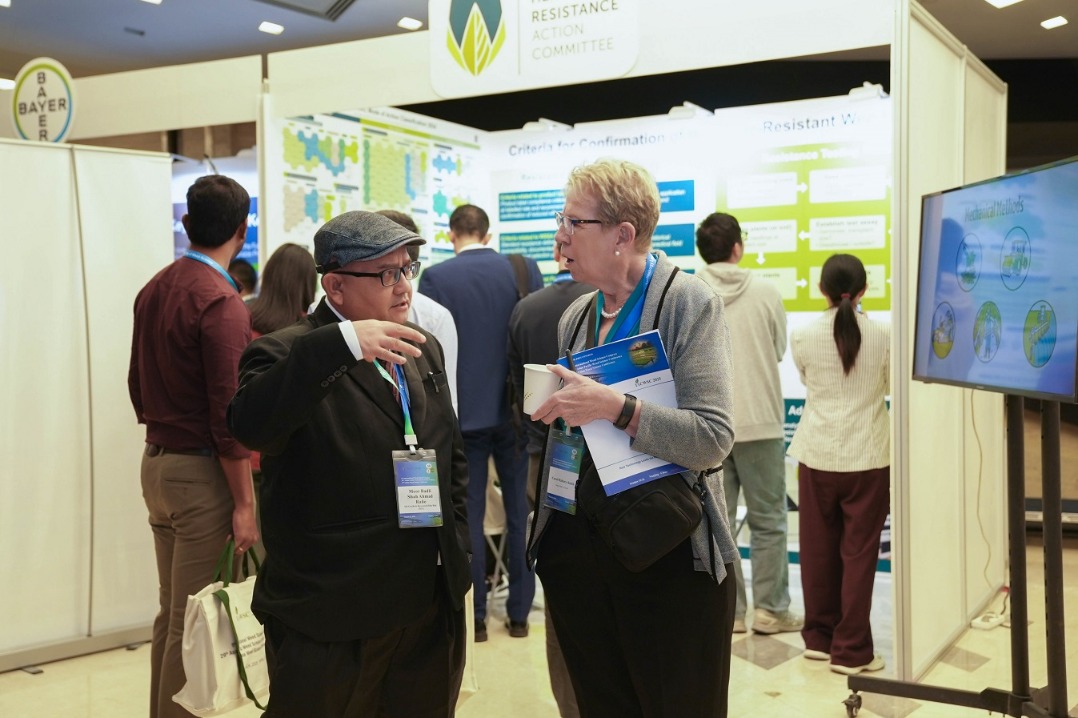
Conference calls for tech innovations to fight weed menace
The Joint Weed Science Society Congress convened in Nanjing, Jiangsu province, this week, bringing together over 600 experts and scholars from 42 countries and regions. The event, co-hosted by the Institute of Plant Protection of the Chinese Academy of Agricultural Sciences and Nanjing Agricultural University, featured the 9th International Weed Science Congress, the 29th Asian Pacific Weed Science Conference, and the 17th China Weed Science Conference. The congress aimed to share research progress and explore future developments in global weed science. Weeds pose a significant threat to agricultural production and ecological security, with the Food and Agriculture Organization of the United Nations estimating that weeds cause 10 to 15 percent of global crop yield losses annually. In China, the grain-planting area reached 119 million hectares in 2024, with weed occurrence covering nearly 100 million hectares, leading to annual economic losses exceeding 100 billion yuan ($13.8 billion). Experts highlighted the challenges of weed proliferation, widespread herbicide resistance, and frequent chemical damage incidents, emphasizing the need for technological innovation to ensure global food and ecological security. The conference, themed ‘New Technology Leads the Way of Weed Science,’ showcased advances in weed biology, molecular mechanisms, intelligent identification, resistance management, and green control technologies. Delegates visited demonstration sites showcasing China’s latest research and applications in weed management and discussed the impact of climate change on weed disasters and integrated control strategies, proposing targeted recommendations.
-

La Nina weather pattern could bring extreme cold, droughts, says NCC
China is bracing for the potential onset of a La Nina weather pattern in late autumn, which could lead to severe winter conditions across various regions. According to meteorologists, northern, southwestern, and central parts of the country may experience freezing rain and snow, while southern areas could face prolonged droughts. Zhang Daquan, an official from the National Climate Center, highlighted that recent monitoring of the equatorial central and eastern Pacific has shown sea surface temperatures below normal, signaling a neutral-to-cool state. This data has led climate experts to predict a transition to La Nina conditions in the upcoming season. Historically, La Nina winters in China have been marked by lower-than-average temperatures, with notable snow disasters in the north and freezing weather in the south, such as in 2008 and 2018. However, experts caution that La Nina does not always guarantee extreme cold and could even result in warmer winters due to global warming, as seen in the winter of 2020-2021. China’s winter climate is influenced by a combination of factors, including Arctic sea ice, snow cover, and atmospheric circulation systems, making it essential to integrate monitoring and forecasting information from various sources. Zhang emphasized the need for vigilance in addressing the potential adverse impacts of sharp temperature fluctuations on production and daily life.
-
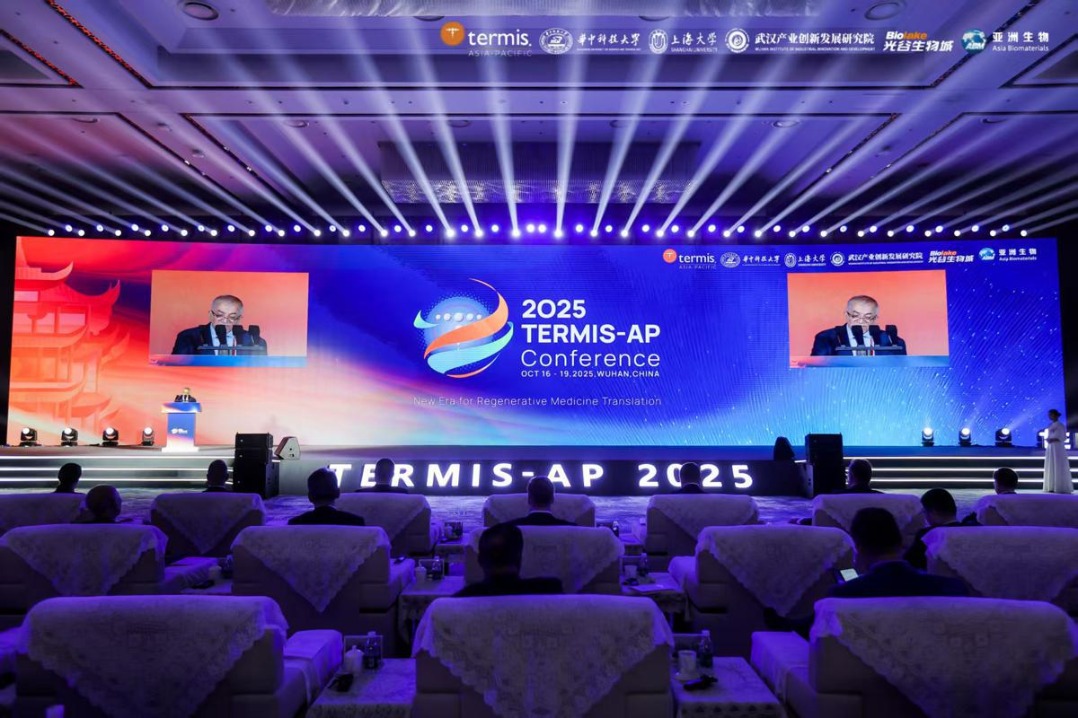
Over 1,600 delegates attend regenerative medicine conference in Wuhan
The 2025 Tissue Engineering and Regenerative Medicine International Society—Asia Pacific (TERMIS-AP) conference recently concluded in Wuhan, Hubei province, marking a significant milestone in the field of regenerative medicine. Held from Friday to Sunday, the event attracted over 1,600 delegates from more than 30 countries and regions, including distinguished members of national academies and leading scholars. The conference aimed to accelerate the translation of cutting-edge research in organ and tissue regeneration into practical clinical applications. Keynote speeches and panel discussions delved into groundbreaking topics such as whole-organ and tissue regeneration using functional biomaterials, 3D bioprinting, and the clinical translation of tissue engineering innovations. Since its inception in 2006, TERMIS has emerged as one of the most influential global academic organizations in the field. The event also featured industry roadshows and exhibitions, with participation from over 50 companies hailing from Sweden, Australia, Singapore, Japan, South Korea, and other regions. The conference underscored Wuhan’s growing prominence as a hub for scientific innovation and international collaboration in regenerative medicine.
-
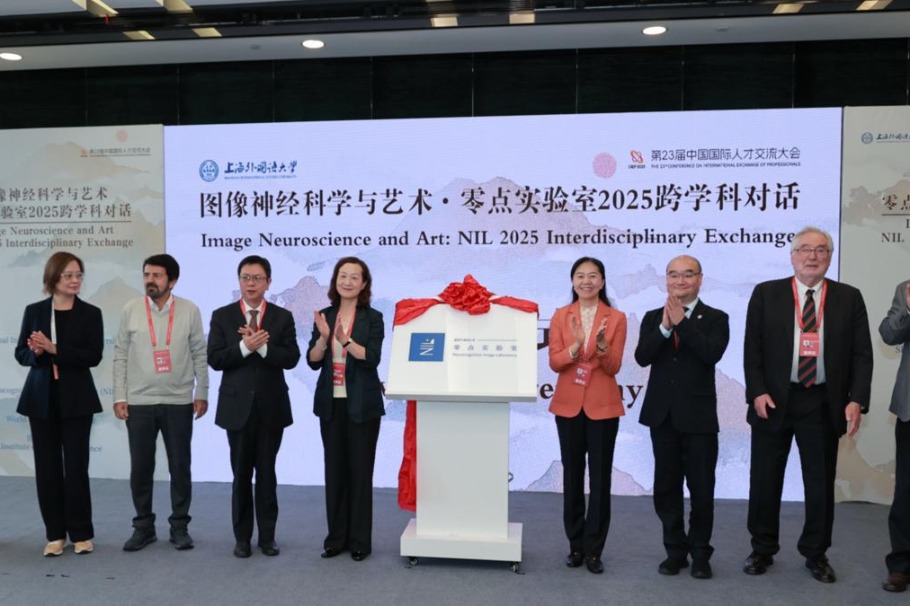
SISU launches neurocognitive image laboratory
Shanghai International Studies University (SISU) has inaugurated its state-of-the-art Neurocognitive Image Laboratory, marking a significant stride in bridging the gap between science and humanities in the era of artificial intelligence. The launch event, held in Shanghai on Tuesday, highlighted the laboratory’s mission to integrate liberal arts with scientific and engineering disciplines, addressing national strategic needs and fostering interdisciplinary research. The facility will delve into pivotal areas such as cognitive neuroscience, image perception, intelligence, and neuroaesthetics, employing advanced methodologies to explore behavior, cognition, and neuroscience across multiple dimensions. Leveraging the synergy between languages, images, and cognitive sciences, the lab aims to propel both fundamental and applied research in human factors engineering and AI. It will also cultivate a global collaboration network, connecting institutions across Europe, Asia, and North America, and establishing an open, shared research platform. Supported by various European organizations, the initiative is led by a consortium of Chinese and international scholars. SISU President Li Yansong emphasized the laboratory’s role in harnessing the university’s international network and humanities expertise to tackle pressing global challenges. ‘This endeavor embodies our commitment to interdisciplinary, international, and integrative research, reflecting the future trajectory of our institution,’ he stated.