分类: science

  • Academicians pledge to advance scientific innovation

    Academicians pledge to advance scientific innovation

    In a significant ceremony held in Beijing on Friday, China’s newly elected academicians pledged their commitment to advancing scientific innovation and accelerating the transformation of research into practical applications. The event marked the formal induction of 144 new domestic members and 51 international members into the nation’s prestigious academies.

    Leadership from both the Chinese Academy of Sciences (CAS) and Chinese Academy of Engineering (CAE) emphasized the dual nature of the academician title as both honor and profound responsibility. CAS President Hou Jianguo challenged the new members to contribute to achieving high-level self-reliance in science and technology, positioning their work within the broader context of national rejuvenation goals.

    CAE President Li Xiaohong highlighted the strategic alignment of the election process with national needs, particularly emphasizing the role of scientific innovation in developing new quality productive forces. The selection criteria prioritized candidates whose expertise addresses China’s most pressing strategic requirements.

    Several newly elected academicians shared their perspectives on their expanded responsibilities. Professor Peng Chengzhi from the University of Science and Technology of China’s Quantum Physics Division described the appointment as representing “national trust and public expectation,” committing to align personal research goals with national development objectives.

    Tsinghua University chemistry professor Li Jun emphasized the practical application of theoretical science, using rare earth elements—which he termed “industrial vitamins”—as an example of how resource advantages must transform into technological prowess for strategic sectors including renewable energy and semiconductor manufacturing.

    Zhejiang University’s neuroscience expert Hu Hailan stressed the human-centered nature of life sciences, stating that scientific research ultimately serves human well-being, particularly in protecting mental health.

    Representing private enterprise, Huang Xianbo, chief engineer at advanced materials supplier Kingfa, highlighted the importance of industry-academia collaboration in converting technological achievements into productive forces, especially in cutting-edge research areas aligned with national strategy.

    The expanded academician roster reinforces China’s systematic approach to building scientific capacity, with members expected to play crucial roles in strategic research consultation and advancing the nation’s technological ambitions.

  • New engineering academicians vow to advance scientific innovation

    New engineering academicians vow to advance scientific innovation

    In a significant ceremony held in Beijing on Friday, 71 newly elected members of the Chinese Academy of Engineering (CAE) formally received their certificates and committed to advancing scientific innovation and transforming research into practical applications. The event marked a pivotal moment in China’s scientific landscape, emphasizing the critical role of engineering excellence in national development.

    CAE President Li Xiaohong addressed the gathering, highlighting how this year’s academician selection process specifically aligned with national strategic priorities. ‘This election cycle emphasized driving the development of new quality productive forces through technological innovation, in keeping with contemporary requirements,’ Li stated. He encouraged the new academicians to take leadership roles in scientific innovation, contribute to strategic national research, and serve as exemplary figures in advancing China’s journey toward high-quality scientific self-reliance.

    The new members represent diverse engineering disciplines and shared their specialized commitments. Zhang Pengju from the Civil, Hydraulic and Architecture Engineering Division pledged to ‘promote the spirit of scientists and break through key core technologies,’ focusing on transforming engineering science into practical solutions that improve living environments in grassland regions and promote green urban-rural transformation.

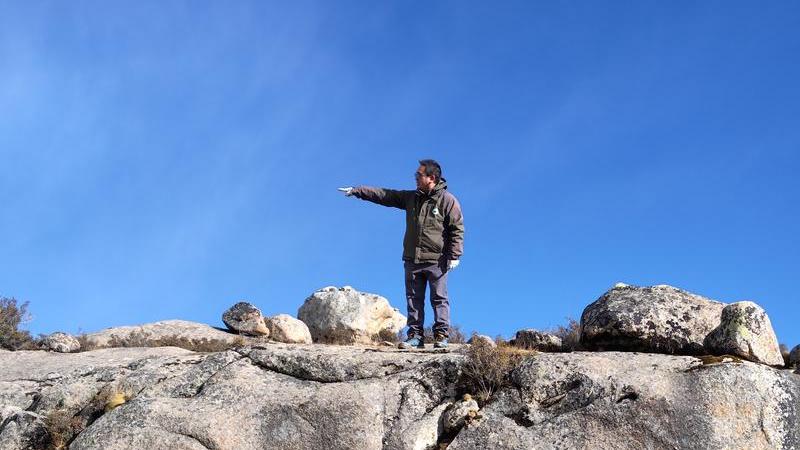
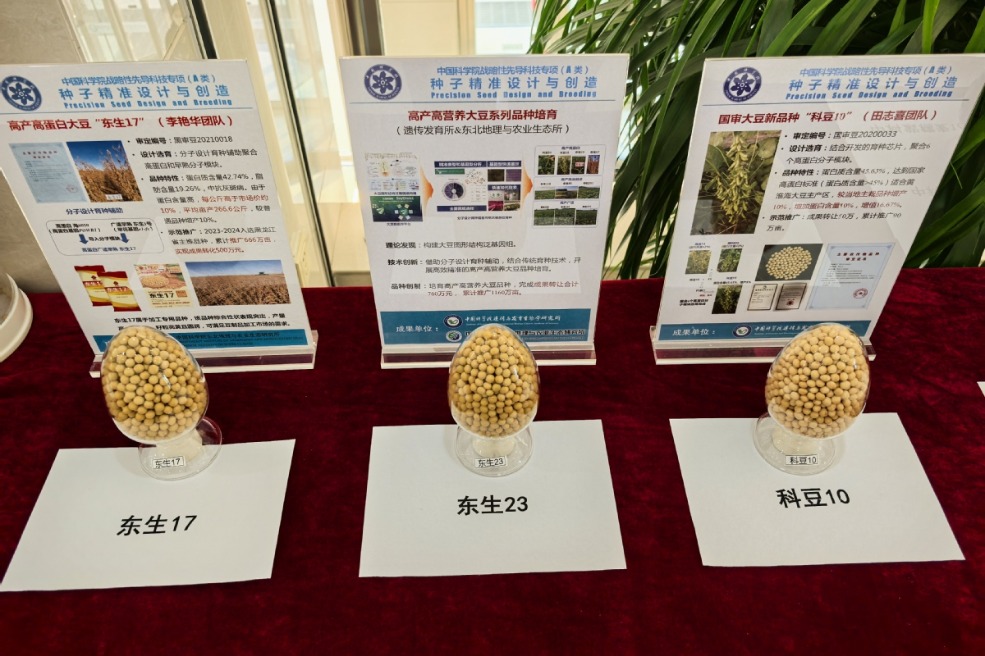
    Lu Zhanyuan from the Agriculture Division emphasized the honor as recognition for all technological workers in frontier regions. He outlined pressing challenges including ‘ensuring food security, promoting green agricultural development, and overcoming bottlenecks in agricultural development in northern China’s farming-pastoral ecotone.’ Lu committed to focusing on farmland protection, water conservation, seed industry revitalization, and cultivating young scientific talents.

    A notable breakthrough in this year’s election was the inclusion of three researchers from private enterprises, signaling China’s commitment to cross-sector collaboration. Huang Xianbo, chief engineer at global advanced materials supplier Kingfa and member of the Chemical, Metallurgical and Materials Engineering Division, noted that ‘the primary concern for researchers in private enterprises is transitioning technological achievements into productive forces.’ He pledged enhanced cooperation with university and research institute scientists to conduct cutting-edge research, contributing to China’s development as a science and technology powerhouse.

    The ceremony followed last month’s announcement by both the Chinese Academy of Sciences and Chinese Academy of Engineering of their expanded ranks, adding 144 new domestic academicians and 51 international members.

  • China set to host World Conference of Science Journalists in 2029

    China set to host World Conference of Science Journalists in 2029

    In a landmark decision at the recently concluded World Conference of Science Journalists in Pretoria, South Africa, China has been selected to host the prestigious 2029 edition of this global gathering. This will mark the first time the conference is held in Chinese territory, representing a significant milestone for the nation’s scientific journalism community.

    The Chinese Society for Science and Technology Journalism successfully secured the hosting rights through a formal application process during the South African conference. The event, organized under the auspices of the World Federation of Science Journalists with support from UNESCO, serves as a premier platform for science communication professionals worldwide to exchange cutting-edge reporting methodologies and practical experiences in scientific storytelling.

    As a founding member of the World Federation of Science Journalists, the China Association for Science and Technology News has maintained consistent engagement with the international science journalism community. This longstanding participation has now culminated in the opportunity to host the global conference, which is expected to significantly enhance China’s role in international science and technology governance discourse.

    The 2029 conference is anticipated to facilitate greater integration of Chinese science journalists into global networks while strengthening China’s influence in shaping international science communication standards. The event will provide a forum for showcasing China’s scientific advancements and journalistic approaches to an international audience, potentially setting new benchmarks for science reporting practices worldwide.

  • Chinese zoologists reveal molecular landscape of aging monkeys

    Chinese zoologists reveal molecular landscape of aging monkeys

    In a groundbreaking study published in Nature Methods, researchers from China’s Kunming Institute of Zoology have unveiled the most comprehensive molecular mapping of aging in non-human primates to date. The research team, spearheaded by prominent scientist Kong Qingpeng, conducted an extensive multi-omics analysis of rhesus macaques, creating an unprecedented resource for understanding the biological mechanisms of aging.

    The investigation focused on 17 female rhesus monkeys ranging from 3 to 27 years old, with samples collected from 30 distinct organ systems including the skin, digestive tract, cardiovascular network, and immune-related organs. Through sophisticated analysis across three molecular dimensions—transcriptomics, proteomics, and metabolomics—the team identified critical patterns in how different organs age at varying rates.

    Researchers discovered that organs age at dramatically different paces, with twelve organs showing accelerated aging patterns including the thymus, spleen, gastrointestinal tract, kidneys, and ovaries. Conversely, eleven organs demonstrated slower aging trajectories, including the brain, liver, skin, and adrenal glands. The study pinpointed translation efficiency—the process of converting mRNA into proteins—as a fundamental molecular mechanism underlying these differential aging rates, with fast-aging organs showing significant decline in this crucial cellular function.

    The research builds upon previous findings that identified a critical aging acceleration point between 16-19 years in rhesus monkeys, equivalent to 48-57 human years. This alignment with human aging patterns reinforces the value of rhesus monkeys as ideal models for human aging research. All molecular data from this comprehensive study has been made publicly available, providing an invaluable resource for the global scientific community’s ongoing efforts to understand and potentially intervene in the aging process.

  • China narrows US’ scientific research lead

    China narrows US’ scientific research lead

    A comprehensive analysis of global scientific research reveals a dramatically narrowing gap between China and the United States in fundamental research leadership. According to the latest annual report jointly produced by the Chinese Academy of Sciences’ Institutes of Science and Development, the National Science Library of CAS, and global analytics firm Clarivate, the two nations now compete head-to-head across 11 major scientific disciplines.

    The study, drawing on data from highly cited research papers published between 2019 and 2024, demonstrates China’s commanding position in six major fields: agricultural, plant and animal sciences; ecology and environmental sciences; chemistry and materials science; physics; information science; and economics, psychology and other social sciences.

    While the United States maintains leadership in five domains—geosciences, clinical medicine, biological sciences, astronomy and astrophysics, and mathematics—its overall advantage has diminished significantly. Notably, China has shown remarkable progress in traditionally weaker areas, climbing to fourth position in clinical medicine and fifth in astronomy and astrophysics.

    “The trend of parallel advancement between the U.S. and China is becoming increasingly pronounced,” the report observes, noting that the United Kingdom and Germany constitute a secondary tier in global research leadership.

    Emmanuel Thiveaud, Clarivate’s vice-president, acknowledged China’s remarkable scientific trajectory: “Over past decades, we have witnessed tremendous progress China has made and continues to make in research and development. China’s position at the forefront of numerous research fronts comes as no surprise.”

    The analysis identified 128 significant research fronts (110 active and 18 emerging), with artificial intelligence emerging as a critical cross-disciplinary force. More than half of emerging research fronts demonstrate AI integration, particularly within clinical medicine and life sciences.

    Professor Li Shao of Tsinghua University highlighted that four of seven emerging clinical medicine research fronts involve large language model applications in healthcare. “Targeted algorithms are revolutionizing disease mechanism research, early screening, and precision treatment,” Li noted, emphasizing AI’s growing role in traditional Chinese medicine and major disease prevention.

    Pan Jiaofeng, president of the Institutes of Science and Development, pointed to the evolving research landscape: “A new scientific revolution is underway with frontiers constantly expanding. High-throughput single-cell technologies, dark matter detection, and AI integration into scientific research are drawing widespread attention.”

    The report serves as both a measurement tool and strategic guide, helping policymakers and researchers navigate the rapidly changing global scientific ecosystem where East-West collaboration and competition are reshaping knowledge production.

  • Mapping the sense of what’s going on inside our body

    Mapping the sense of what’s going on inside our body

    A groundbreaking scientific endeavor is underway to decode interoception—the body’s internal sensory system that provides the brain with continuous feedback about physiological states. This research, spearheaded by Nobel laureate Dr. Ardem Patapoutian and teams at Scripps Research, is revealing how neural pathways monitor everything from heart rate and lung expansion to nutrient absorption and microbial activity in the gut.

    The vagus nerve, a complex network of 100,000 neurons, serves as a primary communication channel, using proteins like Piezo (discovered by Dr. Patapoutian) to detect pressure changes in organs. Advanced tools now allow scientists to trace how these signals travel to the brainstem and disperse to regions like the mid-insula, where they are interpreted—mostly subconsciously—to regulate functions like appetite, immune response, and emotional states.

    Emerging evidence suggests that malfunctions in interoceptive processing may underlie psychiatric conditions including depression, anxiety, and eating disorders. Researchers like Dr. Camilla Nord at the University of Cambridge are exploring innovative treatments, such as using ultrasonic waves to recalibrate brain regions responsible for misinterpreting bodily signals. Meanwhile, weight-loss drugs like Ozempic exemplify how mimicking gut signals can effectively alter brain responses.

    Despite progress, fundamental questions remain. Dr. Patapoutian’s team is developing an interoception atlas to document nerve functions throughout the body, acknowledging that much of this internal landscape is still uncharted. This research not only redefines our understanding of self-awareness but also opens new therapeutic avenues for mental and physical health.

  • Shanghai university unveils sustainable, efficient water treatment system

    Shanghai university unveils sustainable, efficient water treatment system

    Researchers at Shanghai Ocean University have engineered a groundbreaking ecological water treatment system that merges environmental sustainability with significant cost reduction. Spearheaded by Professor Wang Liqing, the innovative approach adopts a holistic methodology inspired by traditional Chinese medicine’s diagnostic principles.

    The system employs a sophisticated four-stage assessment protocol that begins with comprehensive water quality analysis through visual and instrumental monitoring. This initial phase is followed by detailed examination of water circulation dynamics and historical pollution溯源. The collected data then informs the development of tailored treatment strategies that address each water body’s unique characteristics.

    “Water ecosystems represent intricate networks of life,” Professor Wang explained. “Instead of targeting isolated symptoms, our methodology focuses on establishing self-sustaining ecological systems that maintain long-term viability.”

    The treatment process involves strategically interrupting pollution sources, engineering underwater topography, and creating specialized habitats for selected submerged plants. The research team has developed a proprietary strain of Vallisneria that demonstrates exceptional nutrient absorption capabilities and rapid reproduction rates, making it particularly effective for ecosystem restoration.

    The economic advantages are substantial: while conventional engineering methods typically cost 0.2-0.5 yuan per ton of water treated, the ecological approach reduces this expense to just 0.04 yuan per ton—representing up to an 80% reduction in operational costs.

    The university maintains a 22-hectare research facility in Qingpu district that serves as both laboratory and production center, enabling continuous refinement of their sustainable water management technologies. This innovation demonstrates how ecological principles can provide both environmentally sound and economically viable solutions to water treatment challenges.

  • Abu Dhabi: New affordable 3D tumour model eliminates need to test cancer drugs on humans

    Abu Dhabi: New affordable 3D tumour model eliminates need to test cancer drugs on humans

    Researchers at New York University Abu Dhabi have unveiled a groundbreaking paper-based technology that promises to transform cancer research methodologies. The innovation, named Spheromatrix, utilizes a specialized filter paper system to cultivate three-dimensional tumor models that closely mimic human cancer behavior.

    Led by Associate Professor Mohammad Qasaimeh of Mechanical Engineering and Bioengineering, with postdoctoral researcher Ayoub Glia as first author, the team at NYUAD’s Advanced Microfluidics and Microdevices Laboratory has developed a cost-effective alternative to traditional drug testing approaches. The platform enables scientists to grow miniature tumors, preserve them through freezing for extended periods, and conduct repeated drug sensitivity experiments on demand.

    The fiber-based architecture of Spheromatrix provides an optimal biocompatible environment that allows tumor models to develop characteristics remarkably similar to actual human cancers. This technological advancement addresses significant challenges in pharmaceutical development by creating reproducible, scalable systems for preclinical drug screening while substantially reducing dependence on animal testing and human trial subjects.

    In validation studies, the research team applied commercial chemotherapy drugs to preserved brain tumor models, observing response patterns that closely mirrored those seen in actual patient cancers. Crucially, the system demonstrated consistent drug response fidelity both before and after the freezing process, confirming its reliability for long-term research applications.

    The innovation represents part of NYUAD’s expanding portfolio of significant scientific contributions, which recently includes rapid infectious disease detection devices and astrobiological research concerning cosmic rays’ potential role in supporting extraterrestrial life. The Abu Dhabi institution continues to establish itself as a hub for cutting-edge biomedical research with global implications.

  • UAE lunar exploration: Rashid Rover 2 to pioneer historic far side moon mission in 2026

    UAE lunar exploration: Rashid Rover 2 to pioneer historic far side moon mission in 2026

    The United Arab Emirates is preparing to make space exploration history with its Rashid Rover 2 mission, scheduled for launch in 2026. This ambitious endeavor will position the UAE as only the second nation to attempt a landing on the Moon’s mysterious far side, following China’s successful Yutu-2 deployment in 2019.

    Developed entirely within the UAE by the Mohammed Bin Rashid Space Centre (MBRSC), the rover represents a significant leap in the country’s space capabilities. The mission forms a crucial component of the Emirates Lunar Mission program, which aims to deploy multiple rovers to various lunar locations, each with distinct scientific objectives. The program honors the legacy of the late Sheikh Rashid Bin Saeed Al Maktoum, the visionary builder of modern Dubai.

    Rashid Rover 2 will face extraordinary challenges operating on the Moon’s far side, where rugged terrain, complex communication barriers, and extreme environmental conditions present formidable obstacles. The rover has undergone rigorous testing, including thermal vacuum simulations conducted in France, to ensure its systems can withstand the lunar environment’s harsh realities.

    International collaboration plays a pivotal role in this mission. The UAE has partnered with Texas-based Firefly Aerospace, whose Blue Ghost Mission 2 will transport the rover to the Moon using the Elytra Dark orbital vehicle. Additionally, a memorandum of understanding with the French space agency CNES will provide advanced imaging technology, including two high-resolution cameras and a CASPEX imaging module proven effective in previous planetary missions.

    The scientific objectives are both ambitious and practical. Researchers will study geological and thermal aspects of the lunar surface, analyze dust properties, map electrical charge processes, and conduct experiments on materials and mobility systems. Particularly valuable will be testing various materials fitted to the rover’s wheels, with results informing future designs for spacesuits, habitats, and vehicles destined for lunar or Martian operations.

    This mission follows the loss of Rashid Rover 1 in 2023 when its lander failed during descent. Rather than deterring the space program, this experience strengthened the UAE’s resolve, leading to enhanced technological refinement and mission precision.

    Sheikh Hamdan bin Mohammed bin Rashid Al Maktoum, Crown Prince of Dubai and President of MBRSC, emphasized that the mission represents the UAE’s commitment to “generate meaningful knowledge that contributes to humanity’s understanding of the universe.” The project aligns with the nation’s broader vision for economic diversification, scientific advancement, and inspiring future generations to pursue STEM fields.

    As the rover proceeds to the United States for prelaunch preparations, the UAE stands at the threshold of a new era in space exploration—one driven not by prestige but by purpose, collaboration, and a genuine contribution to global scientific knowledge.

  • Shenzhou XXI crew set for first extravehicular activities

    Shenzhou XXI crew set for first extravehicular activities

    China’s ambitious space program reaches another milestone as the Shenzhou XXI astronauts aboard the nation’s orbiting space station prepare to conduct their inaugural extravehicular activities (EVAs) in the coming days. The China Manned Space Agency officially confirmed the planned operations during Thursday’s announcement, marking a significant advancement in China’s celestial capabilities.

    The upcoming spacewalks represent a critical phase in China’s ongoing space station operations, demonstrating the country’s growing proficiency in complex orbital maneuvers. These activities will involve crew members exiting the station’s pressurized modules to perform external maintenance, scientific experiments, and equipment testing in the vacuum of space.

    This mission continues China’s steady progression in space exploration, building upon previous successful missions that established the country as a major spacefaring nation. The carefully orchestrated EVAs require meticulous planning and coordination between the astronauts and ground control teams to ensure absolute safety during the high-risk procedures.

    Technical teams at mission control have been conducting comprehensive simulations and system checks to prepare for the operations. The astronauts have undergone extensive training in both underwater simulations and virtual reality environments to master the complex movements required for working in microgravity conditions while encumbered by pressurized spacesuits.

    The successful execution of these spacewalks will provide invaluable data for China’s future space station operations and potential lunar missions, contributing to humanity’s broader understanding of long-duration space habitation and extravehicular operations.