分类: science

  • How people in Harbin, world’s biggest really cold city, kept warm

    How people in Harbin, world’s biggest really cold city, kept warm

    In the extreme cold of Harbin, Northeast China, where winter temperatures regularly plummet to -30°C, traditional heating methods developed over millennia are now capturing academic attention for their sustainable potential. Unlike modern central heating systems that consume massive energy, these ancient approaches demonstrate remarkable efficiency through intelligent design rather than increased energy consumption.

    The kang, a heated platform-bed constructed from earth bricks, represents one of humanity’s most enduring heating innovations. Functioning as an integrated architectural element rather than mere furniture, this thick raised slab connects directly to the family cooking stove. When meals are prepared, hot air circulates through subterranean passages, warming the entire mass of compacted earth that then radiates heat throughout the night.

    What makes this 2,000-year-old technology particularly relevant today is its targeted heating approach. Instead of warming entire rooms, the kang focuses thermal energy precisely where people need it most. The system requires no pumps, radiators, or fossil fuel consumption beyond what’s already used for cooking. Hundreds of kilograms of earth act as natural thermal batteries, slowly releasing stored heat over many hours.

    Similar principles appear throughout East Asian heating traditions. Korea’s ondol system channels warm air beneath thick floors, while Japan’s kotatsu uses a low table with an under-mounted heater beneath heavy blankets to warm occupants’ legs. These systems all share a common philosophy: maximize personal comfort while minimizing energy waste.

    Even Europe once employed comparable approaches before the widespread adoption of energy-intensive central heating. Ancient Roman hypocausts circulated hot air under floors, medieval households used heavy tapestries as insulation, and various cultures employed heated rugs and enclosed sleeping areas.

    The contemporary relevance of these traditional systems becomes increasingly urgent as millions of Europeans struggle with soaring energy costs and inadequate heating. Modern solutions like heat pumps and renewable energy work best when integrated with highly efficient buildings that require less energy overall. The kang demonstrates that true comfort emerges from intelligent design rather than excessive energy consumption—a lesson that could guide sustainable architecture toward more resilient heating solutions.
  • Climate crisis: Africa’s forests sound a global alarm

    Climate crisis: Africa’s forests sound a global alarm

    A groundbreaking study published in Scientific Reports has uncovered a alarming climate reversal: Africa’s vast forest systems transitioned from carbon absorbers to net emitters between 2010 and 2017. This ecological transformation represents a critical juncture in global climate dynamics, with far-reaching implications for atmospheric stability and international environmental commitments.

    The comprehensive research documents an annual loss of approximately 106 billion kilograms of forest biomass across the continent during the seven-year study period. This degradation translates to 200 million tons of carbon dioxide emissions yearly—equivalent to the total output of a medium-sized industrialized nation like the Netherlands. The most severely impacted regions include the Congo Basin, Madagascar, and West Africa, where deforestation, mining operations, and shifting agricultural practices are accelerating forest depletion at unprecedented rates.

    Forest ecosystems become carbon sources when tree removal surpasses natural regrowth capabilities. The study identifies multiple contributing factors: widespread deforestation eliminating carbon-sequestering vegetation, agricultural and wildfire combustion accounting for nearly 20% of emissions, extractive industries destroying vegetative cover, and soil degradation releasing stored carbon through organic matter breakdown.

    This ecological shift carries profound consequences for global biodiversity, threatening more than 10,000 plant and animal species with potential extinction. Additionally, it jeopardizes the livelihoods of over 100 million people who depend directly on forest resources for sustenance and economic stability. The transformation undermines international climate agreements including the Paris Accord and 2050 net-zero ambitions, particularly as global atmospheric CO2 concentrations exceeded 420 parts per million in 2024—the highest recorded level in human history.

    Researchers emphasize that while Africa’s forest emissions constitute merely 0.5% of global totals, the critical danger lies in the loss of their natural carbon-sequestering function. This development compounds the planetary carbon burden and compromises pathways toward carbon neutrality. The study calls for immediate intervention through strengthened legal protections, large-scale reforestation initiatives capable of reabsorbing 50 million tons of carbon annually through 1.2 million hectares of restoration, community-based forest management, and integration of forest conservation into climate financing mechanisms.

    The findings challenge current carbon offset paradigms, suggesting that without substantial emission reductions, forest-based offsets risk becoming ineffective greenwashing measures. Conservation efforts must therefore form part of a comprehensive strategy prioritizing genuine emission reductions rather than permitting continued fossil fuel expansion.

  • Astronauts complete first cave training

    Astronauts complete first cave training

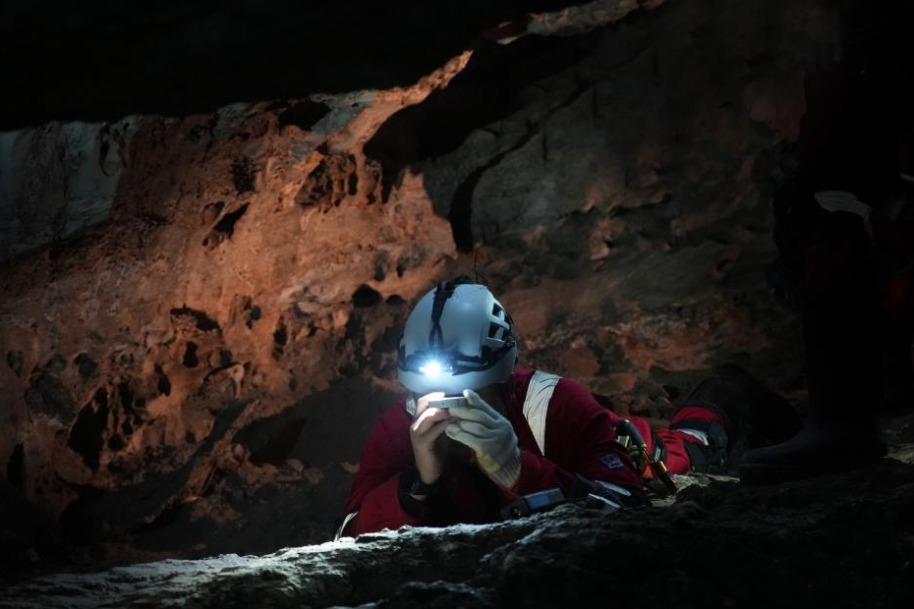
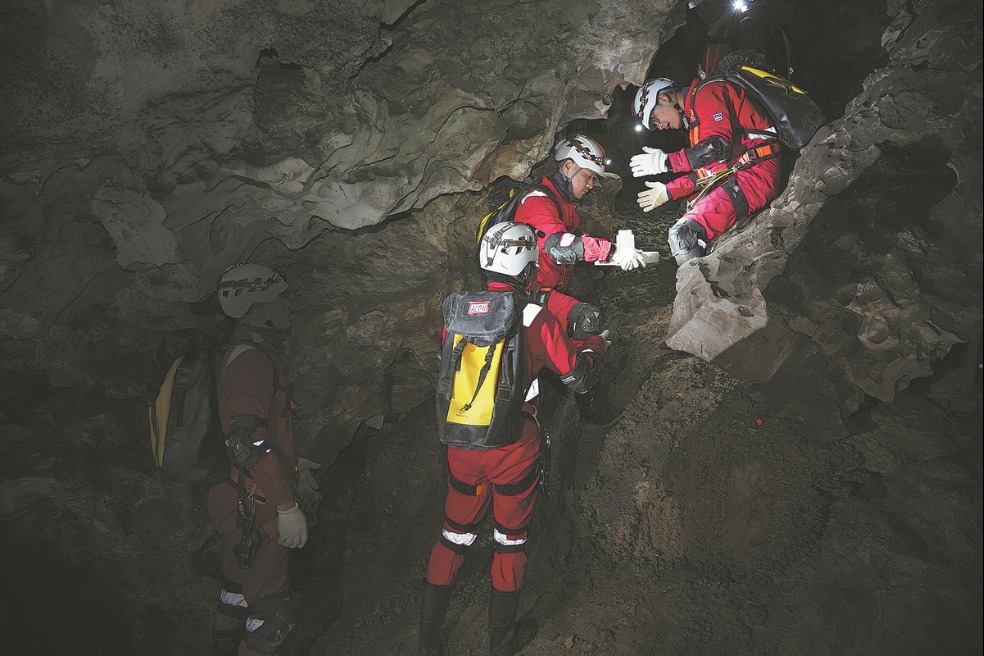
    In a groundbreaking initiative for space preparedness, China has successfully concluded its inaugural cave survival training program for astronauts in Chongqing’s Wulong district. The month-long intensive exercise, organized by the Astronaut Center of China, involved twenty-eight participants facing extreme subterranean conditions to simulate the challenges of deep space exploration.

    The astronauts endured six days and five nights in natural caves with temperatures averaging 8°C and humidity reaching 99%. The training regimen included navigating narrow passages, cliff rappelling, environmental monitoring, cave mapping, and simulated communications with mission control. Beyond physical endurance, the program specifically addressed psychological challenges including sensory deprivation, darkness adaptation, and isolation management.

    According to project leader Wu Bin, the training aimed to enhance multiple critical competencies: “This comprehensive program tested risk response capabilities, self-reliance, teamwork, emergency decision-making, and overall operational readiness in extreme environments.”

    Psychological resilience emerged as a central focus, with astronaut instructor Jiang Yuan emphasizing that “caves represent typical examples of extreme confinement and isolation, providing valuable scientific insights for supporting astronauts’ mental health during prolonged space missions.”

    Veteran astronaut Ye Guangfu, who previously participated in similar European Space Agency training, noted the program’s significance for future long-duration space station operations and crewed lunar exploration. Participants reported the experience effectively simulated the loneliness and unknowns of deep-space exploration while strengthening emergency response capabilities and team cohesion.

    The China Manned Space Agency confirms these rigorous training programs will continue for both new recruits and experienced astronauts, reflecting China’s systematic approach to preparing spacefarers for unpredictable scenarios and potential emergency landings in hostile terrestrial environments.

  • Chinese astronauts complete 1st cave survival training

    Chinese astronauts complete 1st cave survival training

    In a groundbreaking initiative to prepare space explorers for extreme environments, twenty-eight Chinese astronauts have successfully concluded the nation’s inaugural cave survival training program. The intensive month-long exercise, orchestrated by the Astronaut Center of China in Chongqing’s Wulong district, represents a significant advancement in human spaceflight preparation methodology.

    The comprehensive training regimen incorporated over ten specialized activities designed to simulate challenging conditions astronauts might encounter during space missions. Participants conducted environmental monitoring, performed detailed cave mapping operations, engaged in simulated communication exercises replicating spacecraft-ground control interactions, and underwent rigorous psychological and behavioral conditioning.

    Astronauts were organized into four distinct groups, each enduring six days and five nights within natural cave systems characterized by average temperatures of 8°C and humidity levels reaching 99%. The training curriculum required participants to navigate exceptionally narrow passages, execute technical climbs and rappels along cliff faces, and withstand prolonged exposure to cold, damp conditions while managing substantial physical demands.

    Beyond physical challenges, the program addressed critical psychological aspects of space exploration, including overcoming darkness-induced anxiety and coping with sensory deprivation environments. This domestic training initiative follows China’s previous participation in international programs, notably astronaut Ye Guangfu’s involvement in the European Space Agency’s underground training in Italy during 2016.

    The China Manned Space Agency has announced plans to continue these advanced training programs for both veteran astronauts and new recruits, emphasizing the importance of developing enhanced adaptability to extreme environments and improving mission accomplishment capabilities for future space exploration endeavors.

  • Research establishes brain normative references for Chinese population

    Research establishes brain normative references for Chinese population

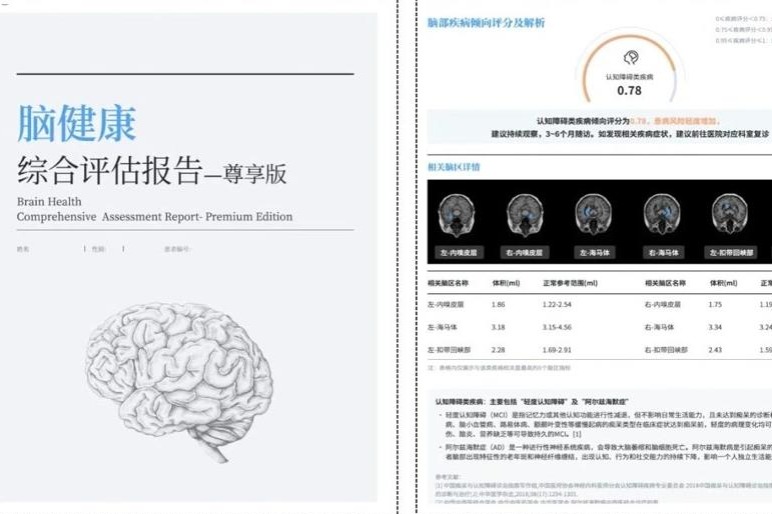
    A groundbreaking study conducted by Chinese researchers has successfully established comprehensive normative references for brain structure across the entire lifespan of the Chinese population, marking a significant advancement in neurological diagnostics. The research, led by Professor Liu Ya’ou from the Department of Radiology at Beijing Tiantan Hospital, addresses critical gaps in neurological healthcare specific to Chinese patients.

    The research initiative emerged from two fundamental challenges in China’s neurological diagnostics landscape. First, existing brain normative standards predominantly derive from Western populations, creating potential inaccuracies when applied to Chinese patients due to distinct genetic backgrounds and environmental factors. Second, the medical community lacked sufficient data to differentiate between normal aging processes and pathological neurological changes, often resulting in delayed diagnoses and missed intervention opportunities.

    To overcome these limitations, the collaborative team from Beijing Tiantan Hospital and Beijing Normal University analyzed an extensive dataset comprising magnetic resonance imaging scans from 24,061 healthy Chinese individuals and 3,932 patients with neurological disorders. Their comprehensive analysis established standardized reference ranges for 228 critical structural indicators specifically tailored to the Chinese population.

    Published in the prestigious international journal Nature Neuroscience, the findings demonstrate how individual brain deviation scores calculated from these normative references can rapidly quantify structural abnormalities and facilitate precise disease identification. The research reveals distinct neurological patterns: Alzheimer’s disease manifests through widespread deviations across multiple brain structures, Parkinson’s disease primarily affects deep gray matter, while multiple sclerosis predominantly involves white matter and thalamus volume alterations.

    This innovative framework, currently undergoing clinical pilot testing at Beijing Tiantan Hospital, enables earlier screening and diagnosis of neurological disorders while supporting more targeted treatment strategies. The research team is expanding collaborations with medical imaging corporations to integrate multi-modal imaging, blood biomarkers, and genetic testing data, further advancing precision medicine approaches for brain health and major neurological conditions.

  • China poised to become a mathematical powerhouse

    China poised to become a mathematical powerhouse

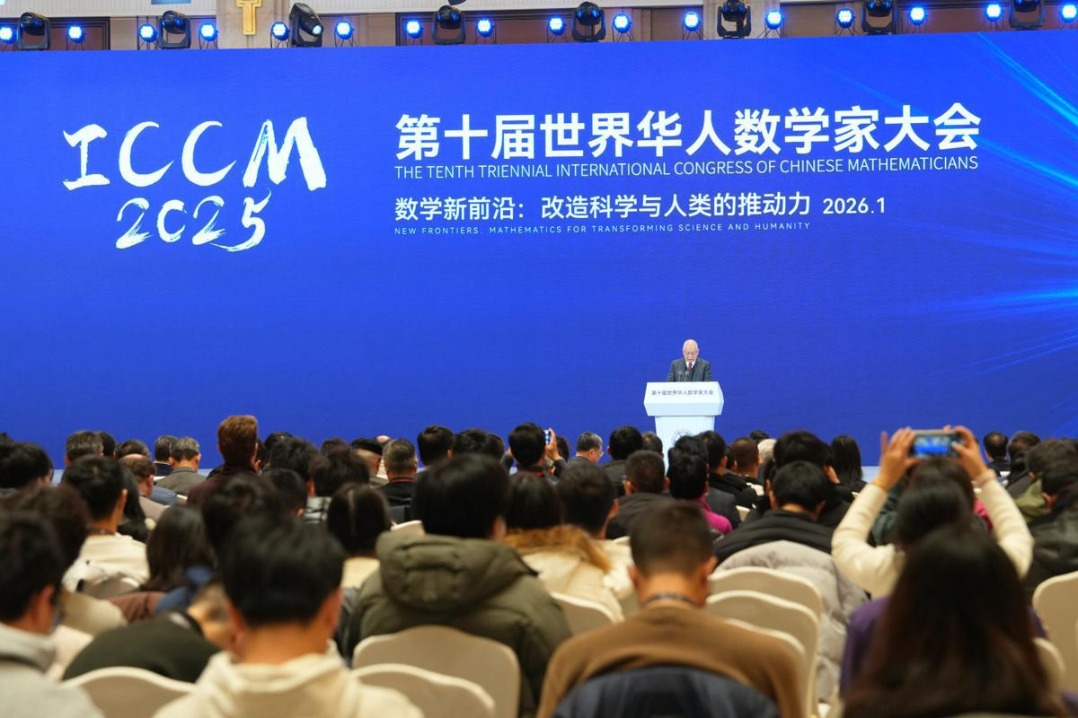
    SHANGHAI – China is rapidly approaching global mathematical supremacy, with projections indicating the nation will reach the pinnacle of mathematical achievement within the next five to ten years. This bold forecast came from Fields Medal laureate Shing-Tung Yau during his address at the 10th Triennial International Congress of Chinese Mathematicians (ICCM), which commenced in Shanghai on Saturday.

    Professor Yau, the first Chinese-born recipient of mathematics’ most prestigious honor and founder of the ICCM in 1998, expressed unwavering confidence that Chinese mathematicians are poised to claim top international awards, including Fields Medals, in the coming decade. His declaration underscores China’s remarkable transformation into an emerging mathematical powerhouse.

    The congress has attracted thousands of participants from across the globe, including Fields Medalists, distinguished researchers, academic professionals, and promising students. This gathering represents one of the most significant international mathematical conferences, creating a dynamic platform for scholarly exchange and collaboration.

    Throughout the five-day event, more than 300 high-level academic presentations and discussions will explore cutting-edge developments in pure mathematics, applied mathematics, and interdisciplinary fields including artificial intelligence and biomedicine. The comprehensive program reflects mathematics’s expanding role in addressing complex scientific challenges.

    Shanghai Party Secretary Chen Jining emphasized the city’s commitment to fostering scientific innovation during his opening ceremony remarks. “Shanghai is dedicated to enhancing innovation capabilities and building an open, inclusive, world-class innovation ecosystem,” Chen stated, highlighting the city’s ambitions to become an international science and technology innovation center.

    Chen specifically recognized Chinese mathematicians as crucial advocates and practitioners within this innovation ecosystem. He called for strengthened collaboration in exploring mathematical frontiers, nurturing young talent, expanding international cooperation, and creating fair innovation environments that serve global communities.

    The event, organized by the Shanghai Institute for Mathematics and Interdisciplinary Sciences with support from the Shanghai Municipal Science and Technology Commission and Yangpu district government, demonstrates China’s strategic investment in mathematical sciences as a foundation for technological advancement and scientific leadership.

  • First super moon of 2026 makes appearance in sky

    First super moon of 2026 makes appearance in sky

    The night sky unveiled a breathtaking astronomical phenomenon on January 3, 2026, as the first super moon of the year made its spectacular appearance. This celestial event, characterized by the moon’s unusually close orbital proximity to Earth, created a visually larger and significantly brighter lunar display than typical full moons.

    The remarkable phenomenon was captured in stunning photographs over Tongjiang city in Northeast China’s Heilongjiang province, where the super moon appeared as a magnificent luminous orb against the night canvas. This occurrence marks the initial of several super moons anticipated throughout 2026, each offering unique opportunities for astronomical observation and photography.

    Super moons occur when the moon’s elliptical orbit brings it to the closest point to Earth (perigee) simultaneously with the full moon phase. This orbital alignment can make the moon appear up to 14% larger and 30% brighter compared to its appearance at the farthest point (apogee). The scientific community emphasizes that while super moons create visually striking appearances, they remain a predictable orbital phenomenon rather than an unusual astronomical event.

    The January super moon attracted attention from both amateur stargazers and professional astronomers worldwide, serving as a reminder of the dynamic relationships within our celestial neighborhood. Such events continue to inspire public interest in astronomy and space science while providing researchers with opportunities to study the moon’s surface features under enhanced lighting conditions.

  • New Chinese study reveals Antarctic amplification mechanism

    New Chinese study reveals Antarctic amplification mechanism

    A groundbreaking study conducted by Chinese scientists has provided definitive confirmation of future Antarctic amplification while elucidating the precise physical mechanisms driving this critical climate phenomenon. Published recently in the prestigious journal Geophysical Research Letters, the research represents a significant advancement in understanding polar climate dynamics.

    Led by researchers from the Institute of Global Change and Polar Meteorology under the Chinese Academy of Meteorological Sciences (CAMS), the study resolves longstanding uncertainties regarding Antarctic warming patterns. While polar amplification has been well-documented in the Arctic, the Antarctic counterpart had remained subject to scientific debate until this comprehensive analysis.

    The research team employed an extensive dataset comprising observations from over 200 Antarctic monitoring stations, combined with China’s first-generation global atmospheric and land surface reanalysis products. This robust methodology enabled the first detection of a continent-wide warming signal across Antarctica’s vast expanse.

    Under the Paris Agreement’s 2 degrees Celsius warming scenario, the study demonstrates a pronounced warming signal over the Antarctic continent, with an overall warming magnitude approximately 1.4 times greater than the Southern Hemisphere average. Dr. Ding Minghu, head of the Institute of Global Change and Polar Research at CAMS, explained the mechanism: ‘The roaring westerlies of the Southern Hemisphere create an isolating effect, meaning human activities primarily influence Antarctica through sea surface warming and subsequent heat transfer. This explains why Antarctic warming has lagged behind other global regions.’

    The research further indicates that with continuously rising sea surface temperatures, Antarctic amplification will progressively intensify in coming decades, accompanied by an accelerated warming rate. This revelation highlights a substantial, previously underestimated human impact on the Antarctic climate system, with far-reaching implications for global sea level rise and climate modeling accuracy.

  • UK records hottest and sunniest year ever in 2025, says weather service

    UK records hottest and sunniest year ever in 2025, says weather service

    Britain’s national meteorological service has confirmed that 2025 stands as the most exceptionally warm and sun-drenched year in the nation’s recorded history, eclipsing previous benchmarks and underscoring an accelerating climate transformation. According to Friday’s announcement from the Met Office, the average annual temperature reached 10.09°C (50.16°F), marginally surpassing the 2022 record of 10.03°C. This milestone represents only the second occasion since comprehensive record-keeping commenced in 1884 that the yearly mean temperature has breached the 10°C threshold.

    The meteorological data reveals a particularly concerning pattern: four of the most recent five years now rank among the top five warmest periods in over 140 years of documentation. This clustering of record-breaking temperatures within such a compressed timeframe provides compelling evidence of rapidly shifting climatic conditions. The persistent dominance of high-pressure weather systems combined with unusually elevated sea temperatures have been identified as primary drivers behind this unprecedented warming trend.

    Mark McCarthy, the Met Office’s Head of Climate Attribution, emphasized the broader implications: ‘While not every subsequent year will necessarily establish new records, the accumulated evidence from both direct weather observations and sophisticated climate modeling unequivocally demonstrates that human-induced global warming is fundamentally altering the United Kingdom’s climate profile.’

    This national phenomenon reflects wider global patterns. The World Meteorological Organization concurrently reported that the past decade constitutes the warmest ten-year period in recorded history. Similarly, the European Union’s Copernicus Climate Change Service projects that 2025 will likely rank as either the second or third warmest year globally in modern datasets, following 2024 which established itself as the hottest year worldwide and particularly affected Europe—the planet’s most rapidly warming continent.

  • China’s ‘artificial sun’ experiment finds way to break fusion plasma density limit

    China’s ‘artificial sun’ experiment finds way to break fusion plasma density limit

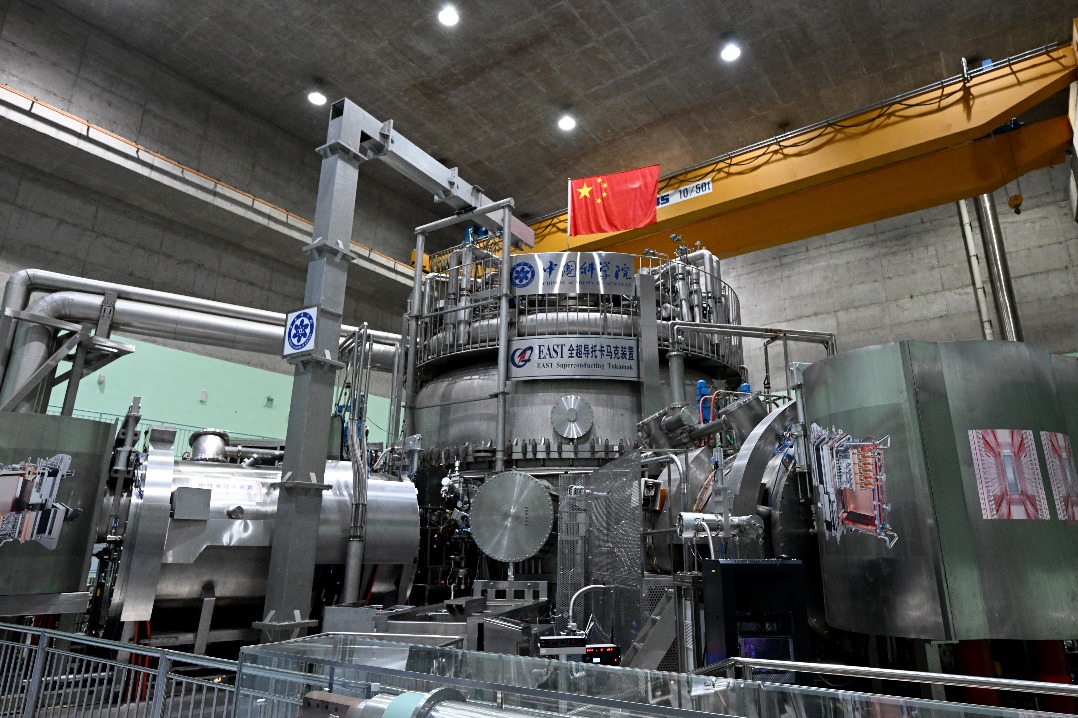
    In a landmark achievement for nuclear fusion research, Chinese scientists have successfully surpassed the longstanding plasma density limit using the Experimental Advanced Superconducting Tokamak (EAST), China’s pioneering ‘artificial sun’ facility. This breakthrough, published in Science Advances on January 2, 2026, represents a critical advancement toward practical nuclear fusion energy.

    The international research collaboration, led by the Institute of Plasma Physics at the Hefei Institutes of Physical Science (Chinese Academy of Sciences) in partnership with Huazhong University of Science and Technology and France’s Aix-Marseille University, has developed a revolutionary theoretical model explaining plasma-wall interactions. Their research identified radiation instability triggered by boundary impurities as the fundamental mechanism behind the previously impenetrable density barrier.

    Tokamak devices, which use powerful magnetic fields to contain superheated plasma in a toroidal configuration, have long been constrained by this density limitation. When approaching this threshold, plasma would become unstable, escape magnetic confinement, and release dangerous energy bursts capable of damaging reactor components.

    The research team’s innovative approach enabled experimental manipulation of plasma beyond conventional limits, guiding it into a previously theoretical ‘density-free zone.’ This marks the first experimental verification of such a stable high-density plasma state in tokamak history.

    This scientific milestone provides both crucial theoretical understanding and practical methodology for achieving sustained high-density plasma operation—a fundamental requirement for viable fusion power generation. The breakthrough significantly advances prospects for developing clean, virtually limitless fusion energy by addressing one of the most persistent challenges in magnetic confinement fusion technology.