分类: science

  • The sea is higher than we thought and millions more are at risk, study finds

    The sea is higher than we thought and millions more are at risk, study finds

    A groundbreaking study published in Nature has uncovered a systematic underestimation in global sea level rise projections that could place tens of millions more people at risk of coastal flooding than previously anticipated. The research reveals that approximately 90% of existing scientific studies and hazard assessments have miscalculated baseline coastal water heights by an average of 30 centimeters (1 foot), creating a dangerous gap in climate preparedness planning.

    The international research team, led by Katharina Seeger of the University of Padua and Philip Minderhoud of Wageningen University, identified a fundamental ‘methodological blind spot’ in how scientists measure the intersection of land and sea. The discrepancy stems from incompatible measurement systems between satellite-based altimetry and land-based elevation models, particularly problematic in the Global South, Pacific regions, and Southeast Asia.

    ‘Studies typically assume a zero-meter starting point without accounting for actual measured sea levels,’ explained Seeger. The reality at coastlines involves complex dynamics including waves, currents, tidal variations, temperature fluctuations, and phenomena like El Niño – factors routinely excluded from simplified models.

    The implications are staggering: when adjusting for accurate baseline measurements, a 1-meter sea level rise (projected by end-century scenarios) could inundate up to 37% additional coastal land. This places 77 to 132 million more people in vulnerable regions at direct risk, with Southeast Asian and Pacific island nations facing the most severe threats.

    Climate scientist Anders Levermann of the Potsdam Institute noted, ‘The risk of extreme flooding is much higher than previously thought for enormous populations.’ The findings underscore urgent needs for revised climate adaptation strategies and funding mechanisms.

    While some experts suggest local planners may already compensate for these discrepancies, the study highlights how methodological oversights could undermine global climate resilience efforts. The research emerges alongside a UNESCO report warning of significant gaps in understanding oceanic carbon absorption, suggesting broader challenges in climate modeling accuracy.

    For coastal communities like those in Vanuatu, where 17-year-old activist Vepaiamele Trief observes eroding shorelines and submerged graves, the scientific revisions confirm lived experiences: ‘These studies represent people’s actual livelihoods being completely overturned.’

  • Beijing to give juniper trees ‘invisible masks’ in fight against pollen

    Beijing to give juniper trees ‘invisible masks’ in fight against pollen

    Beijing is pioneering an innovative approach to combat its annual spring pollen crisis through the strategic application of an organic polymer spray that creates protective barriers on juniper trees. This scientific breakthrough, developed by Beijing University of Agriculture, represents a significant shift from traditional defensive measures to proactive pollen suppression strategies.

    The Beijing Municipal Forestry and Parks Bureau has identified approximately 337,000 juniper trees within the Fifth Ring Road, with nearly half (168,000) being pollen-producing male specimens. According to meteorological projections, the pollination period is scheduled to commence between March 7-11, reaching peak intensity from March 15-20.

    Professor Xing Yu from the College of Plant Science and Technology explains the technological advantage: ‘A single application of this pollen fixative demonstrates over twenty times greater effectiveness in settling pollen compared to conventional water spraying methods. While standard watering requires three to five daily applications, our organic compound achieves superior results with just one daily treatment.’

    The transparent coating, successfully trialed over three years, effectively captures pollen at the source before it becomes airborne. This year marks the first city-wide deployment across Beijing’s six core districts, with the solution now entering mass production phases.

    Complementing the technological intervention, new regulatory frameworks effective since January 1 have formally incorporated pollen management into municipal legislation, establishing clear governmental responsibilities. Additionally, meteorological and forestry departments are collaborating to provide real-time pollen concentration forecasts, enabling citizens to make informed decisions regarding personal protection measures during high-pollen periods.

  • In pics: Lunar eclipse in China

    In pics: Lunar eclipse in China

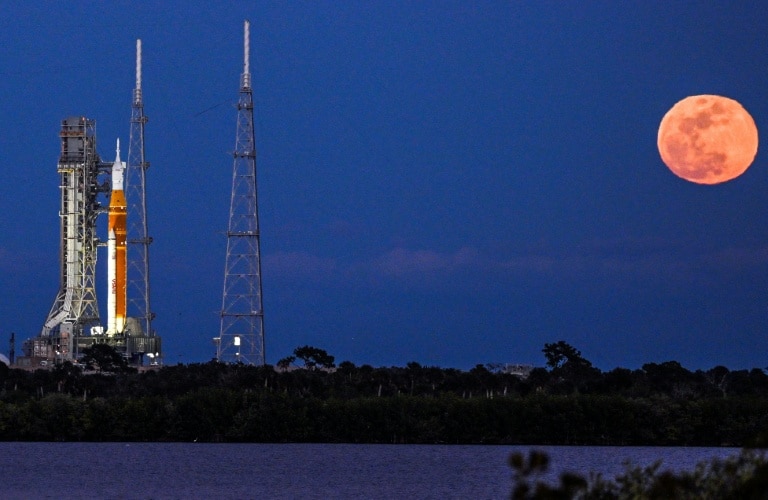
    Skygazers across China were treated to a breathtaking celestial spectacle on Tuesday as a total lunar eclipse painted the moon a dramatic crimson hue. The astronomical event, visible throughout much of the country, reached its peak during evening hours when the Earth’s shadow completely enveloped the moon.

    In Yan’an, Northwest China’s Shaanxi province, photographers captured stunning images of the blood moon suspended against the night sky. The phenomenon occurs when sunlight passing through Earth’s atmosphere gets filtered and scattered, casting the lunar surface in reddish-orange tones rather than the complete darkness one might expect.

    This particular eclipse marked a significant astronomical event for 2026, drawing both amateur stargazers and professional astronomers to observation points across the nation. The clear weather conditions in many regions provided optimal viewing opportunities for those equipped with telescopes and cameras.

    The lunar spectacle attracted widespread public interest, with many Chinese citizens sharing their photographs and experiences on social media platforms. Educational institutions and astronomy clubs organized viewing events to help the public understand the science behind the phenomenon while enjoying its visual grandeur.

    Such celestial events continue to foster scientific curiosity and appreciation for astronomy among China’s population, demonstrating how natural phenomena can bridge gaps between scientific communities and the general public.

  • World’s largest acidic geyser wakes up in Yellowstone from six-year slumber

    World’s largest acidic geyser wakes up in Yellowstone from six-year slumber

    Yellowstone National Park’s renowned Echinus Geyser has spectacularly resumed activity after an unprecedented six-year hiatus, marking its first eruption since 2020. Located within the park’s Norris Geyser Basin, this geological marvel represents the world’s largest acidic geyser, though scientists remain uncertain whether the current activity will persist through the summer tourist season.

    According to the U.S. Geological Survey, geysers naturally cycle through active and dormant phases. “Geysers are always turning on and off. That’s Yellowstone being Yellowstone!” the agency noted in a social media update.

    The geological mechanism behind geyser formation involves a tube-like structure extending deep into the Earth’s crust, filled with water that becomes superheated near magma sources. This pressurized water eventually erupts violently through the surface opening, then gradually drains back to restart the cycle.

    Echinus Geyser historically displayed remarkable regularity, with 1970s eruptions occurring every 40-80 minutes and sometimes lasting 90 minutes while projecting water 75 feet (23 meters) skyward. The eruptions—which could spray vertically or at angles—often drenched spectators with warm mineral water.

    However, the geyser’s pattern became increasingly irregular in recent years, with only one eruption recorded in 2018, one in 2019, and two in 2020. The current activity period began on February 7th, with eruptions now matching 2017 frequency levels, though with shorter durations of up to three minutes and reduced height of approximately 30 feet.

    The geyser derives its name from surrounding rocks resembling sea urchins (echinoderms). Its unique acidic composition—compared by scientists to orange juice or vinegar—results from mixing acidic gases with neutral waters. This mild acidity prevents the corrosive damage typical of acid geysers, which usually degrade their own rock conduits over time.

    Researchers caution that the geyser may already be returning to dormancy following no recorded activity in late February, consistent with its pattern of brief active periods lasting one to two months.

  • New study proposes scientific basis for improving concrete reinforcement in desert environments

    New study proposes scientific basis for improving concrete reinforcement in desert environments

    A groundbreaking study from Chinese researchers has overturned conventional wisdom about sandstorm damage, revealing that moderate wind and sand erosion can actually enhance the structural integrity of concrete surfaces in desert environments. The collaborative research between the Northwest Institute of Eco-Environment and Resources (NIEER) under the Chinese Academy of Sciences and Lanzhou Jiaotong University provides a scientific basis for improving reinforcement methods for infrastructure in arid regions.

    Published in the prestigious journal Composites Part B: Engineering, the study investigated the interface performance of wind-and-sand-eroded concrete when reinforced with carbon fiber-reinforced polymer (CFRP). Unlike previous research that focused on ideal flat interfaces, this pioneering work simulated various wind-sand environments through mechanical testing and microscopic analysis.

    Lead researcher Liu Benli from NIEER explained the counterintuitive findings: “Moderate abrasion forms a microstructure conducive to the bonding of the reinforcing layer. In vivid terms, the process resembles a sculptor carving rough textures into stone for subsequent reinforcement.” The research demonstrated that wind and sand impact creates microscopic grooves on material surfaces, providing natural anchoring points for coatings and protective materials that significantly enhance interfacial bonding.

    The quantitative results were striking: sand erosion increased the interface ultimate bearing capacity of CFRP-concrete specimens by 31 percent and amplified surface roughness by a factor of 10 compared to uneroded specimens. The research team also developed predictive models for interfacial bearing capacity and bond-slip relationships that incorporate abrasion effects, showing strong alignment with experimental data.

    According to Zhang Kai, associate professor at Lanzhou Jiaotong University’s School of Civil Engineering, the study represents a significant advancement: “For the first time, we’ve achieved quantitative correlation between environmental conditions and interface performance. Engineers can now precisely predict material load-bearing capacity based on wind and sand intensity.” This breakthrough enables the scientific utilization of sandstorms as a ‘natural power’ to sustain infrastructure in desert regions, potentially transforming how engineers approach construction and maintenance in challenging environments.

  • Chinese researchers create neural network for modeling human concept formation

    Chinese researchers create neural network for modeling human concept formation

    A team of Chinese researchers has achieved a significant milestone in artificial intelligence by developing an innovative neural network capable of simulating human concept formation. The breakthrough, detailed in a recent publication in Nature Computational Science, represents a fundamental advancement in understanding how AI can form abstract concepts from raw sensory data such as visual and auditory inputs.

    The research collaboration between the Institute of Automation of the Chinese Academy of Sciences and Peking University has produced CATS Net (Concept-Abstraction Task-Solving Network), a novel framework that addresses critical limitations in current AI systems. Unlike conventional large language models that rely exclusively on pre-existing linguistic data, this new architecture enables spontaneous concept generation through experiential learning.

    CATS Net operates through two integrated modules: a concept-abstraction component that processes sensory information, and a task-solving module that performs specific functions including recognition and judgment tasks. This dual-structure approach allows the system to autonomously develop an extensive “concept space” – a structured repository of abstract representations that mirrors human cognitive organization.

    Remarkably, the framework enables knowledge transfer between different AI systems through aligned concept spaces, eliminating the requirement for retraining on raw data. This capability closely parallels human communication patterns where shared conceptual understanding facilitates efficient information exchange.

    Through comprehensive brain imaging studies, the research team demonstrated that CATS Net’s conceptual organization aligns closely with human cognitive and linguistic patterns. The neural activity patterns observed during the network’s operation show significant correspondence with concept-processing regions in the human brain, suggesting the model not only mimics but potentially illuminates the computational mechanisms underlying human concept formation.

    This research provides unprecedented insights into both artificial intelligence development and fundamental neuroscience, offering new pathways for creating AI systems that learn and reason more like humans while advancing our understanding of cognitive processes.

  • Elevated iron levels key to social anxiety

    Elevated iron levels key to social anxiety

    A groundbreaking study led by South China University of Technology has revealed a previously unknown neurological mechanism linking social isolation to anxiety disorders. Published in the prestigious journal Cell Metabolism, the research demonstrates how prolonged solitude triggers iron accumulation in the brain’s emotional regulation centers, creating a biological pathway for social anxiety development.

    The research team, under the direction of Associate Professor Wang Zhuo in collaboration with Zhejiang University and Southern Medical University, discovered that isolated mice exhibited abnormal iron elevation specifically in the ventral hippocampus region. Contrary to iron’s traditional perception as a neural nutrient, the study reveals its dual nature under psychological stress, where excessive amounts trigger destructive neurological processes.

    Professor Wang describes the mechanism as ‘ferroplasticity’—iron-mediated, experience-dependent neuroplasticity that directly connects cerebral iron metabolism disorders to affective conditions. The excessive iron activates alpha-synuclein proteins, inducing abnormal neuronal hyperexcitability that Wang compares to an electrical short circuit constantly transmitting anxiety signals throughout the nervous system.

    The most promising aspect of the discovery lies in its therapeutic implications. Through targeted nasal administration addressing either iron or alpha-synuclein molecules, researchers successfully reversed anxiety behaviors in mice within two weeks—significantly faster than the four weeks required for traditional resocialization approaches.

    This breakthrough suggests potential noninvasive interventions for over one billion people worldwide affected by isolation-related psychological issues. The research team is now advancing human safety studies and dosage optimization for nasal spray formulations while developing noninvasive imaging techniques to detect ventral hippocampal iron deposition.

    The World Health Organization has recognized social isolation as a major global health threat, making this discovery particularly timely. The findings offer hope for vulnerable populations including isolated elderly individuals, remote workers, postoperative patients, and socially avoidant adolescents who might benefit from precisely targeted, non-pharmaceutical anxiety interventions.

  • Cyborg cockroaches to the rescue

    Cyborg cockroaches to the rescue

    In a groundbreaking development at Shandong University of Science and Technology, researchers have successfully engineered cyborg cockroaches capable of navigating complex disaster scenarios. These biohybrid insects, equipped with miniature cameras and neural stimulation devices, represent a significant leap in search-and-rescue technology.

    The innovation centers on a sophisticated bioneural regulation system that directs cockroach movements through precisely calibrated electrical pulses applied to their antennae. This approach leverages the insect’s natural agility while maintaining human control, creating an efficient reconnaissance platform for environments inaccessible to humans or traditional robotics.

    Professor Huai Ruituo, leading the research initiative, emphasizes the transformative potential: “Following catastrophic events like earthquakes or structural collapses, these enhanced insects can rapidly survey hazardous areas while transmitting real-time visual data to rescue teams.”

    The technological breakthrough extends beyond emergency response applications. The research team identifies additional implementations including agricultural pest monitoring, industrial facility inspections, and pipeline maintenance operations where conventional robotics face limitations.

    A key achievement involves the development of an automated surgical platform that streamlines device implantation, increasing procedure efficiency sixfold while maintaining a remarkable 99% success rate. Each unit requires approximately 20 minutes to prepare at a minimal cost equivalent to $6.50, operating continuously for 50 minutes with a total lifespan extending to three months.

    This research continues SDUST’s pioneering work in bionic animal systems dating to the late 1990s, when Professor Su Xuecheng first proposed overcoming traditional robotics limitations by integrating living organisms with electronic control systems. The university previously developed China’s first cyborg rat in 2005 and subsequently advanced avian guidance systems using pigeons.

    Looking forward, Vice-President Chen Shaojie outlines the institution’s roadmap: “We’re integrating artificial intelligence with our biohybrid robotics expertise to evolve beyond remote control toward autonomous perception and decision-making capabilities in dynamic environments.”

  • Mountain quest reveals hidden riches

    Mountain quest reveals hidden riches

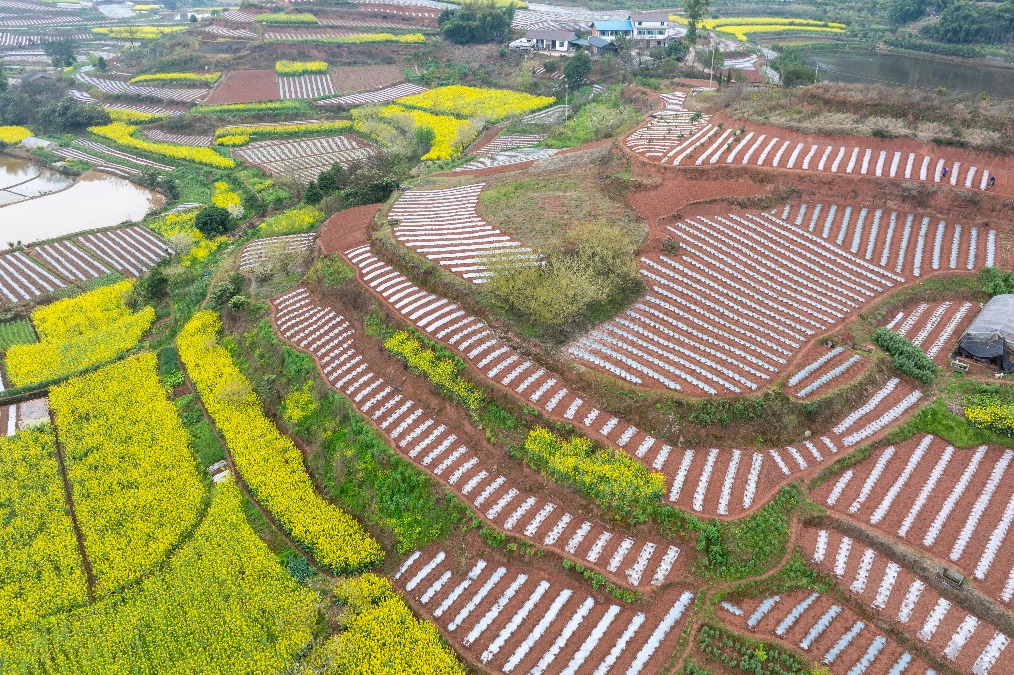
    In the formidable terrain of Yunnan’s Nujiang Lisu Autonomous Prefecture, a team of 33 geological specialists from the Kunming General Survey of Natural Resources Center is conducting a groundbreaking mineral mapping initiative. Their mission: to systematically analyze a 44-square-kilometer radius surrounding China’s largest open-pit lead-zinc mine in Lanping.

    The expedition, launched in early January, represents the critical first phase of mineral exploration. Team members like Wang Tianyi navigate treacherous slopes and freezing conditions while executing precise sampling protocols. Their methodology involves collecting soil samples at precise 40×100 meter intervals, followed by solar drying, mechanical pulverization, and sophisticated geochemical composition testing.

    Wang recently described an unexpected January 28th encounter where his team gently relocated a stray calf blocking mountain access roads—a comparatively benign interruption compared to previous wildlife encounters with bears and wild boars. With 90% of their massive survey already completed, the team has now turned to the most challenging sector: the rugged northern central zone.

    ‘This is physically demanding work, but each sample brings us closer to discovering new mineral deposits,’ noted the 35-year-old geologist. ‘That makes every hardship worthwhile.’

    These scientific efforts provide invaluable data about the region’s mineral potential, enabling strategic planning for future resource exploration and sustainable extraction operations. The team’s findings could significantly impact China’s mineral resource management and economic development planning.

  • Evolution key to food security, new drug discoveries

    Evolution key to food security, new drug discoveries

    A groundbreaking international scientific collaboration has been launched to map the evolutionary history of land plants, aiming to address critical challenges in biodiversity conservation, food security, and pharmaceutical development. The PLANeT initiative, involving over 40 research institutions worldwide including China’s Botanical Society, Peking University, and the Agricultural Genomics Institute at Shenzhen, represents one of the most comprehensive plant genomics projects ever undertaken.

    According to Dr. Wang Li, a leading researcher at the Shenzhen genomics institute, the project addresses a fundamental knowledge gap: despite hundreds of millions of years of plant evolution, scientists still lack a clear understanding of how major plant groups are related. More than 99% of land plant species currently lack high-quality reference genomes, significantly limiting evolutionary and genetic studies.

    The ambitious initiative will systematically sample plant groups at key taxonomic levels that currently lack reference genomes. Using advanced phylogenomic methods that combine evolutionary biology with genomics, researchers plan to construct a high-resolution phylogenetic tree of land plants. This framework will help scientists trace critical evolutionary nodes and understand both shared genetic traits and unique characteristics across plant species.

    To manage the massive volume of genomic data, the project will integrate artificial intelligence into its research framework. Dr. Wang explains the innovative approach: “Just as language models learn grammar and meaning from large amounts of text, genomic language models can learn the ‘common language’ of plants.” By analyzing tens of thousands of plant genomes, AI systems will be trained to recognize conserved DNA sequence patterns, regulatory networks, and functional modules embedded in DNA sequences.

    The project has already completed genome assemblies for representative species from all orders of angiosperms (flowering plants). Its ambitious goals include identifying 1,000 bioactive natural products for drug discovery, discovering 100 potential new economic crops, and establishing what researchers term “a common language of land plants.”

    Beyond biodiversity conservation, the genomic data is expected to revolutionize crop improvement strategies in response to climate change. By identifying genes crucial for disease resistance, drought tolerance, and salt tolerance, researchers hope to accelerate the development of climate-resilient crops and strengthen global food security.

    The initiative also promises to transform conservation efforts. While traditional conservation has been constrained by limited field observations, genomic information will enable scientists to identify species experiencing genetic erosion more efficiently, allowing for better-informed protection strategies and more accurate extinction risk assessments.

    Professor Chong Kang, president of China’s Botanical Society and an academician of the Chinese Academy of Sciences, emphasized the project’s far-reaching implications: “We can foresee that the project will greatly drive research across a broad spectrum of fields—from fundamental studies and biodiversity conservation to crop improvement and natural product-inspired drug discovery.”

    The PLANeT initiative represents a significant step toward unlocking the genetic potential of Earth’s plant diversity, with applications spanning medicine, agriculture, and environmental conservation.