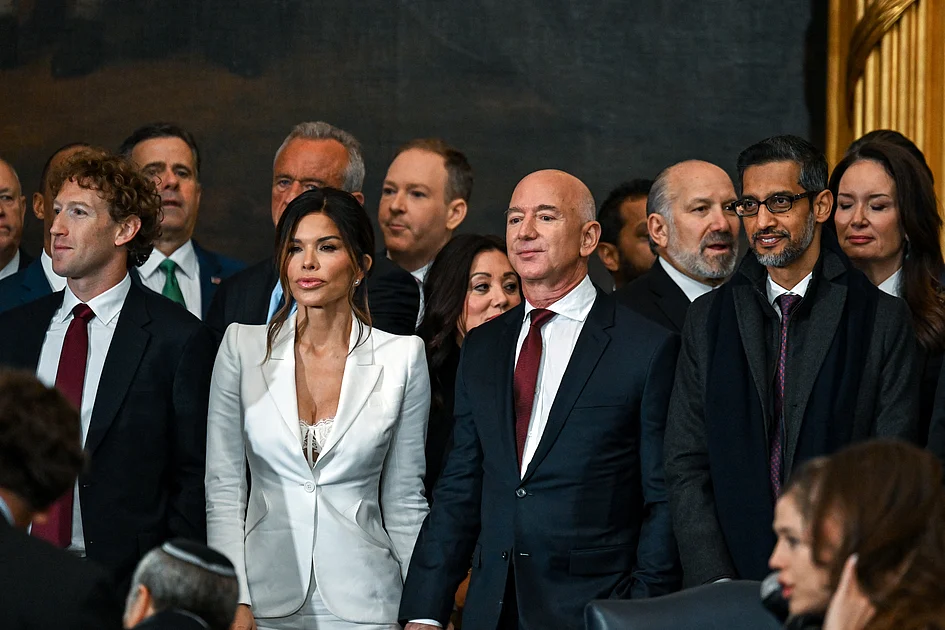
French Prime Minister Sébastien Lecornu finds himself at a critical juncture as he navigates the contentious debate over a proposed 2% wealth tax on billionaires, a measure that could determine his political survival. The tax, dubbed the ‘Zucman tax’ after economist Gabriel Zucman, targets individuals with assets exceeding €100 million and has garnered overwhelming public support, with 86% of voters in favor, including 92% of President Emmanuel Macron’s party members. However, the proposal faces fierce opposition from right-wing lawmakers and business leaders, who warn it could stifle investment and trigger capital flight. Lecornu, who assumed office less than two years ago, is racing to finalize the 2026 budget by October 7, with the Socialists demanding the tax as a condition for their support. Failure to secure their backing could lead to a no-confidence motion, potentially toppling his government. The tax, which would affect approximately 1,800 households, is projected to raise up to €20 billion annually, aiding France’s efforts to reduce its budget deficit, the largest in the eurozone. Critics argue that the tax could harm innovative startups like Mistral AI, Europe’s rising star in artificial intelligence, while proponents insist it is a necessary step toward tax justice and reducing wealth inequality. The debate has reignited discussions about France’s tax burden, already the highest among OECD countries, and its implications for economic competitiveness. As Lecornu weighs the political and economic ramifications, the fate of the Zucman tax remains uncertain, with potential constitutional challenges looming.
分类: politics
-

Exclusive: U.S. diplomats on Syria abruptly let go amid pro-Damascus policy push, sources say
In a surprising turn of events, several senior U.S. diplomats stationed at the Syria Regional Platform (SRP) in Istanbul have been abruptly dismissed, according to sources familiar with the matter. The SRP, which functions as the de facto U.S. mission to Syria, has been a key player in Washington’s efforts to integrate Syrian Kurdish allies with the central administration in Damascus. The dismissals, which occurred suddenly and involuntarily, are part of a broader reorganization of the team, though they are not expected to impact U.S. policy in Syria. The diplomats reported to Tom Barrack, the U.S. special envoy for Syria and a close confidant of former President Donald Trump. Barrack, who was appointed in May, has been advocating for a unified Syrian state under President Ahmed al-Sharaa, who rose to power in a swift advance last year. The move to integrate the Kurdish-led Syrian Democratic Forces (SDF) into national security forces has been met with resistance from some SDF leaders, who have fought alongside the U.S. against Islamic State during former President Bashar al-Assad’s rule. The SDF continues to push for a less centralized government, aiming to retain the autonomy they gained during Syria’s civil war. Barrack, who also serves as the U.S. ambassador to NATO member Turkey, has been actively involved in addressing regional issues, including a recent plan to resolve a standoff with the Druze minority in southern Syria. The State Department has declined to comment on the dismissals, emphasizing that core staff working on Syrian issues remain operational from various locations. The SRP, headquartered at the U.S. consulate in Istanbul, has been the primary U.S. diplomatic presence in Syria since the closure of the embassy in Damascus in 2012.
-

NYT chief executive warns Trump is deploying ‘anti-press playbook’, FT says
On September 17, 2025, Meredith Kopit Levien, CEO of The New York Times, publicly addressed the $15-billion lawsuit filed by U.S. President Donald Trump against the newspaper. Speaking at a Financial Times conference, Levien dismissed the lawsuit as ‘legally baseless’ and lacking any legitimate claims. She asserted that the suit was a strategic move to intimidate and suppress independent journalism, particularly the fact-based reporting that The New York Times is renowned for. ‘The New York Times will not be cowed by this,’ Levien declared, emphasizing the paper’s commitment to upholding journalistic integrity. This lawsuit is part of a broader pattern of legal actions Trump has taken against media outlets during his second term, including a $10-billion defamation case against The Wall Street Journal in July. The White House has yet to comment on the matter. The New York Times, in response to Reuters, reiterated that the lawsuit was an attempt to stifle independent reporting and lacked any substantive legal foundation. The case underscores the ongoing tension between the Trump administration and the press, raising concerns about press freedom and the role of media in holding power to account.
-

Workers across France strike over budget cut plans
France witnessed a massive wave of protests on Thursday as hundreds of thousands of workers, students, and pharmacists heeded the call of trade unions to demonstrate against proposed budget cuts. The interior ministry estimated that between 600,000 and 900,000 people participated in nationwide demonstrations, prompting the deployment of 80,000 police officers to maintain order. The strikes, which severely disrupted public transport and blocked roads in major cities, come just a week after Sébastien Lecornu was appointed prime minister following the collapse of François Bayrou’s government. Unions are demanding increased public spending, higher taxes on the wealthy, and the abandonment of austerity measures outlined by Bayrou’s short-lived administration. Sophie Binet, leader of the General Confederation of Labour (CGT), emphasized the need for collective action to pressure the government into reversing policies perceived as favoring the rich. Meanwhile, outgoing Interior Minister Bruno Retailleau warned of a zero-tolerance approach to unrest, with 58 arrests reported by mid-morning. The protests follow last week’s demonstrations by the Bloquons Tout movement, which also caused widespread disruption. Lecornu, facing a divided parliament and mounting public debt, has yet to renounce the cuts entirely but is engaging in talks with opposition parties to seek a compromise. France’s public debt, equivalent to nearly €50,000 per citizen, remains a pressing concern, with previous prime ministers Barnier and Bayrou also ousted over similar austerity proposals.
-

Togo leader’s sister-in-law arrested after calling for end to family rule
Marguerite Gnakadé, a former defense minister and prominent critic of Togo’s government, has been arrested, according to security sources. Gnakadé, the sister-in-law of long-serving leader Faure Gnassingbé, recently called for his resignation and urged the military to support the people in ending decades of dynastic rule. A police source told AFP that she was arrested for serious acts, including inciting the military to rebellion. Local media reported that she was taken into custody by security forces at her home in the capital, Lomé, on Wednesday. Togo has been experiencing deadly protests demanding Gnassingbé’s resignation and the release of political prisoners. These protests reflect widespread anger and fatigue with a family-run regime that has been in power for six decades. Gnassingbé, who has led the country since 2005, succeeded his father, Gnassingbé Éyadéma, who ruled for 38 years from 1967. A new constitutional structure that allows Gnassingbé to prolong his hold on power while shifting to a new role as President of the Council of Ministers has further fueled the protests. In May, Gnassingbé was sworn into this new position, which has no official term limits. Gnakadé, who served as defense minister from 2020 to 2022, has been a vocal critic of Gnassingbé, writing articles calling for his resignation and supporting protests against his leadership. Her arrest has sparked outrage on social media, and she is currently being questioned by authorities. Some reports suggest the charges against her are related to alleged connections with exiled opposition figures and attempts to incite disobedience within the armed forces. If proven, these allegations could result in a prison sentence of 10 to 20 years. Opposition parties and civil society groups have condemned her arrest, calling it an abuse of power aimed at silencing dissent. A youth-led movement, M66, has issued a 72-hour ultimatum demanding her release, threatening nationwide demonstrations if their demand is not met. The situation remains tense as more details about her arrest are expected to emerge in the coming days.
-

Rahul Gandhi says India poll panel shielding ‘vote thieves’
Indian opposition leader Rahul Gandhi has intensified his criticism of India’s Election Commission (ECI), accusing its chief, Gyanesh Kumar, of shielding those who are ‘murdering democracy.’ Speaking at a press conference in Delhi on Thursday, Gandhi alleged that voter rolls had been manipulated to favor the ruling Bharatiya Janata Party (BJP) in key state elections. He claimed to possess ‘100% proof’ of electoral rigging and criticized the ECI for ignoring repeated complaints from his Congress party. The ECI dismissed the allegations as ‘incorrect and baseless,’ while the BJP also rejected the claims. This marks the latest in a series of accusations Gandhi has leveled against the ECI since August, when he first alleged widespread voter manipulation during last year’s parliamentary elections. Gandhi cited specific instances, including the deletion of over 6,000 voter names in Karnataka’s Aland constituency, predominantly affecting minority and disadvantaged groups known to support Congress. He also highlighted the addition of 6,850 allegedly fake names in Maharashtra’s Rajura constituency. Despite the ECI’s rebuttal, Gandhi’s claims have garnered support from opposition parties and some former election commissioners, who argue that the ECI must address concerns about the credibility of India’s electoral process.
-

US House advances stopgap bill to avert government shutdown
The U.S. House of Representatives, under Republican control, has taken a critical step toward averting a partial federal government shutdown by approving a procedural measure to debate a stopgap funding bill. The vote, which passed 216-210 on Wednesday, sets the stage for a final decision later this week. The proposed continuing resolution (CR) aims to fund federal agencies through November 21, providing Congress additional time to negotiate comprehensive appropriations for fiscal year 2026, which begins on October 1. The CR also allocates $88 million to enhance security for members of Congress, the Supreme Court, and the executive branch, a response to the recent assassination of conservative activist Charlie Kirk. House Republicans aim to pass the CR by Friday and send it to the Senate, where bipartisan support will be essential for approval. The White House has endorsed the resolution, while Democrats have criticized it as partisan. In response, Democrats introduced an alternative bill to extend government funding through October 31, which includes provisions to restore Medicaid funding and extend healthcare tax credits under the Affordable Care Act. However, the Democratic proposal is unlikely to pass. Senate Democratic leader Chuck Schumer emphasized the need for bipartisan collaboration, stating, ‘We have two weeks. They should sit down and talk to us, and we maybe can get a good proposal.’ The annual funding debate addresses approximately one-quarter of the federal government’s $7 trillion budget, excluding mandatory programs like Social Security and Medicare. The outcome of this legislative battle will have significant implications for government operations and public services.
-

Republican lawmaker raises concerns about TikTok divestiture deal
The Republican chair of the House Select Committee on the Chinese Communist Party, Representative John Moolenaar, has expressed significant concerns regarding a proposed U.S.-China framework deal that would transfer TikTok’s U.S. assets to American ownership. Moolenaar highlighted that the deal might still allow Beijing to exert influence over the app’s users through ByteDance’s algorithm and application. This development comes amidst ongoing debates about national security and data privacy concerns associated with the popular social media platform.
-

White House readies executive order on political violence as liberal groups sound warning
The White House is reportedly drafting an executive order aimed at addressing political violence and hate speech, according to a Trump administration official. This move comes in the wake of heightened scrutiny of left-leaning organizations following the assassination of conservative activist Charlie Kirk, a prominent Trump ally. The administration has accused liberal groups of exacerbating societal divisions and inciting violence, while critics argue that the focus on left-wing organizations overlooks the administration’s own controversial actions, including the pardoning of individuals involved in the January 6, 2021, Capitol attack. President Trump has suggested using federal racketeering laws to prosecute groups he claims fund left-wing violence and has even floated the idea of designating some as terrorist organizations. Over 120 nonprofits, including the Ford Foundation and Open Society Foundations, have publicly opposed these efforts, asserting that their charitable work is being mischaracterized. The executive order, which could be unveiled soon, is being finalized by Trump’s top advisers, including White House Deputy Chief of Staff Stephen Miller. This development marks the latest escalation in the Trump administration’s broader campaign to challenge institutions it perceives as adversarial, including withholding federal funds from universities like Harvard and Columbia and investigating Democratic fundraising platforms like ActBlue.
-

US judge orders deportation of Palestinian activist Mahmoud Khalil
A US immigration judge has mandated the deportation of Mahmoud Khalil, a pro-Palestinian activist, to either Algeria or Syria, citing alleged omissions in his green card application. Judge Jamee Comans of Louisiana asserted that Khalil intentionally misrepresented facts to bypass immigration procedures. Khalil, a permanent US resident of Palestinian descent, gained prominence during the 2024 Gaza war protests at Columbia University, where he was a student. His legal team has announced plans to appeal the decision, emphasizing that existing federal court orders prevent his deportation or detention. Khalil was previously detained by Immigration and Customs Enforcement (ICE) in March as part of the Trump administration’s crackdown on universities accused of failing to address antisemitism. After three months in a Louisiana immigration facility, a federal judge ruled his release, citing no flight risk or community threat. During his detention, Khalil’s wife, a US citizen, gave birth to their son. The US government has also accused Khalil of omitting details about his past affiliations, including his work with UNRWA and the British Embassy in Beirut. Khalil has condemned the deportation order as a retaliatory measure for his activism, stating, ‘They resorted to fabricating baseless allegations to silence me.’ In June, his lawyers filed a $20 million damages claim for false imprisonment and malicious prosecution. Trump has labeled pro-Palestinian activists, including Khalil, as Hamas supporters, advocating for their deportation. Khalil played a significant role in Columbia University’s 2024 protests, mediating between activists and university officials. While accused of leading the Columbia University Apartheid Divest (CUAD) group, Khalil denies the claim, stating he merely served as a spokesperson and mediator.