The U.S. Department of Health and Human Services (HHS) Inspector General’s office has launched an investigation into whether individuals detained during President Donald Trump’s intensified crime prevention efforts in Washington, D.C., are fraudulently enrolled in federal benefit programs. This probe, revealed through a government document and sources familiar with the matter, focuses on potential misuse of Medicare, Medicaid, and Temporary Assistance for Needy Families (TANF) programs by those caught in the crackdown. The initiative has diverted federal agents from high-impact cases, raising concerns about resource allocation. Since August 2025, Trump has deployed National Guard troops and federal law enforcement to curb crime in the capital, resulting in over 2,000 arrests. However, it remains unclear if any charges related to benefits fraud have been filed. The investigation also examines individuals questioned or detained but not arrested. Critics argue that involving specialized agents in this effort is inefficient, as it sidelines their expertise in recovering significant funds for the government. The HHS Inspector General’s office declined to comment, citing policy. Meanwhile, the crackdown has led to a notable decline in violent crime in D.C., with a 35% drop in 2024 and an additional 26% reduction in the first seven months of 2025. Trump has expressed plans to replicate this strategy in other cities, starting with Memphis, Tennessee.
分类: politics
-

Co-build mechanism for coexistence
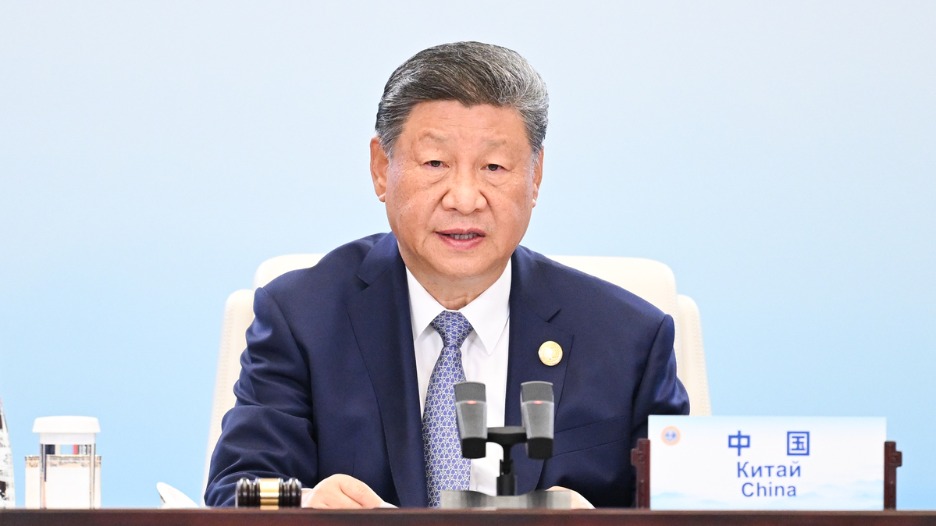
The 12th Beijing Xiangshan Forum, a prominent international security dialogue, convened at the Beijing International Convention Center from September 17 to 19, 2025. This year’s forum centered on the theme ‘Upholding International Order and Promoting Peaceful Development,’ drawing global attention to the pressing need for stability and cooperation in an increasingly complex geopolitical landscape. Among the distinguished speakers was Chad Sbragia, former US deputy assistant secretary of defense, who shared his insights on fostering coexistence in a divided world. His remarks underscored the importance of dialogue, mutual understanding, and collaborative mechanisms to address global challenges. The forum also highlighted significant developments in international relations, including the signing of a mutual defense agreement between Saudi Arabia and Pakistan, as well as urgent calls from global leaders for an immediate ceasefire in Gaza. The event served as a platform for nations to reaffirm their commitment to peace, security, and sustainable development, emphasizing the collective responsibility to build a harmonious global order.
-

Saudi-Pakistan defense pact more symbolism than substance
Saudi Arabia and Pakistan have inked a Strategic Mutual Defense Agreement (SMDA), a pact designed to bolster defense collaboration and enhance joint deterrence against potential aggressions. The agreement stipulates that an attack on either nation will be regarded as an attack on both, echoing the strategic ambiguity of NATO’s Article 5. However, it stops short of mandating military intervention, leaving the specifics of support open to interpretation. The move comes as Saudi Arabia, a key U.S. ally, reportedly seeks to counterbalance Israel’s actions in the region, particularly in light of recent conflicts in Gaza. By aligning with nuclear-armed Pakistan, Saudi Arabia aims to strengthen its defensive posture, while Pakistan may gain Saudi support in its longstanding tensions with India. Despite the pact’s symbolic significance, analysts argue that its practical impact may be limited. Pakistan has historically avoided direct confrontation with Israel, even in its conflicts with India, and Saudi Arabia maintains strong economic ties with India, its major oil importer. The agreement is seen more as a gesture of solidarity within the Muslim world rather than a transformative military alliance. The most plausible scenario for mutual military support would involve the Houthi rebels in Yemen, should they escalate hostilities against Saudi Arabia. While the SMDA has sparked debate, its real-world implications remain uncertain, with many viewing it as a strategic maneuver rather than a game-changing alliance.
-

US immigration judge orders Khalil deportation, his lawyers say separate ruling protects him for now
In a controversial decision, a U.S. immigration judge has ordered the deportation of Mahmoud Khalil, a pro-Palestinian activist and Columbia University student, to either Algeria or Syria. The ruling, issued on September 17, 2025, stems from allegations that Khalil omitted critical information from his green card application. Immigration Judge Jamee Comans asserted that Khalil ‘willfully misrepresented material facts’ to bypass immigration protocols and increase his chances of approval. However, Khalil’s legal team has vowed to appeal the decision, citing ongoing federal court orders that prevent his immediate deportation or detention. Khalil, a 30-year-old permanent U.S. resident of Palestinian descent, was previously detained for over 100 days earlier this year under the Trump administration’s crackdown on pro-Palestinian activism. During his detention, Khalil missed the birth of his child, as his wife, a U.S. citizen, was pregnant at the time. He was eventually released on June 20 after U.S. District Judge Michael Farbiarz ruled that punishing Khalil for a civil immigration matter was unconstitutional. The Trump administration has labeled pro-Palestinian activists like Khalil as antisemitic and supporters of extremism, a characterization vehemently denied by protesters, including some Jewish groups. They argue that criticizing Israel’s actions in Gaza and advocating for Palestinian rights is unfairly equated with extremism. Khalil has accused the administration of retaliating against him for exercising his right to free speech, stating, ‘They resorted to fabricating baseless allegations to silence me.’ The case has sparked widespread concern among human rights advocates, who warn that such actions threaten free speech and due process. Columbia University, where Khalil is a student, was a focal point of last year’s protests calling for an end to Israel’s war and divestment from companies supporting Israel. The ongoing legal battle highlights the tension between immigration enforcement and constitutional rights in the U.S.
-

What is Antifa and why is President Trump targeting it?
Former US President Donald Trump has announced his intention to designate Antifa as a ‘major terrorist organization,’ targeting what he describes as the ‘radical left.’ This declaration follows the killing of conservative activist Charlie Kirk, which has intensified political divisions in the country. In a post on his Truth Social platform, Trump labeled Antifa as a ‘sick, dangerous, radical left disaster’ and pledged a thorough investigation into the group. Antifa, a decentralized, leftist movement opposing far-right, racist, and fascist groups, has long been a focal point of Trump’s criticism. However, experts question the feasibility of this designation, given Antifa’s lack of formal structure, leadership, or membership. In 2020, then-FBI Director Christopher Wray noted that Antifa is better understood as an ideology rather than an organization. Despite this, Antifa remains a contentious topic among right-wing influencers and politicians, who argue it is part of a broader left-wing network undermining US values. The movement, whose name derives from the German ‘antifaschistisch,’ gained prominence after Trump’s 2016 election and the 2017 Charlottesville rally. Activists associated with Antifa have frequently clashed with right-wing groups, both online and in physical confrontations. Critics highlight the movement’s willingness to use violence, which activists claim is in self-defense. Trump’s proposal to designate Antifa as a terrorist organization faces legal hurdles, as the US government can only designate foreign groups as Foreign Terror Organizations (FTOs). Legal experts emphasize that the First Amendment protects the right of association, complicating any efforts to label domestic groups as terrorist organizations. This is not the first time Trump has targeted Antifa; he made a similar pledge in 2020 but did not follow through. His latest move comes amid heightened political tensions, with the Department of Justice recently removing a study on political violence that highlighted far-right extremism as a significant threat. Experts warn that politicizing violence risks escalating tensions rather than reducing them.
-

Saudi Arabia, nuclear-armed Pakistan sign mutual defence pact
In a landmark move, Saudi Arabia and Pakistan solidified their longstanding alliance by signing a comprehensive mutual defence agreement on September 17, 2025, in Riyadh. The pact, inked by Saudi Crown Prince Mohammed bin Salman and Pakistani Prime Minister Shehbaz Sharif, underscores a deepening of military and strategic cooperation between the two nations. The agreement, which includes provisions for mutual defence against aggression, comes at a critical juncture as regional tensions escalate following Israel’s recent airstrikes on Qatar. The strikes, aimed at Hamas leaders during ceasefire negotiations, have heightened concerns among Gulf states about the reliability of the United States as a security partner. Pakistan, the only nuclear-armed Muslim-majority nation, has historically maintained that its nuclear arsenal is a deterrent against India. The Saudi official emphasized that the agreement is not a reaction to specific events but rather an institutionalization of decades-long collaboration. The pact also highlights the economic interdependence between the two countries, with Saudi Arabia providing Pakistan with a $3 billion loan to bolster its foreign reserves. The agreement’s implications for regional stability, particularly in light of Pakistan’s ongoing tensions with India, remain a focal point of analysis. Both nations have fought three wars since their independence in 1947, and their nuclear capabilities have since shaped a precarious balance of power. The Saudi official acknowledged the need to balance relations with both Pakistan and India, emphasizing the kingdom’s commitment to fostering regional peace.
-

Key takeaways from Trump-Starmer news conference
Sir Keir Starmer and Donald Trump held a joint press conference at Chequers, the UK Prime Minister’s country residence, marking the conclusion of Trump’s second state visit to the UK. The hour-long event covered a range of topics, from international relations to domestic policies, with both leaders addressing contentious issues diplomatically. One of the key points of discussion was the UK’s imminent recognition of Palestinian statehood, a move Trump had previously criticized as potentially rewarding Hamas. However, Trump downplayed the disagreement, stating it was one of only a few differences between him and Starmer. Starmer clarified that the timing of the decision was unrelated to Trump’s visit and emphasized that Hamas would have no role in any future Palestinian state. Trump praised Starmer’s stance, even giving him a pat on the back during the conference. Another hot topic was the UK’s efforts to curb illegal migration, particularly the record number of small boat crossings in the English Channel. Trump suggested that Starmer consider involving the military, drawing parallels to his own border security policies in the US. Starmer highlighted the recent launch of the first flight under the UK-France migrant returns deal as a significant step forward. Both leaders also united in condemning Russia’s invasion of Ukraine, with Starmer criticizing recent Russian missile attacks and Trump expressing disappointment in Vladimir Putin’s actions. Trump admitted he had hoped the Russia-Ukraine conflict would be easier to resolve but reaffirmed his commitment to finding a peaceful solution. The issue of free speech also surfaced, with Starmer vowing to protect it as a fundamental British value while balancing it with necessary safeguards. The press conference concluded without addressing the recent dismissal of Lord Mandelson as the UK’s US ambassador, a decision linked to his past association with Jeffrey Epstein. Trump distanced himself from Mandelson, stating he did not know him well, while Starmer reiterated that the decision was based on new information about Mandelson’s ties to Epstein.
-

Trump targets antifa movement as ‘terrorist organization’
In a significant move following the assassination of right-wing activist Charlie Kirk, U.S. President Donald Trump announced on Wednesday his intention to designate the anti-fascist movement, Antifa, as a terrorist organization. Trump made the declaration on his social media platform, Truth Social, stating, \”I will also be strongly recommending that those funding ANTIFA be thoroughly investigated in accordance with the highest legal standards and practices.\
-

Japan’s Ishiba to visit Busan from Sept 30 to meet S.Korea’s Lee, TV Asahi reports
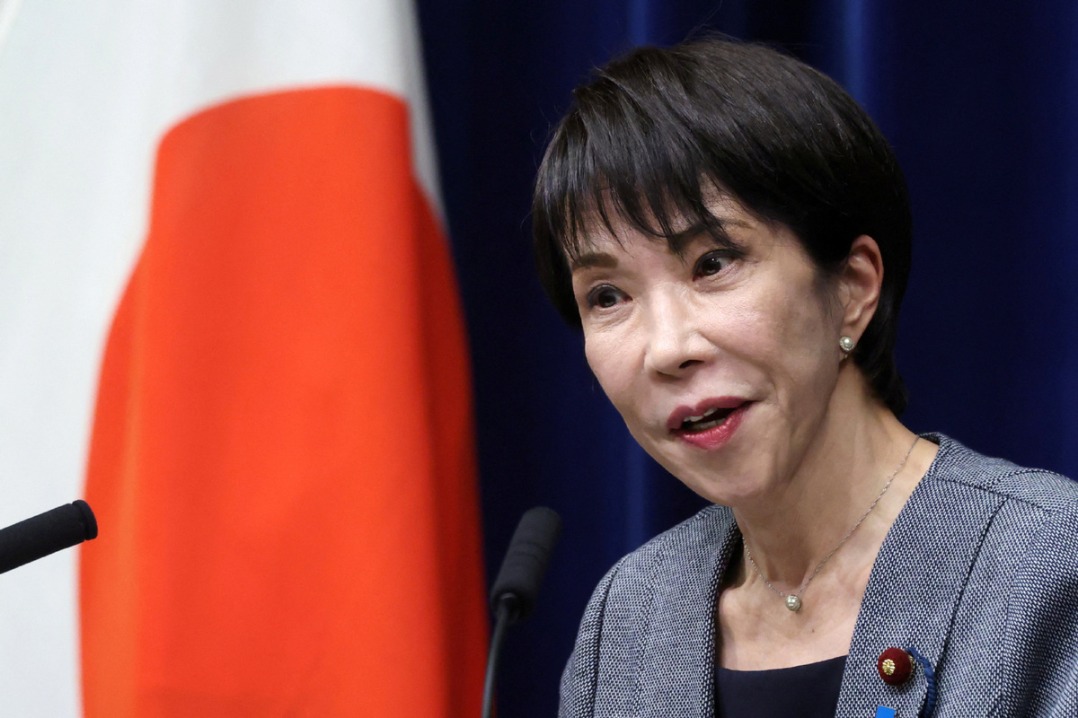
In a significant diplomatic move, Japanese Prime Minister Shigeru Ishiba is scheduled to meet South Korean President Lee Jae Myung during his two-day visit to Busan, South Korea, starting September 30. This visit, reported by Japanese broadcaster TV Asahi and confirmed by a Korean government official, will mark Ishiba’s first and final trip to South Korea as prime minister. The announcement comes shortly after Ishiba revealed his resignation earlier this month, with his successor to be determined through a ruling party leadership race in early October. This meeting underscores the ongoing efforts to strengthen bilateral ties between the two nations, particularly in the realms of security and economic cooperation. The leaders previously met in Tokyo last month, where they agreed to enhance collaboration with the United States to counter North Korea’s nuclear and missile threats. Ishiba’s impending departure adds a layer of urgency to this diplomatic engagement, as both countries seek to solidify their partnership amidst regional security challenges.
-

Anti-Trump protesters march through London as president basks in royal welcome
On September 17, 2025, London witnessed a stark contrast in public sentiment as U.S. President Donald Trump embarked on his second state visit to Britain. While thousands of protesters marched through the capital under the banner ‘Trump Not Welcome,’ a smaller yet enthusiastic crowd gathered outside Windsor Castle to welcome the president with open arms. The visit, marked by royal pageantry including a carriage procession and a grand military parade, highlighted the polarizing nature of Trump’s presence on the global stage. Organized by the Stop Trump Coalition and supported by groups like Amnesty International and pro-Palestinian activists, the protest in London featured banners with messages such as ‘Not Wanted Here, Not Wanted Anywhere’ and ‘Trump, a big step back on the evolution of man.’ Despite the protests, British Prime Minister Keir Starmer has cultivated an unlikely friendship with Trump, though public opinion remains deeply divided. A YouGov poll revealed that 45% of Britons opposed the invitation, while 30% supported it. The event also saw the arrest of four individuals who projected images of Trump alongside Jeffrey Epstein onto Windsor Castle, a controversy that continues to shadow the president. Over 1,600 police officers were deployed to manage the peaceful protest, which drew around 5,000 participants. Meanwhile, in Windsor, a handful of Trump supporters, including former New York police officer Steven DeFranco, praised the president as a ‘beaming light’ and celebrated his policies. The turnout for this visit was comparable to Trump’s 2019 state visit but paled in comparison to his first official trip in 2018, which attracted significantly larger crowds.