分类: politics

  • Deference and disappointment as Zelensky leaves White House empty-handed

    Deference and disappointment as Zelensky leaves White House empty-handed

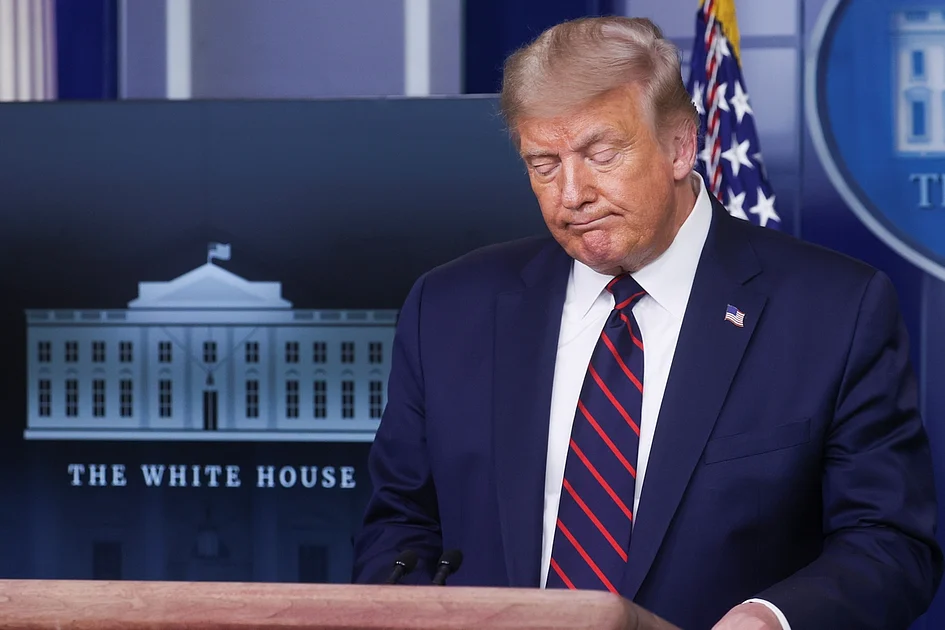
    Ukrainian President Volodymyr Zelensky’s high-stakes visit to the White House ended in disappointment as he failed to secure the much-needed American long-range Tomahawk missiles. The meeting, described by Zelensky as ‘pointed,’ starkly contrasted with the optimism his delegation had harbored before their arrival in Washington. Just hours before landing, news broke of a two-and-a-half-hour phone call between President Donald Trump and Russian President Vladimir Putin, followed by an announcement of an upcoming summit between the two leaders. This development cast a shadow over Zelensky’s visit, leaving Ukrainian hopes for decisive U.S. support unfulfilled.

    Trump, who had previously expressed frustration with Putin, now appeared confident that the Russian leader was ready to negotiate. ‘I think he wants to make a deal,’ Trump stated, framing the conflict as a personal dispute rather than a geopolitical crisis. Zelensky, cautious not to challenge Trump directly, praised the U.S. president’s peacemaking efforts but made it clear that he did not share Trump’s trust in Putin’s intentions. ‘We understand that Putin is not ready,’ Zelensky said.

    The meeting concluded with Trump suggesting that the war be frozen along existing battle lines, a proposal that falls short of Ukraine’s demands for security guarantees and military aid. For Ukraine and its allies, the conflict is not a personal grievance but a war of aggression by an authoritarian state with imperial ambitions. The absence of U.S. commitments leaves Ukraine to continue its fight against Russia, relying on its own resilience and determination.

    In Kyiv, residents expressed mixed feelings about the outcome of the talks. Volodymyr Tsepovatenko, a shop owner repairing damage from recent missile strikes, warned that any peace deal now would only allow Russia to prepare for future aggression. Oleksandr Vilko, whose car was destroyed in the attacks, emphasized that Ukraine’s fate ultimately lies in the hands of its army. ‘With or without [Tomahawks], Ukrainians will fight on,’ he said. Despite the challenges, Ukraine remains steadfast in its resolve to defend its sovereignty and freedom.

  • Taiwan’s main opposition party elects new leader in a race clouded by claims of China meddling

    Taiwan’s main opposition party elects new leader in a race clouded by claims of China meddling

    In a pivotal leadership election marred by accusations of external interference, Taiwan’s primary opposition party, the Nationalist Party (KMT), has chosen former lawmaker Cheng Li-wun as its new chairperson. Cheng, the sole female candidate in the race, secured a decisive victory over former Taipei Mayor Hau Lung-bin and four other contenders. Positioning herself as a reformist, Cheng aims to rejuvenate the party, which has suffered three consecutive presidential election defeats to the ruling Democratic Progressive Party (DPP), known for its pro-independence stance. Despite these losses, the KMT retains significant political influence, holding a legislative majority with its allies and surviving recent recall elections triggered by controversial legislative changes perceived as favoring China. Cheng’s leadership, set to begin in November, is expected to shape Taiwan’s approach to cross-strait relations with Beijing, domestic policies, and the 2026 local and 2028 presidential elections. During her campaign, Cheng vowed to transform the KMT from a passive “flock of sheep” into a dynamic “pride of lions,” emphasizing the need to reconnect with younger voters. The election unfolded against a backdrop of heightened tensions between Taiwan and China, with Beijing accusing incumbent President Lai Ching-te of separatism and threatening military action if necessary. Allegations of Chinese interference in the KMT election emerged, with reports of over 1,000 TikTok videos and 23 YouTube accounts discussing the race, many based outside Taiwan. Cheng has called for party unity, warning that internal divisions could weaken the KMT. China’s Taiwan Affairs Office dismissed the allegations, stating that the election was an internal KMT matter and that online opinions from mainland users do not reflect official government positions. Historically, the KMT has maintained warmer ties with Beijing, a stance that supporters argue benefits Taiwan’s stability and economy, while critics caution against Beijing’s growing influence. The party’s roots trace back to its rise under Chiang Kai-shek in 1920s China, before retreating to Taiwan after the Communist victory in 1949. Taiwan’s transition to multiparty democracy began in the 1980s, culminating in its first direct presidential election in 1996.

  • China-US officials hold economic talks

    China-US officials hold economic talks

    In a significant development for bilateral relations, China’s Vice-Premier He Lifeng, who oversees China-US economic and trade affairs, engaged in a high-level video conference with US Treasury Secretary Scott Bessent and US Trade Representative Jamieson Greer on Saturday morning. The meeting, reported by Xinhua News Agency, underscored the commitment of both nations to addressing critical issues in their economic partnership. The discussions were characterized by their candid, in-depth, and constructive nature, focusing on implementing the key agreements reached by the leaders of both countries during their earlier phone conversation this year. Both sides agreed to expedite the scheduling of a new round of economic and trade consultations, signaling a proactive approach to resolving ongoing challenges and fostering mutual economic growth. This dialogue marks a pivotal step in reinforcing the economic ties between the two global powers, amidst a complex international landscape.

  • One scandal too many forces UK monarchy to sideline Prince Andrew

    One scandal too many forces UK monarchy to sideline Prince Andrew

    The British monarchy has taken decisive action to distance itself from Prince Andrew following a series of damaging revelations about his association with convicted sex offender Jeffrey Epstein. Buckingham Palace announced on Friday that Andrew, the second son of the late Queen Elizabeth II, has agreed to relinquish his remaining royal titles, including the Duke of York, to prevent further distractions from the monarchy’s public duties. This move comes after emails surfaced this week showing that Andrew maintained contact with Epstein longer than he had previously admitted, contradicting his earlier claims and misleading the British public. Craig Prescott, a constitutional law expert at Royal Holloway University of London, described this as the “straw that broke the camel’s back,” emphasizing the severity of the deception. The decision to strip Andrew of his titles marks the culmination of a years-long process that began in 2019 when he stepped back from public duties following a disastrous BBC interview addressing his ties to Epstein and allegations of sexual misconduct. The interview, widely criticized for its lack of empathy and implausible explanations, set the stage for this week’s revelations. Andrew’s banishment from royal life underscores King Charles III’s efforts to modernize and stabilize the monarchy, particularly as he prepares for a significant state visit to the Vatican. The king is also motivated by a desire to protect the reputations of Queen Camilla and the Duchess of Edinburgh, who have championed causes related to domestic and sexual violence. By severing ties with Andrew, the monarchy aims to insulate itself from further scandal and reaffirm its commitment to public service.

  • Palestinian PM outlines Gaza reconstruction plan

    Palestinian PM outlines Gaza reconstruction plan

    The Palestinian Prime Minister, Mohammad Mustafa, has announced a comprehensive three-phase recovery and reconstruction plan for Gaza, with an estimated cost of $67 billion over five years. The plan was unveiled during a meeting with international partners in Ramallah, West Bank, on Thursday. This initiative aligns with the Gaza Recovery, Reconstruction & Development Plan adopted at the Extraordinary Arab Summit in Cairo in March 2025 and is consistent with United Nations resolutions and the New York Declaration.

    The first phase, lasting six months, will address urgent humanitarian and infrastructure needs at a cost of $3.5 billion. The second phase, spanning three years, will require $30 billion, while the final phase will focus on long-term recovery and reconstruction. Mustafa emphasized that the reconstruction must be ‘Palestinian-led, Arab-backed, and internationally supported,’ aiming to restore hope, dignity, and stability for Gaza’s people.

    However, the plan faces significant challenges. Israel opposes any role for the Palestinian Authority or Hamas in governing Gaza following the two-year conflict, which has resulted in 68,000 Palestinian deaths, over 170,000 injuries, and widespread destruction. The Israel-Hamas ceasefire, which took effect on October 10, includes Israeli troop withdrawals, hostage and prisoner exchanges, and the opening of aid crossings. Despite progress, tensions remain high. Israel continues to station troops in half of Gaza and has linked the return of deceased hostages to humanitarian aid deliveries.

    Meanwhile, Hamas has accused Israel of violating the ceasefire by killing at least 24 people since October 10. The group has submitted a list of alleged violations to mediators. US President Donald Trump has also escalated tensions, threatening military action against Hamas if it continues to carry out executions in Gaza. Aid trucks from Egypt remain stalled at the Rafah crossing, with Israel providing no clear timeline for their entry.

    The international community is closely monitoring the situation as negotiations for the second phase of the ceasefire are expected to begin soon. The outcome will significantly impact the future of Gaza and the broader Israeli-Palestinian conflict.

  • National Guard activated ahead of No Kings protests planned across US

    National Guard activated ahead of No Kings protests planned across US

    Republican governors across multiple U.S. states have placed National Guard troops on standby in anticipation of widespread protests opposing former President Donald Trump and his policies. The demonstrations, organized under the banner ‘No Kings,’ are expected to occur at over 2,500 locations nationwide. Protest organizers claim the movement aims to challenge what they describe as Trump’s ‘authoritarianism,’ asserting on their website, ‘In America, we don’t have kings, and we won’t back down against chaos, corruption, and cruelty.’

    Governors in Texas and Virginia have activated their state’s National Guard, though the extent of military visibility remains uncertain. Texas Governor Greg Abbott justified the deployment by citing a ‘planned antifa-linked demonstration’ in Austin, the state capital. Similarly, Virginia Governor Glenn Youngkin has ordered the activation of the state’s National Guard.

    Critics, including Democratic leaders, have condemned the move. Gene Wu, a prominent Texas Democrat, accused Abbott of acting like a ‘king or dictator’ by deploying armed soldiers to suppress peaceful protests. Meanwhile, some Republicans have labeled the protests as ‘Hate America’ rallies, with Kansas Senator Roger Marshall expressing skepticism about the events remaining peaceful.

    The ‘No Kings’ movement, which previously drew over five million participants in June, continues to galvanize opposition to Trump’s political agenda. As tensions rise, the nation watches closely to see how these protests will unfold and what impact they may have on the broader political landscape.

  • Singapore’s president: “US–China Edge” drives shared prosperity

    Singapore’s president: “US–China Edge” drives shared prosperity

    At the IMF-World Bank annual meetings in Washington this week, Singapore’s President Tharman Shanmugaratnam emphasized the importance of fostering collaboration between the United States and China, despite escalating tensions over tariffs, technology, and geopolitics. President Shanmugaratnam introduced the concept of the ‘US-China Edge,’ urging both nations to identify shared interests where competition can coexist with cooperation. He argued that transforming rivalry into innovation could drive mutual prosperity and global stability. The meetings, attended by government officials and central bank governors, provided a platform for addressing pressing economic challenges and exploring pathways for international cooperation. President Shanmugaratnam’s remarks underscored the need for strategic dialogue and trust-building measures to navigate the complexities of US-China relations. His call for innovation-driven collaboration resonated with attendees, highlighting the potential for economic growth and shared benefits in a multipolar world.

  • Trump only one who can force Putin to negotiating table, Finnish president tells BBC

    Trump only one who can force Putin to negotiating table, Finnish president tells BBC

    Finland’s President Alexander Stubb has asserted that Donald Trump is the sole figure capable of compelling Russian President Vladimir Putin to engage in peace negotiations regarding the ongoing conflict in Ukraine. In an interview with BBC Radio 4’s Today programme, Stubb emphasized that Finland will never recognize Crimea, Donetsk, or Luhansk as part of Russia. He expressed his commitment to ensuring Ukraine’s future as an EU and NATO member post-war. Stubb’s remarks came ahead of Ukrainian President Volodymyr Zelensky’s meeting with Trump at the White House, where Zelensky appealed for U.S. assistance in ending the war. Trump, in turn, revealed that Putin has agreed to a face-to-face meeting in Hungary, signaling a potential diplomatic breakthrough. Stubb underscored the necessity of applying pressure on Russia to bring them to the negotiating table, contrasting Trump’s earlier ‘carrot’ approach with a more forceful ‘stick’ strategy. He expressed optimism about the progress made in peace negotiations during Trump’s second term, citing economic sanctions and the depletion of Russia’s reserves as critical factors. Stubb also highlighted the importance of U.S. support in providing air defense, intelligence, and operational assistance to Ukraine. He outlined a two-phase peace process, beginning with a ceasefire and followed by extended negotiations, expressing hope for tangible results in the near future.

  • Hamas will not commit to disarm until further negotiations, official says

    Hamas will not commit to disarm until further negotiations, official says

    In a recent interview with Reuters, Mohammed Nazzal, a prominent member of Hamas’s politburo, revealed that the group is not prepared to commit to disarming immediately. Instead, Hamas is advocating for a ceasefire lasting three to five years to facilitate the reconstruction of Gaza. When questioned about relinquishing arms, Nazzal responded ambiguously, stating, ‘I can’t answer with a yes or no. It depends on the nature of the project.’ He further questioned the logistics of disarmament, asking, ‘To whom will the weapons be handed over?’

    Arab diplomats have indicated that mediators are exploring alternatives, such as transferring Hamas’s weapons to Arab peacekeepers or securing long-range missiles rather than destroying them. This approach aligns with US President Donald Trump’s 20-point peace plan, which calls for Hamas’s demilitarization and a phased Israeli withdrawal from Gaza, though it lacks a specific timeline.

    Nazzal emphasized that Hamas would provide a definitive stance during the second phase of negotiations, contingent on consultations with other Palestinian factions like the Popular Front for the Liberation of Palestine and Islamic Jihad. He clarified that the proposed ceasefire is aimed at rebuilding Gaza for civilian purposes, not preparing for future conflict. ‘The priority is to return Gaza to normal civilian life,’ he stated.

    Trump’s plan excludes Hamas from Gaza’s future governance but offers amnesty to its members. It proposes a technocratic administration overseen by a ‘board of peace’ chaired by Trump, with a vague mention of potential Palestinian statehood. On the ground, Hamas remains well-organized, with its security forces deployed post-ceasefire. While Trump initially supported their presence to curb crime, he later reiterated the need for disarmament.

    Nazzal described the current situation as a transitional phase, with Hamas maintaining its presence until Palestinian elections are held. Hamas has governed Gaza since 2007, following a violent split with Fatah, which controls the West Bank. Despite years of reconciliation talks, progress toward unity and fresh elections remains elusive.

  • In New York City mayoral debate, Mamdani is again pressed on Israel and Hamas

    In New York City mayoral debate, Mamdani is again pressed on Israel and Hamas

    In a highly anticipated mayoral debate, New York City assemblyman Zohran Mamdani demonstrated his prowess as a compelling communicator, earning widespread recognition from diverse media outlets, including The New York Times, The Wall Street Journal, and Politico. At 33, Mamdani, a Democratic Socialist, has become a surprising frontrunner in a race that has captured global attention. His ability to articulate his vision on critical issues such as America’s class divide and the Palestinian struggle has set him apart from his competitors, former New York governor Andrew Cuomo and Republican Curtis Sliwa. A recent Fox News poll, conducted prior to the debate, revealed Mamdani surpassing the 50 percent threshold among likely voters, solidifying his lead. Cuomo, who resigned in disgrace in 2020 and lost the Democratic primary to Mamdani, re-entered the race as an Independent, positioning himself as a stark contrast to Mamdani’s progressive platform. The debate highlighted their divergent stances on key issues, particularly regarding Israel and Palestine. Cuomo, backed by pro-Israel lobbying groups, accused Mamdani of not adequately denouncing Hamas and controversial statements by figures like Hasan Piker. Mamdani, in turn, criticized Cuomo’s lack of engagement with the Muslim community and his defense of Israeli policies. Mamdani’s campaign, focused on addressing economic inequality and affordable housing, has resonated with many New Yorkers, though it has drawn ire from the city’s wealthiest residents. As the November 4 general election approaches, the race remains highly contentious, with Mamdani positioning himself as a champion for the working class and a formidable opponent to both Cuomo and the potential backlash from former President Donald Trump.