分类: politics

  • Xi greets Ouattara on reelection as Cote d’Ivoire president

    Xi greets Ouattara on reelection as Cote d’Ivoire president

    Chinese President Xi Jinping sent a congratulatory message on Monday to Alassane Ouattara, who was reelected as the President of Cote d’Ivoire. In his message, Xi highlighted the strong bilateral ties between China and Cote d’Ivoire, describing the two nations as ‘fellow travelers and good partners’ on the path to modernization. He noted that their relationship has seen robust development, with significant achievements in various fields of cooperation and a deepening bond between their peoples. Xi also pointed out the unprecedented global changes and the growing influence of the Global South, emphasizing his commitment to strengthening the strategic partnership with Cote d’Ivoire. He expressed his willingness to collaborate with Ouattara to enhance solidarity and cooperation among Global South nations. Ouattara, 83, secured his fourth term with an overwhelming 89.77 percent of the votes in last month’s presidential election, as confirmed by Cote d’Ivoire’s Constitutional Council. Ouattara has been a prominent political figure in the country, serving as Prime Minister from 1990 to 1993 and winning his first presidential election in 2010, followed by reelections in 2015 and 2020.

  • Outgoing Irish president proved he was no pushover

    Outgoing Irish president proved he was no pushover

    Michael D Higgins, Ireland’s outgoing president, has stepped down from Áras an Uachtaráin after a remarkable 14-year tenure. His presidency was defined by a steadfast commitment to his principles, often defying public, church, and government pressures. One of the most defining moments of his leadership was his 2021 boycott of an inter-church service marking the centenary of Northern Ireland’s partition. Higgins argued that the event’s title politicized the occasion, placing it beyond his presidential remit. This decision polarized opinions, elevating his standing among nationalists while alienating some unionists who questioned his ability to bridge divides. Higgins, a self-proclaimed leftist, followed in the footsteps of his predecessor, Mary Robinson, transforming the presidency from a ceremonial role to a platform for national discourse. He tackled pressing issues such as housing shortages, migration, and climate change, urging reflection without directly criticizing government policies. His activism reshaped public expectations of the presidency, pushing the boundaries of the office. Higgins’ tenure also saw historic moments, including becoming the first Irish president to pay a state visit to the UK. A passionate advocate for the arts and Irish culture, Higgins leaves behind a legacy of moral leadership and cultural promotion, even as his departure raises questions about the future direction of the presidency.

  • Ahmed al-Sharaa becomes first Syrian leader to visit the White House

    Ahmed al-Sharaa becomes first Syrian leader to visit the White House

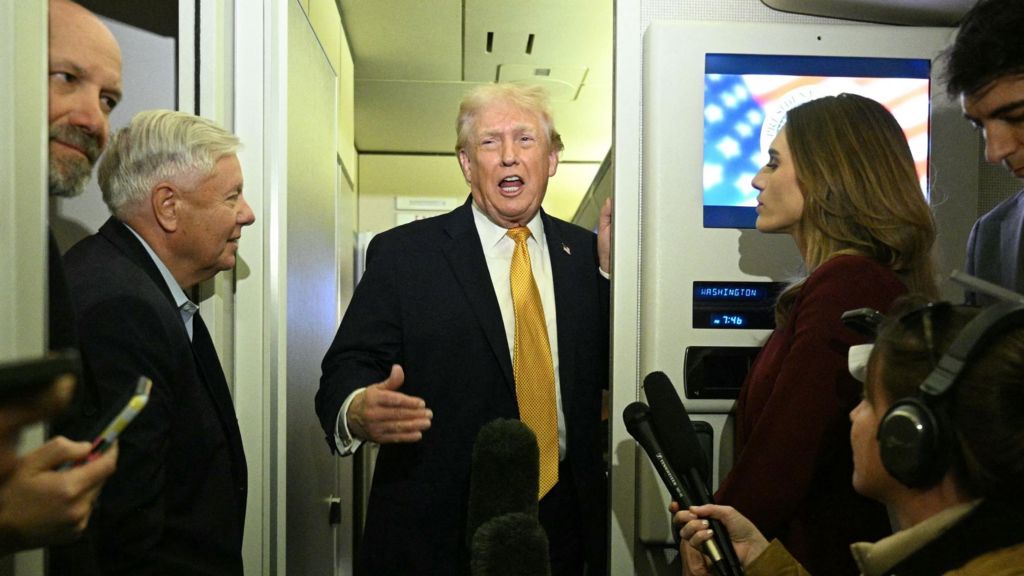
    In a historic turn of events, Syrian President Ahmed al-Sharaa, a former al-Qaeda member, made his first-ever visit to the White House on Monday, symbolizing a dramatic shift in US-Syria relations. Sharaa, who led the Islamist rebel group Hay’at Tahrir al-Sham (HTS) to overthrow longtime ruler Bashar al-Assad in December 2024, is the first Syrian leader to visit Washington since Syria’s independence from France in 1946. His visit underscores Damascus’s transformation from a US-designated sponsor of terror to a potential partner in regional stability. During the meeting, President Donald Trump praised Sharaa as a “strong leader” and pledged US support to make Syria “successful.” Sharaa’s government has been working to solidify security ties with the US, reassert control over Kurdish-dominated regions, and address Israeli attacks in the south. While Sharaa has faced skepticism from Egypt and the UAE due to his past, he has strengthened ties with Saudi Arabia and Qatar. The US is reportedly considering integrating Syria into its coalition against the Islamic State (IS) and may establish an air base south of Damascus to monitor a potential de-escalation agreement between Syria and Israel. Despite these diplomatic strides, Syria’s economy remains stagnant, with corruption and lingering sanctions deterring foreign investment. Trump has lifted some sanctions and is lobbying Congress to repeal the 2019 Caesar Sanctions, but progress has been slow. Sharaa’s visit, though cautiously handled by the White House, marks a significant step in reshaping Syria’s role in the Middle East.

  • Prabowo Subianto to visit Australia for the first time as Indonesia’s president

    Prabowo Subianto to visit Australia for the first time as Indonesia’s president

    MELBOURNE, Australia — Indonesian President Prabowo Subianto is set to embark on his inaugural official visit to Australia since assuming office in October 2023. The visit, scheduled for Wednesday, underscores the deepening diplomatic ties between the two nations. Australian Prime Minister Anthony Albanese confirmed the trip on Tuesday, though specifics remain scarce. Prabowo last visited Australia in August 2023 as defense minister and president-elect, just months before his inauguration. Albanese and Prabowo previously met in Jakarta during the Australia–Indonesia annual leaders’ meeting in May 2024, marking Albanese’s first overseas trip following his reelection. Albanese expressed enthusiasm about hosting Prabowo, stating, ‘I am delighted to welcome President Prabowo to Australia and reciprocate the warm hospitality he extended during my visit to Jakarta earlier this year.’ He emphasized the enduring partnership between the two countries, describing it as a ‘deep trust and unbreakable bond’ that fosters a secure, stable, and prosperous Indo-Pacific region. Australia views Indonesia, its closest neighbor after Papua New Guinea, as a cornerstone of its foreign policy. Notably, newly elected Australian prime ministers traditionally prioritize Jakarta as one of their initial international destinations, reflecting the strategic importance of the bilateral relationship.

  • US Senate passes funding bill that could end shutdown within days

    US Senate passes funding bill that could end shutdown within days

    In a pivotal late-night session on Monday, the US Senate passed a critical funding bill that could terminate the longest government shutdown in US history. The bill, which secured a 60-40 vote, saw nearly all Republicans align with eight Democrats who broke party ranks to support the measure. This bipartisan agreement funds federal operations until the end of January and aims to restore essential services and compensate furloughed employees. The bill now moves to the House of Representatives, where its passage is anticipated before President Donald Trump signs it into law. Trump had earlier indicated his willingness to endorse the legislation. The breakthrough follows a 41-day shutdown that disrupted air travel, left hundreds of thousands of federal workers without pay, and threatened vital food assistance programs. The bill includes provisions to backpay federal employees, extend funding for the Supplemental Nutrition Assistance Program (SNAP) until September, and allocate full-year budgets for the Department of Agriculture and military construction. Additionally, it promises a December vote on extending healthcare subsidies, a key Democratic demand. While Senate Minority Leader Chuck Schumer criticized the bill for failing to address America’s healthcare crisis, supporters like Senator Tim Kaine emphasized the relief it brings to federal workers. The House, led by Speaker Mike Johnson, is set to deliberate the bill starting Wednesday, with every vote crucial given the Republicans’ narrow majority.

  • New Zealand will remove police from gun licensing but near-total semiautomatics ban to remain

    New Zealand will remove police from gun licensing but near-total semiautomatics ban to remain

    In a significant shift in firearms policy, the New Zealand government has announced sweeping reforms aimed at restructuring the regulation of gun ownership. Associate Justice Minister Nicole McKee revealed on Tuesday that uniformed police officers will no longer be involved in the Firearms Safety Authority (FSA), a move designed to ease tensions between the regulator and gun owners. This decision follows years of strained relations, exacerbated by the 2019 Christchurch mosque shootings, where a white supremacist legally amassed semiautomatic weapons before killing 51 people. The FSA, established in 2022, will now report directly to the government instead of the New Zealand Police, though it will retain access to law enforcement databases. McKee emphasized the need to rebuild trust within the firearms community, which has felt unfairly scrutinized since the tragedy. The reforms also include extending license renewal periods, allowing more flexible storage options, and introducing a ‘red flag’ system for information sharing among agencies. However, the near-total ban on semiautomatic firearms, enacted after the Christchurch attack, remains intact. McKee’s proposals, which aim to simplify regulations for law-abiding gun owners, are expected to be introduced to Parliament by the end of 2024 and passed by mid-2026. Gun owners have cautiously welcomed the changes, though some expressed disappointment over the lack of clarity on eligibility criteria for firearm ownership.

  • Syria to join US-led coalition to defeat IS group after Trump meeting

    Syria to join US-led coalition to defeat IS group after Trump meeting

    In a historic shift in US foreign policy, Syria has been welcomed into the international coalition to combat the Islamic State (ISIS), marking a significant turning point in Middle Eastern geopolitics. This development was confirmed by a senior Trump administration official following a landmark meeting between US President Donald Trump and Syrian President Ahmed al-Sharaa at the White House. This visit marks the first time a Syrian leader has been hosted in the US, symbolizing a new chapter in bilateral relations.

  • Syria’s Sharaa met pro-Israel Congressman in bid to repeal Caesar sanctions

    Syria’s Sharaa met pro-Israel Congressman in bid to repeal Caesar sanctions

    Syrian President Ahmed al-Sharaa met with Republican Congressman Brian Mast on Sunday, intensifying efforts to repeal the US Caesar sanctions ahead of his visit to the White House. Mast, a pro-Israel representative from Florida, has become a significant obstacle to the repeal of the 2019 Caesar Act, which imposed severe economic penalties on Syria following evidence of human rights violations by a Syrian defector. Despite former President Donald Trump’s May pledge to lift sanctions and a subsequent 180-day waiver issued in June, the law remains in effect and can only be fully repealed by Congress. Business leaders and diplomats argue that the uncertain status of the sanctions is hindering investment in Syria, where the economy is struggling. The World Bank estimates Syria’s reconstruction costs at $200 billion, but Gulf states’ pledged investments have been slow to materialize due to the sanctions. Reports suggest Mast’s stance is influenced by lobbying from Israeli Prime Minister Benjamin Netanyahu’s advisor, Ron Dermer. Mast, a US Army veteran who lost both legs in Afghanistan, has a strong connection to Israel, often wearing an Israeli army uniform in Congress. Israel has capitalized on Syria’s instability, occupying a UN buffer zone and conducting air strikes reaching Damascus. Additionally, Israel has positioned itself as a protector of Syria’s Druze minority, backing Druze leader Sheikh Hikmat Salaman al-Hajri with arms. During recent Druze-Bedouin conflicts, Israel blocked Sharaa’s deployment of Sunni security forces, angering Saudi Arabia, Turkey, and the Trump administration. Sharaa’s meeting with Mast was reportedly arranged by supporters of Trump, who is pushing Congress to lift the sanctions. Although Congress is currently in recess due to a government shutdown, efforts are underway to amend the 2026 Defense Act to repeal the sanctions. Mouaz Moustafa of the Syrian Emergency Task Force emphasized the need for a “clear-cut repeal” to restore investor confidence, warning that any possibility of sanctions returning would deter companies from entering Syria.

  • Catherine Connolly to be sworn in as Ireland’s 10th president

    Catherine Connolly to be sworn in as Ireland’s 10th president

    Catherine Connolly, an independent politician, was officially inaugurated as the Republic of Ireland’s 10th president in a grand ceremony held at Dublin Castle on Tuesday. The 68-year-old, who secured a landslide victory in the October elections, succeeds Michael D. Higgins, whose 14-year tenure concluded at midnight. The event was attended by prominent figures including Taoiseach Micheál Martin, Tánaiste Simon Harris, senior government ministers, and judges. Northern Ireland’s First Minister Michelle O’Neill and Sinn Féin president Mary Lou McDonald also graced the occasion, though Deputy First Minister Emma Little-Pengelly was absent due to prior commitments related to Remembrance Day. Connolly, accompanied by her husband Brian McEnery, arrived at Dublin Castle in a ceremonial motorcade from Farmleigh at Phoenix Park. The swearing-in ceremony, presided over by the chief justice, took place in St Patrick’s Hall, followed by a service of prayer and reflection. Connolly delivered a speech after receiving the Presidential Seal, emphasizing her commitment to being an inclusive leader for all. The Democratic Unionist Party (DUP) did not send a representative, with party leader Gavin Robinson clarifying it was not a snub but a scheduling conflict. Ulster Unionist Party assembly member Steve Aiken attended in place of his party leader, Mike Nesbitt. Post-ceremony, Connolly traveled to Áras an Uachtaráin, the official residence of the Irish president, where a state reception was held later in the evening. Connolly, who has served as a TD since 2016, brings a wealth of experience as a barrister and psychologist to her new role. Her election will trigger a by-election in Galway West.

  • US Senate advances bill to end record-breaking government shutdown

    US Senate advances bill to end record-breaking government shutdown

    In a pivotal move to end the longest government shutdown in U.S. history, seven Senate Democrats and one independent joined Republicans on Sunday night to advance legislation aimed at reopening the federal government. The shutdown, which began on October 1, has left nearly a million federal workers without pay and disrupted critical services across the nation. The stopgap measure, which passed a crucial 60-40 procedural vote, would temporarily fund the government until January 30, 2026, and reinstate federal employees with back pay.