分类: politics

  • New development philosophy charts China’s path to modernization

    New development philosophy charts China’s path to modernization

    As the world grapples with unprecedented challenges, China is steadfastly advancing its modernization agenda under a transformative development philosophy. Introduced in 2015, this philosophy emphasizes innovation, coordination, green development, openness, and shared benefits, guiding the nation through both domestic and global turbulence. Over the past decade, it has been instrumental in driving high-quality growth and creating new opportunities for the global community. During the 14th Five-Year Plan period (2021-25), China’s economy achieved remarkable milestones, with its total output surpassing 130 trillion yuan ($15.5 trillion) and projected to reach 140 trillion yuan by 2025. Contributing approximately 30% to global growth annually, China has emerged as a beacon of stability in an uncertain world. The Communist Party of China (CPC) Central Committee has recently unveiled recommendations for the 15th Five-Year Plan (2026-30), underscoring the continued application of this philosophy to steer the nation’s next phase of development. Innovation remains a cornerstone of China’s progress. The Seres smart factory in Chongqing, where two new energy vehicles (NEVs) are produced every minute, exemplifies the nation’s technological advancements. China has led the world in NEV production and sales for a decade, holding over 40% of global patents in new-energy technologies. This innovation-driven growth has propelled China from a follower to a global leader in strategic industries. The country’s Global Innovation Index ranking has surged from 34th in 2012 to 10th in 2025, with research and development spending reaching 3.6 trillion yuan in 2024, the second highest globally. Looking ahead, China aims to enhance self-reliance in science and technology, deepen industrial innovation, and accelerate the application of major technological breakthroughs. Green development is another pillar of China’s strategy. The Kubuqi Desert in Inner Mongolia, home to millions of solar panels, symbolizes the nation’s commitment to renewable energy. China’s installed capacity for wind and solar power accounts for nearly half of the global total, and its exports of related products are expected to help other countries reduce carbon emissions by 4.1 billion tonnes. The country has built the world’s largest renewable energy system, with energy consumption per unit of GDP dropping by 11.6% during the 14th Five-Year Plan period. Over the next five years, China will accelerate its green transition, aiming for carbon peaking and neutrality while fostering a green, low-carbon economy. China’s openness to the world remains unwavering. The offshore duty-free policy in Hainan, for instance, has transformed the province into a hub for global luxury brands, reflecting the nation’s commitment to shared benefits. Despite global protectionism, China has eliminated all foreign investment restrictions in manufacturing and steadily opened its services sector. By June 2025, it had utilized $708.73 billion in foreign investment and established 22 pilot free trade zones. The 15th Five-Year Plan recommendations emphasize high-standard opening up, innovative trade development, and two-way investment cooperation, signaling China’s dedication to mutual benefit. The philosophy also prioritizes shared development, aiming for common prosperity through measures such as improving employment, income distribution, social security, and access to public services. As China continues its modernization journey, the new development philosophy will remain the driving force behind its economic resilience and vitality, enabling the nation to seize new opportunities and sustain high-quality growth.

  • US, Syria move toward resetting ties as Trump meets al-Sharaa to discuss sanctions, security

    US, Syria move toward resetting ties as Trump meets al-Sharaa to discuss sanctions, security

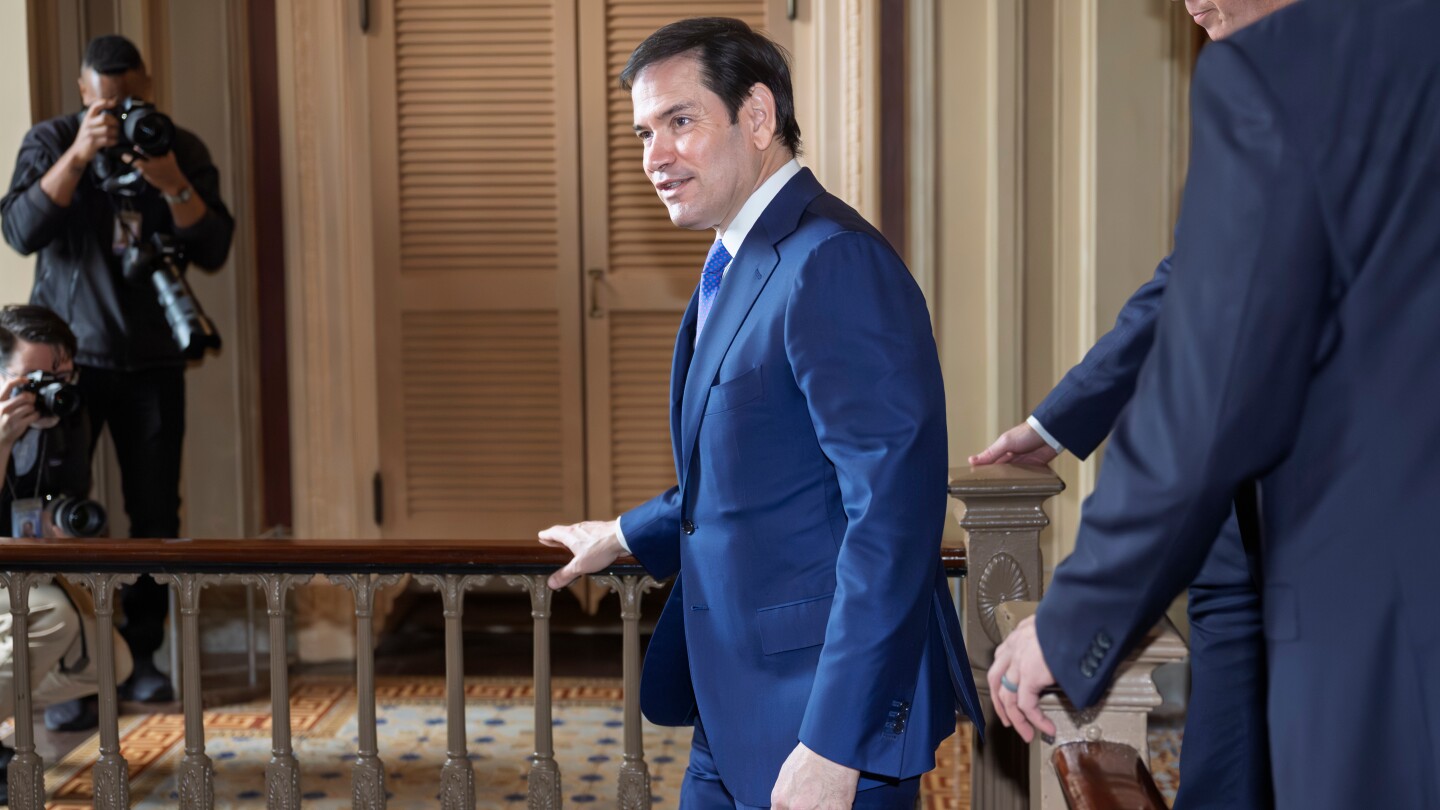
    In a landmark meeting at the White House on November 10, 2025, US President Donald Trump and Syrian interim leader Ahmad al-Sharaa engaged in discussions aimed at resetting bilateral relations. This marked the first visit by a Syrian leader to the White House since Syria’s independence in 1946. Unlike traditional state visits, al-Sharaa entered through a side gate, signaling a low-profile yet significant encounter. The closed-door meeting in the Oval Office focused on two critical issues: the lifting of US sanctions on Syria and Syria’s potential entry into the US-led global coalition against the Islamic State (IS) group. US Secretary of State Marco Rubio announced the suspension of the Caesar Act sanctions, a set of stringent measures imposed during Syria’s civil war. Rubio emphasized that this move would support Syria’s economic recovery and foster peace. The Syrian side, however, seeks a permanent repeal of these sanctions, which would require congressional action. Additionally, al-Sharaa agreed to join the US-led coalition against IS, which remains active in Syria. The US also plans to allow Syria to resume operations at its embassy in Washington, focusing on counterterrorism and economic cooperation. This meeting follows a series of diplomatic efforts, including the removal of al-Sharaa from the UN Security Council’s sanctions list. Analysts caution that while these steps are promising, Syria’s path to stability remains fraught with challenges, including sectarian violence and a massive reconstruction bill estimated at over $200 billion.

  • Egypt kicks off 1st phase of parliamentary elections

    Egypt kicks off 1st phase of parliamentary elections

    Egypt has officially commenced the first phase of its 2025 House of Representatives elections, marking a significant step in the nation’s democratic process. The voting period, which began on Monday, November 10, 2025, and concluded on Tuesday, saw the participation of over 35 million eligible voters across 14 governorates. These regions include Giza, Fayoum, Beni Suef, Minya, Assiut, New Valley, Sohag, Qena, Luxor, Aswan, Red Sea, Alexandria, Beheira, and Matrouh. The House of Representatives, consisting of 568 members, is elected through a dual system: 284 members via a closed-list system and another 284 through an individual system, with additional members appointed by the president. Notably, Egyptian expatriates cast their votes on November 7 at embassies and consulates worldwide. The second phase of the elections is scheduled for November 21-22 for expatriates and November 24-25 for citizens in the remaining 13 governorates. This electoral process underscores Egypt’s commitment to fostering political participation and representation.

  • Turkey demands more than 2,000 years in jail for popular Istanbul mayor

    Turkey demands more than 2,000 years in jail for popular Istanbul mayor

    Ekrem Imamoglu, the prominent mayor of Istanbul and a key political opponent of President Recep Tayyip Erdogan, has been held in pre-trial detention since March 2025 on allegations of corruption. The Istanbul prosecutor has charged Imamoglu with 142 corruption-related offenses, which could result in a prison sentence ranging from 828 to 2,352 years. The charges include 12 counts of bribery, seven counts of money laundering, and seven counts of fraud against public institutions, with estimated losses to the Turkish state amounting to 160 billion lira (£2.9 billion; $3.8 billion).

    Imamoglu, a member of the secular Republican People’s Party (CHP), denies all allegations and claims the charges are politically motivated, aimed at undermining his potential candidacy in the 2028 presidential elections. The prosecutor has also accused 401 others of being part of a criminal network allegedly led by Imamoglu. Of these, 105 are currently in detention.

    The mayor’s arrest in March sparked widespread protests, leading to hundreds of arrests and a police crackdown. Since then, he has been held in Marmara prison on the outskirts of Istanbul. In addition to the corruption case, Imamoglu faces charges of espionage and forging his university diploma, which has since been annulled. This disqualification could prevent him from running for the presidency in 2028.

    CHP leader Özgür Özel has vehemently defended Imamoglu, accusing the government of fabricating charges to silence a political rival. ‘His crime is to run for the next presidency of this country. He has no other crime!’ Özel declared during a parliamentary meeting. Imamoglu, who was re-elected as mayor in April 2024 with a significant margin, is also appealing earlier jail sentences for insulting the Istanbul prosecutor and criticizing election officials.

    The espionage case, initiated two weeks ago, alleges that Imamoglu shared data of Istanbul residents in exchange for international funding. Imamoglu has dismissed these claims as ‘nonsense,’ while his supporters argue that the charges are part of a broader effort to stifle dissent and maintain political control.

  • Iraq kicks off parliamentary elections

    Iraq kicks off parliamentary elections

    Iraq launched its parliamentary elections on Tuesday, November 11, 2025, as millions of citizens headed to the polls to elect a new 329-member Council of Representatives. The voting process, which began at 7:00 am local time (0400 GMT) and concluded at 6:00 pm (1500 GMT), was facilitated through 8,703 polling centers across the country. Over 20 million registered voters were eligible to participate in this pivotal democratic exercise, according to the Independent High Electoral Commission. The elections were conducted under a mandatory election silence period, enforced for security reasons, reflecting the nation’s fragile political climate. This marks the sixth parliamentary election since the 2003 US-led invasion, with the 2021 elections having been marred by violent clashes and prolonged political gridlock. Iraqi Prime Minister Mohammed Shia’ al-Sudani, in a televised address on Friday, emphasized the significance of this election, describing it as the most critical since 2003 and a determinant of Iraq’s future for the next two decades. The polling is seen as a litmus test for Iraq’s stability and democratic progress.

  • Former CPC chief of Pudong New Area in Shanghai prosecuted for bribery

    Former CPC chief of Pudong New Area in Shanghai prosecuted for bribery

    Zhu Zhisong, the former secretary of the Communist Party of China (CPC) Pudong New Area District Committee in Shanghai, has been formally prosecuted on charges of bribery. The case, filed by the Nanchang Municipal People’s Procuratorate in Jiangxi province, has been transferred to the Intermediate People’s Court of Nanchang for further proceedings. The Supreme People’s Procuratorate (SPP) disclosed that Zhu allegedly exploited his influential positions in Shanghai to benefit others in exchange for substantial sums of money and valuable assets. This legal action follows a comprehensive investigation conducted by the National Commission of Supervision, underscoring China’s ongoing efforts to combat corruption within its political ranks. The case highlights the stringent anti-corruption measures being enforced by the CPC, aiming to maintain integrity and public trust in governance.

  • Four potential obstacles in House vote to end US shutdown

    Four potential obstacles in House vote to end US shutdown

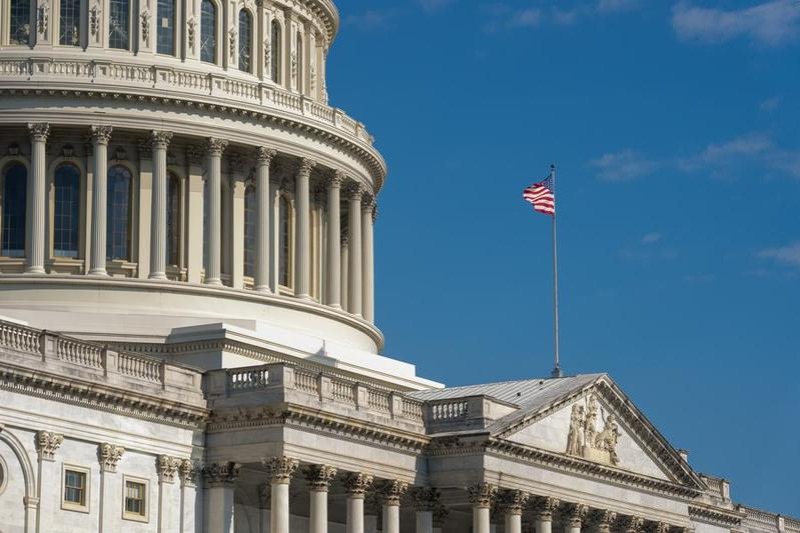
    Following the US Senate’s approval of a spending bill to end the longest government shutdown in history, the focus now shifts to the House of Representatives, where a critical vote is expected this week. Unlike the Senate, House Republicans can pass the budget without Democratic support if they remain united, though the margin for error is exceptionally narrow. Key issues remain unresolved, particularly the Democrats’ push to renew tax credits that make health insurance more affordable for 24 million Americans. Senate Republicans have only agreed to a December vote on extending these subsidies, while House Speaker Mike Johnson has not committed to allowing a vote on the matter. This stance carries significant political risk for Republicans, as failing to extend the subsidies could lead to skyrocketing health insurance premiums, providing Democrats with a potent campaign issue for the upcoming midterm elections. Marjorie Taylor Greene, a conservative Republican from Georgia, has broken ranks with former President Donald Trump to warn against such a scenario. Meanwhile, Democrats, emboldened by recent election victories in Virginia, New Jersey, and New York City, face internal tensions between pragmatic and progressive factions. Progressive leaders like Senator Bernie Sanders and Congressman Greg Casar have criticized the budget deal, with Casar calling it a ‘betrayal’ of millions of Americans. Centrist Democrats, however, may cross party lines to support the bill. House Republicans, holding a slim majority, can only afford to lose two votes, with fiscal conservatives like Thomas Massie likely to oppose the package. The proposed deal would add $1.8 trillion annually to the national debt, a point of contention for fiscal hawks. As the House prepares to vote, logistical challenges, including flight delays and severe weather, further complicate the process.

  • A timeline of the Trump speech controversy roiling the BBC and other recent scandals

    A timeline of the Trump speech controversy roiling the BBC and other recent scandals

    The British Broadcasting Corporation (BBC) is embroiled in its most severe crisis in years, following a series of controversies that have culminated in the resignation of its Director-General, Tim Davie, and head of news, Deborah Turness. The turmoil was sparked by accusations of biased editing in a documentary featuring former U.S. President Donald Trump’s speech on January 6, 2021. Trump has threatened legal action, demanding $1 billion in damages for what he termed “false, defamatory, and inflammatory statements.” The BBC’s chair, Samir Shah, has issued an apology for an “error of judgment” in the editing process. This incident is the latest in a string of scandals that have plagued the BBC under Davie’s leadership. These include the Martin Bashir scandal, where a journalist used fake documents to secure an interview with Princess Diana, and the suspension of high-profile presenter Huw Edwards over allegations of inappropriate conduct. The BBC has also faced criticism for its coverage of sensitive topics, including the Gaza conflict and transgender issues. The institution’s credibility is now under intense scrutiny, with concerns raised about institutional bias and editorial standards.

  • Islamists in Bangladesh demand a referendum on the national charter ahead of a general election

    Islamists in Bangladesh demand a referendum on the national charter ahead of a general election

    In Dhaka, Bangladesh, thousands of Islamist supporters gathered on Tuesday to demand the interim government legalize the ‘July National Charter,’ a proposed framework for political reforms. The rally, organized by the Jamaat-e-Islami party and seven other political groups, emphasized that the upcoming general election, slated for early 2026, cannot proceed without a legally binding roadmap for constitutional changes. The charter, named after the July 2024 uprising that led to the ouster of former Prime Minister Sheikh Hasina, aims to introduce checks and balances to prevent authoritarianism, including term limits for legislators and measures to combat corruption. Currently nonbinding, the charter requires a referendum to become part of the constitution, a process only Parliament can initiate in Bangladesh’s parliamentary democracy. The interim government, led by Nobel Peace Prize laureate Muhammad Yunus, proposed the roadmap following Hasina’s removal in August 2023. The Bangladesh Nationalist Party, headed by former Prime Minister Khaleda Zia, has endorsed the charter, while Hasina’s Awami League remains banned, and she faces trial for alleged crimes during last year’s uprising. Supporters at the rally insisted that the 2026 election must be conducted under a proportional representation system and that the charter must be legally binding. Meanwhile, a special tribunal is set to announce a verdict date for Hasina’s trial on Thursday, as Bangladesh’s political future remains uncertain under Yunus’s leadership.

  • Anger over ‘wanted notice’ for Nigeria’s ex-oil minister Timipre Sylva

    Anger over ‘wanted notice’ for Nigeria’s ex-oil minister Timipre Sylva

    Nigeria’s former oil minister, Timipre Sylva, has been issued an arrest warrant by the country’s anti-corruption agency, the Economic and Financial Crimes Commission (EFCC), over allegations of diverting $15 million in public funds intended for an oil refinery project. Sylva’s spokesperson, Julius Bokoru, has dismissed the charges as politically motivated, asserting that the refinery project was legitimate and fully documented. Bokoru revealed that Sylva is currently in the UK for a medical check-up and plans to engage with the EFCC upon his return. He criticized the agency for not contacting Sylva directly and accused them of using social media to ‘inflame public sentiment’ by issuing a ‘wanted notice.’ The EFCC’s notice follows a warrant issued by a High Court in Lagos last Thursday. Sylva, who served as petroleum minister from 2019 to 2023 under former President Muhammadu Buhari, has a long political history, including a term as governor of Bayelsa state, a key oil-producing region. The case has sparked debate over the transparency of Nigeria’s anti-corruption efforts and the potential politicization of such investigations.