分类: politics

  • Georgia marks a year of protests since EU talks stalled and crackdown intensified

    Georgia marks a year of protests since EU talks stalled and crackdown intensified

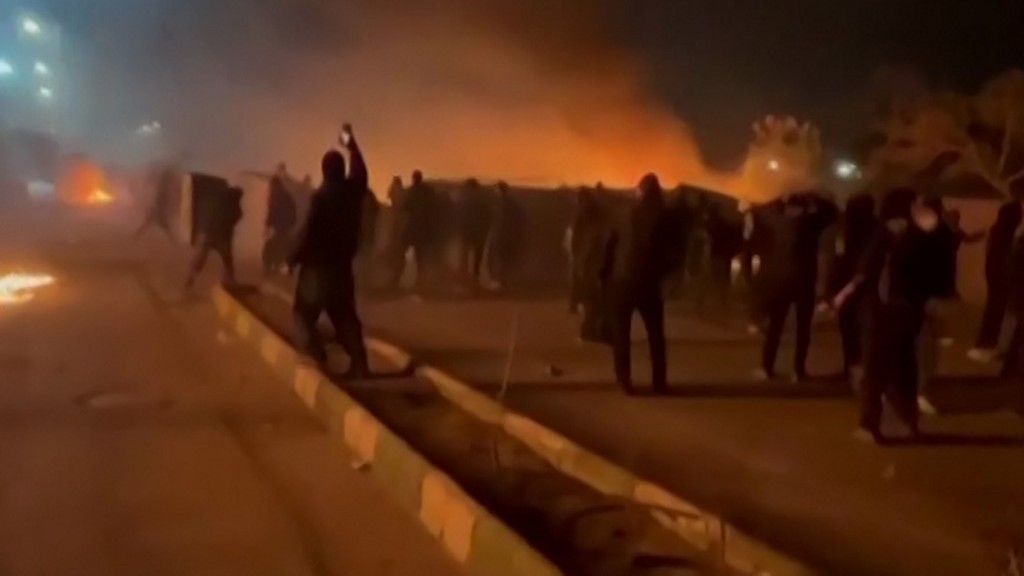
    TBILISI, Georgia — For 365 consecutive days, the streets of Georgia’s capital have echoed with dissent as thousands of citizens maintain unwavering demonstrations against their government’s controversial suspension of European Union accession negotiations. The sustained civic movement reached its one-year milestone on Friday with massive gatherings along Tbilisi’s central Rustaveli Avenue, where protesters brandished national flags, placards, and symbolic whistles while chanting pro-European slogans.

    The protest movement ignited immediately after Prime Minister Irakli Kobakhidze’s November 28, 2024 announcement halting EU membership talks. Despite diminished crowd sizes over time, daily demonstrations have persisted both outside parliament and across other urban centers, representing what participants describe as a fundamental struggle for Georgia’s democratic future.

    In response to the enduring protests, the ruling Georgian Dream party has implemented increasingly stringent measures against dissent. New legislation has dramatically escalated penalties for protest activities, with administrative detention periods extending to 15 days for participants and 20 days for organizers. Financial penalties have skyrocketed from 500 lari ($185) to 5,000 lari ($1,850) for initial violations, with criminal charges following subsequent offenses.

    Critics argue these measures mirror Russian-style suppression tactics, noting similarities to legislation used by Vladimir Putin’s administration to stifle opposition. The government has simultaneously intensified pressure on opposition parties, petitioning the Constitutional Court to ban the country’s three primary opposition groups—the United National Movement, Akhali/Coalition for Change, and Lelo.

    Among hundreds detained under the new framework is Rusiko Kobakhidze, a researcher and mother of nine, who received multiple jail sentences for blocking streets during demonstrations. “I don’t want a country where my children cannot speak openly,” she told Associated Press, capturing the movement’s central ethos.

    Despite the suspended accession process, ruling party officials maintain their commitment to European integration. Lawmaker Mariam Lashkhi asserted that “EU integration and NATO integration remain unchanged,” while simultaneously rejecting international influence on domestic policy. This position contrasts sharply with the EU’s November 4 enlargement report, which cited “democratic backsliding” and described government actions as “fundamentally incompatible with EU values.”

  • Afghans in US issue plea to Trump after Washington DC shooting

    Afghans in US issue plea to Trump after Washington DC shooting

    The Afghan community in the United States has united in condemnation of Wednesday’s fatal shooting in Washington DC that claimed the life of 20-year-old National Guard member Sarah Beckstrom and left her colleague Andrew Wolfe critically injured. The alleged perpetrator, 29-year-old Rahmanullah Lakanwal, entered the U.S. through a special immigration program established for Afghans who collaborated with American forces during the 2021 withdrawal from Afghanistan.

    In response to the incident, President Donald Trump has implemented an immediate suspension of all Afghan immigration applications and ordered a comprehensive review of green cards issued to nationals from 19 countries. The administration has signaled potential broader restrictions on migration from what it characterizes as ‘third-world countries.’

    The Afghan Community Coalition of America expressed profound sympathy for the victims’ families while urging authorities not to delay or suspend Afghan immigration claims. ‘Twenty years of Afghan-US partnership must not be forgotten,’ their statement emphasized, referencing the two-decade military engagement that began in 2001.

    Multiple Afghan immigrants who spoke with media outlets on condition of anonymity due to Taliban reprisal concerns described the shooting as ‘deeply tragic’ and ‘really shocking.’ They emphasized that the suspect’s actions represented an individual criminal act rather than reflecting their community’s values. ‘Afghans in the United States are hardworking, tax-paying members of society,’ one interviewee noted, adding that many remain grateful for American evacuation efforts during the Kabul crisis.

    Lakanwal reportedly assisted U.S. forces as a guard at Kabul airport during the withdrawal operation and entered America the same year. According to official sources, his asylum application was approved earlier this year after being filed in 2024. The FBI confirms the suspect had established relationships with ‘partner forces’ during the U.S. military presence in Afghanistan.

    The political fallout has created widespread uncertainty among immigrant communities, with many expressing concern about potential policy changes that could affect their status. One Afghan resident articulated the dual challenges facing his community: ‘For us Afghans there’s problem for us in Afghanistan as well as here.’

  • Daughter of Zambia’s unburied ex-president loses seat as MP

    Daughter of Zambia’s unburied ex-president loses seat as MP

    Zambia’s parliamentary leadership has officially vacated the parliamentary seat of Tasila Lungu, daughter of late former President Edgar Lungu, following her extended absence during a period of mourning and ongoing legal battles. The decision has ignited fierce political controversy and accusations of governmental hypocrisy.

    Ms. Lungu, who represented the Chawama constituency for the opposition Patriotic Front, had been absent from legislative duties since the passing of her father in June. The situation originates from a deeply contentious dispute between the Lungu family and current President Hakainde Hichilema regarding the repatriation and burial arrangements for the former leader.

    The parliamentary process unfolded over several months despite initial accommodations. Speaker Nelly Mutti initially granted a 14-day compassionate leave period in July, with expectations that Ms. Lungu would return when parliament reconvened in September. When she failed to resume duties, further extensions were requested as the family continued legal proceedings in South African courts regarding burial arrangements.

    The parliamentary Committee on Privileges and Absences attempted to find a compromise by suggesting virtual participation until the burial matter was resolved. However, Speaker Mutti firmly rejected this proposal, asserting that physical representation remains indispensable for parliamentary responsibilities.

    The ruling United Party for National Development initiated the action against Ms. Lungu’s seat, with MP Brian Kambita questioning her eligibility due to prolonged absence. The move has drawn sharp criticism from opposition figures, including Independent MP Binwell Mpundu, who publicly denounced the government as ‘hypocrites’ for claiming solidarity with the grieving family while simultaneously pursuing legal action against them.

    In response to her removal, Ms. Lungu hinted at a potential challenge to the decision, telling constituents in a Facebook message that ‘where there is a will there is a way.’ She expressed gratitude to her local team for maintaining constituency services during her absence.

    The vacancy triggers a by-election that must be conducted within 90 days, creating an unexpected electoral contest just months before Zambia’s scheduled general election next August. The decision has divided public opinion, with some arguing for compassion during bereavement while others maintain that constituents deserve active representation.

  • Zelensky’s chief of staff resigns after Ukrainian anti-corruption raid on his home

    Zelensky’s chief of staff resigns after Ukrainian anti-corruption raid on his home

    Ukrainian President Volodymyr Zelensky announced the resignation of his chief of staff Andriy Yermak following an anti-corruption operation targeting Yermak’s Kyiv residence. The development comes at a critically sensitive moment for Ukraine’s leadership as the country navigates both intensified diplomatic efforts to end the war with Russia and mounting domestic pressure over corruption allegations.

    Yermak, 54, who has served as Zelensky’s closest advisor throughout Russia’s full-scale invasion, maintained his cooperation with investigators while not facing formal accusations. The president expressed gratitude for Yermak’s “patriotic position” in negotiations during a Friday video address from Kyiv, while simultaneously announcing consultations for his replacement.

    The resignation strikes at the core of Ukraine’s leadership structure precisely as U.S. Army Secretary Dan Driscoll prepares to visit Kyiv to advance President Donald Trump’s renewed peace initiative. American officials are scheduled to travel to Moscow the following week, highlighting the delicate timing of this political upheaval.

    In a solemn national address delivered outside his presidential office, Zelensky issued a stark warning about internal divisions: “We risk losing everything: ourselves, Ukraine, our future.” He emphasized that Russia anticipates Ukrainian missteps, vowing: “There won’t be any mistakes from our side. Our work continues, our fight continues.”

    Yermak had recently been appointed to lead crucial negotiations with Russia and maintained significant influence until his departure. Just hours before the raid, he explicitly stated Ukraine’s position against territorial concessions in an interview with The Atlantic: “As long as Zelensky is president, no-one should count on us giving up territory.”

    The corruption scandal that precipitated this political crisis involves alleged embezzlement of approximately $100 million from Ukraine’s energy sector. Investigators from Ukraine’s National Anti-Corruption Bureau (NABU) and Specialized Anti-Corruption Prosecutor’s Office (SAP) have uncovered an extensive scheme involving kickbacks and influence over state-owned companies, including nuclear energy firm Enerhoatom.

    The widening investigation has already resulted in the dismissal of two ministers and several detentions. Notably, Timur Mindich, a former business associate of Zelensky from his entertainment career and co-owner of the Kvartal 95 studio that launched the president’s acting career, has fled the country amid the scandal.

  • Russia’s Putin to visit India on December 4-5 at Modi’s invite

    Russia’s Putin to visit India on December 4-5 at Modi’s invite

    Russian President Vladimir Putin will undertake a significant state visit to India on December 4-5, following a formal invitation extended by Indian Prime Minister Narendra Modi. The Kremlin confirmed the diplomatic engagement through Russian state media outlets on Friday, November 28, 2025.

    India’s Ministry of External Affairs emphasized that this high-level meeting presents a crucial opportunity for both nations to comprehensively evaluate the advancement of their bilateral relations. The ministry’s official statement outlined that the leadership summit aims to establish a forward-looking framework for enhancing the ‘special and privileged strategic partnership’ between Moscow and New Delhi.

    The upcoming discussions are expected to cover substantial ground on pressing regional and international matters where both countries share aligned interests. This visit marks another chapter in the long-standing diplomatic relationship between Russia and India, which has maintained resilience despite evolving global geopolitical dynamics and international pressures.

    President Putin’s travel plans indicate continued diplomatic outreach despite current global tensions, while Prime Minister Modi’s administration demonstrates India’s commitment to maintaining balanced international relationships. The meeting will likely address economic cooperation, defense partnerships, and energy security arrangements that have traditionally formed the cornerstone of Indo-Russian relations.

    The timing of this visit holds particular significance as both nations navigate complex international relationships and seek to strengthen their bilateral cooperation across multiple sectors including trade, technology, and counterterrorism efforts.

  • Tunisia hands prison terms to dozens of opposition figures

    Tunisia hands prison terms to dozens of opposition figures

    A Tunisian appeals court has delivered severe prison sentences ranging from four to forty-five years to dozens of opposition leaders, lawyers, and business figures accused of conspiring to overthrow President Kais Saied. The verdicts finalize what human rights organizations have condemned as a politically motivated judicial process targeting dissenters.

    Among the most prominent defendants, opposition leader Jawahar Ben Mbarek received a twenty-year prison term alongside party leaders Issam Chebbi and Ghazi Chaouachi. All three have remained in detention since their arrest during the government’s 2023 crackdown on opposition voices. Businessman Kamel Ltaif received the maximum sentence of forty-five years, while opposition politician Khyam Turki was sentenced to thirty-five years.

    The trial proceedings have drawn international criticism, with Amnesty International’s deputy regional director Sara Hashash describing the sentences as “unjust” and “an appalling indictment of the Tunisian justice system.” Defense lawyers characterized the trial as a judicial “farce” designed to eliminate political opposition.

    Notably, twenty defendants who had fled abroad were sentenced in absentia, including prominent politician and feminist Bochra Belhaj Hmida and French philosopher Bernard-Henri Lévy. The appeals court unexpectedly acquitted three defendants while increasing sentences for others.

    The case has unfolded against a backdrop of democratic backsliding in Tunisia since President Saied suspended parliament in 2021 and began ruling by decree. Tunisian authorities maintain the defendants, including former intelligence chief Kamel Guizani, genuinely attempted to destabilize the nation and topple the government.

    The sentencing has sparked renewed protests, with thousands marching through Tunis on Saturday accusing Saied of establishing one-man rule through judicial and police powers. The UN High Commissioner for Human Rights had previously expressed serious concerns about political motivations behind the trial, urging Tunisia to refrain from using counter-terrorism legislation to silence dissent.

  • Talks over UK joining EU defence fund break down

    Talks over UK joining EU defence fund break down

    Negotiations between the United Kingdom and European Union regarding British defense companies’ participation in the €150 billion (£130bn) SAFE loan program have reached an impasse due to unresolved financial disagreements. The breakdown occurred just before Sunday’s deadline for EU member states to submit initial funding applications for the massive rearmament initiative.

    The core disagreement centered on the substantial entry fee demanded by the European Commission for UK defense firms to access an enhanced share of the loans. While Britain acknowledged the necessity of contributing financially, officials maintained they would not accept an agreement at any cost. This stalemate effectively limits UK-based companies to providing no more than 35% of the total value of any finished defense products funded through the scheme.

    Nick Thomas-Symonds, Minister for EU Relations, expressed disappointment that discussions couldn’t be concluded before the first bidding round. ‘Our negotiators engaged in good faith throughout,’ he stated, ‘but our position remained clear: we will only sign agreements serving national interests and delivering value for money.’

    The European Commission indicated potential for future negotiations, with a spokesperson noting that while no agreement could be reached ‘at this time,’ constructive dialogue had occurred. Meanwhile, nineteen EU nations have already applied for funding from the program, with Poland securing the largest allocation at €43.7 billion.

    Industry representatives from ADS, Britain’s defense trade organization, characterized the development as a ‘frustrating setback’ for UK defense contractors. Chief Executive Kevin Craven maintained optimism that arrangements might be salvaged in the coming year.

    This negotiation failure occurs against the broader backdrop of ongoing UK-EU discussions aimed at resetting post-Brexit relations, including potential agreements on reducing border checks for food products and linking carbon trading systems. Separate talks with Canada regarding its participation in the SAFE program were also underway, with Brussels hoping to finalize an agreement before the weekend deadline.

  • South African ex-leader’s daughter quits Parliament over Russian mercenary allegations

    South African ex-leader’s daughter quits Parliament over Russian mercenary allegations

    In a significant political development, Duduzile Zuma-Sambudla, daughter of former South African President Jacob Zuma, has stepped down from her parliamentary position following allegations of involvement in recruiting citizens for Russian military operations in Ukraine. The resignation was confirmed by her political party, the MK Party, during a Friday press briefing.

    National Chairman Nkosinathi Nhleko announced the departure while acknowledging the “sensitivity” of the situation, though he provided limited details about the circumstances surrounding her resignation. The move comes as South African authorities investigate claims that Zuma-Sambudla participated in deceiving 17 South African men into traveling to Russia under false pretenses of security training opportunities, only to find themselves coerced into frontline combat roles in Ukraine’s Donbas region.

    According to official statements, the affected individuals—ranging from 20 to 39 years old—had initially believed they were accepting legitimate employment contracts. Distress communications from the group prompted intervention from South Africa’s foreign ministry and police agencies, who are now collaborating with international law enforcement to facilitate their repatriation.

    Notably, court documents submitted by Zuma-Sambudla’s half-sister, Nkosazana Bonganini Zuma-Mncube, allege that eight of the recruited men are extended family members. The affidavit further claims the South Africans were transferred to a Russian mercenary organization upon arrival.

    The MK Party leadership has explicitly denied institutional involvement in the recruitment operation while pledging support for the families seeking the safe return of their relatives. This controversy emerges alongside Zuma-Sambudla’s ongoing trial concerning unrelated charges of inciting violence during the 2021 anti-government protests, to which she has pleaded not guilty.

  • Hungary’s Orban defies EU partners and meets Putin again in Moscow

    Hungary’s Orban defies EU partners and meets Putin again in Moscow

    Hungarian Prime Minister Viktor Orban has conducted a high-stakes diplomatic visit to Moscow, engaging in talks with Russian President Vladimir Putin just days before crucial negotiations regarding the Ukraine conflict. This meeting marks Orban’s continued alignment with Moscow despite Hungary’s membership in both NATO and the European Union.

    During their discussions, which were broadcast on Russian state television, Putin acknowledged Orban’s “balanced position on the situation in Ukraine” and expressed gratitude for Hungary’s proposal to host a potential Russia-US summit involving President Donald Trump. This Budapest “peace summit” initiative, however, was ultimately abandoned last month due to Russia’s unwillingness to compromise on its maximalist demands for ending the conflict.

    The timing of Orban’s Moscow visit carries significant political implications as his Fidesz party faces potential defeat in upcoming April parliamentary elections, which would mark the first change in Hungary’s leadership in 15 years according to current polling data.

    Energy security emerged as the central focus of the talks, with Orban framing the visit as part of a strategic effort to secure Russian energy supplies for Hungary, Slovakia, and Serbia during the winter months. This Moscow engagement follows Orban’s recent success in Washington, where he secured exemptions from US sanctions on Russian fuel—contingent on his continued leadership.

    Orban has consistently positioned himself as a peace advocate since Russia’s 2022 invasion of Ukraine, recently claiming on Hungarian state radio that “Europe has decided to go to war in Ukraine.” He has vigorously supported Trump’s 28-point peace plan while accusing EU leaders of “war-mongering” for attempting to adapt the proposal to address Ukraine’s concerns.

    In a recent communication with European Commission President Ursula von der Leyen, the Hungarian leader advocated for immediate, unconditional peace talks and direct EU negotiations with the Kremlin. He simultaneously expressed opposition to additional EU funding for Ukraine and rejected using frozen Russian assets to support Ukrainian defense efforts.

    Despite Hungary’s continued energy dependence on Russia—receiving over 80% of its oil and gas and 100% of its nuclear fuel from Moscow—Orban’s recent agreements with the United States to purchase liquefied natural gas and nuclear fuel may potentially strain his relationship with Russian leadership. The Prime Minister argues that without agreements with both superpowers, Hungarian heating prices would triple next month.

    Hungary faces mounting pressure from the EU to completely phase out Russian energy imports by 2027, making any Moscow agreements particularly contentious within the European bloc. The country’s trade relationship contributes approximately $5 billion annually to the Russian budget.

    Political analysts suggest that both Putin and Trump have expressed clear interest in Orban’s electoral success next April, making any diplomatic achievement valuable for all parties involved. Putin previously praised Orban at September’s Valdai Forum in Sochi, celebrating the rise of “nationally-oriented political forces” across Europe and suggesting that their growth could lead to Europe’s “rebirth.”

  • Talks on UK access to an EU defense fund have broken down

    Talks on UK access to an EU defense fund have broken down

    LONDON — Critical negotiations regarding Britain’s participation in the European Union’s landmark defense initiative have concluded without resolution, marking a significant setback in post-Brexit relationship rebuilding efforts. The British government confirmed the stalemate on Friday, revealing that financial considerations ultimately prevented agreement on UK accession to the Security Action for Europe (SAFE) program.

    The SAFE initiative, established with a substantial €150 billion (approximately $170 billion) war chest, represents the EU’s strategic response to enhance continental security and support Ukrainian defense capabilities. The proposed arrangement would have enabled British defense contractors to access favorable EU-backed financing for military procurement projects.

    Prime Minister Keir Starmer’s administration, which had prioritized mending strained relations with the European bloc following Britain’s contentious 2020 departure, now faces diplomatic challenges. Just months earlier in May, both parties had celebrated several bilateral agreements covering trade, mobility, and defense cooperation as evidence of a revitalized partnership.

    British EU Relations Minister Nick Thomas-Symonds characterized the negotiations as conducted ‘in good faith’ while emphasizing Britain’s unwavering commitment to securing arrangements that serve national interests and demonstrate fiscal responsibility. ‘While disappointing that we have not been able to conclude discussions on UK participation in the first round of SAFE,’ Thomas-Symonds stated, ‘the UK defense industry will still be able to participate in projects through SAFE on third country terms.’

    Under existing framework parameters, non-member states can contribute up to 35% of contract values within SAFE projects. British negotiators had sought to elevate this threshold through specialized arrangements.

    Despite this setback, both governments indicated continued progress in other dimensions of their May agreement. Collaborative efforts in energy security and food and beverage trade regulations proceed positively according to officials.

    EU spokesperson Thomas Regnier reaffirmed the bloc’s dedication to fostering robust UK-EU security cooperation, noting that ‘SAFE remains open by design’ and that Britain retains participation rights under standard third-country provisions.

    This development underscores the ongoing complexities in redefining UK-EU relations following Brexit, particularly in areas requiring financial contributions and regulatory alignment.