分类: politics

  • Opposition leader detained in Azerbaijan’s continuing crackdown on dissent

    Opposition leader detained in Azerbaijan’s continuing crackdown on dissent

    Azerbaijan’s government has intensified its suppression of political dissent with the detention of prominent opposition figure Ali Karimli, chairman of the Popular Front Party, on Saturday. The move represents a significant escalation in President Ilham Aliyev’s ongoing campaign against opposition voices.

    According to Karimli’s adviser Fuad Gahramanli, security forces conducted searches at the opposition leader’s residence while simultaneously cutting off his communication channels. The operation extended to Mammad Ibrahim, another senior party official, who faced similar detention and property searches.

    While authorities remain officially silent regarding the detentions, government-aligned media outlets have linked the actions to an ongoing criminal investigation targeting Ramiz Mehdiyev, former head of the presidential administration. Mehdiyev, currently under house arrest, faces serious allegations including attempted seizure of state power, high treason, and financial crimes—though official confirmation of these charges remains pending.

    Human rights organizations document a concerning pattern of escalating repression in Azerbaijan, where authorities systematically target journalists, activists, and independent political figures. The Aliyev dynasty, which has maintained power since 2003 when Ilham succeeded his father Heydar, has consistently suppressed political opposition through various means.

    International observers have repeatedly questioned the legitimacy of Azerbaijan’s electoral processes since the nation gained independence from the Soviet Union in the early 1990s. The oil-rich Caspian nation of approximately 10 million people continues to face criticism for its record on democratic principles and human rights protections.

  • Georgian opposition leader arrested over alleged arson attempt at Tbilisi court

    Georgian opposition leader arrested over alleged arson attempt at Tbilisi court

    Georgian law enforcement authorities have apprehended Aleksandre Elisashvili, leader of the opposition Citizens party, on allegations of attempting to ignite the Tbilisi City Court building. According to the Interior Ministry’s official statement, the incident occurred at dawn when Elisashvili allegedly breached the court chancellery by shattering a window with a hammer before dousing the premises with gasoline.

    The 47-year-old former parliamentarian, who leads the Lelo-Strong Georgia coalition affiliate, was reportedly armed during the confrontation and injured a court official during the arrest procedure. Security footage disseminated by authorities purportedly shows a handgun, gasoline container, lighter, and broken glass at the scene, though independent verification remains pending.

    This development occurs amidst heightened political tensions in Georgia, where the ruling Georgian Dream party has petitioned the Constitutional Court to ban three primary opposition groups, including Elisashvili’s coalition. The arrest coincides with ongoing demonstrations marking one year of continuous protests against the government’s suspension of European Union accession talks.

    Thousands of demonstrators have maintained daily gatherings along Tbilisi’s central Rustaveli Avenue since November 28, 2024, when Prime Minister Irakli Kobakhidze announced the halt in EU membership negotiations. The government has responded by implementing stricter public assembly regulations and legislation targeting civil society organizations, measures critics compare to Russian-style authoritarian practices.

  • Fall of Zelensky’s top aide – reboot for Kyiv or costly shake-up?

    Fall of Zelensky’s top aide – reboot for Kyiv or costly shake-up?

    In a dramatic political development that has shaken Ukraine’s wartime leadership, Andriy Yermak, Chief of Staff to President Volodymyr Zelensky and one of the nation’s most influential figures, has resigned abruptly following an anti-corruption raid on his Kyiv residence. The investigation, conducted by Ukraine’s National Anti-Corruption Bureau (NABU) and Special Anti-Corruption Prosecutor’s Office (SAPO), represents a significant moment in Ukraine’s ongoing struggle against corruption during wartime.

    Yermak, who stood beside Zelensky during the historic “we are still here” speech as Russian forces descended on Kyiv in February 2022, had evolved into arguably the second most powerful individual in Ukraine. The former intellectual property lawyer, who first met Zelensky in 2011 when the president was a television producer, rose to become a central figure in shaping foreign policy, managing political rivals, and even influencing battlefield decisions.

    The current crisis stems from July when Zelensky’s administration attempted to bring anti-corruption agencies under direct government control, citing concerns about Russian interference. This move triggered mass demonstrations and international criticism, particularly from the European Union, forcing a presidential reversal. By autumn, these same agencies released findings implicating senior officials in Zelensky’s inner circle regarding alleged embezzlement of $100 million from energy sector projects.

    The timing proves particularly sensitive as Russia systematically targets Ukraine’s energy infrastructure, leaving millions without reliable power during winter months. The juxtaposition of alleged corruption within the energy sector against ongoing civilian suffering has amplified public outrage.

    Despite not being named as an official suspect and denying any involvement, Yermak found himself unable to distance from the scandal. Local media reported investigators examining multiple electronic devices seized from his residence during the search operation.

    The resignation comes at a critical diplomatic moment, with Yermak having recently led negotiations with US Secretary of State Marco Rubio regarding a US-drafted peace proposal. The Ukrainian presidential office has announced Defense Minister Rustem Umerov will lead the delegation for upcoming talks, though questions remain about continuity in these delicate negotiations.

    In a message to the New York Post, Yermak declared his innocence and stated his intention to join frontline forces, claiming readiness for “any reprisals” while maintaining his honesty and decency.

    Media commentators like Olga Rudenko, editor of the Kyiv Independent, view the development as ultimately positive for Ukrainian democracy, noting that independent institutions investigating the country’s most powerful figures during wartime demonstrates institutional strength and commitment to values that justify international support.

  • Australian prime minister becomes first to wed in office

    Australian prime minister becomes first to wed in office

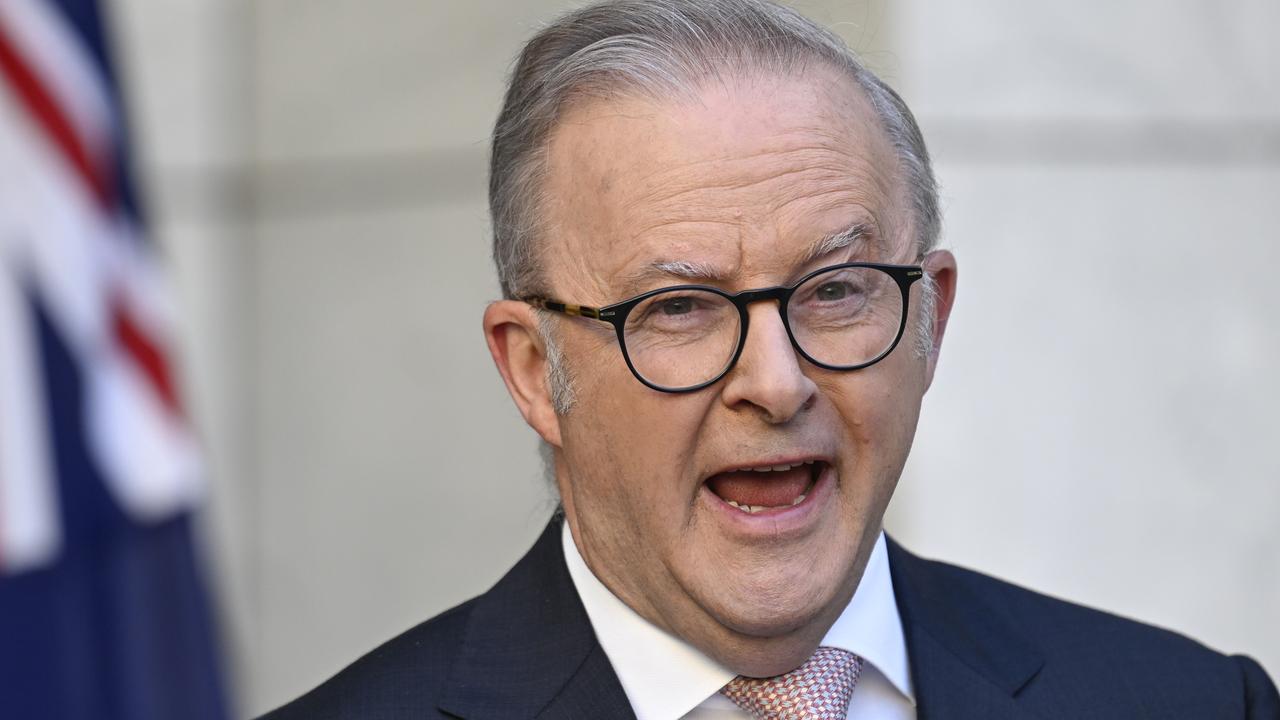
    Australian Prime Minister Anthony Albanese has entered the history books by marrying his partner Jodie Haydon in a private ceremony held in Canberra on Saturday. This landmark event marks the first time a sitting Australian prime minister has married while occupying the nation’s highest office.

    The wedding took place at the prime minister’s official residence, The Lodge, following the conclusion of the parliamentary year. The couple, who became engaged on Valentine’s Day last year in another historic first for a sitting prime minister, exchanged vows before close family and friends in a ceremony that had been meticulously guarded for security reasons.

    In a heartfelt statement, Prime Minister Albanese expressed their joy: ‘We are absolutely delighted to share our love and commitment to spending our future lives together, in front of our family and closest friends.’ The intimate gathering included Ms. Haydon’s parents and Albanese’s son from his previous marriage, creating a deeply personal atmosphere for the political leader.

    The ceremony featured several touching moments, including the couple’s dog Toto serving as ring bearer and their recessional walk accompanied by Stevie Wonder’s ‘Signed, Sealed, Delivered (I’m Yours).’ Guests celebrated the newlyweds by showering them with confetti, a moment captured in video shared on the prime minister’s official social media accounts.

    The reception showcased custom-made beer cans printed with the image used to announce their engagement, while the couple’s first dance was to Frank Sinatra’s ‘The Way You Look Tonight.’ Several cabinet ministers attended the celebrations, highlighting the unique intersection of personal joy and public leadership.

    The couple first met at a business dinner in Melbourne in 2020 while Albanese served as opposition leader. Ms. Haydon has since become a visible presence in the prime minister’s public life, accompanying him to significant events including Queen Elizabeth II’s funeral and state dinners hosted by former U.S. President Joe Biden.

    Following the ceremony, the couple plans a modest honeymoon within Australia, adjusted due to the prime minister’s responsibilities following his re-election in May.

  • Trump vows to halt ‘3rd world’ migration flow

    Trump vows to halt ‘3rd world’ migration flow

    In a dramatic policy announcement with far-reaching implications, former President Donald Trump has declared his intention to implement a comprehensive suspension of migration from what he termed “Third World Countries.” This decisive move comes in direct response to a recent ambush near the White House that resulted in the death of a National Guard member and critical injuries to another.

    The attack, which investigators attribute to an Afghan national who entered the United States through a Biden-era resettlement program, has rapidly evolved into a significant political flashpoint. Trump utilized his Truth Social platform to outline his proposed measures, which include terminating millions of immigration approvals granted during the Biden administration and eliminating federal benefits for noncitizens.

    According to government documents reviewed by Reuters, the alleged perpetrator, 29-year-old Rahmanullah Lakanwal, entered the country in 2021 under a program established following the U.S. military withdrawal from Afghanistan. Trump characterized the evacuation effort as “horrendous,” claiming it allowed hundreds of thousands of individuals to enter the country “unvetted and unchecked.”

    In addition to the migration pause, Trump’s proposal includes provisions to denaturalize migrants deemed to “undermine domestic tranquility” and deport foreign nationals classified as public charges or security risks. The U.S. Citizenship and Immigration Services has already indefinitely halted processing immigration requests from Afghan nationals.

    The policy announcement has generated considerable concern among immigrant communities and advocacy groups. Many Afghans currently residing in the United States reportedly fear both official retaliation and xenophobic attacks despite having no connection to the incident. Advocacy leaders emphasize that one individual’s actions should not endanger entire communities who fled persecution and supported U.S. interests abroad.

    The White House and relevant immigration authorities have not yet responded to requests for comment regarding Trump’s proposals. This development signals a potential return to the hardline immigration policies that characterized Trump’s previous administration and is expected to intensify debates surrounding national security, immigration vetting procedures, and humanitarian obligations.

  • Thousands of protesters gather as German far-right party sets up new youth organization

    Thousands of protesters gather as German far-right party sets up new youth organization

    Thousands of protesters descended upon the western German city of Giessen on Saturday, demonstrating against the founding convention of a new youth organization established by the far-right Alternative for Germany (AfD) party. The gathering prompted significant civil unrest, with groups of activists attempting to blockade roads throughout the city of approximately 93,000 residents. Law enforcement officials reported deploying pepper spray in response to projectiles, including stones, being thrown at police officers at one demonstration site.

    The newly formed group, anticipated to be named ‘Generation Germany,’ replaces the party’s previous youth wing, Young Alternative, which was formally dissolved in late March. This predecessor organization had operated with considerable autonomy and was subsequently classified as a confirmed right-wing extremist group by Germany’s domestic intelligence agency. The AfD itself received a similar designation, though this classification remains suspended pending the outcome of a legal challenge initiated by the party.

    This organizational restructuring reflects AfD’s desire to exercise tighter control over its youth affiliate. The party has experienced substantial political gains, finishing as runner-up in Germany’s February national election with over 20% of the vote, establishing itself as the country’s principal opposition force. Recent polling indicates continued growth in popular support as Chancellor Friedrich Merz’s coalition government struggles to maintain voter confidence.

    Youth wings traditionally associated with German political parties typically adopt more radical positions than their parent organizations. The AfD has strategically positioned itself as an anti-establishment movement, capitalizing on widespread political disillusionment. Initially gaining parliamentary representation in 2017 through leveraging public discontent regarding migration policies, the party has demonstrated remarkable aptitude in channeling dissatisfaction across various societal issues beyond its signature anti-immigration platform.

  • Experts share ideas on advancing human rights

    Experts share ideas on advancing human rights

    China is poised to significantly advance its human rights framework through both domestic policy implementation and enhanced international cooperation, according to expert discussions at a major symposium organized by the China Society for Human Rights Studies on Friday. The gathering brought together over 170 specialists from diverse sectors to formulate strategies for human rights advancement during the nation’s critical transition between five-year planning periods.

    The symposium focused on implementing directives from the fourth plenary session of the 20th Central Committee of the Communist Party of China, which emphasized comprehensive human rights development as a cornerstone of national policy. Padma Choling, president of the hosting organization, highlighted that the Recommendations for the 15th Five-Year Plan period (2026-30) establish promoting all-around human rights advancement as a key national priority.

    Central to China’s human rights philosophy is the principle that “the ultimate human right is for people to lead a happy life,” Choling stated. This approach emphasizes ensuring equitable distribution of modernization benefits and improving welfare through sustainable development. The strategy includes strengthening international cooperation, particularly with Belt and Road Initiative partners and Global South nations, while increasing China’s participation in multilateral institutions and global rule-making processes.

    Legal experts addressed judicial protections, with Li Xiao, former inspector of the Supreme People’s Court research office, emphasizing the need to balance leniency and severity in criminal enforcement while rigorously maintaining evidence-based judgments and presumption of innocence principles.

    Rural development received significant attention, with China Foundation for Rural Development deputy secretary-general Ding Yadong outlining programs that ensure farmers’ dignity through improved living conditions and development opportunities. These initiatives include expanding agricultural machinery access and providing skills training to support rural revitalization.

    Media representation emerged as another critical focus. China Daily deputy editor-in-chief Xing Zhigang noted that while Western media narratives often dominate global human rights discourse, support from Global South countries for China’s human rights achievements continues growing. He advocated for proactive agenda-setting to counter what he described as hypocritical Western narratives with double standards.

    In the technological sphere, Beijing Institute of Technology’s science and technology human rights center director Qi Yanping called for integrating human rights ethics and legal values into digital governance. This includes refining information rights standards and embedding dignity concepts into technology design to ensure digital intelligence serves broader societal benefits.

  • How Trump’s pledge to tackle Sudan atrocities could play out

    How Trump’s pledge to tackle Sudan atrocities could play out

    After enduring thirty months of devastating civil war, Sudan stands on the brink of collapse with previous international peace initiatives failing to achieve breakthrough compromises. The conflict has displaced nearly 12 million people and created famine conditions across multiple regions, leaving citizens questioning whether the global community acknowledges their suffering.

    A potential shift emerged when Saudi Crown Prince Mohammed bin Salman personally briefed U.S. President Donald Trump on the crisis during a White House meeting. Following their discussion, Trump publicly acknowledged the ‘tremendous atrocities’ occurring in Sudan, which he described as ‘the most violent place on Earth,’ and committed to collaborate with Egypt, Saudi Arabia, and the United Arab Emirates to end the violence.

    This development comes amid escalating brutality in the conflict. In late October, paramilitary Rapid Support Forces (RSF) captured el-Fasher, the army’s final stronghold in Darfur, following a 500-day siege. The capture was accompanied by widespread atrocities, including ethnically targeted massacres that claimed over 5,000 lives, with RSF fighters circulating ‘trophy videos’ of their actions on social media.

    The war originated in April 2023 from a power struggle between Armed Forces Chief Gen Abdel Fattah al-Burhan, who leads the UN-recognized government, and RSF commander Gen Mohamed Hamdan Dagalo (Hemedti) over Sudan’s political future. Despite Hemedti’s post-victory ceasefire offers, Burhan’s faction has rejected compromise, particularly the Islamists within his coalition who demand complete defeat of the RSF.

    Regional powers have exacerbated the conflict through weapon supplies: Egypt and Turkey support the regular army, while multiple reports indicate the UAE arms the RSF, though Emirati officials consistently deny these allegations. This external involvement has created a complex geopolitical landscape that peace efforts must navigate.

    For six months, U.S. Secretary of State Marco Rubio and Senior Africa Advisor Massad Boulos have developed a three-point peace framework through the ‘Quad’ mechanism (U.S., Egypt, Saudi Arabia, UAE) featuring: an immediate ceasefire, humanitarian access, and civilian-led transition negotiations. However, the RSF’s assault on el-Fasher undermined these diplomatic efforts.

    Trump’s personal involvement potentially strengthens the Quad initiative, as he maintains unique relationships with regional leaders. However, significant obstacles remain, including the fierce Saudi-Emirati rivalry for influence across the Arab world, differing approaches to Islamist groups, and competing priorities that place Sudan behind issues like Gaza and commercial interests.

    Effective peacemaking would require convincing the UAE to cease its alleged support for the RSF—a challenging proposition given Abu Dhabi’s status as a major U.S. investment partner and architect of the Abraham Accords. The U.S. has avoided public criticism of Emirati actions and shows no appetite for sanctions, preferring quiet diplomacy instead.

    Even if a ceasefire is achieved, humanitarian challenges loom large. Aid organizations require approximately $3 billion for immediate relief, while political solutions must address deep public distrust of military leaders and civilian demands for democracy following the 2019 revolution that ousted longtime ruler Omar al-Bashir. Many Sudanese also fear that Arab-led mediation might reduce their nation to dependency status rather than achieving genuine self-determination.

  • Trump says not inviting South Africa to next year’s G20 in Miami

    Trump says not inviting South Africa to next year’s G20 in Miami

    In a significant escalation of diplomatic tensions, former US President Donald Trump has declared South Africa will be excluded from the 2026 G20 Summit scheduled for his Miami golf resort. The announcement marks the latest development in an ongoing confrontation between Trump’s administration and the African nation.

    Trump justified the exclusion through a post on his Truth Social platform, citing alleged ‘horrific Human Right Abuses’ against white farmers and South Africa’s breach of diplomatic protocol regarding the G20 presidency transition. This decision follows the Trump administration’s boycott of the recent G20 summit hosted in Johannesburg, which concluded without the traditional symbolic handover of presidency to the United States as next host.

    The diplomatic rift deepened when President Cyril Ramaphosa declined to formally transfer the G20 presidency to the United States, breaking with established convention. Trump’s administration has further intensified tensions by propagating controversial claims of ‘white genocide’ targeting Afrikaner communities, allegations that the South African government vehemently denies.

    The confrontation reached a notable point during a May meeting at the White House, where Trump presented President Ramaphosa with a video purportedly documenting these allegations, though the material contained numerous factual inaccuracies according to independent verification.

    The 2026 gathering of the world’s twenty largest economies is set to occur at the Trump National Doral Miami resort in Florida, presenting unique ethical considerations given the former president’s continued ownership of the venue.

  • DHS points to US travel ban list when asked about ‘Third World’ countries

    DHS points to US travel ban list when asked about ‘Third World’ countries

    In a significant policy shift following a fatal shooting incident near the White House, the Trump administration has declared a permanent suspension of migration from all nations classified as ‘Third World Countries.’ The announcement came late Thursday after an Afghan national, identified as 29-year-old Rahmanullah Lakanwal, shot two U.S. National Guard members, resulting in the death of 20-year-old Sarah Beckstrom and critical injuries to 24-year-old Andrew Wolfe.

    The Department of Homeland Security, when pressed for clarification regarding which nations fall under the ‘Third World’ designation, directed inquiries to the existing travel ban list encompassing 19 countries. This policy expansion builds upon the recent suspension of all U.S. immigration applications from Afghan nationals implemented after the Washington shooting.

    President Trump characterized the measure as a necessary security precaution, though the administration provided no specific timeline for implementation or detailed criteria for the ‘Third World’ classification. The policy represents one of the most restrictive immigration measures undertaken by the administration, potentially affecting migration patterns from dozens of developing nations across multiple continents.

    The tragic shooting incident that precipitated this policy change occurred in proximity to the presidential residence, amplifying security concerns and triggering immediate governmental response. The administration’s reference to the existing travel ban list suggests alignment with previously identified countries of concern, though the broader ‘Third World’ terminology implies a potentially much wider scope of affected nations.