分类: politics

  • France Unbowed ‘has become a target’ of the UAE, Melenchon says

    France Unbowed ‘has become a target’ of the UAE, Melenchon says

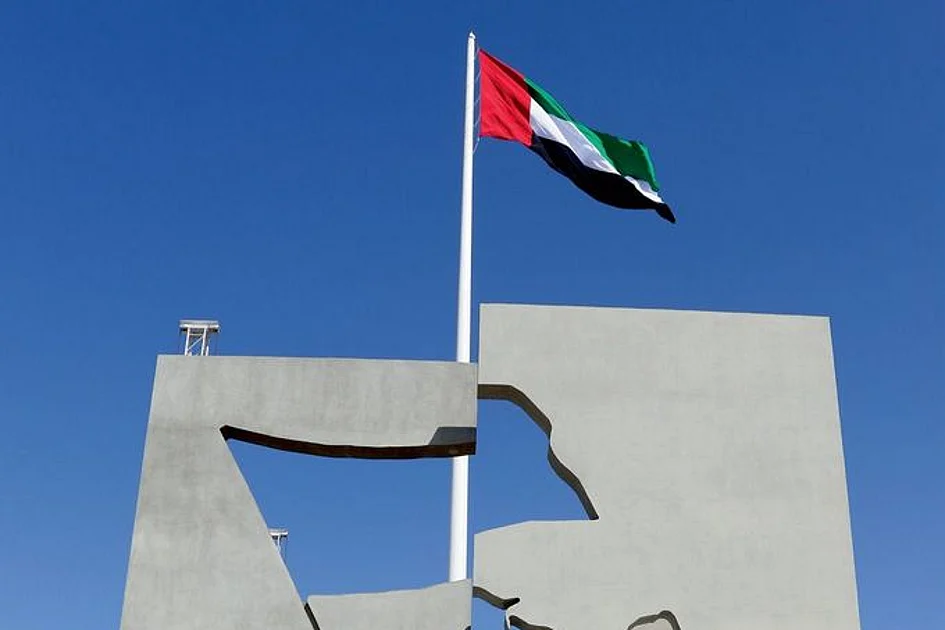
    Jean-Luc Melenchon, leader of France’s left-wing La France Insoumise (LFI) party, has publicly denounced what he characterizes as a coordinated influence operation by networks linked to the United Arab Emirates targeting his political movement. The allegations emerge amid a contentious parliamentary inquiry into alleged Islamist connections within French politics.

    The controversy centers on a controversial poll conducted by the French Institute of Public Opinion (Ifop) that suggested a phenomenon of ‘re-Islamization’ in France. Commissioned by the magazine Écran de Veille, which has documented ties to UAE interests, the survey has faced multiple legal challenges from Muslim organizations alleging biased methodology and inflammatory rhetoric.

    LFI has formally lodged a complaint with French prosecutors, arguing the poll serves as platform for discriminatory discourse and may violate laws prohibiting intelligence activities with foreign powers that threaten national interests. The party contends that an Emirati influence network may have infiltrated French institutions, citing connections between Écran de Veille consultants and UAE-linked operatives.

    Media investigations have revealed that Écran de Veille’s parent company, Global Watch Analysis, maintains strong anti-Islamist positions particularly targeting the Muslim Brotherhood—an organization banned in the UAE. According to Le Monde, the publication’s founder, Atmane Tazaghart, communicated with anonymous accounts linked to former Emirati intelligence operatives involved in European influence campaigns.

    The Swiss firm Alp Services reportedly conducted surveillance on hundreds of European individuals and organizations, including LFI, allegedly branding them as Muslim Brotherhood affiliates before forwarding information to Emirati intelligence services for further targeting.

    The political dimension intensified as consultants from Écran de Veille testified before a parliamentary inquiry committee examining connections between political parties and Islamist organizations—an investigation initially requested by right-wing legislators. Melenchon questioned why the committee focused on domestic political ties rather than foreign interference, specifically highlighting UAE’s alleged campaign to settle regional scores with Qatar using French political discourse as a battleground.

    The LFI leader also referenced the case of party member Carlos Martens Bilongo, who faced investigation based on a financial intelligence report later dismissed by prosecutors. Recent investigative reporting suggests the original report contained implausible errors and may have been produced under Emirati pressure following Bilongo’s criticism of UAE policies.

    Historical context indicates ongoing Emirati influence campaigns targeting Qatar and political Islam throughout Western nations, employing methods including character assassination, media manipulation, and policy influence. The UAE has consistently denied involvement in such operations.

    Notably, the French far-right National Rally party reportedly received an €8 million loan through Emirati banking channels in 2017, though the ultimate origin of these funds remains unclear. A subsequent parliamentary inquiry into foreign interference chaired by the National Rally highlighted operations by Russia and China but omitted any mention of similar campaigns by the UAE or Israel.

  • Former Bolivian President Arce arrested in corruption investigation a month after leaving office

    Former Bolivian President Arce arrested in corruption investigation a month after leaving office

    In a dramatic political development, Bolivian authorities have taken former President Luis Arce into custody as part of a sweeping corruption investigation. The arrest marks a significant escalation in the nation’s ongoing political transformation following the inauguration of conservative President Rodrigo Paz, which concluded two decades of socialist governance last month.

    Government official Marco Antonio Oviedo announced that Arce faces serious allegations of breach of duty and financial misconduct during his tenure as economy minister under former leader Evo Morales (2006-2019). The charges specifically relate to the alleged embezzlement of approximately $700 million from a state fund established to support Indigenous communities and peasant farmers—the core constituency of Morales’ Movement Toward Socialism party.

    A specialized anti-corruption police unit confirmed Arce is currently detained at their headquarters in La Paz. The arrest occurred under controversial circumstances, with allies claiming Arce was apprehended without prior notification while walking through an upscale neighborhood after teaching an economics class.

    The new administration has positioned this arrest as evidence of its commitment to fulfilling campaign promises to combat high-level corruption. “It is the decision of this government to fight corruption, and we will arrest all those responsible for this massive embezzlement,” Oviedo stated.

    However, the action has intensified Bolivia’s deep political divisions. Maria Nela Prada, Arce’s former government minister and key ally, denounced the detention as “a total abuse of power” and alleged political persecution. She described frantic scenes outside police headquarters where supporters gathered to protest the arrest.

    Prosecutor General Roger Mariaca countered these claims, asserting the case represents a straightforward anti-corruption effort rather than political targeting. Arce has invoked his right to remain silent during questioning and will remain in custody pending a judicial determination regarding continued detention.

    The arrest occurs against the backdrop of Bolivia’s volatile political landscape. Paz secured electoral victory in October amid widespread public dissatisfaction with Arce’s administration, which left the nation grappling with hyperinflation, fuel shortages, and depleted state coffers.

    This development continues Bolivia’s pattern of judicial actions against former leaders. The previous interim right-wing government had issued arrest warrants for Morales and his officials in 2019, while Arce’s administration subsequently imprisoned political opponents including former interim president Jeanine Añez—many of whom have now been released following Paz’s election.

    Vice President Edman Lara celebrated the arrest on social media, warning that additional anti-corruption cases against former officials would follow and declaring “death to the corrupt.” The case highlights the persistent challenges of Bolivia’s politicized judiciary and institutional fragility, which experts note has historically enabled corruption across political factions.

  • Taoiseach deems drones ‘not a threat’ to Zelensky aircraft

    Taoiseach deems drones ‘not a threat’ to Zelensky aircraft

    Irish Taoiseach Micheál Martin has addressed security concerns surrounding Ukrainian President Volodymyr Zelensky’s recent diplomatic visit to Dublin, confirming the detection of unidentified drones near naval assets but emphasizing they posed no threat to the Ukrainian leader’s aircraft. The incident occurred during President Zelensky’s single-day official visit with First Lady Olena Zelenska last week.

    According to Martin’s statement before the Dáil, crew members aboard the Irish naval vessel LÉ William Butler Yeats observed multiple unidentified drones operating near Howth over the Irish Sea during the day of the visit. The Taoiseach clarified that these sightings occurred ‘quite some time’ after President Zelensky’s plane had already landed safely at Dublin Airport, eliminating any direct aviation security risk.

    Martin characterized the drone activity as ‘highly concerning’ and indicative of ‘an ongoing Russian-inspired hybrid campaign targeting European and Ukrainian interests.’ He noted similar incidents have occurred across other European states, suggesting a coordinated pattern of psychological operations rather than immediate physical threats.

    The Irish leader detailed that an immediate operational response was initiated by the naval commander upon detection, with subsequent coordination between police and military authorities. Despite the unsettling nature of the incident, Martin affirmed that overall security operations during President Zelensky’s Irish visit remained ‘effective’ and uncompromised.

    The disclosure highlights growing concerns about non-conventional security threats during high-profile diplomatic events, particularly involving nations directly engaged in geopolitical conflicts. Irish authorities continue to investigate the origin and purpose of the drone incursions while maintaining heightened security awareness.

  • Five things we learnt at the Doha Forum

    Five things we learnt at the Doha Forum

    The recent Doha Forum became a stage for revealing the profound shifts in Middle Eastern geopolitics and America’s evolving role in the region. Syrian leader Ahmed al-Sharaa received an unexpectedly warm reception, highlighting his rehabilitated status, while prominent US figures sparked contentious debates on Gaza and regional security.

    Mr. al-Sharaa’s appearance generated remarkable enthusiasm, with attendees rising to capture photos during his CNN interview. When questioned about past terrorist allegations, he deflected by referencing Israel’s actions in Gaza and Western military interventions, asserting that public perception of terrorism has become increasingly politicized. His confidence appeared bolstered by recent White House engagement, including his meeting with President Trump.

    The Trump administration’s distinctive approach was articulated by several representatives. US Ambassador to Turkey Tom Barrack signaled a departure from previous democratic promotion efforts, comparing them to colonial mandates. He emphasized that Syria would determine its own future without Western-imposed timelines. This perspective was reinforced by Donald Trump Jr., who championed his father’s ‘America First’ doctrine, stating the US would no longer serve as the world’s financial backer but rather seek transactional partnerships, particularly with energy-rich Gulf states.

    However, regional reactions to America’s retrenchment have been mixed. Saudi analyst Dr. Abdulaziz Alghashian expressed diminished expectations regarding US security guarantees, citing Washington’s muted response to 2019 Houthi attacks as prompting Riyadh to diversify alliances, including pursuing détente with Iran.

    Significant policy divergences emerged regarding Palestine. While US delegates focused on expanding the Abraham Accords and Gaza reconstruction, Arab diplomats uniformly emphasized the necessity of Palestinian statehood as a precondition. Egypt’s Foreign Minister outlined ceasefire implementation requirements, while Turkey’s Hakan Fidan challenged Israel’s disarmament prerequisites. Both Qatar and Saudi Arabia explicitly conditioned reconstruction funding on a credible pathway to statehood—a proposition Israel’s government strongly opposes.

    The forum also featured notable Western voices. Tucker Carlson, interviewing Qatar’s Prime Minister, denounced expectations that Qatar fund Gaza’s reconstruction while denying allegations of being a Qatari agent. Former Secretary Hillary Clinton defended her comments about young people consuming propaganda on TikTok regarding Gaza, asserting they lacked historical context while expressing anger about multiple global conflicts.

    The evident disparities between US and regional priorities, particularly regarding Palestinian statehood and security commitments, suggest that while America First rhetoric has reached the Gulf, its practical implementation faces substantial resistance from partners seeking more reliable alliances and diplomatic solutions.

  • Why were two US fighter jets near Venezuela?

    Why were two US fighter jets near Venezuela?

    Two U.S. Navy F/A-18 Super Hornet fighter jets executed a prolonged surveillance mission in close proximity to Venezuelan territory, according to flight tracking data. The advanced aircraft appeared on public flight monitoring systems near Maracaibo, Venezuela’s second-largest city and crucial economic hub, before initiating an extensive 40-minute circular pattern over the Gulf of Venezuela.

    The operation, which occurred in international airspace, represents the latest development in ongoing tensions between the United States and the administration of Venezuelan President Nicolás Maduro. Aviation experts confirmed the aircraft were operating at standard surveillance altitudes and patterns consistent with intelligence-gathering missions.

    This aerial activity follows previous U.S. military deployments in the region, including recent naval exercises and increased surveillance operations aimed at monitoring Venezuelan military movements and alleged illicit activities. The Gulf of Venezuela represents a strategically significant maritime corridor for both commercial shipping and regional security operations.

    The U.S. Southern Command has maintained an increased presence in the Caribbean region, citing concerns about drug trafficking, regional stability, and the humanitarian situation in Venezuela. Venezuelan officials have repeatedly condemned such operations as violations of their sovereignty and examples of U.S. aggression.

    Military analysts note that such flights typically serve multiple purposes: demonstrating regional commitment to allies, gathering intelligence on potential security threats, and maintaining operational readiness in strategically important regions. The extended duration of this particular mission suggests comprehensive surveillance objectives rather than mere presence demonstration.

  • US sanctions Colombians involved in Sudan war but fails to mention UAE link

    US sanctions Colombians involved in Sudan war but fails to mention UAE link

    The United States has imposed targeted sanctions on a sophisticated transnational network responsible for recruiting Colombian combat veterans to serve as mercenaries alongside Sudan’s Rapid Support Forces (RSF). The Treasury Department’s action specifically identifies four individuals and four entities central to this operation, yet notably omits any direct reference to the United Arab Emirates, despite mounting evidence of its alleged involvement.

    According to official statements, this sanctioned network systematically recruited former Colombian military personnel who provided the RSF with critical tactical expertise in infantry operations, artillery, drone piloting, and vehicle operations. Disturbingly, some were implicated in training child soldiers. These mercenaries have reportedly participated in major battles across Sudan, including engagements in Khartoum, Omdurman, Kordofan, and el-Fasher—where the RSF stands accused of documented mass killings and human rights abuses.

    The sanctioned entities include Bogota-based International Services Agency (A4SI), its co-founder Alvaro Andres Quijano Becerra (a retired Colombian officer residing in the UAE), and his wife Claudia Viviana Oliveros Forero. Additional designations extend to Panama-based Global Staffing S.A., along with Colombian firms Maine Global Corp S.A.S. and Comercializadora San Bendito. Individuals Monica Munoz Ucros and Mateo Andres Duque Botero were also sanctioned.

    Leaked documents obtained by Colombian media outlet La Silla Vacia reveal that a UAE-registered company, Global Security Services Group—which identifies as “the only armed private security services provider for the UAE government”—contracted A4SI to supply hundreds of former troops to Sudan. This company remains conspicuously absent from the US sanctions list.

    The complex recruitment pipeline funnels Colombian fighters through multiple routes: one via Benghazi, Libya, where passports are reportedly confiscated, and another through Spain, Ethiopia, Somalia’s Bosaso port, and Chad before reaching RSF-controlled territories in Darfur. Exclusive footage obtained by Middle East Eye captures dozens of Colombians disembarking at Bosaso airport, with senior port sources confirming undisclosed heavy logistical materials funneled through UAE networks ultimately destined for Sudan’s RSF.

    This development occurs against the backdrop of Sudan’s formal complaint to the UN Security Council accusing the UAE of sponsoring Colombian mercenaries, and the August downing of a UAE aircraft carrying 40 Colombian fighters and arms allegedly destined for the RSF. The UAE consistently denies these allegations, dismissing evidence as fabricated.

    The strategic value of Colombian mercenaries in modern warfare cannot be overstated. Decades of internal conflict against guerrillas and drug cartels have produced combat-hardened veterans offering exceptional value—costing approximately a quarter of American counterparts while demonstrating superior discipline and chain-of-command adherence. Their services have been previously utilized in Ukraine, Libya, Afghanistan, and Iraq.

    Sudan’s devastating conflict erupted in April 2023 from tensions between the regular army under General Abdel Fattah al-Burhan and the RSF commanded by Mohamed Hamdan Dagalo. Disagreements over RSF integration into the national army spiraled into nationwide warfare that has killed tens of thousands and displaced over 13 million people, with both sides facing accusations of severe human rights violations.

  • Hamas demands end to Israeli violations before second ceasefire phase

    Hamas demands end to Israeli violations before second ceasefire phase

    Hamas declared on Tuesday that it would suspend advancement to the second phase of the ceasefire agreement until Israel ceases its alleged violations and military operations in Gaza. Senior Hamas official Husam Badran urged mediating nations—Qatar, the United States, and Egypt—to pressure Israel into adhering to the initial terms of the truce.

    Badran emphasized that the next phase of the agreement cannot proceed while Israel continues to breach the ceasefire terms and evade its commitments. Reports indicate that since the ceasefire began on October 10, Israel has violated the agreement at least 738 times.

    The first phase stipulated a cessation of hostilities, the exchange of Israeli captives for Palestinian prisoners, and increased humanitarian aid into Gaza. Badran highlighted that the agreement mandated the daily entry of 400 to 600 aid trucks and the reopening of the Rafah crossing for both goods and individuals. However, Israel has kept the crossing closed, leaving 6,000 aid trucks stranded, according to Gaza’s government media office director.

    Under international pressure, Israel reopened the Allenby Bridge Crossing for commercial traffic, though humanitarian shipments remained heavily restricted. The crossing had been closed since September following a security incident.

    A contentious aspect of the ceasefire involved the division of Gaza into Green and Red zones, separated by a Yellow Line. Israeli military chief Eyal Zamir stated that Israel would retain control over the Green zone, which encompasses most of Gaza’s agricultural land, the Rafah crossing, and over half of its territory. The UN condemned this move, with spokesperson Stephane Dujarric asserting that it contradicts the spirit of the Trump peace plan and called for the restoration of Gaza’s original borders.

    Further exacerbating tensions, Israeli forces reportedly killed two Palestinian children near the Yellow Line on November 29, claiming they posed a threat. Additionally, Israel continued demolishing homes in the Green zone, violating terms meant to halt such operations.

    The second phase of the agreement envisions a full Israeli withdrawal from Gaza, Hamas’s disarmament, and the deployment of an international stabilization force. Hamas expressed willingness to surrender its weapons to a future Palestinian government, contingent on an end to Israeli occupation. However, the proposed peace council, initially including figures like Tony Blair, faced setbacks following objections from Arab and Muslim leaders.

    Since the October ceasefire, the Palestinian Ministry of Health in Gaza reports that Israeli actions have resulted in over 380 fatalities and 987 injuries.

  • Venezuelans have mixed reactions to Nobel laureate Machado traveling abroad

    Venezuelans have mixed reactions to Nobel laureate Machado traveling abroad

    OSLO, Norway – The Nobel Peace Prize ceremony honoring Venezuelan opposition leader María Corina Machado transformed into both a celebration of democratic principles and a stark condemnation of the Maduro regime’s human rights record. While Machado’s daughter accepted the award on her behalf in Oslo, the absence of the laureate herself underscored the ongoing political tensions in Venezuela.

    Ana Corina Sosa delivered her mother’s prepared remarks to an international audience, stating: “She wants to live in a free Venezuela, and she will never give up on that purpose. We all know she will return to Venezuela very soon.” The statement came as Machado made her first public appearance since January 9, when she was briefly detained following anti-government protests in Caracas.

    The award ceremony featured extensive documentation of human rights abuses under President Nicolás Maduro’s administration. Jørgen Watne Frydnes, chair of the Norwegian Nobel committee, detailed instances of torture including electric shocks to genitals, suffocation techniques using plastic bags, and systematic sexualized violence against detainees. He explicitly called on Maduro to “accept the election result and step down”—referencing the controversial 2024 presidential election that extended his term despite evidence of electoral irregularities.

    Back in Venezuela, reactions to Machado’s international recognition revealed deep political divisions. Some citizens, like office worker Josefina Páez, supported her decision: “That woman has made many sacrifices to fight for democracy. It’s time she reunites with her family and continues fighting from abroad.” Others expressed skepticism, with shopkeeper José Hurtado labeling Machado a “traitor” for her alignment with U.S. policies toward Venezuela.

    The geopolitical context surrounding the ceremony remains tense, with the United States maintaining military operations in the Caribbean that have resulted in Venezuelan casualties. Meanwhile, Machado’s political successor, Edmundo González, attended the ceremony after seeking asylum in Spain following an arrest warrant issued by Venezuelan authorities. His son-in-law remains among hundreds imprisoned for what human rights organizations classify as political reasons.

    United Nations-backed investigators and Venezuelan NGOs have extensively documented the government’s repression tactics throughout Maduro’s presidency. The opposition now faces logistical challenges regarding how and when both Machado and González might safely return to Venezuela, as their continued exile represents both a symbolic and practical challenge to Maduro’s authority.

  • Sarkozy releases prison diaries about his 20 days behind bars

    Sarkozy releases prison diaries about his 20 days behind bars

    In a remarkably candid memoir penned just weeks after his release, former French President Nicolas Sarkozy offers unprecedented insights into his 20-day incarceration at Paris’s La Santé prison. “A Prisoner’s Diary,” spanning 216 pages, documents Sarkozy’s experience as inmate number 320535 while serving a five-year sentence for campaign finance conspiracy involving alleged Libyan funding during his 2007 presidential bid.

    The memoir vividly describes Sarkozy’s 12-square-meter isolation cell, which he compares to a “bottom-of-the-range hotel” despite its reinforced door with guard eye-hole. The former head of state details his decision to forgo daily yard walks—which he deemed “more like a cage than a place of promenade”—opting instead for exercise on a running machine in what became his “veritable oasis.”

    Beyond the physical descriptions, Sarkozy reveals touching moments: being kept awake by a fellow inmate singing Lion King songs, receiving overwhelming support through postcards covering his walls, and experiencing unexpected kindness from prison staff who consistently addressed him as “Président.”

    The book transforms into political commentary as Sarkozy vehemently denies the charges, claiming victimhood in a “politically-motivated cabal” within France’s justice system. He draws striking parallels between his case and the historic Dreyfus affair, noting both involved “fake documents” and similar humiliations—including his dismissal from the Legion of Honor.

    This dismissal becomes the platform for Sarkozy’s critique of current President Emmanuel Macron, whom he accuses of insincerity for not personally explaining the decision. More significantly, Sarkozy expresses unprecedented warmth toward former rival Marine Le Pen, praising her “brave and unambiguous” support following his conviction. He notably renounces future participation in any “Republican Front” against her National Rally party, arguing that excluding RN voters from the political mainstream constitutes a strategic error for the right.

    The memoir, launched with substantial media attention at a Paris book signing, represents both personal catharsis and political repositioning, potentially reshaping alliances within French conservative politics as Sarkozy maintains considerable influence despite his legal troubles.

  • Former senior customs official sentenced to 13 years for bribery

    Former senior customs official sentenced to 13 years for bribery

    In a significant ruling against corruption, the Hefei Intermediate People’s Court has sentenced Sun Yuning, former deputy director of China’s General Administration of Customs, to 13 years imprisonment for bribery offenses. The verdict delivered on Wednesday includes an additional fine of 4 million yuan ($566,300) and mandates that all illicit assets be confiscated by the state treasury.

    The court established that between 2005 and 2024, Sun systematically exploited his influential positions across multiple customs administrations to provide unlawful advantages to various corporations and individuals. His corrupt activities spanned business operations, project contracts, and personnel promotions during his tenures as senior official in Changchun, Manzhouli, Zhengzhou, and Dalian Customs before his promotion to the national administration.

    Evidence presented during the September 2024 trial revealed Sun accepted bribes exceeding 50.72 million yuan, either directly or through intermediaries. The court characterized the case as involving “an extraordinarily large sum” but acknowledged several mitigating factors including partial restitution of illegal gains, voluntary disclosure of previously unknown offenses, and cooperative conduct throughout judicial proceedings.

    Sun, 60, who joined the Communist Party of China in 1988, spent his entire career in customs services before his dramatic fall from grace. His investigation began in September 2024 for “serious violations of Party discipline and national laws,” resulting in immediate dismissal from office. By March 2025, he faced formal expulsion from the Party and subsequent arrest approval by the Supreme People’s Procuratorate.