分类: politics

  • Trump launches $1m ‘gold card’ immigration visas

    Trump launches $1m ‘gold card’ immigration visas

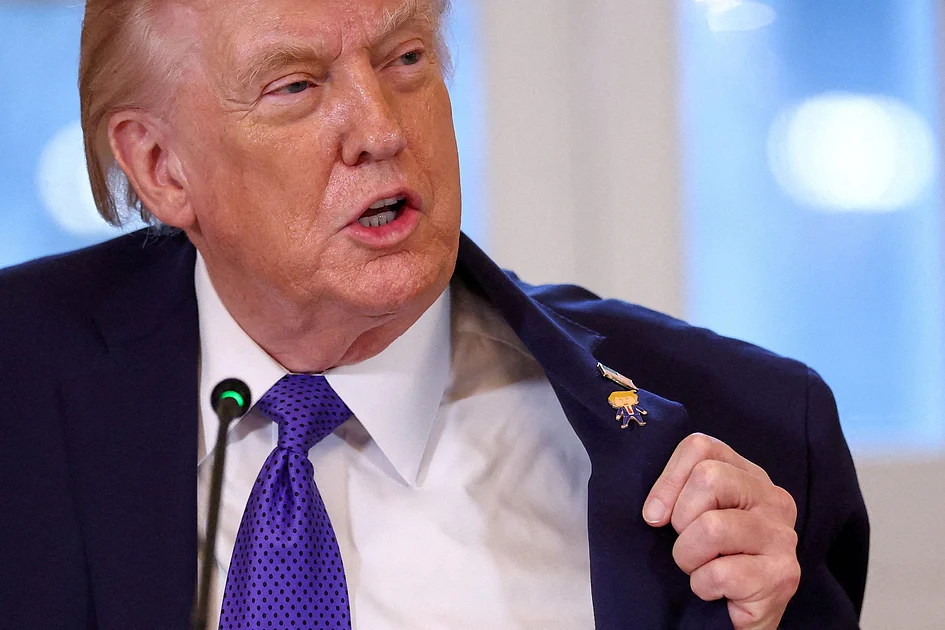
    The Trump administration has officially implemented its controversial premium immigration initiative, the Trump Gold Card program, creating a expedited pathway to U.S. residency for affluent foreign nationals. The program mandates a minimum investment of $1 million from individual applicants, while corporate sponsors must contribute $2 million plus additional fees.

    According to the program’s official website, the Gold Card provides qualified applicants with U.S. residency in “record time” and serves as “evidence that the individual will substantially benefit the United States.” President Trump promoted the initiative on social media, characterizing it as a “direct path to Citizenship for all qualified and vetted people” that will enable American companies to “keep their invaluable Talent.”

    The tiered program structure includes a forthcoming platinum version priced at $5 million that offers special tax advantages. All applicants must additionally pay a non-refundable $15,000 processing fee before their application undergoes review, with potential additional government fees depending on individual circumstances.

    This premium immigration pathway emerges alongside significant immigration policy restrictions implemented by the administration, including increased work visa fees, suspension of immigration applications from 19 countries predominantly in Africa and the Middle East, halted asylum application processing, and a $100,000 fee proposal for certain H-1B visa applicants currently abroad.

    The program has drawn substantial criticism since its initial announcement in February, particularly from Democratic opponents who argue it creates an inequitable immigration system favoring wealthy individuals. The administration maintains that the program specifically targets “high-level” professionals who will contribute to job creation and economic productivity.

  • Congress would target China with new restrictions in massive defense bill

    Congress would target China with new restrictions in massive defense bill

    While the Trump administration demonstrates diplomatic softening toward China to preserve trade war détente, the U.S. Congress is advancing assertive measures through the National Defense Authorization Act (NDAA) that signal a hardened long-term competition strategy. The House-approved $900 billion defense bill, now advancing to the Senate, incorporates multiple China-focused provisions that contrast sharply with the White House’s recent conciliatory gestures.

    The legislation mandates heightened scrutiny of American investments in Chinese technological sectors that could enhance military capabilities, including quantum computing, artificial intelligence, and semiconductors. It further prohibits federal funds from being allocated to blacklisted Chinese biotechnology companies, addressing concerns about genetic data security and pharmaceutical supply chain vulnerabilities. The bill significantly amplifies support for Taiwan, authorizing increased security cooperation funding and endorsing the island’s bid for International Monetary Fund membership.

    Representative Raja Krishnamoorthi, leading Democrat on the House Select Committee on the Chinese Communist Party, characterized these measures as reflecting “a serious, strategic approach to countering the Chinese Communist Party” that diverges markedly from recent White House positioning. The administration recently permitted Nvidia to export advanced computer chips to China and eliminated Biden-era language identifying China as a strategic threat in its national security strategy.

    Chinese officials vehemently condemned the legislation, with embassy spokesperson Liu Pengyu denouncing its “China threat narrative” and warning of damaged bilateral relations. Meanwhile, policy analysts note the provisions would establish foundational competitiveness policies that future administrations would find difficult to reverse, creating structural barriers to economic decoupling regardless of diplomatic rhetoric.

    The NDAA’s biotechnology provisions replace earlier failed legislation that specifically named Chinese companies, instead tasking the Office of Management and Budget with compiling a dynamic list of “biotechnology companies of concern” while expanding Pentagon investments in domestic biotech capabilities.

  • ‘Outright denial’: Genocide prevention group slams Hillary Clinton’s Gaza remarks

    ‘Outright denial’: Genocide prevention group slams Hillary Clinton’s Gaza remarks

    The Lemkin Institute for Genocide Prevention has issued a forceful condemnation of former U.S. Secretary of State Hillary Clinton’s recent comments regarding Israel’s military operations in Gaza, characterizing her statements as “outright genocide denial.” The rebuke came in response to Clinton’s appearance at the Israel Hayom Summit on December 2nd, where she attributed growing American criticism of Israel to poor public relations and social media manipulation rather than substantive concerns about Israel’s conduct.

    During her summit address, Clinton asserted that Israel possesses “the worst PR of any group,” specifically singling out TikTok for disseminating what she termed “pure propaganda” regarding Israeli military actions in Gaza. She further characterized young Americans’ positions as a “serious problem for democracy,” claiming they lacked historical context and were being influenced by one-sided narratives.

    The genocide prevention organization fundamentally rejected this analysis, countering that Americans are responding to overwhelming evidence emerging from Gaza rather than falling prey to misinformation. The institute emphasized that years of documentation from Palestinian journalists, ordinary Gazans, and even IDF soldiers themselves have created an incontrovertible record that cannot be dismissed as mere propaganda.

    According to the institute’s statement, “There has been no convincing refutation of the sheer amount of raw evidence of genocide coming out of Palestine. Young people in the US are not stupid or gullible. They simply reject genocide.”

    The organization noted with particular concern that Clinton’s remarks focused exclusively on narrative management while completely avoiding engagement with the substantive allegations of genocidal violence. They observed that her primary concern appeared to be the increased visibility of Israel’s actions through real-time documentation rather than the actions themselves.

    The statement also highlighted the irony of Clinton’s criticism of TikTok, given the platform’s documented history of censoring pro-Palestinian content and its July appointment of a former IDF instructor as its new manager of hate speech policy.

    The Lemkin Institute, founded in 2017 by renowned genocide scholars Elisa von Joeden-Forgey and Irene Victoria Massimino, takes its name from Raphael Lemkin, the Polish lawyer who coined the term “genocide.” The organization has joined numerous international bodies, United Nations experts, and human rights organizations in characterizing Israel’s campaign in Gaza as genocidal, with Palestinian casualties now exceeding 71,000 according to the report.

  • Portugal braced for mass disruption in first general strike for 12 years

    Portugal braced for mass disruption in first general strike for 12 years

    Portugal experienced widespread disruption across its transportation networks, healthcare facilities, educational institutions, and public services on Thursday as the nation’s two primary labor federations launched a coordinated general strike. This unprecedented joint action between the traditionally more militant CGTP and the typically moderate UGT represents the first such collaboration since the eurozone debt crisis of 2013.

    The strike protests the center-right government’s proposed labor reforms that would significantly alter worker protections. Among the most contentious measures are provisions allowing employers to repeatedly renew temporary contracts indefinitely, eliminating bans on immediately rehiring dismissed workers through outsourcing arrangements, and removing requirements to reinstate unfairly terminated employees.

    Prime Minister Luís Montenegro’s administration argues these changes are necessary to address labor market “rigidities” and ultimately boost both corporate profitability and worker wages. “I will not give up on having a country with the ambition to be at the forefront, to be at the vanguard of Europe,” Montenegro stated ahead of the strike.

    However, the government appears to have underestimated the strength of opposition, with even a Social Democrat MP serving on the UGT executive voting in favor of the strike. Despite last-minute modifications to the proposals, the concessions failed to appease union leaders.

    The reforms particularly impact Portuguese workers in their twenties, creating divided opinions among younger citizens. While some support the modernization efforts, others express concern about already precarious employment conditions.

    The political landscape complicates the situation, with Montenegro’s minority government seeking support from both the free-market Liberal Initiative and the hard-right Chega party—a move that has drawn criticism given his pre-election pledge to avoid deals with Chega.

    The controversy has spilled into January’s presidential campaign, with several candidates arguing the reforms violate Portugal’s 1976 constitution. Under Portugal’s semi-presidential system, the president could potentially delay or block the legislation through constitutional challenges.

    Unlike typical public sector strikes, this action garnered support across industries, including near-unanimous backing from nearly 1,000 employees at Volkswagen’s Autoeuropa plant, Portugal’s largest factory.

  • Group of Friends initiated to boost global governance

    Group of Friends initiated to boost global governance

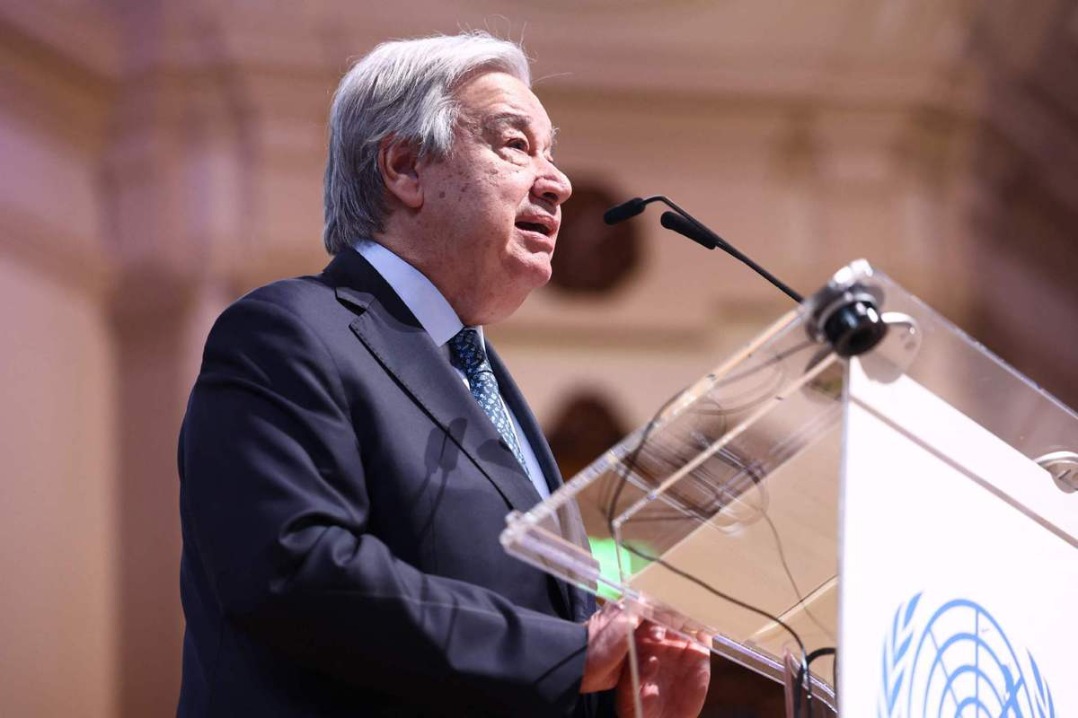
    UNITED NATIONS HEADQUARTERS – A significant new diplomatic coalition, the Group of Friends of Global Governance, was formally inaugurated on Tuesday at the United Nations in New York. The initiative, championed by China and guided by President Xi Jinping’s Global Governance Initiative, has drawn participation from 43 founding member states spanning diverse geographical regions, including Cuba, Iran, Kenya, Kazakhstan, Morocco, and Malaysia.

    The launch event, presided over by China’s Permanent Representative to the UN, Ambassador Fu Cong, signals a concerted effort to revitalize multilateral cooperation. Ambassador Fu contextualized the group’s establishment against a backdrop of mounting challenges to the international rules-based order, describing the current era as a ‘new period of turbulence’ where multilateralism faces ‘severe strain.’

    Central to the group’s mission is advancing the core tenets of the Global Governance Initiative, which is built upon five fundamental principles: sovereign equality, adherence to international rule of law, unwavering support for multilateralism, a people-centered development approach, and a focus on actionable results. The initiative, first proposed by President Xi at a Shanghai Cooperation Organization meeting in September 2025, has already garnered diplomatic support from over 140 countries and international organizations.

    Diplomats from founding nations voiced strong backing for the initiative. Cuban Ambassador Ernesto Soberon Guzman praised it as a vital contribution to ‘the democratization of international relations’ and a tool to combat ‘widening inequalities’ and ‘unilateral measures.’ Similarly, Burundi’s Ambassador Zephyrin Maniratanga emphasized the coalition’s importance in tackling modern challenges that no nation can solve alone. Kyrgyzstan’s representative, Aida Kasymalieva, highlighted the platform’s practical utility for unifying the voices of developing and landlocked states and fostering capacity-building.

    The group, described by Ambassador Fu as an ‘open and inclusive platform,’ released a joint statement committing to strengthen the UN-centric international system, uphold the UN Charter, and promote dialogue to achieve tangible outcomes. An invitation was extended to other like-minded UN member states to join the collective effort.

  • Tourists to US may be required to reveal five years of social media history

    Tourists to US may be required to reveal five years of social media history

    The Trump administration has introduced a groundbreaking proposal that would mandate international travelers to disclose extensive digital histories before entering the United States. Published in the Federal Register on Tuesday, the initiative would require all visitors to provide five years of social media activity, five-year histories of personal and business phone numbers, ten-year records of email addresses, and residential information for family members.

    This comprehensive digital screening would apply universally to both visa-required travelers and those from Electronic System for Travel Authorization (ESTA) countries, including the United Kingdom. The proposal, advanced by US Customs and Border Protection (CBP) under the Department of Homeland Security, has initiated a 60-day public commentary period allowing federal agencies and citizens to evaluate the potential implications.

    Following the commentary phase, agencies will conduct thorough analysis of submitted feedback before finalizing regulations with detailed explanations of modifications. The implemented rules would then be codified into the Code of Federal Regulations, establishing permanent entry requirements.

    This proposed policy could significantly impact international tourism, particularly affecting the anticipated five million visitors expected for the 2026 World Cup jointly hosted by the United States, Canada, and Mexico. The measures follow previous travel restrictions that resulted in detained or refused European visitors earlier this year.

    Concurrently, CBP is proposing additional biometric requirements, including voluntary facial image collection and geolocation tracking to verify departure compliance. The agency plans to implement sophisticated verification technology, including live photo authentication and geolocation confirmation systems.

    Furthermore, CBP intends to replace the current ESTA website application with a mandatory mobile application, citing security enhancements and operational efficiency. The agency asserts that these measures address vulnerabilities exploited by malicious actors who submit low-quality photographs or passport images to evade detection.

  • What Yemenis in Hadhramaut and al-Mahra think of the STC takeover

    What Yemenis in Hadhramaut and al-Mahra think of the STC takeover

    The Southern Transitional Council (STC), a UAE-backed separatist movement, has consolidated its control over Yemen’s eastern governorates of Hadhramaut and al-Mahra following a swift military campaign. This expansion grants the STC authority over regions containing most of Yemen’s oil reserves and its only two functional border crossings with Saudi Arabia and Oman.

    The takeover, executed by STC-aligned Hadrami Elite Forces earlier this month, represents a significant shift in Yemen’s complex geopolitical landscape. While the STC and its supporters celebrated their territorial gains from their stronghold in Aden, residents in the newly controlled eastern provinces have responded with caution and apprehension.

    Ayman, a 43-year-old resident of Hadhramaut, expressed the ambivalence shared by many locals: “I’m not against the internationally recognized government and not against the STC if they are in Aden. But I’m against anyone who invades us to loot our oil and other wealth and leave us suffering.”

    The military advance began after tribal leaders in Hadhramaut announced in late November they would assume control of oil fields and manage their governorate independently. Saudi Arabia attempted to broker a truce through a delegation on December 3, but these efforts proved unsuccessful. Saudi-backed Dira al-Watan forces withdrew as STC fighters advanced, encountering minimal resistance beyond tribal members and soldiers at few military bases.

    With this expansion, the STC now controls all southern governorates that previously constituted the People’s Democratic Republic of Yemen before unification in 1990. The group emerged in 2018 advocating for an independent southern state but has operated as part of the internationally recognized Yemeni government based in Aden.

    Local resistance appears to be organizing through peaceful means. Ammar, a 38-year-old resident of al-Mahra, stated that residents “won’t seek violent conflict with the STC, but will resist it nonetheless through peaceful means like protests.” Many residents traditionally oppose the STC and now fear potential retaliation.

    STC fighter Mahmoud Taher defended the movement’s actions: “Now we, the STC, lead the south, and its forces need to spread in all governorates, not to fight residents but to keep all governorates safe. We will stop those who try to create chaos.”

    The situation remains tense as the STC seeks to impose its authority on regions historically accustomed to autonomy, with local communities deeply suspicious of outside intervention regardless of its origin.

  • Israeli minister says war ‘inevitable’ after Syrian troops chant for Gaza

    Israeli minister says war ‘inevitable’ after Syrian troops chant for Gaza

    Tensions between Israel and Syria have escalated dramatically after Israel’s Minister of Diaspora Affairs, Amichai Chikli, declared war “inevitable” in response to inflammatory footage from a Syrian military parade. The incident occurred during Damascus’ commemoration of the first anniversary of Bashar al-Assad’s fall, where Syrian troops were filmed chanting: “Gaza, Gaza, Gaza, our slogan, night and day, bombing and ruin. We are coming for you, our enemy, coming, coming for you, even if you were a mountain of fire.”

    Chikli, sharing the video originally posted by far-right aggregator Visegrad24, accused Syria of fostering “jihadist terror” and warned that “a full-blown Islamic jihadist caliphate now sits on Israel’s northern border.” The minister emphasized that Israel would not repeat the lessons of October 7th, stating: “Do not let the beast become an untouchable monster.”

    Israeli security officials confirmed that defense establishments have convened emergency meetings to assess the footage, with one anonymous official telling Army Radio: “We deal with the Syrian regime with a doctrine of complete suspicion. We monitor it with mistrust. Its nature is extreme and jihadist, and we cannot afford to misread it.”

    The historical context reveals deepening complexities: Israel has maintained occupation of Syria’s Golan Heights since 1967 and expanded its territorial control following Assad’s downfall. In December 2024, Israel seized the entire UN-patrolled buffer zone that previously separated forces in the region.

    Syrian Interim President Ahmed al-Sharaa countered these developments at a Doha conference, accusing Israel of “exporting crises” to divert attention from Gaza operations. Sharaa detailed extensive Israeli military actions, citing “more than 1,000 air strikes and 400 incursions into Syrian territory” since December 2024, including a recent attack on Beit Jinn that killed at least 13 people.

    The international dimension intensified as U.S. President Donald Trump cautioned Israel against interfering with Syria’s “evolution,” expressing satisfaction with Syria’s progress and emphasizing the importance of maintaining “strong and true dialogue” between the nations.

  • Why Thailand and Cambodia are fighting again after Trump ceasefire

    Why Thailand and Cambodia are fighting again after Trump ceasefire

    Artillery fire and aerial bombardments have resumed along the contentious Thai-Cambodian border, shattering the temporary peace established by a US-mediated ceasefire in July. The renewed hostilities have triggered mass evacuations, displacing approximately half a million residents from villages within a hundreds-kilometer conflict corridor for the second time in five months.

    The immediate catalyst emerged from a border incident on Sunday when Cambodian troops allegedly opened fire on a Thai engineering team constructing an access road in disputed territory. While only two Thai soldiers sustained non-life-threatening injuries, the event exposed the profound mistrust between the neighboring nations that has rendered diplomatic resolutions ineffective.

    President Donald Trump’s July intervention, touted as a historic peace achievement, ultimately proved unsustainable. Thailand reluctantly accepted the ceasefire under economic pressure, facing imminent tariff threats on crucial exports to the United States. Cambodia, conversely, welcomed international involvement as leverage against its larger neighbor.

    The conflict has escalated dangerously since July. Cambodian forces have deployed new landmines along the border, resulting in at least seven Thai soldiers suffering limb amputations. Thailand has responded by authorizing military autonomy under Prime Minister Anutin Charvirakul’s minority government, with objectives including permanent neutralization of Cambodian military capabilities and seizure of strategic hilltop positions.

    Political dimensions further complicate the situation. Former Cambodian Prime Minister Hun Sen continues to influence current PM Hun Manet, employing both public appeals for restraint and covert political maneuvers. The leaking of a confidential conversation with former Thai PM Paetongtarn Shinawatra ultimately catalyzed her government’s collapse and intensified Thai public support for military action.

    Prospects for renewed diplomacy appear dim. Thailand insists Cambodia must demonstrate verifiable sincerity—particularly regarding landmine deployment cessation—before considering further negotiations. While US re-engagement remains possible, any ceasefire without addressing underlying tensions and territorial disputes would likely prove equally transient.

  • ‘Death run’: New film shot in Cyprus reveals UK military help to Israel during Gaza genocide

    ‘Death run’: New film shot in Cyprus reveals UK military help to Israel during Gaza genocide

    A groundbreaking investigation by Declassified UK has exposed extensive covert military collaboration between Britain and Israel during the Gaza conflict, challenging official narratives about the purpose of surveillance operations. The documentary ‘Britain’s Gaza Spy Flight Scandal,’ released Thursday, presents evidence of hundreds of Royal Air Force surveillance missions conducted from Cyprus’s RAF Akrotiri base, located merely 40 minutes from Tel Aviv.

    While Britain’s Ministry of Defence maintains these flights exclusively support hostage rescue operations, the investigation reveals significantly broader activities. The film captures unprecedented footage of American contractor-operated spy planes—leased by the RAF—departing from Akrotiri to conduct surveillance over Gaza. These operations reportedly included up to 116 additional missions beyond previously disclosed numbers, utilizing advanced radar imaging systems capable of transmitting high-resolution footage to Israeli forces in real time.

    The documentary highlights the tragic case of James Henderson, a former royal marine killed in an Israeli airstrike on a World Central Kitchen aid convoy on April 1, 2024. Despite RAF aircraft capturing footage from that exact day, the MoD has refused to release the material citing national security concerns—a decision Henderson’s father Neil characterizes as ‘an insult’ that prevents understanding whether aid workers were deliberately targeted.

    Further investigations reveal the MoD possesses additional footage of Israeli strikes that killed eight volunteers from UK charity Al-Khair Foundation in March, yet continues to withhold this evidence under security exemptions. Former RAF technician Steve Masters challenges the official narrative, noting Britain cannot control how Israel utilizes shared intelligence, suggesting the material could easily serve target acquisition purposes rather than purely humanitarian missions.

    The film also documents growing Cypriot opposition to British military operations, featuring local protests and statements from politician Melanie Steliou who condemns the base’s role in facilitating missions that result in civilian casualties. This comprehensive investigation raises serious questions about accountability, transparency, and the ethical implications of military intelligence sharing during active conflicts.