分类: politics

  • Israel diverts Palestinian citizens’ development funds to police

    Israel diverts Palestinian citizens’ development funds to police

    In a controversial budgetary shift, Israel’s government has authorized the reallocation of approximately 220 million shekels ($68.6 million) from civil development programs for Palestinian citizens to police and internal security services. The Sunday decision, proposed by National Security Minister Itamar Ben Gvir and Social Equality Minister May Golan, will redirect funds originally designated for social programs addressing economic disparities within the Arab-Israeli community.

    The transferred budget will now enhance law enforcement capabilities, intelligence operations, and security activities in Palestinian communities across Israel. This move occurs against a backdrop of escalating violent crime, with local media reporting 245 crime-related fatalities in 2025 alone—surpassing last year’s total of approximately 230 deaths.

    Government officials defended the reallocation as necessary for addressing urgent security concerns. Minister Golan characterized cultural and sports facilities as ineffective solutions, stating the funds would instead support a “groundbreaking programme” against criminal elements. Minister Ben Gvir framed the measure as implementing “zero tolerance towards criminals.”

    However, the decision has faced substantial criticism from community leaders and rights organizations. Talal al-Qrinawi, mayor of Rahat, denounced the move as “purely political and unjustified,” noting that security agencies already possess adequate budgets if properly utilized. Human rights attorney Abeer Baker warned that reducing long-term social investments would undermine crime prevention efforts, emphasizing that “crime cannot be addressed solely through immediate deterrence.”

    The Abraham Initiatives, a joint Jewish-Arab advocacy organization, condemned the budgetary transfer as logically bereft and potentially devastating to addressing root causes of violence. The group announced potential legal action through Israel’s High Court of Justice, arguing the cuts would severely harm developmental programs specifically designed to combat crime through education, youth initiatives, and local authority development.

  • Conservative Kast’s victory in Chile suggests a hard-right, pro-Trump surge across Latin America

    Conservative Kast’s victory in Chile suggests a hard-right, pro-Trump surge across Latin America

    SANTIAGO, Chile — Chile has dramatically pivoted toward conservative governance with the election of José Antonio Kast, a veteran politician whose hardline stance on crime, immigration, and social policy has drawn comparisons to Donald Trump. This outcome marks a significant departure from the country’s recent liberal trajectory and reflects a broader regional realignment toward right-wing leadership across South America.

    Kast, a 59-year-old conservative stalwart, secured a decisive electoral victory by capitalizing on widespread public discontent over rising organized crime, economic stagnation, and uncontrolled migration. His success represents a remarkable political comeback, given his previous failed presidential bids in an increasingly progressive nation. Kast has expressed admiration for Chile’s Pinochet-era military dictatorship, opposed same-sex marriage, and advocated for constitutional bans on abortion—positions that previously limited his appeal but now resonate with voters seeking strong leadership.

    This electoral shift occurs against a backdrop of regional transformation. Across South America, voters are rejecting left-wing incumbents and embracing conservative alternatives. Argentina’s anarcho-capitalist President Javier Milei, Ecuador’s iron-fisted leader Daniel Noboa, and Bolivia’s right-wing President Rodrigo Paz exemplify this trend, which has effectively ended nearly two decades of socialist dominance in several nations.

    Harvard political scientist Steven Levitsky observes, ‘The last decade has been rough. Those in power—predominantly left-wing governments—are being blamed for stagnant economies, rising crime perceptions, and not insignificant corruption.’

    The defeat of Kast’s communist rival, Jeannette Jara from the center-left governing coalition, underscores the depth of public frustration with President Gabriel Boric’s administration. Despite initial promise, Boric’s government faced legislative defeats, corruption scandals, and escalating crime that derailed his transformative agenda.

    Kast’s victory celebration featured symbolic displays of alignment with global conservatism, including American flags, ‘Make Chile Great Again’ caps, and banners supporting Milei’s ideological movement. Like Milei and Brazil’s former President Jair Bolsonaro, Kast has been a featured speaker at the Conservative Political Action Conference, where he has denounced socialism, criticized ‘gender ideology,’ and promised mass deportations.

    Despite his hardline reputation, Kast positioned himself as a moderate during the runoff election, promising to preserve social benefits and maintain Chile’s free-market institutions. His campaign focused primarily on crime and immigration, successfully appealing to middle-class voters who viewed him as the candidate most likely to deliver tangible results.

    In his first address as president-elect, Kast struck a conciliatory tone, promising to ‘be the president of all Chileans’ and surprising critics with his commitment to unity. This victory represents not just a political change but a fundamental reorientation of Chilean politics with potentially far-reaching implications for the region’s geopolitical landscape.

  • Watch: What to know about the growing US military presence in Puerto Rico

    Watch: What to know about the growing US military presence in Puerto Rico

    A significant strategic military enhancement is underway in the Caribbean as the United States substantially increases its defense assets in Puerto Rico. This buildup, analyzed by a retired U.S. vice admiral, involves the deployment of advanced military hardware and personnel to the island territory over recent months.

    The expansion includes sophisticated defense systems, surveillance technology, and logistical support units designed to bolster regional security. Military analysts interpret this move as a strategic response to multifaceted challenges, including transnational criminal operations, potential adversarial activities in the Western Hemisphere, and natural disaster response preparedness.

    Puerto Rico’s geographical position makes it a crucial hub for U.S. Southern Command operations, serving as a strategic vantage point for monitoring maritime routes and airspace. The military official elaborated that this reinforcement enhances rapid response capabilities while strengthening deterrence measures in the region.

    This development occurs amid evolving global security dynamics that have increased the Caribbean’s strategic importance. The infrastructure improvements and personnel deployments represent one of the most substantial military enhancements in the territory in recent decades, signaling a renewed focus on Caribbean security as part of broader national defense strategy.

  • Australia PM rejects links between recognition of Palestine and Bondi attack

    Australia PM rejects links between recognition of Palestine and Bondi attack

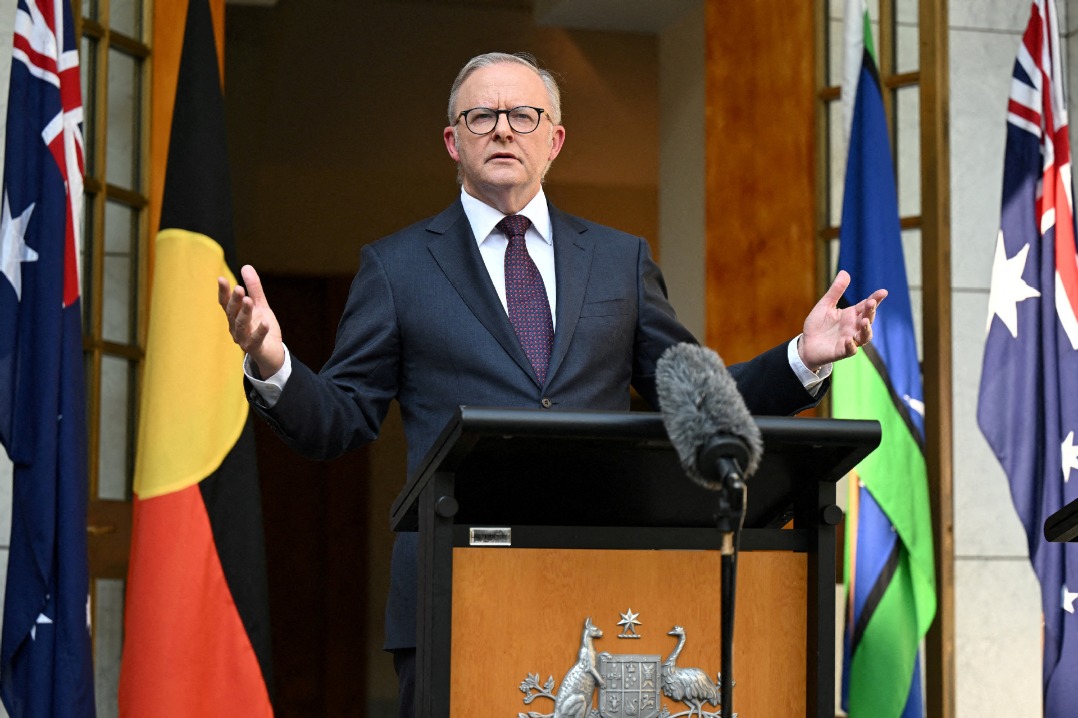
    Australian Prime Minister Anthony Albanese has forcefully rejected Israeli Prime Minister Benjamin Netanyahu’s assertion that Australia’s recognition of Palestinian statehood fueled the antisemitic massacre at Bondi Beach. The attack during Hanukkah celebrations left 15 dead and 40 wounded, marking one of Australia’s deadliest terrorist incidents.

    Netanyahu claimed in a statement that Australia’s diplomatic move to recognize Palestine, made in September 2025 alongside Canada and the United Kingdom, had “promoted and encouraged antisemitism.” Albanese countered this narrative during a live ABC interview, stating: “No, I don’t perceive such a link, and overwhelmingly, most of the world recognizes a two-state solution as being the way forward in the Middle East.”

    The attack unfolded when two armed assailants opened fire on Jewish community gatherings. Bystander footage captured fruit shop owner Ahmed Al Ahmed, a Muslim Australian of Syrian descent, disarming one shooter despite being wounded. His bravery earned international recognition, including from Albanese and former US President Donald Trump, though Netanyahu erroneously identified him as Jewish in his praise.

    The incident has triggered widespread condemnation of Netanyahu’s remarks. UN Special Rapporteur Ben Saul expressed disgust at the Israeli leader’s attempt to connect Australia’s principled diplomatic stance with terrorism. Meanwhile, Australia’s Palestine Advocacy Network and the Palestinian Foreign Ministry both issued unequivocal condemnations of the antisemitic violence.

    In response to the tragedy, Australia’s National Cabinet has initiated a comprehensive overhaul of gun laws. Investigations revealed the perpetrators—father and son Sajid and Naveed Akram—utilized legally owned firearms. Sajid held a gun license with six registered weapons, while Naveed had previously been investigated for connections to an Islamic State cell, with IS flags discovered in their vehicle.

    The victims, ranging from 10 to 87 years old, included prominent Rabbi Eli Schlanger. The attack has also sparked concerning rhetoric in international media, with publications like The New York Times and The Atlantic drawing inflammatory connections to Palestinian solidarity movements, while Australian opposition leader Sussan Ley criticized the government’s security measures.

  • Mainland warns Taiwan leader against provoking conflict

    Mainland warns Taiwan leader against provoking conflict

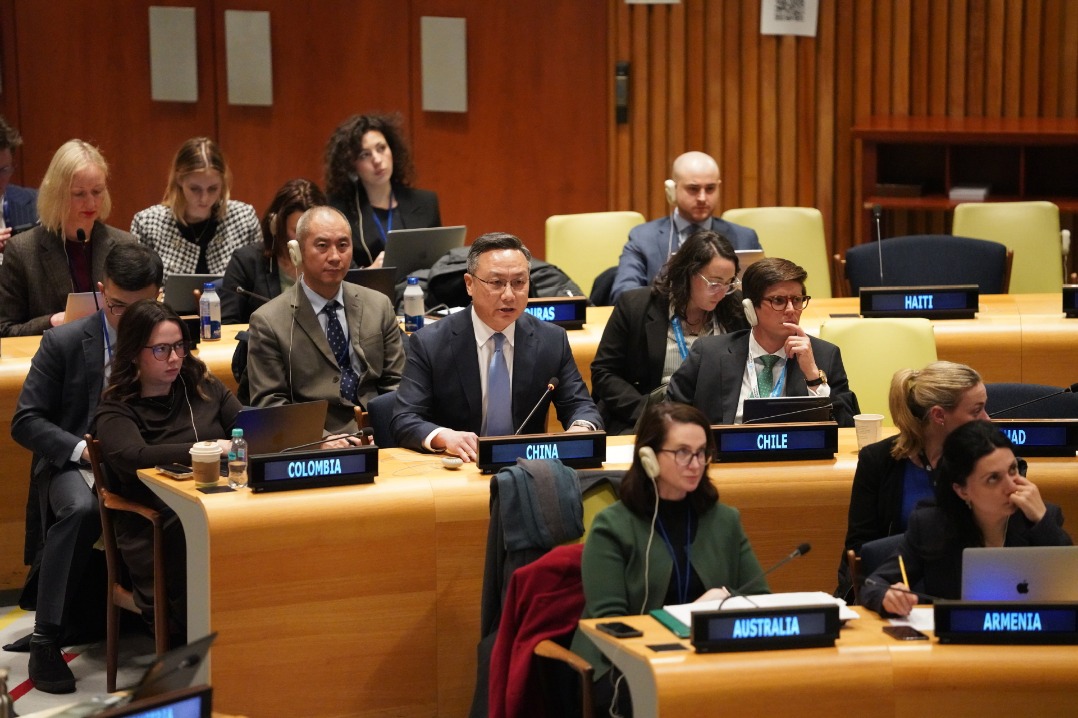
    The Chinese mainland has delivered a forceful condemnation of Taiwan’s leadership, characterizing their recent actions as dangerously provocative moves toward independence. Defense Ministry spokesperson Jiang Bin articulated Beijing’s position on Monday, December 15, 2025, directly addressing what he termed the “most dangerous poison” threatening Taiwan’s stability.

    The remarks came in response to statements by Taiwan leader Lai Ching-te, who had previously suggested that mainland China might attempt to forcibly take Taiwan by 2027. Lai had emphasized the necessity for Taiwan to prepare for worst-case scenarios while maintaining hope for peaceful resolutions.

    Jiang systematically refuted these claims, asserting that Lai has consistently exaggerated mainland military capabilities and intentionally heightened tensions across the Taiwan Strait. The spokesperson characterized Lai’s rhetoric about preparedness as a calculated strategy to foster war anxiety among Taiwan residents, thereby creating justification for pursuing independence agendas and provoking conflict.

    “The Lai authorities’ provocations for ‘independence’ represent the most toxic element currently endangering and potentially destroying Taiwan,” Jiang stated during the briefing. He emphasized that peaceful reunification with mainland China remains the optimal pathway to ensure Taiwan’s lasting stability and security.

    The defense spokesperson called upon Taiwanese compatriots to recognize the extreme dangers inherent in their leadership’s push toward independence and military preparation. He urged firm opposition to separatist activities and advocated for collective efforts to maintain cross-strait peace and stability, which he directly linked to the security and welfare of Taiwan’s citizens.

  • Former senior official of Shenzhen under investigation

    Former senior official of Shenzhen under investigation

    In a significant anti-corruption development, Chinese disciplinary authorities have launched a comprehensive investigation into Dai Beifang, the former chairman of Shenzhen’s Political Advisory Body. The Central Commission for Discipline Inspection (CCDI) and National Supervisory Commission jointly announced on Monday that the 69-year-old veteran official is under scrutiny for suspected severe breaches of Party discipline and national laws.

    Dai Beifang, whose entire 52-year career unfolded within Shenzhen’s political apparatus, occupied numerous influential positions throughout his tenure. His extensive portfolio included leadership roles as Secretary of the Shenzhen Municipal Communist Youth League Committee, Party Chief of Yantian District, and membership on the Standing Committee of the CPC Shenzhen Municipal Committee. He further headed several critical municipal departments including Publicity, General Office, and Organization.

    The Guangdong native ascended to the position of Shenzhen’s Deputy Party Chief in November 2012 and subsequently chaired the Chinese People’s Political Consultative Conference (CPPCC) Shenzhen Municipal Committee from June 2015 until his retirement in September 2020. Following his departure from official government service, Dai transitioned to a leadership role in the philanthropic sector as president of the Shenzhen Charity Federation.

    This investigation represents the latest development in China’s ongoing anti-corruption campaign, particularly highlighting the scrutiny of retired officials who previously held substantial regional power. Dai’s case demonstrates the authorities’ continued commitment to investigating alleged misconduct regardless of an official’s retirement status or previous contributions.

    The probe follows established procedures for disciplinary reviews conducted by the CCDI, which typically involve thorough examination of potential ethical and legal violations. Such investigations can lead to various outcomes including internal Party disciplinary measures or formal legal proceedings depending on the severity of findings.

  • Taoiseach bites back at criticism of party’s Irish presidential review

    Taoiseach bites back at criticism of party’s Irish presidential review

    Irish Taoiseach Micheál Martin faces mounting internal pressure within his Fianna Fáil party regarding the handling of a presidential election review, while simultaneously denouncing media coverage as “extremely disappointing, selective and inaccurate.” The political turmoil stems from the withdrawal of the party’s presidential candidate, Jim Gavin, who abandoned his campaign in October after revelations emerged concerning an accidental overpayment to a former tenant. Although Gavin subsequently repaid the funds, his name remained on the ballot and secured 7.18% of first preference votes. The controversy prompted Fianna Fáil to commission an independent review led by senior counsel, yet the unpublished report has become a source of significant internal strife. Three prominent party TDs—Willie O’Dea, Pat Gallagher, and Seán Ó Fearghaíl—have publicly demanded the “immediate release” of the report, condemning media leaks as damaging to the party’s reputation and public trust. They emphasized that “accountability is now essential if we are to restore trust and credibility.” In response, Martin issued a formal statement clarifying that he has not yet received the report and defending his approach to allow the review committee “to do its work independently.” A special parliamentary party meeting is anticipated to discuss the findings, though no date has been confirmed, prolonging the internal dissent within Ireland’s governing party.

  • Beijing: Japanese fighter jets harassed pre-notified exercise zone

    Beijing: Japanese fighter jets harassed pre-notified exercise zone

    In a significant escalation of tensions between the two Asian powers, China’s Defense Ministry has presented detailed evidence countering Japan’s claims regarding recent military encounters in the East China Sea. Defense Ministry spokesman Jiang Bin disclosed that Chinese naval vessels had provided explicit prior notification to Japanese counterparts about scheduled carrier-based aircraft training exercises.

    The confrontation centers around allegations made earlier this month by Japan’s defense ministry that Chinese military aircraft had engaged in radar locking maneuvers against Japanese fighter jets during training operations conducted by the CNS Liaoning aircraft carrier and its accompanying task group. Jiang characterized these accusations as baseless and politically motivated.

    According to the Chinese account, on December 6th, Chinese warship 101 formally notified Japanese warship 116 about planned flight training operations, with the Japanese vessel acknowledging receipt of the communication. A subsequent message specified that training would commence at 3:00 PM local time, continue for approximately six hours, and occur primarily south of the Chinese aircraft carrier—again with Japanese confirmation of understanding.

    Despite these explicit notifications, Jiang stated that Japanese fighter jets repeatedly intruded into the designated training zone, creating hazardous conditions and engaging in what China considers deliberate harassment. The spokesman asserted that Japan bears complete responsibility for any safety compromises resulting from these incursions.

    Jiang further accused Japan of systematic deception, claiming Tokyo has ‘repeatedly misled its own public and the international community’ by portraying routine Chinese military exercises as security threats while casting itself as the victim rather than the instigator. The spokesman suggested these actions might represent a calculated diversion from recent controversial statements about Taiwan made by Japanese Prime Minister Sanae Takaichi.

    The Chinese defense spokesman raised concerns about Japan’s broader strategic intentions, questioning whether the incidents reflect attempts to ‘create excuses to break away from the post-war system, to loosen restrictions on its military development, and to revive the specter of its militarist past.’

    China has called on Japan to address fundamental issues in bilateral relations and ‘earnestly reflect on and rectify its wrongdoings,’ warning that political manipulations aimed at evading responsibility would prove unsuccessful.

  • Japanese scholar condemns Japan’s risky defense spending

    Japanese scholar condemns Japan’s risky defense spending

    A prominent Japanese academic has issued a stern warning about his country’s rapidly expanding military ambitions, citing alarming defense expenditure increases and provocative political rhetoric. Professor Emeritus Atsushi Koketsu of Yamaguchi University recently revealed in an exclusive China Daily interview that Japan’s military budget for fiscal year 2025 will surpass 10 trillion yen (approximately $64.14 billion) – a historic threshold that signals a dramatic shift in the nation’s security posture.

    This substantial financial commitment, Koketsu argues, will primarily facilitate the acquisition of advanced offensive weapon systems rather than defensive capabilities. The professor contends that Japan is dangerously reviving pre-war militaristic tendencies by persistently fabricating external threats from neighboring nations. This approach, he warns, demonstrates a concerning disregard for historical lessons and represents a potential return to past errors that previously led to regional conflict.

    The academic’s critique extends to Prime Minister Sanae Takaichi’s recent controversial statements regarding Taiwan, which Koketsu interprets as evidence of Japan’s increasingly confrontational stance toward China. These developments, according to the scholar, collectively pose a genuine threat to stability and security throughout the Asia-Pacific region. The combination of heightened military spending, offensive weapons procurement, and inflammatory political rhetoric creates a volatile mix that could undermine decades of relative peace and cooperation.

    Koketsu’s analysis suggests that Japan is systematically abandoning its post-war pacifist constitution principles in favor of a more assertive military doctrine. This strategic pivot occurs amid ongoing regional tensions and reflects broader geopolitical realignments that could have far-reaching consequences for international relations and security architectures in East Asia.

  • New Year’s Eve terror plot across southern California foiled by FBI

    New Year’s Eve terror plot across southern California foiled by FBI

    Federal law enforcement agencies have successfully disrupted a sophisticated terror plot planned for New Year’s Eve in Southern California, according to official statements released Monday. The FBI, in coordination with Los Angeles Police Department, apprehended four individuals allegedly belonging to the Turtle Island Liberation Front—an offshoot of a pro-Palestinian anti-government organization—while they were en route to test improvised explosive devices in desert areas east of Los Angeles.

    The suspects, identified as Audrey Illeene Carroll (30), Zachary Aaron Page (32), Dante Gaffield (24), and Tina Lai (41), now face multiple federal charges including conspiracy and possession of unregistered destructive devices. Court documents reveal the group had transported precursor chemicals to remote locations with the alleged intention of constructing explosive ordnance.

    Advanced surveillance operations captured the group’s movements, enabling FBI SWAT teams to execute flawless apprehensions without incident. The planned attacks targeted logistical centers operated by two American corporations at midnight on December 31st across the Los Angeles metropolitan area. Additional intelligence suggests the group had discussed subsequent operations against Immigration and Customs Enforcement personnel and vehicles using pipe bombs in early 2025.

    U.S. Attorney General Pam Bondi characterized the prevented attack as ‘a massive and horrific terror plot’ orchestrated by far-left extremists. LAPD Chief Jim McDonnell emphasized that interagency collaboration proved instrumental in averting potential catastrophe: ‘The successful disruption of this plot is a powerful testament to the strength of our unified response.’

    The FBI confirms that while the immediate threat has been neutralized, investigations continue to identify any additional individuals potentially connected to the planning.