分类: politics

  • Japan’s rising defense spend stirs concern

    Japan’s rising defense spend stirs concern

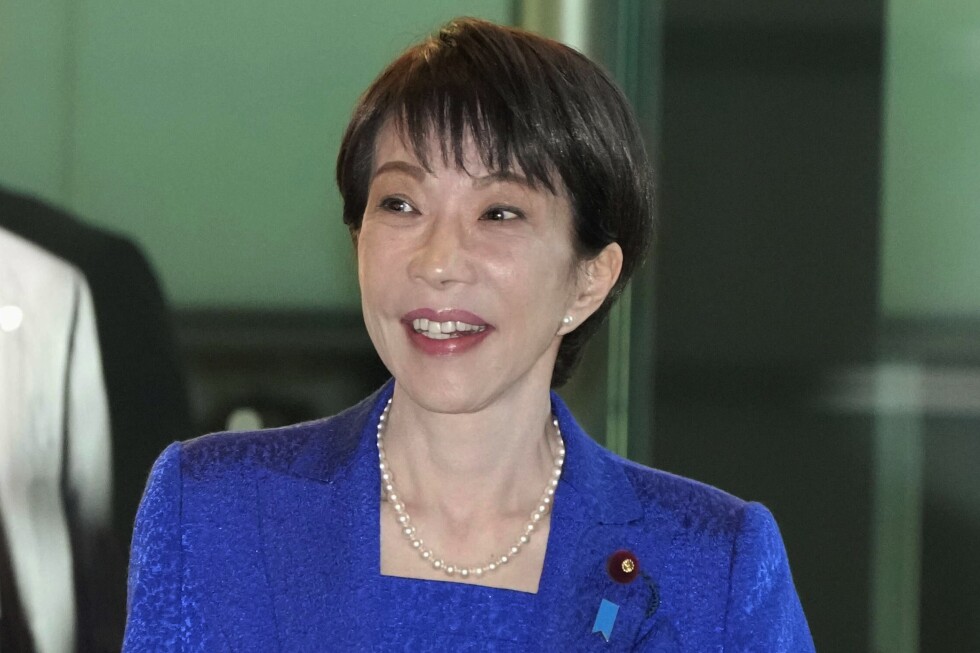
    Japan’s parliamentary approval of an 18.3 trillion yen ($118 billion) supplementary budget has ignited significant debate about the nation’s fiscal priorities and their societal implications. The budget, passed on Tuesday through the House of Councillors, allocates substantial resources to Prime Minister Sanae Takaichi’s policy initiatives with particular emphasis on defense and security enhancements.

    Analysts express growing apprehension that the government’s military expenditure strategy—which includes plans to spend 43 trillion yen ($276 billion) on defense over the next five years—will inevitably constrain funding for essential social welfare programs. This budgetary shift occurs alongside proposed tax increases targeting corporations, tobacco products, and personal income specifically designated for defense financing.

    Professor Emeritus Mieko Takenobu of Wako University warned that these fiscal decisions threaten Japan’s social sustainability. “When fiscal resources are diverted from public welfare to continuous military expansion through supplementary budgets, society becomes unsustainable,” Takenobu stated during a recent public event. The academic highlighted how defense spending has exceeded conventional budgetary frameworks while resources for daily living expenses and social security systems face continued reduction.

    The financial measures include a proposed special income tax for defense spending scheduled for implementation in January 2027, expected to generate approximately 200 billion yen ($1.3 billion) annually. Combined with other tax adjustments, these measures could collectively yield over 1 trillion yen per year, increasing household financial burdens despite the planned reduction of post-disaster reconstruction taxes.

    Beyond domestic concerns, experts identify geopolitical risks in Japan’s budgetary direction. Takenobu characterized Takaichi’s recent statements regarding Taiwan as particularly dangerous, suggesting they undermine Japan’s postwar consensus against military engagement. Regular protests have occurred outside the Prime Minister’s Office for over a month, with citizens demanding retraction of these statements and cessation of military expansion discussions.

    Akinobu Ito, president of the Japan-China Workers Exchange Association, echoed these concerns during a memorial event for the Nanjing Massacre, urging public vigilance against national-level dangerous trends and advocating for constitutional adherence rather than revision.

  • South Korea’s Constitutional Court removes police chief over martial law involvement

    South Korea’s Constitutional Court removes police chief over martial law involvement

    South Korea’s Constitutional Court has delivered a landmark ruling on Thursday, formally dismissing the nation’s impeached police chief for his instrumental role in supporting former President Yoon Suk Yeol’s short-lived imposition of martial law in December 2024. Commissioner General Cho Ji-ho became the first National Police Agency chief to be removed from office through constitutional proceedings.

    The court determined that Cho actively undermined legislative processes by deploying hundreds of police officers to the National Assembly complex, intentionally obstructing lawmakers from reaching the main chamber to vote on revoking Yoon’s emergency decree. The ruling further condemned Cho’s infringement upon the National Election Commission’s independence by directing police personnel to assist military forces in seizing two NEC offices—actions allegedly justified by unverified claims of electoral fraud.

    Evidence presented revealed that Cho and Seoul’s police commissioner were summoned to a secure location hours before the martial law declaration, where they coordinated implementation strategies with Yoon’s defense minister. Following the decree, approximately 300 officers encircled parliamentary entrances alongside heavily armed special operations units with aerial support, creating an unprecedented blockade against legislative activities.

    Despite the military-police barricade, a determined group of lawmakers including current President Lee Jae Myung scaled perimeter fences to establish quorum and unanimously overturn Yoon’s order within hours. The court rejected Cho’s defense that his deployments aimed to maintain public order, noting that the extreme measures taken by parliamentarians demonstrated the severity of the obstruction.

    Cho, who faced impeachment by legislators and arrest shortly after Yoon’s power grab, was previously granted bail in January due to medical requirements for cancer treatment. He now awaits separate criminal proceedings on rebellion charges, while former President Yoon faces life imprisonment or capital punishment for his central role in the crisis.

  • Farmers block roads in Brussels to protest South American free-trade deal

    Farmers block roads in Brussels to protest South American free-trade deal

    Brussels witnessed intense demonstrations on Wednesday as thousands of farmers mobilized tractors to blockade key roadways and ignite fireworks near the European Union headquarters. The protests coincided with an EU leadership summit addressing the contentious free-trade agreement with Mercosur nations. Law enforcement deployed tear gas and water cannons to disperse crowds expressing vehement opposition to the proposed pact with South American economies.

    The agricultural sector’s primary concern centers on potential market destabilization through imported goods produced under less stringent regulatory frameworks. This economic apprehension has triggered broader political ramifications, with several EU members expressing reservations about the agreement’s current terms. France has emerged as the leading opposition force, demanding enhanced safeguards against market disruption, stricter pesticide regulations, and reinforced import inspection protocols.

    Italy recently joined the dissenting coalition, with Premier Giorgia Meloni declaring any immediate signing “premature” without adequate protections for European agricultural interests. This development significantly strengthens the opposition bloc, potentially providing France sufficient votes to veto European Commission President Ursula von der Leyen’s push for ratification.

    Despite twenty-five years of negotiations covering a prospective market of 780 million people, the agreement faces unprecedented political headwinds. Supporters argue the pact would establish crucial economic counterweights to Chinese export controls and American tariff policies, while critics warn of environmental standard erosion and agricultural sector devastation.

    South American leaders remain cautiously optimistic about finalizing the agreement. Brazilian President Lula da Silva has positioned the deal as a cornerstone of his diplomatic agenda, warning that failure to secure ratification now might permanently suspend negotiations during his administration. The agreement has found unusual consensus among ideologically divergent South American leaders, including Argentina’s Javier Milei and Uruguay’s government, all recognizing the potential benefits for their agricultural exports.

    The ongoing stalemate reflects deeper tensions between economic globalization priorities and domestic agricultural protectionism within EU politics, with far-right political movements leveraging the controversy to gain traction among disaffected rural communities.

  • Experts: Lai not freedom fighter, but a pawn of the West

    Experts: Lai not freedom fighter, but a pawn of the West

    Hong Kong political analysts and legal authorities have unanimously characterized convicted media proprietor Jimmy Lai Chee-ying as an instrument of Western geopolitical interests rather than a legitimate advocate for democratic principles. The assessments emerged following Lai’s recent conviction on national security charges, with experts asserting that foreign powers have exploited his case to wage an ideological campaign against China.

    Lau Siu-kai, consultant for the Chinese Association of Hong Kong and Macao Studies, stated that Western nations have deliberately misrepresented Lai’s legal proceedings to discredit Hong Kong’s judicial system and provoke international condemnation against China. Contrary to Western media narratives alleging improper treatment, Lau noted that Lai testified extensively during his 156-day public trial and maintained visible good health throughout the proceedings.

    The High Court of Hong Kong found Lai guilty on December 16th on three criminal counts: two charges of conspiracy to collude with external forces to jeopardize national security and one charge of conspiracy to disseminate seditious publications. The charges relate to his leadership of the now-defunct Apple Daily newspaper.

    Senior counsel and Executive Council member Ronny Tong Ka-wah characterized Lai’s active pursuit of foreign sanctions against Chinese institutions as conduct that ‘bordered on treason’ and harmed his fellow citizens. Tong emphasized that such actions fundamentally contradict internationally recognized definitions of human rights and freedoms.

    Legal experts underscored that national security legislation exists universally to protect sovereign interests, though specific threats may vary between nations. They observed that Western countries typically face different security challenges than those confronting nations subject to external political interference.

    Regina Ip Lau Suk-yee, prominent Hong Kong politician, dismissed concerns about diminishing expressive freedoms in the territory as unfounded and biased. Citing the International Covenant on Civil and Political Rights, she explained that freedom of expression carries inherent responsibilities and may be lawfully constrained to protect national security, public order, and social morality.

    Ip pointed to vigorous public discourse surrounding recent incidents in Hong Kong, including extensive coverage of a major fire in Tai Po, as evidence of the territory’s thriving freedom of expression. These discussions have prompted critical examinations of institutional frameworks and exposed systemic issues requiring reform.

    The Western criticism of Lai’s conviction has prompted counter-demonstrations, with Hong Kong residents and organizations gathering outside diplomatic missions of the United States, Britain, and Australia to protest perceived interference with the region’s judicial independence.

  • India summons Bangladesh envoy over security concerns

    India summons Bangladesh envoy over security concerns

    Diplomatic relations between India and Bangladesh have reached a critical juncture as security concerns surrounding India’s diplomatic missions in Dhaka trigger formal protests. The Indian government has officially summoned Bangladeshi envoy Riaz Hamidullah to express serious apprehensions regarding what it describes as deteriorating security conditions caused by extremist elements.

    This diplomatic action follows recent demonstrations in Bangladesh where protesters attempted to march toward the Indian High Commission, demanding the repatriation of former Prime Minister Sheikh Hasina. The exiled leader has resided in India since August 2024 when student-led protests forced her from power, creating ongoing tension between the neighboring nations.

    The interim government of Bangladesh, led by Nobel laureate Muhammad Yunus and preparing for February 12 elections, finds itself at the center of this diplomatic storm. Dhaka had previously summoned India’s envoy to protest what it called ‘incendiary statements’ allegedly made by Hasina from Indian territory, which Bangladesh claims aim to undermine the upcoming electoral process.

    Complicating matters further, a Bangladeshi court recently sentenced Hasina to death for her alleged role in authorizing lethal force against protesters, resulting in approximately 1,400 casualties during last year’s unrest. Hasina has vehemently denied these allegations, characterizing them as politically motivated attempts to eliminate her Awami League party from the political landscape.

    The situation has escalated with recent statements from Hasnat Abdullah, leader of Bangladesh’s National Citizen Party, who suggested that Bangladesh might shelter separatist groups targeting India’s northeastern states if Delhi continues to ‘destabilize’ Dhaka. This reference to the strategically vulnerable ‘Seven Sisters’ region has added another layer of complexity to the already strained bilateral relationship.

    India has categorically rejected these assertions and expressed disappointment that the interim government has not conducted thorough investigations or shared substantive evidence regarding recent incidents. As political tensions intensify ahead of the elections, India has taken the precautionary measure of temporarily closing its visa application center in Dhaka, rescheduling appointments for security reasons.

  • Tour gives China-Arab strategic trust a boost

    Tour gives China-Arab strategic trust a boost

    A significant diplomatic mission to the Middle East by China’s Foreign Minister Wang Yi has substantially enhanced strategic cooperation between China and Arab nations. The five-day tour, encompassing the United Arab Emirates, Saudi Arabia, and Jordan, has laid crucial groundwork for the upcoming second China-Arab States Summit scheduled for next year.

    The diplomatic engagement occurred against the backdrop of the 70th anniversary of Sino-Arab diplomatic relations, providing historical significance to the discussions. Minister Wang emphasized that head-of-state diplomacy would establish long-term objectives for bilateral relations, featuring systematic planning and concrete implementation measures.

    Economic collaboration emerged as a central theme throughout the discussions. Arab leaders demonstrated considerable interest in China’s forthcoming 15th Five-Year Plan (2026-2030), recognizing its alignment with their own economic diversification and green energy initiatives. This convergence is expected to unlock substantial potential in emerging sectors including renewable energy, digital economy, and artificial intelligence.

    Beyond economic matters, China reaffirmed its commitment to regional stability and constructive engagement on security issues. Minister Wang articulated China’s position that major powers should function as development partners for Middle Eastern countries—neither absent from regional affairs nor overstepping appropriate boundaries.

    Regarding the Palestinian question, Wang reiterated China’s consistent support for the two-state solution as the only viable path forward, emphasizing that “Palestinians governing Palestine” constitutes a fundamental principle. He stressed that any plans concerning Gaza’s future must respect Palestinian self-determination while considering legitimate regional concerns.

    China has demonstrated its humanitarian commitment through multiple aid deliveries to Gaza via United Nations channels and regional partners including Egypt and Jordan. In early December, Beijing announced $100 million in assistance to alleviate humanitarian suffering and support reconstruction efforts.

    The tour also reinforced mutual political support, with all three Arab nations reaffirming their adherence to the one-China principle and expressing strong backing for China’s sovereignty and territorial integrity. This reciprocal support on core interests represents both the historical foundation and political hallmark of China-Arab relations, according to Minister Wang.

    Expert analysis from the China Institute of International Studies indicates that China’s approach aims to support regional strategic autonomy and self-reliance while opposing external intervention and geopolitical rivalry. Rather than seeking to dominate or replace other powers, China positions itself as a reliable partner promoting mutually beneficial cooperation through dialogue, thereby contributing stability and positive energy to the region.

  • US announces $11bn weapons sale to Taiwan

    US announces $11bn weapons sale to Taiwan

    The Trump administration has unveiled a landmark $11 billion arms transfer package to Taiwan, marking one of the largest defense deals in recent history. This comprehensive package includes advanced High Mobility Artillery Rocket Systems (HIMARS) valued at $4 billion, self-propelled howitzers worth another $4 billion, and various missile systems designed to enhance Taiwan’s defensive capabilities.

    This proposed arms sale, which requires congressional approval, represents the second major weapons transfer since President Trump’s return to office in January. The deal significantly surpasses the total arms sales during the Biden administration, which amounted to $8.38 billion across 19 separate transactions.

    Taiwan’s Defense Ministry expressed gratitude for the proposed sale, stating it would facilitate the ‘rapid development of robust deterrence capabilities’ against potential threats. The U.S. State Department emphasized that the transfer aligns with Washington’s strategic interests by supporting Taiwan’s military modernization efforts and maintaining credible defensive preparedness.

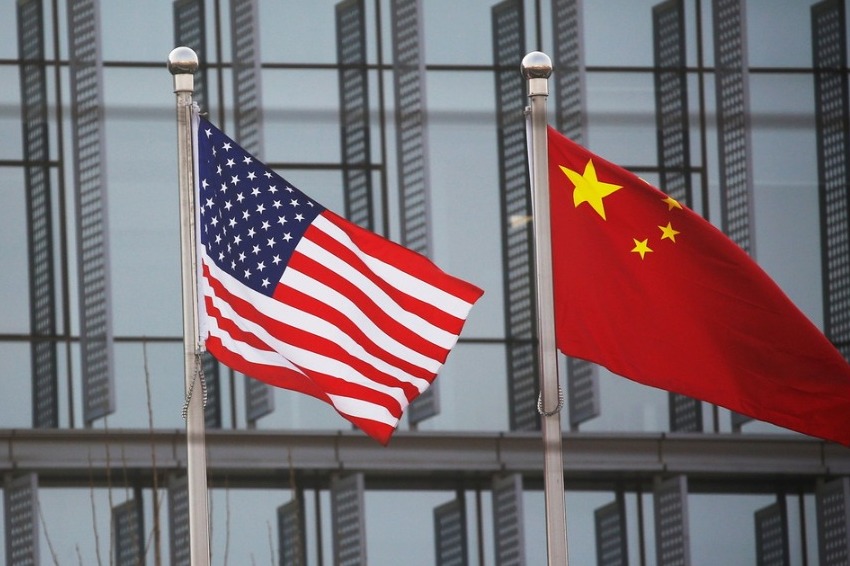
    China, which considers Taiwan a breakaway province, has consistently opposed foreign arms sales to the island nation. While Beijing has not issued an immediate response to this specific announcement, the Chinese Foreign Ministry previously condemned November’s $330 million aircraft parts sale as a ‘grave infringement’ upon Chinese sovereignty and security.

    The announcement occurs against a backdrop of escalating regional tensions. China has increased military pressure on Taiwan through regular incursions into its airspace and waters, while simultaneously demonstrating assertiveness toward neighboring Japan. Recent incidents include Chinese fighter jets locking radar on Japanese aircraft and naval confrontations near disputed islands.

    Taiwan has responded to these security challenges by planning to increase defense spending to over 3% of GDP next year, with projections reaching 5% by 2030. President Lai Ching-te has also announced the development of a dome-like air defense system to counter ‘hostile threats’ in the region.

  • Belgium demands ironclad guarantees of protection as EU leaders weigh a massive loan for Ukraine

    Belgium demands ironclad guarantees of protection as EU leaders weigh a massive loan for Ukraine

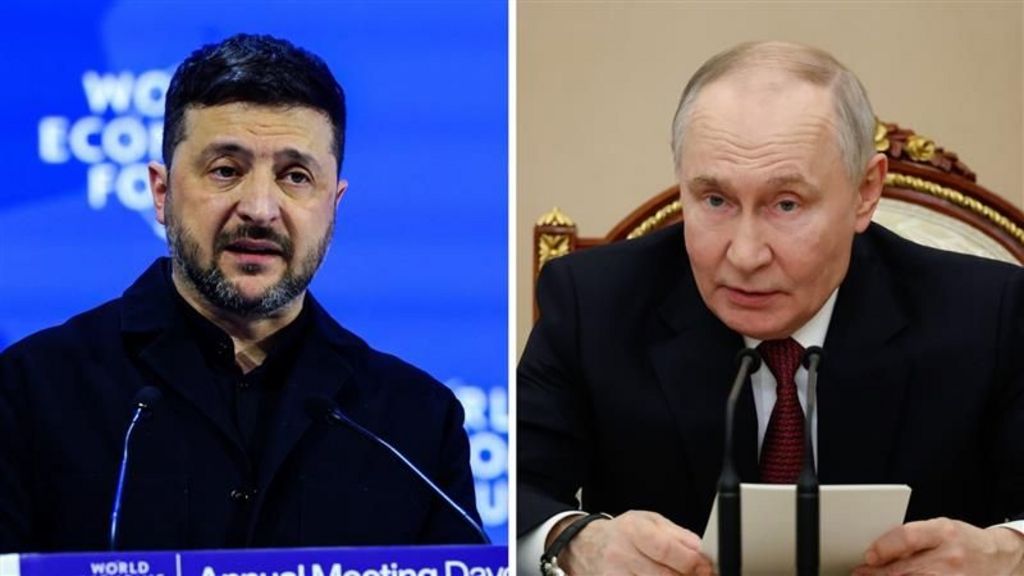
    BRUSSELS — A critical European Union summit faced significant hurdles on Thursday as Belgium demanded unequivocal guarantees of protection against potential Russian retaliation before endorsing a monumental loan package for Ukraine. The high-stakes negotiations centered on a proposal to utilize billions in frozen Russian sovereign assets to underwrite Ukraine’s military and financial requirements for the coming two years.\n\nWith approximately €193 billion ($227 billion) in immobilized Russian central bank funds held predominantly within the Brussels-based Euroclear clearinghouse, Belgium finds itself on the front lines of economic and legal vulnerability. This position was underscored recently when Russia’s Central Bank initiated legal proceedings against Euroclear, intensifying pressure on Belgian authorities.\n\nBelgian political leader Bart De Wever articulated the nation’s position using a vivid metaphor: \”Give me a parachute and we’ll all jump together. If we have confidence in the parachute that shouldn’t be a problem.\” Belgium advocates for broader European burden-sharing, suggesting frozen Russian assets across multiple European jurisdictions should be pooled to mitigate risk. Additionally, Brussels seeks concrete commitments that Euroclear would receive necessary financial backing should it face further legal challenges from Moscow.\n\nThe proposed financial mechanism, termed the \”reparations loan,\” would channel approximately €90 billion ($106 billion) to Ukraine, with non-EU nations including the United Kingdom, Canada, and Norway potentially covering any funding shortfalls. While Russia’s legal claim to these assets would technically remain intact, the funds would remain inaccessible until Moscow concludes its military aggression and compensates for war damages.\n\nDespite European Commission assurances regarding protective safeguards for Belgium, De Wever maintained his reservations, stating, \”I have not yet seen a text that could satisfactorily address Belgium’s concerns.\” He simultaneously reaffirmed Belgium’s commitment as \”a faithful ally\” to Ukraine.\n\nThe urgency of the situation was emphasized by European Commission President Ursula von der Leyen, who declared, \”We have to find a solution today. We will not leave the European Council without a solution for the funding of Ukraine for the next two years.\” This sentiment was echoed by Polish Prime Minister Donald Tusk’s stark warning: \”Now we have a simple choice. Either money today or blood tomorrow.\”\n\nThe negotiations revealed deepening divisions within the bloc. While Germany’s Chancellor Friedrich Merz supported utilizing Russian assets, Hungary and Slovakia openly opposed the loan plan. Hungarian Prime Minister Viktor Orbán, maintaining his position as Vladimir Putin’s closest European ally, criticized the proposal as \”a dead end\” and \”a stupid one,\\” asserting that \”to give money means war.\”\n\nWith Bulgaria, Italy, and Malta also expressing reservations, EU envoys worked intensively to bridge differences among member states. The absence of a viable alternative funding mechanism added further complexity to the deliberations, as no majority support existed for international market borrowing options.

  • Qatar in talks with US about buying F-35 warplanes: Report

    Qatar in talks with US about buying F-35 warplanes: Report

    Qatar has initiated preliminary discussions with the United States regarding the potential acquisition of advanced F-35 fighter jets, according to a report from Israel’s Channel 12 news. This development revives Doha’s five-year-old aspiration to obtain America’s most sophisticated warplane, a move that has immediately raised concerns within Israeli security circles.

    The Qatari initiative follows President Donald Trump’s November announcement indicating willingness to sell F-35s to Saudi Arabia that would be equivalent in capability to those operated by Israel. This potential expansion of F-35 operators in the region would place Qatar alongside both Saudi Arabia and Turkey in seeking to obtain the advanced aircraft, which currently remains exclusively operated by Israel in the Middle East.

    Israeli Prime Minister Benjamin Netanyahu’s administration has historically opposed such sales to regional powers, having actively lobbied Washington against transferring the advanced fighter jets to both Turkey and Saudi Arabia. President Trump himself has publicly acknowledged these Israeli efforts while simultaneously suggesting both Saudi Arabia and Israel should receive ‘top of the line’ military equipment as equal partners.

    The geopolitical landscape surrounding these potential sales varies significantly between regional players. Saudi Arabia appears to have stronger prospects for approval, particularly as the kingdom awaits finalization of a key defense agreement that U.S. officials indicate would streamline future arms transfers.

    Turkey faces substantially greater obstacles, having been expelled from the F-35 co-production program in 2019 following its controversial acquisition of Russia’s S-400 air defense system. Congressional legislation currently prohibits Turkey from receiving the advanced fighters unless the U.S. President certifies that Ankara no longer possesses the Russian system. Recent reports suggest Turkey may be considering returning the S-400 to Russia as it seeks to reenter the F-35 program.

    The regional tensions underlying these arms negotiations are particularly acute. Israeli-Turkish relations remain strained over conflicting positions regarding Syria and Palestinian issues, while Israel-Qatar relations recently deteriorated to historic lows following Israeli actions against Hamas negotiators in Doha.

    In response to Qatar’s renewed F-35 pursuit, Israeli officials are reportedly formulating a substantial counter-request for additional advanced military hardware, including two new squadrons—one of F-35s and another of F-15I aircraft—plus advanced munitions and related systems to maintain Israel’s qualitative military edge in the region.

  • Trump draws condemnation for expanding travel ban, barring Palestinians

    Trump draws condemnation for expanding travel ban, barring Palestinians

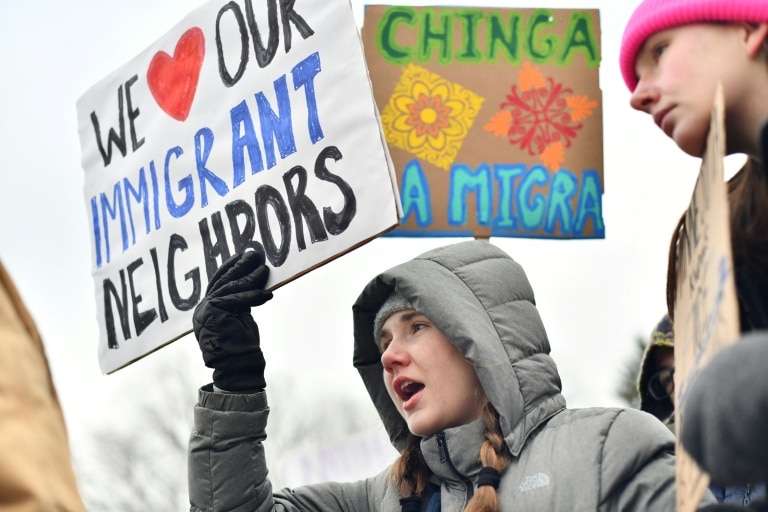
    The Trump administration has ignited a firestorm of criticism with its significant expansion of the controversial travel ban, adding 20 new countries to the restrictions and bringing the total number of affected nations to 39. Announced on Tuesday, the updated policy imposes a full entry ban on Syrian nationals and explicitly targets individuals holding Palestinian Authority travel documents, alongside new restrictions affecting numerous African and Arab nations. The White House justified the measures, set to take effect January 1, as essential for safeguarding U.S. national security through enhanced vetting protocols.

    The expansion has been met with immediate and fierce condemnation from lawmakers, advocates, and public figures who decry it as a thinly veiled manifestation of racism and religious discrimination. Massachusetts Senator Ed Markey declared the policy ‘racism disguised as security, xenophobia disguised as policy,’ a sentiment echoed across social media and official statements.

    Notably, the ban’s timing and specific targets have drawn intense scrutiny. Representative Rashida Tlaib, the sole Palestinian-American in Congress, condemned the inclusion of Palestinians amidst the ongoing conflict in Gaza, stating the administration’s ‘racist cruelty knows no limits.’ This perspective was reinforced by Georgia State Representative Ruwa Romman, a Palestinian American, who warned the policy would cruelly separate families already displaced by violence.

    Critics further argue the administration’s rhetoric reveals a broader agenda beyond security. Immigration policy analyst Aaron Reichlin-Melnick pointed to Department of Homeland Security language classifying even children and spouses of U.S. citizens on legal visas as ‘foreign invaders,’ suggesting an underlying contempt for legal immigration itself. The human cost of the policy was highlighted by users citing the case of Palestinian peace activist Awdah al-Hathaleen, who was denied entry and later killed after being returned.

    While Vice President JD Vance defended the move on X as key to eliminating antisemitism and promoting assimilation, the overwhelming response framed the expansion as a discriminatory policy disproportionately targeting Muslim-majority regions already grappling with war and displacement, drawing historical parallels and signaling a profound shift in U.S. immigration ideology.