分类: politics

  • Rebels start to withdraw from key DR Congo city, leaders say

    Rebels start to withdraw from key DR Congo city, leaders say

    In a significant development in the ongoing conflict in eastern Democratic Republic of Congo, the M23 rebel faction has declared the commencement of its withdrawal from the strategically vital city of Uvira. This announcement follows intense diplomatic pressure from the United States, which has simultaneously issued allegations of Rwandan support for the insurgents—a claim vehemently denied by Kigali.

    The capture of Uvira, situated near the Burundian border, represents a major escalation despite the recent signing of a US-brokered peace agreement between the Congolese and Rwandan governments on December 4th. The seizure triggered immediate condemnation from Washington, accompanied by warnings of potential sanctions against Rwanda.

    M23 leadership, including commander Bertrand Bisimwa, confirmed the withdrawal process was ‘underway,’ characterizing the move as a concession ‘for the sake of peace.’ Through social media channels, Bisimwa appealed to international mediators to ensure protection for the city against potential reprisals and remilitarization.

    However, the declared withdrawal has been met with profound skepticism from both local residents and the Congolese government. DR Congo’s official spokesman, Patrick Muyaya, described the announcement as a potential ‘diversion’ tactic intended to influence the American mediation team. Ground reports from Uvira residents early Thursday revealed continued movement of M23 vehicles throughout the city, casting doubt on the sincerity of the pullout.

    The humanitarian impact of the offensive has been severe, with UN agencies reporting dozens of fatalities, at least 100 wounded, and approximately 200,000 displaced persons. An additional 30,000 civilians sought refuge across the border in Burundi.

    This development occurs against the backdrop of parallel peace processes—the Washington agreement between nation-states and a separate Qatar-mediated negotiation involving the rebels themselves, highlighting the complex multilateral efforts to resolve the persistent instability in the region.

  • Top EU court rules Polish Constitutional Tribunal is not independent

    Top EU court rules Polish Constitutional Tribunal is not independent

    In a landmark decision with profound implications for European judicial standards, the European Court of Justice has declared Poland’s Constitutional Tribunal lacking in independence and impartiality due to politically motivated appointments during the previous conservative administration.

    The ruling specifically identified that Poland’s highest judicial body violated fundamental EU principles by disregarding effective judicial protection and undermining the primacy, autonomy, and uniform application of European law. This verdict stems from systematic reforms implemented between 2015 and 2023 by the Law and Justice party, which established political control over Poland’s top courts including both the Constitutional Tribunal and Supreme Court.

    These judicial reforms precipitated a direct confrontation with European institutions, leading the European Commission to challenge the changes before the EU’s highest court and suspend substantial financial transfers to Poland. The court’s scrutiny focused particularly on the appointment procedures for three judges and the tribunal president under the previous government, determining they compromised the body’s legitimacy under EU legal standards.

    Despite the ruling’s theoretical requirement for national reforms to restore judicial independence, practical implementation has stalled. Two successive justice ministers from the liberal government that assumed power in 2023 have been unable to reverse the changes, primarily due to resistance from Poland’s current and former presidents, both aligned with Law and Justice, who have either vetoed or threatened to veto legislative corrections.

    Justice Minister Waldemar Żurek welcomed the decision, stating on social media platform X that the ruling ‘obliges our state to take action’ and emphasizing the government’s readiness to ‘rebuild a genuine, independent Tribunal together’ as a fundamental issue for both state institutions and citizens.

  • Trump again demands Venezuela ‘return’ assets to US

    Trump again demands Venezuela ‘return’ assets to US

    WASHINGTON — U.S. President Donald Trump intensified pressure on Venezuela Wednesday by demanding the return of what he characterized as stolen American oil assets, while simultaneously enforcing a comprehensive naval blockade against the oil-rich nation.

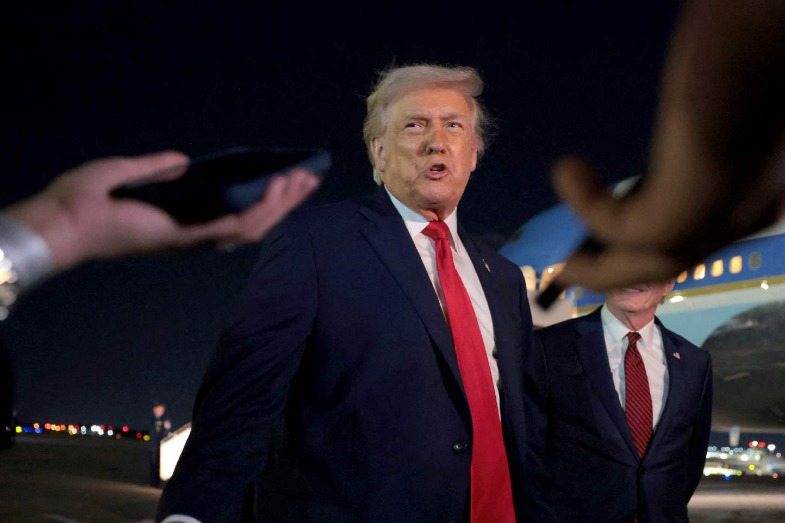
    Addressing reporters at the White House, Trump asserted that Venezuela had unlawfully seized valuable oil rights from American corporations. “They confiscated our oil assets—we possessed substantial resources there. As everyone is aware, they expelled our companies, and we insist on their restitution,” Trump declared, referencing Venezuela’s historical nationalization of its oil industry during the 1970s and under the administrations of both Nicolás Maduro and Hugo Chávez.

    The administration’s rhetoric escalated further through social media channels. Stephen Miller, Trump’s deputy chief of staff, described Venezuela’s resource nationalization as “the most extensive documented theft of American wealth and property in history.” Miller additionally alleged that these appropriated resources had been utilized to “finance terrorist activities and inundate American communities with violent actors, mercenaries, and narcotics.”

    This verbal offensive follows Tuesday’s presidential directive implementing a full-scale blockade on all sanctioned oil tankers entering or departing Venezuelan waters. The administration has simultaneously designated Venezuela as a Foreign Terroristic Organization (FTO), though official registry updates remained pending as of Wednesday evening.

    The geopolitical confrontation intensified last week when Pentagon forces intercepted an oil tanker near Venezuela’s coastline, redirecting the vessel to a U.S. port. White House officials subsequently confirmed intentions to retain the confiscated petroleum—a maneuver condemned by Caracas as outright “piracy.”

    Despite Venezuela’s status as holder of the world’s largest proven oil reserves, U.S. crude imports from the South American nation have dramatically declined over the past decade due to escalating sanctions and diplomatic tensions. Chevron Corporation continues operations in Venezuela under special governmental authorization, reporting no current disruptions to its activities.

    The United States has maintained substantial naval deployment in the Caribbean for nearly four months, ostensibly for counter-narcotics operations—a justification Venezuelan authorities reject as pretext for forced regime change. Since September, U.S. forces have destroyed至少25 suspected drug-trafficking vessels in Caribbean and eastern Pacific waters, resulting in至少95 fatalities.

    Contrasting with official narratives, Drug Enforcement Administration data indicates Venezuela does not rank among primary sources of narcotics entering the United States. Domestic sentiment appears skeptical of administration strategies, with a Quinnipiac University poll revealing 63% of American adults oppose military actions against Venezuela, compared to 25% expressing support.

  • Nigeria apologises over Burkina Faso military flight that saw 11 servicemen detained

    Nigeria apologises over Burkina Faso military flight that saw 11 servicemen detained

    In a significant diplomatic development, Nigeria’s Foreign Minister Yusuf Tuggar has issued a formal apology to Burkina Faso following the unauthorized incursion of a Nigerian military aircraft into Burkinabè airspace. The incident, which resulted in the detention of eleven Nigerian servicemen, has been resolved with their subsequent release and anticipated return to Nigeria.

    According to official statements from the Nigerian Air Force, the aircraft experienced technical difficulties while en route to Portugal, necessitating an emergency landing in Burkina Faso. This unauthorized landing triggered a serious diplomatic confrontation with the Alliance of Sahel States (AES), a regional coalition comprising Burkina Faso, Mali, and Niger.

    The AES leadership characterized the incident as an ‘unfriendly act’ and responded by elevating their defense readiness. Member states’ air forces were placed on maximum alert and authorized to ‘neutralize any aircraft’ violating the confederation’s airspace—a strong indication of the regional tensions.

    Minister Tuggar led a high-level delegation to Ouagadougou on Wednesday for crisis talks with Burkinabè military leader Captain Ibrahim Traoré. During a joint appearance on national television, Tuggar acknowledged administrative failures regarding flight authorizations and expressed regret for the incident.

    The diplomatic resolution comes against a complex geopolitical backdrop. The three AES states, all under military governance, have recently withdrawn from the West African regional bloc ECOWAS and have strengthened ties with Russia, while most ECOWAS members maintain alliances with Western nations.

    Both nations have agreed to maintain regular consultations and implement practical measures to enhance bilateral cooperation and regional integration, according to Nigeria’s foreign ministry. The detained personnel, described as being in ‘high spirits,’ await their return alongside the aircraft, though specific timing remains undisclosed.

  • Germany charges teens in alleged right-wing extremist group with attempted murder

    Germany charges teens in alleged right-wing extremist group with attempted murder

    German federal prosecutors have formally charged eight individuals for their involvement in what authorities describe as a “right-wing extremist terrorist” organization. The group, operating under the name “Last Defense Wave,” allegedly sought to undermine Germany’s democratic foundations through coordinated attacks on migrant accommodations and political opponents.

    The accused face multiple serious charges including membership in a terrorist organization, attempted murder, conspiracy to commit murder, and causing grievous bodily harm. Notably, several defendants are teenagers, highlighting the concerning recruitment of youth into extremist movements.

    According to investigative documents, the cell was established in May 2024 with the declared mission of acting as the “final authority” for protecting the “German nation.” Their operational activities included both executed and planned attacks on asylum-seeker facilities and left-wing institutions across multiple German states.

    The case involves three specifically documented operations: an arson attack on a Brandenburg cultural center, a failed attempted attack on a Thuringia asylum seekers’ home, and detailed plans to target migrant accommodation in Senftenberg. While these incidents resulted in no injuries, group members additionally stand accused of violently assaulting and robbing individuals, causing significant physical harm.

    Internal communications revealed the group’s ultimate objective to instigate a “race war” that would precipitate a cycle of violence intended to preserve the “white race” and ultimately dismantle liberal democracy. Investigators documented their proliferation of racist and antisemitic content on social media platforms, along with overt glorification of Nazi ideology and the Third Reich.

    Following May arrests across Mecklenburg-Western Pomerania, Brandenburg, and Hesse, seven defendants remain in pretrial detention while one has been released since July. Due to the juvenile status of several accused, legal proceedings have required parental accompaniment during court appearances.

  • Africa calls for fairer global governance

    Africa calls for fairer global governance

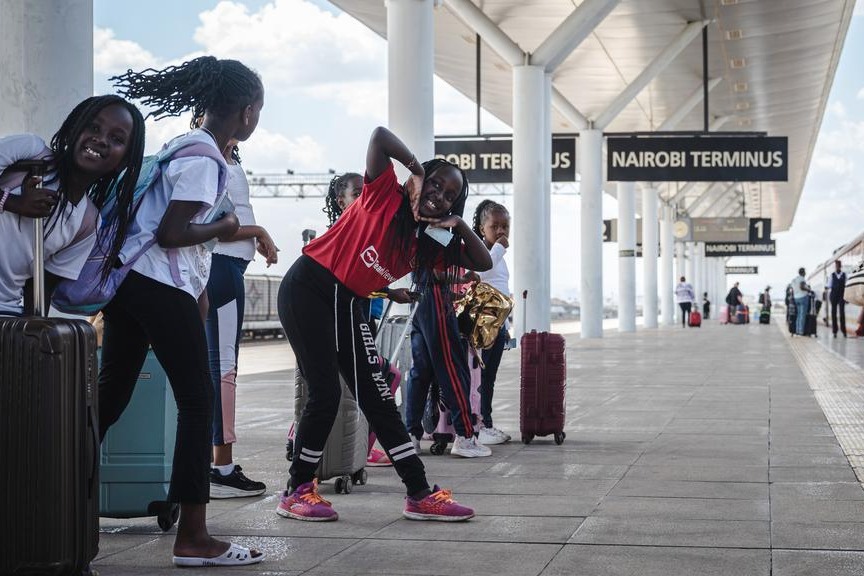
    ACCRA – African leaders convened for the inaugural African Summit in Ghana’s capital, delivering a powerful message to the international community: the continent demands fundamental reforms to global governance structures. Under the theme “Building a New United Africa,” policymakers and stakeholders gathered to forge consensus on achieving greater integration and strategic autonomy.

    Ghana’s Foreign Minister Samuel Okudzeto Ablakwa set the tone, highlighting Africa’s persistent challenges including fragmentation, weak intra-African trade, infrastructure deficits, and excessive dependence on external markets. “The global environment within which Africa must pursue its integration agenda is undergoing rapid, profound transformation,” Ablakwa declared, emphasizing Africa’s transition from passive observer to active shaper of global outcomes.

    The summit occurred against a backdrop of significant geopolitical shifts. November’s G20 Leaders’ Summit in Johannesburg marked a watershed moment as African nations, alongside Global South partners, successfully steered discussions toward development priorities despite U.S. opposition. The adopted declaration emphasized multilateral cooperation and stronger support for developing economies.

    Economic indicators signal Africa’s rising prominence. The IMF projects sub-Saharan Africa’s growth will outpace the global average at 4.1% in 2025. The African Continental Free Trade Area (AfCFTA) demonstrates substantial progress, with 47 nations ratifying the agreement. World Bank estimates suggest AfCFTA could generate $450 billion in additional economic output by 2035, lifting 30 million from extreme poverty.

    However, security challenges persist. Recent coups in Guinea-Bissau and Benin, alongside renewed conflict in the Democratic Republic of Congo displacing over 500,000 people, prompted West African authorities to declare a regional “state of emergency.” Analysts attribute these instability patterns to colonial legacies, terrorism, and economic development gaps.

    External economic pressures compound these challenges. U.S. tariff impositions on Lesotho and South Africa triggered dramatic export declines, with Lesotho losing nearly 80% of textile orders and South African auto exports plummeting 85% in May.

    Infrastructure development emerges as a cornerstone solution. The recent launch of Guinea’s Simandou iron ore project to China and the Tanzania-Zambia Railway rehabilitation project demonstrate advancing regional connectivity. Zambia’s Transport Minister Frank Tayali noted these initiatives support visions of becoming “a land-linked nation and logistics hub.

    As the 70th anniversary of China-Africa diplomatic relations approaches in 2026, partnerships continue deepening. Kenyan economist James Shikwati observed that “China’s pragmatic, inclusive approach offers viable alternatives to traditional Western models” for Global South development.

    African Union Director of Information Leslie Richer captured the summit’s consensus: “The Global South must not speak in fragments. Our strength lies in unity” to shape global decision-making.

  • Somalia marks 65th anniversary of diplomatic relations with China

    Somalia marks 65th anniversary of diplomatic relations with China

    Somalia and China have commemorated 65 years of established diplomatic relations, reaffirming their commitment to enhanced cooperation and shared developmental objectives. The milestone event, held in Mogadishu, brought together high-ranking officials from both nations to celebrate this enduring international partnership.

    Somali Prime Minister Hamza Abdi Barre addressed attendees by highlighting the historical significance of this bilateral relationship, characterizing it as “a testament to enduring friendship between our two peoples.” He emphasized that this friendship has been fundamentally built upon mutual respect for national sovereignty and shared understanding across decades of regional and global transformations.

    Since initially establishing diplomatic ties on December 14, 1960, China has consistently emerged as a trusted partner to Somalia. This partnership has notably respected Somalia’s political independence while supporting its national priorities and belief in the country’s future potential. The cooperative relationship has yielded practical impacts across multiple sectors including critical infrastructure development, healthcare system strengthening, educational advancement, public service capacity building, and humanitarian response during crises.

    Chinese Ambassador to Somalia Wang Yu recalled the historical context of the relationship’s formation, noting that China was among the first nations to recognize Somalia’s independence. Somalia similarly distinguished itself as the first East African nation to establish formal diplomatic relations with China. Ambassador Wang acknowledged Somalia’s consistent adherence to the One-China principle while reaffirming China’s unwavering support for Somalia’s national sovereignty, territorial integrity, and unity.

    The diplomatic celebration underscored how the China-Somalia relationship has evolved into a model of South-South cooperation, demonstrating how mutually beneficial partnerships can foster common development between nations.

  • US, Russian negotiators to meet in Miami over peace deal to end Ukraine crisis: media

    US, Russian negotiators to meet in Miami over peace deal to end Ukraine crisis: media

    High-level diplomatic negotiations between United States and Russian officials are scheduled to occur in Miami, Florida this weekend, signaling potential progress toward resolving the prolonged Ukraine conflict that has persisted for nearly four years, according to Politico reports.

    The anticipated meeting, while still subject to scheduling confirmation, would feature Trump administration officials presenting recent developments from trilateral discussions involving American, Ukrainian, and European representatives held in Berlin last weekend. Two informed sources indicated the Miami talks would build upon these preliminary negotiations.

    The American delegation is expected to include President Donald Trump’s special envoy Steve Witkoff and senior advisor Jared Kushner, while the Russian contingent would likely feature President Vladimir Putin’s special envoy Kirill Dmitriev. In a parallel diplomatic movement, Ukrainian National Security Adviser Rustem Umerov is arranged to conduct separate consultations with the US delegation either in Miami or an alternative American location during the same timeframe.

    Administration officials revealed that the Berlin negotiations produced substantial progress, with participants reaching consensus or significantly narrowing differences on approximately 90% of the twenty-point American draft peace proposal. This development suggests unprecedented alignment among the involved parties.

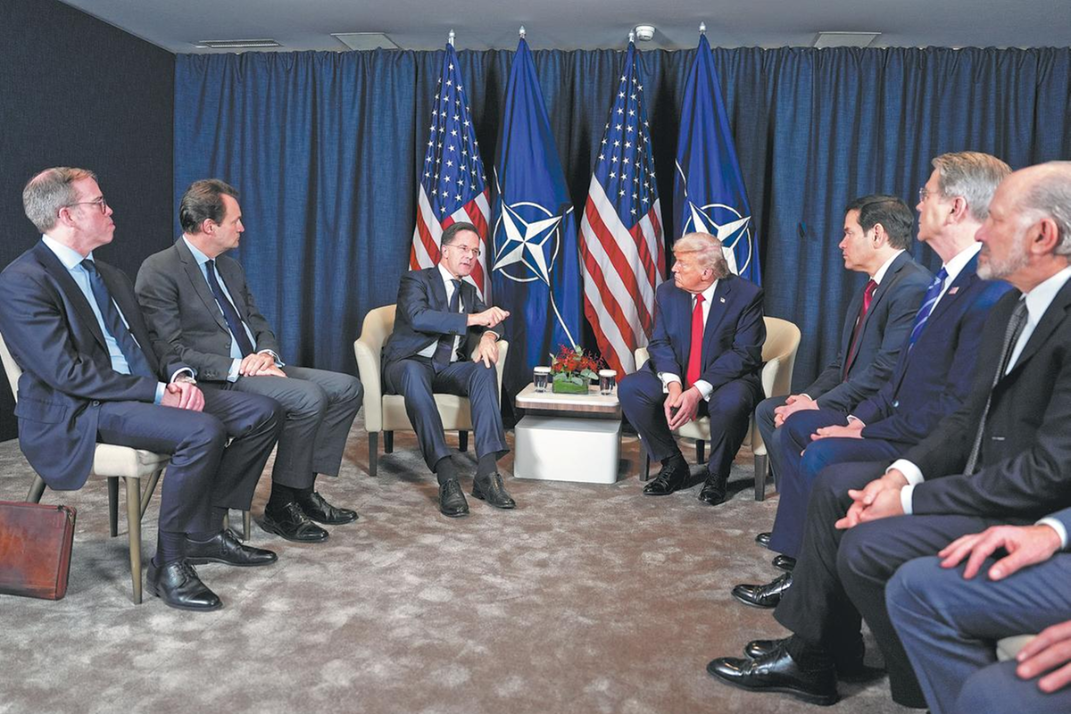
    In a notable concession, Ukrainian President Volodymyr Zelensky has indicated willingness to suspend NATO membership aspirations in exchange for Western security guarantees that would prevent renewed hostilities with Russia. Kyiv seeks protections equivalent to those afforded under NATO’s Article 5 collective defense clause, though the United States has not yet committed to such arrangements. According to Ukrinform news agency, Zelensky expressed readiness to accept Article 5-equivalent security guarantees as part of a comprehensive peace compromise.

  • 63 pct of US voters oppose US military action inside Venezuela: poll

    63 pct of US voters oppose US military action inside Venezuela: poll

    A comprehensive national survey conducted by Quinnipiac University has uncovered significant public opposition to U.S. military engagement in Venezuela, with nearly two-thirds of American voters expressing disapproval of such operations. The poll, conducted from December 11-15 among 1,035 registered voters nationwide, reveals a stark political divide on the controversial military stance.

    The findings indicate that 63% of respondents oppose military action within Venezuelan territory, while only 25% support such measures. The opposition cuts across party lines but demonstrates dramatic partisan variations: 89% of Democrats, 68% of independents, and 33% of Republicans stand against military intervention in the oil-rich South American nation.

    This public sentiment emerges amid escalating U.S. military activities in the Caribbean region, where American forces have maintained a substantial presence off Venezuela’s coast for nearly four months. The Pentagon has justified this deployment as part of counter-narcotics operations, conducting strikes on alleged drug vessels that have resulted in at least 95 fatalities in international waters since September.

    The poll further revealed that 53% of Americans disapprove of these maritime strikes, reflecting growing public skepticism about the administration’s approach. Critics, including bipartisan lawmakers, have questioned both the legality of these operations and whether drug enforcement genuinely represents the sole motivation behind the military buildup.

    The Trump administration has simultaneously intensified economic pressure on Caracas, with the president announcing a complete blockade of all sanctioned oil tankers entering or leaving Venezuelan waters this week. Despite these measures, the president has repeatedly suggested that land-based military operations targeting Caribbean drug traffickers could commence “very soon”—a prospect that appears to lack broad public support according to the survey results.

    The Quinnipiac poll carries a margin of error of approximately 3.9 percentage points, providing a statistically significant snapshot of American public opinion as tensions with Venezuela continue to escalate.

  • US Senate passes 901 bln USD defense authorization bill for fiscal 2026

    US Senate passes 901 bln USD defense authorization bill for fiscal 2026

    In a decisive bipartisan move, the US Senate has ratified a comprehensive $901 billion defense authorization package for Fiscal Year 2026, setting the stage for President Donald Trump’s anticipated endorsement. The legislative measure, formally designated as the National Defense Authorization Act (NDAA), cleared the upper chamber with an overwhelming 77-20 vote margin on Wednesday.

    Senator Roger Wicker, presiding over the Senate Armed Services Committee, emphasized the historical significance of this congressional achievement. “This marks the 65th consecutive year that Congress has transcended partisan divides to deliver a robust national defense enhancement package to the president’s desk,” Wicker declared prior to the vote.

    The voluminous 3,000-page legislation incorporates multifaceted provisions including a 4% salary augmentation for military personnel, structural reforms to accelerate Pentagon weapons procurement, and substantial allocations for advancing the Golden Dome missile defense initiative. The bill mandates $400 million in annual military assistance for Ukraine over a two-year timeframe while imposing restrictions on troop reductions in Europe and South Korea without prior consultation with allied nations.

    Notable budgetary authorizations encompass $26 billion for naval vessel construction, $38 billion for aerial fleet modernization, and $25 billion dedicated to munitions manufacturing expansion. The legislation further implements significant policy shifts by eliminating Diversity, Equity and Inclusion (DEI) offices within the Defense Department, reducing climate-related expenditures by $1.6 billion, and permanently rescinding economic sanctions against Syria.

    A particularly contentious stipulation withholds 25% of Defense Secretary Pete Hegseth’s travel allocation until Congress receives unedited footage of US airstrikes targeting suspected drug trafficking vessels near Venezuela. This follows Hegseth’s recent confirmation that only designated congressional committees would review complete footage of the controversial September 2nd Caribbean operation, which resulted in casualties during a secondary strike.

    Despite broad bipartisan support, the legislation faced criticism from progressive lawmakers regarding the removal of expanded in-vitro fertilization coverage for active duty personnel, while conservative factions expressed dissatisfaction over perceived limitations in scaling back international military commitments. The White House has indicated President Trump will formally enact the legislation within coming days.