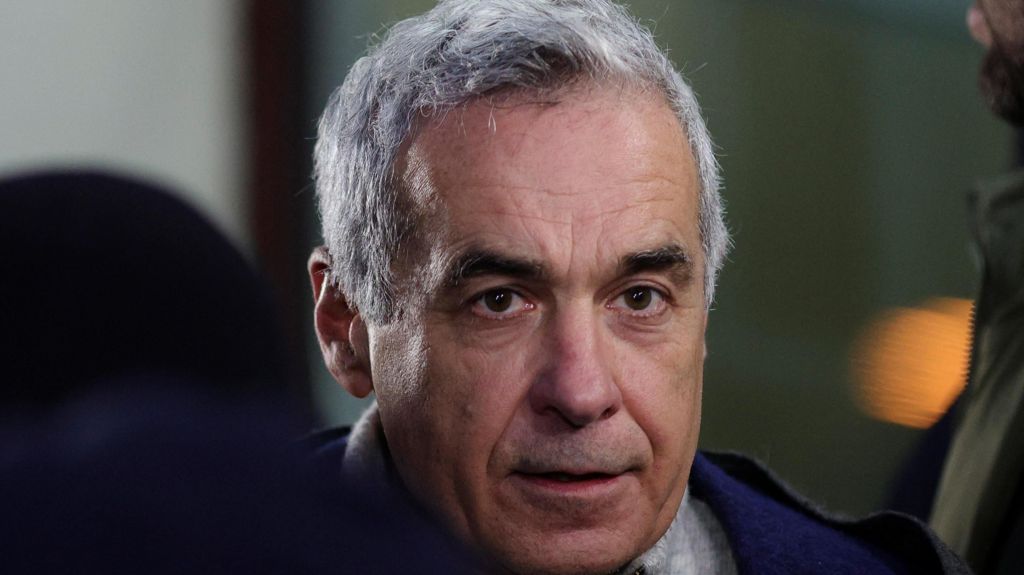
Calin Georgescu, a far-right former presidential candidate in Romania, has been formally charged with attempting to orchestrate a coup following the annulment of the first round of the 2024 presidential election. The charges also extend to Horatiu Potra, a former French legionnaire and militia leader in the Democratic Republic of Congo, along with 20 other individuals. The case centers on a foiled raid planned for December 8 in Bucharest, which authorities claim was part of a broader scheme to destabilize Romania’s constitutional order. Prosecutors allege that Georgescu and Potra collaborated with foreign intelligence operatives, particularly from Russia, to execute the plot. Evidence includes a meeting between Georgescu and Potra at a horse farm shortly after the election annulment, which Georgescu initially denied but later admitted to after photographic proof emerged. In February, police raids uncovered weapons, gold, and cash, allegedly intended for a violent power grab. Potra, currently abroad, is believed to be seeking asylum in Russia. The 2024 election was marred by accusations of Russian interference, with Romanian intelligence citing a large-scale influence operation involving cyberattacks, disinformation campaigns, and social media manipulation. Over 2,000 Facebook pages and 20,000 TikTok accounts were reportedly used to amplify pro-Georgescu messaging. After being barred from the rerun election, Georgescu’s ally, George Simion of the far-right AUR party, stepped in but ultimately lost to pro-EU candidate Nicusor Dan. Georgescu has accused Romanian authorities of ruling through ‘deceit, intrigue, and division,’ while President Dan has labeled the prosecutors’ report as proof of Russia’s systematic disinformation efforts. A trial date for Georgescu is expected in early 2026.
分类: politics
-
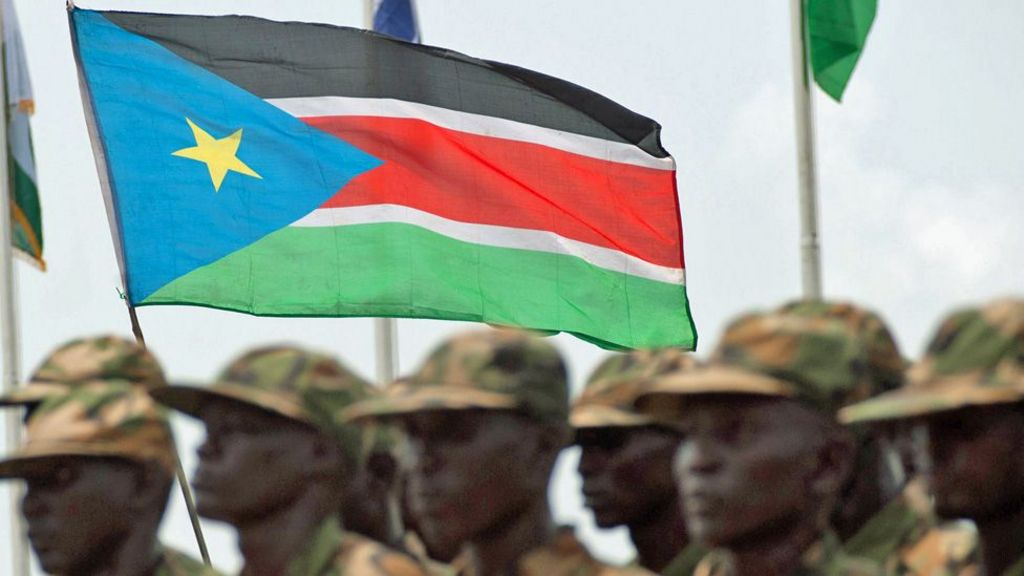
Fears balloon of a return to civil war in South Sudan over treason trial
South Sudan, the world’s youngest nation, faces renewed turmoil as political tensions escalate, raising fears of a potential return to civil war. The crisis deepened after the Sudan People’s Liberation Movement In Opposition (SPLM-IO), led by suspended Vice-President Riek Machar, called for ‘regime change’ in response to Machar’s house arrest and charges of murder, treason, and crimes against humanity. The SPLM-IO denounced the charges as a ‘political witch-hunt’ and accused the government of undermining the 2018 peace agreement that ended a devastating five-year civil war. The situation has been further complicated by the deployment of Ugandan troops to Juba, ostensibly to bolster the government’s control. A recent UN report has also exposed rampant corruption, alleging that South Sudanese officials have embezzled billions in oil revenues, leaving millions without essential services. South Sudan’s independence in 2011, achieved after decades of struggle, has been marred by internal conflict, particularly the 2013 civil war triggered by Machar’s dismissal as vice-president. The conflict, rooted in ethnic divisions, claimed an estimated 400,000 lives and displaced 2.5 million people. Despite the 2018 peace deal, key provisions, such as the formation of a unified national army and the establishment of a transitional justice court, remain unimplemented. The repeated postponement of elections and the failure to draft a new constitution have further eroded trust in the government. As Machar prepares for his trial, concerns grow over the potential for renewed violence, with analysts warning of the risk of proxy warfare in the region. The international community watches anxiously as South Sudan teeters on the edge of another catastrophic conflict.
-

US designates Colombia as country ‘failing to cooperate in drug war’
The United States has officially designated Colombia as a country that has ‘demonstrably failed’ to meet its obligations in combating drug trafficking. This decision, announced on Monday, marks the first time since 1997 that Colombia has been added to the list of nations deemed non-compliant with U.S.-led counternarcotic efforts. Despite this, the U.S. has opted not to cut off aid to Colombia, a move that could have further strained bilateral relations. The Trump administration criticized Colombia’s left-wing President Gustavo Petro, attributing a surge in cocaine production to his leadership. Petro, however, refuted these claims, pointing to his predecessor Iván Duque’s tenure as the period when coca cultivation expanded significantly. In a retaliatory gesture, Colombia announced it would cease purchasing weapons from the U.S., with Interior Minister Armando Benedetti declaring the decision effective immediately. The U.S. also named Afghanistan, Bolivia, Myanmar, and Venezuela as countries failing to meet drug control targets. The decertification of Colombia comes amid heightened U.S. efforts to combat ‘narco-terrorism,’ highlighted by a recent military strike on a suspected Venezuelan drug vessel in the South Caribbean, which resulted in three fatalities. While the U.S. acknowledged the ‘skill and courage’ of Colombia’s security forces, it placed the blame squarely on the political leadership for the country’s drug control shortcomings. The U.S. left open the possibility of recertifying Colombia if it takes more aggressive action against coca cultivation and cocaine production. Despite the diplomatic friction, Colombia remains a key recipient of U.S. aid, a fact that may temper the immediate fallout from this decision.
-
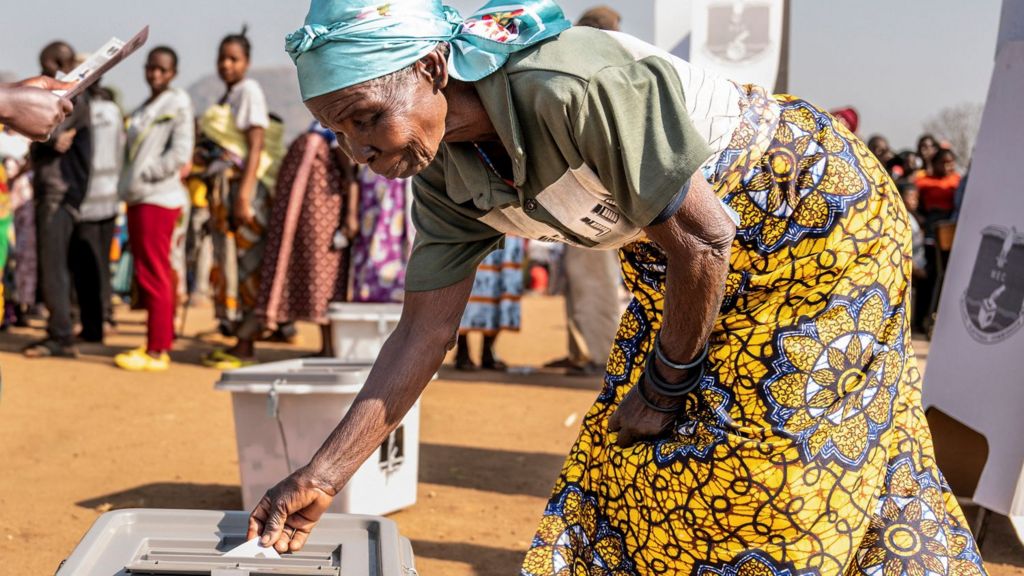
Malawians await presidential poll result in vote dominated by economic woes
As Malawi’s polls closed on Tuesday, the nation eagerly awaited the results of a pivotal presidential election marked by economic distress and a fierce contest between two prominent candidates. Despite a field of 17 contenders, the race has narrowed to a head-to-head battle between incumbent President Lazarus Chakwera and his predecessor, Peter Mutharika. Both leaders have centered their campaigns on promises to revive Malawi’s struggling economy, which has been plagued by soaring inflation, fuel shortages, and widespread power outages. Voters, including a 28-year-old waitress who expressed her frustration with unemployment, turned out in large numbers, hoping for transformative change. The election also saw delays at some polling stations due to technical issues with biometric systems, though the Malawi Electoral Commission assured that these were promptly addressed. With counting underway, the outcome remains uncertain, but the stakes are high for a nation grappling with persistent poverty and economic instability.
-
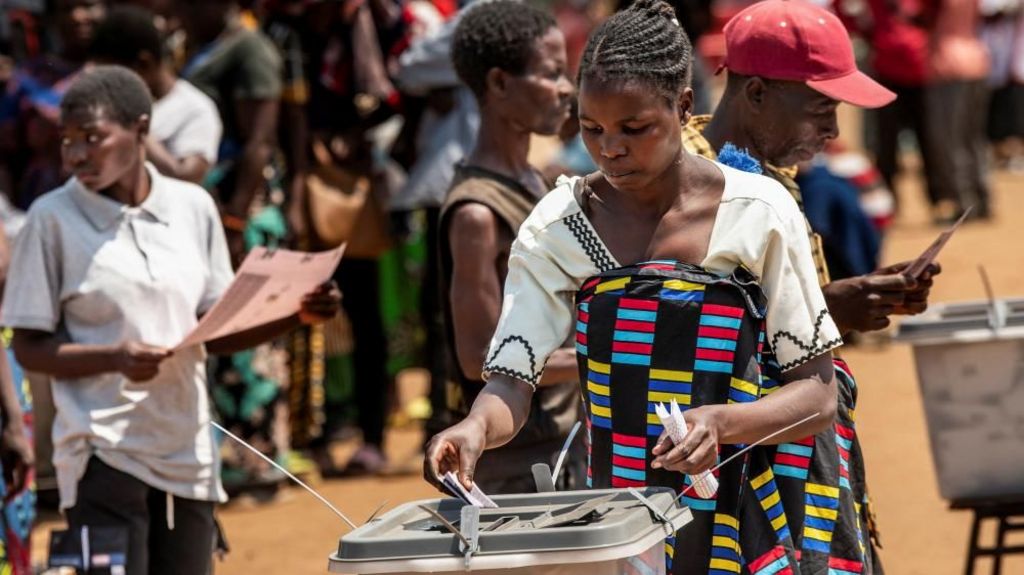
What is at stake in Malawi’s elections as cost-of-living bites?
Malawi’s presidential and parliamentary elections commenced on Tuesday, marking a pivotal moment for the nation after five years of economic hardship and political instability. Incumbent President Lazarus Chakwera, seeking a second term, faces his primary challenger, former President Peter Mutharika, in a rematch of their previous electoral battles. The election unfolds against a backdrop of severe economic challenges, including fuel shortages, skyrocketing living costs, and rampant inflation, which have left many voters disillusioned. With 7.2 million registered voters, the polls also include parliamentary and local elections, with 17 presidential candidates vying for leadership. The electoral commission has until September 24 to announce the presidential results, with a potential run-off if no candidate secures over 50% of the vote. Chakwera, a former theology lecturer, and Mutharika, an 85-year-old ex-lawyer, both carry the weight of corruption allegations and economic mismanagement claims. The election is further complicated by the legacy of Cyclone Freddy, which devastated the country in 2023, and ongoing concerns about electoral integrity. The outcome will determine Malawi’s path forward as it grapples with poverty, corruption, and political polarization.
-
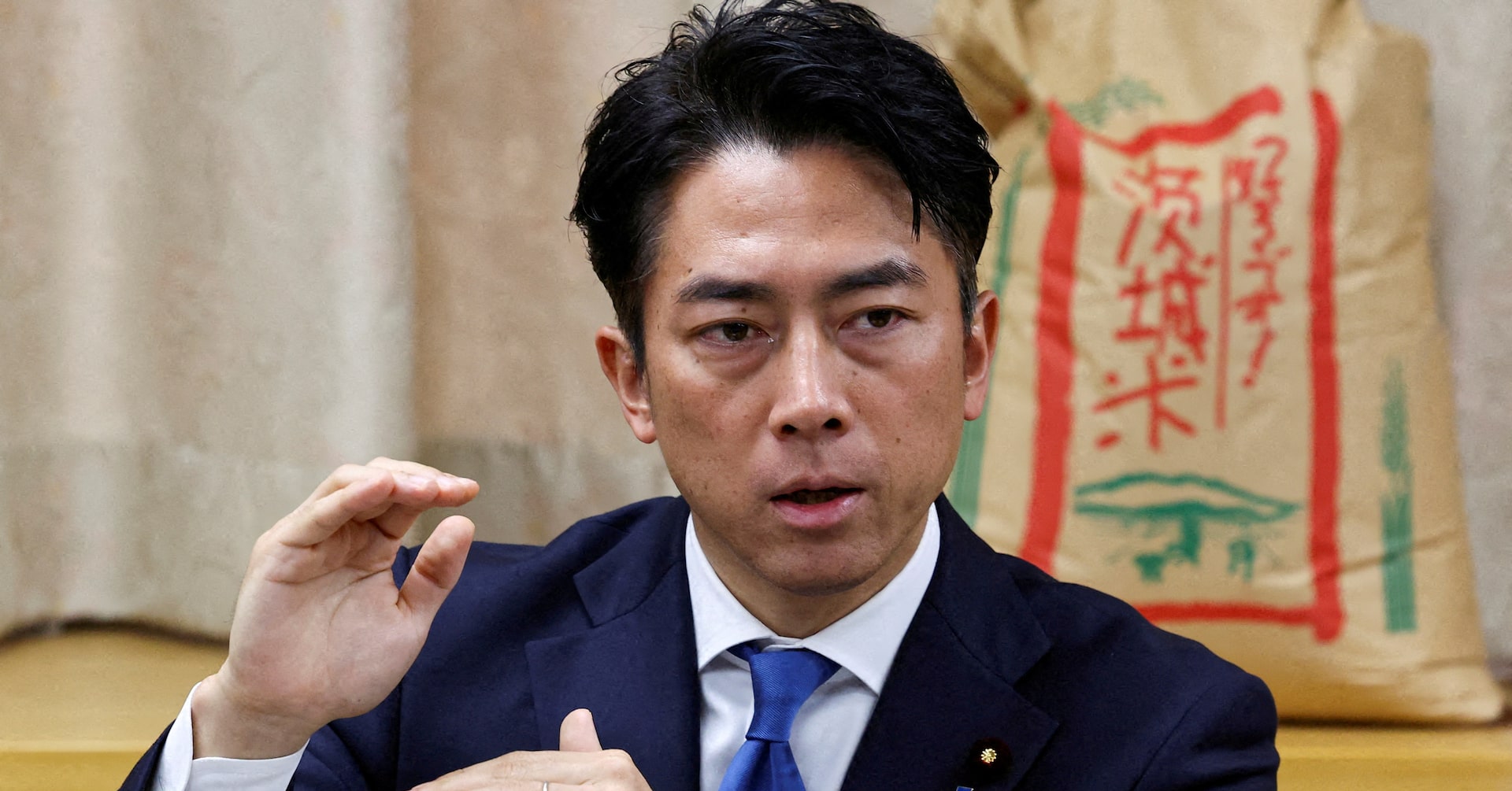
Japan’s Koizumi, Hayashi run for leadership of ruling party
The race to lead Japan’s ruling Liberal Democratic Party (LDP) has intensified as prominent figures officially announced their candidacies on Tuesday. The upcoming vote, scheduled for early October, aims to select a successor to outgoing Prime Minister Shigeru Ishiba, who resigned following a series of electoral setbacks that have complicated the party’s leadership transition. Among the contenders is Shinjiro Koizumi, Japan’s Minister of Agriculture, Forestry, and Fisheries, who confirmed his bid during a press conference. Koizumi, the son of former Prime Minister Junichiro Koizumi, has garnered attention for his efforts to stabilize rice prices this year. Finance Minister Katsunobu Kato, who previously secured the fewest votes in last year’s leadership contest, has pledged to support Koizumi, emphasizing the need for party unity. Chief Cabinet Secretary Yoshimasa Hayashi, Ishiba’s top spokesperson, also declared his candidacy on social media platform X, vowing to lead a government that balances stability and growth. Other notable candidates include former Foreign Minister Toshimitsu Motegi and former Economic Security Minister Takayuki Kobayashi, who outlined policy proposals ranging from temporary income-tax cuts to stricter immigration controls. Former Internal Affairs Minister Sanae Takaichi, a strong advocate for government stimulus and monetary easing, is expected to announce her candidacy soon, potentially making history as Japan’s first female leader. Media polls suggest Koizumi and Takaichi are the frontrunners in this highly competitive race. The LDP, which has dominated Japan’s post-war political landscape, faces additional challenges as it lost its majority in both houses of parliament during Ishiba’s tenure, complicating the selection of the next leader.
-
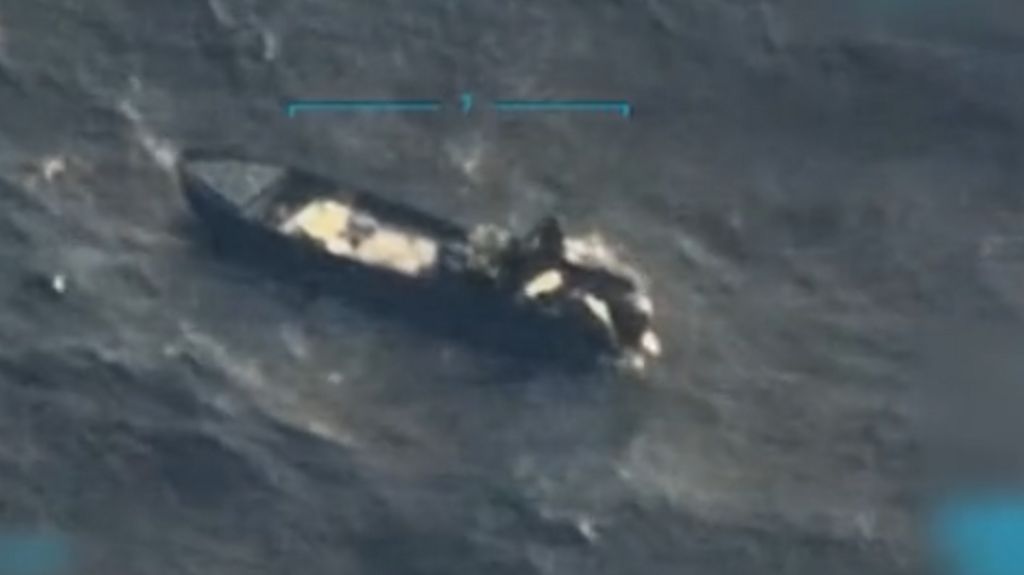
US destroys alleged Venezuelan drug boat, killing three
In a dramatic escalation of tensions between the United States and Venezuela, President Donald Trump announced on Monday that the US military had destroyed an alleged Venezuelan drug vessel in international waters. Trump, speaking via Truth Social, claimed the operation targeted ‘violent drug trafficking cartels’ and resulted in the deaths of three individuals. However, no concrete evidence was provided to substantiate the claim that the boat was carrying narcotics.
The incident follows a series of confrontations between the two nations, including the deployment of US warships to the southern Caribbean for counter-narcotics operations. A previous strike on September 2, which killed 11 people aboard another vessel, has been criticized by legal experts as potentially violating international human rights and maritime law.
Trump defended the actions, stating that the US had ‘recorded proof’ of the boats belonging to narco-terrorist groups. ‘All you have to do is look at the cargo—it was spattered all over the ocean—big bags of cocaine and fentanyl all over the place,’ he said during a press briefing from the Oval Office. He also claimed that maritime drug trafficking to the US had decreased due to recent efforts but acknowledged that narcotics continue to enter the country by land.
Venezuelan President Nicolás Maduro condemned the US actions, accusing Washington of ‘aggression’ and labeling America’s top diplomat Marco Rubio as the ‘lord of death and war.’ Maduro asserted that Venezuela would ‘fully exercise its legitimate right to defend itself’ and called on citizens to enlist in the militia. He also claimed that relations with the US had ‘been destroyed by their bomb threats.’
The Venezuelan Foreign Ministry further alleged that the US was seeking to escalate conflict in the Caribbean to justify regime change in Caracas. This accusation came after Venezuelan Foreign Minister Yván Gil reported that US forces had ‘illegally and hostilely’ seized a Venezuelan fishing boat for eight hours.
The US, along with other nations including the UK, has not recognized Maduro’s re-election in July 2024, citing evidence of electoral fraud. US officials have also accused Maduro of leading a drug cartel and have offered a $50 million reward for information leading to his capture. Maduro has denied these allegations, calling them an ‘imperialist move’ to depose him.
As tensions continue to rise, the international community watches closely, with concerns over the potential for further military escalation and its implications for regional stability.
-
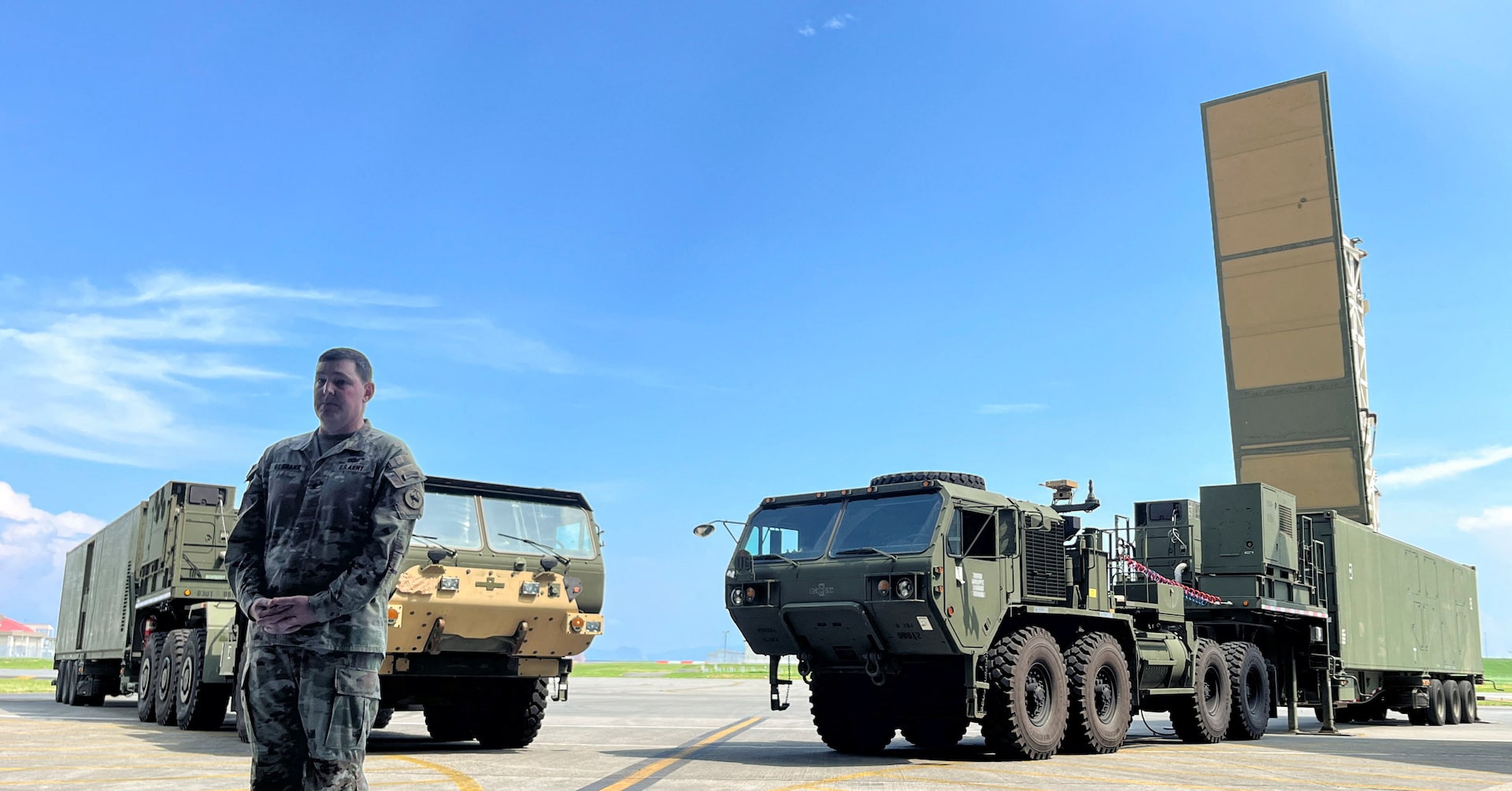
US Typhon missile system’s presence in Japan sharpens Asia arms race
In a significant display of military cooperation, the United States unveiled its Typhon intermediate-range missile system in Japan during the annual Resolute Dragon exercise. The event, held at Marine Corps Air Station Iwakuni on September 15, 2025, marked the first time the Typhon system was showcased in Japan. The exercise, involving 20,000 U.S. and Japanese troops, underscores the growing strategic alignment between Washington and Tokyo in countering regional threats. The Typhon system, capable of launching Tomahawk cruise missiles with ranges sufficient to target China’s eastern seaboard or parts of Russia, has been criticized by Beijing and Moscow as destabilizing. Colonel Wade Germann, commander of the task force operating the system, emphasized its versatility and rapid deployment capabilities, though he declined to disclose its next destination after the exercise. The system’s presence in Japan, closer to China, is expected to provoke a stronger reaction from Beijing compared to its earlier deployment in the Philippines in April 2024. Analysts note that the U.S. and Japan’s willingness to field such weapons reflects a diminished concern over Chinese objections compared to previous years. The Typhon system, which also fires SM-6 missiles designed to strike ships and aircraft, is part of a broader U.S. strategy to counter China’s expanding missile arsenal. Japan, meanwhile, is accelerating its military spending, including the purchase of Tomahawk missiles and the development of its own intermediate-range capabilities, marking its largest military expansion since World War II. The regional arms buildup extends to Taiwan, which plans to increase defense spending to over 3% of GDP by 2026. The U.S. describes Iwakuni as part of the ‘First Island Chain,’ a strategic line of territories and bases aimed at constraining Chinese military power. The Typhon system’s deployment highlights the intensifying geopolitical tensions in the Indo-Pacific region.
-
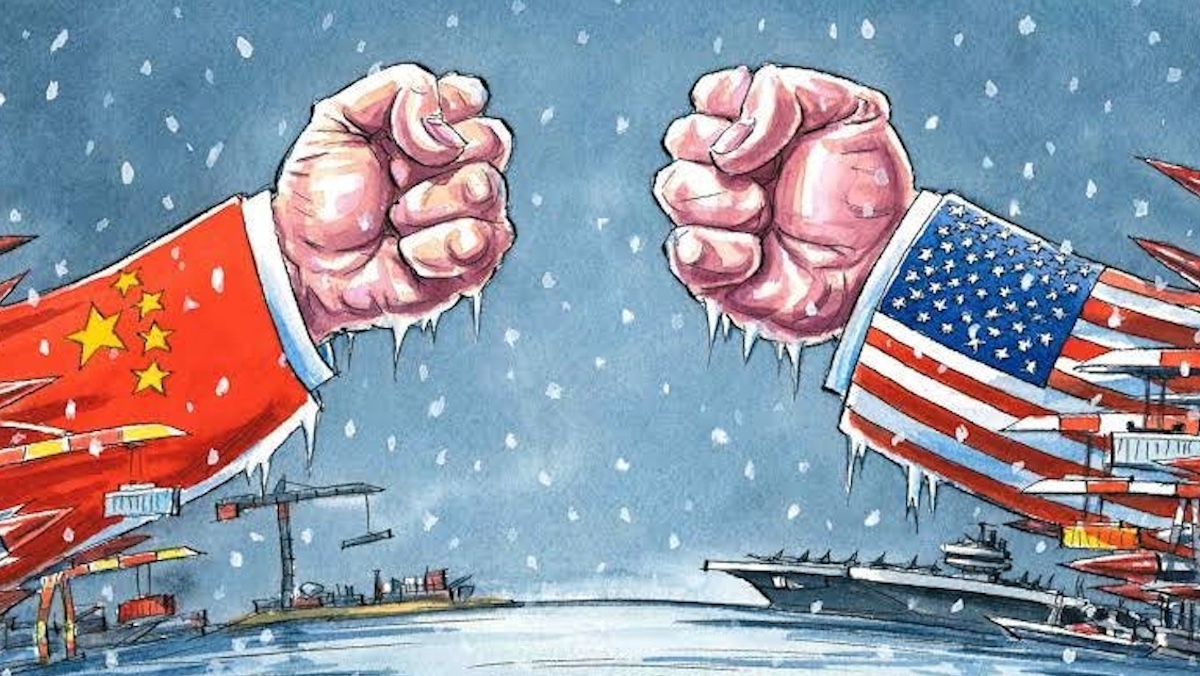
Why China could well win its Cold War with US
The global community, particularly the United States, is grappling with two pressing questions regarding China: the extent of its military industrial production capacity and the true cost of its weaponry. China’s industrial prowess is unparalleled, boasting an independent and self-sufficient production line that outpaces global competitors in both speed and volume. However, the cost of Chinese weapons remains a contentious issue. While some experts argue that China’s expenses are a fraction of those in the U.S., others remain skeptical, pointing to the complexities of cost calculations, including incentives and operational details. If China’s costs are significantly lower, it could pose a substantial challenge to the U.S.; if they are comparable or higher, China might face its own set of difficulties. The stakes are high, as these factors could influence the trajectory of an arms race reminiscent of the Cold War era. China’s strategy appears to leverage low production costs and technological advancements to gain market share and create trade surpluses. This approach, coupled with a potential reverse Reagan-like strategy, aims to deter U.S. confrontation. However, this could also incite backlash from Americans and other nations. The dynamics of this new Cold War differ from the Soviet era, as China’s ideology does not inherently threaten private wealth, instead promising to enrich capitalists. This subtle distinction has garnered support from global financiers, who operate under the protective wing of the Chinese leadership. The U.S., meanwhile, seems unprepared for a full-scale confrontation, as evidenced by its tepid responses and strategic retreats. The absence of American leadership could lead to increased regional tensions, particularly in Asia, where countries may need to manage their relations with China independently. The evolving geopolitical landscape underscores the potential for a significant shift in global power dynamics, with China poised to capitalize on America’s perceived vulnerabilities.
-
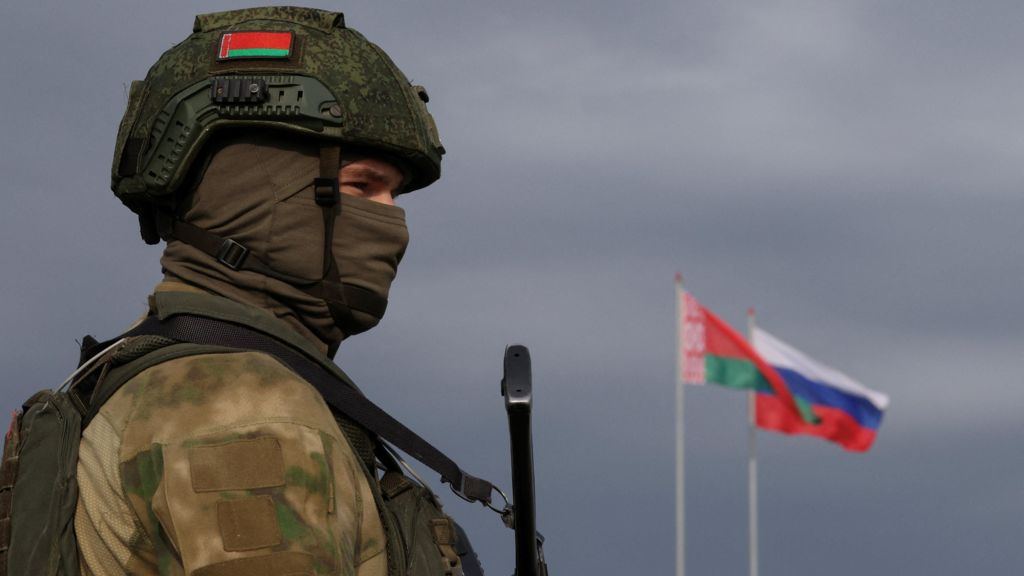
Belarus and Russia’s show of firepower appears to be a message to Europe
In a dramatic display of military might, Belarus and Russia have launched their joint military exercises, codenamed ‘Zapad-2025’ (West 2025), at the Borisovsky training ground, located 45 miles from Minsk. The drills, which occur every four years, feature a series of simulated combat scenarios, including guided bomb drops by Sukhoi-34 bombers, artillery shelling, and helicopter gunship attacks. Surveillance drones hover overhead, capturing the intensity of the maneuvers. Despite the spectacle, Belarusian and Russian officials insist the exercises are purely defensive, aimed at bolstering the security of both nations against potential external threats. However, the timing of the drills has raised eyebrows, coinciding with heightened tensions in Eastern Europe. Poland, in particular, has expressed concern, with Prime Minister Donald Tusk labeling the exercises as ‘very aggressive.’ The drills also come amid ongoing conflict in Ukraine, where Russia continues its military operations. In a bid for transparency, Belarus invited international media and military attachés from 23 countries, including the US, Turkey, and Hungary, to observe the exercises. Major General Valery Revenko, assistant to the Belarusian defense minister, emphasized the unprecedented openness of the event, stating, ‘We are not threatening anyone. We are for constructive and pragmatic dialogue.’ Yet, recent incidents, such as Russian drone incursions into Polish and Romanian airspace, have fueled fears that these exercises may be part of a broader strategy to test NATO’s resolve. While both Russia and Belarus have sought to improve relations with Washington, their ties with Europe remain strained. The ‘Zapad-2025’ drills serve as a stark reminder of the military capabilities on Europe’s doorstep, sending a clear message to the West: confrontation with Moscow may not be in their best interest.