分类: politics

  • Former Malaysian Prime Minister Najib Razak convicted in trial over 1MDB corruption scandal

    Former Malaysian Prime Minister Najib Razak convicted in trial over 1MDB corruption scandal

    PUTRAJAYA, Malaysia — In a landmark ruling with profound political implications, Malaysia’s High Court convicted imprisoned former Prime Minister Najib Razak on Friday for corruption charges directly linked to the multibillion-dollar plundering of the 1MDB state investment fund. The 72-year-old former leader was found guilty on three counts of abuse of power, adding to his existing prison sentence from previous convictions in the same sprawling financial scandal.

    The court determined that Najib had illicitly diverted over $700 million from the state fund into his personal bank accounts during his tenure as prime minister from 2009 to 2018. This latest conviction represents another chapter in one of history’s most extensive financial fraud cases, which ultimately precipitated the shocking electoral defeat of Najib’s long-ruling coalition government in 2018.

    Currently incarcerated since August 2022 following the exhaustion of his final appeals, Najib made history as Malaysia’s first former prime minister to be imprisoned. Although the Pardons Board reduced his original 12-year sentence by half in 2024 and substantially lowered his financial penalty, this new conviction potentially extends his time behind bars.

    The 1MDB scandal generated international shockwaves, triggering comprehensive investigations across multiple continents. According to the U.S. Justice Department, between 2009 and 2014, high-ranking executives and associates connected to Najib systematically embezzled approximately $4.5 billion from the fund. The laundered money financed extravagant acquisitions including luxury real estate, Hollywood film productions, art masterpieces, and even a superyacht—a spending spree that former U.S. Attorney General Jeff Sessions denounced as “kleptocracy at its worst.”

    Najib has consistently maintained his innocence, asserting that the funds constituted legitimate political donations from Saudi Arabian sources and blaming rogue financiers including the fugitive Low Taek Jho, alleged to be the scandal’s mastermind. Prosecutors countered that Najib served as the central architect and primary beneficiary of the elaborate scheme, with other participants merely executing his directives.

    The scandal’s repercussions extended to Wall Street, where Goldman Sachs incurred billions in penalties for its involvement in raising capital for 1MDB. Meanwhile, Najib’s recent petition to complete his sentence under house arrest was rejected by the High Court, which invalidated a rare royal order from the former king on constitutional grounds. His legal team has announced plans to appeal this decision.

    In a related development, Najib’s wife, Rosmah Mansor, received a ten-year prison sentence in 2022 for separate corruption charges, though she remains free on bail pending appeal proceedings.

  • Plan’s focus on tech reliance to aid Africa

    Plan’s focus on tech reliance to aid Africa

    As China advances toward implementing its 15th Five-Year Plan (2026-2030), African analysts anticipate significant opportunities emerging from China’s governance model and technological development strategies. The plan, adopted by the 20th CPC Central Committee in October, emphasizes enhanced governance mechanisms and strengthened technological self-reliance—priorities that resonate across African nations seeking development partnerships.

    Benedict Wachira, Secretary-General of the Communist Party of Kenya, highlighted the efficiency of China’s long-term planning framework, noting that “CPC leadership enables more effective decision-making, faster project approvals and broader access to technological, agricultural and infrastructure support.” This governance approach benefits African countries dependent on Chinese financing and technological expertise, facilitating quicker implementation of development initiatives.

    Emmanuel Matambo, Senior Researcher at the University of Johannesburg’s Centre for Africa-China Studies, emphasized China’s unique combination of domestic prioritization with multilateral engagement. “Even if China prioritizes its domestic interests—which is expected of any country—it still commits itself to multilateralism,” Matambo observed, contrasting this approach with Western inward-looking trends.

    African nations are already witnessing practical benefits from China’s technological advancement. South Africa’s adoption of Huawei technologies demonstrates growing confidence in Chinese innovation despite external pressures. China’s push for technological self-reliance and renewable energy leadership creates opportunities for skills transfer, industrial development, and indigenous technology ecosystem growth across Africa.

    Matambo urged African policymakers to learn from China’s competitive advantages, particularly in strategic resource utilization and workforce development. Critical opportunities exist in artificial intelligence, digital infrastructure, and renewable energy—sectors where Africa can leverage its vast population and mineral wealth through coordinated continental approaches using platforms like the African Continental Free Trade Area.

    Both experts concur that while Africa cannot replicate China’s governance model entirely, valuable lessons exist in long-term strategic planning, technological sovereignty, and multilateral engagement. By investing in skills development, particularly in STEM fields through increased educational exchanges with China, and strategically leveraging resources, Africa can transform Sino-African cooperation into sustainable development outcomes.

  • US launches deadly strikes against Islamic State in Nigeria, says Trump

    US launches deadly strikes against Islamic State in Nigeria, says Trump

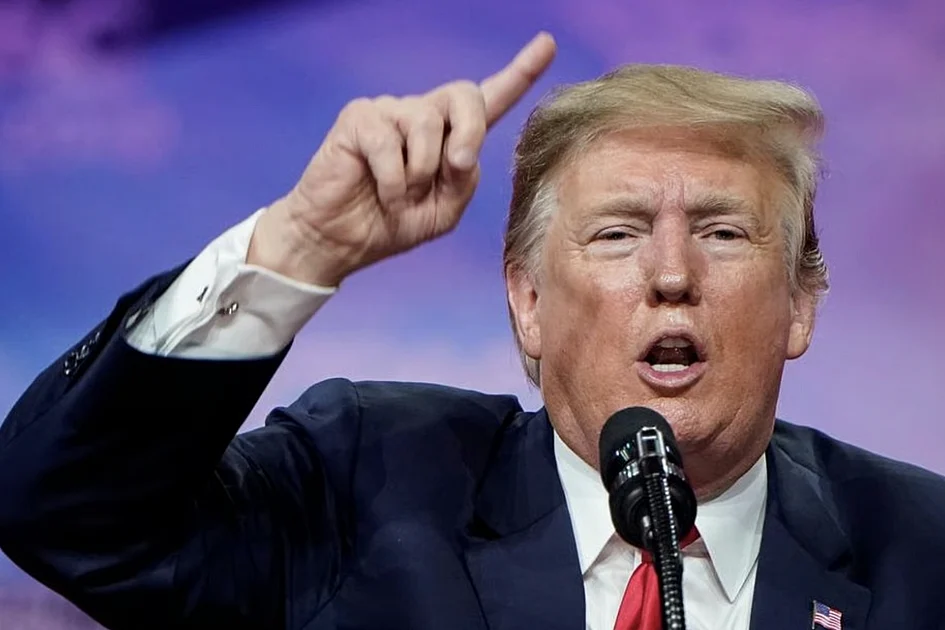
    In a significant international security development, the United States has conducted coordinated military strikes against Islamic State (IS) positions in northwestern Nigeria’s Sokoto state. President Donald Trump announced the operation via Truth Social, characterizing it as a ‘powerful and deadly strike’ against what he termed ‘terrorist scum’ allegedly targeting Christian communities.

    The operation represents the culmination of strategic preparations initiated in November when President Trump directed military planning for counterterrorism actions in Nigeria. The U.S. Africa Command (Africom) confirmed the strikes were executed in coordination with Nigerian authorities, with Defense Secretary Pete Hegseth expressing gratitude for ‘Nigerian government support & cooperation’ in a social media post that concluded with ‘Merry Christmas!’

    Nigerian Foreign Minister Yusuf Maitama Tuggar provided crucial context to the BBC, clarifying this was a ‘joint operation’ targeting ‘terrorists’ without religious specificity. He emphasized the action ‘has nothing to do with a particular religion’ and indicated potential future operations would depend on ‘decisions to be taken by the leadership of the two countries.’

    The U.S. Department of Defense subsequently released an unclassified video showing a missile launch from a military vessel, providing visual documentation of the operation. Nigeria’s foreign ministry issued an official statement acknowledging ‘structured security co-operation with international partners’ that resulted in ‘precision hits on terrorist targets in Nigeria by air strikes in the North West.’

    This military action follows Trump’s controversial designation of Nigeria as a ‘Country of Particular Concern’ based on alleged threats to Christian populations, though monitoring groups including Acled report no evidence supporting claims of disproportionate targeting of Christians. Research indicates most victims of jihadist violence in Nigeria’s prolonged conflict have actually been Muslims.

    President Bola Tinubu’s administration has maintained that security challenges affect all Nigerians ‘across faiths and regions,’ with adviser Daniel Bwala stressing Nigeria’s sovereignty while welcoming international cooperation against insurgent groups that have killed people ‘from all faiths, or none.’

    The Nigeria operation coincides with recent U.S. military actions against IS in Syria, where Central Command reported ‘massive strikes’ involving fighter jets, attack helicopters, and artillery against more than 70 targets in central Syria with Jordanian participation.

  • Myanmar will hold its first general election in 5 years as criticism of the military rule mounts

    Myanmar will hold its first general election in 5 years as criticism of the military rule mounts

    BANGKOK — Myanmar’s military junta proceeds with phased parliamentary elections beginning Sunday, marking the country’s first electoral exercise since the 2021 coup d’état. The voting process, structured across three distinct phases through January 25, faces widespread international condemnation and domestic opposition as analysts characterize it as a calculated maneuver to cement military dominance under a civilian facade.

    The electoral framework systematically excludes major opposition forces, including Aung San Suu Kyi’s dissolved National League for Democracy (NLD), which secured a landslide victory in the 2020 polls. With Suu Kyi serving a 27-year prison sentence on politically motivated charges and her party outlawed, the military-backed Union Solidarity and Development Party (USDP) stands positioned to dominate the proceedings.

    Independent monitoring organizations and human rights advocates uniformly dismiss the electoral process as neither free nor fair. Richard Horsey, Myanmar analyst at the International Crisis Group, stated unequivocally to AP: “These elections are not credible at all. They do not include any of the political parties that performed strongly in previous elections.”

    The military administration has implemented severe restrictions through recently enacted legislation that criminalizes criticism of the electoral process, resulting in over 200 individuals facing charges for leafleting or online activism in recent months. Voting will not occur in 65 townships due to ongoing armed conflict between military forces and ethnic resistance groups.

    International response remains divided, with Western nations maintaining sanctions while regional neighbors including China, India and Thailand may use the elections to justify continued engagement. The United Nations Human Rights Office reports “intensified violence, repression, and intimidation” ahead of the polls, noting that civilians face threats from both military authorities and armed opposition groups regarding participation.

    The humanitarian situation continues deteriorating, with independent monitors documenting over 7,600 civilian deaths and more than 22,000 political detainees since the coup. The conflict has created 3.6 million internally displaced persons, representing one of Southeast Asia’s most severe humanitarian crises.

    Analysts anticipate increased post-election violence as opposition forces seek to demonstrate the military’s lack of popular legitimacy, suggesting the polls will ultimately exacerbate rather than resolve Myanmar’s political crisis.

  • Japan’s Cabinet OKs record defense budget that aims to deter China

    Japan’s Cabinet OKs record defense budget that aims to deter China

    The Japanese Cabinet has greenlit an unprecedented defense expenditure plan surpassing 9 trillion yen ($58 billion) for fiscal year 2026, representing a 9.4% increase from the previous year. This strategic allocation marks the fourth installment of Japan’s accelerated five-year military expansion initiative, which aims to double annual defense spending to reach 2% of GDP by March—two years ahead of the original schedule.

    The budget enhancement occurs against a backdrop of escalating regional tensions, particularly with China. Prime Minister Sanae Takaichi’s November remarks regarding potential Japanese military involvement in Taiwan scenarios have intensified diplomatic friction. Recent incidents, including Chinese aircraft carrier drills near Japanese territories and radar locking incidents, have further heightened security concerns.

    A significant portion of the budget—over 970 billion yen ($6.2 billion)—is designated for enhancing Japan’s ‘standoff’ missile capabilities. This includes 177 billion yen ($1.13 billion) for acquiring upgraded Type-12 surface-to-ship missiles with an extended range of approximately 1,000 kilometers. Deployment in Kumamoto prefecture will commence by March, accelerating regional missile defense preparations.

    Addressing demographic challenges and military staffing shortages, Japan will invest 100 billion yen ($640 million) in the SHIELD initiative—a comprehensive unmanned defense system utilizing aerial, surface, and underwater drones for coastal surveillance. Initial deployments will rely on imported technology from nations like Turkey or Israel.

    The budget also supports international defense collaboration, allocating 160 billion yen ($1 billion) for joint development of next-generation fighter jets with Britain and Italy, alongside AI-operated companion drones. Australia’s selection of Mitsubishi Heavy Industries for frigate upgrades further strengthens Japan’s defense industry exports.

    Funding mechanisms include corporate and tobacco tax increases, with income tax hikes planned from 2027. While Japan is poised to become the world’s third-largest defense spender, long-term fiscal sustainability for maintaining this elevated spending level remains uncertain.

  • New York Post slammed for smearing Ms Rachel after Mamdani inauguration pick

    New York Post slammed for smearing Ms Rachel after Mamdani inauguration pick

    The appointment of children’s content creator Ms. Rachel to New York City Mayor-elect Zohran Mamdani’s inaugural committee has ignited significant controversy, revealing deep divisions over Palestinian solidarity discourse in American politics. The New York Post’s characterization of Ms. Rachel as a ‘controversial YouTube star’ has drawn widespread criticism from activists and parents who argue that humanitarian advocacy for Gazan children is being deliberately misrepresented.

    Ms. Rachel (Rachel Griffin Accurso), an educational content creator with 18 million followers, has utilized her platform to call for an end to child casualties in Gaza. Her inclusion on the 400-member transition team—one of the largest in NYC history—alongside figures like actor Cynthia Nixon and Jewish Voice for Peace’s Beth Miller, reflects Mamdani’s commitment to a progressive coalition that propelled his electoral victory.

    The controversy extends beyond media framing to institutional responses. Both Ms. Rachel and Nixon were previously named finalists on StopAntisemitism’s ‘Antisemite of the Year’ list, a designation critics argue is increasingly weaponized against voices critical of Israeli policy rather than addressing genuine antisemitism. Ms. Rachel revealed on Instagram that resulting harassment forced her to hire personal security due to false allegations supporting Hamas.

    While pro-Israel organizations like the Anti-Defamation League have criticized the appointments, claiming 20% of transition team members have anti-Zionist affiliations, supporters maintain the selections reflect humanitarian principles rather than religious hostility. One appointee, Catherine Almonte Da Costa, resigned after decade-old antisemitic posts surfaced, which she disavowed as no longer reflecting her views.

    Mamdani has defended the selections as representative of diverse viewpoints within his progressive coalition, emphasizing that advocacy for Palestinian rights and opposition to Israeli government violence are legitimate political positions. The inauguration, scheduled for January 1, 2026, will feature a public block party in downtown Manhattan framed as an inclusive civic celebration rather than an exclusive political ceremony.

    This confrontation over a routine political process has evolved into a significant flashpoint, exposing fundamental tensions regarding Middle East discourse, media representation of dissent, and the boundaries of acceptable political speech in American public life.

  • Should a top Russian archaeologist face trial for digging in occupied Crimea?

    Should a top Russian archaeologist face trial for digging in occupied Crimea?

    The arrest of Russian archaeologist Alexander Butyagin in Warsaw has become a focal point in the escalating tension between cultural preservation and geopolitical conflict. Butyagin, a senior scholar at St. Petersburg’s Hermitage Museum, faces potential extradition to Ukraine over allegations of conducting illegal excavations in Crimea since Russia’s 2014 annexation of the peninsula.

    Ukrainian authorities accuse Butyagin of violating international protocols by continuing archaeological work at the ancient Greek site of Myrmekion without proper authorization. The 6th-century BC settlement, where Butyagin has led expeditions since 1999, contains artifacts dating to Alexander the Great’s era. A Kyiv court issued an arrest warrant in April 2025, charging him with ‘illegal partial destruction’ of an archaeological complex and unauthorized excavations.

    The case highlights a fundamental conflict: Butyagin’s supporters claim he has protected Crimea’s heritage from looting, while critics argue his work legitimizes Russia’s occupation. Under the Hague Convention’s 2nd Protocol, which both Poland and Ukraine have ratified, occupying powers must prevent archaeological excavations except in narrowly defined circumstances. Russia, not a party to the protocol, has permitted continued work through its Ministry of Culture.

    Evelina Kravchenko of Ukraine’s National Academy of Sciences asserts that any excavation during armed conflict without permission constitutes destruction, regardless of ethical intentions. The Hermitage maintains Butyagin complied with all legal norms, transferring finds to Crimea’s Eastern Crimean Museum rather than removing them to Russia—though this still violates Ukrainian law requiring artifacts to remain in Ukraine’s national museum fund.

    The extradition decision carries significant implications for European courts’ handling of similar cases. Previous requests have been denied citing the European Convention on Human Rights, which prohibits politically motivated persecution. Legal expert Gleb Bogush suggests that primary responsibility lies with Russian state officials rather than individual archaeologists, though this distinction may not shield Butyagin from prosecution.

    The case has drawn unusual alliances, with both Kremlin supporters and Russian anti-war figures defending Butyagin’s work. Meanwhile, cultural property experts like Samuel Andrew Hardy contend that official excavations don’t necessarily prevent looting and should not excuse violations of international law during occupation.

  • Trump-backed candidate of Palestinian origin wins Honduras presidential election

    Trump-backed candidate of Palestinian origin wins Honduras presidential election

    After a protracted month-long tabulation process marred by technical complications and allegations of electoral misconduct, Honduras has officially declared Nasry ‘Tito’ Asfura as its next president. The announcement on Christmas Eve concludes a highly polarized electoral period that saw unprecedented involvement from the United States.

    Asfura, a 67-year-old conservative former mayor of Tegucigalpa and established business figure, secured victory with a razor-thin margin of 0.74 percentage points over centrist rival Salvador Nasralla. The electoral council reported that approximately 15 percent of ballots required manual counting due to disputes and technical challenges, ultimately delivering Asfura just over 40 percent of the total vote.

    The Trump administration had positioned itself decisively behind Asfura’s candidacy, with President Donald Trump threatening to切断 all American aid to Honduras if Asfura failed to prevail. This extraordinary intervention marked a significant elevation of Asfura’s profile and underscored Washington’s strategic priorities in the region.

    Secretary of State Marco Rubio promptly extended congratulations, stating the United States looks forward to collaborating with Asfura’s administration on bilateral security cooperation, curbing illegal immigration, and strengthening economic ties. Rubio further urged all parties to respect the officially confirmed results.

    Despite these calls for acceptance, both Nasralla and the president of the Honduran Congress have rejected the outcome, alleging that legitimate ballots were improperly discarded during the counting process. Nevertheless, with international recognition already extending to the declared winner, challenges to the result appear unlikely to alter the final outcome.

    This development represents another strategic victory for the Trump administration’s foreign policy reorientation toward the Western Hemisphere. The pattern of supporting conservative leaders across Latin America includes backing Nayib Bukele in El Salvador, congratulating Chile’s recently elected conservative José Antonio Kast, and endorsing Argentina’s far-right president Javier Milei.

    Asfura’s victory ensures Honduras will transition from left-wing leadership under Xiomara Castro to a government aligned with Washington’s geopolitical interests. The incoming administration has pledged to oppose Venezuelan President Nicolás Maduro and counter China’s expanding influence in the region—both key objectives of current U.S. foreign policy.

    Notably, many prominent political figures across Central and South America, including Asfura, Nasralla, and Bukele, trace their ancestry to Palestinian Christian families who immigrated during the early 20th century. This demographic phenomenon has produced the ironic circumstance of leaders with Middle Eastern heritage frequently aligning with Israeli interests to maintain favorable relations with Washington and secure vital economic assistance.

  • US defense policy act fuels Taiwan tensions

    US defense policy act fuels Taiwan tensions

    China has issued a stern condemnation of the United States’ recently enacted National Defense Authorization Act for Fiscal Year 2026, characterizing the legislation as a severe violation of Chinese sovereignty that dangerously escalates tensions surrounding Taiwan. The forceful response came during a press briefing by China’s Ministry of National Defense spokesperson Zhang Xiaogang on Thursday.

    The controversial defense bill, signed into law by President Donald Trump last week, contains multiple China-specific provisions including approximately $1 billion allocated for the ‘Taiwan Security Cooperation Initiative’ – a program designed to enhance weapons sales to Taiwan. Chinese officials maintain that this constitutes blatant interference in China’s internal affairs and represents a serious breach of established diplomatic protocols.

    Zhang accused the United States of reneging on its commitments by intensifying military support for Taiwan, warning that such actions would inevitably embolden separatist forces and push cross-strait relations toward potential conflict. ‘Attempts to use Taiwan to contain China are doomed to fail, and seeking independence through force will only lead to self-destruction,’ Zhang stated emphatically.

    The defense spokesman specifically criticized Taiwan’s Democratic Progressive Party authorities for what he characterized as sacrificing Taiwanese interests to serve American strategic objectives. Zhang singled out regional leader Lai Ching-te, describing him as ‘an instigator of war’ for his policies of military expansion and alignment with US interests.

    Concurrently, Xu Dong, spokesperson for the Foreign Affairs Committee of China’s National People’s Congress, expressed ‘strong dissatisfaction and firm opposition’ to the US legislation. Xu warned that continued implementation of the act’s China-related provisions would compel Beijing to take ‘resolute measures’ to protect its sovereignty and development interests.

    Chinese officials urged the US to recognize the extreme sensitivity of Taiwan-related matters, adhere strictly to the one-China principle, and handle cross-strait issues with maximum caution. The coordinated responses from both defense and legislative bodies underscore China’s escalating concerns over what it perceives as increasingly provocative US actions regarding Taiwan.

  • Hong Kong’s global standing boosted with increasing presence of intl organizations: justice secretary

    Hong Kong’s global standing boosted with increasing presence of intl organizations: justice secretary

    Hong Kong’s position as a premier international legal services center has received a substantial boost with the upcoming establishment of the International Institute for the Unification of Private Law (UNIDROIT) Asia-Pacific Liaison Office. Justice Secretary Paul Lam announced that this landmark development represents a significant vote of confidence in Hong Kong’s global standing and legal capabilities.

    The UNIDROIT office, scheduled to open in the second half of 2026, marks a historic milestone as the organization’s first regional presence outside its Rome headquarters in its century-long history. This expansion places Hong Kong alongside only a select few cities worldwide that host multiple international legal institutions.

    Hong Kong’s legal infrastructure already includes the Hague Conference on Private International Law Regional Office for Asia and the Pacific, the Department of Justice Project Office for Collaboration with United Nations Commission on International Trade Law, and the headquarters of the International Organization for Mediation. This concentration of legal entities creates a unique ecosystem for international dispute resolution and legal cooperation.

    Secretary Lam emphasized the symbolic importance of international organizations choosing Hong Kong for their regional presence, noting that each new institution represents a tangible expression of global confidence in the city’s legal framework and international connectivity. He anticipates a snowball effect where Hong Kong’s enhanced reputation will attract more legal professionals, international activities, and dispute resolution cases to the city.

    The strategic placement of these organizations strengthens Hong Kong’s role in shaping regional legal standards and practices while providing Asian jurisdictions with enhanced access to international legal resources. This development aligns with Hong Kong’s ongoing transformation into a comprehensive international legal services hub capable of handling complex cross-border matters and contributing to the evolution of global legal frameworks.