分类: politics

  • Algeria votes to declare French colonization a crime and demands restitution

    Algeria votes to declare French colonization a crime and demands restitution

    ALGIERS, Algeria — In a landmark legislative move with profound historical implications, Algeria’s National Assembly has formally declared France’s 130-year colonial occupation a criminal act. The newly enacted law establishes a comprehensive framework seeking redress for colonial-era injustices, including demands for restitution of appropriated property and cultural artifacts.

    The legislative body, with an overwhelming majority of 340 out of 407 members, endorsed the measure during a ceremonious session marked by nationalistic symbolism. The timing coincides with broader African continental initiatives advocating for recognition and reparations concerning colonial crimes.

    This groundbreaking legislation encompasses the entire colonial period from France’s initial invasion in 1830 through Algeria’s hard-won independence in 1962. Key provisions mandate the return of Algerian archives and cultural property displaced during colonial rule, alongside detailed documentation regarding French nuclear testing conducted on Algerian territory between 1960-1966. The law further demands repatriation of remains belonging to Algerian resistance fighters currently held in France.

    Notably, the statute imposes criminal penalties—including imprisonment—for any Algerian citizen found celebrating French colonialism or disparaging symbols of national resistance.

    France has vehemently condemned the legislation as a “hostile act” that jeopardizes ongoing bilateral reconciliation efforts. The French Foreign Ministry emphasized President Emmanuel Macron’s previous initiatives addressing colonial grievances while reaffirming commitment to continued dialogue on security and migration matters.

    The historical context reveals particularly brutal aspects of French colonial administration in Algeria. Despite legal incorporation into France, systemic inequality prevailed with nearly one million European settlers enjoying superior political, economic, and social privileges. Algeria’s revolutionary struggle witnessed extreme violence, including widespread torture, forced disappearances, and village devastations as part of French counterinsurgency operations.

    Parliamentary proceedings were emotionally charged, featuring displays of massive national flags and spontaneous renditions of patriotic anthems. Assembly Speaker Mohamed Boughali characterized the occasion as “a historic day to be written in letters of gold in the national narrative.”

    The legislation’s principal architect, former lawmaker Mohamed Arezki Ferrad, described the adoption as “the culmination of a long struggle initiated in 2001 for the memory and honor of all resistance fighters.” The comprehensive statute comprises five chapters and 27 articles, explicitly establishing that colonial-era crimes are not subject to statutes of limitation.

  • Turkiye, Hamas discuss 2nd phase of Gaza truce deal

    Turkiye, Hamas discuss 2nd phase of Gaza truce deal

    Turkish Foreign Minister Hakan Fidan convened with senior Hamas political bureau representatives in Ankara on Wednesday to advance discussions regarding the implementation of the second phase of the Gaza ceasefire agreement. According to a source within Turkey’s Foreign Ministry, the dialogue focused on overcoming obstacles preventing the transition to subsequent stages of the truce.

    The Hamas delegation asserted to Minister Fidan that they had fully complied with their obligations under the current ceasefire framework. They contended that Israel’s persistent military operations in Gaza represent a deliberate strategy to obstruct progress toward the agreement’s next phase. The officials further emphasized the critical insufficiency of humanitarian assistance reaching Gaza, highlighting urgent needs for medical supplies, construction materials for shelter, and fuel.

    Simultaneously, Israeli Defense Minister Israel Katz sparked international controversy with statements concerning Gaza’s future. During an address in the West Bank, Katz declared that Israeli military forces would maintain a permanent presence in Gaza, specifically referencing the deployment of Nahal units—military formations historically involved in establishing Israeli communities. Following immediate backlash and interpretation as advocating resettlement, Katz issued a clarifying statement: “The government has no intention of establishing settlements in the Gaza Strip.”

    Hamas spokesman Hazem Qassem condemned Katz’s initial remarks as a “clear violation of the ceasefire agreement” and fundamentally contradictory to the US-supported peace proposal. The Palestinian Foreign Ministry separately denounced Israel’s approval of 19 new settlements in the occupied West Bank as a “dangerous step” intensifying control over Palestinian territories. The ministry characterized this expansion as extending “apartheid policies,” eroding Palestinian rights, and systematically destroying prospects for stability and Palestinian statehood.

  • New energy needs amended law

    New energy needs amended law

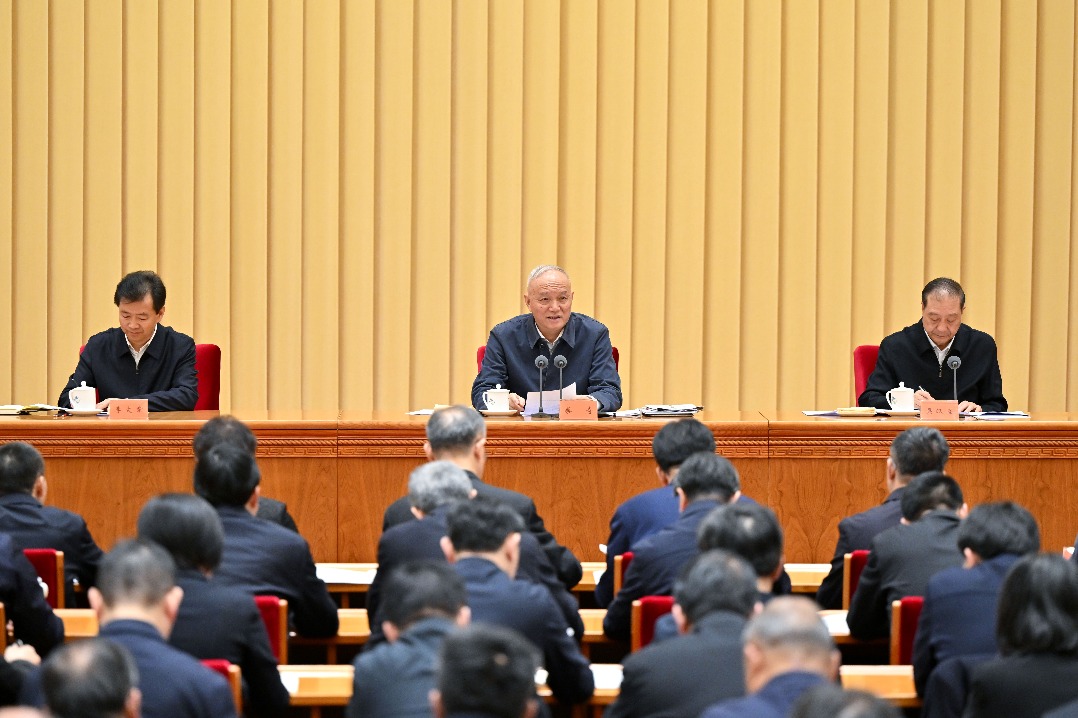
    A senior Chinese legislator has urged comprehensive amendments to the nation’s Energy Conservation Law, arguing that current regulations fail to address the transformative shifts caused by rapid renewable energy expansion and digital economic growth. Xiao Jie, Vice-Chairman of the National People’s Congress Standing Committee, delivered this assessment during the legislature’s ongoing session, highlighting both significant achievements and persistent challenges in China’s energy efficiency journey.

    The legislative push follows extensive inspections conducted jointly by the national committee and provincial-level congresses across 12 regions, evaluating the law’s implementation since its 1998 enactment and 2007 revision. China has demonstrated remarkable progress, with national energy consumption per 10,000 yuan of GDP plunging approximately 43% from 2007 to 2024—equivalent to saving 2.3 billion metric tons of standard coal. Particularly since the 18th CPC National Congress in 2012, energy intensity has dropped 27.2%, positioning China among global leaders in efficiency improvement while maintaining 6.1% average annual economic growth against 3.3% energy consumption growth.

    Despite these achievements, Xiao identified critical gaps in the current legal framework. The existing law lacks specific provisions for emerging energy-intensive sectors including information technology, computing infrastructure, and energy storage systems. This regulatory vacuum results in insufficient legal authority and enforceable mandatory measures for these rapidly expanding domains. Additionally, the law fails to adequately cover renewable energy integration challenges, where installed capacity frequently exceeds grid absorption capabilities.

    The digital economy—now ranking second globally—presents particular urgency, with computing infrastructure electricity consumption growing nearly 20% annually during the 14th Five-Year Plan period, exceeding 250 billion kilowatt-hours yearly. Xiao emphasized that some regions continue struggling with controlling high-energy-consumption projects due to investment impulsivity, weak oversight, and redundant construction. He called for accelerated revisions through thorough research on implementation challenges and careful consideration of suggestions from law enforcement inspections, urging collective wisdom to achieve high-quality legislative updates that support China’s sustainable development goals.

  • UN Security Council members urge deescalation of tensions in Venezuela

    UN Security Council members urge deescalation of tensions in Venezuela

    The United Nations Security Council convened an emergency session on Tuesday addressing the rapidly deteriorating situation in Venezuela, with the overwhelming majority of member states urging restraint and adherence to international law. The meeting, requested by Venezuela itself, revealed deep international divisions over U.S. military actions in the region.

    Venezuelan Permanent Representative Samuel Moncada Acosta delivered a forceful condemnation of American foreign policy, characterizing recent U.S. actions as an extension of historical hemispheric dominance. “The ambition is continental,” Acosta asserted, referencing what he described as a modern enactment of the Monroe Doctrine exacerbated by what he termed the “Trump Corollary” in U.S. national security strategy.

    The diplomatic confrontation intensified as Russian UN Ambassador Vassily Nebenzia denounced American seizure of Venezuelan oil tankers and the imposition of a naval blockade as violations of multiple international legal frameworks. “The illegal U.S. blockade of Venezuela’s coastline is a genuine act of aggression,” Nebenzia stated, warning that Washington’s actions signal a broader pattern of intervention against sovereign nations pursuing independent policies.

    China’s Deputy Permanent Representative Sun Lei joined the criticism, calling for immediate cessation of U.S. campaigns against Venezuela. Sun emphasized that Venezuela’s rights as a sovereign state to develop international cooperation and defend its legitimate interests should receive international respect and support. “China opposes all acts of unilateralism and bullying,” Sun declared, positioning China as a defender of multilateral principles and national sovereignty.

    The emergency session concluded with widespread calls for de-escalation, though no formal resolution was immediately proposed. The meeting highlighted growing international concern that the Venezuela situation could trigger broader regional instability and challenge fundamental principles of international law.

  • Turning nation’s aging challenge into opportunity

    Turning nation’s aging challenge into opportunity

    China is poised to transform its demographic challenge into a strategic economic advantage through its forthcoming 15th Five-Year Plan (2026-2030), marking a fundamental shift in how the nation addresses population aging. Rather than treating elderly citizens merely as recipients of social welfare, the new framework positions them as active contributors to economic growth through three key mechanisms: long-term care insurance expansion, private pension system modernization, and targeted development of the silver economy.

    Current statistics reveal the scale of this demographic transformation: China now counts 310 million citizens aged 60 or above, representing 22% of the total population. Within this group, 220 million have reached 65 years or older. The nation’s life expectancy has climbed to 79 years during the 14th Five-Year Plan period (2021-2025), reflecting a 1.07-year increase from 2020 and standing five years above the global average.

    The Communist Party of China’s recently published recommendations outline specific measures to operationalize this strategic pivot. These include enhancing the national pooling mechanism for basic pension insurance and developing a multi-tiered, multi-pillar retirement security system designed to progressively elevate citizens’ post-retirement income levels.

    Critical infrastructure adaptations form another cornerstone of the strategy. The plan mandates comprehensive upgrades to public facilities, ensuring they become both barrier-free and elderly-friendly. Simultaneously, it promotes wider implementation of long-term care insurance programs across Chinese provinces.

    Workforce policy reforms represent equally significant components. The government will implement gradual retirement age adjustments while relaxing age restrictions for employment and social insurance participation. These measures aim to better utilize senior workers’ capabilities and stimulate silver economy growth.

    Recent economic analysis quantifies the opportunity: China’s silver economy currently generates approximately 7 trillion yuan ($996.1 billion), accounting for 6% of national GDP. Projections indicate this could expand to 30 trillion yuan by 2035, potentially representing 10% of China’s total economic output.

    Experts emphasize that continued enrichment of elderly services, coupled with strengthened insurance systems and enhanced workplace protections for older employees, will be essential throughout the next five-year implementation period to fully realize this demographic-economic strategy.

  • Son of former Bangladesh prime minister returns after 17 years in exile with a chance to lead

    Son of former Bangladesh prime minister returns after 17 years in exile with a chance to lead

    DHAKA, Bangladesh — In a politically charged homecoming, Tarique Rahman, the acting chairman of Bangladesh Nationalist Party (BNP), returned to Dhaka on Thursday after 17 years of self-imposed exile in London. His arrival marks a significant development in Bangladesh’s volatile political landscape ahead of February’s pivotal elections.

    Rahman, son of former Prime Minister Khaleda Zia, arrived at Hazrat Shahjalal International Airport under tight security alongside his wife and daughter. The homecoming transformed into a massive political demonstration as supporters flooded a 2-kilometer radius between the airport and reception venue, with party leaders claiming millions had gathered to welcome the returning leader.

    The 56-year-old politician originally left Bangladesh in 2008 for medical treatment after enduring torture during the military-backed caretaker government (2006-2008). His return follows acquittals on all criminal charges by the current interim government headed by Nobel laureate Muhammad Yunus, including allegations of involvement in a 2004 grenade attack on a political rally of current exiled leader Sheikh Hasina.

    Rahman’s return occurs against the backdrop of profound political transformation. Bangladesh remains governed by an interim administration that assumed power following the 2024 uprising that ended Hasina’s 15-year rule. The Yunus government faces mounting criticism from international human rights organizations and domestic liberals who accuse it of eroding democratic institutions and permitting rising Islamist influence.

    Following his reception, Rahman plans to visit his critically ill mother, former Prime Minister Khaleda Zia, who led the country from 2001-2006. The political dynasty began when Zia, a former housewife, entered politics after her husband President Ziaur Rahman’s assassination in 1981.

    Despite his prolonged absence, Rahman maintained firm control over BNP through digital participation in meetings and rallies, facing no significant internal challenges to his leadership. His return sets the stage for a dramatic political confrontation as Bangladesh approaches what many consider its most consequential election in decades.

  • Front-runner to be Bangladesh PM returns after 17 years in exile

    Front-runner to be Bangladesh PM returns after 17 years in exile

    In a dramatic political homecoming, Tarique Rahman—the exiled leader poised to become Bangladesh’s next prime minister—has returned to his homeland after 17 years in London. The 60-year-old scion of the influential Zia political dynasty arrived to massive crowds of supporters in Dhaka, marking a seismic shift in the nation’s political landscape ahead of watershed general elections.

    Rahman’s return follows the spectacular downfall of former Prime Minister Sheikh Hasina, whose government was ousted last year amid allegations of severe human rights violations. While Hasina’s Awami League party dominated Bangladeshi politics for nearly two decades, Rahman’s Bangladesh Nationalist Party (BNP) now stands as the frontrunner to secure power in the upcoming polls.

    The political transition carries profound historical significance. During Hasina’s tenure, Rahman faced multiple criminal investigations that he characterized as politically motivated persecution. All charges against him were dropped following the regime change, clearing his path to leadership. Meanwhile, Hasina herself now lives in exile in India after being tried in absentia and receiving a death sentence for her government’s lethal crackdown on student-led protests—a period that UN investigators say claimed up to 1,400 lives.

    With the Awami League likely barred from participation, the upcoming elections represent what many observers consider the most consequential democratic exercise in Bangladesh’s modern history. Rahman’s return from exile symbolizes not just a personal homecoming but potentially the dawn of a new political era for the South Asian nation.

  • Somalis vote in the first one-person, one-vote local election in decades

    Somalis vote in the first one-person, one-vote local election in decades

    MOGADISHU, Somalia – The Somali capital witnessed a historic democratic exercise Thursday as residents participated in the nation’s first universal suffrage local elections since 1969. This groundbreaking electoral process represents a radical departure from Somalia’s traditional clan-based power-sharing system that has dominated political life for decades.

    Organized by the federal government across Mogadishu’s 16 districts, the council elections have sparked intense political division. Opposition parties have unanimously rejected the process, labeling it as fundamentally flawed and politically biased. The voting marks the inaugural major electoral undertaking administered by Somalia’s National Independent Electoral and Boundaries Commission, featuring participation from approximately 20 political parties.

    Despite its significance, the election does not determine Mogadishu’s mayoral leadership, which remains an appointed position due to unresolved constitutional status of the capital. This ambiguity reflects broader political fractures between President Hassan Sheikh Mohamud and regional leaders from Jubaland and Puntland regarding constitutional reforms.

    Security measures were significantly enhanced throughout the capital to safeguard the electoral process against potential attacks from al-Shabab militants, who have consistently threatened Somalia’s political stability. Electoral authorities reported over 900,000 registered voters across 523 polling stations in the central region.

    Political analyst Mohamed Husein Gaas, director of the Raad Peace Research Institute, noted that Mogadishu has demonstrated the technical feasibility of local elections despite challenges. He emphasized that the federal government’s initiative empowers citizens, enhances governmental accountability, and progresses toward a more inclusive state structure.

    The elections, previously postponed three times in 2024, have faced vehement opposition criticism alleging that the government seeks to consolidate power and potentially extend presidential term limits—claims that authorities strongly deny. Meanwhile, first-time voter Farhiyo Mohamed expressed exhilaration at participating in an unprecedented democratic experience she had never witnessed in her lifetime.

  • With the exception of US, all G7 nations condemn newly-approved Israeli settlements

    With the exception of US, all G7 nations condemn newly-approved Israeli settlements

    In a significant diplomatic move, the Group of Seven (G7) nations—comprising the world’s most advanced industrialized democracies—have issued a forceful condemnation of Israel’s recent authorization of 19 new settlement units within the occupied West Bank. The joint statement, released on Wednesday, characterized these unilateral actions as clear violations of international law that potentially escalate regional instability.

    The United States notably abstained from endorsing the collective declaration, which garnered additional support from several European countries including Belgium, Denmark, Iceland, Ireland, Malta, the Netherlands, Norway, and Spain. The signatories emphatically reiterated their opposition to territorial annexation and settlement expansion policies, specifically referencing the controversial E1 settlement project and thousands of planned housing units.

    The diplomatic communication further emphasized that such measures undermine the implementation of President Donald Trump’s 20-point peace proposal for Gaza. While Washington has reportedly expressed private frustrations regarding Israel’s actions—particularly given previous assurances against West Bank annexation—Secretary of State Marco Rubio deferred questions about settlement expansion and settler violence against Palestinians to the US embassy in Jerusalem.

    The recent approval of settlements was orchestrated by Israel’s far-right Finance Minister Bezalel Smotrich, who openly acknowledges that these measures intend to obstruct the formation of a Palestinian state. This development coincides with concerning cartographic analyses by The New York Times illustrating how Israeli settlements are progressively consuming West Bank territory, drawing comparisons to South Africa’s apartheid-era bantustan system.

    All signatory nations except Japan have formally recognized the State of Palestine at various points throughout this year, reinforcing their commitment to a negotiated two-state solution as the only viable path toward lasting peace in the region.

  • North Korea displays apparent progress in construction of nuclear-powered submarine

    North Korea displays apparent progress in construction of nuclear-powered submarine

    In a significant demonstration of military advancement, North Korea has revealed substantial progress in its nuclear-powered submarine program during leader Kim Jong Un’s inspection of a naval shipyard. State media imagery depicts a near-complete burgundy-hulled vessel coated with anti-corrosion materials, marking the most visible development since initial images emerged in March.

    Kim characterized South Korea’s pursuit of nuclear submarine technology—reportedly endorsed by former U.S. President Donald Trump—as an ‘offensive act’ violating North Korea’s security and maritime sovereignty. He asserted that this perceived threat justifies accelerated naval nuclearization, describing the submarine project as ‘epoch-making’ for strengthening deterrence capabilities.

    Military analysts note that the visible hull completion suggests critical internal components, including the engine and potential reactor, may already be installed. Moon Keun-sik, a submarine specialist at Seoul’s Hanyang University and former South Korean naval officer, estimates sea trials could commence within months if current progress continues.

    The nuclear submarine represents a cornerstone of Kim’s 2021 weapons modernization agenda, which also includes solid-fueled ICBMs, hypersonic systems, spy satellites, and multi-warhead missiles. This development coincides with North Korea’s recent unveiling of a new naval destroyer and testing of long-range anti-air missiles.

    Experts speculate that North Korea’s strengthened alignment with Russia, including military support for Ukraine operations, may have facilitated technological transfers. While some suspect Russian reactor procurement, others believe Pyongyang developed domestic reactor capabilities with possible external technical assistance.

    The advancement occurs amid deteriorating Korean Peninsula relations, with Kim intensifying weapons development while rejecting denuclearization talks that collapsed following the 2019 Trump-Kim summit.