分类: politics

  • Maduro pleads not guilty in US court

    Maduro pleads not guilty in US court

    Venezuelan President Nicolas Maduro formally declared his innocence before a United States federal court in New York on Monday, marking an unprecedented legal proceeding against a sitting head of state. During his initial court appearance, Maduro entered a plea of not guilty to all charges brought against him by US authorities.

    “I am innocent, I am not guilty,” Maduro asserted in open court, according to journalists present in the courtroom. The Venezuelan leader further stated that he had been forcibly taken from his residence in Caracas and emphasized that he remains the legitimate president of Venezuela despite his current detention.

    In a parallel development, Maduro’s wife, Cilia Flores, similarly proclaimed her complete innocence regarding the allegations leveled against her by American prosecutors. The simultaneous legal challenges facing both individuals represent an extraordinary escalation in US-Venezuela relations.

    Judicial authorities have scheduled the next hearing in this landmark case for March 17, establishing a timeline for what promises to be a complex international legal battle with significant diplomatic implications.

    The circumstances preceding Monday’s court appearance were equally remarkable. In the early hours of Saturday, US military forces conducted targeted operations in Caracas and other Venezuelan locations, culminating in the apprehension and extraction of both Maduro and his wife. The detained couple was subsequently transported to New York where they now await further judicial proceedings, setting a dramatic precedent in international law and interstate relations.

  • Iran says no leniency for ‘rioters’ as protests persist

    Iran says no leniency for ‘rioters’ as protests persist

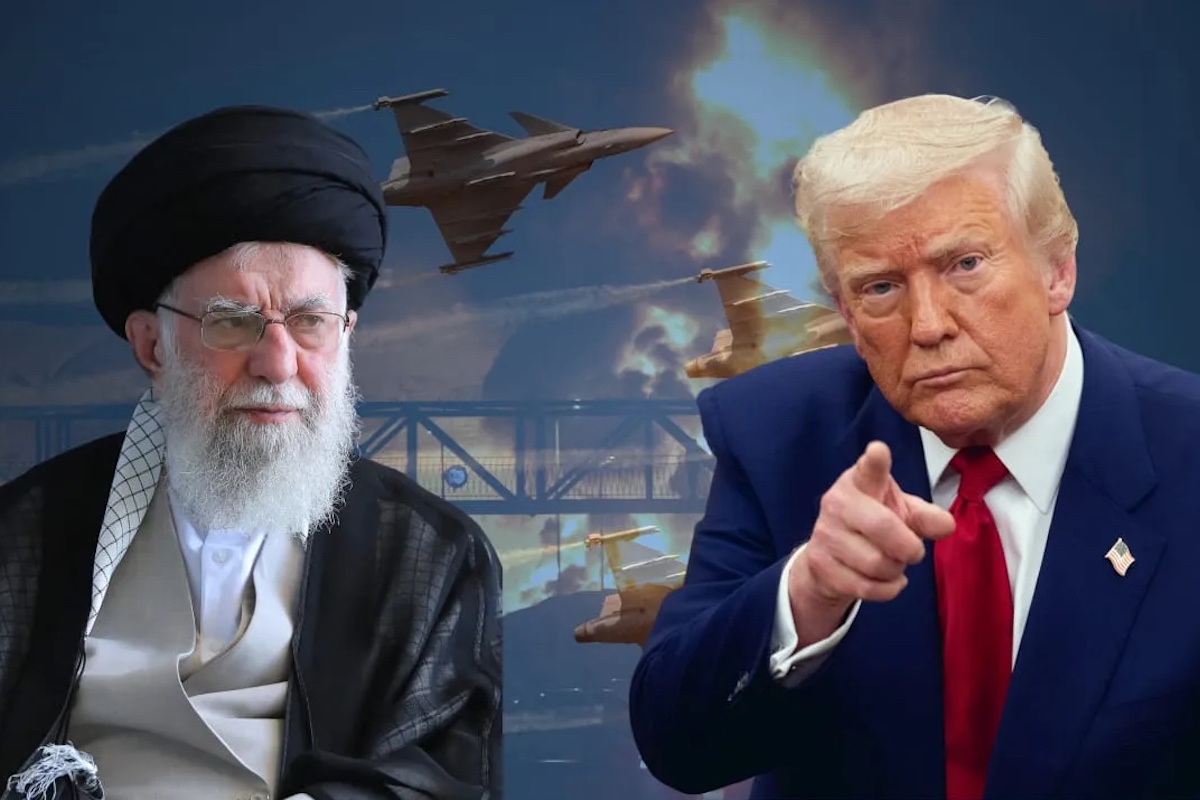
    Iran’s judiciary has declared an uncompromising stance against individuals it labels as ‘rioters’ amid sustained nationwide demonstrations, while simultaneously acknowledging citizens’ constitutional rights to peaceful protest. Judicial Chief Gholamhossein Mohseni Ejei issued directives to prosecutors nationwide to enforce legal measures “with resolve” against those allegedly instigating violence, emphasizing zero leniency would be shown.

    The unrest, now entering its second week, originated from economic grievances but has progressively incorporated political demands. Initial protests emerged in Tehran on December 28 when merchants staged strikes protesting soaring prices and economic stagnation, subsequently spreading across 23 provinces and affecting at least 45 urban centers according to AFP verifications.

    International responses have intensified significantly. United Nations Secretary-General Antonio Guterres has urged Iranian authorities through spokesperson Stephane Dujarric to uphold protesters’ rights to peaceful assembly and prevent further casualties. Concurrently, U.S. President Donald Trump issued a stark warning from Air Force One, stating Iran would face severe consequences if demonstrations turned deadly.

    The Iranian government has implemented dual strategies addressing the crisis. Economically, authorities announced direct cash transfers to citizens equivalent to 3.5% of average monthly wages, acknowledging legitimate socioeconomic frustrations. Simultaneously, security forces have intensified operations, with Mizan News Agency reporting weapons seizures from alleged militant hideouts in Tehran.

    Media polarization reflects the complexity of the situation. Reformist publication Arman Melli suggested authorities were heeding protesters’ concerns, while conservative outlets Javan and Kayhan accused the United States and Israel of financing destabilization efforts. Iranian foreign ministry spokesman Esmail Baqaei condemned Israel for allegedly exploiting protests to undermine national unity.

    Despite official reports of diminishing protest scales from Fars News Agency, social media evidence suggests continued mobilization. The diaspora has intensified solidarity demonstrations globally, with Paris-based protester Sahar Aghakhani declaring incremental progress toward systemic change. Current demonstrations remain smaller than the 2022 Mahsa Amini protests, though analysts note similar patterns of economic discontent evolving into political challenges.

  • Central Africa Republic President Faustin Archange Touadéra reelected, provisional results show

    Central Africa Republic President Faustin Archange Touadéra reelected, provisional results show

    BANGUI, Central African Republic — The nation’s electoral authority has confirmed President Faustin Archange Touadéra’s victory in securing a third presidential term, according to provisional results released late Monday. The controversial election, held last month, proceeded without participation from the major opposition coalition that had denounced the political climate as fundamentally unequal.

    The electoral landscape shifted significantly when a constitutional referendum earlier removed presidential term limits, enabling Touadéra to seek re-election despite previous restrictions. This constitutional amendment prompted the main opposition coalition to boycott the electoral process entirely, claiming the playing field was systematically tilted in favor of the incumbent administration.

    Despite the boycott, six candidates remained in the presidential race against Touadéra. Official results from the National Election Authority indicate the president captured a commanding 76.15% of the total votes cast. The election occurred amid ongoing security challenges in the mineral-rich yet impoverished nation, which has experienced prolonged instability since a violent rebellion ousted former President François Bozizé in 2013.

    International observers have noted concerns about the electoral process, while the government maintains the election was conducted fairly and represents the will of the Central African people. The outcome solidifies Touadéra’s continued leadership amid persistent armed conflict and deepening humanitarian crises affecting approximately half of the country’s population.

  • Maduro makes 1st court appearance in New York

    Maduro makes 1st court appearance in New York

    Venezuelan President Nicolás Maduro appeared before a federal court in New York on Monday morning, marking his first judicial proceeding since being apprehended by U.S. military forces on Venezuelan soil. The unprecedented operation represents one of the most dramatic escalations in U.S.-Venezuela relations in modern history.

    The courtroom proceedings unfolded under tight security as the Venezuelan leader faced charges previously filed by U.S. prosecutors. Legal experts characterize the case as extraordinary in its implications for international law and diplomatic relations between nations.

    The detention operation, conducted by U.S. special forces, has ignited immediate geopolitical repercussions across Latin America and beyond. Regional leaders have begun issuing statements regarding the breach of sovereign territory, while international law specialists debate the legal precedents being established.

    The court appearance sets in motion what promises to be an extended legal battle with significant implications for international justice standards, diplomatic immunity protocols, and cross-border military operations. The case is expected to test longstanding conventions regarding head-of-state protections and extraterritorial jurisdiction.

    Observers note that the proceedings could establish landmark precedents concerning the accountability of national leaders under international law, while simultaneously raising questions about the appropriate boundaries of cross-border judicial enforcement.

  • Key moments in the US arrest of and case against Venezuelan leader Nicolás Maduro

    Key moments in the US arrest of and case against Venezuelan leader Nicolás Maduro

    In a meticulously coordinated military operation authorized by former President Donald Trump, United States forces successfully apprehended Venezuelan leader Nicolás Maduro and his wife Cilia Flores over the weekend of January 2-3, 2026. The dramatic capture unfolded with American special operations teams converging on Maduro’s compound in Caracas before transporting the detainees to a U.S. warship stationed in the Caribbean Sea.

    The operation commenced at 10:46 p.m. EST on January 2 when Trump authorized the mission. Within hours, at 1:01 a.m. EST on January 3, U.S. forces reached Maduro’s residence in Venezuela’s capital. By 3:29 a.m. EST, the extraction team had already departed Venezuelan territory with their high-value captives. Trump publicly announced the successful operation via Truth Social at 4:21 a.m. EST, proclaiming a ‘large scale strike’ against Venezuela.

    Maduro and Flores were transported aboard the USS Iwo Jima to New York, where they faced arraignment on narco-terrorism conspiracy charges. The Justice Department released a new indictment detailing their alleged involvement in drug trafficking operations. During a press conference, Trump was accompanied by key administration officials including Defense Secretary Pete Hegseth, Secretary of State Marco Rubio, CIA Director John Ratcliffe, and Homeland Security advisor Stephen Miller.

    The U.S. president made controversial statements regarding America’s intentions, stating the U.S. would ‘run Venezuela’ until a ‘judicious transition of power’ could be arranged. Trump further escalated regional tensions by making provocative comments about neighboring governments, suggesting similar actions might target Colombian President Gustavo Petro and criticizing Mexico’s approach to drug trafficking.

    Venezuela’s political leadership responded with Vice President Delcy Rodríguez assuming interim presidential duties following a directive from the nation’s high court. Rodríguez demanded proof of life for Maduro and Flores while leaving open possibilities for diplomatic engagement with the U.S. despite the military intervention.

    The operation resulted in significant international backlash, with Cuba reporting 32 military and police officers killed during the strikes. The United Nations Security Council convened an emergency meeting where both allies and adversaries of the United States uniformly condemned the unilateral action.

    On January 5, Maduro appeared in a Manhattan federal courtroom where he pleaded not guilty to all charges, declaring himself ‘a decent man, the president of my country.’ His next court date was scheduled for March 17, 2026, as the unprecedented case continues to develop amid global diplomatic repercussions.

  • Military action in Venezuela emerges as an issue in a closely watched GOP primary in Kentucky

    Military action in Venezuela emerges as an issue in a closely watched GOP primary in Kentucky

    A significant political division has emerged within Kentucky’s Republican primary as President Donald Trump’s military intervention in Venezuela becomes a central point of contention. The race features Congressman Thomas Massie, a longstanding libertarian-leaning Republican who has frequently clashed with Trump, facing challenger Ed Gallrein, a retired Navy SEAL officer enjoying the former president’s full endorsement.

    Massie has launched a vigorous social media campaign condemning the military operation that resulted in the capture of Nicolás Maduro, characterizing it as an unconstitutional overreach of executive power. The congressman asserted that the Venezuela intervention fundamentally concerns oil interests and regime change rather than combating drug trafficking, directly contradicting the administration’s stated objectives.

    “The Founders deliberately vested war-making authority in Congress, not the executive branch,” Massie emphasized, accusing Trump of bypassing constitutional procedures.

    Gallrein countered by defending the operation as a necessary measure against rogue regimes. “This decisive action demonstrates America’s commitment to holding bad actors accountable, restoring international law and order, deterring aggression, and protecting American families,” the Trump-endorsed candidate stated. He further argued that U.S. involvement creates opportunities for Venezuelans to experience peace and prosperity after decades of oppression.

    The May primary will serve as a crucial test of Trump’s ongoing influence within Republican politics. Massie, despite his frequent disagreements with Trump, has consistently secured reelection by substantial margins since 2012. Gallrein benefits from Trump’s powerful political machinery and support from a super PAC operated by former Trump aides, though he confronts a well-established incumbent with significant financial resources.

    Trump recently reinforced his endorsement of Gallrein through social media, urging other potential Republican candidates to avoid the race and describing Massie as a “Weak and Pathetic RINO” (Republican In Name Only). The primary winner will likely become the favored candidate in a district that last elected a Democrat two decades ago, though at least two Democratic contenders have already filed for the congressional seat representing northern Kentucky.

  • NSW Police Commissioner Mal Lanyon to decide on extension of Sydney protest ban

    NSW Police Commissioner Mal Lanyon to decide on extension of Sydney protest ban

    New South Wales Police Commissioner Mal Lanyon is poised to make a pivotal determination regarding the potential extension of Sydney’s controversial protest ban, initially implemented following Christmas Eve legislative changes enacted after the Bondi terror incident. The decision, expected Tuesday, could prolong restrictive measures well into the new year.

    The current regulations, granting unprecedented authority to law enforcement, emerged from marathon parliamentary debates that established a 14-day prohibition on all public assemblies following declared terrorist events. This framework permits Commissioner Lanyon to maintain restrictions for up to three months, with provisions denying all police authorization requests during the initial fortnight.

    Notably, the legislation expands police capabilities to remove facial coverings from individuals suspected of committing offenses at public gatherings—a power previously reserved for more serious categories of criminal activity.

    The urgency of Commissioner Lanyon’s decision intensified after approximately 250 demonstrators defied the ban on Sunday, assembling at Sydney’s Town Hall to protest American military actions against Venezuela. Participants displayed placards bearing anti-imperialist messages and modified American flags featuring skull imagery. Counter-protesters numbered around forty according to police accounts.

    Law enforcement arrested three individuals during the unauthorized gathering: two men aged 26 and 34 for breach of peace, and a 53-year-old woman allegedly wearing offensive attire. All were released without formal charges following the demonstration’s conclusion.

    Commissioner Lanyon previously justified the restrictions by emphasizing their role in preventing community fear and divisiveness, asserting that “NSW Police is committed to exercising these new powers responsibly and transparently.”

    However, civil liberties organizations have mounted significant opposition. NSW Council for Civil Liberties president Timothy Roberts condemned the powers as “extremely anti-democratic,” while the Palestine Action Group criticized the measures as undermining fundamental democratic rights. Advocacy groups argue the regulations disproportionately suppress legitimate dissent across various social movements, extending beyond their original counter-terrorism purpose.

  • After Venezuela, Trump threatens action in 5 more countries over 3 days

    After Venezuela, Trump threatens action in 5 more countries over 3 days

    In a dramatic escalation of foreign policy maneuvers, the Trump administration has initiated a series of confrontational actions against multiple sovereign states within a remarkably condensed timeframe. The opening salvo occurred with a military incursion into Venezuela, resulting in the capture of President Nicolas Maduro and his subsequent extradition to the United States to confront narcotics trafficking allegations. President Trump subsequently declared American oversight of Venezuelan oil reserves pending political transition.

    This unprecedented intervention has catalyzed a rapid succession of diplomatic threats against five additional nations over seventy-two hours. Mexico received stern warnings regarding cartel operations, with Trump insisting the nation ‘get its act together’ to stem drug trafficking. Colombia faced explicit threats of military action, characterized by Trump as a necessary response to governmental complicity in cocaine production.

    The administration reignited territorial aspirations regarding Greenland, with Trump asserting strategic necessity despite Danish objections. Simultaneously, Iran received ultimatums regarding its internal civil unrest, with Trump declaring readiness to ‘hit very hard’ should protests be suppressed. Cuba was conversely described as a ‘failing nation’ potentially requiring American intervention, though Trump suggested regime collapse might occur organically.

    These developments have triggered vehement international condemnation, with multiple nations decrying violations of sovereignty and international law. The rapid succession of threats suggests a coordinated strategy of hemispheric and global power projection that has fundamentally altered diplomatic norms and heightened geopolitical tensions worldwide.

  • A prediction market user made $436,000 from bets on Maduro’s downfall

    A prediction market user made $436,000 from bets on Maduro’s downfall

    A cryptocurrency-based prediction market has become the center of an alleged insider trading investigation after an anonymous bettor profited nearly half a million dollars from Venezuela’s political upheaval. The suspicious activity occurred on Polymarket, where wagers on President Nicolás Maduro’s removal surged hours before Donald Trump’s official announcement regarding the Venezuelan leader’s capture.

    Market data reveals dramatic odds fluctuations in the critical hours preceding Trump’s Truth Social post. On January 2nd, traders placed mere 6.5% probability on Maduro’s exit by month’s end. However, these odds jumped to 11% by midnight and experienced a significant surge in the early hours of January 3rd—immediately before Trump’s revelation that Maduro was in U.S. custody.

    One particularly fortunate account, created just last month with exclusive focus on Venezuelan political outcomes, transformed a $32,537 wager into $436,000 profits. The account’s blockchain identifier, consisting of anonymous letters and numbers, has concealed the bettor’s identity despite the substantial gains.

    Financial reform advocacy group Better Markets has characterized the transaction as exhibiting ‘all the hallmarks of a trade based on inside information.’ Several other Polymarket users also generated tens of thousands in profits from wagers on Maduro’s capture, amplifying concerns about information integrity.

    In response to these developments, Congressman Ritchie Torres (D-NY) introduced legislation seeking to prohibit government employees from trading on prediction markets when possessing material nonpublic information. The bill specifically targets those who may reasonably obtain such privileged information through official channels.

    The prediction market industry, which handled hundreds of millions in wagers during the 2024 presidential election, operates in a regulatory gray area. While traditional stock markets enforce strict insider trading prohibitions, prediction markets like Polymarket and competitor Kalshi face less stringent oversight despite company policies against insider trading. The industry has experienced fluctuating regulatory reception, facing scrutiny during the Biden administration while receiving warmer acceptance during Trump’s presidency, notably with Donald Trump Jr. serving in advisory roles at both major prediction market platforms.

  • Egypt says it has ‘identical’ positions with Saudi Arabia on Yemen and Sudan

    Egypt says it has ‘identical’ positions with Saudi Arabia on Yemen and Sudan

    Cairo and Riyadh have declared a unified diplomatic stance on several critical regional issues following high-level talks between Egyptian President Abdel Fattah el-Sisi and Saudi Foreign Minister Prince Faisal bin Farhan al-Saud. The Monday meeting in Cairo revealed identical positions regarding conflict resolution in Yemen, Sudan, and the contentious status of Somaliland.

    The leaders emphasized their joint commitment to peaceful resolutions for regional crises, specifically highlighting Yemen, Sudan, Gaza, and the recently recognized breakaway state of Somaliland. Both nations affirmed their dedication to preserving ‘the unity, sovereignty and territorial integrity of states’—a statement that carries significant weight given current regional dynamics.

    This demonstration of solidarity emerges against a backdrop of escalating tensions between Saudi Arabia and the United Arab Emirates, who maintain opposing positions on several regional conflicts. The UAE has notably supported secessionist movements in Sudan, Yemen, and Somaliland—a direct contrast to the Saudi-Egyptian position favoring territorial integrity.

    Somaliland, which declared independence from Somalia in 1991 but remains unrecognized by UN permanent members, recently gained recognition from Israel. The UAE, long considered Somaliland’s key international advocate, responded tepidly to Israel’s recognition while reportedly beginning to accept travel documents from the breakaway state.

    The Saudi-Egyptian alignment appears particularly significant in Yemen, where Riyadh supports the internationally recognized government while the UAE backs the Southern Transitional Council secessionist group. Recent clashes saw Saudi-backed forces reclaim territory from STC fighters, including the strategic city of Mukalla in Hadhramaut province.

    President el-Sisi endorsed Saudi Arabia’s proposal to host an inclusive conference for southern Yemeni groups, while Egyptian Foreign Minister Badr Abdelatty called for de-escalation and Yemeni-led political settlements. This coordinated diplomatic approach suggests a reshaping of regional alliances and conflict resolution strategies.