分类: politics

  • Trump has options in Greenland, but provocation may be the point

    Trump has options in Greenland, but provocation may be the point

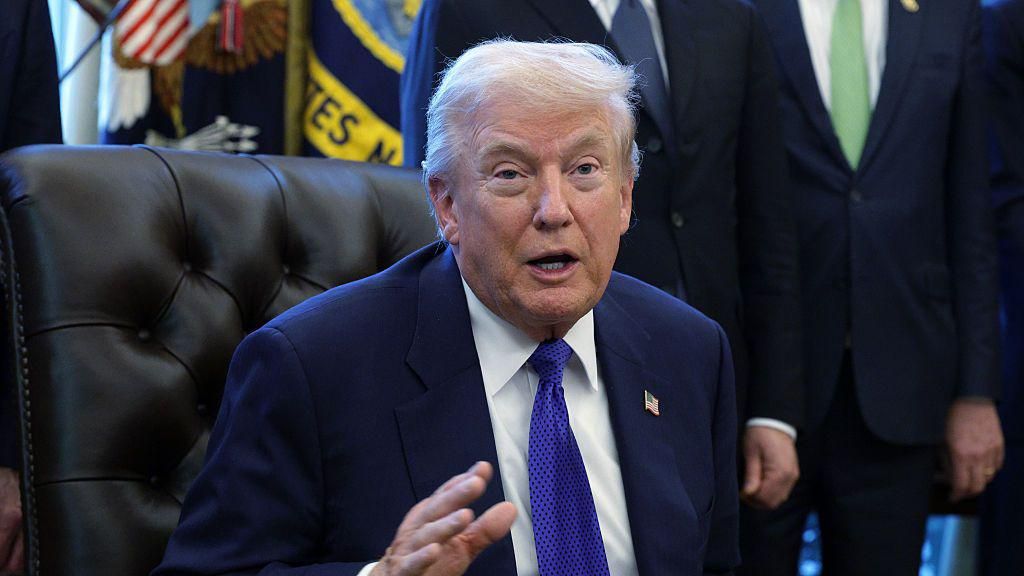
    President Donald Trump’s persistent refusal to dismiss the potential use of military force to acquire Greenland continues to generate diplomatic tensions with Denmark, a longstanding NATO ally governing the autonomous Arctic territory. This controversial stance emerges amid growing concerns over Russian and Chinese military activities in the region and the strategic implications of rapidly melting Arctic ice due to climate change.

    While the United States maintains an established military presence at Greenland’s Pituffik base—operational since World War II with approximately 150 permanent personnel—historical precedents show the stationing of up to 6,000 troops during Cold War tensions. A 1951 defense treaty theoretically permits Washington to substantially increase its military footprint through simple notification to Denmark, bypassing need for complex negotiations.

    Analysts suggest Trump’s motivations extend beyond conventional security considerations. Kristine Berzina of the German Marshall Fund notes the president’s apparent fascination with territorial expansion as symbolic of ‘American greatness’—a core tenet of his Make America Great Again movement. The acquisition of Greenland’s vast territory (comparable to Alaska’s size with merely 57,000 inhabitants) would elevate the United States to the world’s third-largest nation by land area, surpassing China.

    The administration has floated alternative approaches, including replicating the compact association model used with Pacific island nations or resurrecting historical purchase precedents. The 1917 acquisition of the US Virgin Islands from Denmark for $25 million in gold—completed under threat of force—provides historical context, though both Danish and Greenlandic authorities have unequivocally rejected contemporary sale discussions.

    Legal and diplomatic experts remain skeptical about feasibility. Former State Department legal advisor Brian Finucane characterizes the proposals as ‘far-fetched,’ noting significant constitutional and international law hurdles beyond the evident political obstacles. The concept appears particularly incongruous given Trump’s frequent criticism of NATO, through which Greenland’s defense is already indirectly addressed.

    This geopolitical posturing occurs against the backdrop of Russia’s ongoing invasion of Ukraine, where traditional allies would typically welcome heightened US engagement with European security concerns. Instead, Trump’s Greenland rhetoric manifests as potentially performative nationalism rather than substantive policy advancement.

  • Trump to meet Colombian president at White House in ‘near future’

    Trump to meet Colombian president at White House in ‘near future’

    In a dramatic escalation of diplomatic tensions, U.S. President Donald Trump has announced plans to host Colombian President Gustavo Petro at the White House following a contentious phone conversation marked by mutual threats and accusations. The development comes amid heightened regional instability following a U.S. military operation in Venezuela that resulted in the capture of President Nicolás Maduro and significant casualties.

    Trump’s characterization of the Colombian leader as ‘a sick man who likes making cocaine and selling it to the United States’ during remarks aboard Air Force One stands in stark contrast to his subsequent description of their conversation as a ‘Great Honor’ on his Truth Social platform. This diplomatic whiplash underscores the volatile nature of U.S.-Colombian relations under both administrations.

    The backdrop to this diplomatic confrontation includes Saturday night’s raid on Caracas, which Venezuelan officials claim resulted in over 100 fatalities—substantially higher than initial reports of 55 casualties among Venezuelan and Cuban soldiers. Venezuelan Interior Minister Diosdado Cabello confirmed the revised death toll on Wednesday, while interim president Delcy Rodríguez condemned the operation as an unprecedented ‘stain on our relations.’

    Central to the dispute is the ongoing drug trade conflict. The U.S. Treasury Department imposed sanctions on Petro’s administration in October 2026, alleging catastrophic failures in curbing cocaine production that has ‘exploded to the highest rate in decades.’ Treasury Secretary Scott Bessent asserted that Colombian cartels are ‘flourishing’ under Petro’s leadership, flooding American markets with narcotics.

    Petro vehemently countered these allegations, emphasizing his decades-long anti-trafficking efforts and claiming successful containment of coca crop expansion. The Colombian leader issued a stark warning via social media platform X, threatening that his nation would ‘take up arms’ against any U.S. military action, metaphorically invoking the ‘people’s jaguar’ being unleashed if Maduro remains detained.

    Beyond narcotics, energy resources loom large in the geopolitical standoff. Both Colombia and Venezuela possess substantial oil reserves, with the U.S. announcing indefinite control over Venezuelan oil sales while preparing to roll back global market restrictions. Rodríguez notably left the door open for beneficial energy relations despite condemning Maduro’s capture.

    The scheduled White House meeting, to be arranged by Secretary of State Marco Rubio and Colombian counterparts, represents a potential diplomatic off-ramp amid escalating threats and accusations. However, Trump’s earlier warning for Petro to ‘watch his ass’ suggests the relationship remains precariously balanced between confrontation and negotiation.

  • Woman shot dead in Minneapolis raid for ‘attempting to run over’ ICE agents

    Woman shot dead in Minneapolis raid for ‘attempting to run over’ ICE agents

    A fatal shooting during an Immigration and Customs Enforcement (ICE) operation in Minneapolis has sparked controversy and renewed debates about immigration enforcement tactics. According to Department of Homeland Security officials, the incident occurred when a woman allegedly attempted to ram ICE officers with her vehicle during protest actions against an apparent immigration enforcement activity.

    The Department of Homeland Security characterized the event as an act of ‘domestic terrorism’ in a statement on social media platform X. The statement detailed that an ICE officer, ‘fearing for his life, the lives of his fellow law enforcement and the safety of the public,’ fired defensive shots that struck and killed the alleged perpetrator.

    The confrontation took place at the intersection of 34th Street and Portland Avenue in Minneapolis, where local media reports indicated ICE officers were seen pepper spraying and shoving protesters during enforcement operations. Multiple officers sustained injuries during the altercation but are expected to make full recoveries, according to official statements.

    This incident occurs against the backdrop of heightened tensions surrounding immigration enforcement operations across various U.S. cities. The Trump administration’s vowed crackdown on undocumented migrants has previously prompted passionate protests in multiple urban centers.

    Local CBS affiliate WCCO reported that video footage of the incident was circulating among community members, though the complete context remains unclear. One bystander expressed outrage to reporters, stating, ‘There’s no way whatever this person did that they deserved to be killed for it.’

    The shooting highlights the increasingly volatile nature of immigration enforcement encounters and raises questions about appropriate use of force during protest situations involving federal immigration authorities.

  • Trump doubles down on Venezuelan oil with sales and vessels seizure

    Trump doubles down on Venezuelan oil with sales and vessels seizure

    In a significant escalation of economic pressure on Venezuela, former U.S. President Donald Trump announced he would personally oversee the proceeds from the sale of millions of barrels of Venezuelan oil. The declaration came via social media, where Trump revealed that interim Venezuelan authorities would transfer 30-50 million barrels of sanctioned, high-quality oil to the United States for market-price sale.

    Trump emphasized that the substantial revenue generated—equivalent to 30-50 days of Venezuela’s current production—would be under his direct presidential control. He stated these funds would be allocated to benefit both Venezuelan citizens and American interests. This move represents a dramatic expansion of U.S. involvement in Venezuela’s energy sector, which the administration characterizes as an ‘indefinite’ commitment.

    The U.S. Energy Department subsequently clarified that this initial seizure merely inaugurates a broader strategy. All future Venezuelan oil sales will be processed through U.S.-controlled accounts at internationally recognized financial institutions. Energy Secretary Chris Wright, speaking at a Miami conference, confirmed the permanent nature of this arrangement, stating the U.S. would market Venezuela’s oil production ‘indefinitely, going forward’ to drive necessary political changes in the country.

    The geopolitical implications are substantial. This policy has already triggered confrontations with global powers, notably evidenced by the U.S. seizure of a Russian-flagged tanker linked to Venezuela’s oil trade in the Atlantic—an operation supported by Britain’s Royal Air Force. Despite Russian naval vessels providing escort, U.S. forces boarded the tanker, escalating tensions with the nuclear-armed nation amid ongoing Ukraine negotiations.

    The White House attempted to minimize the incident’s diplomatic ramifications, characterizing the vessel as ‘stateless’ due to false flag representation and emphasizing its judicial seizure status. Meanwhile, the oil industry notes that Venezuelan heavy crude is particularly suited to U.S. Gulf refineries (which Trump renamed the ‘Gulf of America’), potentially benefiting American consumers through increased gasoline and diesel availability amid persistent inflation concerns.

    This aggressive approach recalls 20th-century ‘gunboat diplomacy’ and fundamentally alters Venezuela’s economic sovereignty over its world-leading oil reserves, which constitute approximately 17% of global supplies. The policy follows a U.S. blockade that crippled Venezuela’s already struggling energy sector and the subsequent abduction of President Nicolás Maduro, who now awaits trial in New York.

  • Trump not ruling out boots on the ground in Venezuela, Greenland

    Trump not ruling out boots on the ground in Venezuela, Greenland

    The White House has indicated that President Donald Trump maintains an open stance on employing additional military measures in Venezuela while simultaneously pursuing strategic territorial acquisition in the Arctic region. During a press briefing on Wednesday, White House Press Secretary Karoline Leavitt articulated the administration’s position that all options remain viable for advancing U.S. interests.

    Leavitt confirmed that while diplomacy remains the preferred initial approach, the president retains the authority to deploy military force when deemed necessary. This statement follows what the administration characterizes as a successful law enforcement operation resulting in the extraction of Venezuelan leader Nicolas Maduro, who currently faces trial in New York City on federal charges. The operation, which involved U.S. special forces and airstrikes on Venezuelan military targets, reportedly resulted in approximately 80 casualties among security forces and civilians.

    Concurrently, the administration has revived historical discussions regarding the acquisition of Greenland from Denmark, framing the potential territorial transfer as a national security imperative to counter Russian and Chinese influence in the Arctic. Although European officials have expressed strong reservations about such a move, the White House maintains that this initiative aligns with strategic interests pursued by multiple U.S. administrations since the 19th century.

    In related developments, the United States and United Kingdom militaries have intercepted multiple oil tankers allegedly violating sanctions against Venezuela. The seized vessels, identified as ‘Bella 1’ and ‘Sofia,’ were described as stateless ships attempting to circumvent restrictions on Venezuelan oil exports. Administration officials emphasized that crew members face prosecution under U.S. federal law.

    The administration has also announced a controversial arrangement whereby proceeds from the sale of millions of barrels of Venezuelan oil will be managed directly by President Trump. According to Leavitt, this agreement with Venezuelan interim authorities will benefit both American and Venezuelan citizens, with funds being distributed at the discretion of the U.S. government through secured banking channels. The administration has already initiated global marketing efforts for the confiscated crude oil.

  • Trump says he doubts whether NATO would help defend US

    Trump says he doubts whether NATO would help defend US

    WASHINGTON – President Donald Trump has publicly expressed skepticism about NATO’s willingness to defend the United States if needed, creating fresh uncertainty about the future of the transatlantic alliance. The remarks came amid escalating tensions with Denmark over potential U.S. interests in acquiring Greenland.

    In a statement posted on his Truth Social platform Wednesday, Trump declared, “We will always be there for NATO, even if they won’t be there for us.” This questioning of NATO’s mutual defense principles represents the latest chapter in Trump’s complicated relationship with the military alliance he has frequently criticized.

    The comments follow Danish Prime Minister Mette Frederiksen’s warning earlier this week that any U.S. military action against Greenland could effectively terminate the NATO alliance that has existed since the end of World War II. Denmark, as both a NATO and European Union member, finds itself at the center of this geopolitical tension.

    White House Press Secretary Karoline Leavitt confirmed to Xinhua on Tuesday that the administration is evaluating “a range of options” regarding Greenland, including potential “utilization of the U.S. military.” This acknowledgment has intensified diplomatic concerns about U.S. territorial ambitions and their impact on international alliances.

    The situation highlights ongoing questions about America’s commitment to collective security arrangements and raises fresh concerns among European allies about the durability of NATO amid changing U.S. foreign policy priorities.

  • Reality TV star Spencer Pratt announces run for LA mayor

    Reality TV star Spencer Pratt announces run for LA mayor

    Former reality television personality Spencer Pratt has officially declared his candidacy for mayor of Los Angeles, positioning himself as an outsider challenging the political establishment. The announcement came during a emotionally charged rally marking the one-year anniversary of the devastating Palisades Fire that consumed his family home.

    Pratt, 42, addressed gathered residents at the ‘They Let Us Burn’ protest, delivering a scathing critique of current city leadership’s handling of the catastrophic wildfires that swept through Los Angeles in January 2025. The Pacific Palisades blaze, which ignited on January 7th, was followed hours later by the Eaton Fire on the city’s opposite side, collectively claiming 31 lives and destroying over 16,000 residential and commercial properties.

    The celebrity-turned-candidate documented his formal campaign filing process through Instagram, though official registration remains pending. In his rally speech, Pratt characterized conventional politics as ‘a death sentence for Los Angeles’ and declared his intention to ‘expose the system’ by investigating ‘every dark corner of LA politics.’

    Pratt and his wife, fellow reality star Heidi Montag, lost their Pacific Palisades residence in the inferno, an experience that transformed the television personality into a vocal critic of Mayor Karen Bass and California Governor Gavin Newsom’s disaster response efforts.

    Despite his celebrity status from MTV’s ‘The Hills’ and subsequent reality appearances, Pratt enters the political arena as a first-time candidate facing significant challenges in June’s non-partisan primary. He joins a crowded field that includes incumbent Mayor Bass, who defeated real estate magnate Rick Caruso in 2022 and now seeks re-election alongside more than a dozen other contenders.

  • NSW Premier Chris Minns accused of ‘mixed messages’ after ‘globalise the Intifada’ arrest

    NSW Premier Chris Minns accused of ‘mixed messages’ after ‘globalise the Intifada’ arrest

    New South Wales Premier Chris Minns is confronting accusations of delivering contradictory directives to law enforcement regarding potential bans on the phrase “globalise the Intifada.

    The controversy emerged following the arrest and subsequent release of a 53-year-old woman during a Sydney CBD protest. The individual was detained for wearing apparel displaying the contentious expression but was later freed without formal charges. NSW Police have confirmed their investigation into the incident remains active.

    This event has ignited debate over proposed reforms to hate speech legislation, which Premier Minns has advocated following the Bondi Beach terror attack. The government is contemplating outlawing the phrase, drawing inspiration from similar enforcement actions observed in London.

    Greens MLC and Law and Justice Spokesperson Sue Higginson criticized the Premier’s approach, stating: “Leaders and premiers shouldn’t send signals and messages about law and order without playing clear, firm attention to the actual laws in NSW.” She emphasized that approximately 19,000 uniformed officers receive these “significantly poor and mixed messages” while attempting to perform their duties.

    The phrase itself has become a flashpoint in free speech debates. While some Jewish groups contend the term “Intifada” promotes violence, others note its Arabic translation simply means “shaking off” and originates from popular uprisings in Palestinian territories.

    Sydney Law School’s Professor of Criminal Law Tyrone Kichengast warned that such legislation might encroach upon constitutional rights to political communication. He noted that a legal challenge to NSW’s anti-protest laws is already progressing toward the Supreme Court, with potential implications for nationwide jurisprudence.

    The state government has initiated a parliamentary inquiry into expanding hate speech legislation, with findings expected by January 31. Police Minister Yasmin Catley assured that officers would receive necessary training, while critics question whether sufficient guidance has been provided during this transitional period.

  • Trump invites Colombian president to White House days after threatening it with military strike

    Trump invites Colombian president to White House days after threatening it with military strike

    In a striking diplomatic reversal, former President Donald Trump has publicly lauded Colombian leader Gustavo Petro following a previously contentious relationship. The abrupt shift occurred Wednesday evening when Trump announced via his social media platform that the two heads of state had engaged in a productive telephone conversation regarding bilateral concerns.

    Trump characterized the exchange as ‘a Great Honor,’ revealing that President Petro initiated the call to address ongoing disputes, particularly surrounding narcotics trafficking and other contentious issues between the nations. The former president notably commended his counterpart’s diplomatic approach, stating he ‘appreciated his call and tone’ during their discussion.

    This conciliatory gesture marks a dramatic departure from Trump’s rhetoric earlier this week, when he asserted Colombia was ‘very sick’ under Petro’s leadership and made unsubstantiated allegations regarding the president’s personal involvement in cocaine distribution to American markets. Those remarks came in response to U.S. military operations in neighboring Venezuela, with Trump suggesting potential intervention in Colombia might be warranted.

    The newly announced White House invitation signals potential normalization of relations between the conservative former president and Colombia’s first leftist leader. Both parties have expressed anticipation for the forthcoming meeting, though specific dates remain unconfirmed at this time.

  • Venezuelan opposition blindsided by Trump, waiting it out

    Venezuelan opposition blindsided by Trump, waiting it out

    Following the dramatic removal of authoritarian leader Nicolas Maduro, Venezuela’s opposition movement finds itself in an unexpected state of political paralysis rather than triumph. Despite widespread international recognition as the legitimate victors of the 2024 presidential election, opposition leaders remain excluded from power as the United States under President Trump has chosen to work with Maduro loyalists rather than democratic alternatives.

    The situation presents a complex geopolitical puzzle: instead of installing opposition leader Maria Corina Machado or presidential candidate Edmundo Gonzalez Urrutia, the Trump administration has thrown its support behind Delcy Rodriguez, a committed Maduro acolyte sworn in as acting president. This strategic pivot has left the opposition coalition reeling, with key figures acknowledging they must ‘adjust to reality’ despite their disappointment.

    Critical to this political stalemate is Venezuela’s military establishment, which maintains historic allegiance to Maduro’s Chavista movement. Defense Minister Vladimir Padrino and Interior Minister Diosdado Cabello—considered the true powers behind the throne—were prominently present during Rodriguez’s inauguration, signaling continued institutional support for the existing power structure.

    Analysts note that the opposition suffers from significant structural deficiencies, lacking both the organized governance expertise and military backing necessary to assume control. Meanwhile, the Trump administration has made its priorities clear: ‘total access’ to Venezuela’s vast oil reserves, the largest proven reserves in the world, appears to outweigh democratic transition concerns.

    Opposition supporters have largely retreated underground amid widespread fear, remembering the thousands arrested during previous protests. With dozens of opposition leaders remaining in exile or detention, and Machado herself yet to return to Venezuela after receiving the Nobel Peace Prize in Oslo, the democratic movement faces profound challenges in converting moral victory into actual political power.