分类: politics

  • Iran rocked by night of protests despite internet blackout: videos

    Iran rocked by night of protests despite internet blackout: videos

    Iran experienced its most significant civil unrest in years on Thursday night as widespread protests erupted across multiple cities, defying a government-imposed internet blackout designed to suppress demonstrations. Videos verified by international news agencies show thousands of citizens flooding major boulevards in Tehran and regional centers, chanting anti-government slogans including “death to the dictator” in reference to Supreme Leader Ayatollah Ali Khamenei.

    The protests, now entering their second week, originated from public anger over deteriorating economic conditions and rising living costs but have evolved into broader anti-establishment demonstrations. Footage from numerous cities shows protesters setting fire to government buildings, including the regional state television headquarters in Isfahan and the governor’s building in Shazand, Markazi province.

    Internet monitoring organization Netblocks confirmed authorities implemented a near-total connectivity blackout late Thursday, reporting the country had been offline for over 12 hours in what appears to be a deliberate attempt to control information flow and suppress dissent. This digital censorship strategy mirrors previous government responses to civil unrest.

    The scale of protests represents the most substantial challenge to Iranian leadership since the 2022-2023 demonstrations triggered by the death of Mahsa Amini. Notably, security forces appeared restrained in some footage from Tehran, though rights groups have previously accused authorities of using lethal force against protesters in earlier clashes.

    Adding international dimension to the events, US-based Reza Pahlavi, son of Iran’s deposed shah, has openly supported the protests and called for continued demonstrations on Friday to further pressure the regime. The involvement of diaspora figures highlights the expanding nature of the anti-government movement.

  • Venezuela’s acting president says country is not ‘subjugated’ after US attack

    Venezuela’s acting president says country is not ‘subjugated’ after US attack

    Venezuela’s acting president Delcy Rodríguez delivered a resolute address on Thursday, emphatically declaring that the South American nation remains unsubjugated despite recent military actions by the United States that resulted in the capture of President Nicolás Maduro.

    Speaking at a solemn ceremony held at the National Guard Military Academy in Caracas, Rodríguez honored both military personnel and civilians who suffered casualties during the January 3rd incursion. Her speech represented Venezuela’s first official response to the weekend operation that dramatically escalated tensions between the two nations.

    “Our homeland maintains its absolute autonomy and independence notwithstanding foreign military aggression,” Rodríguez asserted before assembled troops and dignitaries. “There was no capitulation during these attacks. Our forces engaged in combat—combat for our sovereign nation, combat honoring the legacy of our liberators.”

    The acting president’s address struck a defiant tone, directly countering narratives of Venezuelan submission to American pressure. She emphasized that the country’s institutions remained functional and that the chain of command had been preserved despite the capture of its head of state.

    Rodríguez’s appearance at the military academy served both commemorative and strategic purposes, demonstrating governmental continuity while rallying military support during a period of heightened geopolitical tension. The ceremony recognized those killed and wounded in what Venezuelan authorities have characterized as an unlawful violation of their territorial sovereignty.

    The developments mark a significant escalation in the long-standing tensions between Washington and Caracas, potentially setting the stage for further international diplomatic confrontations and raising questions about the future of bilateral relations between the Western Hemisphere nations.

  • Report slams Tokyo’s nuclear weapon aims

    Report slams Tokyo’s nuclear weapon aims

    A comprehensive report issued by prominent Chinese research institutions has raised urgent concerns regarding Japan’s escalating nuclear weapons aspirations, warning of substantial risks to global peace and the established international order. The study, collaboratively produced by the China Arms Control and Disarmament Association and the China Institute of Nuclear Industry Strategy, identifies what it characterizes as deliberate efforts by right-wing elements within Japan to undermine longstanding non-proliferation frameworks.

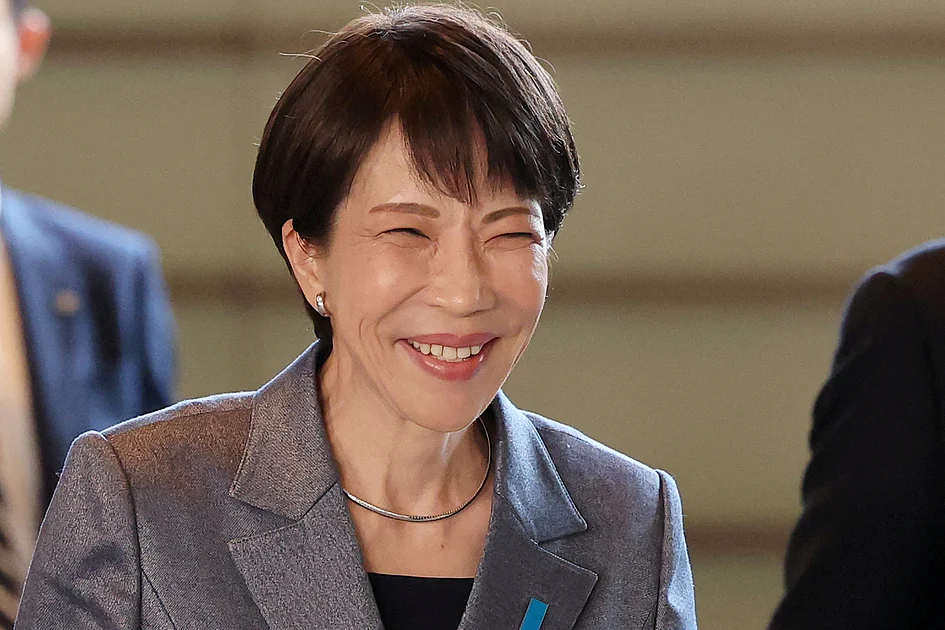
    The document, formally titled ‘Nuclear Ambitions of Japan’s Right-Wing Forces: A Serious Threat to World Peace,’ specifically references recent controversial statements from high-level Japanese officials. These include Prime Minister Sanae Takaichi’s advocacy for revising the nation’s foundational Three Non-Nuclear Principles—which currently prohibit possession, production, and introduction of nuclear weapons onto Japanese territory—and security cabinet members’ explicit calls for domestic nuclear armament.

    Technical analysis within the report indicates Japan maintains advanced nuclear infrastructure, including a complete nuclear fuel cycle and operational platforms theoretically capable of delivering nuclear payloads. The nation reportedly possesses both weapons-grade plutonium reserves and technical foundations for developing nuclear-powered submarines and aircraft carriers, according to senior engineers familiar with Japan’s capabilities.

    The report emerges ahead of the critical 2026 Nuclear Non-Proliferation Treaty Review Conference scheduled at United Nations headquarters. Chinese experts contend that Japan’s nuclear positioning represents a calculated testing of international tolerance rather than isolated political rhetoric. The research institutions have issued a ten-point recommendation urging the international community, including the International Atomic Energy Agency, to enhance scrutiny of Japan’s nuclear materials and activities while demanding official clarification regarding controversial statements from Japanese leadership.

  • ICE officer fatally shoots woman in Minneapolis

    ICE officer fatally shoots woman in Minneapolis

    A fatal shooting during a federal immigration enforcement operation in Minneapolis has ignited widespread condemnation and protests, creating a new flashpoint in the ongoing national debate over immigration policy. The incident occurred on Wednesday when an Immigration and Customs Enforcement (ICE) officer shot and killed 37-year-old Renee Nicole Good, a local resident, during what authorities described as a major enforcement surge.

    According to Department of Homeland Security Secretary Kristi Noem, ICE officers were assisting a vehicle stuck in snow when they encountered what she characterized as a ‘mob of agitators.’ Noem stated that Good had followed agents throughout the day, eventually blocking their vehicle and allegedly attempting to run over a law enforcement officer with her car, which she described as an act of ‘domestic terrorism.’

    Minneapolis Mayor Jacob Frey vehemently contested the federal government’s account, stating that video evidence directly contradicted the self-defense narrative presented by authorities. ‘Having seen the video myself, I want to tell everybody directly—that is bullshit,’ Frey declared at an emotionally charged news conference. The mayor blamed federal immigration agents for creating chaos in the city and demanded their immediate withdrawal.

    The Minneapolis City Council identified the deceased as a community-minded individual who was ‘out caring for her neighbors’ when her life was ‘taken at the hands of the federal government.’ Good’s mother, Donna Ganger, described her daughter to the Minnesota Star Tribune as ‘extremely compassionate’ and not someone who would confront ICE agents, noting that she had ‘taken care of people all her life.’

    As night fell, hundreds gathered at the shooting site in a residential neighborhood, creating a memorial with candles that illuminated the winter darkness. Earlier confrontations between protesters and heavily armed federal agents wearing gas masks resulted in the deployment of chemical irritants. The incident has prompted calls for independent investigations from both state and federal authorities, including the FBI, while raising concerns about the broader implications of federal operations in Democratic-led cities.

  • Trump pick for Gaza board Nickolay Mladenov frequently worked to ease Mideast tensions

    Trump pick for Gaza board Nickolay Mladenov frequently worked to ease Mideast tensions

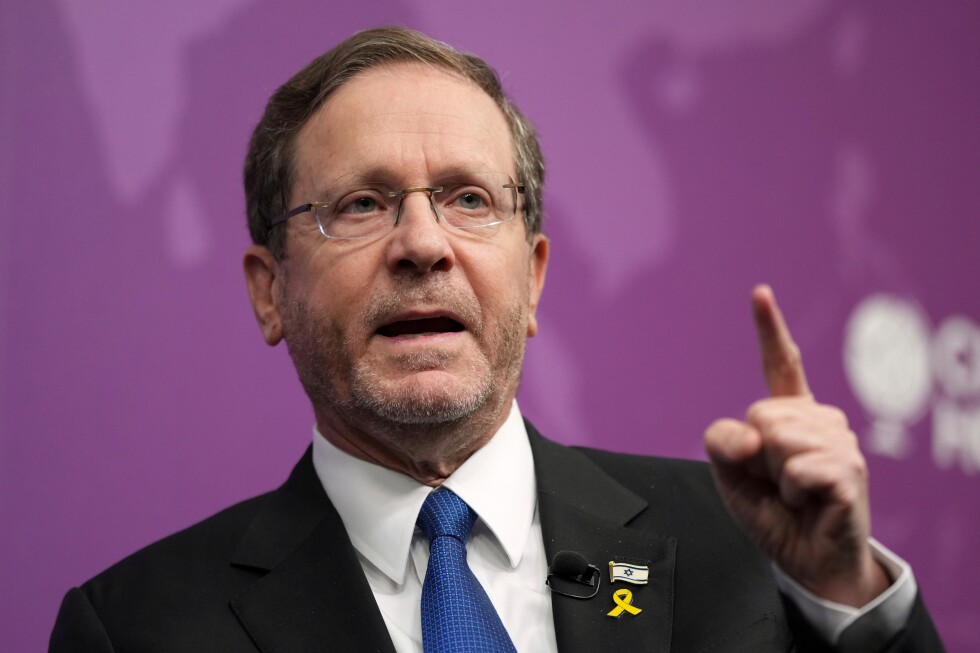
    SOFIA, Bulgaria — In a significant diplomatic move, veteran Bulgarian statesman Nickolay Mladenov has been designated as director-general for the newly established U.S. Board of Peace in Gaza. The appointment, confirmed by Israeli Prime Minister Benjamin Netanyahu on Thursday and verified by U.S. officials, positions Mladenov at the helm of an unprecedented international mechanism designed to administer Gaza during a critical transitional period.

    The 53-year-old diplomat brings extensive credentials to this formidable challenge, having previously served as both Bulgaria’s Defense and Foreign Minister before undertaking high-profile United Nations assignments. His most recent role as U.N. Special Coordinator for the Middle East Peace Process (2015-2020) provided him with deep immersion in the region’s complex political dynamics and established his reputation as a trusted intermediary between conflicting parties.

    According to the ceasefire framework brokered by the United States, the peace authority—which will be chaired by President Donald Trump—bears responsibility for overseeing a technocratic Palestinian administration, facilitating Hamas disarmament, coordinating international security forces, managing Israeli troop withdrawals, and supervising reconstruction efforts in the war-ravaged territory.

    Middle East experts highlight Mladenov’s distinctive qualifications for this delicate assignment. Milen Keremedchiev, a former diplomat and regional specialist, noted that “Bulgaria has long been perceived as a moderate country, one that has avoided extremes in this particularly acute conflict,” adding that Mladenov consistently maintained “a carefully balanced approach” during his ministerial tenure that earned respect from both Israeli and Palestinian leadership.

    This sentiment was echoed by Alon Bar, a retired Israeli diplomat who collaborated closely with Mladenov during his UN service. Bar emphasized that despite Israel’s historically strained relationship with the United Nations, Mladenov “managed to gain Israel’s confidence” while simultaneously building trust with Palestinian counterparts. “He was able to create a relationship of trust with the political echelon in Israel, including Prime Minister Netanyahu,” Bar observed, noting Mladenov’s practical approach focused on “trying to find bridges” between opposing positions.

    Mladenov’s diplomatic portfolio includes significant crisis management experience, having served as U.N. envoy to Iraq during the rise of ISIS (2013-2015) and later helping de-escalate cross-border violence between Israel and Hamas. His leadership during the Arab Spring period as Bulgaria’s foreign minister included hosting the first-ever structured dialogue between Syrian opposition factions in 2012.

    Educated at King’s College London and the University of National and World Economy in Sofia, Mladenov currently directs the Anwar Gargash Diplomatic Academy in the UAE. His extensive peacebuilding efforts were formally recognized in February 2021 when he received the Grand Star of the Order of Jerusalem from Palestinian leadership.

    As the international community watches this new peace architecture take shape, Mladenov’s appointment represents a strategic selection grounded in his proven track record of mediation and consensus-building in one of the world’s most intractable conflicts.

  • ‘Great ship’ of shared future sails onward

    ‘Great ship’ of shared future sails onward

    Drawing inspiration from its ancient maritime heritage, China continues to champion a diplomatic philosophy rooted in peaceful coexistence and mutual development. The legendary 15th-century voyages of Ming Dynasty navigator Zheng He, who commanded the world’s most powerful fleet across the Indian Ocean to more than 30 regions without territorial conquest, established a historical precedent for China’s contemporary global engagement.

    President Xi Jinping has frequently invoked Zheng He’s expeditions as emblematic of China’s commitment to harmonious international relations. In a 2014 address, Xi emphasized that these historical missions ‘sowed the seeds of peace and friendship,’ countering narratives that equate national strength with expansionist ambitions. ‘The Chinese people don’t have the gene for invasion and hegemony in their blood,’ Xi stated, referencing an ancient Chinese maxim that ‘a warlike state would eventually perish however big it might be.’

    This historical continuity finds modern expression in the Belt and Road Initiative (BRI), which scholars identify as the contemporary manifestation of China’s enduring approach to international relations. Wang Youming of the China Institute of International Studies notes that from the ancient Silk Road to Zheng He’s treasure ships, China has consistently emphasized ‘peaceful interaction and mutual benefit, rather than expansion through force.’

    At the third Belt and Road Forum in 2023, President Xi articulated this vision as building ‘an open, inclusive and interconnected world for common development.’ The initiative, now encompassing over 150 countries and 30 international organizations, represents what experts describe as a shift from exchange to shared responsibility in addressing global challenges.

    The metaphor of maritime cooperation has evolved in China’s diplomatic discourse. While Zheng He’s treasure ships carried friendship across oceans, Xi now describes all nations as aboard ‘a giant ship on which their shared destiny hinges’ rather than ‘riding separately in some 190 small boats.’ This conceptual framework underscores the necessity of collective action in facing contemporary global challenges.

    China’s commitment to peaceful development is constitutionally enshrined and demonstrated through initiatives like the Peace Ark hospital ship, which has provided medical services to 49 countries and treated over 370,000 people since 2010. The vessel’s Mission Harmony voyages, including the dramatic rescue of a Bangladeshi newborn named ‘Chin’ (meaning China in Bengali) in 2010, exemplify what scholars term China’s ‘people-centered approach’ to international cooperation.

    As traditional and non-traditional security challenges intersect, China’s proposed frameworks—the BRI alongside the Global Development, Security, Civilization, and Governance Initiatives—offer practical mechanisms for translating the vision of a shared human future into concrete action, continuing a maritime tradition that began centuries ago.

  • US protests erupt nationwide over strike on Venezuela

    US protests erupt nationwide over strike on Venezuela

    Across the United States, thousands of citizens mobilized in coordinated demonstrations over the weekend to voice vehement opposition to American military operations in Venezuela. The protests, characterized by passionate outcries against foreign intervention, saw participants brandishing signs declaring “Bombing Venezuela is a crime” while chanting slogans demanding “US hands off foreign soil.

    The widespread civic action represents a significant domestic response to recent developments in US-Venezuela relations. Protest organizers coordinated events in multiple urban centers, drawing diverse crowds concerned about the ethical implications and potential consequences of military engagement in South America.

    This grassroots movement emerges amid escalating tensions between the two nations, with demonstrators expressing apprehension about the humanitarian impact and geopolitical ramifications of the strikes. The scale and coordination of these protests indicate substantial public dissent regarding current foreign policy approaches, highlighting deepening divisions within American society over appropriate international engagement strategies.

    The demonstrations reflect growing public scrutiny of military decision-making processes and underscore the complex relationship between government actions and citizen accountability in matters of international conflict.

  • Beijing moves to cut losses in Venezuela after Maduro’s capture

    Beijing moves to cut losses in Venezuela after Maduro’s capture

    In the wake of the United States’ military operation that resulted in the capture of Venezuelan leader Nicolás Maduro on January 3, China has initiated a comprehensive reassessment of its overseas investment strategy. The Chinese government has been conducting urgent evaluations of potential economic losses and strategic implications stemming from the political upheaval in the Latin American nation.

    Multiple sources within China’s policy circles indicate that Beijing has concluded its initial assessment, with officials and commentators publicly expressing concerns about overexposure in Venezuela. The consensus reveals a recognition that China placed excessive confidence in international law protections and underestimated the Trump administration’s determination to assert dominance in the Western Hemisphere.

    Financial exposure remains a immediate concern, with Venezuela owing China between $10-20 billion, primarily repaid through crude oil shipments. Short-term strategy focuses on maintaining oil flows, while medium to long-term approaches may involve asset sales to Western firms or establishing partnerships to mitigate losses. This recalibration comes as President Trump announced Venezuela’s interim authorities would transfer 30-50 million barrels of oil worth approximately $2.75 billion to the United States.

    Einar Tangen, senior fellow at the Center for International Governance Innovation, notes that China’s total investments in Venezuela exceed $60 billion across various sectors including energy and infrastructure. Despite the political crisis, Tangen observes that Maduro’s government structure remains nominally intact, with the primary current challenge being the naval blockade preventing shipments.

    The Ministry of Commerce reaffirmed China’s commitment to economic cooperation with Venezuela, emphasizing that bilateral agreements operate under international law and should not be subject to third-party interference. Officials condemned US actions as violations of international law and Venezuelan sovereignty while emphasizing that China’s Latin American engagements follow principles of mutual benefit rather than sphere-of-influence building.

    Analysts suggest that while China may experience tactical setbacks in its Belt and Road Initiative, the strategic outcome could ultimately benefit Beijing by validating its warnings about US unilateralism. The incident has sparked serious discussions within Chinese policy circles about enhancing legal protections, diplomatic responses, and even military capabilities to safeguard overseas investments in an increasingly volatile global landscape.

  • Colombia sees ‘real threat’ of US military action, president tells BBC

    Colombia sees ‘real threat’ of US military action, president tells BBC

    Colombian President Gustavo Petro has issued a stark warning to the BBC, stating he perceives a ‘real threat’ of potential US military intervention against his nation. This alarming assessment follows former President Donald Trump’s recent threats of military action against Colombia and his characterization of Petro as a ‘sick man’ involved in cocaine trafficking—an accusation Petro vehemently denies.

    The escalating diplomatic crisis reveals profoundly divergent worldviews. Petro accuses the United States of operating as an ’empire’ that treats other nations as subordinates rather than sovereign equals. He delivered particularly sharp criticism of US Immigration and Customs Enforcement (ICE), comparing their operations to ‘Nazi brigades’ and citing recent agent-involved shootings of US citizens as evidence of recklessness.

    Trump’s administration has significantly expanded ICE operations, reporting the deportation of approximately 605,000 individuals between January 20 and December 10, 2025, alongside 1.9 million ‘voluntary self-deportations’ through an aggressive public awareness campaign.

    The relationship between the two leaders has been marked by public confrontations, including Trump’s instruction for Petro to ‘watch his ass’ and Petro’s condemnation of US military actions in Venezuela as motivated by ‘oil and coal’ interests. Despite a recent phone conversation that Trump described as a ‘Great Honour’ on his Truth Social platform, Petro indicates relations remain tense, with the call lasting nearly an hour and covering drug trafficking and regional politics.

    Petro emphasized Colombia’s preference for diplomatic resolution but noted the country’s historical resilience against larger military forces, referencing Colombia’s challenging terrain and popular mobilization capabilities. He also revealed communications with Venezuela’s acting president Delcy Rodríguez and expressed concerns about intelligence agency operations in the region.

    As the world’s largest cocaine producer with significant natural resources including oil, gold, and emeralds, Colombia finds itself at the center of US drug policy enforcement. Petro defends his ‘total peace’ strategy of negotiating with armed groups while maintaining military options, citing reduced homicide rates and slowing coca cultivation growth in southern Colombia as evidence of progress.

  • How Oman went from mediator to silent Saudi partner in Yemen fight

    How Oman went from mediator to silent Saudi partner in Yemen fight

    In a significant departure from its traditionally neutral foreign policy, Oman has engaged in covert military cooperation with Saudi Arabia to counter UAE-backed separatist advances in Yemen’s strategic al-Mahra region, according to diplomatic sources and regional analysts.