分类: politics

  • Israeli police detain aide to Prime Minister Netanyahu

    Israeli police detain aide to Prime Minister Netanyahu

    Israeli authorities have taken into custody a high-ranking official from Prime Minister Benjamin Netanyahu’s inner circle amid allegations of obstructing a sensitive investigation into military intelligence leaks. The detained individual, identified by local media as Tzachi Braverman—Netanyahu’s current chief of staff and designated ambassador to the United Kingdom—faces serious accusations related to attempts to interfere with a probe concerning classified information disclosures during the Gaza conflict.

    According to police statements released Sunday, the senior official was questioned ‘under caution’ regarding suspicions of investigation obstruction. The case centers on allegations that Braverman attempted to influence an ongoing military investigation into how sensitive documents were leaked to foreign media outlets during Israel’s military operations in Gaza.

    The investigation gained momentum following revelations from Eli Feldstein, a former Netanyahu aide currently involved in multiple legal controversies. Feldstein claims that shortly after he leaked a classified military document to German publication Bild in September 2024—an action for which he was subsequently arrested and charged—Braverman approached him with offers to potentially ‘shut down’ the military’s investigation into the matter.

    The leaked document in question was reportedly intended to demonstrate Hamas’s reluctance toward ceasefire agreements and bolster Netanyahu’s position that military pressure rather than negotiations represented the most effective means to secure the release of hostages taken during Hamas’s October 2023 attack on Israel.

    Complicating matters further, Feldstein himself remains embroiled in the separate ‘Qatargate’ scandal, wherein Netanyahu associates face allegations of promoting Qatari interests within Israel. While Braverman is not directly implicated in this secondary investigation, the timing of his detention has raised significant political concerns.

    In response to these developments, opposition leader Yair Lapid has publicly demanded the immediate suspension of Braverman’s ambassadorial appointment to the UK, arguing that individuals under investigation for security-related offenses should not represent Israel in crucial diplomatic posts. The situation continues to develop as police conduct additional searches and pursue further questioning of involved parties.

  • Venezuelans demand political prisoners’ release, Maduro ‘doing well’

    Venezuelans demand political prisoners’ release, Maduro ‘doing well’

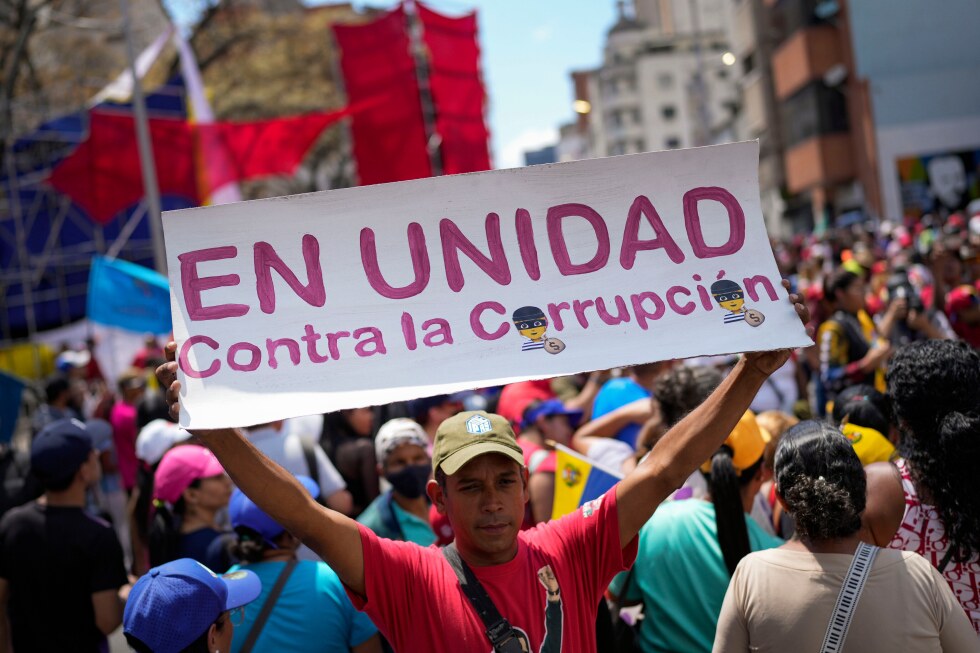
    Hundreds of demonstrators gathered in Caracas over the weekend as Venezuela’s political landscape undergoes dramatic shifts following the capture of former president Nicolas Maduro. The interim government of Delcy Rodriguez has initiated prisoner releases in what appears to be a carefully orchestrated diplomatic opening toward Washington.

    Interim President Rodriguez, who previously served as Maduro’s vice president, has committed to pursuing “the diplomatic route” with the United States. This policy shift has resulted in the liberation of several prominent opposition figures, though human rights organizations note that approximately twenty individuals have been freed thus far—far fewer than the “large” number initially promised.

    From his detention facility in New York, Maduro conveyed through his son that he remains “doing well” following his dramatic capture on January 3rd. US forces apprehended Maduro and his wife Cilia Flores during overnight airstrikes across Caracas, extraditing them to face trial on drug-trafficking and weapons charges.

    The prisoner release initiative has generated both hope and anxiety among Venezuelan families. Outside notorious detention facilities like El Rodeo and El Helicoide, relatives maintained candlelight vigils while displaying signs bearing names of incarcerated loved ones. The atmosphere turned tragic with reports of a detained police officer’s death in state custody, which opposition group Primero Justicia attributed directly to the Rodriguez regime.

    Meanwhile, former US President Donald Trump claimed credit for Venezuela’s political transformations, announcing on his Truth Social platform that the country had “started the process, in a BIG WAY, of releasing their political prisoners.” Trump administration officials have pressed for access to Venezuela’s substantial oil reserves, though industry executives responded cautiously due to the country’s deteriorated infrastructure following years of mismanagement and sanctions.

    The geopolitical ramifications extended to Cuba, with Trump warning Havana to “make a deal” or face consequences as Venezuelan oil exports diminish. Cuban President Miguel Diaz-Canel responded defiantly, asserting Cuba’s sovereignty and readiness to “defend the homeland to the last drop of blood.”

    Despite organized demonstrations featuring approximately 1,000 supporters waving flags with Maduro’s image, the protests notably lacked participation from top figures within the former administration, signaling potential fractures within the political establishment.

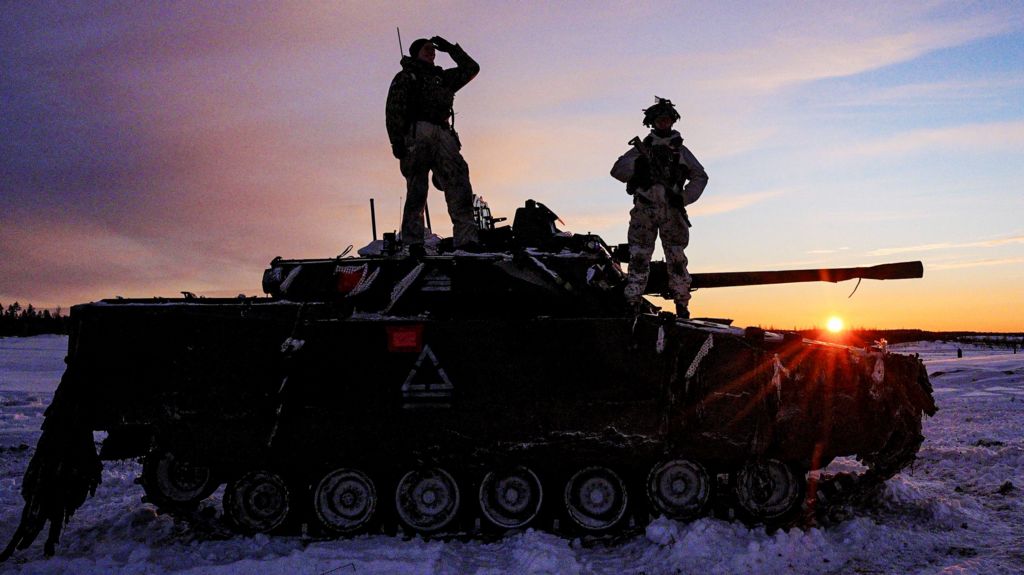
  • Britain is in talks with NATO to counter Russia and China in the Arctic

    Britain is in talks with NATO to counter Russia and China in the Arctic

    LONDON — The United Kingdom is actively coordinating with NATO partners to enhance security measures in the Arctic region, addressing growing concerns about strategic competition from Russia and China. This development emerges alongside diplomatic friction between the United States and Denmark regarding Greenland’s sovereignty.

    Transport Secretary Heidi Alexander characterized these multilateral discussions as routine strategic planning rather than a direct reaction to recent statements from U.S. President Donald Trump regarding Greenland. “While we haven’t witnessed the severe consequences in the Arctic that we’ve seen in Ukraine, it’s imperative that we collaborate with all NATO allies to establish an effective deterrent against Putin’s ambitions,” Alexander stated during a BBC interview.

    The geopolitical landscape has grown increasingly complex since President Trump expressed interest in acquiring Greenland, a semi-autonomous Danish territory, citing prevention of Russian or Chinese expansion as primary motivation. “One way or another, we’re going to have Greenland,” Trump told reporters aboard Air Force One, describing such an acquisition as strategically beneficial for the United States.

    Danish officials have responded firmly to these propositions. Prime Minister Mette Frederiksen has warned that any forced takeover would fundamentally undermine NATO’s integrity. Denmark’s Ambassador to the U.S., Jesper Møller Sørensen, emphasized that Greenland’s future should be determined exclusively by its inhabitants, stating: “Let’s continue to address security challenges in the Arctic as partners and allies.”

    The situation has prompted varied responses from British political figures. Liberal Democrat leader Ed Davey proposed that Britain deploy troops to Greenland under a joint command with Denmark, suggesting this would demonstrate genuine security commitment without violating sovereignty. “Tearing the NATO alliance apart would only play into Putin’s hands,” Davey cautioned.

    Meanwhile, former UK ambassador to the U.S. Peter Mandelson expressed skepticism about military action, noting: “He’s not a fool. We must acknowledge that the Arctic requires securing against China and Russia, and leadership will inevitably fall to the United States.”

    The broader NATO alliance faces philosophical and practical questions regarding collective defense obligations. While President Trump has questioned NATO’s reliability, the alliance’s Article 5 mutual defense provision was previously invoked following the September 11 attacks, leading to NATO’s operational engagement in Afghanistan.

    As diplomatic discussions continue between Danish officials and U.S. Secretary of State Marco Rubio, NATO members are evaluating appropriate responses to potential scenarios involving Greenland, with the UK positioning itself as a mediating force in preserving alliance cohesion.

  • Sudan’s government returns to capital after nearly 3 years of war

    Sudan’s government returns to capital after nearly 3 years of war

    In a landmark development for Sudan’s protracted civil conflict, the nation’s military-led administration has officially reestablished its presence in the capital city of Khartoum after operating from a provisional headquarters in Port Sudan for nearly three years. The symbolic return marks a significant shift in the country’s turbulent political landscape.

    Prime Minister Kamil Idris formally announced the government’s restoration during a press conference on Sunday, characterizing the administration as a ‘government of hope’ committed to addressing the severe humanitarian challenges facing Khartoum’s residents. The capital had endured brutal occupation by the paramilitary Rapid Support Forces (RSF) since April 2023, when violent power struggles erupted between military leadership and the RSF command.

    The reconquest of Khartoum by national army forces last March represented a critical strategic victory after extensive urban combat that left substantial portions of the metropolitan area in ruins. United Nations assessments indicate approximately five million civilians fled the city during the conflict’s most intense phases, while those remaining endured systematic looting and property seizures by RSF fighters.

    Prime Minister Idris outlined immediate priorities including restoration of essential services—particularly electricity, water infrastructure, healthcare systems, and educational institutions—which UN officials had previously reported were ‘barely functional’ as recently as October. The administration simultaneously declared 2026 as a ‘year of peace’ for Sudan, where conservative estimates indicate at least 150,000 fatalities and approximately 12 million displacements throughout the conflict period, creating what international organizations describe as the world’s most severe humanitarian crisis.

    The initial violence originated from the dissolution of Sudan’s ruling coalition, specifically the fracture between army commander General Abdel Fattah al-Burhan and his former deputy Mohamed Hamdan Dagalo, who commands the RSF paramilitary group. Both factions have faced extensive allegations of human rights violations during the conflict, with foreign powers accused of exacerbating hostilities through weapon shipments and strategic support. Recent diplomatic scrutiny has particularly focused on the United Arab Emirates’ alleged backing of RSF forces, claims which Emirati officials vehemently deny.

  • Myanmar votes in second phase of junta-run election

    Myanmar votes in second phase of junta-run election

    Myanmar’s military regime conducted the second phase of its staged electoral process on Sunday, January 11, 2026, amidst mounting international condemnation and domestic skepticism. The voting included the constituency previously represented by ousted democratic leader Aung San Suu Kyi, whose party was forcibly dissolved following the 2021 coup that abruptly ended Myanmar’s decade of democratic transition.

    The State Administration Council, as the junta styles itself, has framed this three-phase electoral exercise as a pathway to restoring civilian governance, with the final phase scheduled for completion by January 25. However, democracy monitoring organizations and international rights experts have uniformly dismissed the process as a carefully orchestrated attempt to cement military dominance under a veneer of electoral legitimacy.

    Electoral mathematics already indicate predetermined outcomes. The military-aligned Union Solidarity and Development Party (USDP) secured approximately 90% of lower house seats during the initial voting phase in late December 2025. This overwhelming victory occurred amid reports of severe voter suppression, with turnout estimated at just 50%—a dramatic decline from the 70% participation recorded in the 2020 elections that brought Suu Kyi’s National League for Democracy to power.

    The electoral landscape reflects Myanmar’s ongoing civil conflict. Voting has been canceled across extensive territories controlled by ethnic rebel factions and resistance forces, while the military has intensified offensive operations, including aerial bombardments of civilian areas, in contested regions. UN Human Rights Special Rapporteur Tom Andrews characterized the process as ‘engineered polls designed to manufacture a facade of legitimacy while violence and repression continue unabated.’

    Myanmar’s political environment remains perilous for dissent. Over 330 individuals face prosecution under junta-enacted laws that criminalize election criticism with penalties up to 10 years imprisonment. The Assistance Association for Political Prisoners documents more than 22,000 political detainees currently held in military prisons, underscoring the repressive context in which this electoral exercise unfolds.

  • Thousands march and dozens arrested in Minneapolis protests against ICE

    Thousands march and dozens arrested in Minneapolis protests against ICE

    Minneapolis became the epicenter of nationwide demonstrations as thousands braved freezing temperatures Saturday to protest U.S. Immigration and Customs Enforcement (ICE) operations. The protests erupted following Wednesday’s fatal shooting of 37-year-old Renee Nicole Good by an ICE agent during what authorities describe as an enforcement operation.

    The ‘ICE out of Minnesota’ rally drew tens of thousands to Powderhorn Park before marching through city streets. Despite Mayor Jacob Frey’s characterization of the protest as predominantly peaceful, tensions flared Friday night when several hundred demonstrators surrounded the Canopy Hotel, believed to house ICE personnel. Police declared an unlawful assembly after protesters forced entry through an alley and allegedly threw ice, snow, and rocks at officers.

    The political fallout intensified as three Minnesota congresswomen—Ilhan Omar, Kelly Morrison, and Angie Craig—accused ICE and the Department of Homeland Security of obstructing congressional oversight after being denied access to local ICE facilities. Their attempted visit came amid revelations of a new DHS policy requiring seven days’ notice for congressional visits, implemented the day after Good’s shooting.

    The incident has exposed deep ideological divisions. Homeland Security Secretary Kristi Noem characterized Good’s actions as ‘domestic terrorism,’ claiming she ‘weaponized’ her vehicle against agents. Conversely, Mayor Frey described the victim as attempting a three-point turn to escape the scene, stating local law enforcement felt ‘outnumbered’ by federal agents.

    Video evidence shows ICE agents approaching Good’s stationary vehicle before shots were fired as she attempted to drive away. The agent involved was identified as Jonathan Ross, a veteran officer previously injured in the line of duty. The FBI has assumed sole investigative authority over the case, prompting Minnesota officials to launch their own inquiry after claiming they were ‘frozen out’ of the federal investigation.

    Protests extended beyond Minneapolis to major cities including New York, Los Angeles, Seattle, and Austin, reflecting growing national tension over immigration enforcement methodologies.

  • Syria govt forces take control of Aleppo’s Kurdish neighbourhoods

    Syria govt forces take control of Aleppo’s Kurdish neighbourhoods

    Syrian government forces have established complete military control over Aleppo’s Kurdish neighborhoods following several days of intense armed conflict, marking a significant shift in the city’s power dynamics. The takeover culminated on Sunday with the evacuation of Kurdish fighters to autonomous regions in northeast Syria under international mediation.

    In the Ashrafiyeh district—the first area to fall under army control—residents cautiously returned to assess substantial property damage, navigating streets littered with shrapnel and shattered glass. Local merchant Yahya al-Sufi reported widespread looting and structural damage to homes, reflecting the violence that displaced civilians earlier in the week.

    The clashes originated from stalled negotiations regarding the integration of Kurdish autonomous administration into Syria’s central government framework. A Syrian security official disclosed that 419 Kurdish combatants, including 59 wounded, were transferred from Sheikh Maqsud neighborhood to Kurdish-controlled zones. Simultaneously, approximately 300 Kurds described variably as fighters or civilians were detained by authorities.

    Contrasting casualty figures emerged from different sources: Syrian officials reported 24 fatalities and 129 wounded since Tuesday, while the Britain-based Syrian Observatory for Human Rights documented 45 civilian deaths plus 60 combatant casualties from both sides. The monitor additionally alleged field executions and body burnings by government forces in Sheikh Maqsud—claims that remain unverified independently.

    The political dimension intensified as Kurdish leader Mazlum Abdi acknowledged international mediation efforts to halt violations against Kurdish communities. U.S. envoy Tom Barrack met with Syrian President Ahmed al-Sharaa, urging a return to dialogue based on last year’s integration agreement. Meanwhile, emotional scenes unfolded in Qamishli where evacuated fighters were greeted by crowds chanting vows of vengeance, accompanied by symbolic defacement of images representing Syrian, Turkish, and American leadership.

    This development echoes earlier phases of Syria’s civil war, particularly the 2016 battle for Aleppo that resulted in government recapture of the city. The current situation underscores ongoing tensions between Damascus’ centralization efforts and Kurdish demands for decentralized governance, with neighboring Turkey monitoring closely due to perceived connections between Kurdish forces and the PKK organization.

  • Trump tells Cuba to ‘make a deal, before it is too late’

    Trump tells Cuba to ‘make a deal, before it is too late’

    In a significant escalation of hemispheric tensions, former U.S. President Donald Trump has delivered a stark warning to Cuba, demanding the nation “make a deal” or face severe consequences following the interception of Venezuelan oil shipments. The ultimatum comes amid a broader campaign against left-wing governments in Latin America that Trump has framed through his revived “Donroe Doctrine”—an aggressive reinterpretation of the 19th-century Monroe Doctrine asserting U.S. supremacy in the Western Hemisphere.

    The confrontation intensified after U.S. forces conducted an unprecedented raid in Caracas on January 3rd, resulting in the capture of Venezuelan leader Nicolás Maduro and his wife, Cilia Flores, who now face drug trafficking charges in the United States. This operation reportedly resulted in the deaths of 32 Cuban nationals who formed part of Maduro’s security detail, a claim that has heightened diplomatic tensions.

    Venezuela, a longstanding Cuban ally, has historically supplied approximately 35,000 barrels of oil daily to the island nation—a vital economic lifeline that the Trump administration has now effectively severed through the seizure of five sanctioned oil tankers. This tactic has already exacerbated existing fuel and electricity shortages in Cuba, creating a humanitarian crisis.

    Trump articulated his position emphatically on Truth Social, stating: “Cuba lived, for many years, on large amounts of OIL and MONEY from Venezuela. In return, Cuba provided ‘Security Services’ for the last two Venezuelan dictators, BUT NOT ANYMORE! THERE WILL BE NO MORE OIL OR MONEY GOING TO CUBA – ZERO! I strongly suggest they make a deal, BEFORE IT IS TOO LATE.” Despite the forceful rhetoric, the former president did not specify what terms such a deal might entail or what precise consequences Cuba would face for non-compliance.

    Cuban leadership responded with defiance. Foreign Minister Bruno Rodríguez asserted the nation’s “absolute right to import fuel without interference or subordination to the unilateral coercive measures of the United States,” emphasizing that Cuba does not engage in “blackmail or military coercion against other States.” President Miguel Díaz-Canel similarly rejected external pressure, stating: “Those who turn everything into a business, even human lives, have no moral authority to point fingers at Cuba for anything, absolutely anything.”

    The administration’s approach appears coordinated, with Secretary of State Marco Rubio—a Cuban-American former senator—suggesting that Cuban leaders “should be worried” and are “in a lot of trouble.” Trump amplified this messaging by sharing a social media post suggesting Rubio could become president of Cuba, commenting: “Sounds good to me!”

    This confrontation represents the latest chapter in the complex U.S.-Cuba relationship that has been strained since the 1959 revolution. While diplomatic relations saw improvement during the Obama administration, Trump has reversed many of those advances, including reinstating Cuba’s designation as a state sponsor of terrorism shortly after beginning his second term—a designation that had been lifted by the Biden administration just days earlier.

    The administration’s Latin American focus has expanded beyond Cuba and Venezuela, with Trump suggesting potential military action in Colombia and offering to deploy U.S. troops to Mexico—proposals that have been firmly rejected by both nations’ leaders. This aggressive posture signals a fundamental shift in hemispheric relations centered on combating drug trafficking and challenging left-wing ideologies throughout the region.

  • Trump won’t take Greenland by force, Mandelson says

    Trump won’t take Greenland by force, Mandelson says

    A significant geopolitical confrontation is unfolding in the Arctic region as the United States under President Donald Trump’s administration demonstrates renewed interest in acquiring Greenland, creating diplomatic friction with NATO allies. While former UK ambassador Lord Mandelson has dismissed the possibility of military action, stating Trump wouldn’t “land on Greenland and take it by force,” the situation has escalated into a serious international discussion about Arctic sovereignty and security.

    The strategic importance of Greenland cannot be overstated. Its geographical position between North America and the Arctic makes it ideally situated for missile early warning systems and monitoring maritime activity. President Trump has repeatedly emphasized Greenland’s vital role in U.S. national security, claiming without evidence that Russian and Chinese vessels increasingly populate surrounding waters. This focus intensified following recent military operations in Venezuela that resulted in the capture of President Nicolas Maduro.

    Denmark and Greenland have firmly maintained that the territory is not for sale, with Danish officials warning that any military intervention would effectively destroy the NATO alliance. This stance has garnered support from major European nations and Canada, who have collectively reaffirmed that “only Denmark and Greenland can decide on matters concerning their relations.”

    The UK government finds itself navigating delicate diplomatic waters. Transport Secretary Heidi Alexander acknowledged the need for enhanced Arctic security cooperation with NATO allies while carefully distinguishing these discussions from being a direct response to U.S. posturing. Meanwhile, political leaders expressed divergent views, with Conservative leader Kemi Badenoch considering Greenland a “second order” issue compared to events in Iran, while Liberal Democrat leader Sir Ed Davey criticized Trump’s “outrageous threats” as benefiting Russian President Vladimir Putin.

    Complicating the diplomatic landscape is the background of Lord Mandelson himself, whose brief tenure as ambassador ended due to revelations about his contacts with convicted sex offender Jeffrey Epstein. Mandelson claims the government was fully aware of his background when appointing him, though Number 10 sources previously stated he had been “economical with the truth” during his vetting process.

    Beyond geopolitical positioning, Greenland’s signifcance extends to its substantial natural resources, including rare earth minerals, uranium, iron, and potential oil and gas reserves that are becoming increasingly accessible due to climate-change-induced ice melt. This economic dimension adds another layer to the ongoing international interest in the strategically crucial territory.

  • With Cuban ally Maduro ousted, Trump warns Havana to make a ‘deal’ before it’s too late

    With Cuban ally Maduro ousted, Trump warns Havana to make a ‘deal’ before it’s too late

    WEST PALM BEACH, Fla. — President Donald Trump escalated tensions with Cuba through a series of social media declarations on Sunday, warning the communist nation of severe economic consequences following the deposition of Venezuelan leader Nicolás Maduro. The U.S. President asserted that Cuba’s longstanding reliance on Venezuelan oil subsidies has reached its definitive endpoint.

    From his Florida residence, Trump proclaimed that Cuba would no longer receive petroleum resources or financial support from Venezuela, emphasizing his message with the declaration: “THERE WILL BE NO MORE OIL OR MONEY GOING TO CUBA – ZERO!” The President urged Cuban leadership to “make a deal, BEFORE IT IS TOO LATE,” though he provided no specific details regarding potential negotiation terms.

    The geopolitical confrontation intensified when Cuban President Miguel Díaz-Canel responded via social media platform X, challenging U.S. moral authority in international affairs. Díaz-Canel asserted that “those who turn everything into a business, even human lives, have no moral authority to point the finger at Cuba.”

    This diplomatic exchange occurs against the backdrop of significant regional upheaval. Cuban authorities reported that 32 military personnel from their nation’s security agencies were killed during the American operation that captured Maduro. These personnel were stationed in Caracas under a bilateral security agreement between Cuba and Venezuela.

    Trump reinforced his position by stating that Venezuela no longer requires protection from “thugs and extortionists,” instead promising that “the most powerful military in the World” would now provide protection to the Venezuelan people.

    The U.S. administration has intensified its pressure campaign against Cuba, which faces its most severe economic crisis in decades. The island nation has suffered from extensive blackouts and critical shortages of essential goods. Cuban officials attribute these challenges primarily to U.S. sanctions, which they claim have cost the economy over $7.5 billion between March 2024 and February 2025.

    Díaz-Canel defended Cuba’s political sovereignty and criticized U.S. economic measures, stating that those blaming the Cuban Revolution for economic hardships “should be ashamed” while condemning American-imposed “draconian measures.”

    Trump previously predicted Cuba’s economic deterioration would accelerate following Maduro’s removal from power, bluntly stating: “It’s going down for the count.”