分类: politics

  • Ugandans vote in tense election as Museveni seeks seventh term

    Ugandans vote in tense election as Museveni seeks seventh term

    Uganda embarked on a pivotal electoral process Thursday amid heightened tensions as long-serving President Yoweri Museveni pursued an unprecedented seventh term in office. The East African nation’s general election pits the 81-year-old incumbent against charismatic opposition leader Robert Kyagulanyi Sentamu, popularly known as Bobi Wine, who has mobilized the country’s substantial youth demographic in his bid for power.

    The electoral contest features eight presidential candidates competing to lead Uganda for the next five years, with approximately 21.7 million registered voters participating across 50,739 polling stations nationwide. Beyond the presidency, Ugandans are simultaneously selecting representatives for 353 parliamentary constituency seats, 146 District Woman Representative positions, and numerous local government roles.

    Campaign rhetoric has highlighted starkly different visions for Uganda’s future. President Museveni, representing the National Resistance Movement, has positioned himself as the guardian of national stability and continued development. Conversely, Bobi Wine’s National Unity Platform has centered its campaign on combating systemic corruption and implementing comprehensive governmental reforms.

    The electoral environment has been marked by significant digital restrictions, with Ugandan authorities implementing an internet blackout citing concerns about misinformation dissemination, potential electoral fraud, and prevention of violence incitement. This decision by the Communications Commission has drawn international scrutiny as polling commenced.

    Voting procedures will continue until 4 PM local time Thursday, with electoral officials confirming that any voters in queue at closing time will be permitted to cast their ballots. The electoral commission anticipates announcing presidential results within approximately 48 hours after polling concludes, setting the stage for a potentially contentious outcome declaration.

    The 2026 election represents a critical juncture in Uganda’s political evolution, testing the durability of Museveni’s 40-year administration against growing demands for change from the country’s youthful majority population.

  • BBC reports from Uganda polling station hit by technical problems

    BBC reports from Uganda polling station hit by technical problems

    Uganda’s pivotal presidential election encountered significant operational hurdles on polling day, with widespread technical failures disrupting the electoral process across multiple voting stations. Reports from various constituencies indicate that biometric voter verification systems, crucial for authenticating voter identities, experienced systemic malfunctions, resulting in extensive delays and growing voter discontent.

    The technological breakdown precipitated long, snaking queues at numerous polling centers, testing the patience of citizens eager to cast their ballots in this high-stakes political contest. Electoral officials scrambled to implement contingency measures, including manual verification processes, to mitigate the escalating crisis. Despite these efforts, the delays compounded logistical challenges already facing the election administration.

    This electoral event features President Yoweri Museveni, who has maintained an uninterrupted tenure since 1986, confronting his most formidable opposition challenge in decades. The technical difficulties have raised serious questions about the electoral commission’s preparedness and have drawn sharp criticism from opposition representatives monitoring the proceedings.

    International observers and local watchdog organizations have expressed concerns regarding how these technological failures might impact the election’s overall credibility and transparency. The electoral commission has acknowledged the issues while maintaining that these are isolated incidents rather than systemic failures, emphasizing their commitment to ensuring every legitimate voter exercises their democratic right.

  • Venezuela’s new leader faces competing pressures from the US and a government loyal to Maduro

    Venezuela’s new leader faces competing pressures from the US and a government loyal to Maduro

    CARACAS, Venezuela — Venezuela’s interim President Delcy Rodríguez delivered her inaugural state of the union address Thursday amid mounting political tensions, balancing competing demands from the United States government and loyalists of ousted leader Nicolás Maduro. The address to the National Assembly, dominated by the ruling party, outlined Rodríguez’s governance vision during this transitional period.

    The speech followed Rodríguez’s announcement of continued prisoner releases from the Maduro era, characterizing the development as part of a ‘new political moment’ following the U.S.-orchestrated removal of her predecessor earlier this month. The acting president faces the complex task of reconciling Washington’s expectations with the influence of hardline factions controlling Venezuela’s security apparatus.

    In a significant diplomatic development, U.S. President Donald Trump hosted Venezuelan opposition leader María Corina Machado at the White House on Thursday, despite having previously sidelined her by endorsing Rodríguez. Machado’s political coalition is widely recognized as the legitimate winner of the 2024 elections that Maduro had rejected.

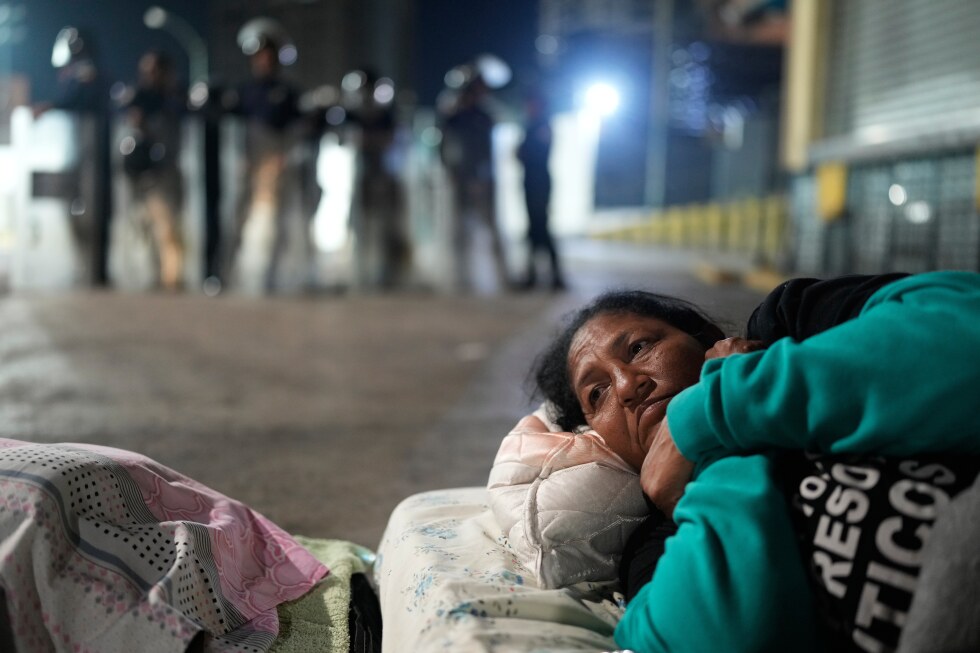
    Rodríguez confirmed following a Tuesday telephone discussion with Trump that her administration would dedicate ‘every dollar’ from petroleum revenues to revitalize Venezuela’s critically deteriorated public healthcare infrastructure. The nation’s medical facilities have suffered systemic collapse, requiring patients to provide even basic medical supplies ranging from syringes to surgical implements.

    The interim leader operates under considerable pressure from Washington, having been sanctioned previously for human rights violations during Trump’s initial presidential term. Trump has explicitly threatened Rodríguez with consequences ‘probably worse than Maduro’ should she fail to cooperate with U.S. objectives regarding Venezuela’s oil industry restructuring.

    Maduro remains incarcerated in a Brooklyn detention facility after pleading not guilty to narcotics trafficking allegations, while Rodríguez maneuvers through Venezuela’s complex political landscape.

  • Trump threatens to invoke Insurrection Act over Minnesota protests

    Trump threatens to invoke Insurrection Act over Minnesota protests

    President Donald Trump has escalated his rhetoric regarding ongoing protests in Minneapolis, Minnesota, threatening to invoke the 19th-century Insurrection Act to deploy military forces domestically. The declaration came via his Truth Social platform amid heightened tensions following two separate shooting incidents involving federal immigration agents.

    The situation intensified Wednesday evening when an Immigration and Customs Enforcement (ICE) agent shot and wounded a Venezuelan man during an apprehension attempt. According to Homeland Security officials, the incident occurred when two individuals emerged from a nearby residence and assaulted the agent with a snow shovel and broom handle during the struggle. The wounded man received treatment for a non-life-threatening leg injury, while his alleged accomplices were taken into custody.

    This marks the second shooting involving ICE personnel within a week in Minneapolis. The previous incident on January 7 resulted in the death of 37-year-old Renee Nicole Good, sparking sustained protests and drawing additional federal agents to the northern city.

    Trump’s social media statement accused Minnesota politicians of failing to control ‘professional agitators and insurrectionists’ targeting ICE personnel. ‘If the corrupt politicians of Minnesota don’t obey the law and stop the professional agitators… I will institute the INSURRECTION ACT and quickly put an end to the travesty,’ the former president wrote.

    The Insurrection Act, last invoked in 1992 by President George H.W. Bush during the Los Angeles riots, empowers the president to deploy military forces for domestic law enforcement during insurrection scenarios. Homeland Security Secretary Kristi Noem declined to speculate on whether Trump would follow through with the threat, acknowledging only that ‘it’s his constitutional right’ to utilize the mechanism.

    The unfolding situation represents the latest escalation in Trump’s hardened immigration enforcement approach, which has previously included threats to deploy National Guard units and has drawn accusations of authoritarian overreach from critics.

  • Colombian president confirms date for meeting with Trump at White House

    Colombian president confirms date for meeting with Trump at White House

    Colombian President Gustavo Petro has officially confirmed a high-stakes diplomatic meeting with US President Donald Trump scheduled for February 3rd at the White House. The announcement came during a publicly broadcast cabinet meeting on Wednesday, where Petro emphasized the critical nature of these bilateral discussions.

    The meeting, established through formal diplomatic channels between the two governments, will mark the first face-to-face encounter between the leaders since Trump’s return to office. Central to the agenda will be addressing persistent issues in US-Colombia relations, with drug trafficking prevention emerging as a primary focus area.

    President Trump had previously expressed enthusiasm for the January meeting following a January 7th phone conversation between the leaders, during which he publicly praised Petro and emphasized the importance of continued dialogue on narcotics control.

    The diplomatic engagement occurs against a backdrop of heightened US pressure on Latin American nations regarding security and drug-related matters. Tensions surfaced earlier this month when Trump issued veiled threats toward Colombia on January 4th, suggesting that taking action against the country “sounds good.” Petro responded decisively via social media the following day, indicating readiness to “take up again the weapons that no one wants to touch” in response to what he characterized as “illegal threats.”

    Despite these diplomatic friction points, both administrations appear committed to dialogue, with Petro underscoring the meeting’s significance for ensuring the safety and security of the Colombian people.

  • Leaders meet, but enduring rifts remain in Japan-S. Korea ties

    Leaders meet, but enduring rifts remain in Japan-S. Korea ties

    In a carefully choreographed diplomatic encounter, South Korean President Lee Jae-myung concluded a two-day visit to Japan this week, engaging in bilateral discussions with Japanese Prime Minister Sanae Takaichi. The meeting, held in Nara, western Japan, produced striking imagery as the leaders posed with autographed drumsticks following a joint drum-playing demonstration—a symbolic gesture of cooperation that contrasted sharply with the substantive disagreements that characterized their private talks.

    The 90-minute discussion encompassed economic collaboration, artificial intelligence development, regional security architectures, and select historical matters. Notably absent from the formal agenda were the most contentious bilateral issues: compensation for wartime forced labor, the ‘comfort women’ controversy, and the sovereignty dispute over the Dokdo/Takeshima islets.

    Divergent strategic perspectives emerged prominently during the post-meeting press conference. Prime Minister Takaichi emphasized strengthening trilateral cooperation with the United States as crucial for regional stability, framing Japan-South Korea relations as possessing ‘strategic importance.’ President Lee notably avoided this terminology, instead advocating for broader multilateral cooperation across Northeast Asia beyond the US-centered framework.

    Analysts suggest domestic political considerations significantly influenced the summit’s staging. With Takaichi preparing to dissolve Japan’s lower house for snap elections later this month, the meeting provided an opportunity to showcase diplomatic achievements amid criticism of her administration’s foreign policy challenges. Meanwhile, President Lee faces persistent domestic pressure regarding historical issues, evidenced by pre-summit protests in Seoul demanding Japanese accountability for wartime actions.

    The territorial dispute remains particularly intractable. Takaichi’s December parliamentary declaration reaffirming Japan’s claim to the disputed islets triggered strong condemnation in South Korea, with major media outlets labeling the statements provocative and detrimental to bilateral relations. The upcoming February observance of ‘Takeshima Day’ in Japan represents another potential flashpoint, especially given Takaichi’s refusal to rule out elevated official participation.

    The leaders announced a rare collaborative initiative to recover and identify remains from the 1942 Chosei coal mine flooding, which claimed 183 lives including 136 forcibly mobilized Koreans. Experts note this project represents perhaps the only historically charged issue currently manageable for bilateral cooperation, primarily because Japanese victims were also involved and domestic advocacy for resolution exists within Japan.

    Despite the ceremonial displays of goodwill, analysts from both countries conclude that the summit relied on temporarily shelving disputes rather than resolving them. Given the current Japanese administration’s stance on historical issues and its confrontational security outlook, bilateral relations are likely to remain instrumental rather than strategic in the foreseeable future, characterized by pragmatic cooperation on specific issues while fundamental divisions persist.

  • US forces seize a sixth Venezuela-linked oil tanker in Caribbean Sea

    US forces seize a sixth Venezuela-linked oil tanker in Caribbean Sea

    United States Southern Command forces have conducted a sixth maritime interception operation in the Caribbean Sea as part of Washington’s escalating campaign to control Venezuelan oil exports. The vessel Veronica was boarded during a pre-dawn operation that military officials described as executed “without incident.”

    The seizure occurred as the tanker was attempting to circumvent President Donald Trump’s sanctioned vessel quarantine program. “The only oil leaving Venezuela will be oil that is coordinated properly and lawfully,” stated the Southern Command in an official release.

    This latest maritime enforcement action follows recent U.S. military strikes against Venezuela and the detention of President Nicolás Maduro earlier this month. The Trump administration has openly declared intentions to access the nation’s substantial petroleum reserves, estimated among the largest globally.

    In a significant development, a U.S. official confirmed Wednesday the completion of the first sale of Venezuelan oil under American control, valued at approximately $500 million (£373 million). The transaction signals the operationalization of Washington’s strategy to monetize seized Venezuelan resources.

    Thursday’s interception indicates the administration’s continued crackdown on the so-called “dark fleet” – an network of over 1,000 vessels specializing in transporting sanctioned petroleum products. The United States is currently collaborating with Venezuela’s interim government to establish control over the country’s oil sales infrastructure and revenue streams.

  • Moscow agrees with Trump that Ukraine is holding up a peace deal, the Kremlin says

    Moscow agrees with Trump that Ukraine is holding up a peace deal, the Kremlin says

    The Kremlin has publicly aligned itself with former U.S. President Donald Trump’s characterization of Ukrainian leadership as the primary obstacle to peace negotiations in the ongoing Russo-Ukrainian conflict. Kremlin spokesperson Dmitry Peskov stated Thursday that Moscow concurs with Trump’s assessment that President Volodymyr Zelenskyy is impeding U.S.-led peace efforts, marking a significant convergence of views between Russian officials and the former American president.

    This alignment emerges against a backdrop of starkly contrasting European perspectives. European leaders, including Polish Prime Minister Donald Tusk, have consistently attributed negotiation delays to Russian President Vladimir Putin’s strategic stalling tactics. Tusk explicitly countered Trump’s remarks, asserting on social media platform X that Russia had rejected the American-prepared peace plan and responded instead with intensified missile attacks on Ukrainian urban centers.

    Putin himself articulated Russia’s position during a diplomatic credentials ceremony, emphasizing Moscow’s demand for comprehensive security guarantees as an essential component of any prospective peace agreement. The Russian leader underscored that security must be “universal, equal and indivisible,” warning that without such assurances, Russia would persist in pursuing its military objectives.

    The diplomatic landscape appears increasingly complex as conflicting reports emerge regarding U.S. policy directions. While Trump’s comments suggested Ukrainian intransigence, simultaneous developments indicated potential hardening of American stance toward Russia. Senator Lindsey Graham referenced upcoming stringent sanctions designed to economically pressure Moscow, and U.S. officials accused Russia of dangerously escalating hostilities despite ongoing peace negotiations.

    Independent analysis from the Institute for the Study of War supports the European perspective, concluding that the Kremlin has deliberately protracted peace discussions to achieve original war aims through military means. This assessment gained grim validation as Russian drones struck civilian areas in western Ukraine, including a playground in Lviv, causing significant property damage though fortunately no casualties.

    With no agreed timeline for further diplomatic engagements between U.S. envoy Steve Witkoff and Russian officials, the conflict continues amid fundamentally divergent interpretations of negotiation impediments and security requirements.

  • Watch: Danes and Americans react to US threats against Greenland

    Watch: Danes and Americans react to US threats against Greenland

    A wave of disbelief and concern has swept through both Denmark and American communities with Danish heritage following former President Donald Trump’s persistent campaign to bring Greenland under U.S. jurisdiction. The renewed interest in acquiring the autonomous Danish territory has sparked diplomatic unease and public bewilderment on both sides of the Atlantic.

    In Copenhagen, citizens expressed astonishment at the revival of what many consider a colonial-era approach to international relations. The concept of purchasing a sovereign territory with its own established government and culture has been met with particular incredulity among Danish policymakers and the general public alike.

    Meanwhile, in Solvang, California—often referred to as ‘The Danish Capital of America’—residents of Danish descent have reacted with mixed emotions of pride in their heritage and concern about the potential geopolitical implications. Many find themselves caught between their American identity and their cultural connections to Denmark, creating a unique perspective on the unusual territorial proposition.

    The situation has highlighted the complex nature of modern international relations, where historical precedents meet contemporary diplomatic norms. Greenland itself, while enjoying self-governance in most matters, remains part of the Kingdom of Denmark, which handles its foreign and security policy. The island’s strategic location and natural resources have increasingly attracted global attention in recent years, particularly as climate change opens new Arctic shipping routes and access to untapped mineral deposits.

    Political analysts suggest that the renewed discussion about acquiring Greenland represents a significant departure from conventional diplomatic approaches between allied nations, potentially creating lasting implications for U.S.-Denmark relations and America’s standing among European partners.

  • US seizes in Caribbean Sea another sanctioned oil tanker it says has ties to Venezuela

    US seizes in Caribbean Sea another sanctioned oil tanker it says has ties to Venezuela

    United States military forces have intercepted another Venezuelan-flagged oil tanker in the Caribbean Sea, marking the sixth such seizure in the Trump administration’s ongoing campaign to control Venezuela’s petroleum resources. The Motor Tanker Veronica was captured in a coordinated operation involving multiple branches of the U.S. military and law enforcement agencies.

    Homeland Security Secretary Kristi Noem announced the seizure through social media channels, stating the vessel had previously navigated through Venezuelan waters while defying President Trump’s established quarantine protocol for sanctioned ships in the Caribbean region. The operation featured Marines and sailors deployed from the USS Gerald R. Ford aircraft carrier, with a specialized U.S. Coast Guard tactical team executing the actual boarding and seizure procedures.

    Documentation of the mission released by officials includes black-and-white aerial footage showing military helicopters hovering above the merchant vessel’s deck as armed personnel descended via ropes to secure the tanker. This represents the fourth interception since the surprising nighttime raid that ousted Venezuelan President Nicolás Maduro approximately two weeks ago.

    Noem emphasized the interagency coordination behind the operation, noting collaboration with the State and Justice Departments alongside military counterparts. She praised Coast Guard personnel for executing what she characterized as a flawless operation conducted in compliance with international legal standards.

    While administration officials publicly frame these seizures as law enforcement actions, other Republican officials acknowledge the financial motivations behind the campaign. The Trump administration aims to generate significant revenue through the sale of 30-50 million barrels of sanctioned Venezuelan oil, with broader plans to invest $100 billion in rebuilding Venezuela’s damaged oil infrastructure and revitalizing its economy.