分类: politics

  • Why India’s approach makes sense in the Gulf today

    Why India’s approach makes sense in the Gulf today

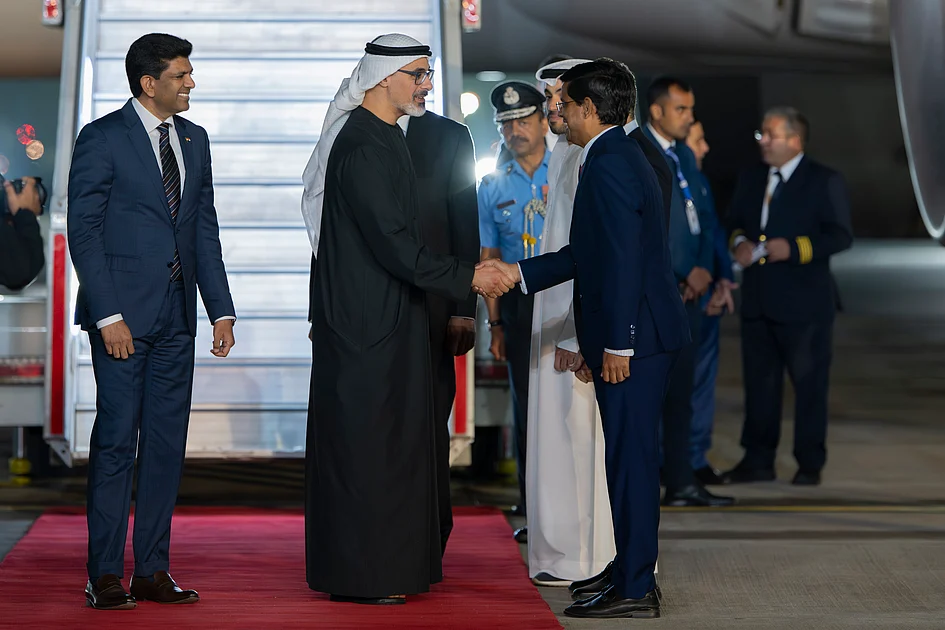
    In the volatile landscape of West Asian geopolitics, India has cultivated a distinctive diplomatic approach characterized by strategic patience and principled engagement. Rather than resorting to public posturing or reactive measures, New Delhi’s foreign policy operates on the foundational belief that sustainable peace represents a collective responsibility rather than a concession between powers.

    This philosophy finds expression in India’s consistent advocacy for dialogue and de-escalation during regional tensions. Recent developments involving Iran have demonstrated the practical application of this methodology, with India prioritizing measured communication over condemnation and maintaining open channels across political divides. Prime Minister Narendra Modi’s explicit statement that “this is not the time for war” encapsulates this consistent warning against escalation in an interconnected world where conflicts rapidly transcend local boundaries.

    India’s credibility in advocating restraint stems from its demonstrated refusal to advance interests through proxy relationships or zero-sum diplomacy. The nation has maintained multifaceted ties with key regional players including the United Arab Emirates and Saudi Arabia, with partnerships spanning energy security, trade networks, defense cooperation, and technological exchange. These relationships are strengthened by substantial people-to-connections, with millions of Indian expatriates contributing to Gulf economies while Gulf investments fuel India’s own growth trajectory.

    The conceptual framework of Vasudeva Kutumbakam—the ancient Indian principle envisioning the world as one family—informs this diplomatic paradigm. Far from abstract idealism, this worldview promotes practical bridge-building where others establish hardened camps. India’s conflict resolution approach emphasizes inclusion over humiliation, believing sustainable peace emerges when local stakeholders claim ownership of solutions rather than having outcomes externally imposed.

    While some critics misinterpret this consistent posture as ambiguity, it actually reflects strategic clarity refined through historical experience. India’s role may not generate sensational headlines, but its steady emphasis on dialogue, sovereignty respect, and shared prosperity provides stabilizing reassurance during periods of uncertainty. In an increasingly transactional global environment, India’s commitment to diplomacy rooted in mutual respect and long-term vision offers a compelling alternative model for international engagement.

  • Vietnam’s Communist Party congress meets to pick new leaders​

    Vietnam’s Communist Party congress meets to pick new leaders​

    Vietnam’s political landscape enters a pivotal phase as the ruling Communist Party commences its quintennial congress, a decisive gathering that will determine the nation’s leadership structure and establish critical economic objectives for the coming years. This high-stakes assembly brings together approximately 1,600 delegates tasked with approving comprehensive policy frameworks and electing key governing bodies.

    At the forefront of leadership considerations stands General Secretary Tô Lâm, widely regarded as the predominant candidate for continuation in the party’s most influential position. The 68-year-old leader, who assumed office in August 2024 following the passing of his predecessor Nguyễn Phú Trọng, has championed an ambitious reform agenda during his tenure. Lam’s background as a former police official within the secretive public security ministry has shaped his governance approach, characterized by both economic modernization initiatives and consolidation of institutional power.

    The political proceedings follow a meticulously orchestrated sequence: delegates will first elect a new Central Committee of approximately 200 members, who in turn will select the 17-19 member Politburo—the party’s supreme decision-making authority. This body ultimately determines the general secretary position through a closed-door process devoid of electoral competition, typically resulting in near-unanimous approvals. The Vietnamese public maintains no direct involvement in selecting national leadership.

    Economically, Vietnam confronts both remarkable opportunities and significant challenges. While boasting Southeast Asia’s most rapidly expanding economy with consistent growth exceeding 6% annually, the administration has established an ambitious 10% growth target for 2026. This objective emerges amidst complex global trade dynamics, particularly concerning U.S. tariff policies that initially threatened 46% levies before settling at 20% on Vietnamese exports. Remarkably, official statistics indicate a 28% increase in exports to the United States despite these trade barriers.

    The nation’s single-party socialist system has fostered policy continuity that attracts substantial foreign investment, especially as multinational corporations diversify supply chains away from China. However, maintaining this economic momentum requires navigating persistent challenges including institutional corruption—which precipitated the resignation of two previous presidents—and the looming uncertainty of international trade relations.

    Lam’s vision for national development extends beyond immediate economic targets, envisioning transformation into an upper-income, knowledge-driven technological economy by 2045. His administration has prioritized administrative reforms, private sector expansion, and national development initiatives while simultaneously centralizing authority and enhancing the police ministry’s influence.

    Leadership transitions may extend beyond the congress’s January 25 conclusion, with legislative elections scheduled for March 15 and the new National Assembly convening in April to formally appoint senior government officials. Reports suggest potential constitutional modifications regarding leadership structure, including possible consolidation of the general secretary and presidential roles—a arrangement Lam experienced temporarily between May and August 2024.

    The congress outcomes will fundamentally shape Vietnam’s political and economic direction, testing the Communist Party’s capacity to deliver prosperity and maintain legitimacy through fulfilling its ambitious developmental promises.

  • India gets Trump’s invite to join Board of Peace on Gaza, source says

    India gets Trump’s invite to join Board of Peace on Gaza, source says

    The Trump administration has formally invited India to participate in its newly proposed “Board of Peace” initiative targeting global conflict resolution, with initial focus on the Gaza situation, according to a senior Indian government official speaking on Sunday, January 18, 2026.

    The invitation arrives during a period of diplomatic strain between New Delhi and Washington, primarily driven by the collapse of bilateral trade negotiations. The failed trade deal would have reduced substantial tariffs currently imposed on Indian exports to the United States, which stand among the world’s highest at approximately 50 percent.

    President Trump has reportedly extended similar invitations to nearly 60 nations worldwide, including Pakistan—India’s regional neighbor and strategic rival. The Pakistani government has already indicated its willingness to engage with international peace and security efforts concerning the Palestinian territory.

    India’s Ministry of External Affairs has not yet issued an official response regarding its potential participation in the initiative. The silence leaves observers questioning whether New Delhi will commit to the multinational diplomatic effort.

    The proposed Board of Peace represents the Trump administration’s latest attempt to address protracted global conflicts through a coalition of willing nations. Its formation and operational framework remain undefined, though the Gaza conflict appears to be its initial testing ground.

  • Surging billionaire wealth a political threat, Oxfam warns as Davos opens

    Surging billionaire wealth a political threat, Oxfam warns as Davos opens

    As global elites convened for the World Economic Forum in Davos, Oxfam issued a stark warning about the unprecedented concentration of wealth among billionaires, describing it as a grave political danger. The charity’s annual report revealed that billionaire fortunes surged to a record $18.3 trillion in 2025, marking a 16.2% increase during the first year of Donald Trump’s second presidential term.

    The analysis specifically highlighted Trump’s policy initiatives—including deregulation efforts and undermining international corporate tax agreements—as significant drivers of this wealth accumulation among the ultra-wealthy. For the first time in history, the world now counts more than 3,000 billionaires, with the top 12 individuals, led by Tesla’s Elon Musk, possessing more collective wealth than the poorest four billion people globally.

    Oxfam emphasized that this economic disparity is increasingly translating into political influence, citing billionaires’ acquisitions of major media outlets such as Musk’s takeover of X (formerly Twitter) and Jeff Bezos’ purchase of The Washington Post. Amitabh Behar, Oxfam’s executive director, characterized the situation as ‘highly dangerous and unsustainable,’ noting that the wealth gap is creating a parallel ‘political deficit’ that undermines democratic processes.

    The report specifically criticized Washington’s decision to exempt U.S. multinationals from the internationally agreed minimum tax rate of 15%, calling it a clear example of how economic inequality is being institutionalized. ‘The super-rich have not only accumulated more wealth than could ever be spent,’ Oxfam stated, ‘but have also used this wealth to secure the political power to shape the rules that define our economies and govern nations.’

    Trump’s participation at Davos drew approximately 300 protesters to the Swiss resort town on Sunday, many wearing masks of Musk and Vice President JD Vance while holding symbolic fistfuls of euros. Nathalie Ruoss of the Swiss Young Socialists told AFP that the World Economic Forum lacks democratic legitimacy, particularly criticizing its inclusion of figures like Trump whom she described as ‘fascists.’

    The gathering occurs amid heightened tensions regarding the political influence of extreme wealth, with Oxfam concluding that billionaire power ‘undermines political freedom and erodes the rights of the many’ while giving the ultra-wealthy disproportionate control over global futures.

  • Syrian interim leader signs agreement with SDF to integrate institutions, restore state authority

    Syrian interim leader signs agreement with SDF to integrate institutions, restore state authority

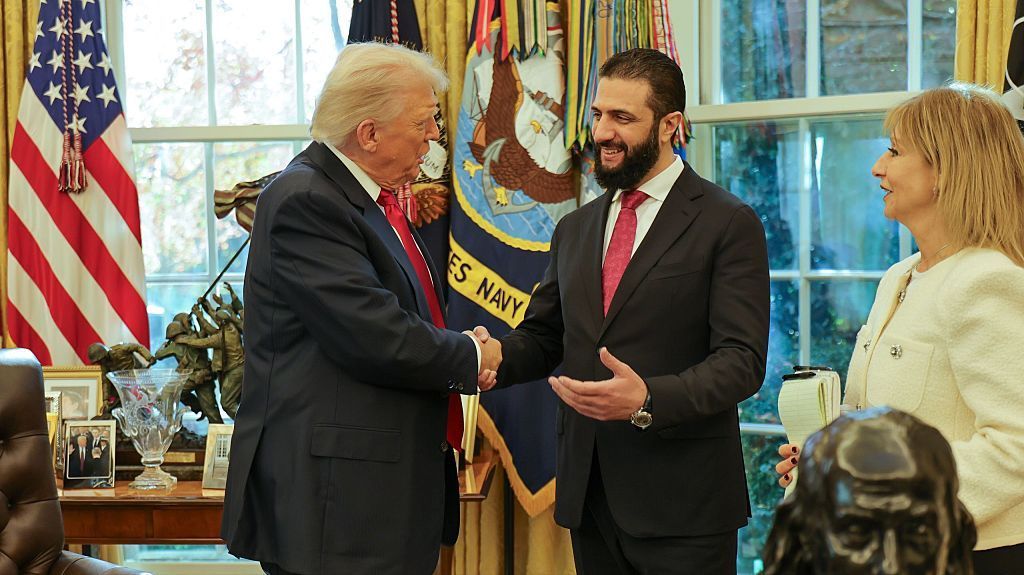
    In a landmark development for Syria’s protracted conflict, interim leader Ahmad al-Sharaa announced on Sunday a comprehensive ceasefire and integration agreement with the Kurdish-led Syrian Democratic Forces (SDF). The accord, brokered after weeks of intensified clashes, marks the most significant step toward reunifying government control over the strategically vital northeast region since previous arrangements collapsed in 2025.

    The immediate ceasefire covers all active fronts, with SDF forces commencing withdrawal from positions east of the Euphrates River to facilitate redeployment. The agreement stipulates full transfer of administrative and military authority in Deir al-Zour and Raqqa provinces to Damascus, including civil institutions and public facilities. Notably, the government has committed to retaining current employees in their positions and granting amnesty to SDF members and local administrators.

    Further provisions include the integration of Hasakah province’s civil institutions into state governance, with al-Sharaa issuing a decree to appoint a new governor. All SDF military and security personnel will undergo individual security vetting before incorporation into government ministries, with guaranteed ranks, salaries, and benefits according to established regulations.

    The breakthrough follows recent escalation in Aleppo’s eastern countryside, Raqqa, and Deir al-Zour that resulted in competing military advances and civilian displacement. Damascus authorities characterized the agreement as essential for restoring stability, preserving national unity, and bringing all armed formations under state authority. Implementation begins immediately, signaling a potential turning point in Syria’s complex geopolitical landscape.

  • Iran’s president warns strikes on Khamenei would lead to ‘all-out war’

    Iran’s president warns strikes on Khamenei would lead to ‘all-out war’

    Iranian President Masoud Pezeshkian has issued a grave warning that any military strike targeting Supreme Leader Ayatollah Ali Khamenei would be interpreted as a declaration of comprehensive warfare against the Iranian nation. This stern pronouncement emerged amidst escalating diplomatic hostilities between Tehran and Washington.

    The presidential statement, disseminated via social media platform X on Sunday, constitutes a direct response to provocative remarks from US President Donald Trump. In an interview with Politico published Saturday, Trump explicitly called for regime change in Iran, asserting that ‘the time has arrived to seek new leadership in Iran.’

    President Pezeshkian’s communiqué further attributed Iran’s economic challenges to what he characterized as ‘persistent antagonism’ and ‘cruel sanctions’ enforced by the United States and allied nations. He maintained these measures have principally instigated the hardships confronting ordinary Iranian citizens.

    The diplomatic confrontation intensified earlier when Supreme Leader Khamenei personally denounced Trump as a ‘criminal,’ alleging his responsibility for casualties and destruction during recent domestic turmoil in Iran. Bilateral relations have remained profoundly strained since Trump’s return to executive power, marked by the perpetuation of maximum pressure tactics and recurrent verbal clashes between the two administrations.

    This exchange represents the most severe rhetorical escalation since the renewal of tensions, highlighting the fragile state of US-Iran relations and raising concerns about potential miscalculation that could precipitate open conflict.

  • Hispanic voters sent Trump back to power. Now some are souring

    Hispanic voters sent Trump back to power. Now some are souring

    A significant shift is occurring within the Latino electorate that helped propel Donald Trump to victory in the 2024 presidential election. New polling data from CBS News reveals a notable decline in support, with approval among Latino voters dropping to 38%—a substantial decrease from the 49% recorded in February following his inauguration. This demographic, representing over 36 million people and constituting the largest non-white voting bloc in the United States, appears to be reconsidering its allegiance to the Republican administration.

    The economic concerns that initially drove Latino voters toward Trump have now become his administration’s greatest vulnerability. While 93% of Latino Trump voters cited the economy as their primary issue during the 2024 election according to Pew Research, current CBS polling shows 61% now disapprove of Trump’s economic management, with 69% expressing dissatisfaction with his handling of inflation. Despite White House officials highlighting lower gas prices, tariff revenue, and foreign investment as successes, many Latino voters report continued financial strain.

    Moses Santana, a resident of a predominantly Latino neighborhood in North Philadelphia, observed that ‘things are still getting tight… people who are low-income are definitely feeling the impact of the prices.’ This sentiment was echoed by John Acevedo, a 74-year-old California realtor who noted that ‘He promised they would come down. They haven’t.’

    The administration’s immigration enforcement operations have further complicated the relationship with Latino voters. With over 600,000 deportations between January and early December 2024 and widespread ICE raids, 70% of Latinos disapprove of Trump’s immigration handling according to CBS data—significantly higher than the national average of 58%. While some supporters defend these measures as protecting legal immigrants’ jobs, others like Oscar Byron Sarmiento, a Houston electrician, believe the approach has ‘gone a little bit extreme.’

    Republican strategist Mike Madrid, a prominent observer of Latino politics, suggests that ‘The Latino shift right was more a function of Latinos leaving the Democratic Party [due to the economy] than it was a function of being compelled by the Republican Party.’ He notes that Latino voters, having the ‘weakest partisan anchor of any group,’ are willing to reject both parties when they feel failed.

    As the administration approaches midterm elections, addressing this erosion of support presents a significant challenge. Even staunch supporters acknowledge growing concerns, with Crystal Sarmiento noting that ‘Right now Trump is trending in a lower direction, simply because of not being able to get in front of the messaging.’ The administration’s ability to address economic anxieties and modify its approach to immigration may determine whether it can reclaim the Latino support that proved decisive in 2024.

  • Faisal Islam: Global disruption looms large over biggest-ever Davos

    Faisal Islam: Global disruption looms large over biggest-ever Davos

    The pristine slopes of Davos provide an incongruous backdrop for what promises to be one of the most politically charged World Economic Forum gatherings in recent memory. President Donald Trump’s scheduled appearance Wednesday marks his physical debut at the Alpine summit following last year’s remote participation just days after his inauguration.

    The American president returns as what analysts term the ‘chief global disruptor,’ bringing with him an entourage of five cabinet members and corporate titans including Nvidia’s Jensen Huang and Microsoft’s Satya Nadella. His presence has dramatically amplified attendance figures, creating the largest Davos congregation on record.

    Central to the geopolitical tension is Trump’s extraordinary territorial ambition regarding Greenland—a proposition that has left European leaders both bewildered and concerned. The administration’s attempt to economically pressure Europe into selling the autonomous Danish territory represents precisely the type of unilateral action that contradicts the forum’s official theme of ‘spirit of dialogue.’

    This year’s proceedings unfold under unusual circumstances, with reports suggesting the White House pressured organizers to minimize traditional focus areas like environmental sustainability and global development in favor of hardline business discussions. The creation of a ‘USA House’ in a local church—funded by American corporations to celebrate the World Cup and 250th anniversary of U.S. independence—further underscores the administration’s America-first approach.

    The forum gathers an unprecedented 65 heads of state alongside Ukrainian President Volodymyr Zelensky, 850 top executives, and numerous technology pioneers. This concentration of global leadership has sparked comparisons to historic summits like Yalta, particularly given ongoing border disputes from Venezuela’s Caracas to Ukraine’s Donbas region.

    While Trump champions economic nationalism, Canadian leadership presents a contrasting vision of North American cooperation. Prime Minister Mark Carney arrives having successfully navigated U.S. trade turbulence through diversified partnerships and strengthened multilateral alliances, recently advocating for a new world order alongside Chinese leadership.

    China’s substantial delegation, operating at finance minister level, positions the world’s second-largest economy as a stabilizing force amid American disruption. Their growing technological dominance—evidenced by last year’s surprise emergence of the DeepSeek AI chatbot that overshadowed early-week American triumphalism—signals a fundamental power shift that many European manufacturers now acknowledge as irreversible in critical sectors like electric vehicle batteries.

    Despite frequent criticisms of the Davos concept, this year’s forum offers a unique lens through which to observe the accelerating reorganization of global influence and the competing visions for international cooperation in an increasingly fragmented world.

  • Pentagon readies 1,500 troops for potential Minnesota deployment, US officials say

    Pentagon readies 1,500 troops for potential Minnesota deployment, US officials say

    The Pentagon has initiated prepare-to-deploy orders for approximately 1,500 active-duty soldiers from Alaska-based units amid escalating tensions in Minnesota, according to senior U.S. officials. The mobilization preparation comes as federal immigration enforcement operations have sparked widespread protests and confrontations in the Midwestern state.

    The strategic positioning of cold-weather specialized troops from the 11th Airborne Division’s infantry battalions follows President Donald Trump’s Thursday threat to invoke the Insurrection Act if state officials fail to curb protests targeting Immigration and Customs Enforcement personnel. While deployment remains uncertain, the move represents the administration’s latest escalation in responding to domestic civil disturbances.

    This development occurs against the backdrop of intensified federal immigration enforcement in Minneapolis, where tensions dramatically increased after an ICE agent fatally shot Renee Good, a U.S. citizen and mother of three, during a January 7th encounter. The incident has galvanized opposition to the nearly 3,000 federal agents deployed to the Minneapolis-St. Paul area since last week.

    The Trump administration maintains that military deployment would protect federal property and personnel, citing previous deployments in Los Angeles where Marines were dispatched under similar justification. Legal complexities surround potential deployment, as presidents possess authority to deploy active-duty forces for specific domestic purposes without invoking the Insurrection Act.

    Minnesota Governor Tim Walz has mobilized the state’s National Guard while facing a Justice Department criminal investigation. Local leaders have consistently accused the administration of federal overreach and exaggerating isolated violence to justify military intervention. The administration has particularly focused on Minnesota’s Somali immigrant community in its rationale for increased enforcement.

    The Pentagon and White House have not publicly commented on the deployment preparations, which were first reported by ABC News. The situation continues to evolve as both protest activity and federal enforcement operations persist in the region.

  • Trump tests boundaries of his power as Minnesota pushes back

    Trump tests boundaries of his power as Minnesota pushes back

    Minnesota has become the epicenter of a mounting constitutional crisis as federal immigration enforcement operations trigger widespread civil unrest and prompt military deployment preparations. The state faces unprecedented tensions with approximately 1,500 troops reportedly standing ready for deployment amid escalating protests against President Trump’s aggressive immigration enforcement campaign.

    In the Twin Cities of Minneapolis and St. Paul, civilian monitoring groups have organized to track and document the activities of U.S. Immigration and Customs Enforcement (ICE) agents. One activist, operating under the pseudonym ‘Sunshine’ due to safety concerns, explained her daily routine of tracking unmarked ICE vehicles through city streets. ‘We have the legal right to observe [ICE agents], but they seem to have forgotten that,’ she stated while navigating the icy roads of St. Paul.

    The conflict reached a critical juncture following the January 7th fatal shooting of 37-year-old Minneapolis resident Renée Good by an ICE agent. The circumstances remain fiercely contested, with federal authorities claiming self-defense while local officials maintain the victim posed no danger. This incident has galvanized community resistance and intensified protests outside federal buildings, despite freezing temperatures.

    Federal judicial intervention has attempted to de-escalate tensions. U.S. District Judge Katherine Menendez issued a restraining order prohibiting ICE agents from arresting or using pepper spray against peaceful demonstrators monitoring immigration enforcement activities. However, clashes persist, with authorities deploying tear gas and pepper balls to disperse crowds.

    The Department of Homeland Security maintains that operations target ‘the worst of the worst,’ but documentation reveals numerous instances of non-criminal immigrants and even U.S. citizens being detained. The administration’s approach has proven particularly controversial in Minnesota, home to America’s largest Somali immigrant community, whom President Trump previously described as ‘garbage’ and suggested should ‘return to where they came from.’

    The political dimension has intensified with the Justice Department opening criminal investigations against Minnesota Governor Tim Walz and Minneapolis Mayor Jacob Frey, accusing them of obstructing federal immigration operations. Governor Walz, who recently abandoned his re-election bid amid unrelated fraud scandals, condemned the probes as ‘weaponizing the justice system against your opponents.’

    President Trump has threatened to invoke the Insurrection Act—a 19th-century statute permitting domestic military deployment—to quell resistance to his immigration campaign. Meanwhile, counter-protests have emerged, including attempts by pardoned January 6th participant Jake Lang to organize pro-ICE rallies, though these have been overwhelmingly outnumbered by opposing demonstrators.

    As temperatures plummet and tensions escalate, Minneapolis residents like ‘Sunshine’ continue their vigilante monitoring efforts, despite reporting intimidation tactics from federal agents. ‘If they’re doing this with me, they’re not putting their hands on someone,’ she remarked, acknowledging the personal cost in time and resources. ‘I think that I’m doing what I’m doing because I love my neighbors.’