分类: politics

  • Ex-South Korean president Yoon Suk Yeol sentenced to life in insurrection trial

    Ex-South Korean president Yoon Suk Yeol sentenced to life in insurrection trial

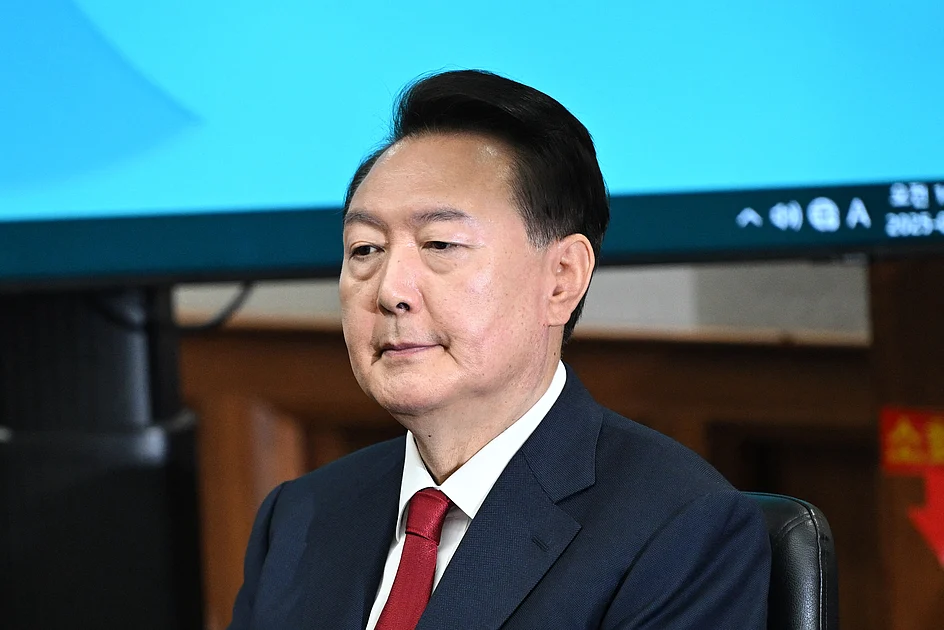
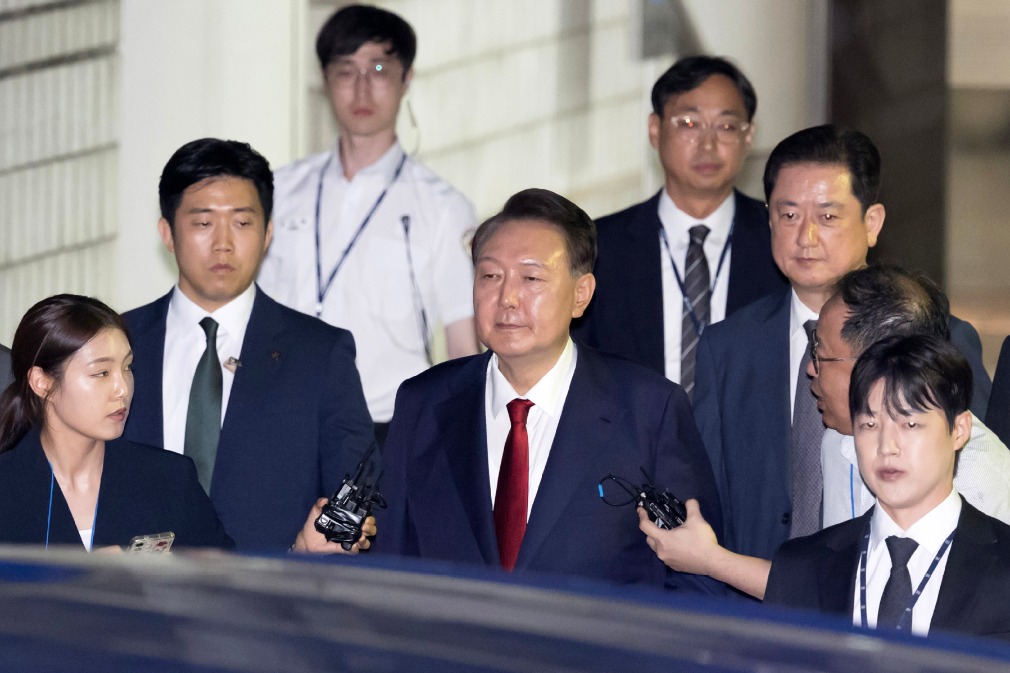
    In a landmark ruling that has captured national attention, Seoul Central District Court sentenced former President Yoon Suk Yeol to life imprisonment on Thursday for orchestrating an insurrection and abusing presidential authority. The verdict concludes a highly watched trial in a nation grappling with deep political divisions.

    The court found Yoon guilty of attempting to impose martial law in December 2024, an action prosecutors characterized as “destroying the liberal democratic constitutional order” by undermining the National Assembly and Election Commission. While prosecutors had sought capital punishment, the court delivered a life sentence—the most severe judicial consequence yet for the ousted leader.

    The attempted martial law declaration, which lasted approximately six hours before being defeated by parliamentary vote and mass public protests, triggered a national political crisis that tested South Korea’s democratic institutions. The court additionally ruled on charges that Yoon ordered military forces to storm parliament, detain political opponents, and blockade opposition party facilities.

    Yoon, 65, maintained his innocence throughout proceedings, arguing that his actions fell within presidential authority and were necessary to address opposition parties’ obstruction of government functions. The conservative former prosecutor faces multiple legal battles, having already received a five-year sentence in January for obstructing authorities attempting to arrest him following the martial law attempt.

    Security was heightened around the courthouse with police buses forming protective cordons, reflecting the trial’s significance in a country that hasn’t executed anyone since 1997. Current President Lee Jae Myung commended the public’s resistance to martial law, suggesting the Korean people should be considered for a Nobel Peace Prize for their nonviolent opposition.

    Legal experts anticipate appeals that could extend the judicial process beyond the typical two-year timeframe for such cases, regardless of Thursday’s verdict.
  • S. Korea’s ex-president Yoon sentenced to life in prison on insurrection

    S. Korea’s ex-president Yoon sentenced to life in prison on insurrection

    In a landmark ruling that marks a dramatic fall from power, former South Korean President Yoon Suk-yeol has been sentenced to life imprisonment for insurrection charges related to his declaration of emergency martial law. The Seoul Central District Court delivered its verdict Thursday in a proceeding broadcast live nationwide, creating a historic moment in South Korea’s democratic journey.

    The court determined that Yoon’s deployment of military forces to the National Assembly in December 2024 constituted a direct assault on constitutional order. Presiding judges emphasized that declaring martial law without legitimate cause—specifically absent war, incident, or equivalent national emergency—represented an unconstitutional power grab designed to subvert parliamentary authority.

    Prosecutors from the independent counsel team led by Cho Eun-suk had sought capital punishment for the ousted leader, arguing he orchestrated a systematic attempt to undermine South Korea’s democratic foundations. The court instead imposed life imprisonment, the maximum penalty short of execution for insurrection ringleaders under South Korean law.

    This case represents the third instance in South Korean history where a former president faced insurrection charges, following predecessors Chun Doo-hwan and Roh Tae-woo who were convicted for their roles in military coups and martial law crackdowns.

    The judicial proceedings revealed coordinated efforts between Yoon and senior security officials to obstruct parliamentary functions. Former Defense Minister Kim Yong-hyun received a 30-year sentence for his central role in mobilizing military resources, while former Defense Intelligence Commander Noh Sang-won and former National Police Agency Commissioner Cho Ji-ho received 18 and 12-year terms respectively.

    The controversial martial law declaration occurred on December 3, 2024, but was revoked hours later through legislative action. This triggered a constitutional crisis that ultimately led to Yoon’s impeachment in April 2025 and subsequent indictment while in detention this past January.

    The court’s comprehensive ruling addressed eight defendants total, with all receiving significant sentences for their participation in what judges characterized as a deliberate attack on South Korea’s democratic institutions.

  • What to know about the arrest of Andrew Mountbatten-Windsor

    What to know about the arrest of Andrew Mountbatten-Windsor

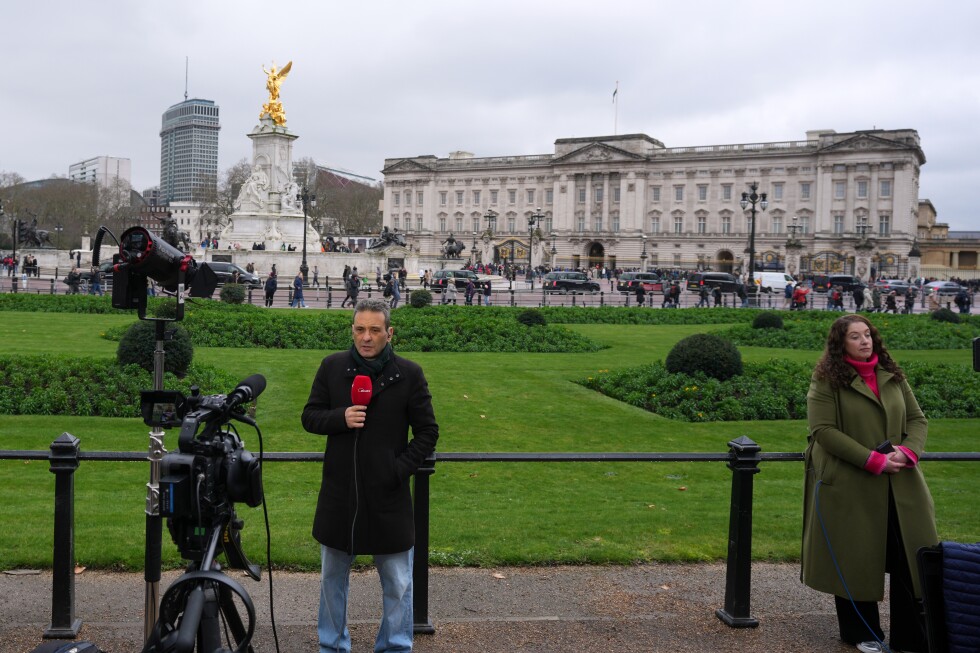
    In an unprecedented development for the British monarchy, Andrew Mountbatten-Windsor, formerly known as Prince Andrew, was taken into custody by Thames Valley Police on Thursday morning. The arrest occurred at King Charles III’s Sandringham estate, where the disgraced royal currently resides, on suspicion of misconduct in public office related to his association with the late convicted sex offender Jeffrey Epstein.

    The investigation centers on allegations that Mountbatten-Windsor, during his tenure as Britain’s special envoy for international trade, shared confidential government information with Epstein. Evidence emerging from millions of pages of documents recently released by the U.S. Justice Department appears to show the Duke of York forwarding sensitive trade reports to Epstein in 2010, including details about official visits to Hong Kong, Vietnam, and Singapore, as well as confidential briefs on investment opportunities in Afghanistan’s Helmand Province.

    This constitutional crisis represents one of the most severe challenges to the House of Windsor in over a century, comparable in magnitude only to King Edward VIII’s abdication in 1936 and the death of Princess Diana in 1997. The offense of misconduct in public office carries a maximum sentence of life imprisonment, though legal experts note the difficulty in securing convictions for this particular charge.

    King Charles III has formally distanced the monarchy from his brother, stating in an official communiqué that ‘the law must take its course’ while emphasizing his family’s continued commitment to public service. The monarch declined further commentary on the ongoing investigation.

    Police authorities are conducting simultaneous searches at properties in Berkshire and Norfolk, including Windsor Castle where Mountbatten-Windsor resided until recently. Under UK law, suspects can be held for up to 24 hours without charge, extendable to 96 hours, during which time formal questioning occurs and legal representation is provided.

    The Crown Prosecution Service must now apply the two-stage ‘Code for Crown Prosecutors’ test—evaluating both the realistic prospect of conviction and whether prosecution serves the public interest—before determining whether to bring formal charges.

  • Tucker Carlson interrogated in Israel, passport seized after US ambassador interview

    Tucker Carlson interrogated in Israel, passport seized after US ambassador interview

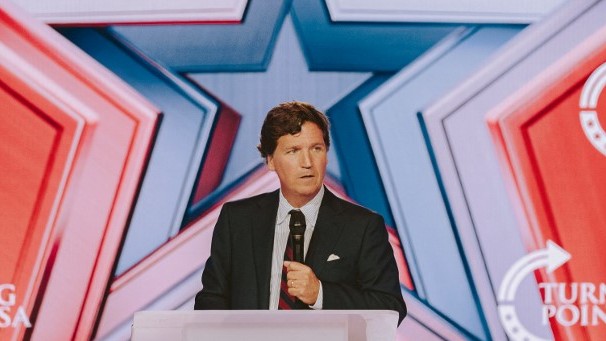
    Prominent US conservative commentator Tucker Carlson reported being detained and questioned by Israeli security personnel shortly after conducting an interview with US Ambassador to Israel Mike Huckabee. The incident occurred as Carlson and his production team attempted to depart from Israel on Wednesday.

    According to Carlson’s account to the Daily Mail, individuals identifying as airport security officials confiscated the team’s passports and separated his executive producer for interrogation regarding the nature of their conversation with Ambassador Huckabee. Carlson characterized the encounter as ‘bizarre’ but confirmed his team subsequently left the country without further incident.

    The detention followed a publicly contentious exchange between Carlson and Huckabee regarding Israel’s treatment of Christian communities. Carlson had previously criticized what he described as ‘shocking’ harassment of Christians by Orthodox Jews, including physical intimidation, property damage, cemetery desecration, and disruption of religious services.

    This diplomatic friction occurs against the backdrop of Carlson’s increasingly vocal criticism of Israel’s military operations in Gaza, which he has repeatedly characterized as genocidal. His commentary has positioned him as a significant conservative voice challenging Israel’s influence on US politics, particularly since the October 2023 conflict escalation.

    The US Embassy in Israel issued a statement defending the security procedures as standard protocol for all visitors, emphasizing that Carlson ‘received the same passport control questions that countless visitors to Israel receive.’ Embassy representatives denied allegations of selective treatment, stating Carlson received ‘the same positive treatment of any visitors to Israel.’

    Israeli media outlet Channel 13 reported that authorities had initially considered denying Carlson entry to avoid potential controversy, but ultimately permitted his visit to prevent a ‘diplomatic incident.’ The episode highlights growing tensions within Republican circles regarding US-Israel relations, Washington’s financial support for Israeli military operations, and concerns about escalating regional conflicts.

  • Intelligence report says 1,000 Kenyans were recruited to fight for Russia in Ukraine

    Intelligence report says 1,000 Kenyans were recruited to fight for Russia in Ukraine

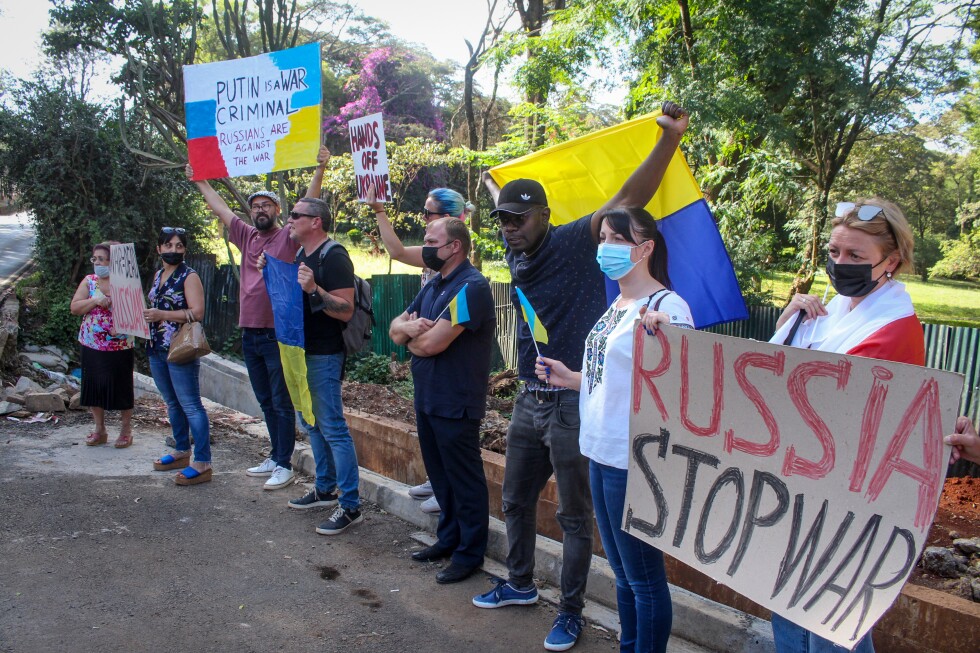
    NAIROBI, Kenya — A startling intelligence report presented to Kenya’s parliament has revealed an extensive deception operation targeting Kenyan citizens, with approximately 1,000 individuals allegedly recruited under false pretenses to fight for Russian forces in Ukraine.

    Parliamentary leader Kimani Ichung’wah delivered the damning report on Wednesday, detailing how Russian embassy officials in Nairobi allegedly collaborated with employment agencies to mislead Kenyans with promises of skilled positions in Russia. Instead of legitimate work visas, recruits reportedly received tourist documentation before being transported to conflict zones.

    The intelligence assessment provides grim statistics: 89 Kenyans currently deployed on frontlines, 39 hospitalized with combat injuries, 28 classified as missing in action, and at least one confirmed fatality. Some recruits have managed to return home, sharing harrowing accounts of being coerced into military service.

    The Russian Embassy in Nairobi issued a firm denial Thursday, stating they “never issued visas to anyone intending to travel to Russia to fight in Ukraine.” The diplomatic mission maintained that any foreign nationals joining Russian armed forces did so through voluntary enlistment programs.

    Returned recruits describe being offered positions as electricians, plumbers, and other skilled trades before signing Russian-language contracts they couldn’t comprehend. Many received minimal or no combat training before being deployed to active battle zones.

    Ichung’wah issued a stern warning that any Kenyan officials stationed at the Moscow embassy found complicit in the scheme would face severe consequences. The revelation comes as dozens of Kenyan families plead with their government to repatriate loved ones allegedly stranded in Russia or held as prisoners of war in Ukraine.

    Kenyan authorities previously acknowledged the recruitment crisis, with two alleged recruiters currently awaiting trial after being arrested and released on bail last year. The foreign ministry continues to caution citizens about overseas employment opportunities that appear suspiciously favorable.

  • A nationwide union strike in Argentina tests its leader Milei’s flagship labor overhaul

    A nationwide union strike in Argentina tests its leader Milei’s flagship labor overhaul

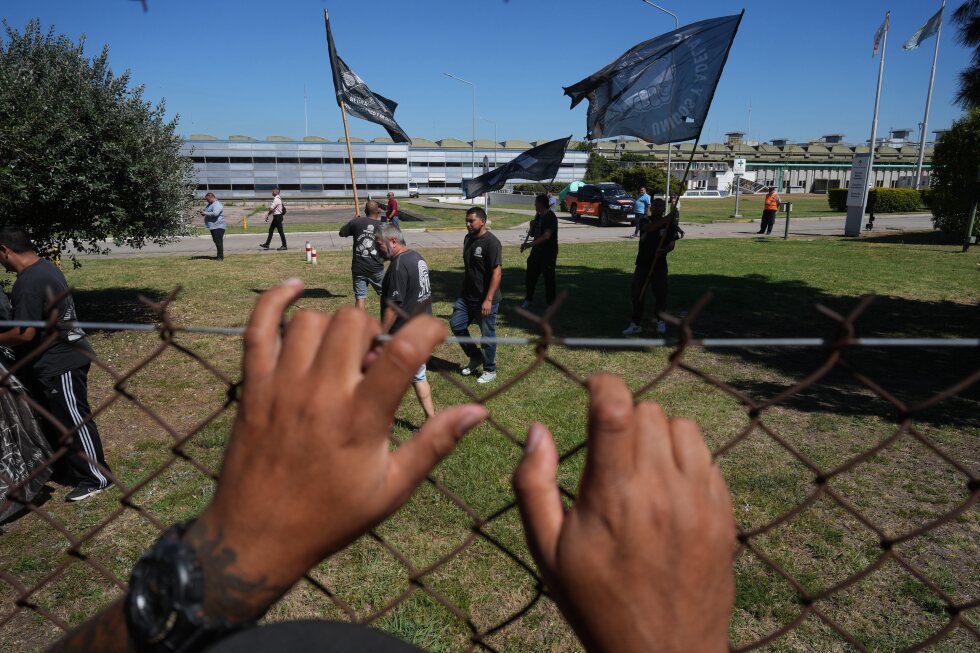
    BUENOS AIRES, Argentina — Argentina’s most influential labor unions orchestrated a comprehensive nationwide strike on Thursday, creating widespread disruptions in protest against President Javier Milei’s proposed overhaul of the country’s labor legislation. This massive demonstration has escalated the confrontation between the libertarian administration and traditionally powerful worker organizations as the contentious bill approaches a pivotal legislative vote.

    The strike precipitated significant operational halts across multiple sectors: financial institutions shuttered, public education facilities closed, transportation networks suspended services, airlines canceled hundreds of flights, and medical centers deferred all non-urgent surgical procedures. This coordinated action coincides with the lower house of Argentina’s Congress preparing to deliberate on the labor reform legislation, following the Senate’s preliminary approval granted one week earlier.

    This formidable display of union solidarity—encompassing transportation, construction, food services, and other essential industries—emerges amid growing public dissatisfaction with the inconsistent economic recovery under Milei’s governance. While the administration has successfully stabilized government finances and curbed the nation’s previously rampant inflation, it continues to grapple with persistent unemployment, wage stagnation, and sluggish economic expansion.

    President Milei maintains that modernizing Argentina’s five-decade-old labor regulations constitutes a fundamental component of his strategy to attract foreign investment, enhance productivity, and stimulate employment growth in a nation where approximately 40% of workers operate in the informal economy without legal protections.

    Union representatives contend that the proposed legislation would substantially undermine longstanding worker safeguards, including reductions in traditionally generous severance packages, restrictions on strike authorization, simplified employee termination procedures, and the legalization of 12-hour workdays.

    Cristian Jerónimo, a prominent leader within the General Confederation of Labor (Argentina’s largest trade union coalition), characterized the proposal as “entirely regressive” during a press conference announcing the strike, asserting that “the only priority it establishes is the restriction of workers’ rights.”

    This robust union opposition has historically thwarted previous governmental attempts to reform Argentina’s antiquated labor code, which remains widely regarded as one of the most financially burdensome regulatory frameworks for corporations operating in Latin America.

    The labor reform’s legislative outcome represents the first significant assessment of Milei’s political influence since his libertarian party, La Libertad Avanza, secured victory in last year’s midterm elections with support from key ally former U.S. President Donald Trump. The timing of the strike proved particularly inconvenient for the Argentine leader, who was attending the inaugural meeting of Trump’s Board of Peace initiative in Washington during the protests.

    Even if the legislation passes the lower house, it must return to the Senate for final ratification due to a controversial last-minute amendment that would reduce salaries by half for workers taking leave due to non-occupational injuries or illnesses. This provision generated substantial opposition criticism and compelled the government to modify the version previously approved by the Senate.

    Approximately 40% of Argentina’s 13 million formally registered workers maintain union membership according to labor estimates, with many maintaining strong affiliations with the Peronist movement that governed the country previously and dominated national politics for decades.

  • Trump hints at striking Iran as White House tells Tehran to make a deal

    Trump hints at striking Iran as White House tells Tehran to make a deal

    The White House has issued a stark warning to Tehran, suggesting Iran would be “wise” to reach an agreement with the United States amid escalating military posturing and renewed diplomatic efforts. President Donald Trump has repeatedly hinted at potential military action against Iran, with satellite imagery confirming the USS Abraham Lincoln aircraft carrier and its air wing positioned approximately 700 kilometers from the Iranian coastline as of February 15th.

    The two nations recently resumed indirect negotiations mediated by Oman, marking the first serious diplomatic engagement since previous talks collapsed following Israeli surprise strikes on Iranian nuclear sites last June. That military confrontation escalated into a 12-day war that briefly saw American participation in bombing campaigns against Iranian facilities.

    White House Press Secretary Karoline Leavitt emphasized the administration’s position, stating, “Iran would be very wise to make a deal with President Trump and with his administration.” Meanwhile, Trump himself suggested on his Truth Social platform that the United States might initiate strikes, with reports indicating military preparations could be finalized as early as this weekend, though no final decision has been confirmed.

    According to intelligence sources cited by major news organizations, Trump has received comprehensive military briefings outlining options “designed to maximize damage,” including potential campaigns targeting Iranian political and military leadership with regime change objectives.

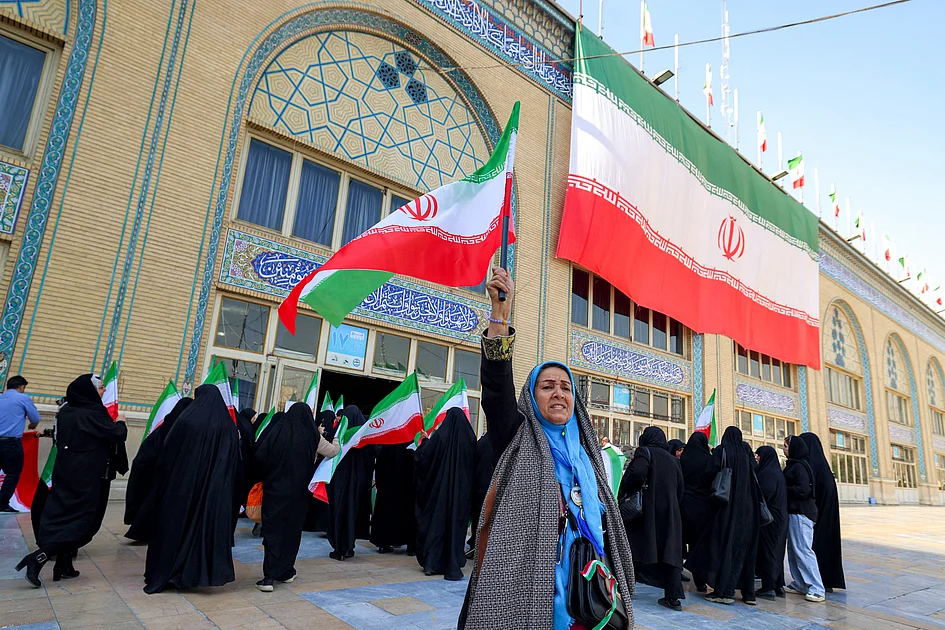
    Iranian officials have responded with measured defiance. Foreign Minister Abbas Araghchi confirmed Tehran is “drafting” a framework for future talks, while President Masoud Pezeshkian insisted “We do not want war” but warned Iran would not accept humiliating demands. “If they are going to try to impose their will on us, humiliate us and demand that we bow our heads at any cost, should we accept that?” Pezeshkian questioned.

    The diplomatic stalemate continues as both sides demonstrate military capabilities. Washington has deployed a second aircraft carrier to the region, while Iran’s Islamic Revolutionary Guard Corps has initiated war games in the strategically vital Strait of Hormuz, through which significant global energy supplies transit. Iranian state media has confirmed temporary closures of portions of the waterway during these exercises.

    Meanwhile, International Atomic Energy Agency head Rafael Grossi has engaged with Iranian officials regarding Tehran’s nuclear program, which has seen reduced cooperation with UN inspectors following previous attacks on facilities. US Energy Secretary Chris Wright reinforced Washington’s position, vowing to prevent Iranian nuclear weapons acquisition “one way or the other,” citing Tehran’s stated intentions as “entirely unacceptable.”

  • Peru names eighth president in a decade after incumbent’s ouster

    Peru names eighth president in a decade after incumbent’s ouster

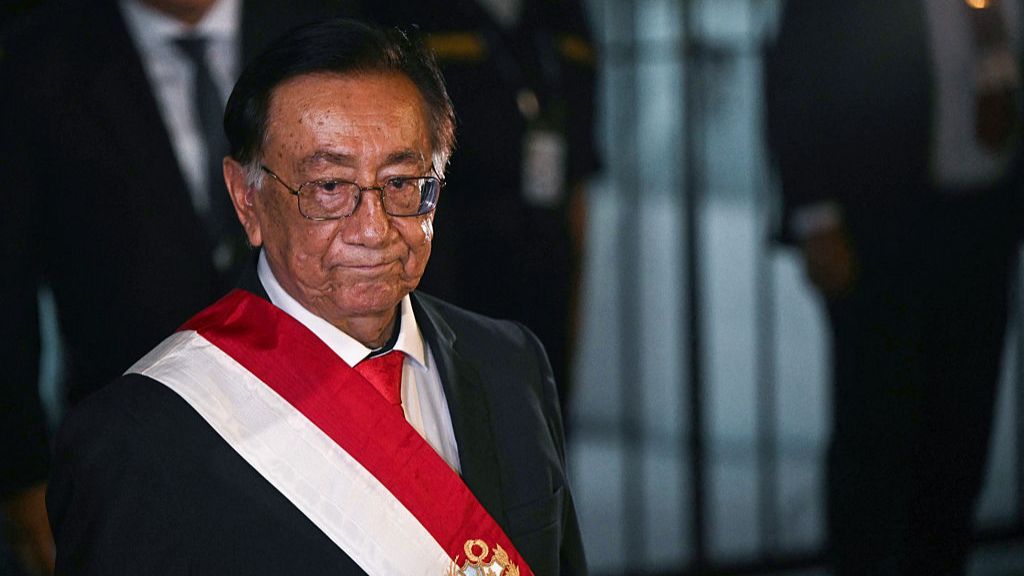
    Peru’s political landscape has undergone another seismic shift as Congress ousted President José Jerí and installed 83-year-old José María Balcázar as interim leader until July elections. The leadership change marks the eighth presidential transition since 2016, highlighting the nation’s prolonged political instability.

    Congress voted overwhelmingly to remove Jerí following allegations of influence peddling connected to undisclosed meetings with Chinese businessman Zhihua Yang, who was under government scrutiny. The scandal, dubbed ‘Chifa-gate’ after Chinese-Peruvian fusion restaurants where some meetings occurred, revealed Jerí wearing hooded attire during late-night visits to Yang’s establishments. Although Jerí maintained his innocence and denounced the allegations as a smear campaign, further controversy emerged regarding state contracts awarded to women after nocturnal presidential palace meetings.

    Balcázar, representing the left-wing Free Peru party, assumes power during profound public distrust in political institutions. The octogenarian former judge previously faced criticism for opposing legislation banning child marriage, though the bill ultimately passed despite his objection.

    In his inaugural address, Balcázar pledged to “guarantee the people of Peru a peaceful and transparent democratic and electoral transition” toward the July 28th transfer of power. The electoral process begins with April 12th primaries featuring numerous candidates, making an outright first-round victory unlikely. Polls indicate right-wing Congresswoman Keiko Fujimori (daughter of former president Alberto Fujimori) and Lima Mayor Rafael López Aliaga as frontrunners, though most Peruvian voters remain undecided.

    Notably, both Jerí and Balcázar are constitutionally barred from running in the upcoming election due to term succession rules. The political turbulence continues a pattern that has seen multiple presidents deposed by Congress, with Jerí having served merely four months after replacing impeached predecessor Dina Boluarte in October.

    Peruvian citizens expressed disillusionment to international media, with one Lima resident noting: “In 10 years, how many presidents have we had? It’s an enormous setback for the country.” Another stated they had “gotten used to this crisis, where Congress only dedicates itself to changing the president and looking out for their own well-being.”

  • Bangladesh’s new PM Tarique Rahman pledges price stability during Ramadan

    Bangladesh’s new PM Tarique Rahman pledges price stability during Ramadan

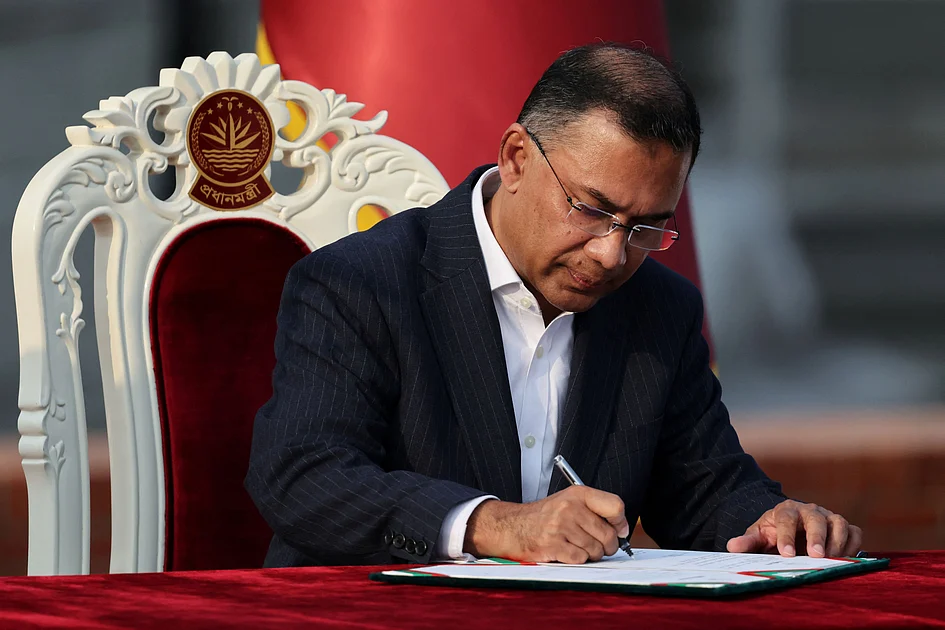
    In his inaugural policy address, Bangladesh’s newly appointed Prime Minister Tarique Rahman has committed to addressing the nation’s pressing economic challenges during the holy month of Ramadan. The 60-year-old political scion, sworn into office on Tuesday, faces the formidable task of stabilizing essential commodity prices while implementing comprehensive governance reforms.

    Rahman, son of former Prime Minister Khaleda Zia and the late President Ziaur Rahman, assumes leadership following his party’s decisive electoral victory. His administration inherits a complex landscape marked by political turbulence and economic strain, particularly after the 2024 uprising that ousted Sheikh Hasina’s government.

    During a nationally televised speech on Wednesday evening, the Prime Minister issued a stern warning against commercial exploitation during Ramadan. He emphasized the spiritual significance of the holy month, stating, ‘This period of self-purification should not exacerbate public hardship. Traders must refrain from treating Ramadan as an opportunity for excessive profit and ensure essential goods remain accessible to all citizens.’

    The government’s commitment comes against a backdrop of persistent inflationary pressures. Recent data reveals Bangladesh’s annual inflation reached 8.58% in January 2026—the highest recorded since May 2025—with food prices continuing to burden household economies.

    Rahman outlined a multi-faceted approach to economic management, pledging to dismantle market syndicates that manipulate prices while establishing robust mechanisms to protect both consumers and legitimate businesses. His administration will prioritize judicial reforms and anti-corruption measures, asserting that ‘the rule of law, rather than political influence or coercion, will serve as the foundational principle of governance.’

    Beyond immediate economic concerns, the Prime Minister revealed ambitious infrastructure modernization plans. These include comprehensive reorganization and expansion of the national railway network, alongside enhanced coordination between transportation ministries to develop an integrated transit system. This initiative aims to alleviate urban congestion while improving nationwide connectivity and commercial efficiency.

  • Trump’s ‘Board of Peace’ to hold first meeting with eyes on Gaza and beyond

    Trump’s ‘Board of Peace’ to hold first meeting with eyes on Gaza and beyond

    Washington witnessed the inaugural gathering of President Donald Trump’s newly established ‘Board of Peace’ on Thursday, an institution conceived with immediate focus on Gaza’s stabilization but designed with far broader geopolitical ambitions. The high-profile assembly brought together approximately two dozen world leaders and senior officials, notably including several of Trump’s authoritarian-leaning allies while conspicuously excluding traditional European democratic partners typically aligned with U.S. initiatives.

    The board’s formation follows the Trump administration’s successful mediation of an October ceasefire in Gaza, achieved through collaborative diplomacy with Qatar and Egypt, which halted two years of devastating conflict. According to U.S. officials, the peace plan has now progressed to its second phase, prioritizing the disarmament of Hamas—the Palestinian group whose October 7, 2023 attack on Israel triggered massive military retaliation. Gaza’s Hamas-operated health ministry reports at least 601 casualties since the truce implementation.

    Central to Thursday’s deliberations were substantial financial commitments exceeding $5 billion for Gaza’s reconstruction, where extensive infrastructure lies in ruins. President Trump has notably suggested developing resorts in the territory, drawing from his background as a property magnate. The meeting also advanced plans for an International Stabilization Force to ensure security, with Indonesia—the world’s largest Muslim-majority nation—expressing readiness to contribute up to 8,000 troops pending confirmation.

    Israeli Prime Minister Benjamin Netanyahu emphasized the priority of disarming Hamas, specifically targeting AK-47 rifles as ‘the main weapon that has to go.’ Strategic affairs expert Jeremy Issacharoff acknowledged the complexity of disarmament while stressing that a credible pathway would determine the initiative’s viability. Meanwhile, Hamas spokesman Hazem Qassem urged the board to compel Israel to cease violations and lift its longstanding siege of Gaza.

    The board’s operational framework grants Trump veto power and permanent leadership privileges even after leaving office, with permanent membership requiring a $1 billion contribution. The initiative has drawn criticism from analysts like Bruce Jones of the Brookings Institution, who described it as ‘a confused mix of ambition and narcissism, unleavened by any effort at intellectual coherence.’

    The attendance roster reflected Trump’s diplomatic preferences, featuring Hungarian Prime Minister Viktor Orban and Argentina’s President Javier Millei, while traditional U.S. allies including France and Canada were notably absent. Japan remained undecided on membership, and Brazilian President Lula da Silva declined participation, criticizing the board as ‘a new UN where only [Trump] is the owner.’