分类: politics

  • Anthony Albanese’s plea for unity on Australia Day

    Anthony Albanese’s plea for unity on Australia Day

    In the wake of a devastating terrorist attack that shook the nation, Australian Prime Minister Anthony Albanese has delivered a poignant Australia Day address emphasizing resilience and national unity. The December 14 Bondi Beach massacre, which claimed 15 lives, created a period of national turmoil that tested the country’s social fabric throughout the summer months.

    Addressing the nation, Prime Minister Albanese acknowledged the profound challenges faced by Australians while highlighting the characteristic courage and compassion that emerged in response to the tragedy. He asserted that Australia’s distinctive national character isn’t accidental but has been deliberately cultivated through generations of collective service and mutual care.

    ‘This summer has tested our nation once again,’ Albanese stated, ‘but as ever in the worst of times, we have witnessed the very best of the Australian character.’ The Prime Minister encouraged citizens to approach the coming year with renewed pride in their country and strengthened faith in one another, emphasizing the ‘collective responsibility’ to build a ‘stronger and fairer’ Australia for future generations.

    Echoing this sentiment, Opposition Leader Sussan Ley delivered a complementary message during her Australia Day appearance in Corowa, historically recognized as the birthplace of Federation. Ley emphasized that unifying elements among Australians significantly outweigh divisive factors, describing the nation as ‘the best country in the world.’

    Both leaders reflected on how the Bondi tragedy had imbued this year’s Australia Day with deeper significance. Ley noted that the attack had ‘shaken the nation to its core’ while simultaneously revealing the powerful resilience of the Australian spirit. She highlighted how ordinary citizens demonstrated extraordinary bravery by rushing toward danger to assist strangers and comforting the wounded during the crisis.

    The coordinated messages from both government and opposition figures represent a concerted effort to strengthen social cohesion following a period of national trauma, reinforcing values of community solidarity and shared national identity.

  • UK plans to create ‘British FBI’ to bring national investigations under single police force

    UK plans to create ‘British FBI’ to bring national investigations under single police force

    The British government has revealed groundbreaking plans to establish a comprehensive National Police Service, colloquially termed the ‘British FBI,’ designed to oversee intricate criminal investigations spanning counterterrorism, digital offenses, and organized crime. This transformative initiative, announced on Sunday by Home Secretary Shabana Mahmood, represents the most significant overhaul of British policing in decades.

    The newly proposed agency will consolidate multiple specialized units under a single command structure, incorporating counterterrorism operations, regional organized crime task forces, police aviation resources, and road policing functions across England and Wales. This consolidation aims to address critical gaps in local law enforcement capabilities while creating a centralized framework for complex criminal investigations.

    Home Secretary Mahmood emphasized that the current policing model, established generations ago, has become increasingly inadequate against sophisticated modern criminal networks. ‘Many local constabularies lack either the specialized expertise or necessary resources to effectively combat evolving threats such as cyber-enabled fraud, online child exploitation, and transnational criminal organizations,’ Mahmood stated.

    The restructuring will fundamentally redefine policing responsibilities, enabling regional forces to concentrate exclusively on community-level crimes while the national service handles cross-jurisdictional and technically complex cases. The unification is projected to generate substantial operational efficiencies through centralized procurement processes and attract elite investigative talent through enhanced career development opportunities.

    Additional reforms expected alongside the national service implementation include potential consolidation of England and Wales’ 43 regional police forces and modernization of officer recruitment and management protocols. The Metropolitan Police Service, which currently leads counterterrorism efforts, has expressed strong support for the centralized approach, acknowledging the necessity of adapting to contemporary security challenges.

  • Trump’s Greenland ambitions strain MAGA ties with Europe’s far-right

    Trump’s Greenland ambitions strain MAGA ties with Europe’s far-right

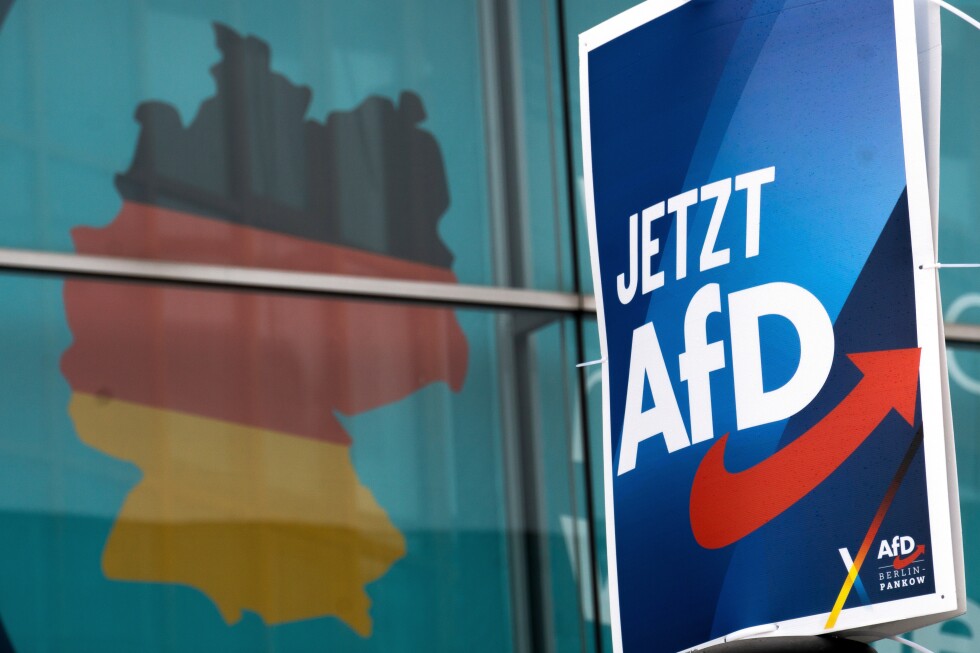
    A significant diplomatic schism has emerged between former U.S. President Donald Trump’s political movement and its traditional European far-right allies, triggered by growing concerns over American interventionism. The fracture became particularly evident through widespread condemnation of Trump’s proposed acquisition of Greenland, which multiple European nationalist leaders characterized as a hostile act threatening national sovereignty.

    Despite previous ideological alignment demonstrated during the ‘Make Europe Great Again’ gathering in Madrid less than a year ago, prominent figures including France’s National Rally president Jordan Bardella, Italy’s Prime Minister Giorgia Meloni, and Reform UK’s Nigel Farage have publicly criticized Trump’s approaches to Greenland, Venezuela, and Iran. Bardella specifically denounced what he termed ‘commercial blackmail’ regarding Greenland, while Meloni directly informed Trump that his tariff threats represented ‘a mistake.’

    The divergence highlights a fundamental tension within the trans-Atlantic nationalist alliance, where shared ideological convictions on immigration and sovereignty appear insufficient to overcome concerns about American overreach. This development occurs amidst substantial gains by far-right parties across the European Union, which now hold approximately 26% of seats in the European Parliament according to security analyses.

    Not all European nationalist leaders have joined the criticism, however. Hungarian Prime Minister Viktor Orbán, facing his most challenging election in sixteen years, has carefully avoided criticizing Trump, instead positioning the former president as Europe’s best hope for peace in Ukraine and a guarantor of national sovereignty. Similar restraint has been observed among Eastern European allies including Poland’s President Karol Nawrocki and Czech Prime Minister Andrej Babiš, who cautioned against allowing the Greenland issue to escalate into broader EU-U.S. conflict.

    Analysts suggest this division within the trans-Atlantic nationalist movement may force a recalibration of political alliances, with cooperation potentially continuing on shared grievances such as opposition to EU migration policies and trade agreements, while sovereignty concerns create enduring fractures regarding American foreign policy approaches.

  • US: ICE agents shoot dead another person in Minneapolis

    US: ICE agents shoot dead another person in Minneapolis

    A federal immigration enforcement operation in Minneapolis escalated into a fatal confrontation on Saturday, resulting in the death of 37-year-old Alex Jeffrey Pretti, a white male U.S. citizen and lawful gun owner with no criminal record. U.S. Immigration and Customs Enforcement (ICE) officers opened fire during what the Department of Homeland Security described as a self-defense response to an armed individual who “violently resisted” apprehension.

    This incident represents the second civilian fatality involving ICE officers in Minneapolis within three weeks, following the recent killing of Renee Nicole Good, a 37-year-old mother of three. The operation has also drawn criticism for the detention of a five-year-old boy alongside his father earlier this week, further inflaming public sentiment.

    Open-source investigative group Bellingcat conducted a detailed analysis of social media footage circulating from the incident. Their examination revealed that agents appeared to remove a firearm from Pretti before the first shot was fired. The analysis further indicated that two different agents discharged their weapons, with at least ten shots heard in total, most occurring while the man lay motionless on the snow-covered street.

    The shooting has triggered widespread outrage and protests across Minneapolis, with state officials demanding accountability. Minnesota Governor Tim Walz characterized the shooting as “horrific” and called for state authorities to lead the investigation, asserting that the federal government “cannot be trusted” with the probe. In a social media post, Governor Walz directly appealed to President Donald Trump to “pull the thousands of violent, untrained officers out of Minnesota.”

    Minneapolis Mayor Jacob Frey condemned the federal operation, stating that “a great American city is being invaded by its own federal government.” Representative Ilhan Omar described the shooting as “an execution” and accused President Trump of transforming Minneapolis into a “war zone.” The incident occurs amid the Trump administration’s intensified nationwide campaign to detain and deport undocumented migrants, which has deployed thousands of ICE agents to the Minneapolis area.

  • US to gain sovereignty over Greenland areas where American bases are located: Trump

    US to gain sovereignty over Greenland areas where American bases are located: Trump

    In a groundbreaking development reported by the New York Post on Saturday, President Donald Trump revealed that the United States will establish sovereignty over specific territories in Greenland where American military installations are currently situated. This announcement represents a significant shift in Arctic geopolitical dynamics and follows Trump’s persistent interest in acquiring the strategically vital island.

    The President’s statements clarify that this sovereignty arrangement specifically applies to zones containing U.S. military facilities, rather than encompassing the entire Danish autonomous territory. This distinction emerges after previous suggestions of potential acquisition through purchase, which Denmark consistently rejected despite the nations’ allied relationship.

    Notably, during mid-week discussions, President Trump explicitly dismissed the possibility of military intervention as a method to secure control over Greenland. Instead, he emphasized having negotiated access guarantees through NATO channels, suggesting a diplomatic approach to securing American interests in the resource-rich Arctic region.

    The development signals a recalibration of U.S. strategic positioning in the increasingly contested Arctic, where melting ice has opened new shipping routes and access to untapped natural resources. This sovereignty arrangement would mark the most significant territorial adjustment in the region in decades, with implications for international law, Arctic governance, and NATO alliance dynamics.

  • Ros Atkins on… How popular is President Trump?

    Ros Atkins on… How popular is President Trump?

    BBC Analysis Editor Ros Atkins has launched a comprehensive examination of former President Donald Trump’s current standing with the American public during what has been an exceptionally eventful period in early 2026. The analysis comes as the nation navigates a series of consequential developments both domestically and internationally that have shaped the political landscape.

    The assessment delves beyond superficial polling numbers to explore the nuanced dimensions of Trump’s popularity, measuring public sentiment through multiple indicators including approval ratings, voter enthusiasm, and demographic breakdowns. The investigation considers how recent policy decisions, international engagements, and domestic controversies have collectively influenced perceptions of the former president’s leadership.

    Atkins’ methodology incorporates comparative historical data, placing current approval metrics within the context of previous administrations at similar junctures. The analysis further examines regional variations in support, highlighting the evolving political allegiances across different states and constituencies. Special attention is given to how independent voters and moderate Republicans view Trump’s handling of the pressing issues that have dominated the national conversation throughout this period.

    The timing of this deep dive proves particularly significant as the political ramifications of these approval ratings could influence upcoming electoral strategies and policy directions. The comprehensive assessment provides stakeholders across the political spectrum with critical insights into the American electorate’s current disposition toward one of the nation’s most polarizing political figures.

  • ‘Not deterred’: Anthony Albanese defiant after alleged far-right kidnap threat

    ‘Not deterred’: Anthony Albanese defiant after alleged far-right kidnap threat

    Australian Prime Minister Anthony Albanese has adopted a resolute stance following disclosures that far-right extremists with neo-Nazi affiliations allegedly plotted to kidnap him. The reported threats emerged from an online Discord chatroom operated by radical activists, where discussions allegedly included a $10,000 offer to rent a vehicle for the abduction operation. These developments occurred shortly after the Bondi Beach terror attack, though investigators have not connected the plot to that incident.

    Addressing the security concerns, Prime Minister Albanese confirmed that threat levels against him have substantially increased, particularly following events of December 14. Despite these security challenges, the Prime Minister emphasized his unwavering commitment to public engagements and direct interaction with Australian citizens. ‘My primary focus remains ensuring the safety of all Australians, not myself,’ Albanese stated during an ABC interview. ‘I maintain full confidence in the Australian Federal Police and security authorities to perform their duties effectively.’

    The security climate has intensified significantly in recent months, with at least five individuals facing charges for allegedly threatening both Prime Minister Albanese and New South Wales Premier Chris Minns. These cases include a Sydney man accused of making threatening communications to the Prime Minister’s office and a 19-year-old from Western Australia allegedly sending social media messages containing death threats.

    This escalation coincides with increased visibility of neo-Nazi organizations across Australia. The recently dissolved Nationalist Socialist Network (NSN) has drawn particular attention from security agencies, with ASIO Director-General Mark Burgess and Home Affairs Minister Tony Burke repeatedly highlighting concerns about the group’s extremist rhetoric. The group announced its disbandment following new anti-hate legislation passed by federal parliament in response to the Bondi attack.

    The threat environment has extended beyond the Prime Minister, with NSW Opposition Leader Kellie Sloane reporting similar security concerns after criticizing neo-Nazi demonstrations outside state parliament. In a separate development, neo-Nazi figure Joel Davis was denied bail this month for allegedly inciting violence against independent Wentworth MP Allegra Spender through Telegram communications.

  • Abu Dhabi talks on Ukraine were ‘constructive, positive’, says UAE

    Abu Dhabi talks on Ukraine were ‘constructive, positive’, says UAE

    Abu Dhabi has emerged as a pivotal diplomatic hub following successful trilateral negotiations between the United States, Russia, and Ukraine. The talks, characterized by participants as constructive and positive, mark a significant advancement in international efforts to resolve the ongoing conflict in Eastern Europe.

    According to Afra Al Hameli, Director of Strategic Communications at the UAE Ministry of Foreign Affairs, the discussions facilitated direct engagement between Russian and Ukrainian representatives. The negotiations focused on critical elements of the US-proposed peace framework and confidence-building measures designed to pave the way for a comprehensive agreement.

    The UAE government extended particular recognition to US President Donald Trump for his instrumental role in facilitating the dialogue, noting his contribution to reinforcing regional stability and advancing the political track toward peace. This diplomatic initiative builds upon the UAE’s established record as a neutral mediator, having previously hosted multiple rounds of Russia-Ukraine negotiations that resulted in approximately 17 successful prisoner-of-war exchanges.

    ‘Our approach to diplomacy is guided by the fundamental principle that conflicts cannot be resolved without dialogue, and progress is built through sustained engagement,’ stated Al Hameli in an official communication. ‘The UAE remains committed to supporting all efforts that advance peace across various global crises.’

    The successful hosting of these high-stakes talks reinforces Abu Dhabi’s growing stature as an international diplomacy center capable of bringing conflicting parties to the negotiation table under neutral auspices.

  • Myanmar holds its last election round with the army already certain to keep control over government

    Myanmar holds its last election round with the army already certain to keep control over government

    YANGON, Myanmar — Myanmar’s military junta concluded its orchestrated three-phase general election on Sunday, finalizing a political process designed to cement the authority of Senior General Min Aung Hlaing’s regime. The election, conducted over nearly a month, has been universally condemned by international observers and domestic opposition groups as a fraudulent endeavor to legitimize the military’s seizure of power in February 2021.

    The electoral framework guaranteed military dominance from the outset. With 25% of parliamentary seats constitutionally reserved for the armed forces, the army-backed Union Solidarity and Development Party (USDP) secured most contested seats during the initial voting phases in December and January. This pre-arranged structure ensures the military and its allies will command the parliamentary majority required to form the next government, with Min Aung Hlaing anticipated to assume the presidency.

    Voting occurred under severe restrictions that criminalized public criticism through a new Election Protection Law, which has already resulted in over 400 individuals facing charges for activities such as distributing leaflets or online commentary. The absence of voting in more than one-fifth of Myanmar’s 330 townships—due to both security concerns and active armed conflict—further undermined the process’s legitimacy.

    The Association of Southeast Asian Nations (ASEAN) explicitly declined to send observers or recognize the election results, with Malaysian Foreign Minister Mohamad Hasan citing concerns over the lack of inclusive participation. Only nations including Russia, China, Belarus, Kazakhstan, Nicaragua, Vietnam, Cambodia, India, and Japan dispatched observers.

    Notably absent from the polls was Aung San Suu Kyi’s National League for Democracy (NLD), which was forcibly dissolved in 2023 after refusing to register under new military regulations. Suu Kyi remains imprisoned on politically motivated charges totaling 27 years. Other opposition parties either boycotted the election or faced severe restrictions, while armed resistance groups disrupted previous voting rounds with attacks on polling stations that resulted in several casualties.

    The final phase of voting commenced at 6 a.m. Sunday across 61 townships in six regions and three states, many of which have experienced recent clashes between military forces and opposition groups. The election commission reported turnout between 50-60% in earlier phases, with approximately 35% fewer eligible voters compared to the 2020 election.

  • Exclusive: Weapons flow to RSF via Libya continue despite pressure on Haftar

    Exclusive: Weapons flow to RSF via Libya continue despite pressure on Haftar

    A complex geopolitical standoff is unfolding across North Africa as weapons shipments persistently transit from Libya to Sudan’s Rapid Support Forces (RSF), despite concerted pressure from Saudi Arabia and Egypt on Libyan commander Khalifa Haftar to terminate Emirati military support. Middle East Eye reveals that this ongoing arms transfer occurs amid escalating tensions between regional powers.

    Eastern Libya commander Khalifa Haftar faces mounting pressure from Cairo and Riyadh, with both nations warning that continued assistance to RSF could fundamentally reshape Egypt’s relationship with his administration. Earlier this month, Saddam Haftar, Khalifa’s son and deputy commander of the Libyan Arab Armed Forces, was unexpectedly summoned to Cairo where Egyptian officials delivered a stern warning demanding immediate cessation of support to RSF.

    Paradoxically, Libyan sources with direct knowledge confirm that Saddam Haftar simultaneously faces counter-pressure from the United Arab Emirates to maintain the weapon facilitation pipeline through eastern Libya. This places the younger Haftar in a precarious position, caught between regional heavyweights, even as arms continue flowing toward the Sudanese conflict zone.

    The pressure campaign constitutes part of a broader Egyptian-Saudi initiative to block transfers of arms, fuel, and fighters to RSF, curtail Emirati influence, and prevent further destabilization along the critical Egypt-Libya-Sudan border triangle. During Saddam Haftar’s Cairo visit, Egyptian intelligence officials presented compelling evidence of Emirati weapons shipments, drones, air defense systems, and fuel deliveries from Libya’s Sarir refinery reaching RSF leadership.

    Since the Sudanese conflict erupted in April 2023 between the Sudanese Armed Forces and RSF, Egypt has watched apprehensively as its southern neighbor descends into chaos. Cairo backs the Sudanese government and military, which have recently lost strategic territories including Darfur’s el-Fasher, where paramilitaries allegedly committed mass atrocities.

    The situation reveals strange bedfellows: while Haftar’s eastern Libyan administration receives longstanding Egyptian support, it simultaneously benefits from UAE backing. The Emirates serves as RSF’s primary patron, funneling weapons, mercenaries, and funds through Libya, Chad, and Ethiopia. Recent intelligence indicates these supply lines directly enabled RSF’s capture of el-Fasher following a 550-day siege.

    Egyptian surveillance has captured aerial imagery documenting weapons moving from Abu Dhabi to Haftar-controlled areas before reaching RSF, plus Libyan fuel tankers supplying paramilitaries in Darfur. Security agencies have also monitored mercenaries from Colombia and Venezuela transiting through Libya en route to join RSF ranks in Sudan.

    In response, Cairo and Riyadh offered Saddam Haftar cooperation alternatives including financial and military support to replace Emirati backing. This diplomatic maneuvering coincided with a substantial $4 billion Saudi arms deal with Pakistan, with weapons potentially allocated to both Haftar’s forces and Sudanese army leader Abdel Fattah al-Burhan.

    Adding complexity, Egyptian officials shared intelligence with Saddam Haftar outlining alleged Emirati plans to fragment Haftar’s territory once RSF secured control over Darfur and Kordofan. The purported strategy involved dividing Libya into multiple zones, potentially undermining Haftar’s authority in eastern and southern regions.

    The situation reflects broader regional realignments, with a public feud emerging between Saudi Arabia and the UAE. The Emirates faces accusations of sowing discord across the Middle East and Africa by backing insurgencies and separatist groups, including RSF which stands accused of genocide and war crimes.

    Recent developments in Yemen saw UAE-backed Southern Transitional Council separatists routed by pro-government fighters supported by Saudi air strikes, accompanied by rare public condemnations between Riyadh and Abu Dhabi. Egypt has joined Saudi Arabia in pushing back against Emirati regional policies, sharing intelligence on UAE activities in Yemen.

    Geopolitical analysts suggest UAE’s RSF backing forms part of a broader strategy to shape Sudan and Libya’s future while strengthening its foothold in the Horn of Africa and Sahel. These ambitions increasingly clash with Saudi interests, particularly as Riyadh perceives RSF’s rise as threatening regional stability and challenging Saudi-backed forces in Yemen.