分类: politics

  • Chongqing Liangjiang New Area inaugurated as administrative entity

    Chongqing Liangjiang New Area inaugurated as administrative entity

    In a landmark administrative transformation, Chongqing Liangjiang New Area has been formally inaugurated as a fully-fledged administrative entity, marking a significant milestone in China’s regional development strategy. This establishment on January 25, 2026, represents the first national-level new area in central and western China to achieve this elevated administrative status.

    The restructuring follows a major governmental overhaul implemented in November 2025, which dissolved the former Jiangbei and Yubei districts of Chongqing municipality. These territories have now been comprehensively integrated into the newly formed Liangjiang New Area, creating an expansive administrative region covering approximately 1,360 square kilometers with a population of 3.52 million residents.

    Strategic positioning designates Liangjiang New Area as the primary hub for Chongqing to execute major national initiatives, foster innovative productive capacities, deepen institutional reforms, and expand high-level international openness. The area is poised to serve as a critical testing ground for governance innovation and economic modernization, potentially establishing new benchmarks for regional development models across China’s western regions.

    This administrative evolution reflects China’s continuing efforts to optimize territorial governance structures while enhancing economic coordination mechanisms. The consolidation aims to eliminate previous administrative barriers, creating more efficient resource allocation and policy implementation frameworks that could accelerate regional development and improve public service delivery across the newly unified jurisdiction.

  • Voting concludes for all three phases of Myanmar’s general election

    Voting concludes for all three phases of Myanmar’s general election

    Myanmar has successfully completed its extensive three-phase general election process, marking a significant milestone in the nation’s democratic journey. The final voting phase concluded on Sunday afternoon across approximately 60 townships, bringing closure to a comprehensive electoral exercise that spanned multiple regions.

    The electoral process, characterized by its staggered approach, commenced with the initial phase conducted in 102 townships on December 28 of the previous year. This was followed by the second electoral round covering 100 townships on January 11, culminating in Sunday’s final voting session. The multi-phase structure allowed for thorough administration across Myanmar’s diverse constituencies.

    According to official data released by the Union Election Commission (UEC), the electoral contest featured an impressive roster of approximately 5,000 candidates representing 57 distinct political parties. These candidates competed for representation across multiple legislative bodies, including the Pyithu Hluttaw (Lower House), the Amyotha Hluttaw (Upper House), and various Region and State Hluttaws (regional parliaments).

    The electoral framework encompassed 263 constituencies for the Pyithu Hluttaw, while the Amyotha Hluttaw elections utilized a dual-system approach with 73 constituencies operating under the first-past-the-post (FPTP) system and 26 following proportional representation (PR) principles. Regional parliamentary elections similarly employed both FPTP (255 constituencies) and PR (42 constituencies) systems, supplemented by 29 specialized ethnic constituencies.

    Zaw Min Tun, spokesperson for Myanmar’s National Defense and Security Council, has indicated that the newly elected parliament will convene in March, with the formal transition to a new government scheduled for April. This electoral cycle represents Myanmar’s first general election since November 2020, signaling a renewed commitment to democratic processes amid the country’s ongoing political evolution.

  • Venezuela frees dozens of political prisoners, human rights group says

    Venezuela frees dozens of political prisoners, human rights group says

    In a significant development within Venezuela’s political landscape, at least 80 individuals identified as political prisoners have been granted release following intensified pressure from the United States. The prominent human rights organization Foro Penal confirmed these releases, which occurred across multiple detention facilities on Saturday, with indications that additional discharges may follow.

    This prisoner release initiative represents the most recent action taken since US forces apprehended Venezuelan President Nicolás Maduro earlier this month. Maduro currently faces trial in New York on serious drug-trafficking allegations following what has been described as a raid operation.

    Alfredo Romero, director of Foro Penal, announced through social media platforms that his organization is actively verifying the identities of those freed. Among those confirmed released is Kennedy Tejeda, a colleague from Foro Penal who had been detained at Tocorón prison since August 2024. Gonzalo Himiob, another attorney with the organization, indicated on social media platform X that the number of releases might exceed 80 as verification processes continue.

    The interim Venezuelan government, led by President Delcy Rodriguez, claimed on Friday that over 600 prisoners had been freed. However, Foro Penal has contested this figure, asserting it appears significantly inflated. Before this weekend’s developments, the human rights group had documented only 156 political prisoner releases since January 8th.

    Notably, many previously released detainees continue to exist in a state of legal uncertainty, with charges remaining active against them and restrictions preventing public commentary. Those freed include domestic opposition figures and at least five Spanish citizens.

    Interim President Rodriguez announced plans to engage with United Nations High Commissioner for Human Rights Volker Turk on Monday, seeking UN verification of the release lists. This development occurs against a backdrop of longstanding accusations from human rights organizations claiming the Venezuelan government systematically uses detention to silence critics—allegations which authorities consistently deny, maintaining that all arrests stem from criminal activities rather than political motives.

    Many of those detained were taken into custody following the controversial 2024 presidential election, where Maduro’s victory claim was disputed by opposition groups and numerous international governments.

  • Second death in Minneapolis crackdown heaps pressure on Trump

    Second death in Minneapolis crackdown heaps pressure on Trump

    Minneapolis became the epicenter of a mounting political crisis for the Trump administration following the second fatal shooting of a U.S. citizen by federal immigration agents within three weeks. The latest incident resulted in the death of Alex Pretti, a 37-year-old intensive care nurse, during a confrontation on an icy roadway. This event occurred shortly after the earlier killing of Renee Good, another 37-year-old, who was shot inside her vehicle.

    Initial statements from federal authorities described Pretti as an imminent threat to agents, claiming he possessed a firearm with intent to harm. However, widely circulated cell phone footage, authenticated by major U.S. media outlets, presented a contradictory narrative. The video evidence showed Pretti never brandishing a weapon before agents discharged approximately ten rounds seconds after deploying chemical irritants and forcing him to the ground.

    The administration’s response drew immediate condemnation from Pretti’s family, who denounced official characterizations as ‘sickening lies.’ Political reactions revealed significant divisions, with Homeland Security Secretary Kristi Noem expressing personal grief while continuing to defend the agents’ conduct. Her tempered Sunday remarks on Fox News contrasted sharply with previous assertions that Pretti had attacked law enforcement personnel.

    Mounting pressure from both political parties prompted calls for comprehensive investigations. Republican Senator Bill Cassidy of Louisiana demanded a ‘full joint federal and state investigation,’ while Minnesota’s Democratic Governor Tim Walz declared state authority over the inquiry, stating the federal government had forfeited trust. The House Homeland Security Committee’s Republican chairman simultaneously requested congressional testimony from senior officials.

    This escalation occurs amid the controversial ‘Operation Metro Surge,’ which deployed thousands of immigration agents to Minneapolis following conservative media reports alleging voter fraud within the Somali immigrant community. The operation has generated widespread civil unrest, with residents organizing whistle alerts against agent sightings and frequent clashes between protesters and authorities.

    Legal challenges advanced as local authorities filed suit seeking operational suspension, with an initial hearing scheduled for Monday. A federal judge additionally issued an evidence preservation order prohibiting destruction or alteration of materials related to Pretti’s death. Former President Barack Obama and First Lady Michelle Obama issued a joint statement condemning the shooting as indicative of eroding core American values, urging administrative cooperation with local officials.

    Recent polling indicates growing public disapproval of domestic immigration operations, particularly as documentation of civilian detentions—including children—circulates widely. The convergence of evidentiary disputes, political condemnation, and judicial interventions creates a multifaceted challenge for federal authorities amid heightened national scrutiny.

  • Carney says Canada has no plans to pursue free trade agreement with China as Trump threatens tariffs

    Carney says Canada has no plans to pursue free trade agreement with China as Trump threatens tariffs

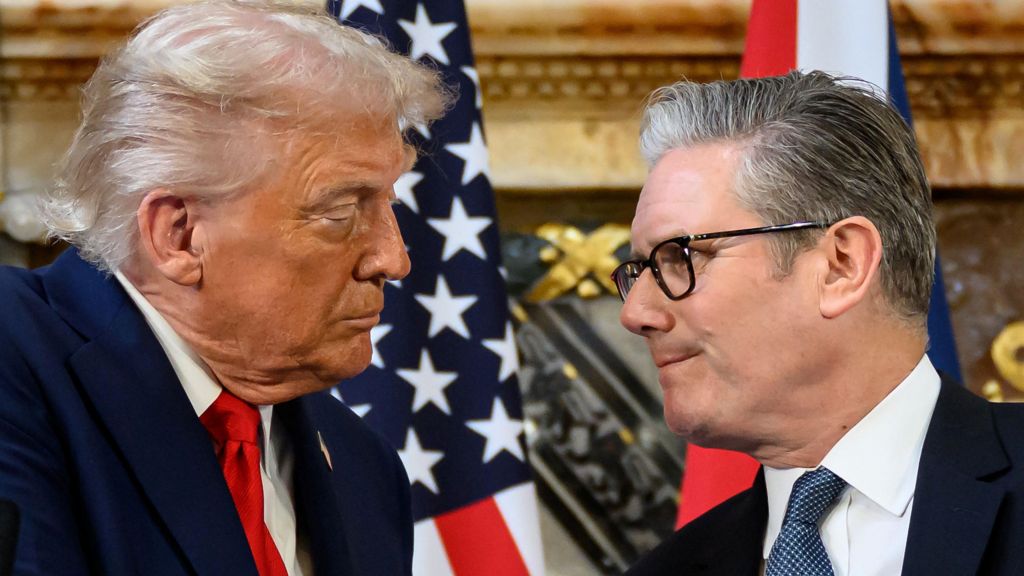
    Canadian Prime Minister Mark Carney has explicitly stated that Canada will not pursue a comprehensive free trade agreement with China, responding directly to U.S. President Donald Trump’s threat to impose 100% tariffs on Canadian goods should such an arrangement materialize.

    The clarification came Sunday as tensions escalate between the neighboring nations regarding trade relationships with Beijing. Carney emphasized that recent tariff adjustments with China merely address specific sectoral issues that emerged in recent years, rather than constituting a broader free trade initiative.

    ‘Under our existing trade agreement with the United States and Mexico, we have commitments prohibiting the pursuit of free trade agreements with nonmarket economies without prior notification,’ Carney stated. ‘We have no intention of doing that with China or any other nonmarket economy.’

    The diplomatic friction originates from Canada’s recent decision to reduce its 100% tariff on Chinese electric vehicles to 6.1%, implemented during Carney’s visit to China earlier this month. In exchange, Beijing agreed to lower tariffs on Canadian agricultural products including canola oil, pork, and seafood that had been affected by previous trade measures.

    This arrangement includes an annual cap of 49,000 Chinese EV imports—approximately 3% of Canada’s annual vehicle market—with provisions for gradual increase to 70,000 over five years. Additionally, China committed to investing in Canada’s automotive industry within three years.

    President Trump responded vehemently on social media, characterizing the agreement as ‘a disaster for Canada’ and ‘one of the worst deals, of any kind, in history.’ He warned that Canada must not become a ‘drop off port’ for Chinese goods entering the U.S. market.

    The trade dispute occurs alongside broader geopolitical tensions, including Trump’s expressed interest in acquiring Greenland and suggestions about Canadian sovereignty. Carney has positioned Canada as a leader among middle powers seeking to counterbalance U.S. influence, notably declaring at Davos that ‘if you are not at the table, you are on the menu’—a remark widely interpreted as criticism of Trump’s approach to international relations.

  • US security agreement for Ukraine is ‘100% ready’ to be signed, Zelenskyy says

    US security agreement for Ukraine is ‘100% ready’ to be signed, Zelenskyy says

    Ukrainian President Volodymyr Zelenskyy announced Sunday that a comprehensive U.S. security guarantees agreement for Ukraine has reached completion following intensive multilateral negotiations in Abu Dhabi. The breakthrough emerged from unprecedented trilateral discussions involving high-level diplomatic and military representatives from Ukraine, the United States, and Russia—marking the first such format in an extended period.

    During his diplomatic visit to Lithuania, Zelenskyy confirmed the security document stands ‘100% ready’ and awaits finalization of signing arrangements between partner nations. The finalized agreement will subsequently undergo ratification procedures through both the U.S. Congress and Ukraine’s parliamentary system.

    Parallel to security negotiations, Zelenskyy emphasized Ukraine’s strategic objective to achieve European Union membership by 2027, characterizing this geopolitical alignment as a crucial ‘economic security guarantee’ for the nation’s future stability.

    The Abu Dhabi talks, spanning Friday through Saturday, addressed the complex landscape of Russia’s ongoing invasion now approaching its fourth year. While acknowledging persistent fundamental disagreements—particularly regarding territorial integrity and Russia’s illegal annexation of eastern regions—Zelenskyy noted the discussions concluded constructively. He reiterated Ukraine’s non-negotiable position on territorial sovereignty, stating ‘Our position regarding our territory must be respected.’

    According to U.S. officials involved in the process, negotiators will reconvene in the United Arab Emirates on February 1 for subsequent rounds. The comprehensive agenda covered military and economic considerations, including potential ceasefire arrangements preceding a formal agreement. Outstanding issues remain, particularly regarding operational oversight of the Zaporizhzhia Nuclear Power Plant—Europe’s largest nuclear facility currently under Russian occupation.

    The diplomatic momentum coincides with reported backchannel discussions between Russian President Vladimir Putin and former Trump administration officials, though the Kremlin maintains any peace agreement necessitates Ukrainian withdrawal from contested eastern territories.

  • South Korean ex-PM Lee Hae-chan dies in Vietnam

    South Korean ex-PM Lee Hae-chan dies in Vietnam

    SEOUL – Lee Hae-chan, a distinguished former Prime Minister of South Korea and a pivotal figure in the nation’s democratic development, has passed away at the age of 71 while on official duty in Vietnam. The veteran politician, who was serving as Senior Vice President of the Peaceful Unification Advisory Council (PUAC), succumbed to complications from an acute myocardial infarction on Sunday afternoon.

    The tragic incident occurred during a high-profile diplomatic mission in Ho Chi Minh City, where Lee was participating in a conference of the PUAC’s Asia-Pacific regional committee. According to official reports from Yonhap News Agency, the seven-term lawmaker experienced a sudden medical emergency on January 23rd and was immediately transferred to a local medical facility.

    Despite undergoing an emergency stent procedure performed by Vietnamese medical specialists, Lee’s condition failed to improve. He was pronounced deceased at 2:48 PM local time on January 25th, with medical authorities confirming cardiac arrest as the definitive cause of death.

    Lee’s political career spanned decades, marked by his significant tenure as Prime Minister under former President Roh Moo-hyun from 2004 to 2006. As a respected elder statesman and democracy movement activist, he remained actively engaged in diplomatic efforts through his role with the PUAC, a presidential advisory body focused on inter-Korean relations and unification policies.

    The South Korean government has initiated coordination procedures for repatriating Lee’s remains, while diplomatic channels between Seoul and Hanoi remain actively engaged in managing the aftermath of this unexpected tragedy. The passing of this political luminary has generated profound condolences across South Korea’s political spectrum, with tributes highlighting his enduring commitment to public service and democratic values.

  • US pressure fuels Israel’s expanding influence in Latin America, experts say

    US pressure fuels Israel’s expanding influence in Latin America, experts say

    A complex geopolitical realignment is underway across Latin America as US political pressure creates openings for expanded Israeli influence, though historical solidarity with Palestine persists despite these shifting dynamics, regional specialists reveal.

    Left-leaning governments continue anchoring their foreign policy in anti-imperialist and decolonial principles, maintaining symbolic and substantive support for Palestinian rights. During Israel’s military operations in Gaza, Brazil’s President Lula da Silva characterized the offensive as genocide, Colombia severed diplomatic ties with Israel, and Chile pursued accountability through international legal channels.

    However, extensive US lobbying efforts, direct threats against regional leadership, and the recent seizure of Venezuelan President Nicolás Maduro indicate coordinated pressure to align Latin American nations more closely with Israeli interests. According to Latin American affairs expert Ali Farhat, regional states’ limited hard power capabilities constrain their responses to Washington’s influence campaigns.

    This pressure has yielded tangible results: Argentina’s far-right President Javier Milei has announced plans to relocate Argentina’s embassy to Jerusalem while deepening security and economic cooperation with Israel, following an unprecedented $20 billion US bailout. Meanwhile, Venezuela’s Maduro—previously among Palestine’s most uncompromising regional defenders—faces sustained international legal pressure that Farhat characterizes as emblematic of broader efforts to marginalize vocal Palestinian supporters.

    Despite these pressures, left-leaning leaders are recalibrating rather than retreating from their positions. Colombia’s Gustavo Petro and Brazil’s Lula attempt to balance condemnation of Israeli actions with pragmatic diplomacy aware of potential economic repercussions. This caution represents strategic adaptation rather than surrender, particularly in regions lacking credible deterrence against US overreach.

    The resurgence of far-right governments accelerates alignment with US and Israeli priorities, with Argentina becoming the only Latin American nation joining Trump’s controversial Board of Peace initiative. Brazilian Congressman Nilto Tatto warns that Washington-managed frameworks risk reproducing hegemony under international guise rather than genuinely promoting peace.

    Former Argentine parliamentarian Julia Perie interprets Argentina’s position as reflecting broader ideological realignment rather than targeted anti-Palestinian sentiment, noting that support for Palestine has historically fluctuated in cyclical patterns. Observers note that advocacy is increasingly channeled through legal avenues, multilateral institutions, and popular movements rather than overt diplomatic confrontation.

    Ramon Medero of Venezuela’s La Danta TV describes current dynamics as representing adaptation rather retreat, with the Palestinian cause becoming structurally embedded within broader Global South struggles against colonial domination. Despite far-right advances, grassroots mobilization may intensify as documentation of Gaza atrocities awakens global popular consciousness, converging Latin American and Palestinian liberation struggles against shared adversaries.

  • Row erupts within UK’s governing Labour Party after popular mayor blocked from upcoming election

    Row erupts within UK’s governing Labour Party after popular mayor blocked from upcoming election

    A significant internal conflict has emerged within Britain’s ruling Labour Party following the decisive blocking of Manchester Mayor Andy Burnham’s attempt to re-enter Parliament. The party’s National Executive Committee (NEC), a 10-member body overseeing election machinery, rejected Burnham’s Saturday request to stand as candidate in the upcoming Gorton and Denton constituency by-election expected before February’s end.

    The NEC justified its decision as necessary to avoid “an unnecessary election” for Manchester mayor that would impose “a substantial and disproportionate impact on party campaign resources.” Had Burnham won the traditionally safe Labour seat, he would have been required to resign his mayoral position, triggering another special election in Manchester. His current mandate as mayor extends through May 2028.

    Critics within the party perceive this move as Prime Minister Keir Starmer strategically neutralizing a potential leadership rival. Burnham, twice previously unsuccessful in Labour leadership contests and colloquially known as the “King of the North,” has openly expressed ambitions to lead the party eventually. The former minister under Blair and Brown governments has recently voiced policy disagreements with Starmer, particularly on economic matters, and called for renewed debate on party direction.

    The controversy unfolds against a backdrop of concerning poll numbers for Labour since their July 2024 landslide victory. The party faces predicted significant losses in May’s critical elections—Britain’s equivalent of U.S. midterms—with potential historic defeat in Wales, continued opposition in Scotland, and substantial losses in English local elections. Anti-immigration Reform UK and the Greens have been primary beneficiaries of Labour’s declining support.

    Reactions within the party reflect deep divisions. Labour lawmaker John Slinger praised the “quick and clear decision” as allowing the party to move beyond “damaging introspection” and unite behind the eventual candidate. Conversely, former Cabinet minister Louise Haigh described the blocking as “incredibly disappointing” and urged the NEC to reconsider.

  • Final phase of Myanmar’s election underway, military-backed party set to win

    Final phase of Myanmar’s election underway, military-backed party set to win

    Myanmar’s controversial general election reached its final phase on Sunday, with polling stations opening across 60 townships including major urban centers Yangon and Mandalay. The military-backed Union Solidarity and Development Party (USDP) stands positioned to secure a decisive victory, cementing the junta’s political control following the 2021 coup that overthrew Nobel laureate Aung San Suu Kyi’s democratically elected government.

    The electoral process, conducted against a backdrop of persistent civil conflict, has been characterized by significantly diminished voter participation. Preliminary data indicates turnout hovering around 55%, markedly lower than the approximately 70% participation recorded during the 2015 and 2020 general elections. This decline reflects both widespread public disillusionment and an atmosphere of apprehension among citizens.

    International response has been overwhelmingly critical, with the United Nations, Western governments, and human rights organizations dismissing the election as a carefully orchestrated sham designed to legitimize military rule. The Association of Southeast Asian Nations (ASEAN) notably rejected Myanmar’s invitation to deploy election observers, refusing to endorse the political exercise.

    Security concerns have plagued the electoral process, with ongoing military operations including airstrikes near civilian populations in border regions such as Rakhine, Shan, and Kayin states. The junta has simultaneously pursued legal measures against dissent, charging over 400 individuals under election protection laws for criticizing the process.

    Analysts from risk intelligence firms suggest the election will likely reinforce military dominance rather than resolve the nation’s protracted crisis, offering little prospect for restored domestic legitimacy or improved relations with Western nations. Junta leader Min Aung Hlaing has indicated plans to transition from military command to a political role, signaling the armed forces’ enduring intention to maintain political control.